
Reviewed · ROTORUA TOURS
Volcanic Valley Self Guided Walking and Hiking at Waimangu
Waimangu is not a quick stop beside a steaming hole. It is a proper walk through the world’s youngest geothermal system, where acidic lakes, hot streams, steam vents, and native bush appear one after another. The valley also carries the story of the Tarawera eruption and the lost Pink and White Terraces.
I like the freedom to set your own pace, and I like the natural setting. The Wanderer Guide, with its clear explanations, gives the walk purpose without attaching you to a tour group. The main consideration is the return bus: check its final departure before setting out, especially if you arrive late in the afternoon.
Key points before you set out
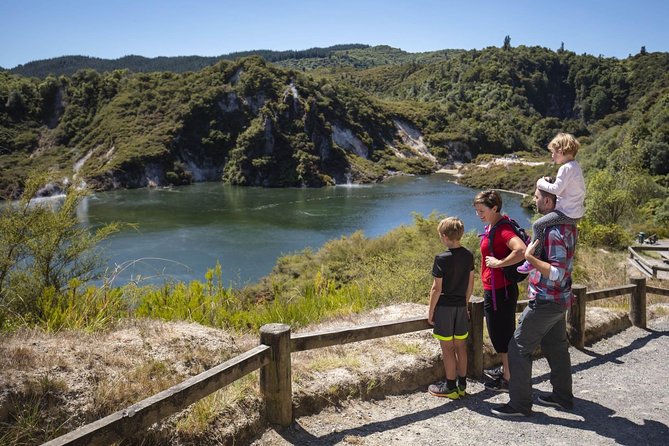
- Frying Pan Lake and Inferno Crater Lake: Two of Waimangu’s most memorable geothermal sights, each with a very different character.
- A downhill walk with a shuttle back: You do not need to repeat the route uphill, though you must keep an eye on bus times.
- Self-guided, not self-explanatory: Pick up the Wanderer Guide or use the free Waimangu App to understand what you are seeing.
- A mix of bush, wetlands, and volcanic features: The walk feels like a nature reserve as much as a geothermal park.
- About two hours for the main experience: Extra time helps if you stop often for photos, rest, and the views.
- Moderate fitness required: Expect uneven ground, steep sections, and a walk that is easier going down than up.
Why Waimangu feels different from a quick geothermal stop
Rotorua gives you several ways to see geothermal activity. Some involve a short viewing platform, a scheduled demonstration, or a compact circuit around bubbling mud. Waimangu asks for more time and effort, but it also gives you a stronger sense of place.
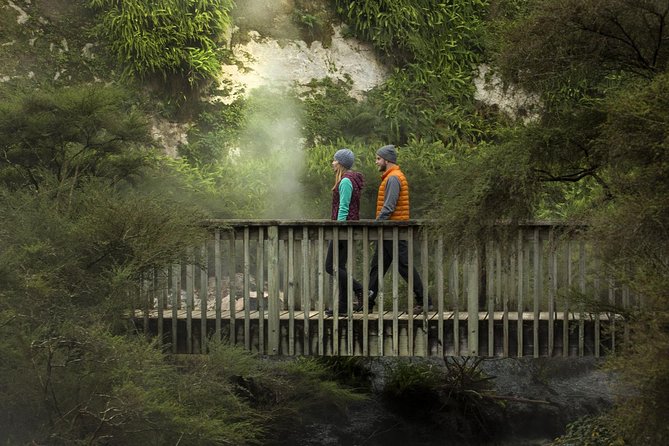
You walk through a long valley rather than simply moving from one lookout to the next. Steam rises through forest and grassland. Lakes appear below the track. Small streams, vents, and fissures remind you that the ground here is still active. The setting is quiet enough that birdsong and the sound of bubbling water can become part of the experience.
That matters because the geothermal features do not all look alike. Frying Pan Lake is broad and constantly active. Inferno Crater Lake is famous for its striking blue colour. Lake Rotomahana adds a larger body of water and a wider view near the end of the route. The variety keeps the walk from feeling like a series of similar hot pools.
The valley also gives you useful historical context. The Tarawera eruption changed this area dramatically and buried the Pink and White Terraces, once among New Zealand’s best-known natural attractions. Your guide sheet connects the scenery to that event, so you are not left trying to guess what created each crater or lake.
More Walking Tours in Rotorua
- Rotorua’s Ultimate Zipline: 6 ziplines, 400 m Tandem, Cliff Walk
★ 5.0 · 2,557 reviews - Rotorua: Hell’s Gate Outdoor Mud Spa & Guided Walk
★ 4.7 · 1,140 reviews - Rotorua: Hell’s Gate Geothermal Walk
★ 4.4 · 217 reviews
Checking in at 587 Waimangu Road
You begin at Waimangu Volcanic Valley on Waimangu Road, in the Bay of Plenty region south of Rotorua. At check-in, you collect your admission and guide sheet. You can also download the free Waimangu App if you prefer using your phone.
The printed Wanderer Guide is useful because it lets you look down at the page, then back at the valley without constantly handling a phone. It explains the main geothermal features, the eruption history, and the plant and animal life along the route. If you want more freedom, the app gives you another way to follow the walk.
The entry price is listed at $46.54 per person. I think that is fair if you use the walk as a two-hour or half-day outing rather than treating it as a quick photo stop. Admission, the guide sheet, and the internal shuttle are included. Food, drinks, alcohol, and transport from Rotorua are not included.
The value improves if you intend to walk most of the valley. The shuttle saves your legs on the uphill return, and the self-guided format means you are paying for access and interpretation rather than for a fixed commentary-heavy tour. If you only have time for a brief visit, the price may feel less attractive.
Following the valley downhill
The main route takes about two hours, though the overall activity is described as lasting from one to four hours depending on your choices. You can walk at your own pace and select from different options based on your energy and available time.
The downhill direction is a major practical advantage. You can stop often without worrying about a hard climb at the end, then use the internal shuttle from the trail end or one of the designated stops. Several stopping points and benches make it possible to pause, study the guide, or simply watch the steam.
Do not mistake downhill for effortless. The trail includes uneven surfaces and some steep sections. The official advice calls for moderate physical fitness and says the activity is not recommended for people with walking disabilities. Wear shoes with a good grip and dress for changing weather. Waimangu operates in all weather conditions.
The route works best when you resist the urge to hurry. You might find that a vent looks ordinary from a distance, then becomes fascinating when you stop to notice the steam, colour, sound, or nearby vegetation. Give yourself enough time to read the guide sheet at the main viewing points.
Frying Pan Lake and the first volcanic sights
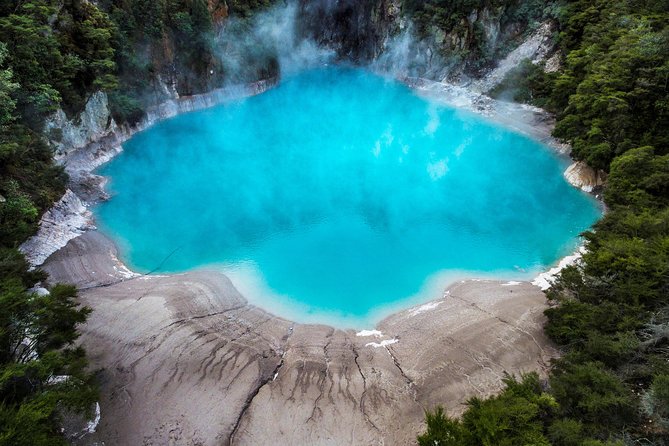
Frying Pan Lake is one of the valley’s defining features. The name gives you a fair idea of its character, though the scale is much larger than a kitchen pan. Steam and heat rise from the water, creating an active scene rather than a still, decorative pool.
This is a good point to start paying attention to the difference between geothermal activity and ordinary water. You may see bubbling, steaming, or spurting features close to forest and grassland. The contrast is what makes Waimangu memorable: living greenery sits beside ground that is hot, acidic, and constantly changing.
The guide sheet helps explain why the valley looks the way it does. Without it, you would still see attractive views, but you would miss much of the meaning behind them. I recommend reading the information as you go rather than saving it for the end.
More Hiking Tours in Rotorua:
- Rotorua Hiking: Mt Tarawera Guided Volcanic Crater Experience
★ 5.0 · 283 reviews - Rotorua: Kaituna Rafting & Mt. Tarawera Guided Hike Combo
★ 4.5 · 11 reviews - Franz Josef Glacier Heli-Hike
★ 4.5 · 618 reviews - Heli Hike Fox Glacier
★ 5.0 · 563 reviews
Inferno Crater Lake and the most dramatic colour
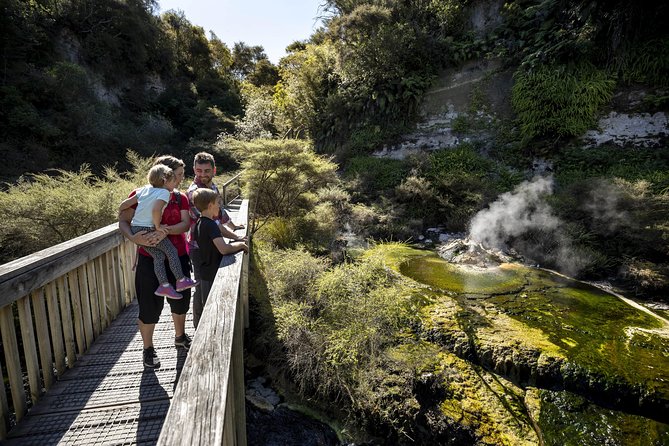
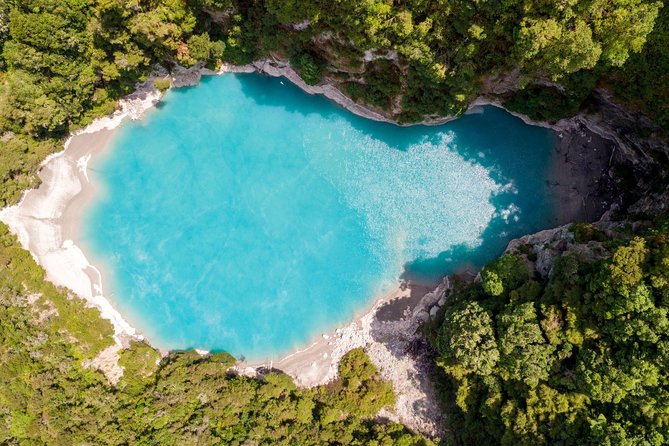
Inferno Crater Lake is one of the walk’s strongest moments. Its intense blue colour is the feature that catches the eye first, but the guide gives you a better understanding of the crater and its geothermal activity.
The lake is not simply a scenic stop. It shows how unusual the chemistry and heat of Waimangu can be. The colour can look almost unreal against the surrounding bush, which is why this is likely to become one of your favourite photo stops.
Weather affects the mood of the walk. Cooler conditions can make steam easier to see, and one useful tip is to visit in the morning if you want stronger visible steam. A sunny day can make the trail pleasant and bring out the lake colours, but mist and cooler air can also add atmosphere.
Keep your attention on the path and viewing areas. The valley combines attractive scenery with active geothermal ground, so this is not a place for wandering off-track.
Forest, wetlands, and the life around the heat
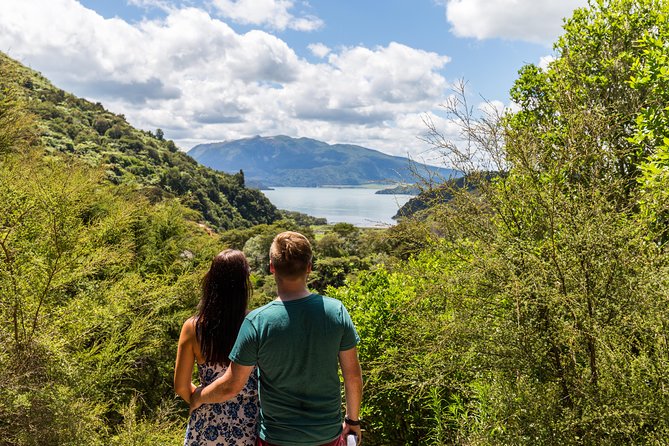
Waimangu is more than a volcanic display. The route passes through native woodland, wetlands, and grassland, giving you a chance to notice how plant and animal life exists around the geothermal activity.
That mixture is one reason I prefer this walk to a purely paved viewing circuit. You hear birds in the bush, see steam threading through greenery, and move between open views and enclosed stretches of track. The experience has a calm, natural quality even when the ground is bubbling nearby.
Families can find enough variety to keep younger walkers interested, though the distance and steps still matter. There are easier route choices and bus stops along the way, so you can shorten the outing if needed. The best plan is to agree before starting where you might stop, rather than waiting until everyone is tired.
The guide also points out the valley’s flora, fauna, and volcanic story. This adds substance for anyone who wants more than photographs. I would allow extra time if you enjoy reading signs, listening for birds, or taking close views of the vents and streams.
Lake Rotomahana and the end of the walk
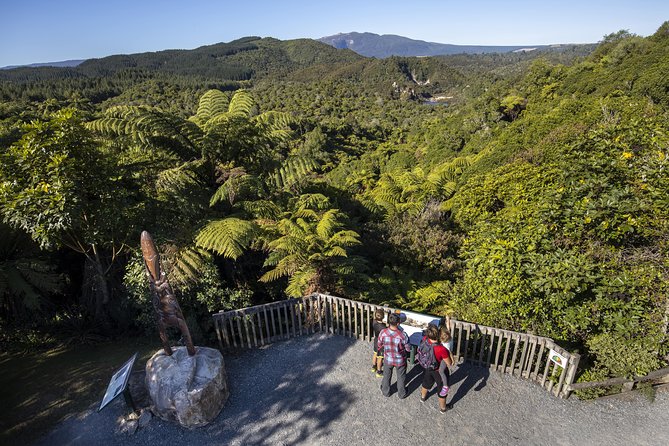
Lake Rotomahana provides a broader final scene after the closer geothermal features. The route opens your view toward the lake and the wider volcanic setting, giving the walk a sense of progression.
This is also where time management becomes important. The shuttle is a welcome part of the experience because the return route is uphill. You can ride back toward the starting point instead of retracing every step, but you need to know when the final bus leaves.
A late afternoon arrival can create pressure. One reported schedule had a 3 p.m. appointment with the last bus from stop three at 4:35 p.m., leaving too little time for a relaxed walk. Schedules can change, so confirm the current bus times at check-in and plan around the earliest practical departure.
The internal shuttle is included and air-conditioned. It is transport within the valley, not transport from Rotorua, so arrange your own way to 587 Waimangu Road.
How the walking options affect your day
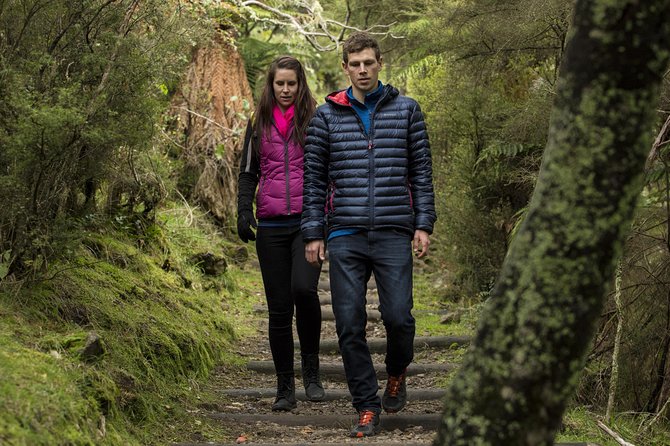
The experience can fit into a short morning, a relaxed half-day, or a longer visit if you pause often. The stated itinerary allows about two hours, which is a sensible target for the main walk with stops.
If you have only one hour, choose your route carefully and ask staff which sections best match your time. If you have four hours available, you can move slowly, read the guide in full, sit at the benches, and wait for the bus without rushing.
The walk is not presented as a guided group tour. That gives you privacy and control, but it also means you must pay attention to signs, trail choices, and shuttle stops yourself. The maximum group size is 15, but the self-guided format means you are not tied to a guide’s pace.
I find this format especially good for people who want to stop for photos or avoid a constant stream of commentary. It is less suitable if you want someone beside you explaining every feature in real time.
What to bring and what to watch
Dress for all weather. The activity operates in rain or shine, and geothermal areas can feel different from the weather at your accommodation in Rotorua. Bring water and any food you need, since these are not included. Food and drinks are available to purchase, but it is better not to depend on a meal break fitting neatly into your walking schedule.
Wear comfortable walking shoes. Uneven surfaces and steep parts make sandals or smooth-soled shoes a poor choice. If you have limited mobility, consider the official warning seriously before booking.
Give yourself a buffer before the last shuttle. A beautiful stop is not worth a hurried final stretch or a long uphill return. The bus is one of the best features of the visit, but only if you use it within the operating schedule.
If a boat trip interests you, ask about current availability when you arrive. Some outings have included a Lake Rotomahana cruise, while another visit was affected by renovations. The boat is not listed among the inclusions for this self-guided walk, so do not assume it forms part of your ticket.
Is $46.54 good value?
At $46.54, Waimangu is not the cheapest geothermal attraction around Rotorua. The price makes more sense when you count the length of the walk, the number of different settings, the printed interpretation, and the return shuttle.
You are paying for a substantial outdoor experience rather than a short look at one feature. The most positive part for me is that the valley feels relatively low-key and natural. There are no theatrical effects needed when you have steaming lakes, native bush, bright crater water, and the history of the Tarawera eruption in front of you.
The value depends on your interests. If you prefer a quick, highly organised display with minimal walking, another Rotorua attraction may suit you better. If you want an active visit with time to think, photograph, and notice small details, Waimangu earns its price.
The high satisfaction rating of 4.7 from 248 ratings and 94 percent recommendation suggest that the experience works well for most people who arrive prepared for a walk. I would not book it expecting a simple roadside attraction. Plan on proper shoes, a couple of hours, and enough energy to enjoy the route.
Who should book Waimangu?
I would choose this for couples, families with reasonably active children, and anyone interested in geology, plants, birds, or New Zealand’s volcanic past. It is also a good choice if you have already seen a mud pool or geyser and want a more varied outing.
The route can be gentle in places, but the uneven surfaces and steep sections rule it out for some people with mobility concerns. Children must be accompanied by an adult, and families should use the available route choices and bus stops rather than feeling obliged to complete every section.
Photographers should allow extra time for steam, crater colours, and changing views. Morning can be a good choice when cooler air makes steam more visible. People who dislike self-guided activities should know that the guide sheet and app are your main sources of interpretation, with only limited conversation from shuttle staff.
Should you book the Waimangu walk?
Book it if you want Rotorua geothermal scenery with real walking, quiet stretches of bush, and enough time to understand what you are seeing. Inferno Crater Lake, Frying Pan Lake, and Lake Rotomahana give the route variety, while the shuttle removes the worst of the uphill work.
Skip it if you want a short, flat visit or if your schedule leaves no room for the full route. For the best experience, arrive early enough to walk without rushing, confirm the last shuttle, dress for wet weather, and treat the guide sheet as part of the attraction rather than an optional extra.
Free cancellation is available when you cancel at least 24 hours before the start time. That flexibility helps, especially when Rotorua weather is uncertain, but it does not remove the need to plan your walking time carefully.
FAQ
How long does the Waimangu self-guided walk take?
The main itinerary allows about two hours. Depending on your route, walking speed, stops, and available time, the overall activity can last from about one to four hours.
Where does the activity start?
It starts at Waimangu Volcanic Valley, 587 Waimangu Road, Bay of Plenty Region 3073, New Zealand.
Is admission included?
Yes. The admission fee for the self-guided walk is included in the listed price.
Is the shuttle bus included?
Yes. The internal shuttle bus is included and can take you back from the trail area toward the starting point. Check the current departure times when you arrive.
Do I need to walk uphill at the end?
No. The route is generally downhill, and the internal shuttle provides a return service. You should still allow enough time to reach the bus stop before the final departure.
Is a guide included?
You receive a Wanderer Guide sheet for the self-guided walk. You can also download the free Waimangu App. This is not described as a walking tour led by a personal guide.
Is food included?
No. Food, drinks, and alcoholic drinks are not included. Food and drinks are available to purchase.
Is the walk suitable for people with walking disabilities?
The activity is not recommended for people with walking disabilities because of uneven surfaces. A moderate level of physical fitness is advised.
Can I cancel for a full refund?
Yes, if you cancel at least 24 hours before the experience start time. Cancellations made less than 24 hours in advance are not refunded, and changes within that period are not accepted.
More self guided tours in Rotorua
- Half-Day Self-Guided Mountain Bike Journey through Whakarewarewa Redwood Forest
★ 5.0 · 124 reviews - Rotorua: Waimangu Volcanic Valley Ticket & Self-Guided Walk
★ 4.8 · 104 reviews - Whaka Geothermal Trails Self-Guided Tour
★ 3.5 · 44 reviews - Whakarewarewa: Self-Guided Geothermal Trails
★ 4.5 · 41 reviews
Newly listed around Rotorua
- Rotorua: White Island, Mount Tarawera & Waimangu Volcanic …★ 4.4 · 5 reviews
- Whirinaki Forest Footsteps: Māori Guided Tour, Picnic & Transfer★ 5.0 · 5 reviews
- Rotorua: Lake View Private Pools Experience★ 4.3 · 6 reviews
- Rotorua: Floatplane Flight with Orakei Korako Landing★ 5.0 · 6 reviews
- Raceline Karting at Off Road NZ★ 5.0 · 6 reviews
- Epic Tandem Kayak Tour down the Kaituna River Waterfalls★ 5.0 · 6 reviews
- From Rotorua: Whirinaki Rainforest Guided Cultural Tour★ 5.0 · 6 reviews
- Rotorua: Evening Starlight Gourmet Kayak Tour with dinner★ 5.0 · 6 reviews
Rotorua Tours, compared.
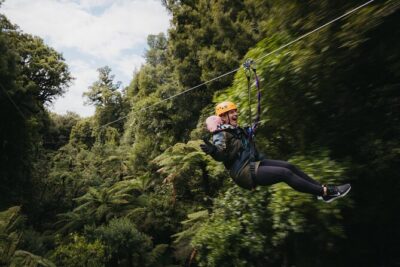
Rotorua Canopy Tours: 2.5Hour Native Forest Zipline Adventure
Read our review →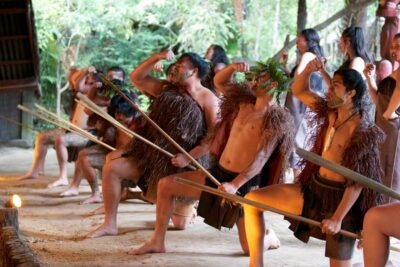
Mitai Maori Village: Cultural Experience and Dinner Buffet
Read our review →
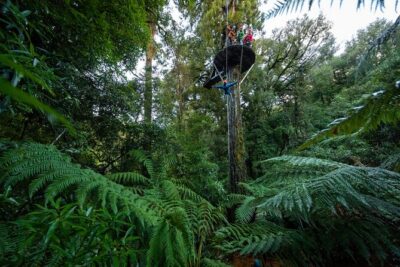
Rotorua’s Ultimate Zipline: 6 ziplines, 400 m Tandem, Cliff Walk
Read our review →
Rotorua Rafting: Kaituna River White Water Rafting & Free Sauna
Read our review →
Cultural Experience & Seasonal Māori Cuisine at Te Pā Tū
Read our review →
Mitai Maori Village Cultural Experience in Rotorua
Read our review →
Te Pa Tu Māori Cultural Experience with Dinner
Read our review →Browse the lists this tour appears in