
Reviewed · ROTORUA TOURS
Rotorua: Hell’s Gate Geothermal Walk
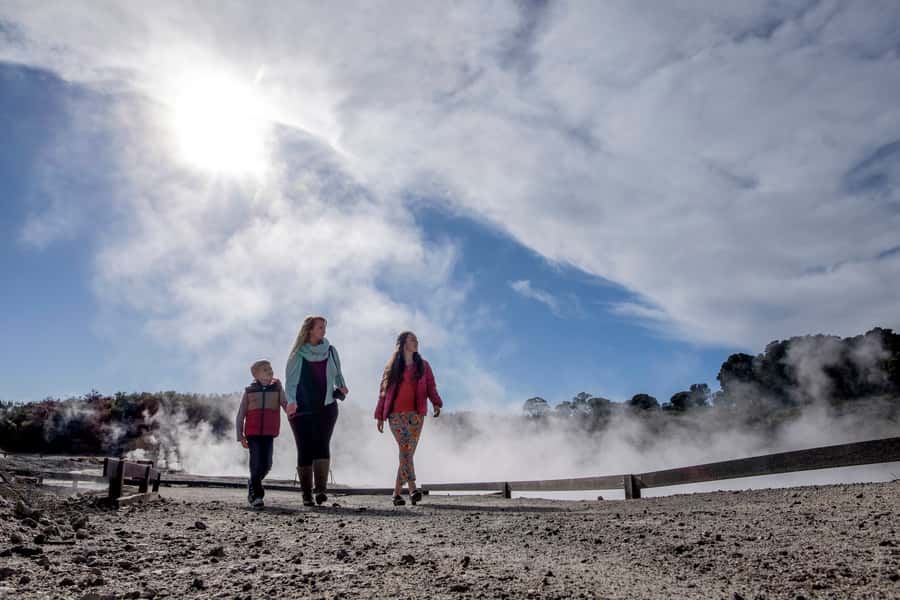
Hell’s Gate is Rotorua’s most active geothermal park, and its appeal lies in the raw, slightly intimidating feel of the place. You walk past boiling pools, steaming fumaroles, sulfur deposits, a large active mud volcano, and hot waterfalls, often with bush growing right beside the heat.
I like the strange mix of geology and vegetation, and I like that you can choose between a self-guided walk and a local guide. The main drawback is the sulfur smell, which can be strong, and the site is not suitable for people with mobility impairments.
Key points to know before you go
- The 2-kilometer route takes about an hour: The walk is manageable, but it is outdoors on geothermal ground.
- The guided walks run at 10:30 AM and 2:30 PM: The map makes the self-guided option easy when those times do not fit.
- You see Rotorua’s largest active mud volcano: Boiling pools, hot-water lakes, fumaroles, sulfur crystals, and hot waterfalls fill the route.
- The sulfur smell is part of the experience: It can resemble rotten eggs and may be hard for very young children.
- Māori carving and a mud foot pool may be available: These extras depend on availability, and carving is for children aged 12 and over.
- The listed price is $26 per person, but entry is not included: Check the final total carefully before booking.
Hell’s Gate, where the ground never seems fully quiet
Hell’s Gate Geothermal Reserve, also called Tikitere, sits about 15 minutes east of central Rotorua. From town, take State Highway 30, pass the airport, turn toward Whakatane, and continue about 3 kilometers to the reserve.
The setting changes quickly once you leave Rotorua. You are not simply looking at a few neatly arranged hot pools. The reserve spreads across a working geothermal field, with steam drifting from the ground and water moving through pools and channels. It feels less polished than some geothermal parks, which is part of its appeal.
The name Hell’s Gate is easy to understand. Sulfur hangs in the air, mud bubbles without much warning, and the heat underfoot is a constant reminder that this is an active volcanic area. You should stay on the marked route and pay attention to barriers. The boiling mud and hot water are not theatrical effects.
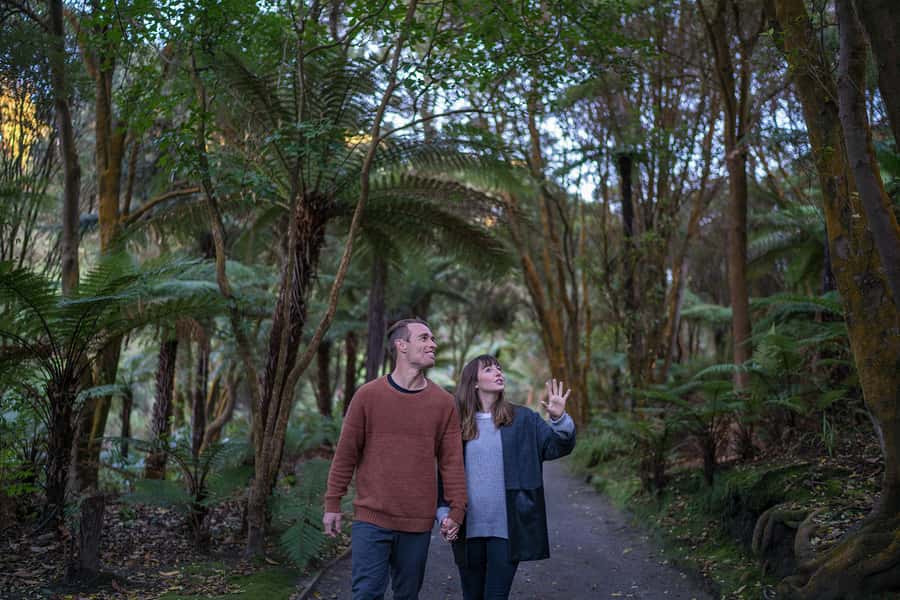
This is also a place of contrasts. The geothermal ground can look harsh and bare, yet sections of bush and vegetation grow nearby. That change from steaming earth to green forest gives the walk more variety than a simple circuit of hot pools.
More Walking Tours in Rotorua
- Rotorua’s Ultimate Zipline: 6 ziplines, 400 m Tandem, Cliff Walk
★ 5.0 · 2,557 reviews - Rotorua: Hell’s Gate Outdoor Mud Spa & Guided Walk
★ 4.7 · 1,140 reviews - Volcanic Valley Self Guided Walking and Hiking at Waimangu
★ 4.5 · 248 reviews
Following the one-hour geothermal route
The walking route takes roughly one hour and covers about 2 kilometers. You receive a map with descriptions of the main features, so you can move at your own pace and stop whenever a pool or plume catches your eye.
That self-guided format works well if you have limited time. You are not tied to a group, and the written information gives you enough background to understand what you are seeing. The map also helps you keep track of the route, which matters because the geothermal field contains many similar-looking pools and steaming areas.
The walk is not a demanding hike, but you should wear comfortable shoes. The reserve is outdoors and the surface can be uneven. People who have trouble walking should choose another activity, since the experience depends on completing the geothermal route on foot.
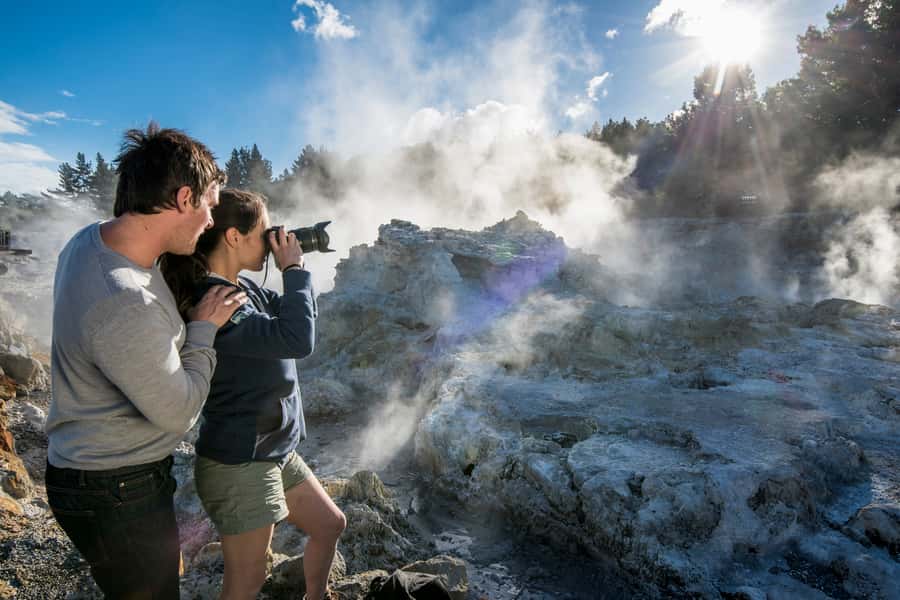
Take your time near the quieter sections. The most obvious sights are the boiling pools and the mud volcano, but the smaller details help explain how the field works. Look for sulfur crystals and mineral deposits around the pools. Watch how steam collects in low spots and how the water changes color from one area to another.
Do not expect a tall, dramatic geyser show. One useful detail is that Hell’s Gate does not have the hot-water geyser found at some other Rotorua geothermal attractions. Its strength is the overall geothermal setting, especially the mud, fumaroles, hot lakes, and unusual vegetation.
The active mud volcano and boiling pools
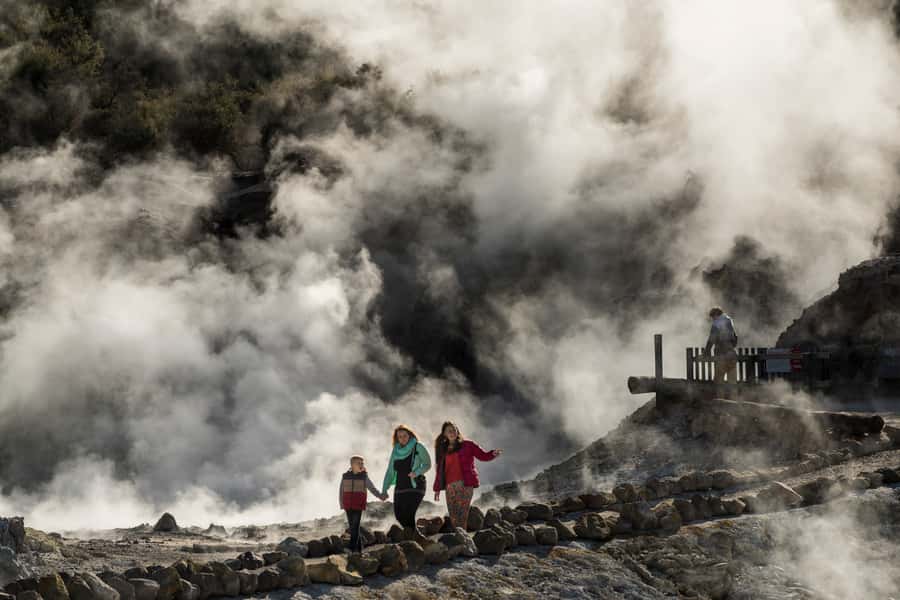
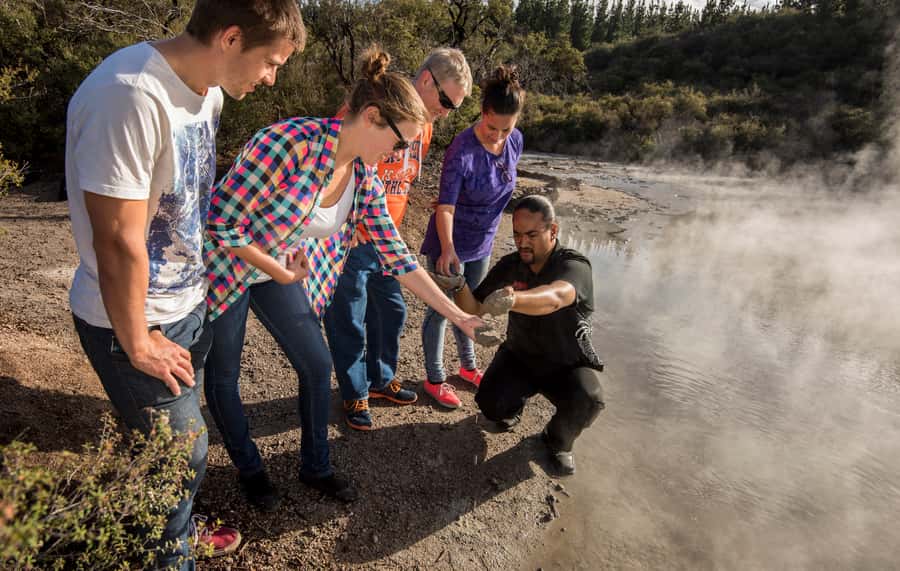
The largest active mud volcano in New Zealand is one of the main reasons to visit. It is not a classic cone with a neat plume. Instead, you see mud pushed and stirred by heat below the surface, giving the feature a restless, almost living quality.
The boiling pools require the same respect. Water can exceed 100 degrees Celsius, and the reserve uses marked paths and fences to keep you away from the most dangerous edges. One point worth keeping in mind is that the barriers may not feel especially high in every spot, so stay alert and keep children close.
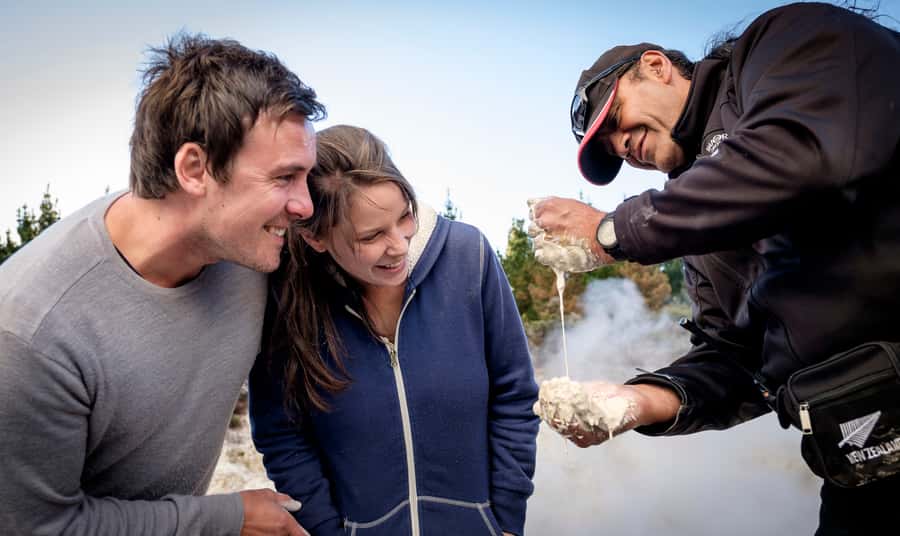
The guide can make these features easier to understand. At the scheduled guided walks, an English-speaking local guide explains the geothermal activity, the reserve’s past, and the meaning of the surrounding features. Guides named T, Liam, and Luke have been praised for their storytelling, humor, and clear explanations in past sessions.
That human element matters here. Without context, you might spend a few minutes looking at a pool and then move on. With a guide, you learn why the mud behaves differently from hot water, how sulfur forms around volcanic areas, and how Māori culture connects with the site. The most useful guided walks combine science, local history, and a bit of personality rather than simply naming each pool.
The guided walk is listed as lasting 1.5 hours, while the self-guided route takes about one hour. The schedule is limited to 10:30 AM and 2:30 PM, subject to availability. If you want the guide, plan your day around one of those times rather than assuming a guide will be available whenever you arrive.
Hot waterfalls, fumaroles, and the bush walk
Hell’s Gate has the Southern Hemisphere’s largest hot waterfalls, another feature that gives the reserve a strong sense of place. Hot water moving over a waterfall is unusual enough on its own, but the surrounding bush makes the sight more memorable.
The vegetation section is one of the better parts of the route because it breaks up the geothermal sights. You move between steaming ground and living forest, seeing how plants occupy a place shaped by heat and minerals. It also gives you a cooler, more natural stretch after the open geothermal plain.
Steaming fumaroles add another layer. These vents release heat and gases from underground, and they can make the field feel active even when a pool is not bubbling dramatically. You may notice the sound of steam, the smell of sulfur, and residue around the vents.
Bring water, sunscreen, sunglasses, and clothing suited to the weather. The reserve operates in rain as well as sunshine, and wet weather can actually make the geothermal features look more dramatic as steam rises against the cooler air. Pack a rain jacket or rain cape. A rain cape is available to buy onsite, but it is not included.
More geothermal parks and hot pools:
- Rotorua: Wai-O-Tapu Geothermal Park Entry Ticket
★ 4.6 · 2,601 reviews - Rotorua: Hells Gate Outdoor Mud Bath & Spa Experience
★ 4.6 · 398 reviews - Wai-O-Tapu Thermal Wonderland, Rotorua, New Zealand
★ 4.5 · 379 reviews - Rotorua Lake: Deluxe Lake Spa Geothermal Hot Spring Bathing
★ 4.5 · 302 reviews
Why the sulfur smell matters
The smell is not a minor detail. Sulfur can be quite pungent, often like rotten eggs, and it stays with you through much of the walk. Most people find it bearable, but the intensity varies around the reserve.
If you are sensitive to strong smells, prepare for this before you book. Very young children may struggle with it, and the activity data recommends considering the issue. The smell is also a useful reminder that the geothermal activity here is real and active, not just a collection of warm pools designed for display.
Remove valuable jewelry before walking the route. Sulfur residue can tarnish gold and silver items, and this is an easy problem to avoid. That small precaution is not widely obvious when you arrive, so take care of it before entering the geothermal area.
Smoking and drones are not allowed. Those rules are sensible in a hot, gas-filled environment and help protect both visitors and the reserve.
Māori carving and the mud foot pool
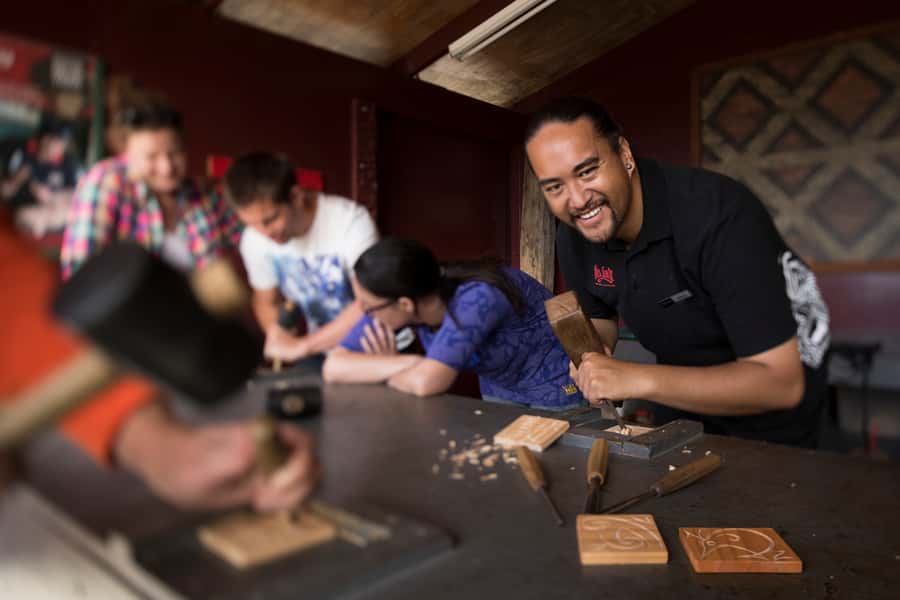
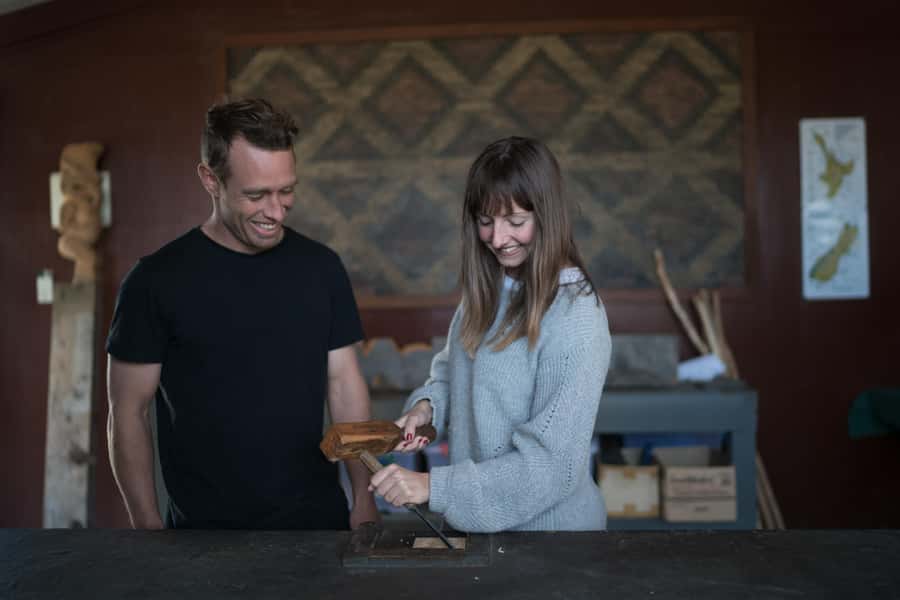
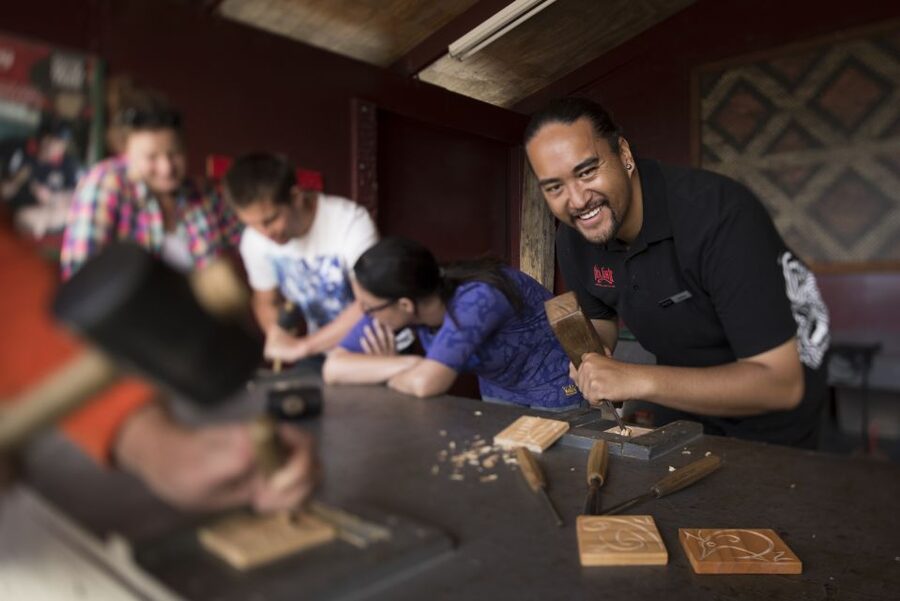
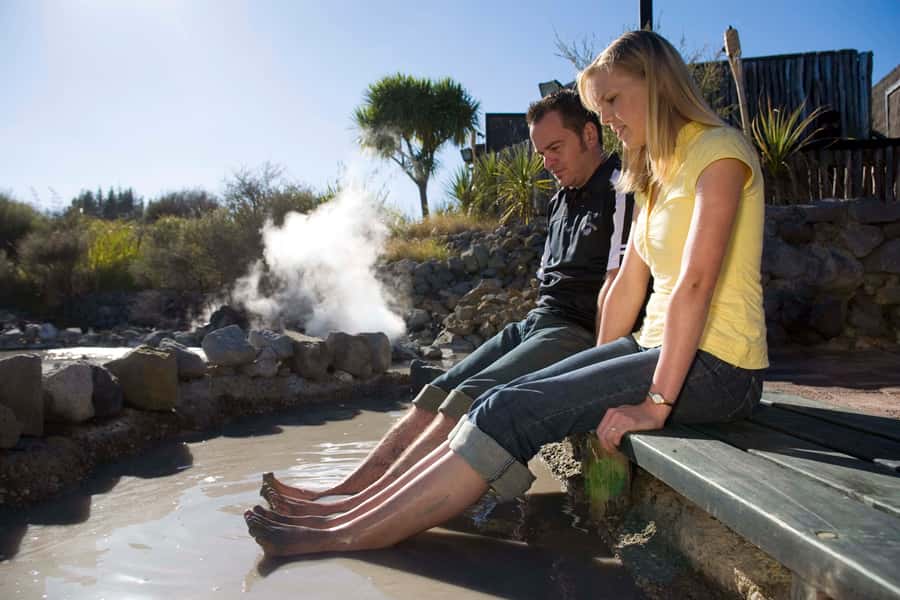
The experience can include a complimentary Māori carving activity and access to a mud foot pool, but both are subject to availability. These additions give the visit a cultural and hands-on finish rather than ending when you leave the last geothermal pool.
The carving activity is especially useful if you want more than a short nature walk. It offers a direct way to engage with Māori craft, and several people have found it a memorable part of the visit. Children must be at least 12 years old to participate in the carving.
Because these extras are not guaranteed, do not book the experience solely for them. Treat them as worthwhile additions to the geothermal walk. If they are available, allow enough time after the route rather than rushing off immediately.
The mud foot pool is another optional extra. The information provided does not give exact details about how long it lasts or what facilities are available, so ask staff onsite if you want to include it in your plans. If you use changing facilities, you may find that more seating would be helpful.
Choosing between the guide and the map
The self-guided option is the better choice if you want flexibility. The supplied map gives clear descriptions of the pools and other features, and the route is simple enough to follow. You can pause for photographs, move quickly through areas that interest you less, or linger beside the waterfall and bush.
I would choose the guided walk if this is your only geothermal visit in Rotorua or if you want cultural and geological context. The site is visually strong, but the explanations add meaning. The best guides bring humor and energy to what could otherwise become a series of similar-looking pools.
The schedule is the main limitation. Guided walks are available at 10:30 AM and 2:30 PM, subject to availability. If you arrive outside those times, you may need to use the map. Check the start times before paying if having a guide is important to you.
A self-guided walk is not a lesser experience. It simply puts more responsibility on you to read the information and notice the differences between the geothermal features. The route descriptions are considered adequate, although some visitors may want more detail.
Is $26 a fair price?
The listed price is $26 per person, but the details also state that the entry ticket is not included. That means you should check exactly what your booking covers before you commit. The included map, possible guided walk, and complimentary Māori carving add value, but availability affects how much you receive.
For a one-hour geothermal walk, the price is reasonable if you want a focused visit close to Rotorua. You are paying for access to a large active field with features that are not all found together at other sites: the mud volcano, hot waterfalls, fumaroles, sulfur deposits, and vegetated bush sections.
The value is better if you can join a guide or take part in the carving activity. If neither is available, the walk still works for someone who wants a short, independent geothermal stop. It may feel less worthwhile if you have already visited several Rotorua geothermal parks and are mainly seeking a dramatic geyser eruption.
The reserve is also convenient for a half-day plan. It is only about 15 minutes from central Rotorua by car, so you do not lose a full day getting there. A cafe onsite offers food and coffee, which can be welcome after walking in rain or strong sulfur fumes.
Free cancellation up to 24 hours before the activity and reserve-now-pay-later booking make it easier to fit into a changeable itinerary. These options are useful in Rotorua, where weather can affect how much you enjoy outdoor activities.
Who will enjoy Hell’s Gate most?
I would recommend Hell’s Gate to anyone curious about active volcanic ground and willing to accept a strong smell. It suits adults, older children, photographers, and people who prefer a walk with room to explore rather than a tightly staged attraction.
It is particularly good for you if:
- You want to see boiling mud rather than only hot-water pools.
- You enjoy learning how geology and Māori culture connect.
- You have about one to two hours available near Rotorua.
- You like taking photographs of unusual textures, steam, mineral colors, and waterfalls.
- You prefer a self-guided route but would like a guide option at set times.
I would be cautious about recommending it to people with mobility impairments, since the walking route is essential. I would also explain the sulfur smell to families with very young children before booking.
Bring comfortable shoes and weather-appropriate clothing. Sunglasses, sunscreen, and water are practical in all conditions, while rain protection is especially important. Do not wear jewelry you care about, and keep your phone or camera secure near the marked viewpoints.
Should you book this geothermal walk?
Book Hell’s Gate if you want Rotorua’s geothermal activity in its messier, more natural form: bubbling mud, hot water, sulfur, steam, and bush all in one walk. The active mud volcano and hot waterfalls give it a clear identity, while the map makes the visit easy to manage on your own.
Choose the guided option at 10:30 AM or 2:30 PM if you want the geology and Māori connections explained by a local guide. Choose the self-guided route if your schedule is tight or you prefer to walk quietly and take photographs.
Skip it if strong sulfur smells bother you, if you need a fully accessible attraction, or if your main goal is a famous erupting geyser. For everyone else, Hell’s Gate offers a compact and unusual look at Rotorua’s volcanic character, with carving and a mud foot pool available when conditions allow.
FAQ
How long does the Hell’s Gate geothermal walk take?
The self-guided geothermal route takes about one hour and covers roughly 2 kilometers. The guided tour is listed as lasting 1.5 hours.
What time are the guided tours?
Guided walks are available at 10:30 AM and 2:30 PM, subject to availability. The live tour guide speaks English.
Can I visit Hell’s Gate without joining a guide?
Yes. You can explore independently using the map provided at the reserve. The self-guided route takes about one hour.
What can I see at Hell’s Gate?
The reserve includes New Zealand’s largest active mud volcano, boiling hot pools, hot-water lakes, steaming fumaroles, sulfur crystals and deposits, hot waterfalls, and examples of land coral.
Is Māori carving included?
A complimentary Māori carving activity may be available, but it is subject to availability. Children must be aged 12 or over to take part.
Is Hell’s Gate suitable for people with mobility impairments?
No. The activity is listed as unsuitable for people with mobility impairments because the geothermal route requires walking.
What should I bring to Hell’s Gate?
Bring comfortable shoes, sunglasses, sunscreen, water, and clothing suited to the weather. The activity operates in all weather, and rain capes are available to purchase onsite.
Newly listed around Rotorua
- Rotorua: White Island, Mount Tarawera & Waimangu Volcanic …★ 4.4 · 5 reviews
- Whirinaki Forest Footsteps: Māori Guided Tour, Picnic & Transfer★ 5.0 · 5 reviews
- Rotorua: Lake View Private Pools Experience★ 4.3 · 6 reviews
- Rotorua: Floatplane Flight with Orakei Korako Landing★ 5.0 · 6 reviews
- Raceline Karting at Off Road NZ★ 5.0 · 6 reviews
- Epic Tandem Kayak Tour down the Kaituna River Waterfalls★ 5.0 · 6 reviews
- From Rotorua: Whirinaki Rainforest Guided Cultural Tour★ 5.0 · 6 reviews
- Rotorua: Evening Starlight Gourmet Kayak Tour with dinner★ 5.0 · 6 reviews
Rotorua Tours, compared.
Rotorua Canopy Tours: 2.5Hour Native Forest Zipline Adventure
Read our review →
Mitai Maori Village: Cultural Experience and Dinner Buffet
Read our review →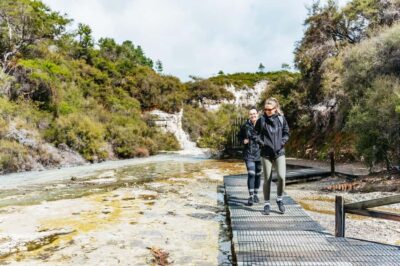
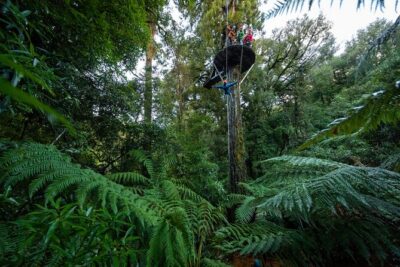
Rotorua’s Ultimate Zipline: 6 ziplines, 400 m Tandem, Cliff Walk
Read our review →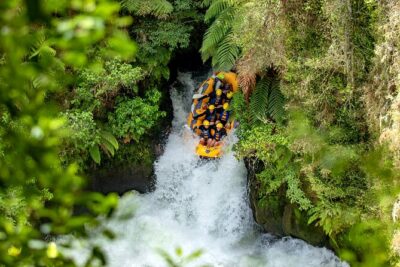
Rotorua Rafting: Kaituna River White Water Rafting & Free Sauna
Read our review →
Cultural Experience & Seasonal Māori Cuisine at Te Pā Tū
Read our review →
Mitai Maori Village Cultural Experience in Rotorua
Read our review →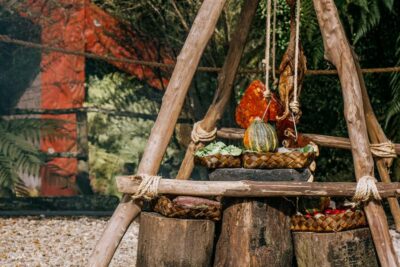
Te Pa Tu Māori Cultural Experience with Dinner
Read our review →Browse the lists this tour appears in