
Reviewed · ROTORUA TOURS
Rotorua Hiking: Mt Tarawera Guided Volcanic Crater Experience
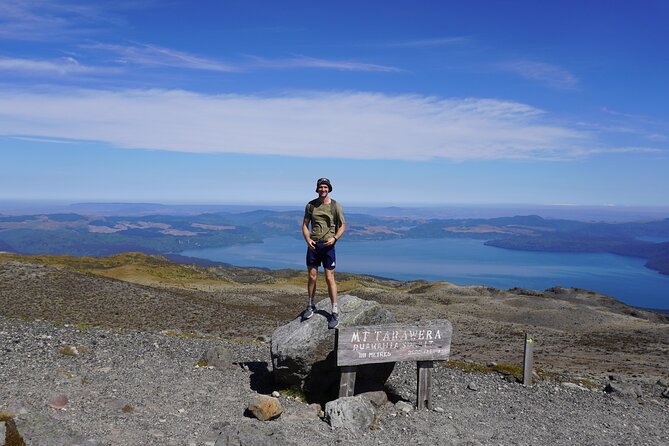
Mt Tarawera is not a gentle viewpoint stroll. It is a raw volcanic hike with steep, loose sections, strong wind, and a memorable optional slide down into the crater. At the top, you get 360-degree views across the central North Island and down toward Waimangu Volcanic Valley.
I like the small-group feel, with no more than 20 people, and the way the guides combine geology with Māori stories and local history. Hotel pickup also saves you the trouble of finding a remote trailhead. The main caution is simple: good boots and reasonable fitness matter, and anyone uneasy with heights may find the descent uncomfortable.
Key points at a glance
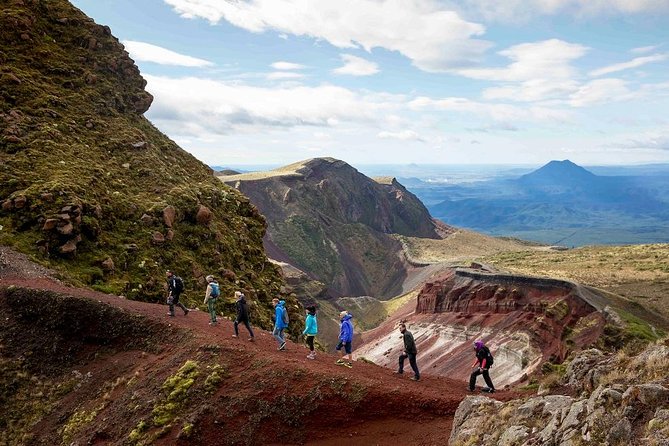
- A real crater walk: You hike from the mountain base to the rim, then may scree-run into the volcanic crater.
- A powerful eruption story: The June 10, 1886 eruption destroyed the Pink and White Terraces and helped create Waimangu Volcanic Valley.
- Guides add meaning: Guides including Dan, Chucky, Deborah, Jesse, Hauri, Jack, and others explain geology, Māori culture, and the mountain’s connection to the area.
- Expect loose volcanic rock: Scoria can enter your boots and scratch your ankles, so wear higher socks and proper hiking footwear.
- Weather shapes the day: Wind, cold, and cloud can change the views and make the exposed sections harder.
- Good value for an active half-day: At $121.01 per person, the price includes transport, guiding, and about four and a half hours on the experience, but not lunch.
Why Mt Tarawera feels different from a normal Rotorua hike
Rotorua is famous for bubbling mud, steaming pools, and sulphur-scented geothermal parks. Mt Tarawera gives you a very different view of the same volcanic region. Here, you walk on the remains of a major eruption, moving through bush, volcanic ash, scoria, and crater slopes rather than along a neatly marked boardwalk.
The mountain erupted on June 10, 1886. That event reshaped the area and destroyed the famous Pink and White Terraces, once regarded as one of New Zealand’s great natural wonders. It also created Waimangu Volcanic Valley, described as the world’s youngest geothermal valley.
That story makes the hike more than a workout with a view. You are seeing the physical results of a violent event while hearing how the eruption affected the area and its people. The guides also bring Māori cultural knowledge and a sense of connection to the maunga, or mountain. Chucky, Dan, Daniel, Jesse, Hauri, Jack, and other members of the guiding team have received particular praise for making the history and cultural side easy to follow.
I would choose this experience if you want to understand why Rotorua looks and feels the way it does. If you only want a short, easy walk, this is the wrong choice.
More Hiking Tours in Rotorua:
- Volcanic Valley Self Guided Walking and Hiking at Waimangu
★ 4.5 · 248 reviews - Rotorua: Kaituna Rafting & Mt. Tarawera Guided Hike Combo
★ 4.5 · 11 reviews - Franz Josef Glacier Heli-Hike
★ 4.5 · 618 reviews
Pickup from Rotorua and the rough road to the mountain
The tour includes free pickup and drop-off from your Rotorua hotel or motel. The exact pickup arrangements should be confirmed before the day, especially if you are staying somewhere with a complicated entrance or if the pickup point changes to a nearby coffee shop.
From the meeting point, the journey heads toward the mountain and into bush country. The final road is a rough 4WD track. Some people enjoy this part as a small off-road adventure, but the ride can be bumpy and the vehicle may not be the rugged jeep-style transport you picture from the advertising.
That distinction matters. You are not simply being driven to a paved trailhead. The road helps explain why pickup and transport are useful, since getting there independently would be less straightforward. It also means you should expect a practical, sometimes jostling ride rather than a polished sightseeing transfer.
There is a portable toilet stop before the hike begins. Use it. Facilities are limited once you set off.
Kaitiaki Adventures and the start of the walk
The itinerary begins with Kaitiaki Adventures, the local operator running the experience. After transport and a briefing, the group continues toward the mountain through the Rerewhakaaitu area and along Bretts Road toward the camping area used as part of the route.
The group limit is 20 people. That is not an expedition-sized crowd, though the feel of the walk will depend on how many people book your departure. Smaller groups can make it easier to ask questions, hear stories, and get individual help on the steeper ground.
The guides set the pace and stop for rests and photos. This is useful if your group includes people with different levels of fitness. Guides have been praised for waiting patiently, helping people over difficult sections, and avoiding exposed areas during severe wind gusts.
Still, do not confuse a patient guide with an easy trail. The mountain remains steep and loose in places. The guide can help you manage the route, but you still need to be able to walk uphill and handle uneven ground.
The volcanic route to the crater rim
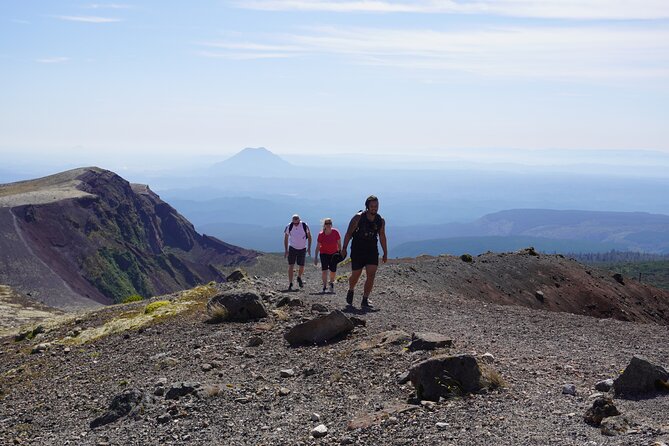
The walk uses short sections of varied terrain rather than one long, steady climb. You move through winding trails from a high point near the mountain and across volcanic ground, with breaks that give you time to catch your breath and look around.
The most demanding parts are the uphill sections and the talus, or loose rock, slopes. Scoria can shift beneath your feet, making balance more important than speed. One practical tip is to wear higher socks. Small volcanic stones can work their way into your boots and rub or cut the skin around your ankles.
Good hiking shoes are strongly recommended. Several people completed the route in trainers, but that does not mean trainers are the best choice. One person had been told that casual athletic shoes would be sufficient, then slipped on the scree and had to leave the hike. The operator offers boot hire during the booking process, so consider that option if your footwear is doubtful.
You also need clothing for changing conditions. The summit can be cold and windy, even when Rotorua feels mild. Early autumn conditions have been described as especially brisk. Bring water and dress in layers. Lunch is not included, so eat beforehand or bring food for after the walk, according to the operator’s instructions.
A few more Rotorua days to compare
- Rotorua Canopy Tours: 2.5Hour Native Forest Zipline Adventure
★ 5.0 · 4,563 reviews - Mitai Maori Village: Cultural Experience and Dinner Buffet
★ 4.7 · 3,575 reviews - Rotorua: Wai-O-Tapu Geothermal Park Entry Ticket
★ 4.6 · 2,601 reviews - Rotorua’s Ultimate Zipline: 6 ziplines, 400 m Tandem, Cliff Walk
★ 5.0 · 2,557 reviews
Reaching the rim and looking across Waimangu
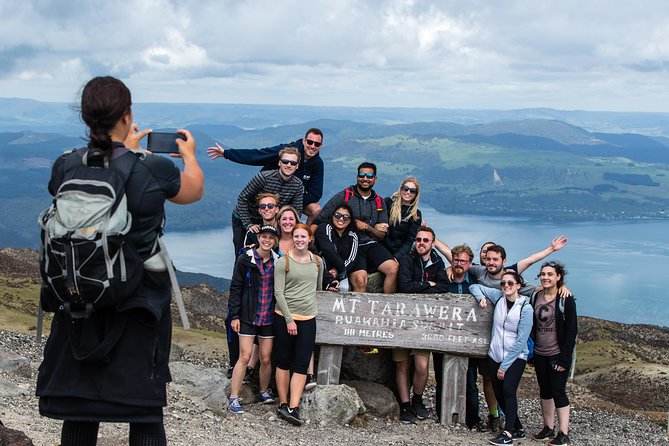
The reward for the climb is the view from Mt Tarawera. From the crater rim, you can look across the broken volcanic forms of the mountain and toward Waimangu Volcanic Valley. On a clear day, the 360-degree panorama is the central event of the trip.
Weather is the big variable. Cloud or wind can reduce the view, and the exposed upper sections can feel much tougher in poor conditions. This is not a flaw in the mountain, but it is worth understanding before you book. A tour scheduled for a morning or afternoon departure may still encounter very different conditions from one day to the next.
The view also gives the eruption story a physical setting. Instead of hearing about Waimangu as a separate Rotorua attraction, you can see how the mountain and valley belong to the same volcanic story. The guides explain the rock types and the forces that shaped the area, adding useful context to what might otherwise look like a collection of red, grey, and black slopes.
I particularly like this part of the tour because it rewards both curiosity and effort. The scenery is striking, but it feels more meaningful when you understand what happened here.
The optional scree run into the crater
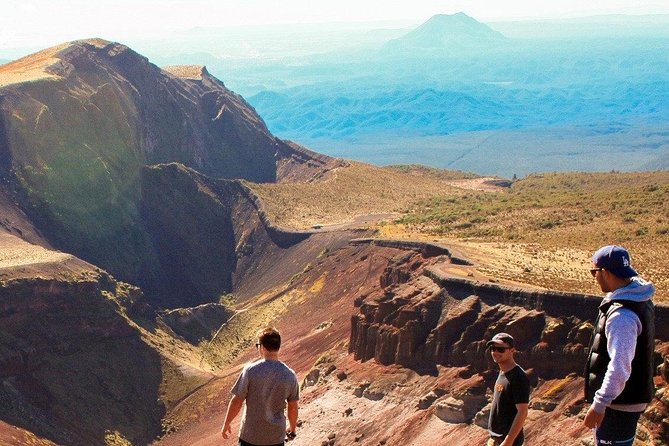
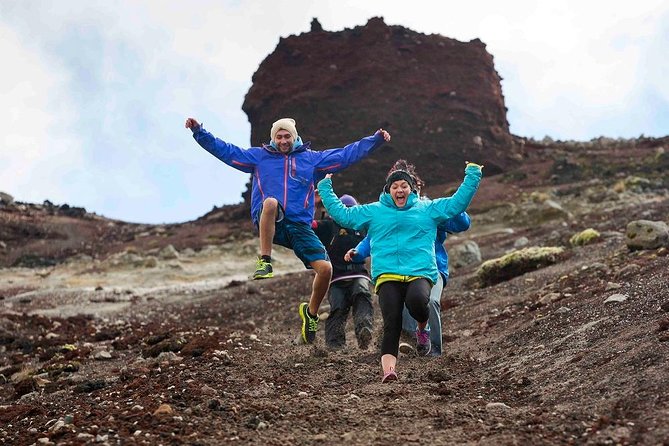
The optional scree run is the most unusual feature of the experience. From the crater rim, you can slide or run down the loose volcanic stones toward the heart of the crater. People describe it as great fun, but it is not compulsory.
This activity is also where footwear, balance, and comfort with steep ground matter most. Loose pebbles move underfoot, and the return route can be uneven and steep. If you are afraid of heights, the descent may be more worrying than exciting.
Do not feel pressured to take part. The crater view and the guided walk are worthwhile without the scree run. If you do choose it, follow the guide’s instructions and move at a pace you can control. The experience is adventurous, not a competition.
The optional nature of the run is a plus for mixed groups. More confident walkers can enjoy the playful descent, while others can stay with the guide and take in the crater from a safer position.
The guides are a major part of the experience
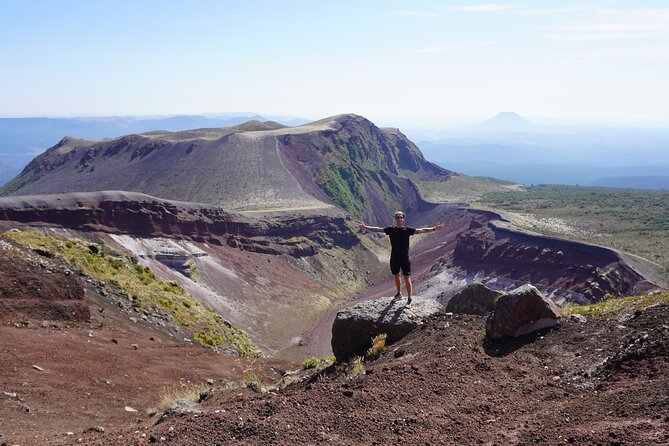
The guiding team is the strongest reason to book this as a guided walk rather than attempt to find your own route. You get route support, but the human side matters just as much.
Guides such as Dan and Daniel have been praised for their patience and personal manner. Chucky has been singled out for sharing Māori history and cultural knowledge, while Jesse and Hauri have been noted for keeping the walk fun and well paced. Jack, Deborah, AJ, Frank, Napier, Jacky, and Jonathan have also led departures described as friendly, helpful, and engaging.
Guide names can change by date, so do not book expecting one particular person unless the operator confirms it. What you can reasonably expect is a professional Kiwi guide who explains the mountain, watches the weather, and helps the group handle the more difficult ground.
This cultural element is important. Mt Tarawera is not simply a geological object. The guides connect the mountain to local people, stories, and Māori relationships with the land. That makes the walk feel more grounded and respectful than a quick climb focused only on taking photographs.
How hard is the 4.5-hour hike?
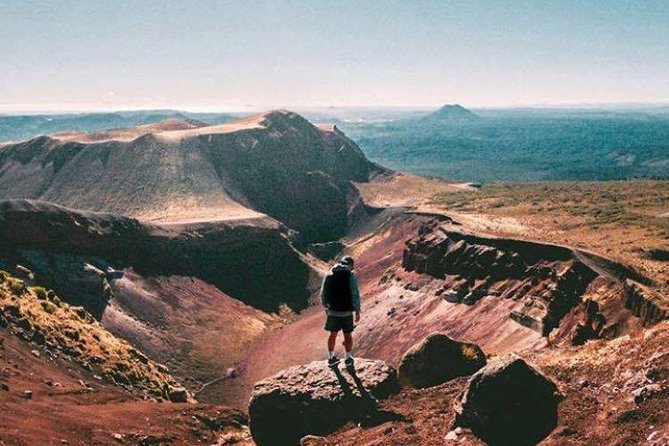
The activity is best described as moderate to challenging, depending on your coordination, fitness, and comfort with steep or loose ground. The overall duration is about four and a half hours, but that includes transport and the full guided experience, not four and a half hours of nonstop climbing.
You should be comfortable walking uphill, stepping across uneven surfaces, and descending on loose scoria. The route includes breaks, and guides can offer encouragement and assistance, but it is not suitable for someone looking for a flat nature walk.
If you are moderately fit and have some hiking experience, the route should be manageable, though you may still find it strenuous. The uphill work can burn your legs, and the descent may require care even if you find the climb easy.
Height is another consideration. The route is not described as a technical climb, but some sections feel exposed and the return from the crater can be steep. If heights make you nervous, ask the operator for a clear description of current conditions before booking.
Is $121.01 good value?
At $121.01 per person, this is not the cheapest activity around Rotorua. The price becomes easier to justify when you count the included hotel pickup, 4WD transport, professional guiding, cultural interpretation, geology, and access to a remote volcanic site.
You are paying for a guided experience rather than a simple entry ticket. There is no lunch included, and the transport may be basic rather than luxurious. One poor experience also raised concerns about a vehicle problem and a late arrival, though the operator said the vehicle issue was fixed and that newer 4WD vehicles were being used.
For me, the value is strongest if you want three things at once: an active half-day, a major volcanic viewpoint, and a guide who can explain the region. If you only want scenic photos, the price may feel high. If you value the stories, transport, and route support, it is a fair cost for a distinctive Rotorua outing.
The maximum group size of 20 is worth noting. A smaller departure will likely feel more personal, while a full group may make the pace and stops feel less flexible.
Morning or afternoon departure?
You can choose a morning or afternoon tour. That makes it easier to fit Mt Tarawera around Rotorua’s other activities, including geothermal parks and cultural experiences.
Think about the weather and your energy. An early departure may suit you if you want to hike before a full day of sightseeing. An afternoon departure can work well if you prefer a slower morning, but you should still allow enough time for pickup, the rough road, the walk, and the return journey.
The mountain can be windy and cold at the top at any time of day. Bring a warm layer regardless of the forecast in Rotorua. Conditions on the mountain can differ from those in town.
The operator requires good weather. If poor weather cancels the tour, you are offered another date or a full refund. You can cancel for a full refund if you do so at least 24 hours before the start time. Cancellations or changes inside 24 hours are not refunded or accepted.
Who should book Mt Tarawera?
I would recommend this experience to you if:
- You want a memorable active outing beyond Rotorua’s main geothermal parks.
- You are moderately fit and comfortable with uneven volcanic ground.
- You like learning about geology, Māori culture, and local events from a guide.
- You enjoy wide views more than polished facilities.
- You are curious about trying an optional scree run.
- You prefer having transport and route support arranged for you.
I would think twice if you dislike bumpy 4WD rides, need an easy walking surface, have poor footwear, or feel uneasy on steep descents. The experience is also weather dependent, so flexible plans help.
Families and mixed-age groups may manage it well if everyone understands the physical demands. The guides can provide support, but each person needs enough fitness and coordination to handle the trail.
What to wear and bring
Keep your packing simple but practical:
- Hiking boots or sturdy hiking shoes with a good sole
- Higher socks to keep scoria away from your ankles
- Water
- Warm layers for wind and cold
- Food if you need something during or after the outing, since lunch is not included
- A mobile phone for your ticket and photos
Avoid treating this as a trainers-and-jeans excursion. Some people have managed in sneakers, but loose rock makes proper footwear the safer choice. If you are unsure, ask about boot hire during booking.
Should you book this Mt Tarawera experience?
Book it if you want Rotorua’s volcanic story delivered in person, with a real climb, open views, and a guide who adds cultural meaning to the route. The crater, the 1886 eruption story, and the optional scree run make this far more memorable than a standard lookout walk.
Skip it if you want an easy stroll or dislike heights and loose ground. For the right person, the $121.01 cost is reasonable because it covers transport, guiding, and access to a remote mountain experience. Just arrive prepared for wind, bumps, uphill effort, and volcanic stones in your boots.
FAQ
How long does the Mt Tarawera experience last?
The experience lasts approximately 4 hours and 30 minutes.
Is hotel pickup included?
Yes. Free pickup and drop-off from your Rotorua hotel or motel are included.
What happened during the Mt Tarawera eruption?
Mt Tarawera erupted on June 10, 1886. The eruption destroyed the Pink and White Terraces and created Waimangu Volcanic Valley.
Is lunch included?
No. Lunch is not included in the tour price.
How many people can join the tour?
The activity has a maximum group size of 20 people.
Do I need to be fit for the hike?
Yes. A moderate level of physical fitness is required. The route includes uphill walking, uneven ground, loose scoria, and a steep descent in places.
Is the scree run into the crater required?
No. The scree run into the crater is optional.
What happens if bad weather cancels the tour?
If poor weather causes cancellation, you can choose another date or receive a full refund.
Newly listed around Rotorua
- Rotorua: White Island, Mount Tarawera & Waimangu Volcanic …★ 4.4 · 5 reviews
- Whirinaki Forest Footsteps: Māori Guided Tour, Picnic & Transfer★ 5.0 · 5 reviews
- Rotorua: Lake View Private Pools Experience★ 4.3 · 6 reviews
- Rotorua: Floatplane Flight with Orakei Korako Landing★ 5.0 · 6 reviews
- Raceline Karting at Off Road NZ★ 5.0 · 6 reviews
- Epic Tandem Kayak Tour down the Kaituna River Waterfalls★ 5.0 · 6 reviews
- Rotorua: Evening Starlight Gourmet Kayak Tour with dinner★ 5.0 · 6 reviews
- From Rotorua: Whirinaki Rainforest Guided Cultural Tour★ 5.0 · 6 reviews
Rotorua Tours, compared.
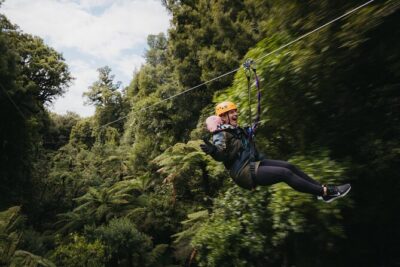
Rotorua Canopy Tours: 2.5Hour Native Forest Zipline Adventure
Read our review →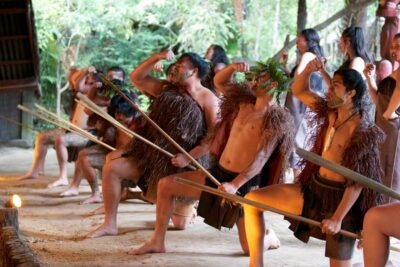
Mitai Maori Village: Cultural Experience and Dinner Buffet
Read our review →
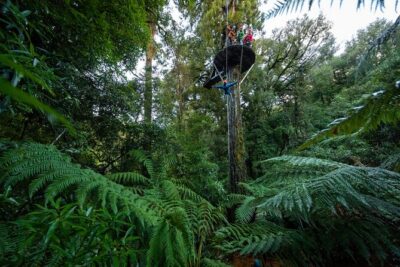
Rotorua’s Ultimate Zipline: 6 ziplines, 400 m Tandem, Cliff Walk
Read our review →
Rotorua Rafting: Kaituna River White Water Rafting & Free Sauna
Read our review →
Cultural Experience & Seasonal Māori Cuisine at Te Pā Tū
Read our review →
Mitai Maori Village Cultural Experience in Rotorua
Read our review →
Te Pa Tu Māori Cultural Experience with Dinner
Read our review →Browse the lists this tour appears in