
Reviewed · MOUNT COOK & LAKE TEKAPO TOURS
Mount Cook: 3 Hour Heli Hike to the Tasman Glacier
A helicopter drops you onto the Tasman Glacier, where the ground rolls and folds beneath your boots instead of lying flat like a normal trail. After the landing, you spend about two hours walking among ice formations beneath Aoraki, New Zealand’s highest mountain, and Mount Tasman.
I like the combination of a scenic flight over the Southern Alps and a proper guided walk on the ice. I also like the small group limit of 10, plus the careful equipment fitting and safety work reported by several people who joined the trip.
The main consideration is weather. A cloudy or snowy day can reduce the views and limit access to ice caves and formations. At $564 per person, this is a major splurge, so you need flexible plans and a reasonable level of fitness.
Key details before you book
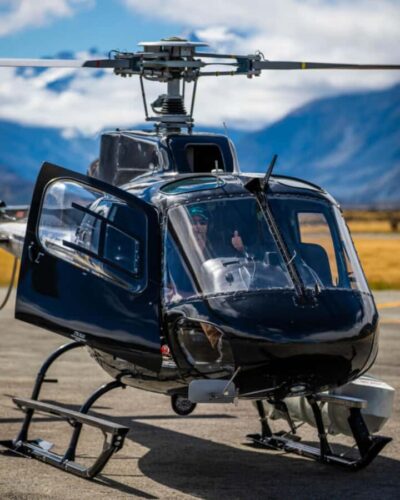
- Fly onto the Tasman Glacier: The helicopter ride gives you views of Tasman Glacier Lake, snow-covered peaks, and the glacier from above before you ever put on crampons.
- Walk for about two hours: This is more than a photo stop, but it is a guided glacier walk rather than a hard mountaineering expedition.
- See Aoraki’s Hochstetter Icefall: The return flight passes near the huge icefall on the eastern face of Aoraki.
- Small groups help: A maximum of 10 participants makes it easier for the guide to watch the group and explain the ice.
- Weather controls the day: Snow, rain, cloud, and wind can change the route, the views, and the chance of entering ice caves.
- Allow extra time at check-in: The stated tour length is three hours, but you should allow at least 45 minutes after check-in for the briefing and equipment fitting.
Why this Tasman Glacier flight feels different
A standard scenic flight lets you look at the Southern Alps through a helicopter window. This experience adds the part that makes the glacier real: you step out onto it.
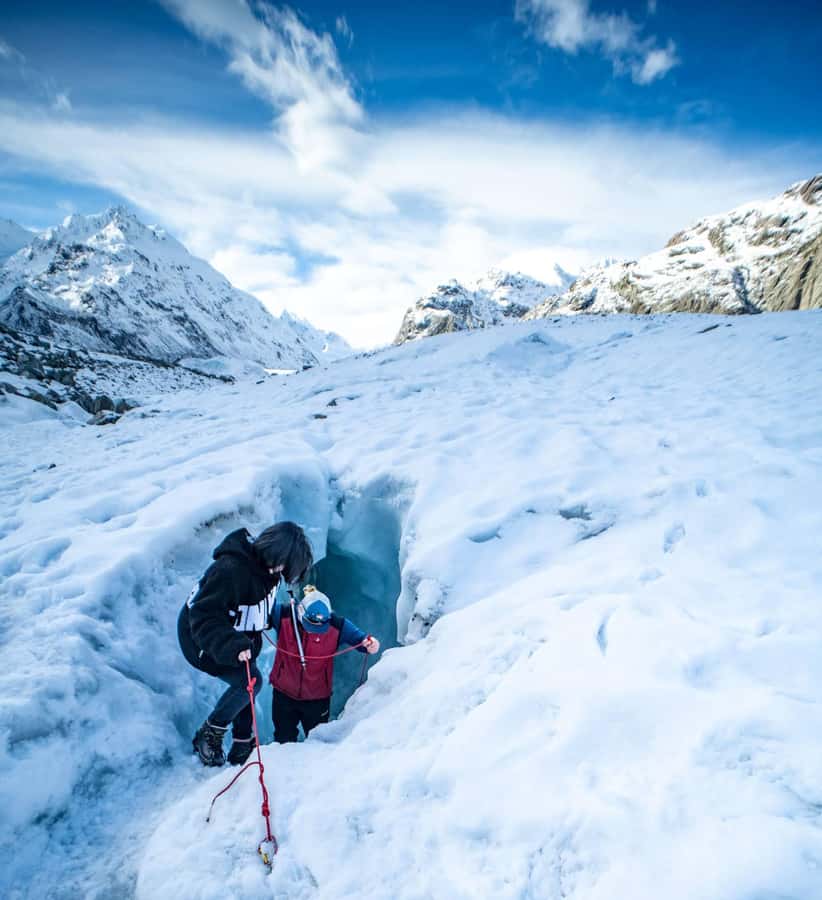
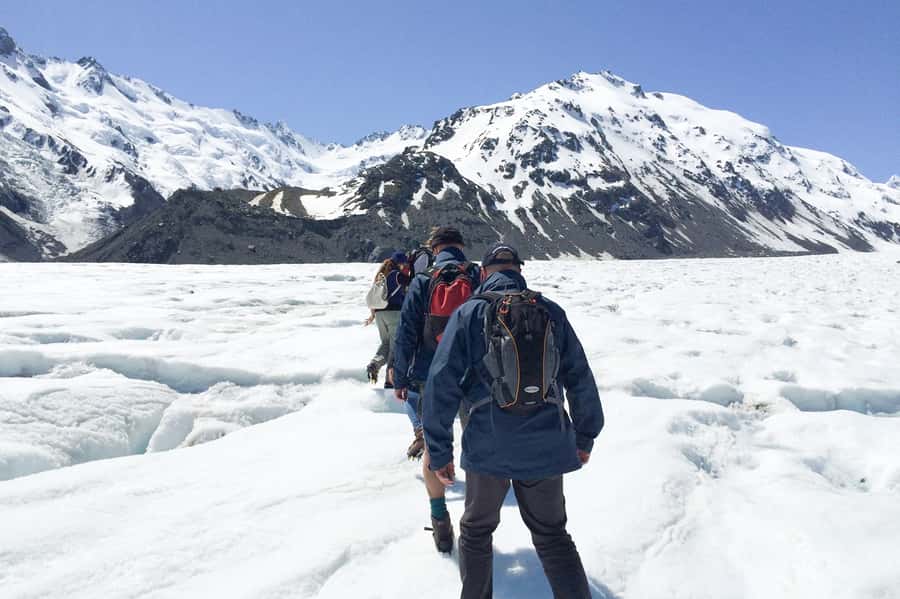
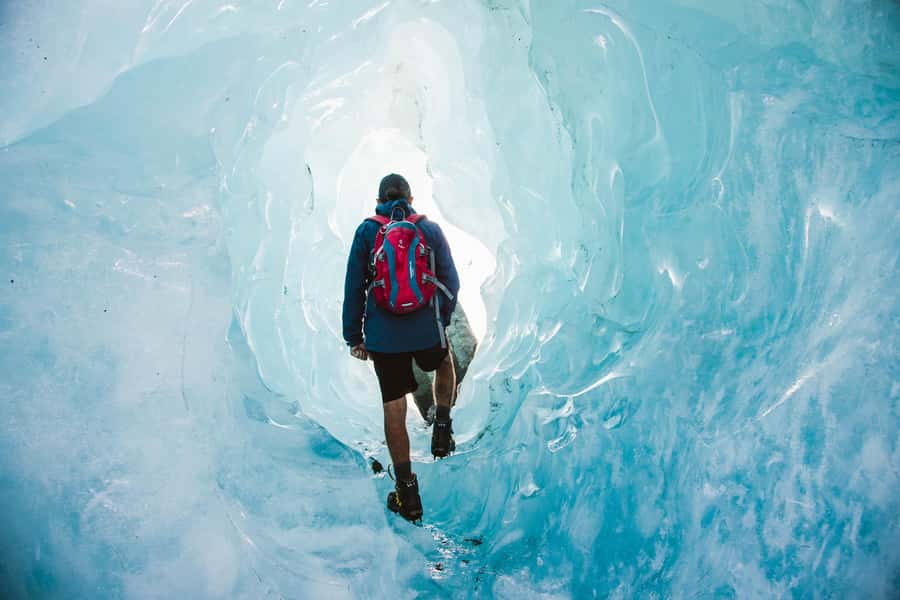
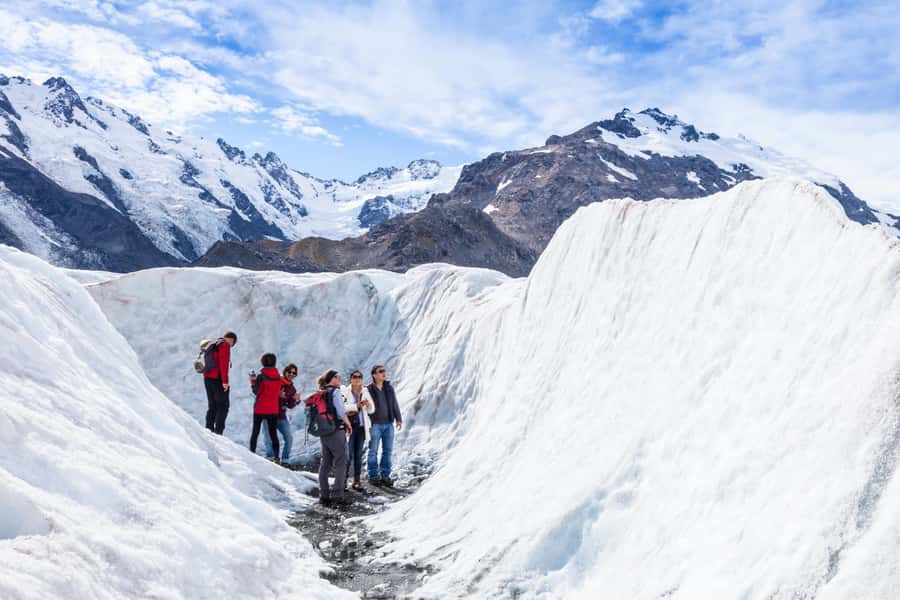
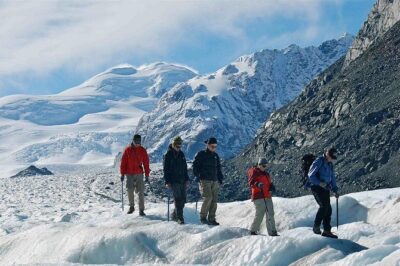
The Tasman Glacier is not presented as a smooth white runway. You walk over undulating ice terrain, with snow, ridges, hollows, and changing formations underfoot. Your guide chooses a safe section and shows you how to move with glacier boots and crampons. Depending on recent snow and the conditions that day, you might see ice caves, seracs, crevasses, or other sculpted forms.
That variety is important. A glacier is always changing, and the exact walk cannot be promised months ahead. Heavy snowfall limited the ice features on one visit, while another group was able to enter a large ice cave. You should book this for the overall glacier experience, not for one specific cave or photograph.
The setting does much of the work. Aoraki and Mount Tasman rise around the upper Tasman region, while the glacier stretches through Aoraki/Mount Cook National Park. The flight puts the scale into perspective, then the hike lets you notice small details in the ice that you would miss from the air.
More glacier walks and heli hikes:
- The Adventurer: Tasman Glacier Heli-hike
★ 5.0 · 92 reviews - Glentanner High Country Heli Hike
★ 5.0 · 52 reviews - Mount Cook: 3-Hour Tasman Glacier Heli-Hike
★ 4.5 · 29 reviews
Starting at Mount Cook Airport
The meeting point is upstairs in the Mount Cook Airport building. Hotel pickup and drop-off are included in Mount Cook Village, which is useful if you are staying locally and do not want to arrange separate transport.
Your requested booking time is the check-in time, not the moment the helicopter lifts off. Allow at least 45 minutes after check-in for the safety briefing and clothing preparation. The formal safety briefing takes about 20 minutes, followed by fitting for glacier boots, crampons, and a waterproof jacket if required.
This part is not wasted time. Helicopter operations and glacier travel both demand clear instructions. You will receive guidance on getting into and out of the aircraft, securing your harness or seat belt, and moving safely on the ice. One useful point from the trip reports is that the ground team paid close attention to fitting equipment and helping people board smoothly.
The airport has several operators, so look carefully for the correct signage. Arriving prepared also helps. Wear warm clothing, sturdy closed-toe shoes, sunscreen, and sunglasses. Bring rain gear, even if the sky looks friendly when you leave your hotel. You should also bring a phone or camera, but leave drones, selfie sticks, tablets, and iPads behind.
The first 15 minutes: flying over Tasman Glacier Lake
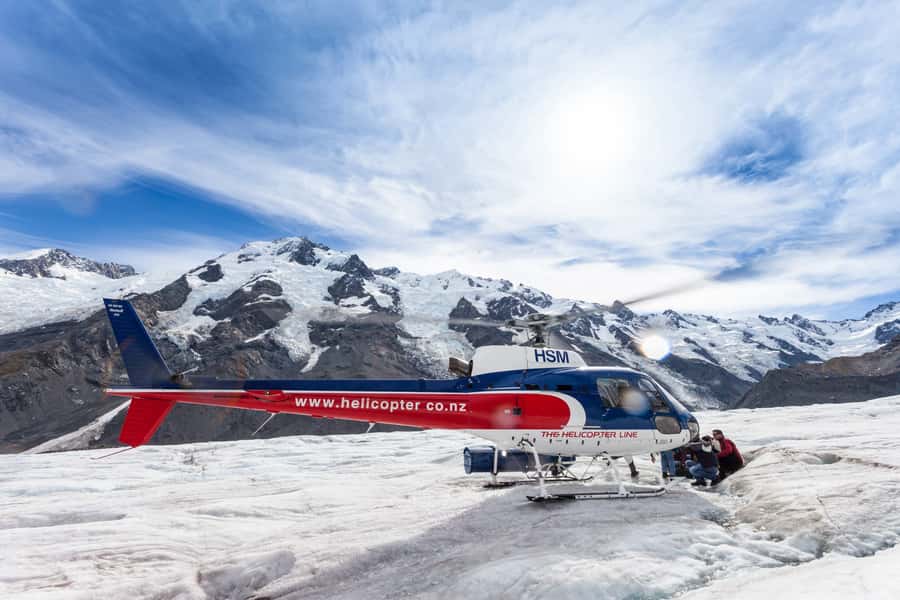
The outbound helicopter flight takes about 15 minutes. The route crosses the area around Tasman Glacier Lake and moves toward the glacier and surrounding peaks.
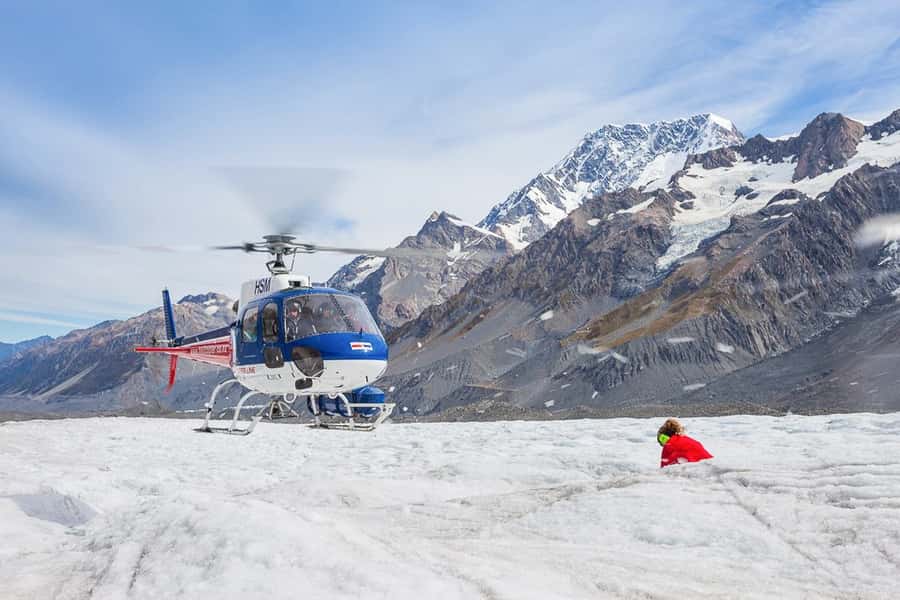
This is not simply a taxi ride to the walking point. The flight is one of the main attractions, and the aerial view gives you a clear sense of the glacier’s scale. White snow and ice fill the valleys, while exposed rock and high peaks frame the route. The pilot may point out features along the way, and people have particularly praised the pilots for smooth flying and useful information during both legs.
The flight can also be the most thrilling part for first-time helicopter passengers. It is short enough to feel exciting without taking up the whole activity. The return leg adds a different view, especially near the roughly 1,000-meter-high Hochstetter Icefall on Aoraki’s eastern face.
Sit back and keep your camera ready, but do not spend the entire flight looking at a screen. Mountain weather can change quickly, and the best view may last only a few seconds. Also remember that the pilot’s priority is safe flight, not lining up every photograph.
Landing on the Tasman Glacier
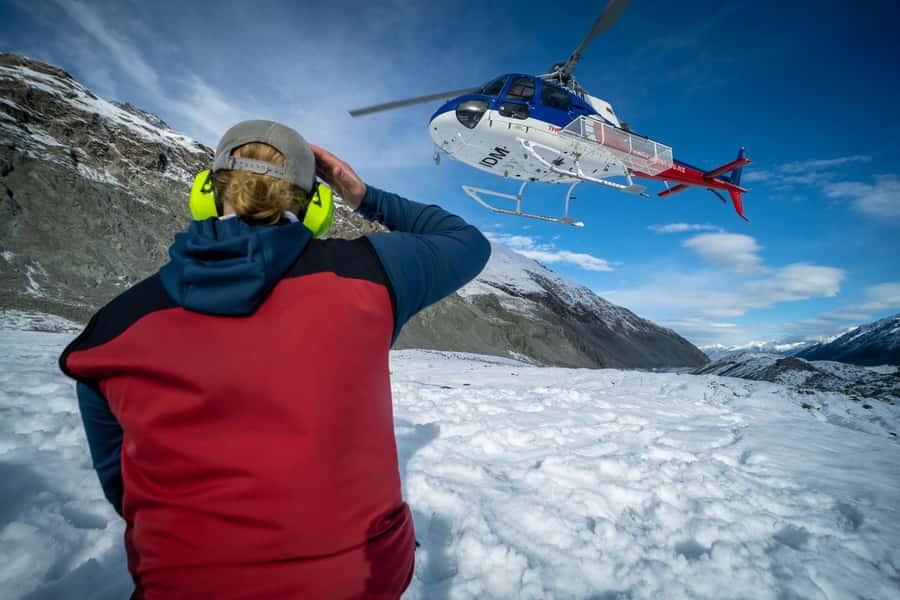
The landing is the moment this excursion separates itself from ordinary sightseeing. You leave the airport, fly over snow and ice, and then step directly onto the glacier.
The landing area is selected according to conditions, safety, and the current state of the ice. You will not be wandering wherever you like. Your professional guide leads the group over an approved route and keeps an eye on the terrain, weather, and the pace of the walkers.
With a group limit of 10, the guide can give more individual attention than on a large coach-style excursion. This matters when people have different levels of confidence on crampons. One guide also noticed when a participant was tiring and acted quickly to help the person complete the walk. That sort of supervision is more valuable than a long list of glacier facts.
You should expect a real outdoor setting, not a polished attraction with a fixed path. The ice may be firm, soft, uneven, snowy, wet, or tiring. Your boots and crampons improve traction, but they do not remove the need to watch your footing.
More Hiking Tours in Mount Cook & Lake Tekapo:
- Mount Cook: Glentanner High Country Heli Hike
★ 5.0 · 7 reviews - Franz Josef Glacier Heli-Hike
★ 4.5 · 618 reviews - Heli Hike Fox Glacier
★ 5.0 · 563 reviews - Queen Charlotte Track: Cruise & Self-Guided Hike from Picton
★ 4.8 · 383 reviews
Two hours among ice caves, ridges, and snow
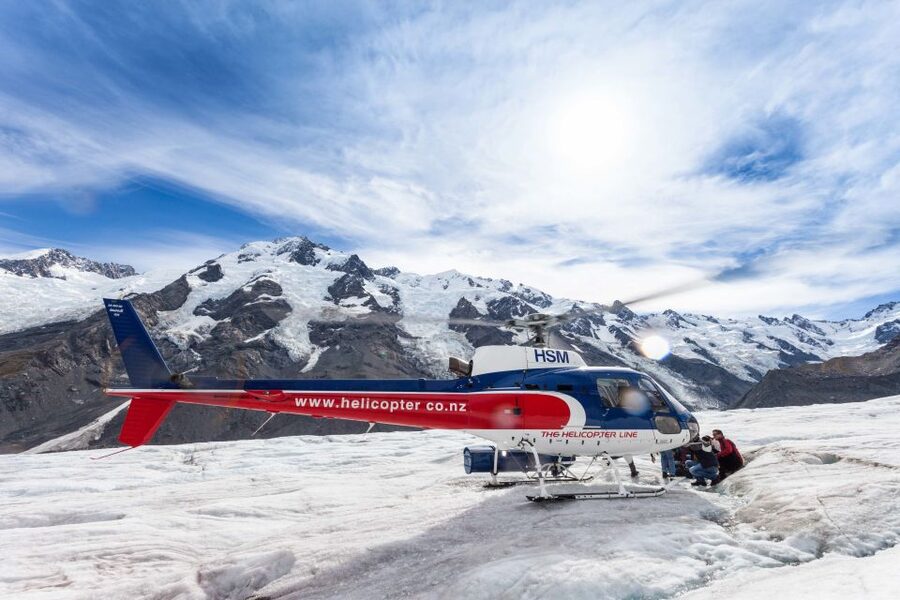
The glacier walk lasts about two hours. The pace is guided and generally designed to keep the group together, so do not picture a fast hike or a demanding climb.
One person wanted a harder and faster walk and felt the pace was more of a stroll. That is a fair warning if you already hike regularly and want a strenuous outing. The guide needs to accommodate the whole group, and glacier travel requires stops for instruction, safety checks, and photography.
For most people, the slower rhythm is a benefit. You have time to look into blue ice, study layers in the snow, learn how the glacier moves, and ask questions. Guides such as Kerry, Scott, Maddie, Jess, Max, Matt, Sammy, and Simon have been singled out for their friendly manner, glacier knowledge, safety guidance, and help with photographs. Your guide may be someone else, but the standard you should expect is an active guide who explains the environment while managing the route.
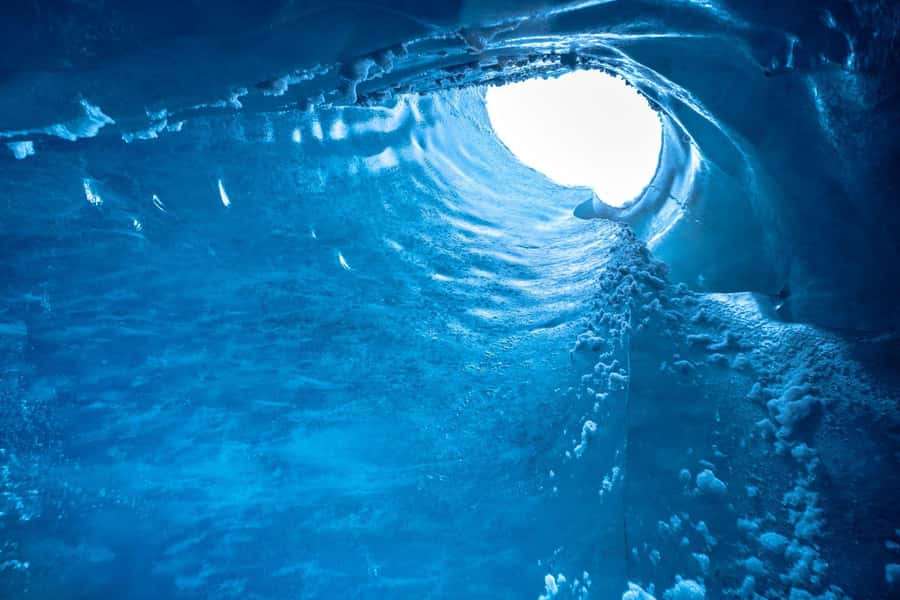
The ice features vary greatly. Recent heavy snow covered some formations on one outing, while another group explored a large ice cave. If you get a chance to enter an ice cave, listen closely to the guide and follow instructions. Ice caves and crevasses are not places for independent wandering.
Crampons take a little practice. Your guide will show you how to place your feet and how to avoid catching a point in clothing or another boot. You need moderate fitness and hiking ability, but you do not need technical climbing experience based on the information provided. Still, the walk can require strength and stamina, and several people felt tired by the end.
Guides, safety, and the small-group advantage
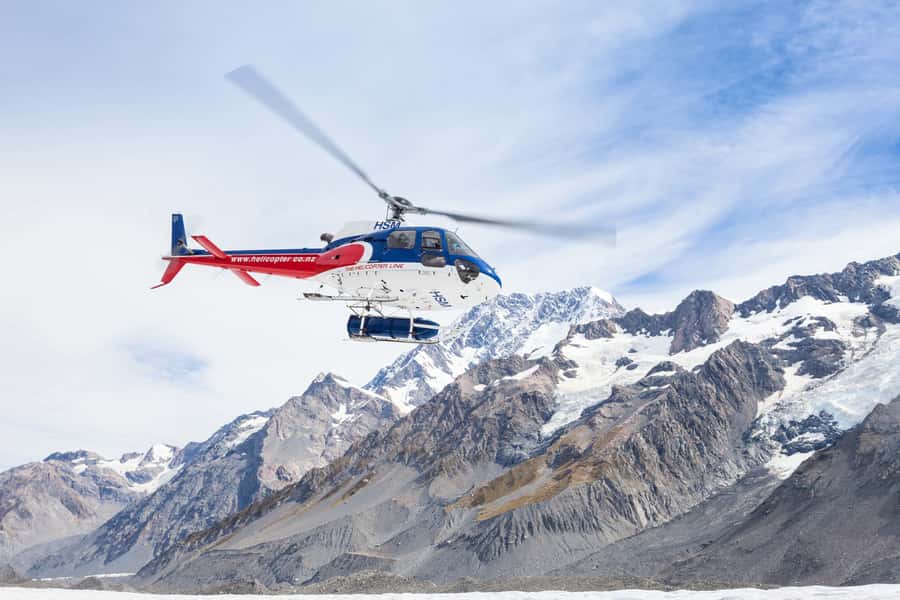
The guide is central to the value of this activity. Without a good guide, you would have a helicopter landing and a short walk on ice. With one, you get help understanding the glacier, moving safely, and finding worthwhile features.
The strongest guide feedback focuses on three things: clear safety instruction, enthusiasm for the natural environment, and practical help on the ice. Guides have explained how to avoid dangerous areas, how glacier formations develop, and how rescue ropes can be secured. Some have also taken excellent photographs, a welcome service when you are busy managing crampons and uneven ground.
The small group limit is 10 people. That is not a private excursion, and the pace can still be set by the slowest participant. But 10 is small enough for questions and for the guide to notice if someone is cold, nervous, or tiring.
The operator has also received especially strong marks for transport and ground handling, with 93 percent of ratings giving transport a perfect score. That fits the practical details of the experience: clear aircraft instructions, careful boarding, and equipment checks. One area to watch is preparation information. Bring your own hat, gloves, sunglasses, warm layers, and rain protection rather than assuming every item will be supplied.
Weather is part of the deal
Weather is not a minor footnote here. The helicopter flies only in suitable conditions, and the company can cancel if conditions are unsafe or if minimum passenger numbers are not reached.
A cancellation gives you the choice of another date or a full refund. The flexible cancellation policy also allows a full refund if you cancel at least 24 hours ahead. Those terms are helpful, but they do not remove the scheduling problem. If this is the one activity you most want to do at Mount Cook, avoid placing it on the final morning of a tightly planned trip.
Cloud can hide Aoraki. Snow can cover ice features. Rain can make the glacier walk colder and less comfortable. On the other hand, weather can improve quickly in the mountains. One group had several morning flights canceled before conditions cleared by early afternoon, allowing the later departure to go ahead.
Pack for the poor-weather version of the activity and treat clear views as a bonus. Warm clothing, gloves, a hat, waterproof layers, sunscreen, and sunglasses all have a job here. You should be ready for bright glare from snow as well as cold rain.
Is $564 per person good value?
At $564 per person, this is expensive by New Zealand day-trip standards. The price includes hotel pickup and drop-off in Mount Cook Village, the helicopter flights, glacier landing, two-hour guided walk, boots, crampons, and a waterproof jacket if needed.
The value depends on what you want from Mount Cook. If you only want a view of the Southern Alps, a scenic flight without a glacier walk may be enough. If you want to physically reach the ice and have a guide lead you across it, this package combines two costly elements in one three-hour outing.
I think the price makes the most sense for a special occasion, a honeymoon, or a short visit where you want one major Mount Cook experience. People have described it as a highlight of longer New Zealand trips and a once-in-a-lifetime outing. That enthusiasm is understandable: the flight gives you the big picture, while the walk supplies the personal memory.
Still, value falls if you expect a long, athletic hike. The ice walk is about two hours, and the group pace may feel gentle. You are paying for access, aircraft logistics, equipment, safety management, and the chance to reach a remote glacier, not for a full day of hard hiking.
Who should book this experience?
You should consider it if you are at least 10 years old, reasonably fit, comfortable with moderate hiking, and excited by both flying and walking on ice. It suits people who want a memorable Mount Cook activity without committing to a technical mountaineering trip.
It is also a strong choice for photographers, though you must balance camera use with safe footing. The combination of aerial views, ice formations, and high peaks gives you many different kinds of photographs.
You should think twice if you dislike helicopters, cold weather, uneven ground, or group pacing. The tour is not recommended during pregnancy, and the maximum weight is 150 kilograms, including equipment. Children under 10 and people over 150 kilograms cannot join.
Non-English speakers need to be able to follow an English-language guide. The activity is conducted in English, and unclear communication can slow the group and make safety instructions harder to manage. Bring a translator only if you can use it without interfering with instructions, and confirm your needs before booking.
Practical tips for a better glacier walk
- Dress warmer than the village weather suggests. The glacier can feel far colder, especially in rain or wind.
- Wear sturdy shoes. The company supplies glacier boots, but comfortable closed-toe footwear is still recommended for the start of the activity.
- Bring sunglasses and sunscreen. Snow and ice reflect strong light, even when the air feels cold.
- Keep your hands free when walking. Selfie sticks are not allowed, and a phone or camera should be used only when the guide says it is safe.
- Allow time after check-in. The 45-minute preparation period comes before the flying and hiking portion.
- Keep your schedule flexible. A later departure may operate after an earlier one is canceled.
- Expect conditions to change the route. A cave or large ice formation cannot be guaranteed.
- Tell yourself this is a glacier walk, not a race. A moderate pace gives the guide time to manage the group and explain what you are seeing.
FAQ
How long is the Tasman Glacier heli hike?
The experience lasts about three hours. It includes a safety briefing, two helicopter flights of roughly 15 minutes each, and about two hours of guided glacier hiking.
Where does the activity begin?
It begins at Mount Cook Airport. The operator’s office is upstairs in the airport building, and hotel pickup and drop-off are available in Mount Cook Village.
How much does the experience cost?
The listed price is $564 per person.
What is included in the price?
The price includes hotel pickup and drop-off in Mount Cook Village, scenic helicopter flights, a glacier landing, a two-hour glacier hike, professional guides, glacier boots, crampons, and a waterproof jacket if required.
Do I need previous glacier experience?
Previous glacier experience is not stated as a requirement. You do need moderate fitness and hiking ability, and the guide provides instruction and equipment for walking on the ice.
What age do I need to be?
Participants must be at least 10 years old. Children under 10 cannot join.
Is there a weight limit?
Yes. The maximum weight is 150 kilograms, or 331 pounds, per person, including equipment.
What happens if the weather cancels the flight?
If the flight is canceled because of unsuitable weather or insufficient passenger numbers, you can choose an alternative date or receive a full refund.
What should I bring?
Bring warm clothing, comfortable sturdy shoes, rain gear, sunscreen, sunglasses, and a phone or camera. Hats and gloves are also sensible for the cold conditions.
Can I bring a drone or selfie stick?
No. Drones, selfie sticks, and tablets or iPads are not permitted for passenger safety.
Should you book the Tasman Glacier heli hike?
I would book this if walking on a real glacier is high on your New Zealand wish list and you can accept the cost and weather risk. The strongest part is the pairing of a smooth Southern Alps flight with two hours on the ice, guided by a professional team and limited to 10 people.
I would not book it simply because you want a quick scenic flight or a fast, demanding hike. The walk can be affected by snow, the group pace may be gentle, and a clear view of Aoraki is never guaranteed.
For a flexible Mount Cook itinerary, though, this is a powerful choice. It gives you the aerial scale of the Tasman Glacier, the close-up detail of ice caves and formations when conditions allow, and the rare chance to stand beneath Aoraki with crampons on your feet. Reserve it for a day when you can wait out the weather, dress properly, and let the glacier set the pace.
More three hour outings in Mount Cook & Lake Tekapo
- Queenstown: 3-Hour Zipline Adventure with 6-Lines
★ 4.8 · 485 reviews - Fox Glacier: Up to 3 Hours Hike with Helicopter Transfer
★ 4.9 · 309 reviews - Mount Cook: 3-Hour Tasman Glacier Helicopter Ride and Hike
★ 4.9 · 235 reviews - Discover Wellington 3 hour City Tour
★ 5.0 · 213 reviews
Newly listed around Mount Cook & Lake Tekapo
- Mount Cook: 20-Minute Alpine Vista Helicopter Flight★ 4.2 · 5 reviews
- Lake Tekapo to Mt Cook One-Way Small Group Tour★ 4.0 · 5 reviews
- Mount Cook: Alpine Explorer 35 Minute Flight★ 4.9 · 6 reviews
- Mount Cook: Tasman Glacier and West Coast Helicopter Flight★ 5.0 · 6 reviews
- Mount Cook Scenic 35 Minute Helicopter Flight★ 5.0 · 6 reviews
- Mt Cook: 55-Minute Scenic Flight in Helicopter or Ski Plane★ 4.1 · 6 reviews
- Mount Cook: Glentanner High Country Heli Hike★ 5.0 · 7 reviews
- Mount Cook: Tasman Glacier Helicopter Flight★ 4.3 · 7 reviews
Mount Cook & Lake Tekapo Tours, compared.
Mt Cook Small Group Scenic Day Tour from Queenstown
Read our review →
Tekapo Shuttle: Mt Cook Day Tour via Pukaki & Tasman Lake
Read our review →
Browse the lists this tour appears in