
Reviewed · MOUNT COOK & LAKE TEKAPO TOURS
Lake Tekapo: Mountaintop Stargazing at Mount John Summit
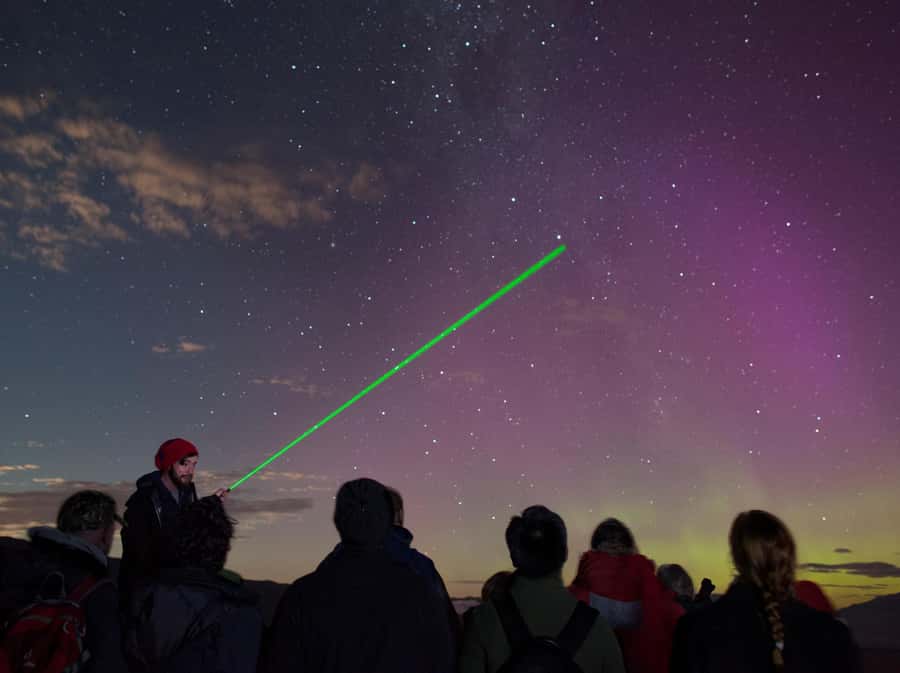
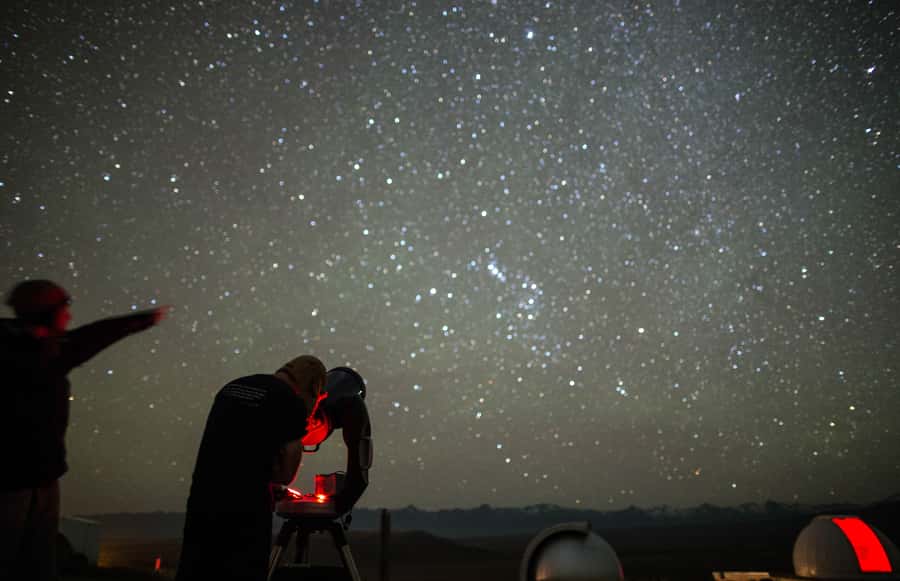
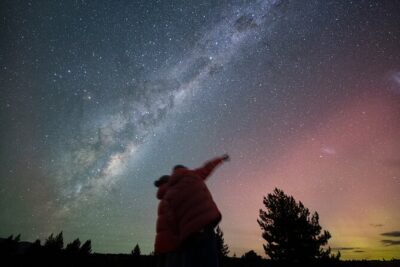
Mount John gives you something no lakeside stargazing session can match: a mountaintop view from 1,029 meters, above Lake Tekapo and inside the Aoraki Mackenzie Gold Standard International Dark Sky Reserve. Guides begin with the naked-eye sky, using handheld lasers to help you find the Southern Celestial Pole and major stars before turning to the telescopes.
I like the university setting, with the University of Canterbury research centre around you, and the practical care taken with the cold. Big extreme cold weather jackets are supplied, and the short ride from the Dark Sky Project base saves you from making your own way up the mountain. The main catch is simple: clouds, wind, or a bright moon can soften the show, so timing matters.
Key points
- Mount John access: Ride to the summit for a high-altitude view of the Southern Hemisphere sky.
- Clear teaching: Guides use handheld lasers to show you how to find stars for yourself.
- Telescope viewing: Look at selected objects through high-powered telescopes, with different sights appearing each evening.
- Cold-weather support: Extreme cold weather jackets are provided, but you still need warm clothing.
- Weather matters: A clear, low-cloud night gives you the best chance of seeing the Milky Way.
- Basic mobility required: You need to walk 100 meters up a gravel incline and climb a few steps in darkness.
Riding up Mount John after dark
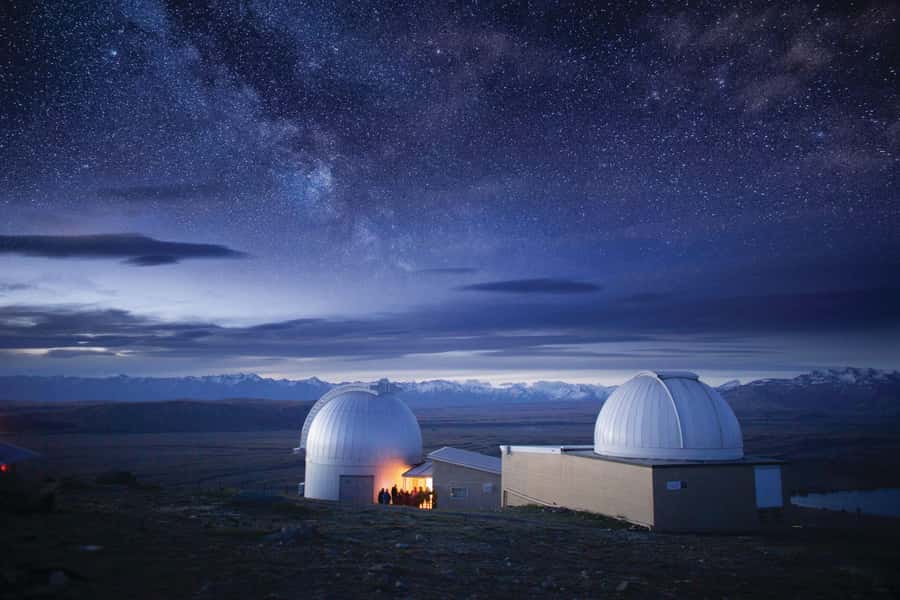
Your evening begins at the Dark Sky Project base beside Lake Tekapo. Check in at least 20 minutes before departure, then join the return transport to Mount John’s summit.
The ride itself is short in practical terms, but it changes the tone of the evening. You leave the lights of the lakefront behind and head up to a site used alongside the University of Canterbury research centre. One guide described the ride as Tekapo’s only nightclub, a playful line that captures the odd charm of traveling uphill into darkness with the night sky waiting above.
You do not need to arrange your own transport to the summit. That matters because Mount John is not a place you want to navigate alone at night, particularly if you are unfamiliar with the road and conditions.
Once you arrive, expect a dark outdoor setting, gravel underfoot, and a few steps to manage. The tour is not designed for people with mobility impairments, and you should feel comfortable walking roughly 100 meters up a gravel incline. A small torch is available, but you should still move carefully and keep your phone light off unless a guide asks you to use it.
A few more Mount Cook & Lake Tekapo days to compare
- Lake Tekapo: Alpine Stargazing Experience with a Guide
★ 4.5 · 626 reviews - Lake Tekapo: Stargazing Experience
★ 4.9 · 607 reviews - Mount Cook: Scenic Helicopter Flight with Alpine Landing
★ 4.8 · 442 reviews
Getting comfortable in the Tekapo cold
Mount John can feel cold at any time of year. The tour supplies an extreme cold weather jacket at check-in, which is one of the most useful inclusions here. You are not left to guess how much insulation an evening on the summit requires.
Still, bring weather-appropriate clothing. The supplied jacket is extra protection, not a replacement for warm trousers, socks, shoes, and layers. You will spend time outside looking up, and standing still in the dark can feel colder than walking around during the day.
Food and drinks are not included in the stated package. One account describes hot chocolate on arrival, but you should not rely on that as part of the booking. Eat beforehand and bring nothing that could create a spill or distraction around the equipment.
Flash photography is not allowed. That rule protects everyone’s night vision, including your own. A bright flash can wipe out the dark adaptation that takes time to build, so keep your camera on a low-light setting and follow the guide’s instructions.
Learning the Southern Sky without a telescope
The first major part of the session uses no telescope at all. Your astronomy guide takes you outside and points out features of the Southern Hemisphere sky with a handheld laser.
This is more useful than simply hearing a list of star names. You learn how to orient yourself and how to keep looking after the guide has moved on. You might be shown the Southern Celestial Pole, Alpha Centauri, Jupiter, or familiar star groups, depending on the season and what is visible that night.
That basic orientation is one of the best reasons to choose this tour instead of a quick photo stop beside the lake. You leave with a few tools for finding your way around the sky on your own. Guides also answer questions, so this part suits both complete beginners and people who already know a few constellations.
The guide’s personality makes a real difference. Oscar has been praised for his enthusiasm, while other guides are described as passionate and clear in their explanations. The tours are offered in English, Japanese, and Chinese, but you must speak the language of the selected tour for health and safety reasons. If you cannot do that, you will not be allowed to join.
Telescopes and the limits of magnification
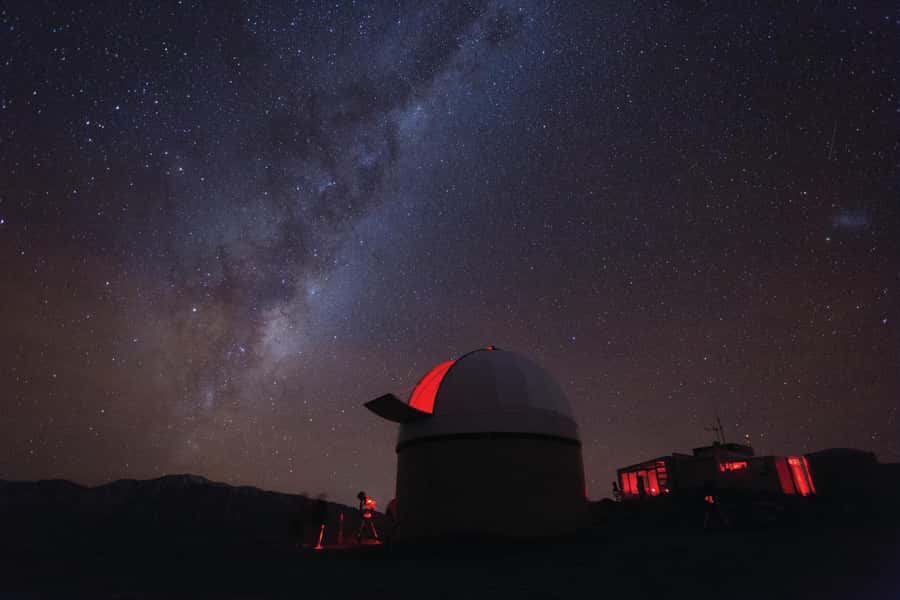
After the naked-eye introduction, you get a closer look through high-powered telescopes. The exact objects depend on the night. You might see a planet, a bright star, or a particular star group, with Mercury and Jupiter among the objects previously viewed during sessions.
The telescope portion can be striking, but it is important to set your expectations correctly. Astronomy equipment does not always produce the giant, colorful images seen in books or on screens. One person felt disappointed that stars appeared only slightly larger through the telescope than with the naked eye, and expected a larger instrument.
That is a fair warning. The strongest part of the evening may be the combination of the naked-eye sky, the guide’s explanation, and the setting on the summit rather than a single dramatic telescope image. Planets or the Moon may not be visible during your time slot, and even when they are, weather and seasonal position control what you can see.
The guides can point out something different each evening because the sky changes with date, time, cloud, and moon phase. I would treat the telescopes as one part of the program, not the sole reason to pay for it.
Somewhere else in Mount Cook & Lake Tekapo entirely:
- Mt Cook Small Group Scenic Day Tour from Queenstown
★ 5.0 · 407 reviews - Tekapo Shuttle: Mt Cook Day Tour via Pukaki & Tasman Lake
★ 4.8 · 307 reviews - Mount Cook: Ski Plane and Helicopter Glacier Combo Flight
★ 4.6 · 271 reviews - Mount Cook: 3 Hour Heli Hike to the Tasman Glacier
★ 4.7 · 218 reviews
Why the moon phase can change the whole evening
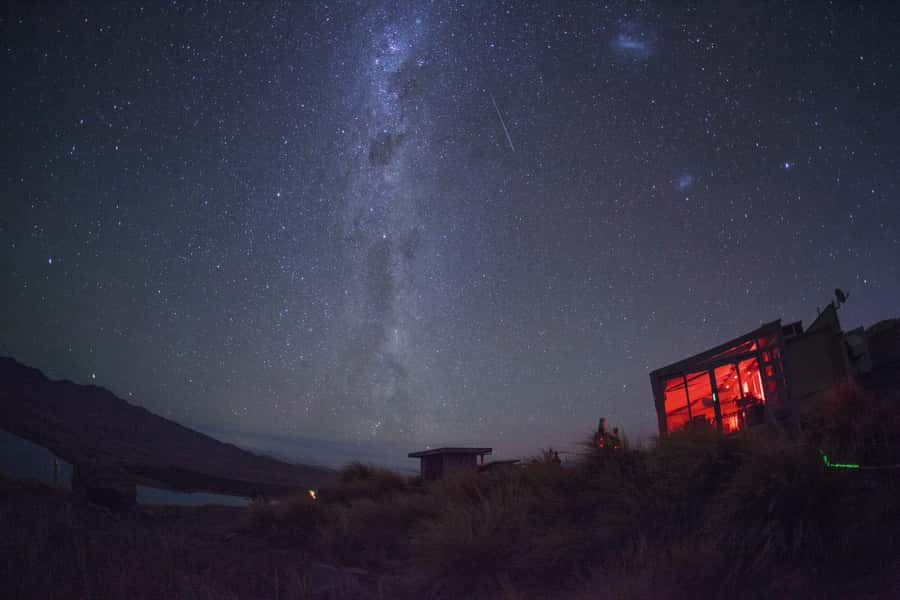
A dark moonless night is not automatically the best choice for every person. If your main aim is to see the Milky Way, less moonlight usually helps. One clear-night account found that a waxing moon made the overall sky too bright for the best Milky Way view, even though the Moon itself looked impressive through a telescope.
This gives you a useful booking tip. If your schedule is flexible and your priority is the Milky Way, check the moon phase as well as the forecast. If you want to see the Moon through a telescope, a brighter lunar phase may be more appealing.
The moon is only one factor. Wind, cloud, and poor visibility can prevent the trip to the summit or reduce what you see once there. The operator can cancel in bad weather and offer an indoor alternative or a full refund. If you have more than one night in Tekapo, keep a little flexibility rather than treating one fixed evening as your only chance.
The value of an International Dark Sky Reserve
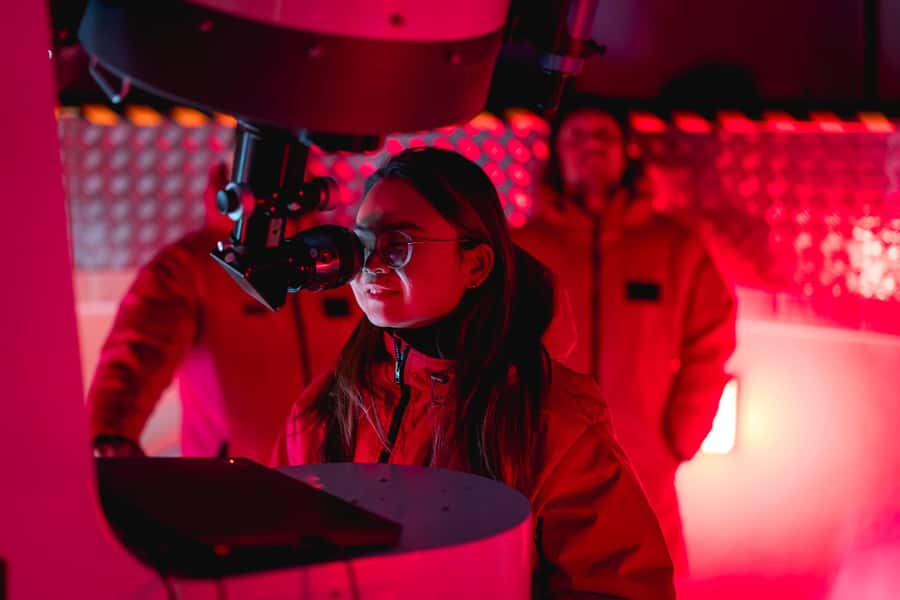
Tekapo is a strong place for this kind of outing because the region has strict protection for its night skies. Mount John is in the Aoraki Mackenzie Gold Standard International Dark Sky Reserve, described as the world’s largest at that designation.
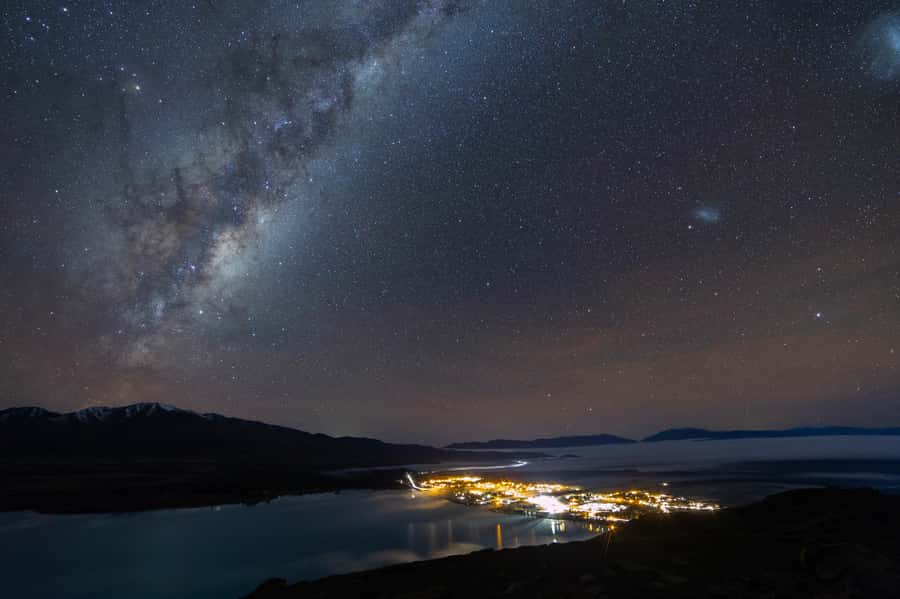
That label matters because artificial light is the enemy of stargazing. A darker sky lets you see fainter stars and makes the Milky Way easier to pick out. From a high summit, with the lake and town lights below, you get a better sense of how much detail disappears in an ordinary urban sky.
The University of Canterbury research centre adds a useful layer of context. You are not simply looking through a telescope at a scenic viewpoint. You are surrounded by a working astronomy setting, and the guides are linked with that scientific environment.
The value is partly educational and partly emotional. You learn where to look, then you have a chance to look up and see the Southern sky as a real place rather than a picture. Several people rate the clarity, the guide explanations, and the summit views as the strongest parts of the evening.
Is NZD 130 a fair price?
The supplied booking information lists the cost at $130 per person. A separate booking account refers to NZD209, so check the live price carefully before paying, since the amount may vary by date, booking channel, or current pricing.
At $130, the package is reasonably easy to justify if you value the summit access, return transport, warm jacket, and 105 minutes with an astronomy guide. You are paying for more than a telescope view. The transport removes a practical problem, the location gives you a darker sky, and the teaching helps you understand what you are seeing.
At the higher NZD209 figure, I would be more selective. The price becomes harder to defend if your only goal is a guaranteed close-up view of Saturn, Venus, or the Moon, since those objects may not be visible. A telescope cannot overcome cloud, moonlight, or seasonal position.
The value is best for you if the setting and explanation matter as much as the equipment. If you want a quick, cheap look at stars, this is not the right choice. If you want a guided night on Mount John and appreciate the chance to learn the Southern sky, the package has more substance.
Family suitability and physical demands
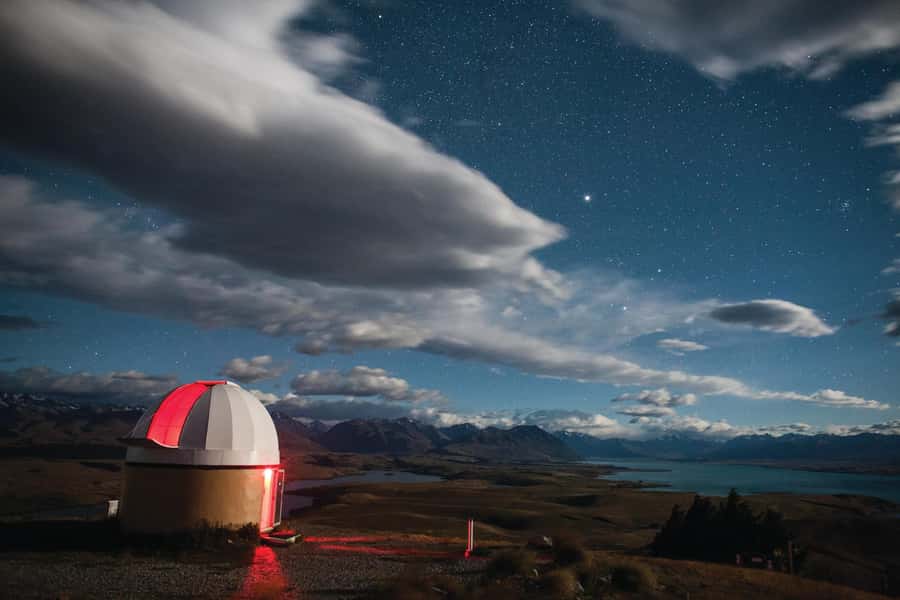
The minimum age is 10, so this is not a late-night outing for young children. Older children and teenagers who can stay quiet, follow instructions, and cope with the cold should find the subject engaging, especially during the laser-guided part.
You need to walk on a gravel incline and climb a couple of steps in the dark. The tour is not suitable for people with mobility impairments. You should also be able to remain outdoors for much of the session while wearing warm clothing.
The language rule is stricter than on a casual sightseeing ride. You must speak the language used for your booked tour because the guides need to communicate safety instructions. English, Japanese, and Chinese are available.
How to plan the best night
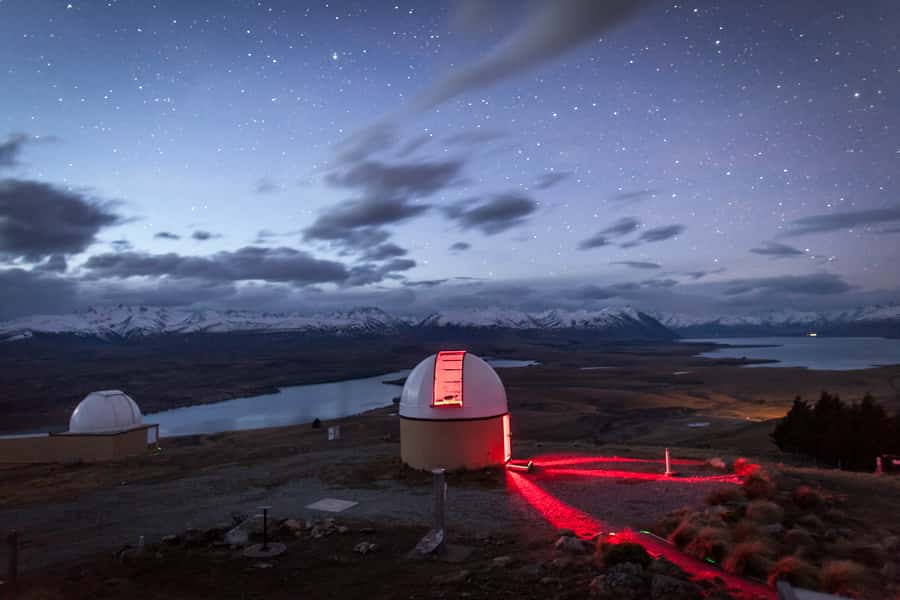
Book the tour for a night when you can tolerate a change of plan. The weather can cancel the summit outing, so avoid placing it immediately before an important departure if you have no spare time.
Check the moon phase if the Milky Way is your main goal. A dark night may offer more stars, while a brighter moon can give you a striking telescope subject but wash out some faint detail.
Arrive early at the Dark Sky Project base and dress before you leave for the summit. The jacket is supplied, but you will be happier with warm layers already on. Eat first, since food and drinks are not part of the stated inclusions.
For photos, obey the flash restriction and keep your screen dim. The point of the evening is to let your eyes adjust, and constant phone light works against that.
If you book a start time after midnight, check the date carefully. That small detail can cause a surprising amount of confusion when a late-night session crosses into the next calendar day.
Who should book Mount John Stargazing?
You should book this if you want a guided introduction to the Southern Hemisphere sky, care about dark-sky conditions, and like the idea of reaching a summit used beside a university research centre. It is especially good for couples, families with children over 10, and curious first-time stargazers.
I would also choose it if you have never learned how to identify the Southern Celestial Pole. The laser demonstration gives you something practical to take away, rather than leaving you with a few impressive but disconnected facts.
I would hesitate if you need guaranteed clear skies, a specific planet, or dramatic telescope images. The activity is weather dependent, and the exact sights change. You also need to decide if the current price works for you, particularly if it is closer to NZD209 than the listed $130.
FAQ
Where does the Mount John stargazing tour meet?
You meet at the Dark Sky Project base beside the Takapō, also called Tekapo, lakefront.
How early should I arrive?
You should check in at least 20 minutes before departure.
How long does the experience last?
The stargazing session lasts 105 minutes, or 1 hour and 45 minutes.
Is transport to Mount John included?
Yes. Return transport from the Dark Sky Project base to the summit of Mount John is included.
What languages are available?
The tour is available in English, Japanese, and Chinese. You must speak the language of your selected tour for health and safety reasons.
Are warm clothes provided?
An extreme cold weather jacket is provided at check-in. You should still bring warm, weather-appropriate clothing because the activity takes place outdoors at the summit.
Can the tour be canceled because of weather?
Yes. Bad weather can cancel the summit tour. An indoor alternative or a full refund is offered.
Can children join the tour?
Children must be at least 10 years old. The tour is not suitable for children under 10 or for people with mobility impairments.
Should you book this experience?
I would book Mount John Stargazing if you have a clear night available and want more than a quick look at the stars. The summit setting, dark skies, return transport, warm jacket, and strong guide-led introduction make it a thoughtful way to see the Southern Hemisphere.
Just keep your expectations grounded. The weather may cancel the outing, the Moon can brighten the sky, and the telescopes may not show the giant images you imagine. Check the current price, watch the forecast, consider the moon phase, and leave room to reschedule. If those conditions work for you, this is one of the more distinctive evening activities in the Tekapo area.
Newly listed around Mount Cook & Lake Tekapo
- Mount Cook: 20-Minute Alpine Vista Helicopter Flight★ 4.2 · 5 reviews
- Lake Tekapo to Mt Cook One-Way Small Group Tour★ 4.0 · 5 reviews
- Mount Cook: Alpine Explorer 35 Minute Flight★ 4.9 · 6 reviews
- Mount Cook: Tasman Glacier and West Coast Helicopter Flight★ 5.0 · 6 reviews
- Mount Cook Scenic 35 Minute Helicopter Flight★ 5.0 · 6 reviews
- Mt Cook: 55-Minute Scenic Flight in Helicopter or Ski Plane★ 4.1 · 6 reviews
- Mount Cook: Glentanner High Country Heli Hike★ 5.0 · 7 reviews
- Mount Cook: Tasman Glacier Helicopter Flight★ 4.3 · 7 reviews
Mount Cook & Lake Tekapo Tours, compared.
Mt Cook Small Group Scenic Day Tour from Queenstown
Read our review →
Tekapo Shuttle: Mt Cook Day Tour via Pukaki & Tasman Lake
Read our review →
Browse the lists this tour appears in