
Reviewed · MOUNT COOK & LAKE TEKAPO TOURS
Mount Cook: Ski Plane and Helicopter Glacier Combo Flight
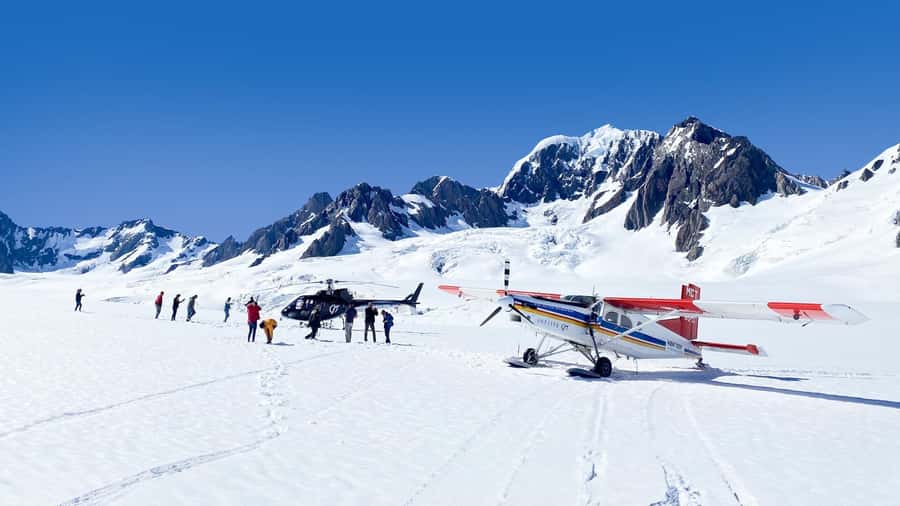
The best part of this Mount Cook flight is the glacier landing. You fly above the Tasman Valley, see the blue glacier lake and Hochstetter Icefall, then step onto the upper snowfields of New Zealand’s longest glacier. I like that you experience the area from two aircraft, not just one, and that both are shut down on the ice so you can enjoy the alpine silence.
I also like the chance to see Aoraki/Mount Cook and the full Tasman Glacier from several angles. The main caution is weather: wind, cloud, and aircraft weight limits can change the plan, sometimes at short notice. At $328 per person, it is a major expense for 45 minutes, but few Mount Cook activities put you on the snowfields so quickly.
Key points to know before takeoff
- Two aircraft in one trip: Fly by ski plane and helicopter, usually using one to reach the glacier and the other to return.
- A real snow landing: Step onto the upper Tasman Glacier, where the mountains remain covered in snow and ice throughout the year.
- A full alpine circuit: Look for Tasman Terminal Lake, Grand Plateau, Plateau Hut, Hochstetter Icefall, and Aoraki/Mount Cook.
- Weather shapes the day: Flights can be delayed, shortened, rescheduled, or changed to another glacier when conditions are poor.
- No bags onboard: You can bring a phone or camera, but not a bag, food, drinks, drone, or selfie stick.
- Plan around check-in: Check-in closes 45 minutes before departure, and all passengers must provide full names and weights when booking.
Why this Mount Cook flight feels different
Mount Cook National Park is easy to admire from roads and walking tracks, but the scale changes when you rise above it. From the air, the Tasman Glacier is no longer a white patch beneath the peaks. It becomes a long, broad river of ice, marked by ridges, crevasses, blue pools, and steep walls of rock.
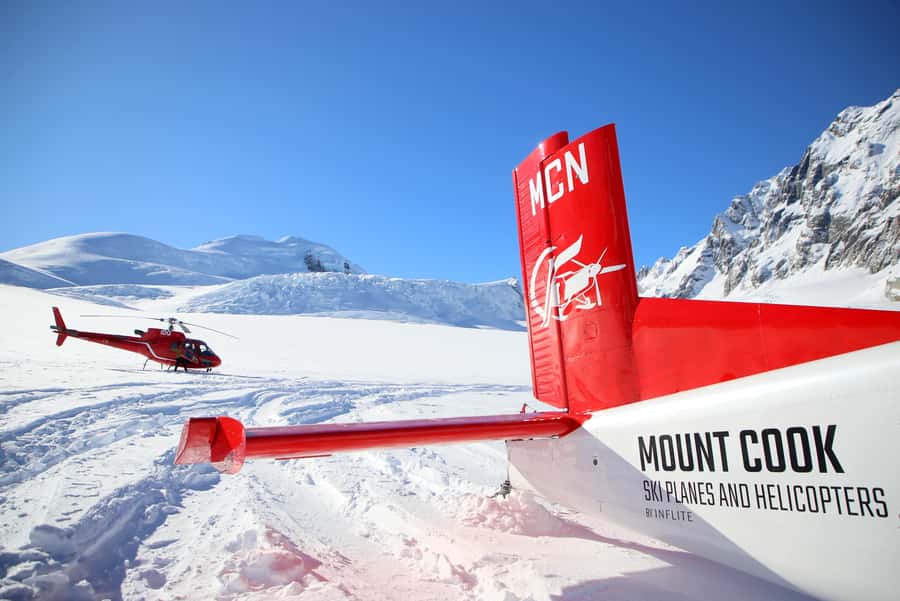
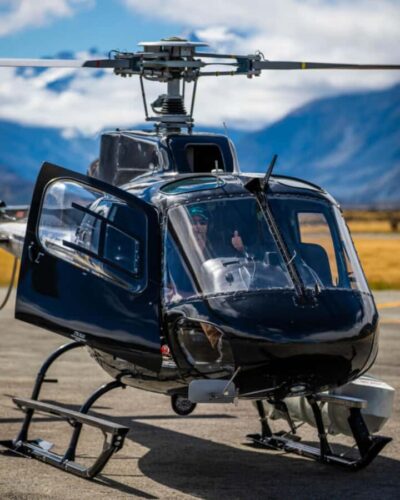
This trip adds a second layer to that view. A ski plane has the character of a true mountain aircraft, while a helicopter offers a steadier, more open-feeling look at the peaks. The aircraft swap on the glacier is the unusual part. You are not simply flying out and landing back at the airport. You pause in the high snowfields, change aircraft, and continue from there.
The experience is short, but it is not just a quick flyover. The landing gives you time to stand on the snow, take photographs, and take in the quiet after the engines stop. That silence is one of the most valuable parts of the trip. It gives the landing a sense of place that an aerial loop alone cannot provide.
More helicopter flights over Mount Cook & Lake Tekapo:
- Mount Cook: Scenic Helicopter Flight with Alpine Landing
★ 4.8 · 442 reviews - Mount Cook and The Glaciers 55-Minute Helicopter Flight
★ 4.5 · 133 reviews - 45-Minute Mount Cook Ski Plane and Helicopter Combo Tour
★ 4.5 · 107 reviews
From Mount Cook Aerodrome to the Tasman Valley
You meet at Mount Cook Aerodrome in Aoraki/Mount Cook National Park. Free parking and Wi-Fi are available at the airport, which makes the base simple to use if you are driving through the Mount Cook area.
Allow plenty of time before the flight. Check-in closes 45 minutes before departure, and the operating team needs every passenger’s full name and weight. Those details are not mere paperwork. Small aircraft and helicopters operate with strict weight and balance limits, and the departure time can be moved if the combined passenger weight reaches the aircraft’s safety limit.
The route begins over the Tasman Valley. You may fly first in the ski plane or helicopter, depending on the schedule and conditions. The precise order matters less than the contrast: you get two different ways to view the same mountain country.
As you rise, keep an eye out for the Tasman Terminal Lake. This is where the glacier’s lower end meets a broad, changing body of water. From the air, you can better understand the distance between the lake, the upper icefields, and the mountains beyond.
The aircraft then heads toward the upper Tasman Glacier. The views include the Hochstetter Icefall, Grand Plateau, Plateau Hut, and Aoraki/Mount Cook. The mountain can appear and disappear behind cloud, so clear conditions make a major difference. Several flights have gone ahead only after weather improved, while others have been changed or canceled because of cloud and wind.
What the ski plane adds
The ski plane is the more distinctive choice if you want a mountain flying experience rather than a standard scenic flight. Its skis allow it to land on snow, and the approach to the glacier gives you a clear sense of how remote the upper icefields are.
You can take photographs during the flight, but the plane’s wings may block parts of the view depending on your seat. That is a practical point worth knowing. You still get wide views, but the helicopter generally provides a more open sightline around the aircraft.
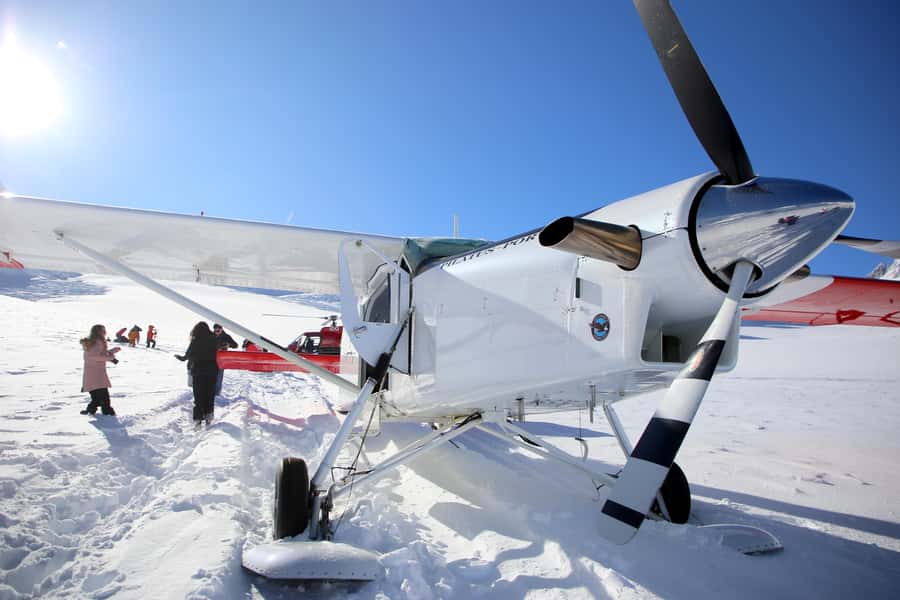
The ski plane landing is a highlight in its own right. Instead of touching down on a runway, the aircraft lands on a snowfield surrounded by peaks. Once the plane stops and shuts down, the change is striking. The noise fades, and you are left with snow, ice, rock, and sky.
The ski plane is not always available. Scheduled maintenance or high winds can remove it from the plan, and in that case the operator may arrange a helicopter-only alternative or another suitable flight. If the ski plane is the single reason you are booking, ask about the current aircraft situation before you commit.
The helicopter flight and the aircraft swap
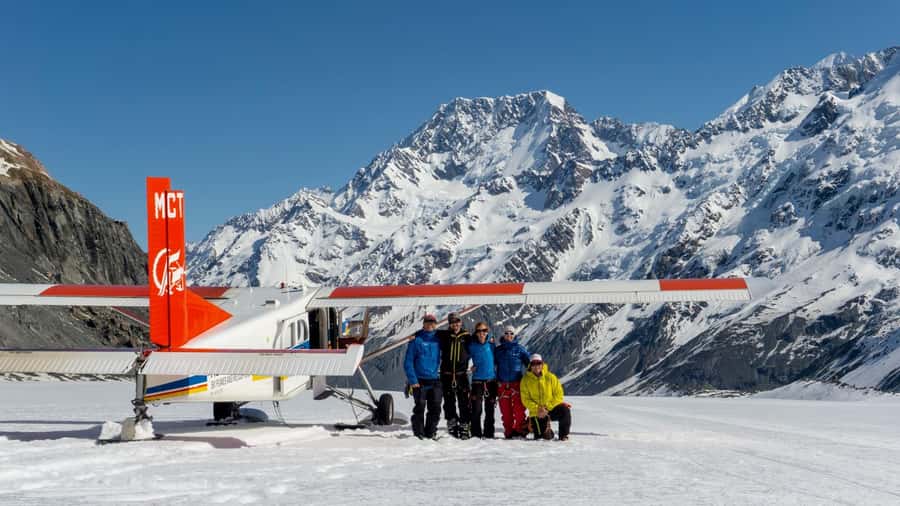
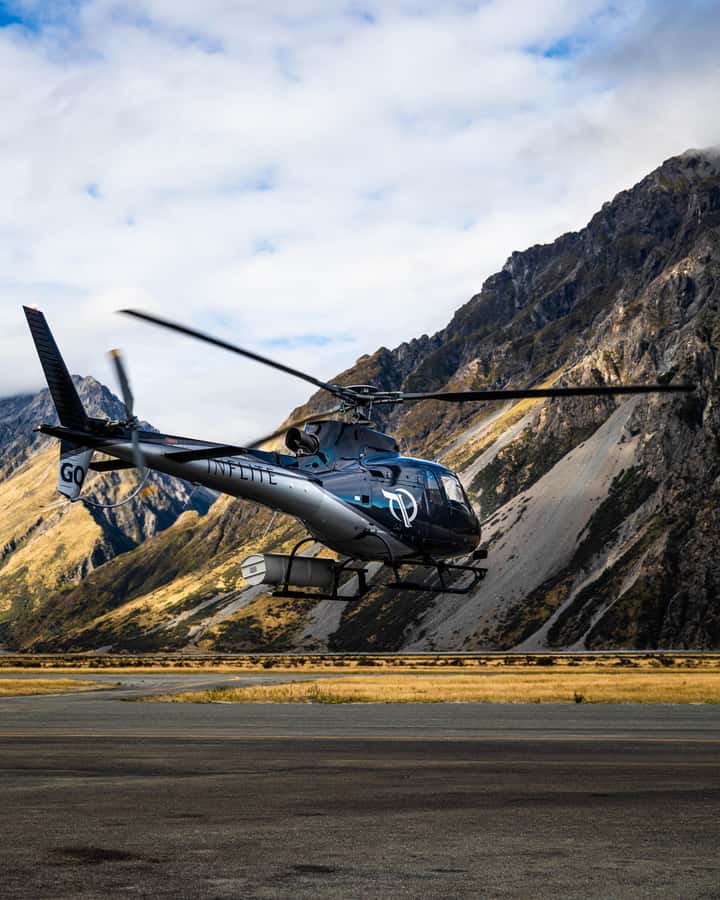
At the glacier, you change aircraft for the return to Mount Cook Airport, or you may make the trip in the opposite order. The helicopter gives you a closer, more flexible view of the mountain walls and ice formations. Its position makes it easier to look down into the glacier valley and across to the steep faces of the surrounding peaks.
Seat position can affect your view. One helicopter arrangement described for the experience has four passenger seats across the rear row and two in front. A middle rear seat gives you less side visibility than a window position, so it is sensible to share viewing time and keep your camera ready during turns.
The helicopter ride may feel more stable to some people, and several passengers have particularly enjoyed its close views of Aoraki/Mount Cook. The tradeoff is that the helicopter portion may feel brief. At 45 minutes for the full experience, each aircraft section has to share time with the landing and aircraft change.
Pilots generally provide commentary in English, and an English audio guide is included. The amount of spoken information can vary. Some pilots, including Mark, Ben, Jordan, and Greg on different flights, have been praised for explaining the route and flying steadily. A few passengers wanted more commentary, and one person missed some talk because the sound was turned down in the headphones. Check your headset early.
More skiing in Mount Cook & Lake Tekapo:
- 45-Minute Glacier Highlights Ski Plane Tour from Mount Cook
★ 5.0 · 19 reviews - 55 minute Grand Circle Ski Plane
★ 5.0 · 16 reviews - Mt Cook: 55-Minute Scenic Flight in Helicopter or Ski Plane
★ 4.1 · 6 reviews - Shuttle Park n Ride to Whakapapa Ski fields
★ 4.5 · 7 reviews
Standing on New Zealand’s longest glacier
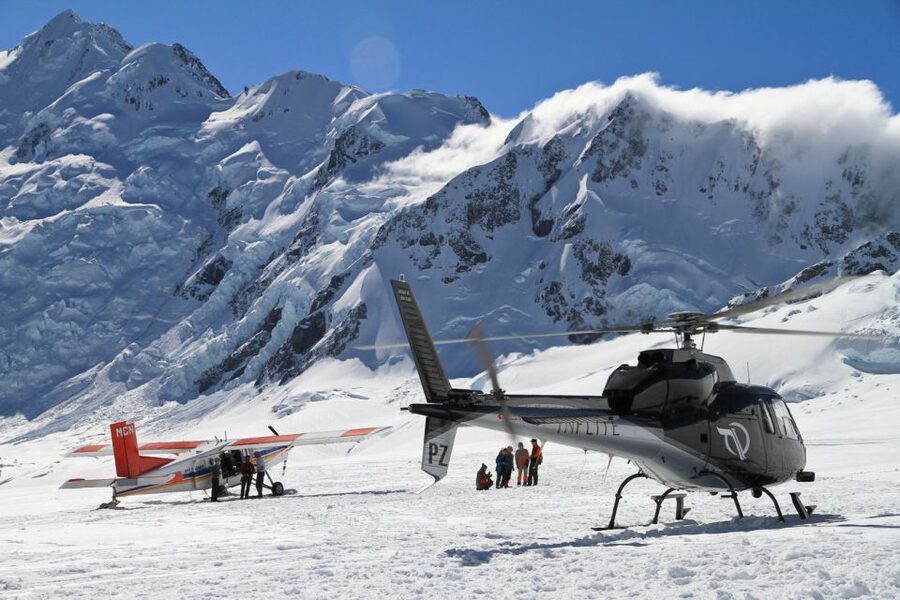
The Tasman Glacier is the emotional center of this trip. At roughly 28 kilometers long, it is not something you grasp easily from the valley floor. Standing on its upper snowfields puts you inside a much larger alpine system, with the glacier stretching away and the peaks rising around it.
You may find fresh, untouched snow at the landing area, though the surface will depend on current conditions. The stop is suitable for photographs and a short walk around the landing area. Some people have had enough snow for playful snowball fights, while others have simply stood quietly and taken in the view.
The clothing lesson is useful: do not assume the glacier will feel brutally cold. One January flight was warm and sunny enough for passengers to remove a few layers. Conditions can vary, so closed-toe shoes are required and warm layers remain sensible. The supplied information specifically requires closed-toe footwear, but it does not promise special clothing or equipment.
The aircraft shuts down fully while you are on the glacier. That matters because you get a short period without engine noise. It is a simple detail, but it makes the alpine landing feel less like a photo stop and more like an encounter with the place.
Weather is part of the planning
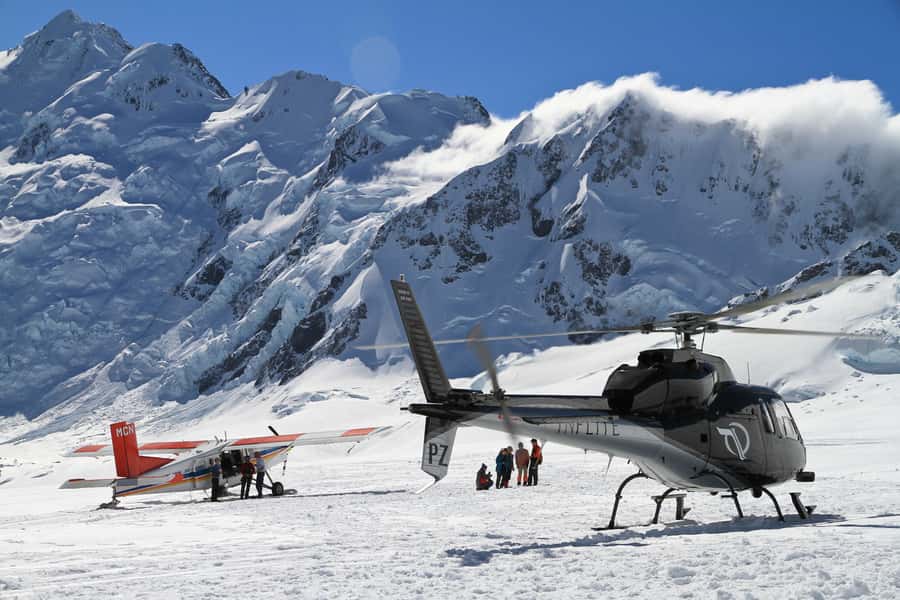
Mount Cook weather can change faster than your schedule. Wind and cloud are the main concerns, and the decision to fly is made for safety. A clear morning does not guarantee a clear afternoon, and a canceled flight can sometimes be moved to later the same day or the following day.
Build flexibility into your Mount Cook plans. If this is your only free morning, a cancellation may be disappointing. If you can keep a spare half-day or full day, you have a better chance of taking the flight when conditions improve.
The operator has worked with passengers to reschedule after cancellations. In some cases, a slightly shorter flight was offered later that day. In others, a helicopter alternative replaced the ski plane, or Franz Josef Glacier was used when incoming cloud affected the Tasman route.
That flexibility is useful, but you should understand the difference between the booked experience and an alternative. A helicopter-only flight can still include a spectacular alpine landing, yet it does not provide the same two-aircraft contrast. If poor weather prevents the flight entirely, the activity is refundable, and the operator will try to find a new time that fits your plans.
Is $328 good value for 45 minutes?
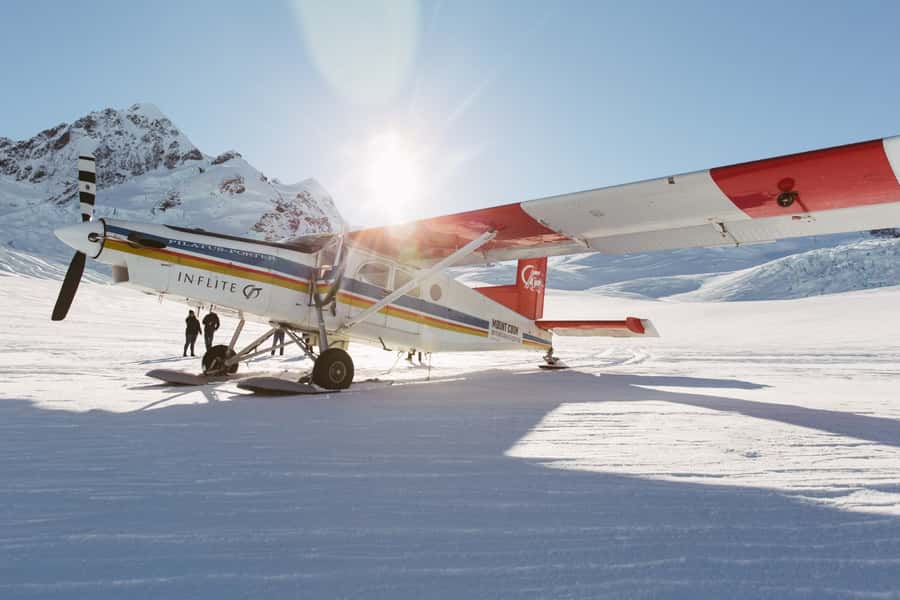
At $328 per person, this is not a casual add-on. A couple spends $656, and a family can quickly reach a four-figure total. The flight also lasts 45 minutes, so you are paying for a concentrated experience rather than a long excursion.
I think the value depends on what you want from Mount Cook. If your priority is to walk on a glacier without a long trek or technical equipment, this is one of the most direct ways to do it. You also get aerial views of the Tasman Valley, terminal lake, icefall, plateau, hut, and Aoraki/Mount Cook in one compact outing.
The price includes both the ski plane and helicopter flights, taxes and fees, airport parking, and Wi-Fi. Those inclusions simplify the cost, though they do not make the trip inexpensive.
Seat position, aircraft availability, and weather can affect the exact experience. You may have an excellent view from the helicopter but a wing in your way on the ski plane. You may also receive an alternative flight if the original plan cannot operate. That uncertainty is part of the value calculation.
For a once-in-a-lifetime New Zealand trip, I can see the price making sense, especially if you value unusual access and strong photographs. If you are mainly looking for a low-cost view of Mount Cook, the valley’s walking routes and lookout points will be easier on your budget.
Practical details that make the day easier
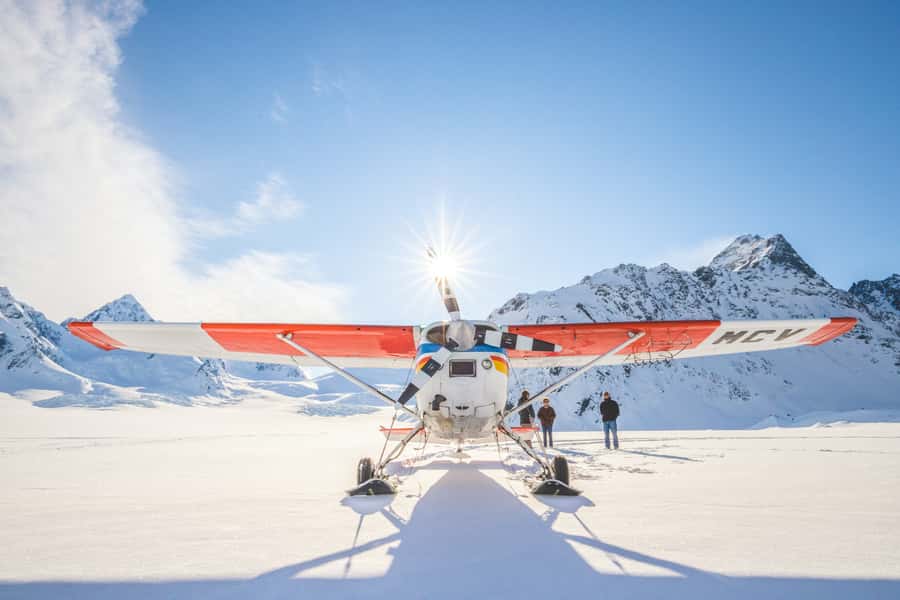
You can use cameras and phones throughout the flights, but bags are not allowed onboard. Leave backpacks, handbags, food, drinks, drones, and selfie sticks behind. A phone with a secure grip or a small camera is the most useful setup.
Wear closed-toe shoes. Bring layers that you can adjust, since sunshine at the glacier can feel milder than the setting suggests, while wind can change the feel quickly.
Give yourself more time than the 45-minute flight duration implies. The tour itself is short, but check-in closes 45 minutes before the scheduled departure, and weather or aircraft changes may affect the day. One passenger also reported arriving late after a road closure and being moved to a later flight after contacting the company. That kind of help may be possible, but it is far better not to rely on it.
The experience is conducted in English, with a live guide and English audio support. If you want to learn more about the peaks and glacier, listen carefully through the headset. If the sound seems low, ask for help before takeoff.
Who should book this experience?
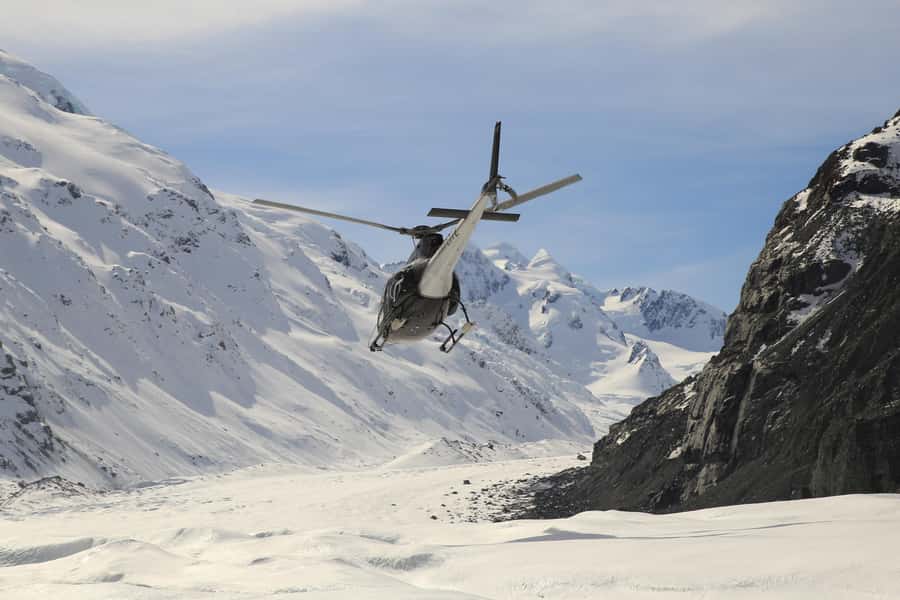
I would point this flight toward anyone who wants a glacier landing without committing to a demanding hike. It suits first-time visitors to Aoraki/Mount Cook, families with older children, photographers, and anyone who wants to see the park’s scale in a short period.
It also works well for a special occasion, though the aircraft restrictions and weather risk make it a poor choice for a tightly timed celebration. Give yourself room to reschedule.
This is less suitable if you dislike flying, need to carry luggage with you, or expect a guaranteed route and aircraft. It is also worth thinking twice if you are paying mainly for a long helicopter ride. The helicopter is one part of a combined 45-minute experience, not the whole outing.
Should you book the Mount Cook ski plane and helicopter combo?
Book it if standing on the Tasman Glacier is high on your New Zealand wish list and $328 fits your budget. The two aircraft, the silent snow landing, and the view toward Aoraki/Mount Cook make this far more memorable than a standard scenic flight.
Choose a flexible date if possible, and keep your plans open for weather. Before booking, provide accurate passenger weights, confirm the aircraft arrangement, and accept that the ski plane may be replaced by another flight if conditions or maintenance require it.
The flight is short and expensive, but its access is hard to match. For many people, the moment the aircraft shuts down on the snow, with the glacier stretching beneath the peaks, will justify the cost.
FAQ
How long is the Mount Cook ski plane and helicopter experience?
The advertised duration is 45 minutes. This includes the ski plane flight, helicopter flight, glacier landing, and aircraft change.
Where does the flight depart?
The meeting point is Mount Cook Aerodrome in Mount Cook National Park, New Zealand. Free car parking is available at Aoraki/Mount Cook Airport.
Will I land on the Tasman Glacier?
The planned experience includes a snow landing on the upper snowfields of the Tasman Glacier. Weather and operating conditions can affect the route or landing.
Can I bring a bag or food onboard?
No. Bags, food, drinks, drones, and selfie sticks are not allowed on the aircraft. Phones and cameras can be used during the flights.
What should I bring?
You must wear closed-toe shoes. Adjustable layers are sensible because conditions at the glacier can differ from those at the airport.
What happens if bad weather cancels the flight?
The operator will try to reschedule the flight to suit your plans. If the tour is canceled because of weather, it is refundable. An alternative helicopter trip, a shorter flight, or a different glacier route may also be offered depending on conditions.
Newly listed around Mount Cook & Lake Tekapo
- Mount Cook: 20-Minute Alpine Vista Helicopter Flight★ 4.2 · 5 reviews
- Lake Tekapo to Mt Cook One-Way Small Group Tour★ 4.0 · 5 reviews
- Mount Cook: Alpine Explorer 35 Minute Flight★ 4.9 · 6 reviews
- Mount Cook: Tasman Glacier and West Coast Helicopter Flight★ 5.0 · 6 reviews
- Mount Cook Scenic 35 Minute Helicopter Flight★ 5.0 · 6 reviews
- Mt Cook: 55-Minute Scenic Flight in Helicopter or Ski Plane★ 4.1 · 6 reviews
- Mount Cook: Glentanner High Country Heli Hike★ 5.0 · 7 reviews
- Mount Cook: Tasman Glacier Helicopter Flight★ 4.3 · 7 reviews
Mount Cook & Lake Tekapo Tours, compared.
Mt Cook Small Group Scenic Day Tour from Queenstown
Read our review →
Tekapo Shuttle: Mt Cook Day Tour via Pukaki & Tasman Lake
Read our review →
Browse the lists this tour appears in