
Reviewed · MOUNT COOK & LAKE TEKAPO TOURS
Lake Tekapo: Stargazing Experience
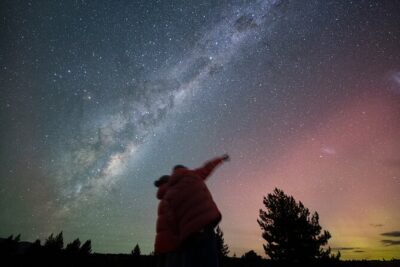
Lake Tekapo’s real attraction after dark is above you. Away from almost all artificial light, the Southern Sky becomes the main event, with stars, planets, constellations, and deep-sky objects brought into view through a powerful telescope. The mix of clear science, old stories, and hands-on viewing makes this much more than simply standing outside and looking up.
I like the thoughtful comfort: thick blankets, reclining seats, pillows, and hot chocolate make a cold night easier. I also like the useful keepsakes, especially the edited night-sky photos and personal photo taken beneath the stars. The main catch is simple: Tekapo can be bitterly cold, windy, or cloudy at any time of year, so the quality of your night depends partly on the weather.
- A four-minute drive from town: The viewing site sits beside the Tekapo River, close enough to reach easily by car.
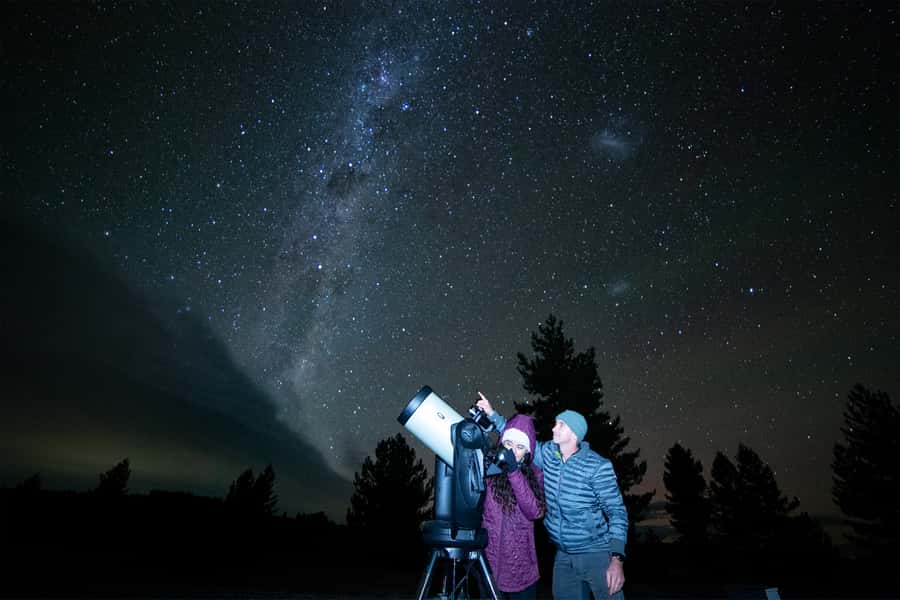
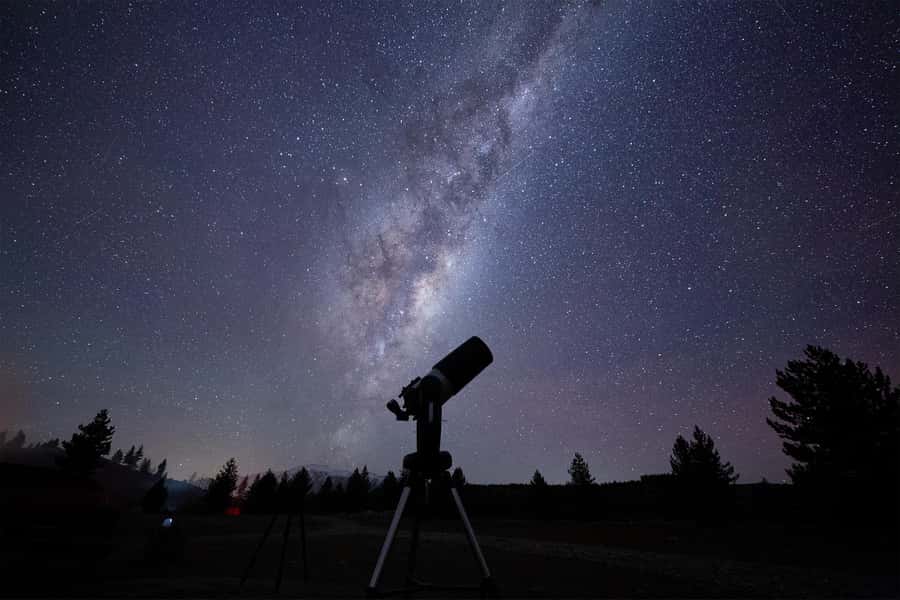
- Two telescope experiences: Use a 9.25-inch computerized telescope and a smart telescope to view objects that are hard to see with the naked eye.
- Stories with substance: Guides combine astronomy, constellation lore, Greek mythology, Maori legends, and practical facts about the sky.
- Comfort built into the evening: Outdoor seats, pillows, mattresses, blankets, and hot chocolate are provided.
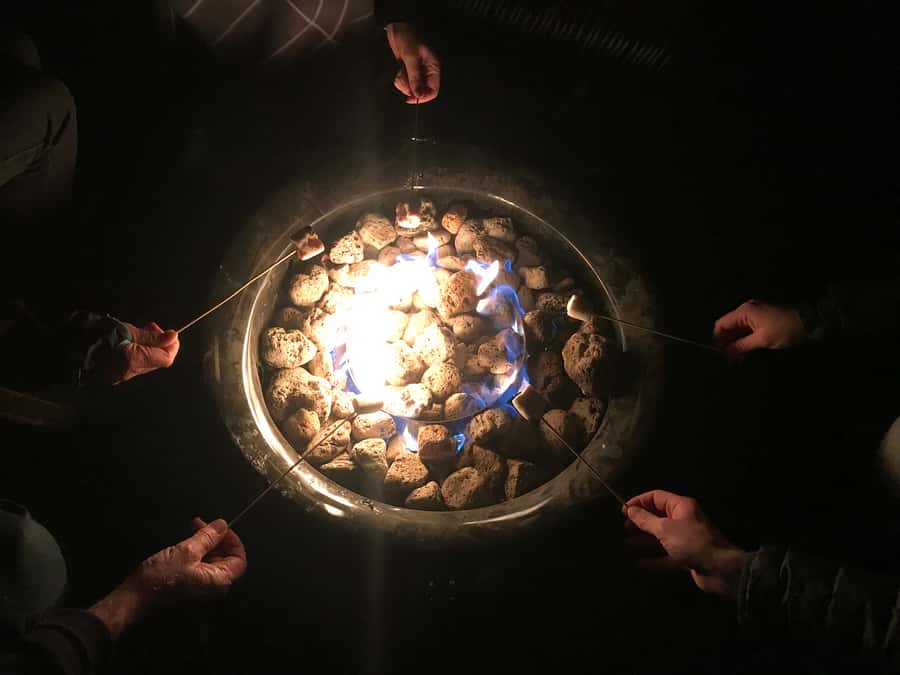
- A warm finish: Toast marshmallows around a fire bowl at the end of the 90-minute session.
- Photos included: The team takes an individual long-exposure photo and sends edited images from the telescope session.
Why Lake Tekapo Is Made for Stargazing
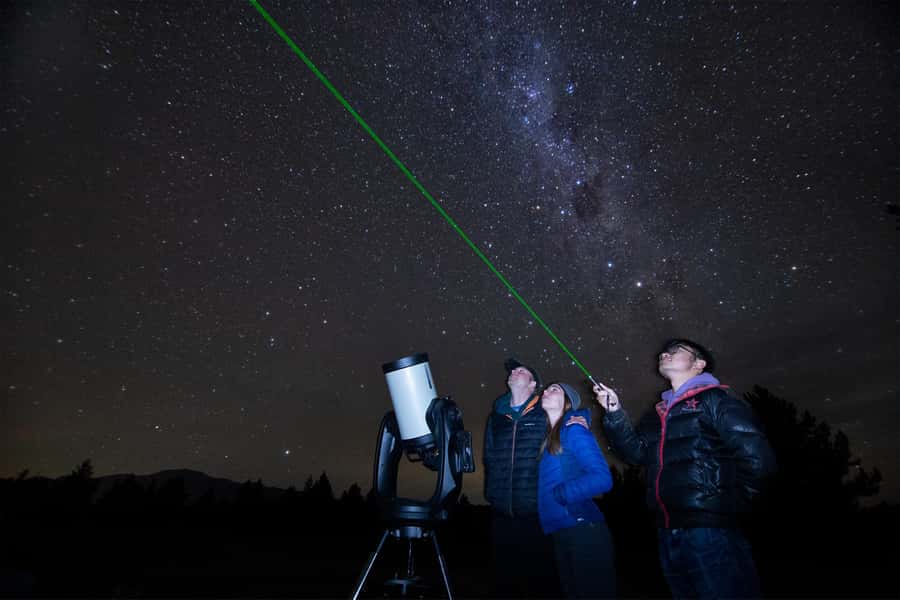
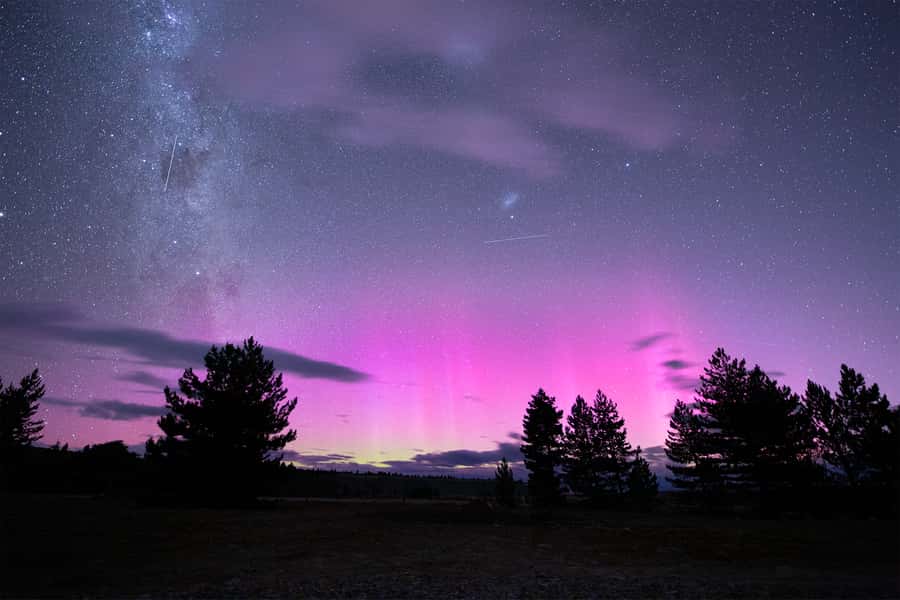
Lake Tekapo lies within the Aoraki Mackenzie International Dark Sky Reserve, a region known for unusually low light pollution. That matters because city lights wash out the faint stars first. At Tekapo, the darker sky gives you a better chance to see the broad sweep of the Milky Way and notice far more stars without optical help.
The experience takes place outside the village, next to the Tekapo River. You are not being sent far into the countryside, but the short distance from town helps reduce stray light. The site is about a four-minute drive from Lake Tekapo’s center, or roughly a 20-minute walk.
That walk needs care. At night, parts of the route can be completely dark. If you walk, bring a torch or headlamp, and something reflective is a sensible extra. The final approach may feel longer than expected when you are trying to find your way under a dark sky.
The setting is practical rather than fancy. You get an outdoor astronomy site arranged for looking upward, with seats and warm coverings ready for the session. That is a good fit for Tekapo. The point is not a polished indoor show, but a close look at the actual sky above the South Island.
The First Look: Constellations, Myths, and the Southern Sky
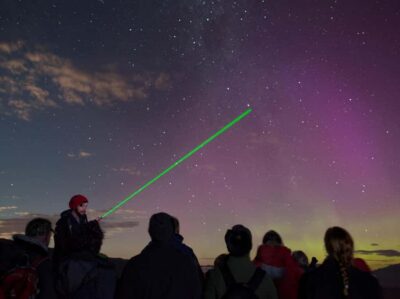
Your guide leads you to the viewing area and begins with the sky itself. Before you look through a telescope, you learn how to read what is overhead. A laser pointer helps connect the explanation to the actual stars, which is far more useful than hearing a list of constellation names in the abstract.
The presentation blends several kinds of storytelling. You may hear the science behind stars and planets, ancient Greek mythology linked to constellations, and Maori stories connected with the night sky. The guides also explain practical points such as finding your bearings and using the Southern Sky for navigation.
That variety gives the first part of the tour a broad appeal. If you already know basic astronomy, the stories add cultural context. If the difference between a planet and a star is still a blur, the guide keeps the subject approachable. Guides including George, Mok, Estella, Adria, Adrian, and Josh have been praised for making explanations lively and easy to follow, though the guide assigned to your session may be different.
I especially like that the guide leaves room for questions. Several sessions have been described as interactive, with time to ask about stars, constellations, planets, and the objects being viewed. The best part of a live astronomy tour is often the follow-up question you did not know to ask before arriving.
A few more Mount Cook & Lake Tekapo days to compare
- Lake Tekapo: Alpine Stargazing Experience with a Guide
★ 4.5 · 626 reviews - Mount Cook: Scenic Helicopter Flight with Alpine Landing
★ 4.8 · 442 reviews - Mt Cook Small Group Scenic Day Tour from Queenstown
★ 5.0 · 407 reviews
Through the 9.25-Inch Telescope
The main viewing uses a 9.25-inch computerized telescope. The size and computer guidance matter because they allow the team to locate faint or distant targets with much greater precision than a basic backyard telescope.
You may look at a variety of deep-sky objects, as well as stars, planets, and the Moon when they are available in the night sky. One particularly memorable possibility is viewing a nebula through the telescope, an experience that can feel surprisingly dramatic after first seeing only a dark patch of sky with your eyes.
The view through a telescope is not the same as a glossy space-agency photograph. You are looking through a real outdoor instrument, in real time, from New Zealand. The reward is the connection: the small shape or cluster in the eyepiece is actually above you, not on a screen inside a visitor center.
The computerized system also helps the session move along. You are not left waiting while someone searches randomly across the sky. The guide can point the telescope toward selected objects and explain what you are seeing before and after each look.
A second smart telescope adds another way to view the sky. Having two telescope systems gives the session more variety and lets the guides show objects in different ways. It also helps keep the evening moving when several people are waiting for a turn.
Do not expect to spend all 90 minutes with your eye pressed to an eyepiece. A group astronomy session has to share the equipment, and the guide’s explanation is a central part of the experience. The value comes from the combination of naked-eye orientation, guided stories, telescope views, and conversation.
Comfort That Matters on a Tekapo Night
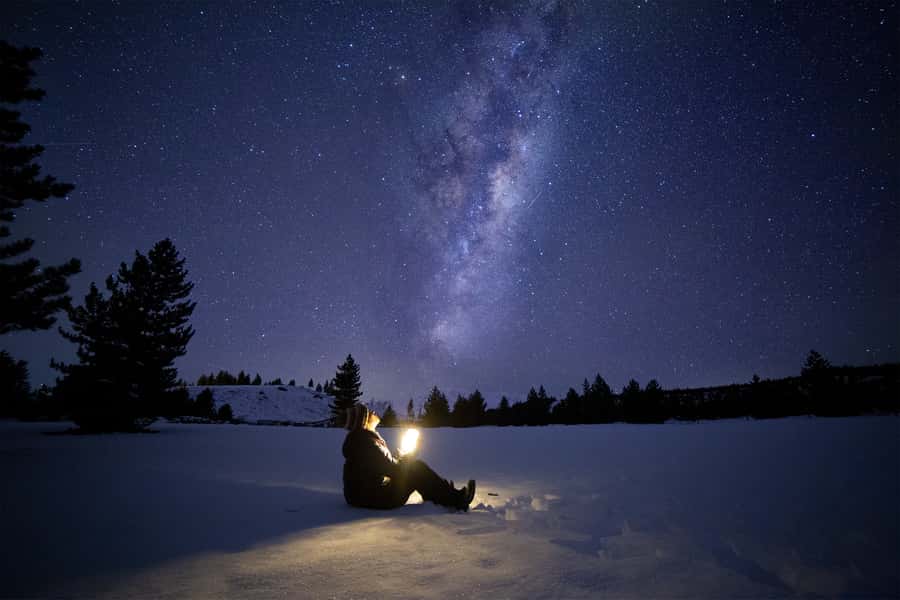
The temperature is the biggest practical issue. Tekapo can feel very cold after sunset even in summer, and winter nights can be severe. Wind makes the cold more noticeable, as one session demonstrated when the guides had to work through a particularly gusty evening.
The tour provides outdoor seats, pillows, mattresses, and blankets. Some seating is arranged so you can lean back and spend time looking at the sky without standing for the whole session. That is a small detail, but it makes a real difference when the tour lasts 90 minutes.
You should still dress as if you will be outside for longer than planned. Wear warm layers, a proper jacket, comfortable shoes, and extra clothing if you have it. Gloves, a hat, and warm socks are sensible additions, although only warm clothing and comfortable shoes are specifically required.
The hot chocolate arrives as part of the experience, with lactose-free and gluten-free choices available on request. Some cups are reusable souvenir cups, which turns a simple drink into a practical reminder of the evening. It is not a replacement for warm clothing, but it is welcome when you have been sitting still and looking upward.
At the end, the guide lights a fire bowl and brings out marshmallows for roasting. This gives the evening a relaxed finish and creates time for more questions. It also suits families and groups who want something social after the concentrated telescope viewing.
Photos You Receive After the Stars Come Out
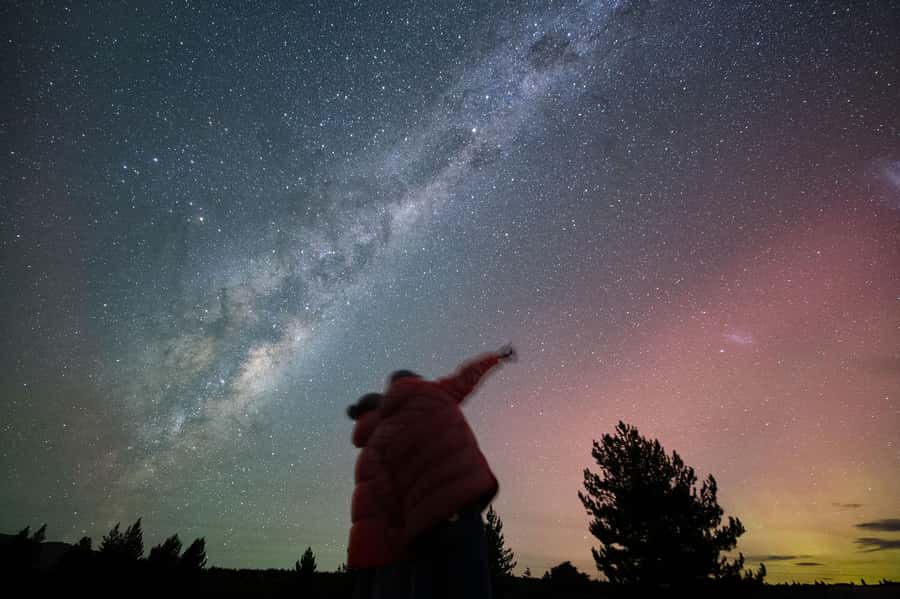
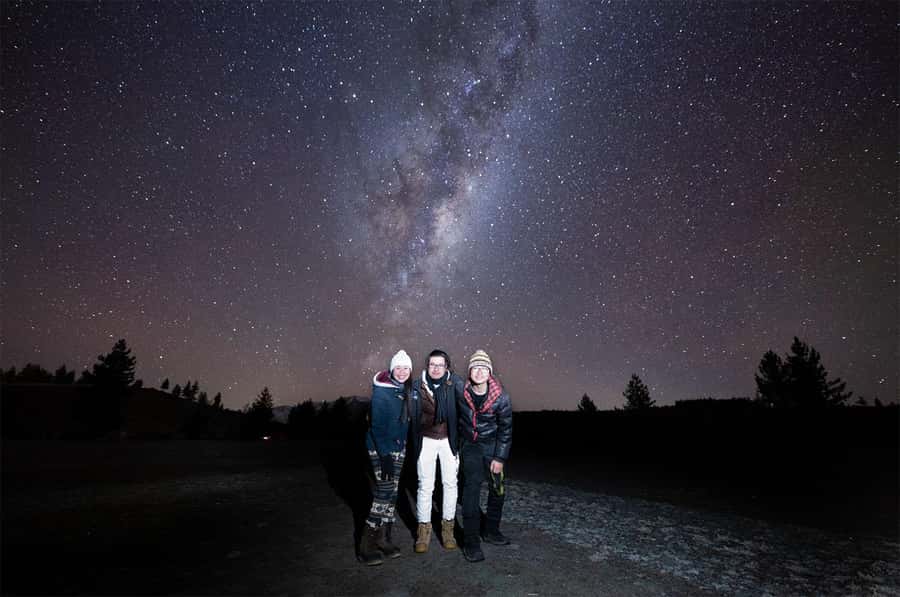
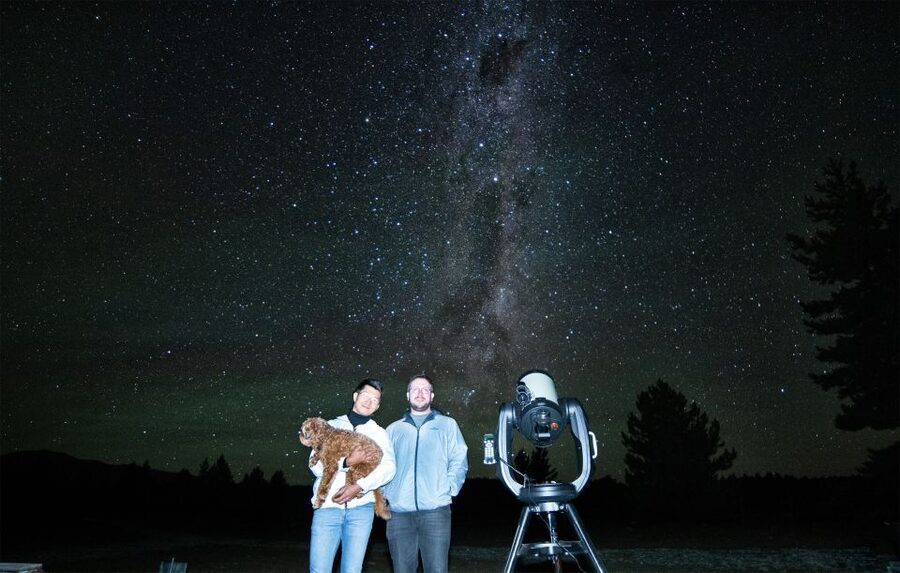
The photography service is one of the tour’s strongest extras. During the session, the guide takes an individual photo of you beneath the night sky, usually using a long-exposure technique that shows the stars behind you more clearly than an ordinary phone photograph.
You also receive edited images connected with the telescope session. These show the celestial objects you viewed, including the Moon, stars, or other deep-sky targets when conditions allow. The result helps you remember not only that the sky looked beautiful, but what you actually learned to identify.
This is useful because night photography is difficult. A phone camera may capture a few stars, but it will not easily produce a clear portrait with the Southern Sky behind you. The included photos give you something shareable without requiring you to bring a camera or understand manual exposure settings.
The images are sent after the experience, so do not expect to leave with printed photographs in hand. Make sure the provider has the correct contact details for sending the edited files.
Somewhere else in Mount Cook & Lake Tekapo entirely:
- Tekapo Shuttle: Mt Cook Day Tour via Pukaki & Tasman Lake
★ 4.8 · 307 reviews - Mount Cook: Ski Plane and Helicopter Glacier Combo Flight
★ 4.6 · 271 reviews - Mount Cook: 3 Hour Heli Hike to the Tasman Glacier
★ 4.7 · 218 reviews - Chameleon Stargazing Shared Tour
★ 5.0 · 181 reviews
Weather, Clouds, and What You Can Control
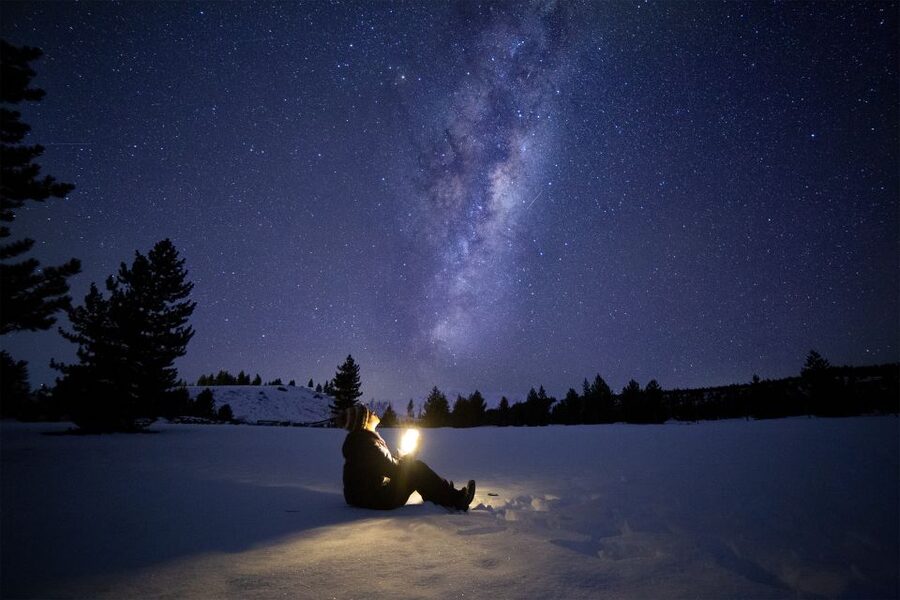
Stargazing has one unavoidable weakness: clouds can block the sky. Wind, haze, and changing conditions can also affect what the telescopes can show. No guide can fix a cloudy night, but the team’s communication and judgment matter.
If conditions look doubtful, the provider may contact you and offer the choice of a refund or proceeding in the hope that the clouds clear. That flexibility is valuable because Tekapo weather can change during an evening. One cloudy start has still led to a successful viewing once the sky opened up.
You should check the forecast, but do not treat it as a promise. A partly cloudy night may still offer worthwhile gaps, while a forecast that looks acceptable can change by the time you reach the site. If the weather is clearly poor, confirm the current plan before setting out.
The possibility of seeing the aurora is another bonus, not something to book around. A southern lights display was visible during one session, but aurora sightings depend on conditions beyond the tour operator’s control. Book this for the Dark Sky Reserve and the astronomy, then treat an aurora as luck.
Tours scheduled after midnight require careful date planning. A session at 12:45 AM on January 1 is booked as January 1, not December 31. If your evening crosses midnight, check the calendar date closely when choosing your time.
Is $71 a Fair Price?
At $71 per person, this is not the cheapest way to look at stars. You could step outside in Tekapo for free and see a remarkable sky on your own. The question is what you want from the evening.
The tour earns its price through the equipment, instruction, comfort, and included extras. You get access to a 9.25-inch telescope and a smart telescope, a live guide, blankets and seating, hot chocolate, marshmallows, and edited photos. A self-guided walk gives you none of the explanation or telescope access.
The guide also saves you from guessing what you are seeing. A bright point may be a planet, a star, or something else entirely. The tour turns that uncertainty into a lesson, then lets you see selected objects through equipment designed for the job.
I see the best value for people who want a shared, easy-to-follow evening rather than a specialist observatory program. Beginners get clear explanations, families get a warm and social ending, and couples receive a personal photograph beneath the sky. People who already own serious astronomy equipment may find the session less essential, but the location and southern constellations still add interest.
The 90-minute length is well judged. It gives you enough time for the sky talk, telescope turns, photographs, and fire bowl without making the cold unbearable. On an excellent night, you may wish it were longer, but the shorter format is easier to fit into a busy South Island itinerary.
Who Will Enjoy This Most
I would recommend this experience if you want to understand the Southern Sky instead of simply photographing it. The guide’s explanations make the evening more rewarding, and the telescope views add something you cannot get from a lookout beside the lake.
It is a good choice for:
- First-time stargazers who want astronomy explained in plain language
- Families who appreciate seating, blankets, hot chocolate, and marshmallows
- Couples who want a personal night-sky photo
- Visitors curious about Maori stories and Greek mythology
- People without their own camera or telescope
- Anyone with limited time in Tekapo who wants a planned evening activity
It may be less suitable if you dislike cold outdoor conditions or want complete control over what you observe. The tour follows a shared schedule, and several people use the telescopes. You also need to accept that clouds may limit the viewing.
The activity is wheelchair accessible, which widens its appeal. Transport to the site is not provided, so you must drive or walk from the village. That is easy by car, but a dark 20-minute walk requires a torch and extra caution.
How to Get Ready for the Night
Arrive dressed for standing or sitting outdoors in cold air. Wear several layers rather than relying on one thick coat, and bring extra warmth if you have room in your bag. Comfortable shoes matter because the site is outside and the evening includes moving between the viewing area and fire bowl.
If you are walking from town, carry a torch or headlamp. Add something reflective if you are alone or walking near roads. The route is short, but darkness changes how familiar places feel.
Keep your expectations realistic about photos. The included images are a fine extra and a useful record, but the main attraction is seeing the sky through the equipment and learning what is above you. Put your phone away for parts of the evening and let the guide do the pointing.
Finally, leave room in your schedule for the possibility of a weather change. The provider offers free cancellation up to 24 hours before the activity, and you can reserve now while paying later. Those terms are useful for a weather-dependent outing, but you should still check the latest details at booking.
Should You Book Lake Tekapo Stargazing?
Yes, if you want a friendly introduction to astronomy with proper equipment and a few well-chosen comforts. The guides, including George, Mok, Estella, and others, bring energy to subjects that can otherwise feel technical. The telescope views, dark location, photos, hot chocolate, and marshmallow fire make the $71 feel justified for most first-time stargazers.
Book it with warm clothes and flexible weather expectations. If you are willing to sit outside in the cold and share telescope time with a group, this is one of the better ways to make sense of Lake Tekapo after sunset. If the forecast is poor, check the operator’s advice before committing, since the sky, not the brochure, decides how much you will see.
FAQ
How long does the Lake Tekapo stargazing experience last?
The experience lasts 90 minutes.
How much does the tour cost?
The listed price is $71 per person.
Where does the stargazing take place?
The site is next to the Tekapo River, about a four-minute drive from Lake Tekapo village center or a 20-minute walk.
Is transport included?
No. The provider does not offer shuttle service to the meeting point.
What telescopes will I use?
You will have access to a 9.25-inch computerized telescope and a smart telescope.
What is included to keep me warm?
Outdoor seats, pillows, mattresses, and blankets are provided. Hot chocolate is included, with lactose-free and gluten-free options available on request.
What should I bring?
Bring warm clothing and comfortable shoes. If you walk to the site, also bring a torch or headlamp, and consider wearing something reflective.
Newly listed around Mount Cook & Lake Tekapo
- Mount Cook: 20-Minute Alpine Vista Helicopter Flight★ 4.2 · 5 reviews
- Lake Tekapo to Mt Cook One-Way Small Group Tour★ 4.0 · 5 reviews
- Mount Cook: Alpine Explorer 35 Minute Flight★ 4.9 · 6 reviews
- Mount Cook: Tasman Glacier and West Coast Helicopter Flight★ 5.0 · 6 reviews
- Mount Cook Scenic 35 Minute Helicopter Flight★ 5.0 · 6 reviews
- Mt Cook: 55-Minute Scenic Flight in Helicopter or Ski Plane★ 4.1 · 6 reviews
- Mount Cook: Glentanner High Country Heli Hike★ 5.0 · 7 reviews
- Mount Cook: Tasman Glacier Helicopter Flight★ 4.3 · 7 reviews
Mount Cook & Lake Tekapo Tours, compared.
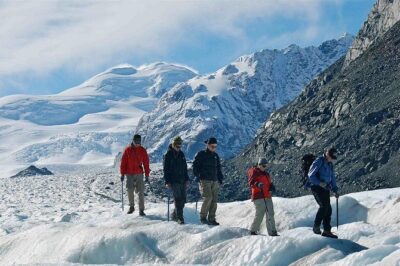
Mt Cook Small Group Scenic Day Tour from Queenstown
Read our review →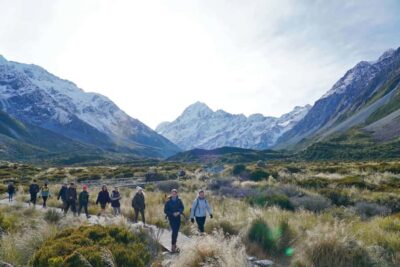
Tekapo Shuttle: Mt Cook Day Tour via Pukaki & Tasman Lake
Read our review →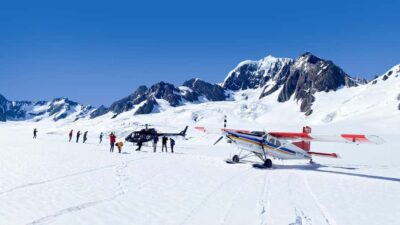
Browse the lists this tour appears in