
Reviewed · MOUNT COOK & LAKE TEKAPO TOURS
The Adventurer: Tasman Glacier Heli-hike
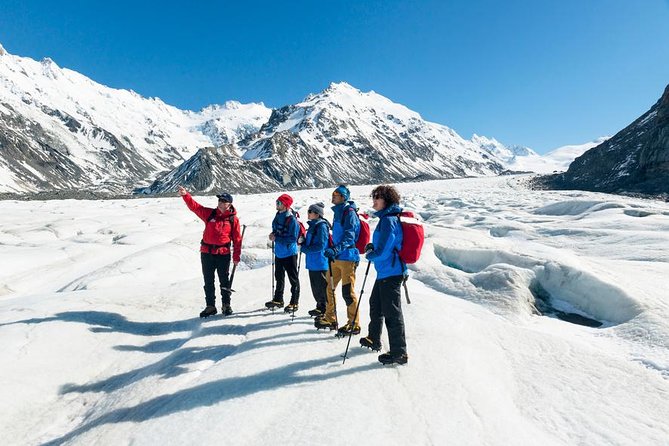
The best part of this Tasman Glacier heli-hike is the sudden change from airport to high alpine ice. One minute you are at Mount Cook Airport; soon you are looking down on the glacier from a helicopter, then walking across it at roughly 1,300 meters. The guide may lead you into an ice tunnel, across fresh snow, or down toward a blue-white hole where meltwater moves below.
I like the two-part design: the flight gives you huge views of Aoraki/Mount Cook, while the hike lets you examine the ice close up. I also like the small maximum group of 11, since guides such as Richard, Hunter, Flav, Fiona, and Pawel can give more direct help with crampons, footing, and photographs. The main drawback is simple: weather controls the day, and the $572.23 price is a serious bite from a New Zealand holiday budget.
Key details before you book
- Two helicopter flights carry you from Mount Cook Airport to the glacier and back, with a fly-by of Aoraki/Mount Cook.
- The glacier walk reaches about 1,300 meters, where crampons or winter snowshoes help you cross the ice.
- Blue ice caves, tunnels, holes, fresh snow, and meltwater may form part of what your guide shows you.
- Boots, wool socks, outerwear, poles, and ice gear are supplied, so you do not need to pack specialist equipment.
- Groups are limited to 11 people, and the activity lasts about three hours.
- Poor weather can cancel or delay the trip, so keep some flexibility in your Mount Cook plans.
From Mount Cook Airport to the Tasman Glacier
The experience starts at Mount Cook Airport on Mount Cook Road. You do not meet in a central town and then ride by bus to the glacier. The helicopter is the transport, which is why this trip reaches ice and snow that would otherwise require a long, demanding overland journey.
At the base, the team sorts out your clothing and equipment. You receive quality leather boots and wool socks, plus a waterproof jacket and over-trousers. Adjustable walking poles are included, along with crampons or snowshoes depending on conditions and the season. A harness can also be supplied if required.
That preparation matters. The glacier is not a paved walk with a scenic backdrop. It is uneven, cold, and shaped by changing ice. Your own packing list still matters: bring three or four warm upper-body layers, warm trousers instead of jeans, sunglasses, sun protection, a hat, gloves, water, snacks, and a camera.
You need a moderate level of fitness. The tour does not promise a long expedition, but you will walk on snow and ice, use traction equipment, and follow your guide over ground that can change from firm snow to rough ice. Wear the supplied boots properly and listen closely during the safety briefing.
More glacier walks and heli hikes:
- Mount Cook: 3 Hour Heli Hike to the Tasman Glacier
★ 4.7 · 218 reviews - Glentanner High Country Heli Hike
★ 5.0 · 52 reviews - Mount Cook: 3-Hour Tasman Glacier Heli-Hike
★ 4.5 · 29 reviews
The helicopter flight to Aoraki and the ice
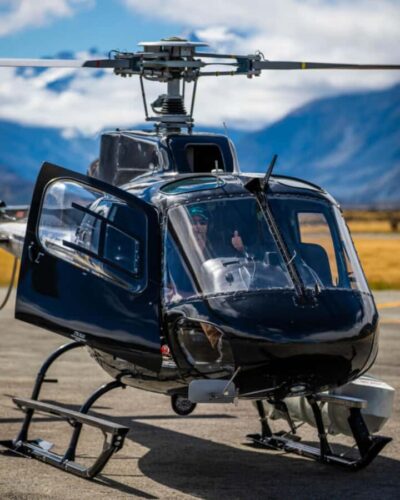
The first flight is part of the attraction, not just a lift to the starting point. The route includes views of New Zealand’s highest peak, Aoraki/Mount Cook, and a scenic look at the Tasman Glacier from above. The exact view depends on cloud, wind, and the pilot’s flight path.
Helicopter seating can affect what you see. The company has switched seating between the outward and return flights so people have a chance at a window or front position. I would still avoid treating one seat as guaranteed. The aircraft is small, and the view can change quickly as the helicopter banks around the mountains.
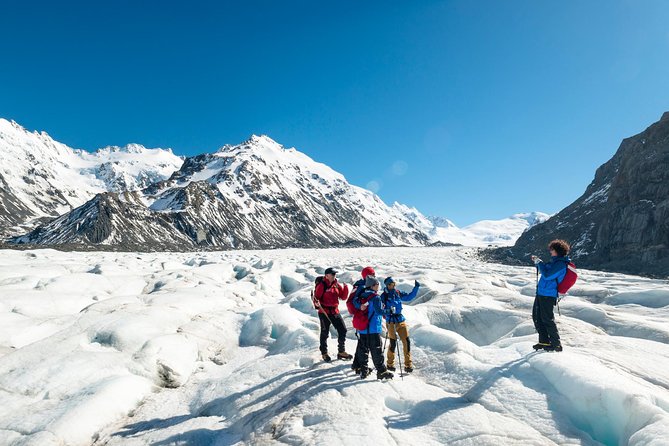
For many people, the flight alone would be a major South Island experience. You see the glacier as a broad sweep of ice and snow, then land on a remote section at roughly 1,300 meters. That combination gives you both the grand view and the close-up experience. A standard lookout gives you scale. This gives you texture.
The return flight adds another scenic chapter. Depending on conditions, the pilot may make a close pass by a glacier on a mountain face. That is a memorable way to finish, though the route and exact sights cannot be promised. Helicopter operations follow strict schedules, so the flight cannot simply wait for a late arrival.
Walking across the Tasman Glacier
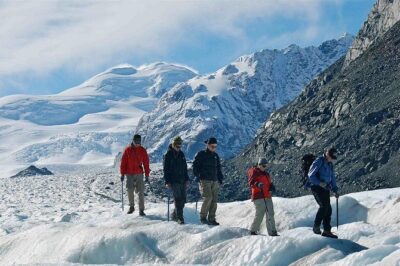
After landing, your guide fits your crampons or snowshoes and explains how to move across the surface. Crampons help grip hard ice. Snowshoes may be used in winter when fresh snow changes the footing. Walking poles give you extra balance, especially when the surface is uneven.
The guide may cut steps into the glacier using techniques passed down from New Zealand’s early mountaineers. That detail gives the walk a practical, old-school feel. You are not simply following a marked path. Your guide reads the ice and chooses a route through the safest and most interesting sections available that day.
The pace is built around seeing the ice rather than covering a fixed distance. You might follow a narrow route toward blue ice, inspect small formations, or walk through fresh snow. The activity usually includes time for photographs, so you do not need to choose between paying attention and rushing to get a picture.
The glacier can also offer features that change from day to day. A guide may locate an ice tunnel or cave, a hole descending into blue-white ice, or water moving below the surface. One especially memorable possibility is a short descent of about 10 feet into a blue-white hole with water surging underneath. That is not a guarantee, but it shows why a guided visit is more rewarding than simply landing and wandering.
You might also drink glacier water or make a slushie from glacier ice if conditions and the route allow. These small moments make the trip feel less like a sightseeing flight and more like a hands-on mountain outing. Do not expect a fixed checklist, though. The glacier is active, and your guide decides what is safe and accessible.
Guides who make the difference
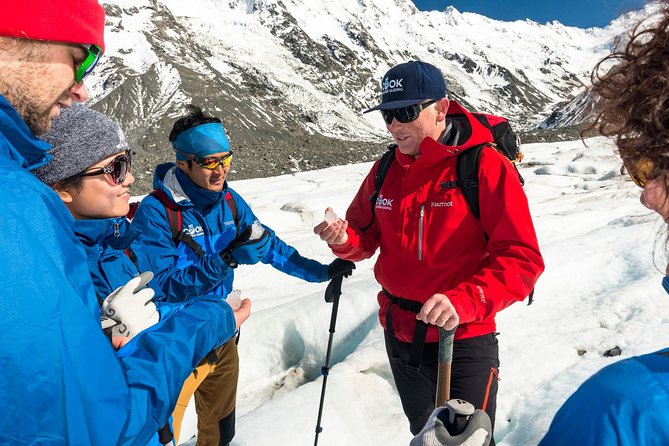
The guide is central to this experience. The helicopter gets you there, but the guide turns a cold walk into an understandable one. You need someone who can manage equipment, explain ice formations, watch group safety, and keep the outing enjoyable when the weather is uncertain.
Guides named in the feedback include Richard, Hunter, Flav, Anna, Fiona, and Pawel. Hunter has been praised for finding interesting sights such as caves and slushie-making ice. Richard is associated with patient route-finding and a lively approach to unusual formations. Flav has been singled out for allowing time for photographs and explaining what the group was seeing.
Your guide on the day may be someone else. That is worth keeping in mind when comparing the tour. The company’s strength appears to be the guiding system rather than one advertised personality. The guide’s decisions also carry real weight because conditions can alter the route after you land.
A small group helps here. With no more than 11 people, you are less likely to disappear behind a crowd when the guide is explaining a crevasse or fitting equipment. It also makes it easier to ask questions and get help with your footing. Still, this is a shared activity, not a private glacier walk, and time at each feature must be divided among the group.
More Hiking Tours in Mount Cook & Lake Tekapo:
- Mount Cook: Glentanner High Country Heli Hike
★ 5.0 · 7 reviews - Franz Josef Glacier Heli-Hike
★ 4.5 · 618 reviews - Heli Hike Fox Glacier
★ 5.0 · 563 reviews - Queen Charlotte Track: Cruise & Self-Guided Hike from Picton
★ 4.8 · 383 reviews
What the supplied gear really means
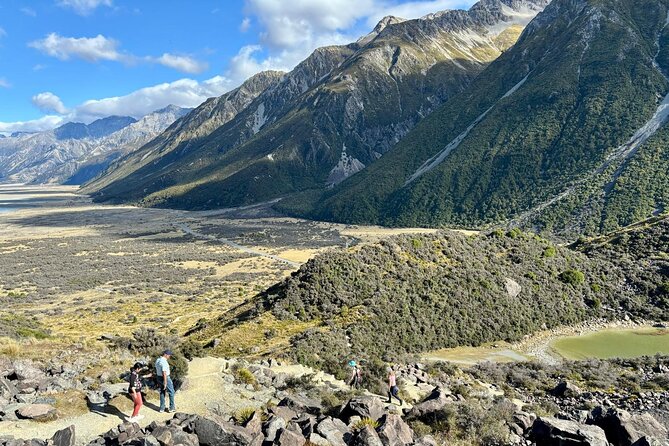
You do not need to own mountaineering equipment for this trip. The operator supplies leather boots, wool socks, waterproof outer layers, poles, crampons, and winter snowshoes when needed. A harness is included if the route requires one.
The provided clothing is useful, but it does not replace warm layers underneath. Bring your own thermal or insulating layers, warm trousers, hat, gloves, sunglasses, and sun protection. Ice and snow can reflect strong light, and the open conditions give you little shelter.
Do not wear jeans. They are poor protection once damp and uncomfortable under waterproof layers. Bring water and snacks as well. The tour lasts about three hours, and the cold can make you hungry even when the walking is not especially long.
The gear also reduces one common problem with specialist outings: buying or renting expensive equipment for a single holiday. That helps soften the price, though the supplied clothing should be viewed as part of a professionally arranged high-altitude outing, not a reason to ignore your own preparation.
Weather, timing, and the risk of a wasted morning
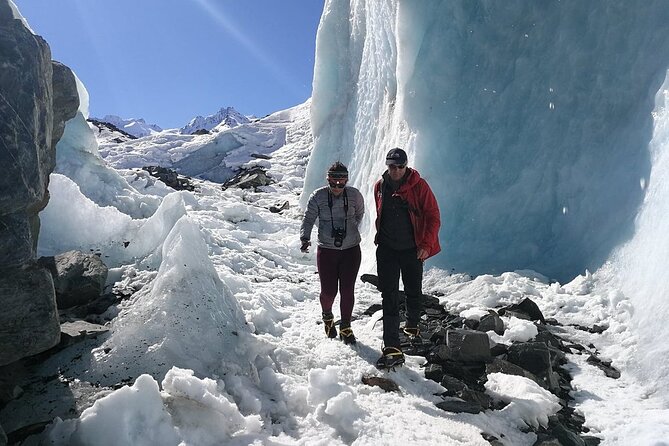
The Tasman Glacier heli-hike operates only in suitable weather. Wind, cloud, and visibility can affect both the flight and the walk. You may wait until close to departure for a final decision, so do not be alarmed if the schedule remains uncertain on a doubtful day.
The company can offer another date or a full refund if poor weather cancels the experience. This is helpful, but it works best if your itinerary has room to move. A road closure has also forced rescheduling in the past, with a later slot found two days afterward. I would leave at least one flexible day around Mount Cook if this activity is a major priority.
Do not plan a tight connection after the tour. The advertised duration is about three hours, but helicopter operations and weather decisions do not behave like a bus timetable. The company cannot delay departure for late arrivals because of strict helicopter scheduling. Missing your confirmed time can lead to a charge of the full cost if the space cannot be resold.
For standard cancellations, you can cancel free of charge up to 24 hours before the local start time. Changes or cancellations inside that window are not accepted for a refund. The activity also requires a minimum number of participants, and if that threshold is not met, you are offered another option or a full refund.
Is $572.23 good value?
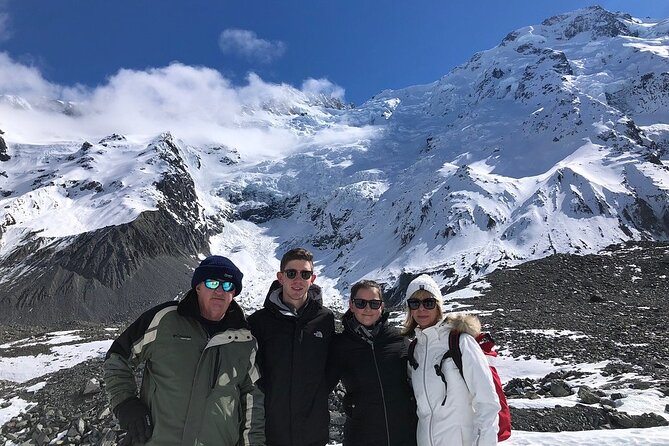
At $572.23 per person, this is one of the expensive activities around Aoraki/Mount Cook. The cost covers two helicopter flights, a professional guide, specialist clothing, boots, safety equipment, and access to remote glacier ice. You are paying for the aircraft and the guided access, not merely for a short walk.
I see the value if you want a genuine ice experience but do not have mountaineering skills or the time for a long expedition. The helicopter removes the arduous approach, and the guide handles the technical basics. You can spend your limited holiday time seeing ice caves, tunnels, blue formations, and snowfields rather than learning how to reach them.
The price is harder to justify if you mainly want mountain views. A flightseeing trip without the glacier hike would be less physically demanding, and Mount Cook offers other ways to enjoy its scenery. I would book this only if walking on the glacier matters to you, not simply because a helicopter sounds exciting.
The high rating of 4.9 from 92 reviews and 98 percent recommendation points to consistently strong satisfaction, but those numbers should not hide the practical tradeoff. Weather can cancel your day, the walk requires moderate fitness, and the cost is substantial. The payoff is a rare combination: an aerial view of the Southern Alps followed by actual time on the ice.
Who should book this experience?
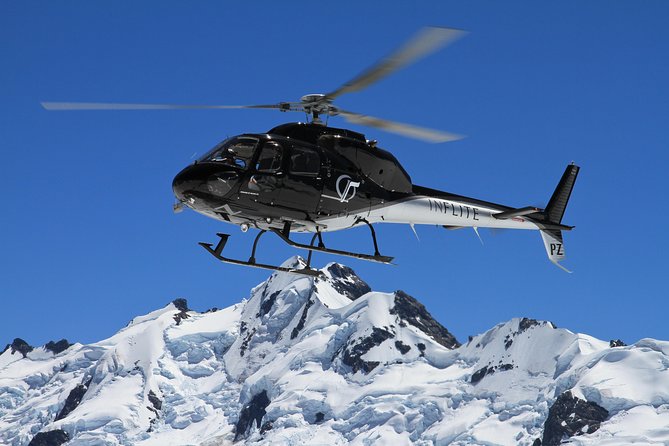
I would recommend it to active adults, couples, families with suitable older children, and anyone looking for a major adventure during a South Island road trip. It suits you especially well if you enjoy guided activities, photography, and learning how natural formations change over time.
It is also a strong choice for first-time helicopter passengers. The flight is scenic, the pilots are part of the experience, and the glacier walk gives the aircraft ride a clear purpose. Several pilots and guides have been praised for calm handling, safety, and a friendly approach.
I would think twice if you dislike cold conditions, have limited mobility, or want a relaxed sightseeing outing with no physical effort. The supplied equipment helps, but it does not turn a glacier into an easy boardwalk. You need to manage layers, stand on uneven ice, and follow instructions carefully.
My practical booking advice
Book early if your dates around Mount Cook are fixed, since the maximum group is 11 and the activity had been booked twice on the day of the supplied information. Then protect the booking with a flexible itinerary. A weather cancellation is easier to handle when you have another morning or afternoon available.
Choose the time of day based on your wider plans, but do not assume the company can shift you later if you arrive late. Get to Mount Cook Airport with enough time to prepare, and keep your camera, sunglasses, water, and gloves easy to reach.
The experience works best when you accept that the glacier decides what you see. You may find a tunnel, a cave, a deep blue hole, fresh snow, meltwater, or small avalanches. The guide will choose the route according to safety and conditions, so the day is more like a guided exploration than a scripted attraction.
Should you book the Tasman Glacier heli-hike?
Book it if you want to walk on real glacier ice, not just photograph it from a lookout. The helicopter flights, close views of Aoraki/Mount Cook, supplied gear, and capable guides make this a strong full-day-trip highlight in miniature.
Skip it if $572.23 would force you to cut more important parts of your New Zealand trip, or if you need a guaranteed schedule. For the right visitor, this is a rare and well-organized way to reach the Tasman Glacier. Leave room for weather, bring proper layers, and you will give yourself the best chance of a memorable three hours above Mount Cook.
FAQ
Where does the Tasman Glacier heli-hike start?
The activity starts at Mount Cook Airport, Mount Cook Road, in the Canterbury region of New Zealand.
Where does the activity finish?
The experience ends back at the Mount Cook Airport meeting point.
How long does the heli-hike take?
The total duration is approximately three hours.
How high on the glacier does the tour go?
The glacier landing and walk take place at roughly 1,300 meters, or 4,265 feet.
Are helicopter flights included?
Yes. The experience includes two scenic helicopter flights, one to the glacier and one back to the Aoraki/Mount Cook base.
Is a professional guide included?
Yes. A professional guide leads the glacier walk and helps with safety, equipment, and route selection.
Is glacier equipment supplied?
Yes. The operator supplies leather boots, wool socks, a waterproof jacket, over-trousers, adjustable walking poles, crampons, and snowshoes in winter when needed. A harness is supplied if required.
What should I bring?
Bring three or four warm upper-body layers, warm trousers, sunglasses, sun protection, a hat, gloves, water, snacks, and a camera. Jeans are not recommended.
What happens if bad weather cancels the tour?
If poor weather causes a cancellation, you can choose an alternative date or receive a full refund.
Can I cancel for free?
You can cancel up to 24 hours before the local start time for a full refund. Cancellations or changes made less than 24 hours before departure are not accepted for a refund.
Newly listed around Mount Cook & Lake Tekapo
- Mount Cook: 20-Minute Alpine Vista Helicopter Flight★ 4.2 · 5 reviews
- Lake Tekapo to Mt Cook One-Way Small Group Tour★ 4.0 · 5 reviews
- Mount Cook: Alpine Explorer 35 Minute Flight★ 4.9 · 6 reviews
- Mount Cook: Tasman Glacier and West Coast Helicopter Flight★ 5.0 · 6 reviews
- Mount Cook Scenic 35 Minute Helicopter Flight★ 5.0 · 6 reviews
- Mt Cook: 55-Minute Scenic Flight in Helicopter or Ski Plane★ 4.1 · 6 reviews
- Mount Cook: Glentanner High Country Heli Hike★ 5.0 · 7 reviews
- Mount Cook: Tasman Glacier Helicopter Flight★ 4.3 · 7 reviews
Mount Cook & Lake Tekapo Tours, compared.
Mt Cook Small Group Scenic Day Tour from Queenstown
Read our review →
Tekapo Shuttle: Mt Cook Day Tour via Pukaki & Tasman Lake
Read our review →
Browse the lists this tour appears in