
Reviewed · ROTORUA TOURS
Rotorua: Waimangu Volcanic Valley Entry Ticket
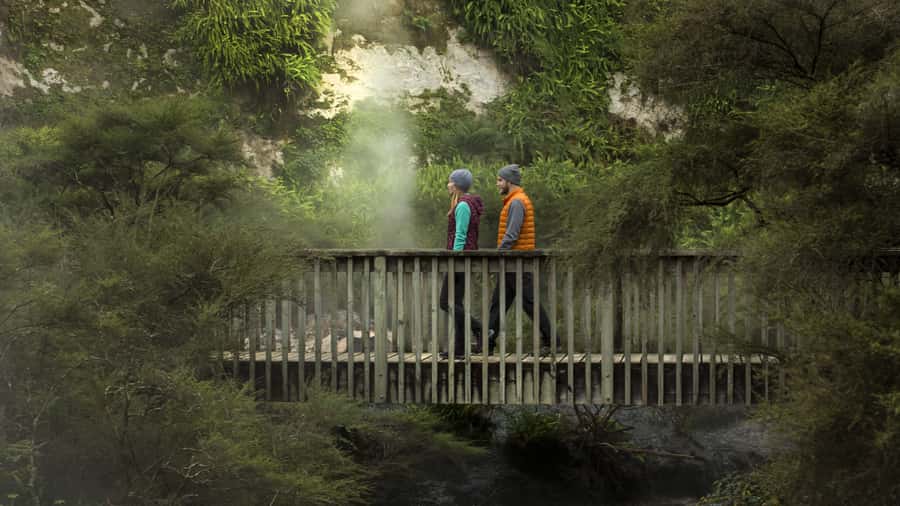
Waimangu Volcanic Valley is a place where the ground feels newly made. Steam vents rise among native forest, hot springs glow in unexpected colors, and broad crater lakes fill the valley below. The site is the world’s youngest geothermal area, and its raw volcanic character is the main reason to come.
I like the freedom to choose your walk, from a manageable 45-minute route to a demanding four-hour outing. I also like the practical shuttle bus, which lets you walk downhill through the valley and ride back instead of retracing every step.
The main consideration is terrain. The shorter walks are more approachable, but the Mount Haszard Trail is steep and rough, and the site is not suitable for wheelchair users. You need flat, comfortable walking shoes and enough time to enjoy the valley without rushing.
Key points to know before you go
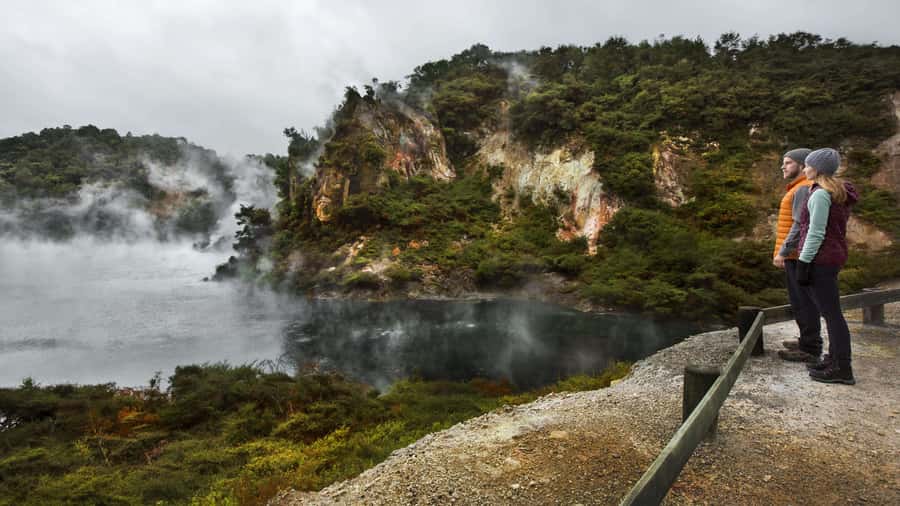
- Frying Pan Lake is one of the world’s largest hot springs, a broad and powerful geothermal feature surrounded by steam and volcanic colors.
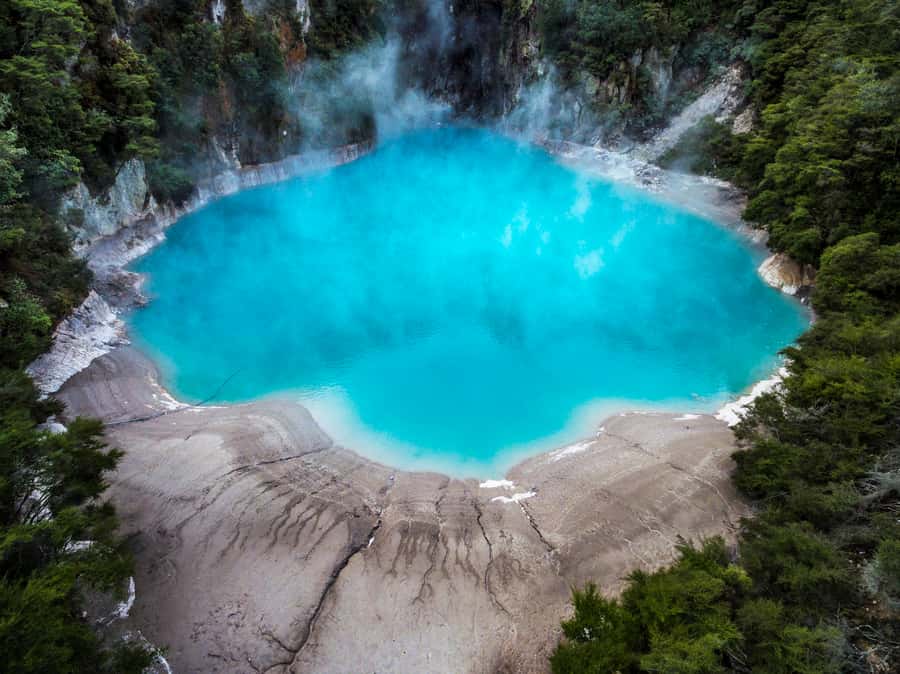
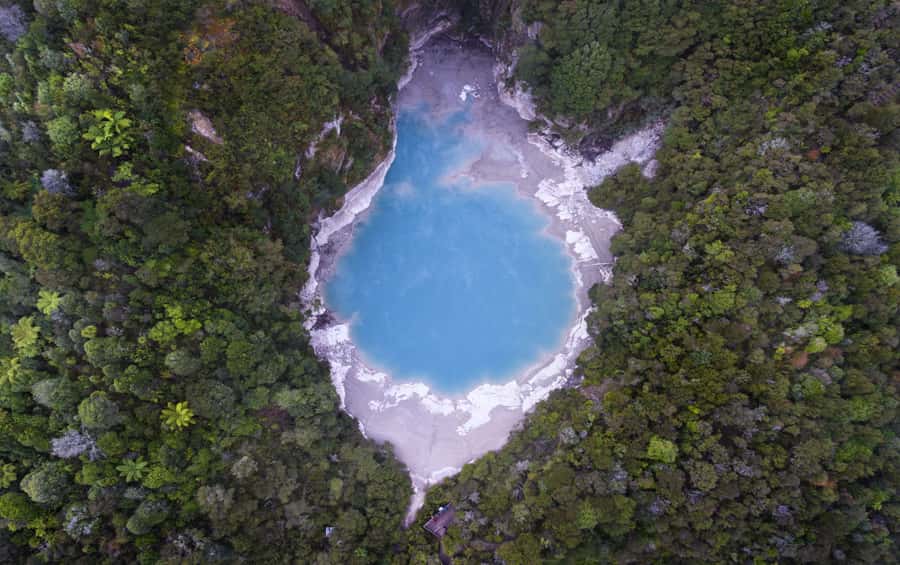
- Inferno Crater Lake brings the bright blue, while Echo Crater adds another striking stop along the walking routes.
- Walks range from 45 minutes to four hours, so you can match the visit to your fitness, weather, and schedule.
- A regular courtesy shuttle circles the valley, reducing walking distances and returning you to the visitor center.
- The Mount Haszard Trail is steep and rough, making it unsuitable for strollers, children, and wheelchair users.
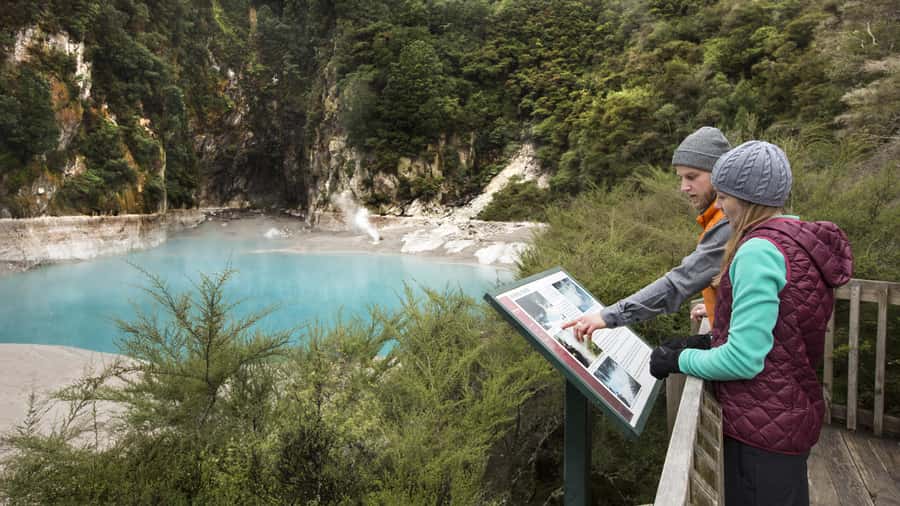
- A numbered map and guide sheet help you read the valley, with information available in multiple languages.
Why Waimangu feels different from Rotorua’s other geothermal stops
Rotorua is famous for geothermal activity, but Waimangu gives you a sense of moving through an entire volcanic valley rather than stopping at one contained attraction. The route links crater lakes, hot springs, terraces, steam vents, native plants, and open grassland.
The valley formed after volcanic activity reshaped the area, and its young age is part of the experience. You are not simply looking at bubbling water in a landscaped park. You are following trails through a place that still feels active and changeable.
That does not mean every step is dramatic. Some sections are quieter, with vegetation and broad views replacing obvious steam. I consider that a strength. The contrast helps the major geothermal features feel more powerful when they appear.
You can visit Waimangu as a self-guided walk, with no fixed group pace and no requirement to follow a guide from stop to stop. The information sheet and map give you the basic story and identify numbered sights, so you can focus on what is in front of you without needing a tour lecture.
A few more Rotorua days to compare
- Rotorua Canopy Tours: 2.5Hour Native Forest Zipline Adventure
★ 5.0 · 4,563 reviews - Mitai Maori Village: Cultural Experience and Dinner Buffet
★ 4.7 · 3,575 reviews - Rotorua: Wai-O-Tapu Geothermal Park Entry Ticket
★ 4.6 · 2,601 reviews
Arriving from Rotorua or Taupo
The visitor center is at 587 Waimangu Road. From Rotorua, the drive takes about 20 minutes south. From Taupo, allow about 40 minutes north.
The location makes Waimangu easy to add to a Rotorua day, especially if you start early. The valley opens at 8:30 am, and an early arrival gives you more flexibility with the walking routes. The shortest walk has a last admission time of 3:00 pm, but you should not arrive late if you want one of the longer options.
At reception, you check in and receive the information sheet and map. You then enter the valley at your own pace. Since the experience is independent, take a few minutes at the start to understand the route and shuttle stops.
The shuttle matters more than it might seem. Waimangu is not just a short loop beside the entrance. The internal bus reduces the amount of walking between sections, and a courtesy coach returns to the visitor center after you finish farther down the valley.
Choosing between the 45-minute walk and the four-hour route
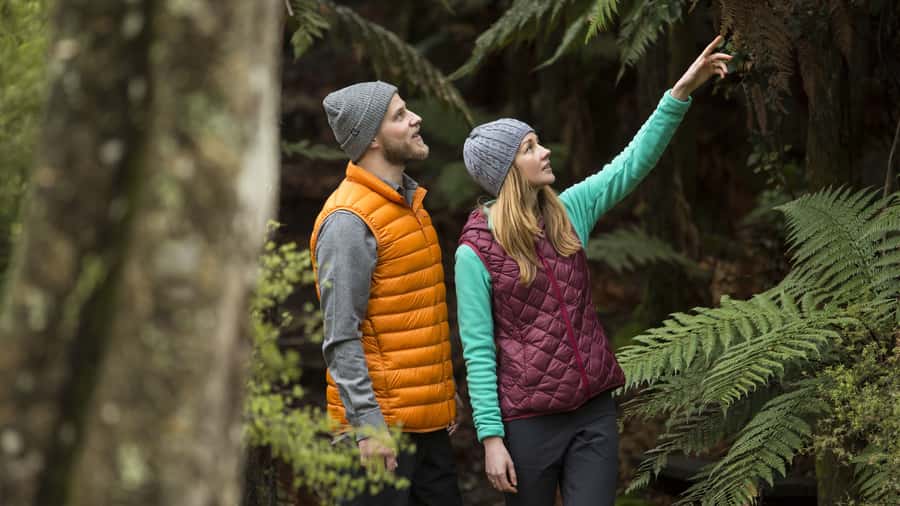
You have several walking choices, ranging from roughly 45 minutes to four hours. The shortest route works if your day is crowded or if you want a quick look at the geothermal highlights.
I would allow at least two hours for a worthwhile visit. That gives you time to stop at the main features, read the guide sheet, take photographs, and use the shuttle without treating the valley like a checklist.
If you have the time and reasonable fitness, the longer walks offer a better sense of the place. You will see more changes in vegetation, more open views, and more of the relationship between the volcanic features and the surrounding valley.
The longest options are not simply longer versions of the same path. Walking farther changes the rhythm of the visit. You may begin among forest and steam, then reach higher viewpoints, crater lakes, and wider views over the geothermal area.
Your choice should depend on more than ambition. Weather, footwear, daylight, and your group’s energy all matter. A four-hour route in poor weather may be less enjoyable than a shorter walk followed by a relaxed shuttle ride.
Echo Crater and the first geothermal sights
Echo Crater is one of the named sights to watch for on the map. The guide sheet uses numbered points, which makes it easier to connect what you see with the information provided at reception.
This is useful on a self-guided visit. You do not need to guess which steam vent or crater feature you are looking at, and you can pause at the stops that interest you instead of waiting for a whole group.
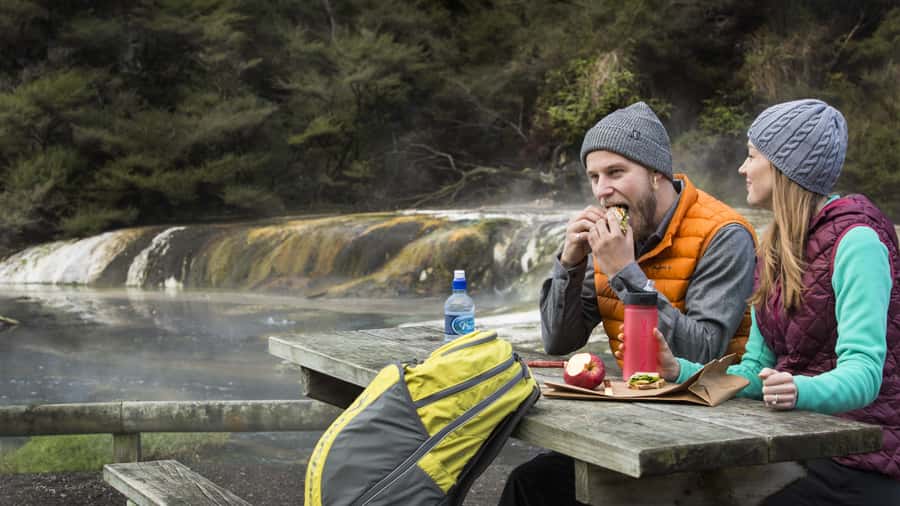
The early part of the route introduces the character of Waimangu. Geothermal features appear beside native plants and grassland, creating a setting that is both harsh and surprisingly alive. Keep your attention on the ground and stay on the marked walking areas around hot water and steam.
Native birds and wildlife may appear among the vegetation. They are part of the valley’s appeal, but they are not a guaranteed wildlife show. Come for the volcanic features first, and treat any bird sightings as an extra.
Somewhere else in Rotorua entirely:
- Rotorua’s Ultimate Zipline: 6 ziplines, 400 m Tandem, Cliff Walk
★ 5.0 · 2,557 reviews - Rotorua Rafting: Kaituna River White Water Rafting & Free Sauna
★ 5.0 · 1,952 reviews - Cultural Experience & Seasonal Māori Cuisine at Te Pā Tū
★ 5.0 · 1,546 reviews - Mitai Maori Village Cultural Experience in Rotorua
★ 4.5 · 1,294 reviews
Inferno Crater Lake and its intense blue color
Inferno Crater Lake is one of Waimangu’s visual highlights. Its bright blue color looks almost artificial, but it belongs to the natural geothermal system around you.
The color is the kind of detail that makes the stop memorable, especially after walking through darker forest or seeing steam rise from other parts of the valley. I would not rush past it. Use the map to understand where it sits in relation to the rest of the route, then take time to look across the crater.
The exact experience can change with weather and viewing conditions. Sun, cloud, and steam affect how strongly the color appears. That is another reason not to judge the visit by a single photograph.
Inferno Crater is also a good example of why Waimangu works better as a walk than as a quick roadside stop. The range of features gives you context. Bright water, steaming ground, forest, and open views all belong to the same volcanic story.
Frying Pan Lake, the valley’s broad centerpiece
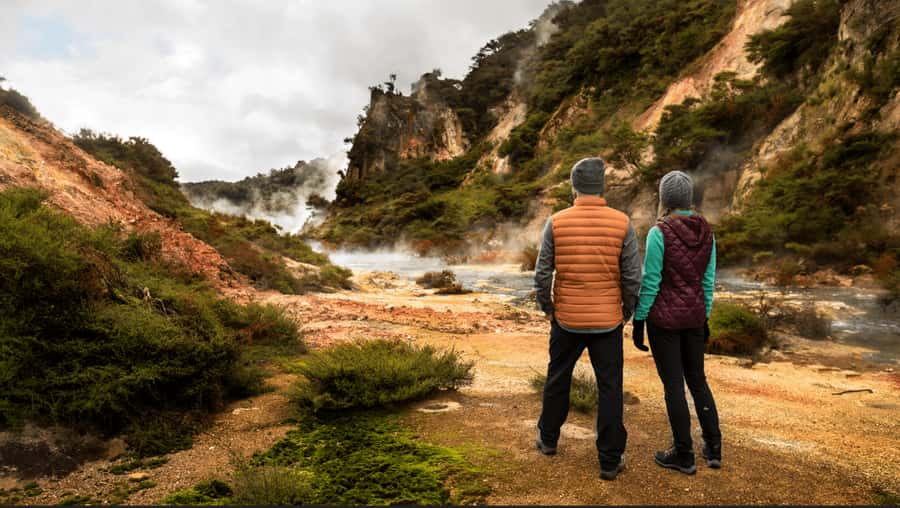
Frying Pan Lake is one of the world’s largest hot springs and one of the largest features in the valley. Its scale gives the visit a different feel from smaller pools and vents.
You can expect steam, hot water, and a wide sweep of geothermal activity rather than a small, neatly framed pool. The lake helps you understand the size of the volcanic system and gives the route one of its strongest visual anchors.
This is a place where the information sheet earns its keep. The map helps you identify the major stops, while the written notes give you a basic explanation of what you are seeing. Information is available in multiple languages, which is useful if you are exploring without an English-speaking guide.
Do not plan your visit around taking one perfect picture. Steam can obscure parts of the lake, and the scene changes as you move along the path. Walk to the viewpoints, pause, and look for the broader relationship between the lake, the valley walls, and the forest.
Mount Haszard Trail and the higher views
The Mount Haszard Hiking Trail is the more demanding choice. It takes you higher above the valley floor and provides wider views over the unusual volcanic terrain.
The tradeoff is clear: you get more distance and stronger panoramic views, but the trail is steep and rough in places. It requires suitable footwear and a degree of fitness. It is not suitable for children, strollers, or wheelchair users.
I would choose this route only if you are comfortable on uneven ground and have allowed enough time. Flat walking shoes are specifically recommended, and rain gear is sensible even when the morning begins clear.
The higher trail is not essential for every visitor. If you mainly want the major geothermal sights, the shorter routes and shuttle system may be enough. If you enjoy walking and want the fullest sense of the valley’s shape, Mount Haszard adds a worthwhile challenge.
Lake Rotomahana and the shuttle back
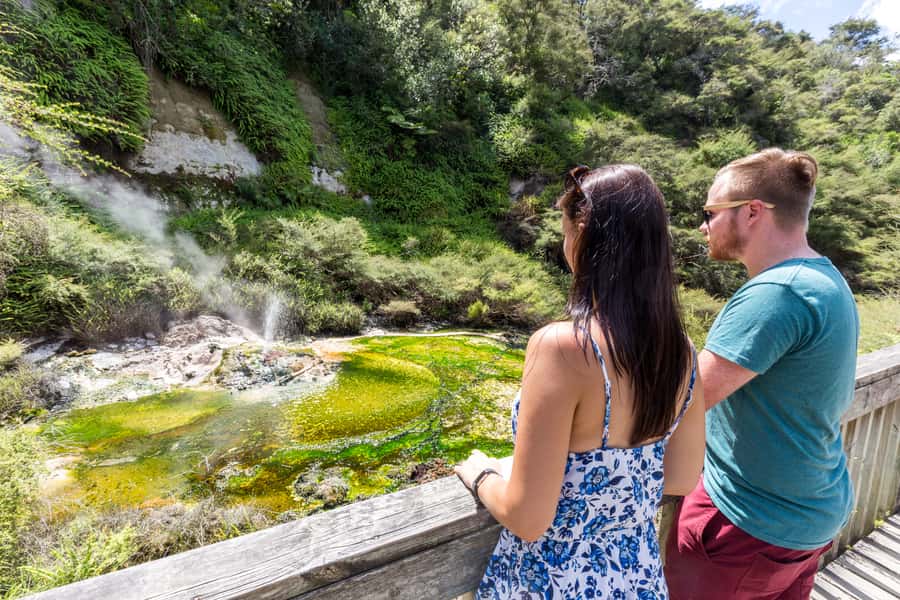
The walking routes finish at Lake Rotomahana, giving the visit a natural endpoint. Reaching the lake helps you see how the geothermal area connects with a larger body of water rather than ending at one isolated crater.
At this point, the shuttle becomes especially valuable. You can return to the reception area by complimentary bus, and the regular service also transfers you between bus stops inside the valley. This means you can reduce walking distances without giving up the main sights.
One practical detail: a useful return coach operates from the end of Walk 3. Pay attention to the shuttle stops and service pattern when you arrive, particularly if you are choosing a longer route or visiting late in the day.
The bus also makes the experience more flexible for mixed-ability groups, although the overall site is not suitable for wheelchair users. Someone may choose a shorter route while another person walks farther, then both can use the shuttle system to reconnect.
How much time should you plan?
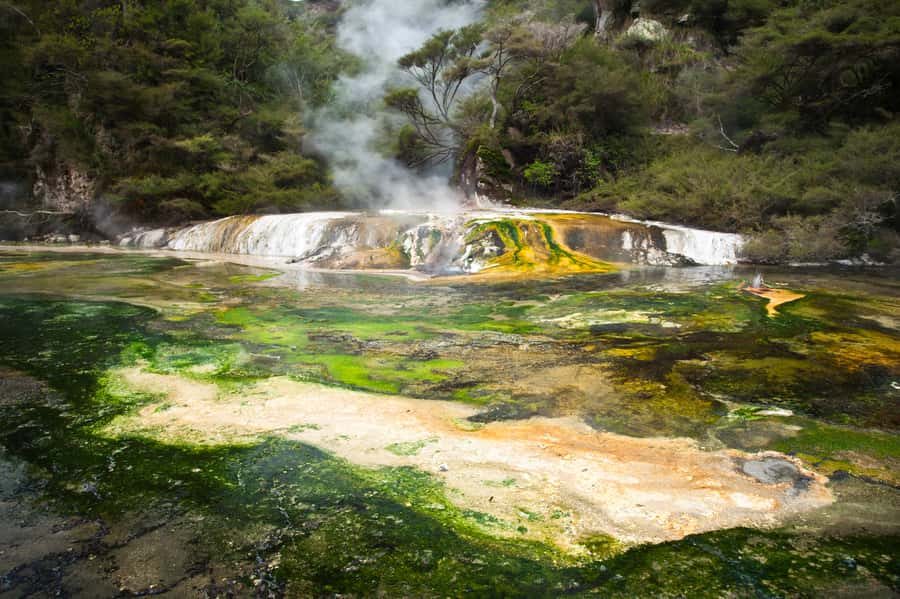
The advertised duration is one day, but you do not need to spend a full day inside the valley. The walks themselves range from about 45 minutes to four hours.
For most people, I would set aside two to three hours. That gives you a comfortable pace for the main features and leaves room for the shuttle. Add more time if you want the Mount Haszard route or prefer to stop often for views and photographs.
A short visit can work, but it limits the experience. You may see a few geothermal highlights without getting the full change from forest to crater lakes and higher viewpoints.
The last admission for the shortest walk is at 3:00 pm. Since longer walks need more time, arrive earlier if you want choices. Waimangu opens at 8:30 am daily, so morning is the safest option for a relaxed visit.
What to wear and carry
Waimangu is outdoors, and the weather can affect both comfort and footing. Wear flat walking shoes with enough support for uneven sections, especially if you plan to use the Mount Haszard Trail.
Bring:
- Comfortable shoes
- Sunglasses
- A sun hat
- Sunscreen
- Rain gear
- Weather-appropriate clothing
Sun and rain protection are both sensible. A clear start does not guarantee a dry finish, and exposed viewpoints can feel different from sheltered forest sections.
Pets are not allowed, although assistance dogs are permitted. Children must be accompanied by a responsible adult. Keep young children close, particularly around hot springs, steam vents, and rough trail sections.
Is the $44 entry fee good value?
At $44 per person, the ticket is not the cheapest short attraction near Rotorua. Its value depends on how much of the valley you use.
I think the price is reasonable if you plan to spend at least two hours, walk beyond the easiest section, and make use of the shuttle. Your ticket includes admission, the self-guided walk or hike, the map and information sheet, and the onsite bus. You are paying for access to a large geothermal area rather than a single viewing platform.
The shuttle improves the value because it lets you see more without turning the return journey into a tiring uphill walk. The self-guided format also suits you if you prefer setting your own pace rather than joining a fixed tour.
The price is harder to justify if you want only a very brief stop or do not enjoy walking. Waimangu is an active outdoor experience, not a quick indoor attraction. Its strongest qualities appear when you give the valley time.
Who should book Waimangu?
I would recommend Waimangu to you if you enjoy natural scenery, short hikes, unusual geology, and the freedom to choose your own route. It works especially well for visitors based in Rotorua who want a half-day activity with a strong sense of place.
It also suits families with older children who can manage the walking and remain with a responsible adult. The easiest routes provide access to major sights, but the Mount Haszard Trail is not suitable for children.
You should think twice if you need step-free access, use a wheelchair, or dislike uneven ground. The site is not suitable for wheelchair users, and the longer trail can be steep and rough.
The lack of a live guide is either a benefit or a drawback. I like being able to pause at Inferno Crater Lake or Frying Pan Lake without holding up a group. If you want detailed interpretation throughout the walk, the guide sheet provides basic help but does not replace a dedicated guide.
Should you book this geothermal valley walk?
Book it if you want to see Rotorua’s volcanic side in a setting that combines major hot springs with native forest, crater lakes, and proper walking routes. The map, numbered sights, and shuttle make the visit easy to manage, while the range of walks lets you choose how much effort to put in.
Choose the shorter route if time or fitness is limited. Choose Mount Haszard if you want higher views and are ready for rough, steep ground. Either way, arrive early, wear sensible shoes, and allow at least two hours.
The $44 cost makes the most sense when you treat Waimangu as a substantial half-day outing rather than a quick photo stop. For an independent visitor who values space, scenery, and a flexible pace, it is a strong choice near Rotorua.
FAQ
Where is Waimangu Volcanic Valley?
Waimangu Visitor Centre is at 587 Waimangu Road, Rotorua, New Zealand. The site is about a 20-minute drive south of Rotorua and a 40-minute drive north of Taupo.
How much does admission cost?
The entry ticket costs $44 per person.
How long should I allow for a visit?
Allow at least two hours. Self-guided walks and hikes range from about 45 minutes to four hours.
What time does Waimangu open?
Waimangu opens daily at 8:30 am.
What is the latest admission time?
The last admission for the shortest walk is at 3:00 pm. Arrive earlier if you want to take a longer route.
Is transport included inside the valley?
Yes. Admission includes an onsite shuttle bus, and a courtesy shuttle regularly circles the valley and returns to the visitor center.
Where does the walking route finish?
The walk or hike finishes at Lake Rotomahana, where you can use the shuttle to return to the reception area.
Is the Mount Haszard Trail suitable for everyone?
No. It is steep and rough in places and requires suitable footwear and a degree of fitness. It is not suitable for children, strollers, or wheelchair users.
Is Waimangu suitable for wheelchair users?
No. The experience is not suitable for wheelchair users.
What should I bring?
Bring comfortable or flat walking shoes, sunglasses, a sun hat, sunscreen, rain gear, and clothing suited to the weather. Pets are not allowed, but assistance dogs are permitted.
Newly listed around Rotorua
- Rotorua: White Island, Mount Tarawera & Waimangu Volcanic …★ 4.4 · 5 reviews
- Whirinaki Forest Footsteps: Māori Guided Tour, Picnic & Transfer★ 5.0 · 5 reviews
- Rotorua: Lake View Private Pools Experience★ 4.3 · 6 reviews
- Rotorua: Floatplane Flight with Orakei Korako Landing★ 5.0 · 6 reviews
- Raceline Karting at Off Road NZ★ 5.0 · 6 reviews
- Epic Tandem Kayak Tour down the Kaituna River Waterfalls★ 5.0 · 6 reviews
- Rotorua: Evening Starlight Gourmet Kayak Tour with dinner★ 5.0 · 6 reviews
- From Rotorua: Whirinaki Rainforest Guided Cultural Tour★ 5.0 · 6 reviews
Rotorua Tours, compared.
Rotorua Canopy Tours: 2.5Hour Native Forest Zipline Adventure
Read our review →
Mitai Maori Village: Cultural Experience and Dinner Buffet
Read our review →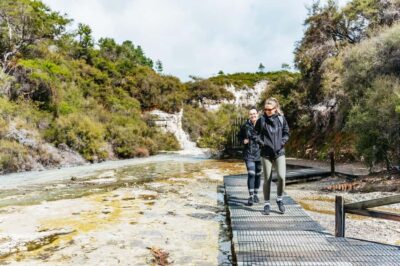
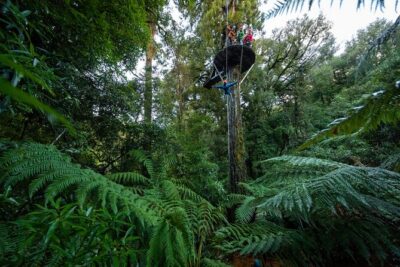
Rotorua’s Ultimate Zipline: 6 ziplines, 400 m Tandem, Cliff Walk
Read our review →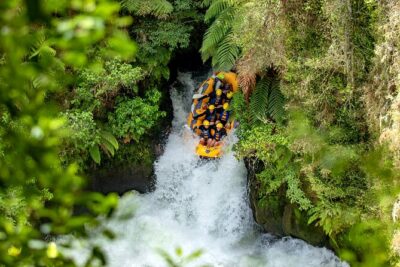
Rotorua Rafting: Kaituna River White Water Rafting & Free Sauna
Read our review →
Cultural Experience & Seasonal Māori Cuisine at Te Pā Tū
Read our review →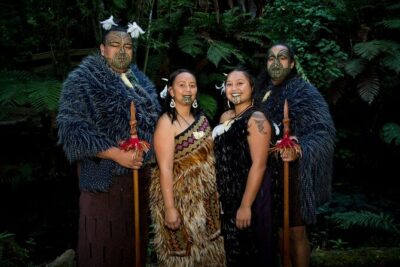
Mitai Maori Village Cultural Experience in Rotorua
Read our review →
Te Pa Tu Māori Cultural Experience with Dinner
Read our review →Browse the lists this tour appears in