
Reviewed · ROTORUA TOURS
Whakarewarewa: Self-Guided Geothermal Trails
Whakarewarewa puts Rotorua’s geothermal power right under your feet. From the admissions office, you pass through the memorial archway and the main village area before reaching steaming lakes, boiling pools, mud pots, and native bush. The setting can feel almost prehistoric, but the experience stays simple: you walk, read the signs, and stop when something catches your eye.
I like the freedom to set your own pace, especially because the route takes about an hour and does not tie you to a group. I also like the clear information boards, which help explain the geothermal features and Whakarewarewa’s guiding legacy. The main consideration is that this is not a live-guided tour, so anyone wanting detailed storytelling or personal interpretation should choose a guided village experience instead.
Key points
- Geothermal features at close range: See hot-spring lakes, steaming pools, and bubbling mud.
- A self-guided route: Walk independently and spend more time at the viewpoints or information boards that interest you.
- Views over Whakarewarewa: Look back toward the village and geysers from selected viewpoints.
- Native plants among the steam: Manuka, ferns, and edible plants add a distinctly New Zealand touch.
- About one hour on site: The route is manageable, but entry is available from 9:00 AM until the 3:00 PM last call.
- Good value for a short stop: At $23 per person, it works well as a focused geothermal outing rather than a full-day attraction.
Starting at the Geyser Café and admissions office
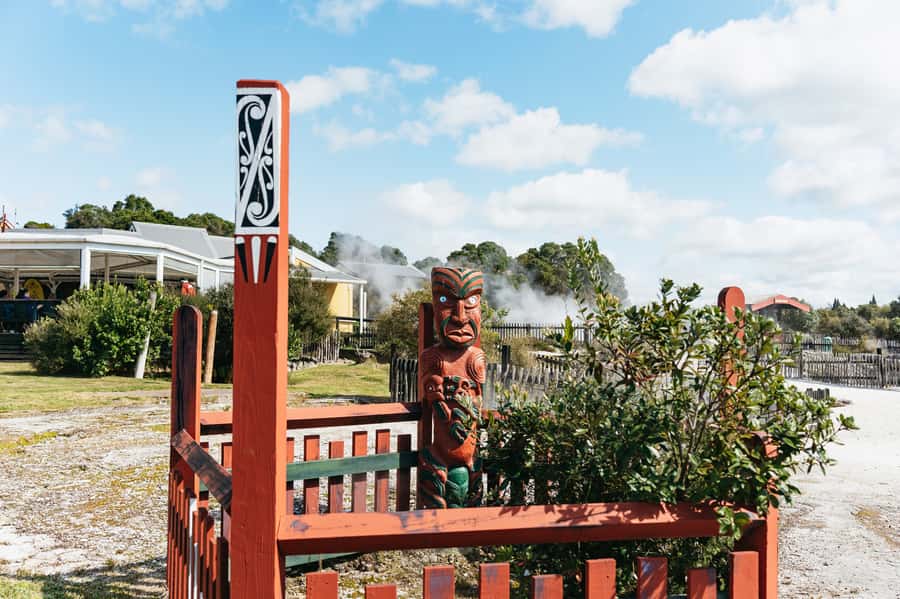
Your visit begins at the Geyser Café, where you exchange your voucher at the admissions office before entering. This first stop matters because the experience has no scheduled guide leading you from one feature to the next. Take a few minutes to read the introductory material before walking out.
The opening information covers Whakarewarewa’s guiding legacy and the world-famous guides who have passed through its history. That gives the walk a stronger sense of place than a simple nature trail. You are not just looking at steam and mud. You are entering an area connected with the Māori village and its long tradition of showing visitors around the geothermal country.
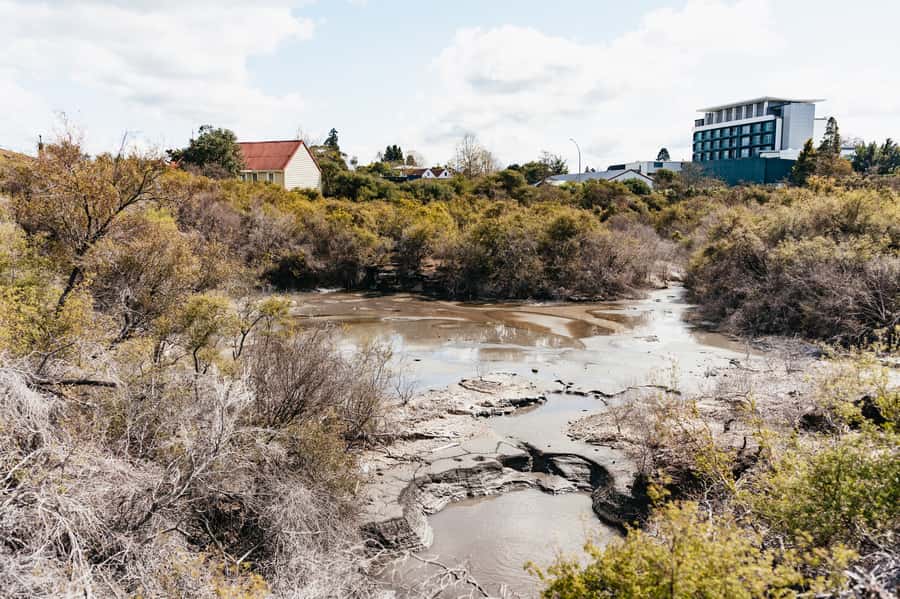
The route then leads beneath a memorial archway and past Rahui, the main area of the village. This transition is worth noticing. The geothermal activity is not separated from daily life by a distant viewing platform. The village and the hot ground exist side by side, which helps explain why this place has such a distinctive character.
More geothermal parks and hot pools:
- Rotorua: Wai-O-Tapu Geothermal Park Entry Ticket
★ 4.6 · 2,601 reviews - Rotorua: Hells Gate Outdoor Mud Bath & Spa Experience
★ 4.6 · 398 reviews - Wai-O-Tapu Thermal Wonderland, Rotorua, New Zealand
★ 4.5 · 379 reviews
A one-hour walk through steaming ground
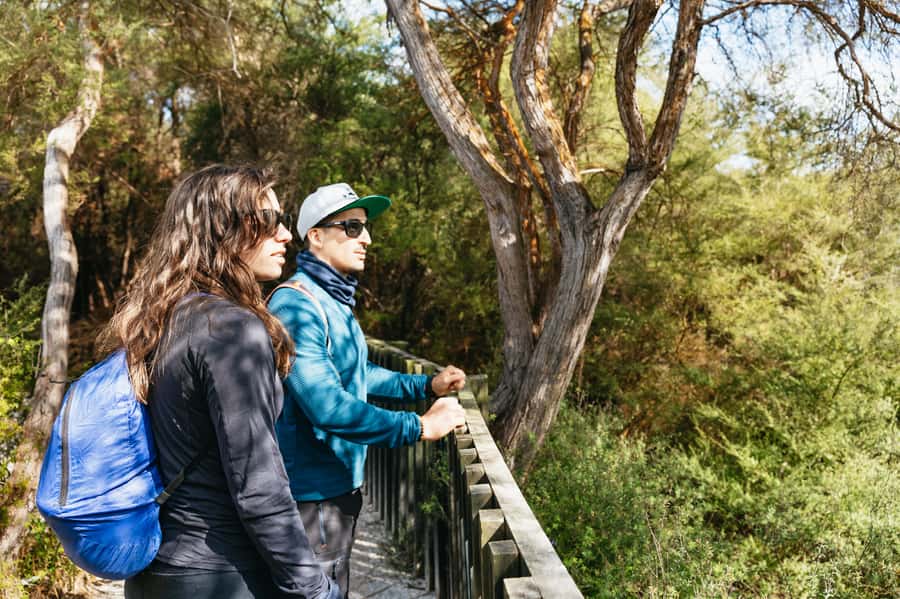
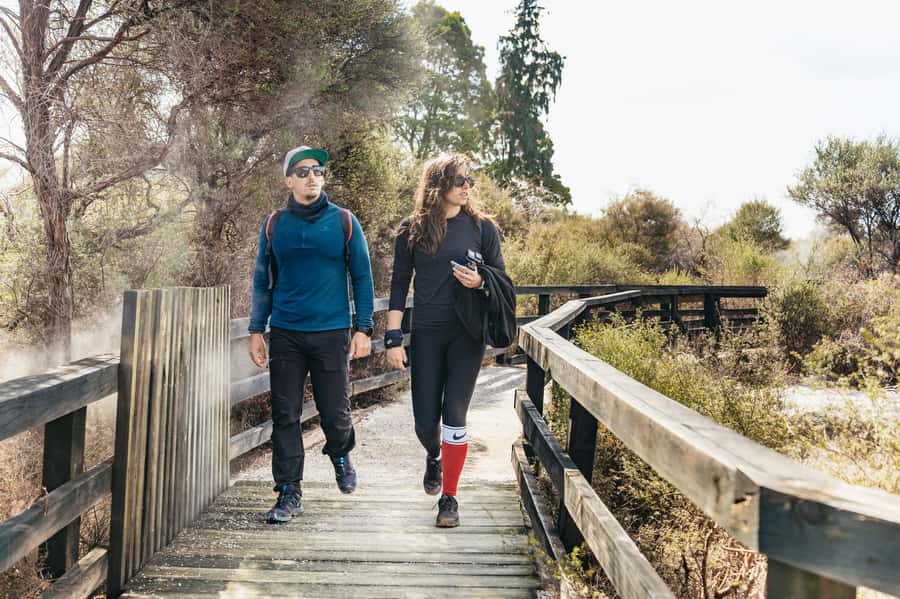
The stated scenic section takes about one hour. That makes it easy to fit into a day in Rotorua, particularly if you are combining it with other sights. You are free to pause, take photographs, and read the boards instead of keeping up with a group.
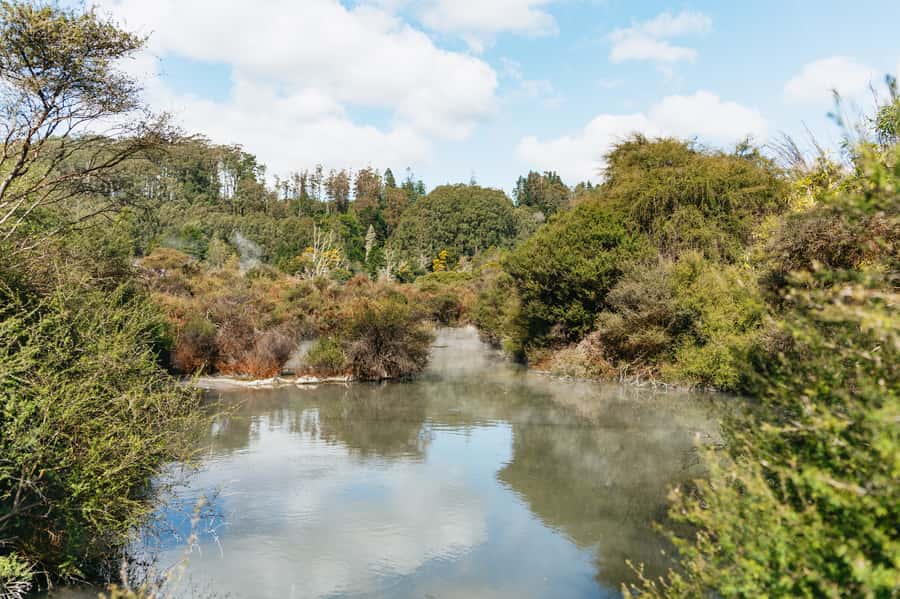
The route passes through scenes that may remind you of a Jurassic Park set, though the geothermal activity here is very real. Bubbling water, hot springs, and steaming pools create a changing mix of sound, color, and movement. You might find one pool calm and reflective, while another sends up constant steam or shows signs of boiling activity.
The self-guided format is both the attraction and the limitation. I like being able to linger at a viewpoint without worrying about holding up a guide. If you want a quiet photograph or need a slower pace, that flexibility is useful.
On the other hand, you will need to take responsibility for your own attention. Read the information boards, follow the route, and respect the marked areas around the hot ground. Since there is no live guide included, the boards carry much of the interpretation.
Hot-spring lakes, mud pools, and geothermal color
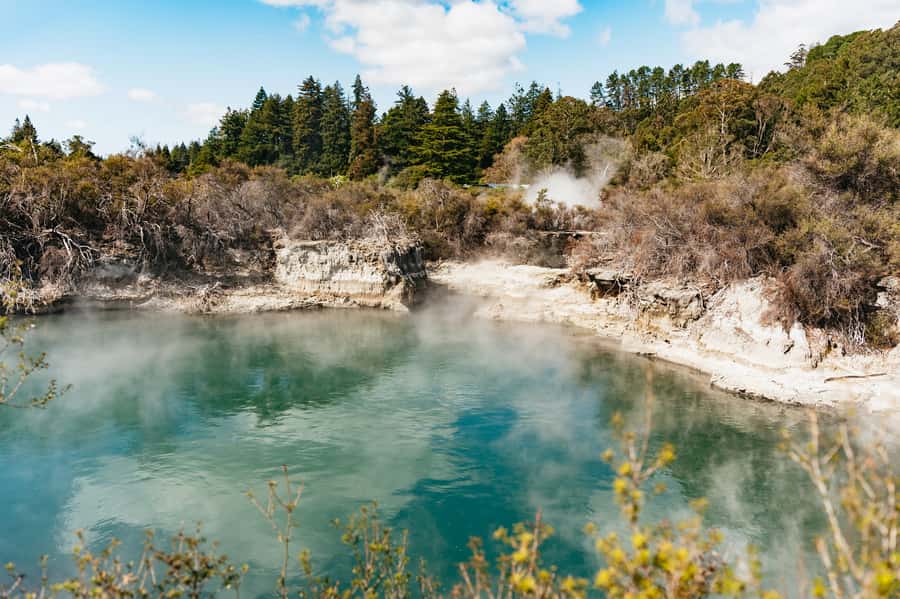
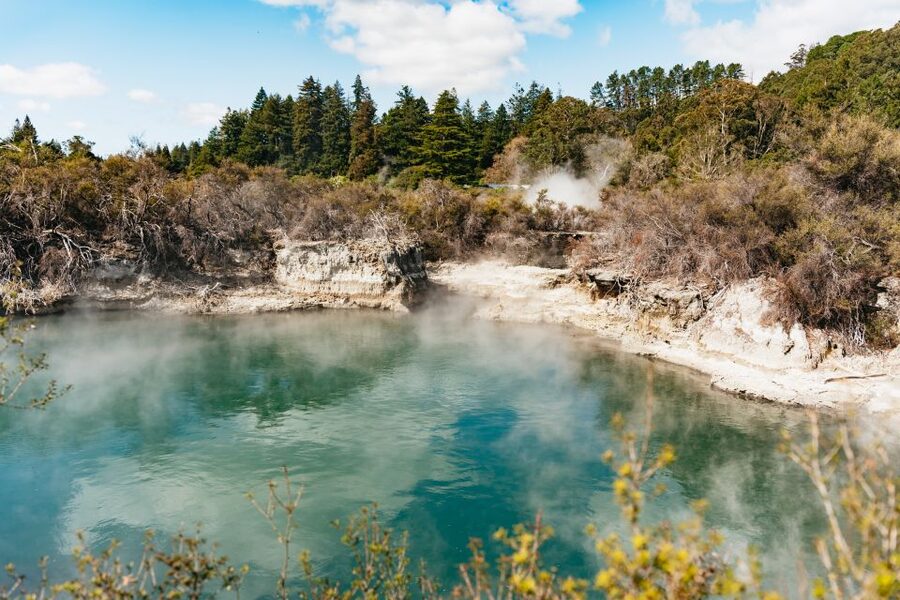
The main reason to come is the variety of geothermal features packed into a short walk. The route includes hot-spring lakes, bubbling mud pools, and colorful steaming water. These are not interchangeable sights. Each gives you a different view of what heat and mineral activity can do below the surface.
The hot-spring lakes provide the broadest views. Their steam can soften the edges of the water and make the scene feel unusually still, even when the ground is active. From the viewpoints, you can also look toward the village and geysers, giving the walk a wider sense of place instead of a series of close-up pools.
Mud pools offer a different kind of drama. Their bubbling surface is slower and thicker than a spring or geyser, with movement that seems almost comical until you remember how hot the ground is. These pools are especially good for photographs because their texture contrasts with the smoother water of the hot springs.
The colorful pools and steaming areas are likely to be the most memorable parts of the route. I would bring a camera, as suggested, but do not spend the entire walk looking through it. Steam, reflections, and changing light are part of the appeal, and some scenes are better appreciated in person than on a screen.
Native manuka, ferns, and edible plants
The walk is not only about hot water. Native manuka bushlands, ferns, and edible plants share the route with the geothermal features. This mix gives you a more complete view of the area’s natural character.
I like this combination because it prevents the visit from becoming a checklist of pools. You see how native plant life sits beside steaming ground, and the contrast makes both parts more interesting. The ferns and manuka also provide a strong New Zealand setting for photographs, especially beside the bare mineral colors and drifting steam.
The information about edible plants adds another layer, though the experience does not include a live guide to explain their uses in person. If plant knowledge is a major interest, read every sign carefully and consider a more interpretive village experience elsewhere in your itinerary. For a short self-guided walk, however, the plant life adds welcome variety.
More self guided tours in Rotorua:
- Volcanic Valley Self Guided Walking and Hiking at Waimangu
★ 4.5 · 248 reviews - Half-Day Self-Guided Mountain Bike Journey through Whakarewarewa Redwood Forest
★ 5.0 · 124 reviews - Rotorua: Waimangu Volcanic Valley Ticket & Self-Guided Walk
★ 4.8 · 104 reviews - Whaka Geothermal Trails Self-Guided Tour
★ 3.5 · 44 reviews
Viewpoints toward the village and geysers
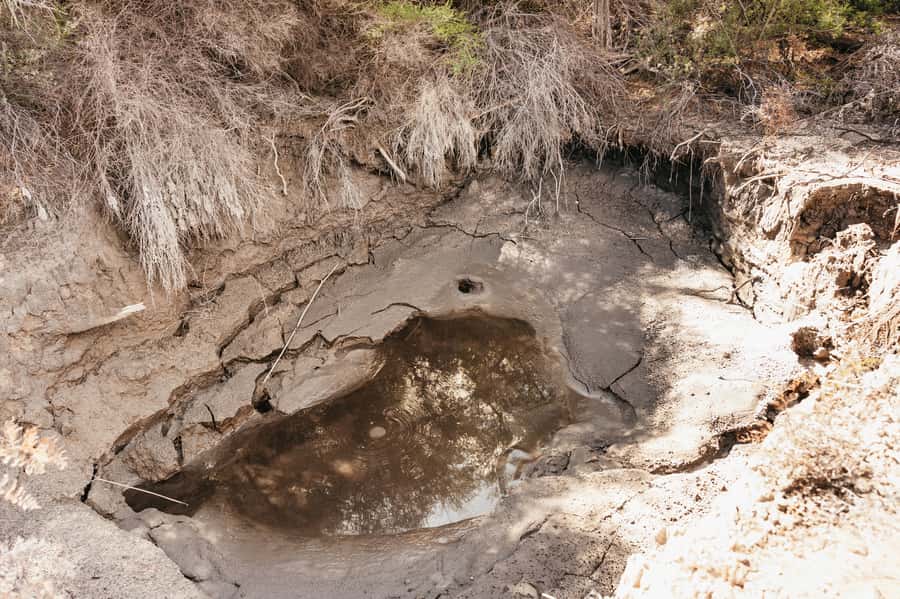
The viewpoints are important because they help you understand the scale of Whakarewarewa. From higher points along the route, you can look across the village and toward the geysers rather than seeing only the feature immediately in front of you.
These stops also break up the walk. After watching a mud pool bubble or standing near a steaming lake, a broader view gives your eyes a rest. It is a good place to take photographs that show the relationship between the village, the geothermal activity, and the surrounding native vegetation.
The route is described as an easy walk, and the short duration supports that impression. Still, comfortable shoes are sensible. Geothermal trails can include uneven ground, and you will get more from the visit if you are not distracted by footwear. The activity is listed as wheelchair accessible, which is useful for planning, although the supplied information does not specify the exact surface or slope of every section.
What $23 buys you
At $23 per person, this is a reasonably priced way to see geothermal features without committing to a long organized tour. Your ticket covers entrance to the geothermal trails, and you can spend roughly an hour on the route at your own speed.
The value is strongest for visitors who want a compact introduction to Whakarewarewa. You receive access to several types of geothermal scenery, viewpoints, information boards, and a look at the village setting. You also avoid paying for a live guide you may not need.
The value is less clear if you want a full cultural program, extended interpretation, or an all-day activity. Food, drink, hotel pickup, and drop-off are not included. You are paying for access to the trail, not transport or a meal.
Because admission is valid for one day and the trail is available from 9:00 AM to 3:00 PM, you have some flexibility. The last call is at 3:00 PM, so do not arrive at the end of the afternoon expecting a late start. I would aim to enter with enough time for the one-hour walk, photographs, and reading the signs.
Who will enjoy the self-guided format
This experience suits you if you like independent sightseeing and prefer to move without a fixed group. It is also a good choice if you have limited time in Rotorua and want geothermal scenery in a concentrated format.
Families may appreciate the short route and the visual variety, though adults should keep a close eye on children around hot ground and water. The provided information does not describe a special children’s program, so the visit depends on your family’s interest in reading signs and observing natural features.
Photographers should find plenty to work with: steam, mud, reflective water, native plants, village views, and geysers. The conditions may change from one moment to the next, which is part of the fun.
This is also a practical choice for visitors who do not want a guide speaking throughout the experience. You can stop often, walk quietly, and decide how much information you want to absorb. The tradeoff is simple: you get independence, but not the personal stories and live explanations that a guide can provide.
Practical timing and what to bring
Plan for about one hour on the geothermal trails, with extra time if you enjoy photography or read every information board. Since entry is available between 9:00 AM and 3:00 PM, place it earlier in your day if you want a relaxed visit.
Bring comfortable shoes and a camera. Food and drink are not included, so plan those separately. Hotel pickup and drop-off are also not included, and the voucher must be exchanged at the admissions office before you enter.
English is the listed language, and an English-speaking host or greeter is available at the start. There is no live guide included on the trail itself. If you value background information, use the admissions material and signs as part of the experience rather than rushing straight outside.
The booking terms are traveler-friendly. You can cancel up to 24 hours ahead for a full refund, and the reserve-now, pay-later option lets you hold a place without paying immediately. Check the available starting times when booking, since the trail has a defined daily access window.
Should you book the Whakarewarewa trails?
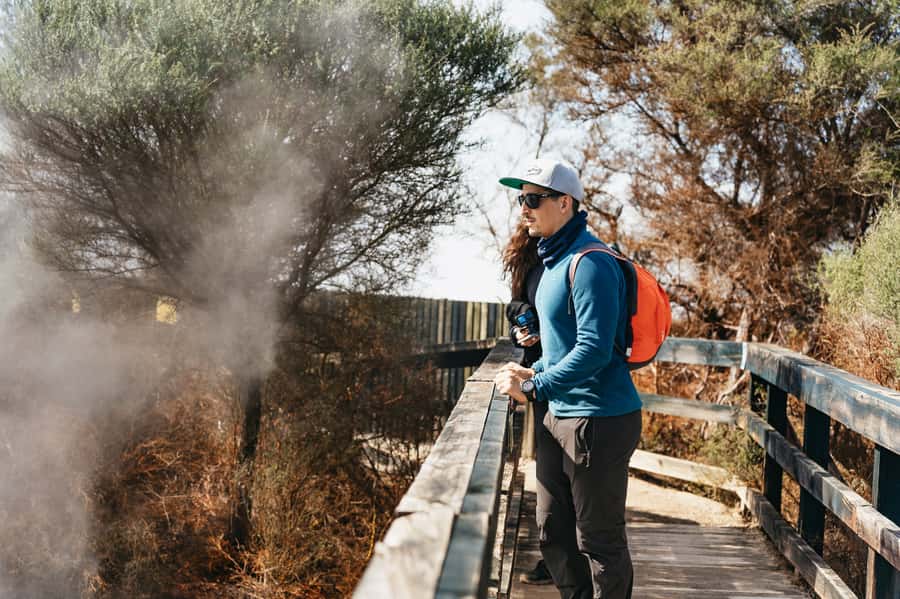
I would book this for a short, flexible geothermal walk that combines hot springs, mud pools, native plants, and views toward the village and geysers. The $23 price is fair when you want a focused outing and are comfortable learning from signs instead of a live guide.
Choose another option if your main goal is detailed cultural storytelling, a longer guided visit, or included transport. But if you want to walk at your own pace and see a varied slice of Whakarewarewa without filling an entire day, this is an easy choice. Give yourself enough time before the 3:00 PM last call, wear sensible shoes, and let the steaming ground do most of the talking.
FAQ
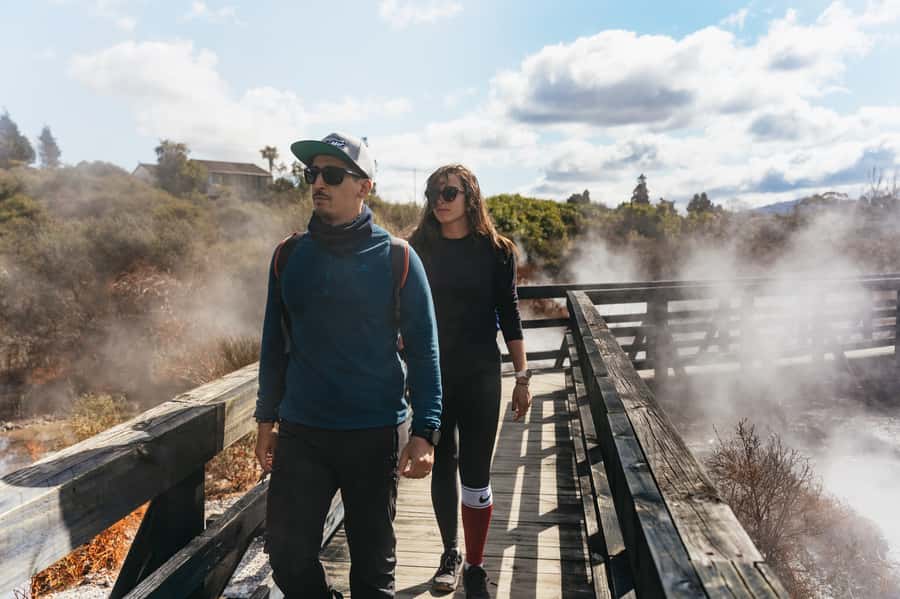
Where does the Whakarewarewa geothermal trail visit begin?
The visit begins at the Geyser Café. Exchange your voucher at the admissions office before entering the trails.
How long does the walk take?
The scenic walk is listed as taking about one hour. You can walk at your own pace and stop at the viewpoints or information boards.
What time can I enter the trails?
The geothermal trails are available from 9:00 AM to 3:00 PM. The last call for entry is at 3:00 PM.
Is a live guide included?
No. This is a self-guided experience. English-speaking host or greeter assistance is available, and information boards explain parts of the visit.
What can I see along the route?
You can see hot-spring lakes, bubbling mud pools, steaming pools, native manuka bushlands, ferns, edible plants, village views, and geyser views.
Is the experience wheelchair accessible?
Yes. The activity is listed as wheelchair accessible.
What should I bring?
Bring comfortable shoes and a camera. Food and drink are not included.
Is hotel transportation included?
No. Hotel pickup and drop-off are not included.
Can I cancel my booking?
Yes. You can cancel up to 24 hours in advance for a full refund. A reserve-now, pay-later option is also available.
Newly listed around Rotorua
- Rotorua: White Island, Mount Tarawera & Waimangu Volcanic …★ 4.4 · 5 reviews
- Whirinaki Forest Footsteps: Māori Guided Tour, Picnic & Transfer★ 5.0 · 5 reviews
- Rotorua: Lake View Private Pools Experience★ 4.3 · 6 reviews
- Rotorua: Floatplane Flight with Orakei Korako Landing★ 5.0 · 6 reviews
- Raceline Karting at Off Road NZ★ 5.0 · 6 reviews
- Epic Tandem Kayak Tour down the Kaituna River Waterfalls★ 5.0 · 6 reviews
- Rotorua: Evening Starlight Gourmet Kayak Tour with dinner★ 5.0 · 6 reviews
- From Rotorua: Whirinaki Rainforest Guided Cultural Tour★ 5.0 · 6 reviews
Rotorua Tours, compared.
Rotorua Canopy Tours: 2.5Hour Native Forest Zipline Adventure
Read our review →
Mitai Maori Village: Cultural Experience and Dinner Buffet
Read our review →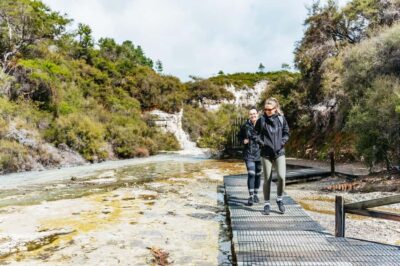
Rotorua’s Ultimate Zipline: 6 ziplines, 400 m Tandem, Cliff Walk
Read our review →
Rotorua Rafting: Kaituna River White Water Rafting & Free Sauna
Read our review →
Cultural Experience & Seasonal Māori Cuisine at Te Pā Tū
Read our review →
Mitai Maori Village Cultural Experience in Rotorua
Read our review →
Te Pa Tu Māori Cultural Experience with Dinner
Read our review →Browse the lists this tour appears in