
Reviewed · ROTORUA TOURS
Voyages of Maori at Mitai Maori Village
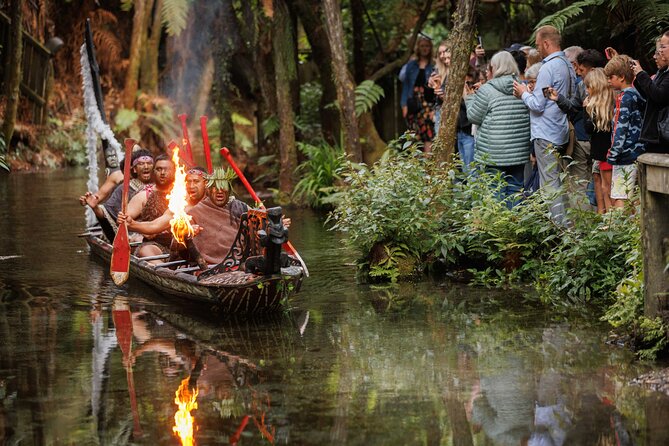
The most memorable part of Mitai Māori Village is the waka taua, a traditional war canoe gliding along the Wai o Whiro Stream with warriors in Māori dress. It is a striking scene, but the value goes beyond the performance: your guide explains the meaning behind the songs, dances, greetings, rituals, and weapons.
I like the way the experience joins a forest walk with a cultural presentation, rather than keeping you in a theater from start to finish. I also like the generous buffet meal, especially if you arrive hungry. The main consideration is that the 11:00 a.m. session can feel warm, and some areas used for the performance have steps and uneven ground.
Key things to know before you book
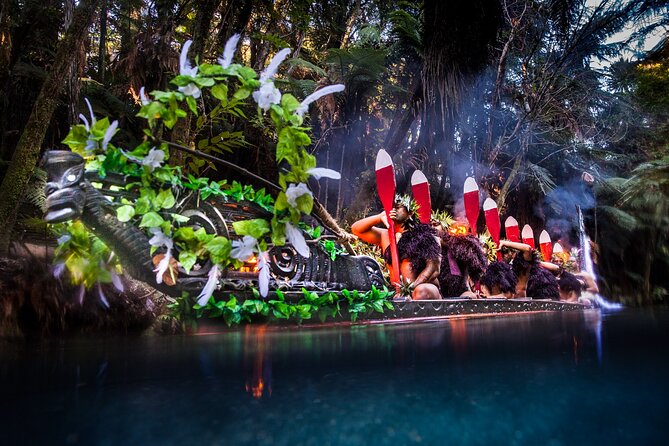
- A waka on the Wai o Whiro Stream: Watch Māori warriors paddle a traditional canoe through the natural setting.
- Haka, poi, songs, and chants: The performance explains what you are seeing instead of presenting dance as a stand-alone show.
- A sacred spring in the forest: Walk to Te Wai Whakarukuhanga a Atua, also called the waters of the gods.
- A substantial buffet meal: Expect a wide selection of savory dishes, desserts, tea, coffee, and spring water.
- A compact two-hour visit: The program packs a lot into a morning or lunchtime schedule.
- A few practical limits: The group can reach 130 people, and the forest path includes some steps and uneven ground.
What Mitai Māori Village is really offering
Mitai Māori Village gives you a structured introduction to Māori culture in Rotorua. You are not simply watching a haka, taking a few photographs, and leaving. The program combines performance, explanation, food, nature, and time for questions.
That mix matters. Māori culture includes language, family connections, spiritual beliefs, music, movement, food, and relationships with the land. A short visit cannot cover all of that, but Mitai makes a clear effort to connect the different parts.
The experience is led in English, with a certified English-speaking guide and written information in English. The explanations help you understand why a movement or song is included, rather than asking you to guess what a performance means.
The setting also helps. The village sits at 196 Fairy Springs Road, close to Rotorua’s Fairy Springs area and near public transport. You begin and end at the same meeting point, which keeps the visit simple if you are fitting it between other Rotorua activities.
More Maori Experiences in Rotorua
- Mitai Maori Village: Cultural Experience and Dinner Buffet
★ 4.7 · 3,575 reviews - Cultural Experience & Seasonal Māori Cuisine at Te Pā Tū
★ 5.0 · 1,546 reviews - Mitai Maori Village Cultural Experience in Rotorua
★ 4.5 · 1,294 reviews
Starting at 11:00 a.m. in Rotorua
The scheduled start is 11:00 a.m., and the complete visit lasts about two hours. That timing works well if you want a cultural activity before an afternoon visit to Rotorua’s geothermal attractions, lakes, or town center.
At the beginning, you are introduced to the program and shown where the buffet meal will be served. This practical start helps you settle in, though the group size can reach 130 people. With a group that large, your position can affect how easily you see parts of the presentation.
I would arrive ready to listen and move with the group. If you want the clearest view during the village demonstrations, stay attentive when the group is directed onward rather than hanging back. One part of the visit includes an extended walk through the village area, and getting near the front can make the explanations easier to follow.
The program is suitable for most people, and anyone can access the activity according to the supplied information. Still, most people can participate does not mean every surface is flat. The forest walk includes steps and uneven ground, so wear comfortable walking shoes.
The forest path and Te Wai Whakarukuhanga a Atua
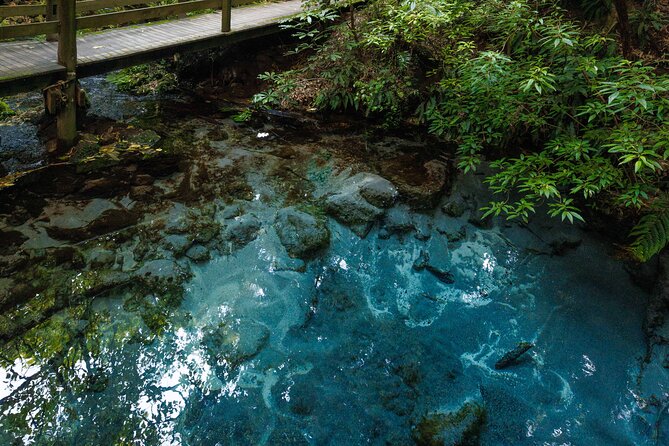
A short walk through the forest takes you to a sacred spring called Te Wai Whakarukuhanga a Atua, or the waters of the gods. This is one of the quieter sections of the visit, and it gives the program a sense of place.
The spring is not just a scenic stop added to fill time. It helps show how Māori traditions connect natural features with spiritual meaning. You are encouraged to see the forest and water as part of the cultural setting, not merely as scenery around a stage.
The walk is manageable for most participants, but it is not a polished urban path. Expect some steps and uneven ground. In wet weather, walking footwear becomes especially important. The provider says the activity operates in all weather, while the cancellation terms also allow for a possible weather cancellation, so dress for changing Rotorua conditions and check arrangements close to your visit.
The natural setting is at its best when you slow down and listen. The stream, trees, and spring create a calmer contrast to the louder haka and warrior demonstrations later in the program.
The waka taua on Wai o Whiro Stream
The waka scene is one of the strongest visual moments. At Wai o Whiro Stream, a waka taua, or war canoe, moves past with Māori warriors in traditional dress.
You are positioned beside the water, watching the canoe approach and pass. The scene feels more connected to the land than a performance on a flat stage. The water, forest, canoe, paddling, and clothing work together to give you a clearer sense of how Māori identity is tied to place.
This is also a good example of why the explanatory parts matter. Without context, you might see only a dramatic canoe display. With a guide explaining Māori traditions and the role of the warriors, the scene becomes easier to understand.
The stream portion does not appear to involve a long boat ride for the audience. You watch the waka as it moves through the water. That distinction is useful if you are expecting an active river cruise. This is a cultural presentation beside the stream, not a paddling excursion.
Somewhere else in Rotorua entirely:
- Rotorua Canopy Tours: 2.5Hour Native Forest Zipline Adventure
★ 5.0 · 4,563 reviews - Rotorua: Wai-O-Tapu Geothermal Park Entry Ticket
★ 4.6 · 2,601 reviews - Rotorua’s Ultimate Zipline: 6 ziplines, 400 m Tandem, Cliff Walk
★ 5.0 · 2,557 reviews - Rotorua Rafting: Kaituna River White Water Rafting & Free Sauna
★ 5.0 · 1,952 reviews
Songs, poi, weapons, and the haka
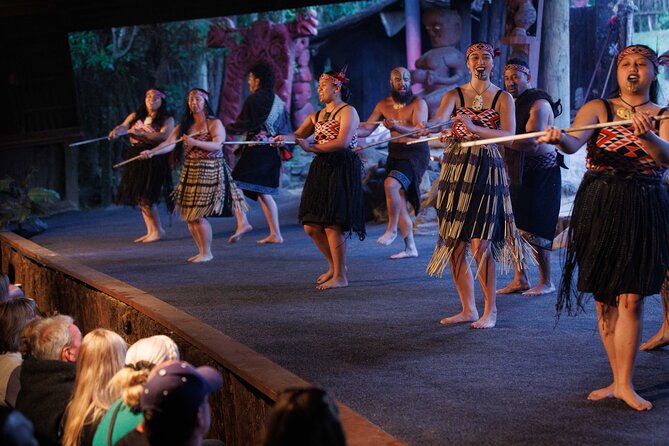
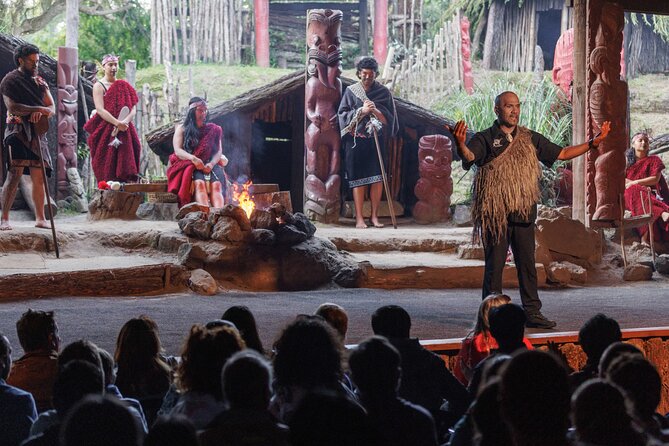
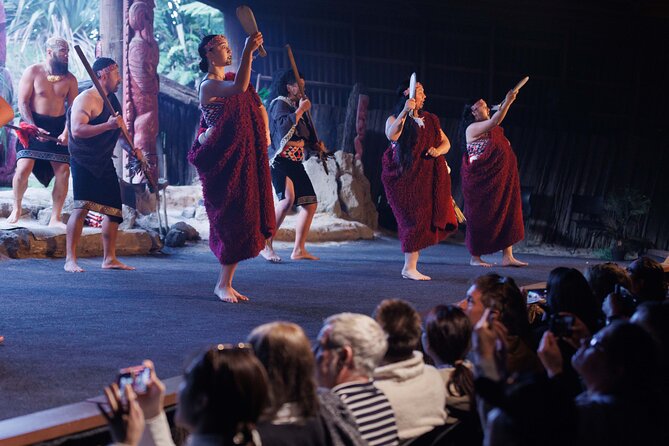
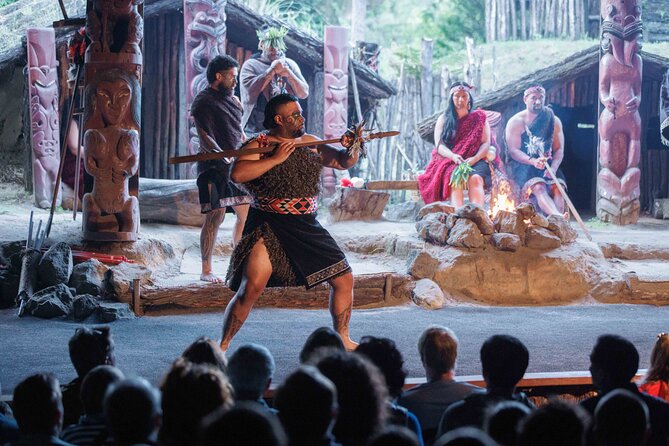
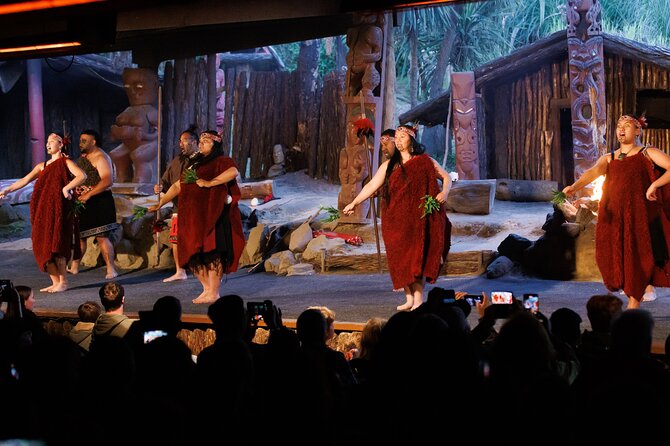
The central cultural presentation brings together mōteatea, or traditional chants, waiata, or songs, poi, dance, weapons, and haka. The strongest part is the explanation. The narrator describes the purpose and meaning of what you see, including rituals, movement, and aspects of Māori life.
The haka is powerful, but it is presented as one part of a wider cultural program. That gives the performance more balance. You also see graceful movement, singing, poi work, and demonstrations connected with traditional weapons.
Poi can be especially enjoyable to watch because the movement is precise and rhythmic. The songs and chants provide a different mood from the force of the haka. Taken together, the presentation shows that Māori performance is not one single style.
The performers are described as passionate and professional, and the presentation is designed to teach as well as entertain. You should expect a polished show, but not a concert with no explanation. The aim is to share cultural practices and values in a form that a first-time visitor can follow.
The venue can affect your comfort. At the 11:00 a.m. session, one area may feel warm, and the position of the audience can make some dancing harder to see. If heat bothers you, light layers and water are sensible choices. Spring water, tea, and coffee are included, but you may want your own water during the walk.
The buffet meal and hangi tradition
Food is a major part of the Mitai visit. The program includes the unveiling of an earth-cooked hangi and a buffet meal with desserts. The meal is described in the supplied information as lunch in some places and dinner in others, but with an 11:00 a.m. start, you should think of it as a substantial daytime buffet.
A hangi is food cooked in an earth oven, a traditional Māori method that uses heated stones and steam. Seeing the hangi unveiled connects the meal to the cultural material presented earlier. Several people have found the food generous, with a wide selection and particularly good desserts. Mango cake receives special praise.
There is one small point to clarify before booking. Some descriptions say you will see the hangi lifted, while some experiences do not include a clear view of that moment. If the hangi unveiling is your main reason for coming, treat it as part of the program rather than a guaranteed close-up demonstration.
Food quality can vary by dish. The overall meal is often described as plentiful and enjoyable, though one assessment found the buffet itself less impressive than the cultural performance. That is a fair way to view it: the meal adds real value, but the cultural program is the main reason to book.
Tea, coffee, and spring water are included. Alcohol is not included, though alcoholic drinks are available to purchase.
How much value do you get for $86.26?
At $86.26 per person, Mitai is not a low-cost museum admission. You are paying for a guided cultural program, a forest and stream setting, live music and dance, a waka presentation, a sacred spring visit, and a full buffet meal.
That package can represent good value if you want one well-organized activity that covers several parts of Māori culture in a short period. You do not need to arrange separate transport between a performance, a meal, and a nature walk. The return to the same meeting point also saves planning time.
The value is weaker if you only want a brief haka. In that case, a two-hour program with food may feel longer and more expensive than necessary. It is also less suitable if you dislike scheduled group activities or prefer to explore cultural sites independently.
I would compare the cost with what you would otherwise spend on a Rotorua meal and a separate cultural attraction. The buffet is not merely a snack, and the educational presentation is much more than a quick photo stop. For a first visit to Rotorua, the combined format makes practical sense.
Who will enjoy this experience most?
Mitai suits you if you want a clear introduction to Māori culture without committing to a full-day excursion. Families, first-time visitors to New Zealand, and anyone interested in music, storytelling, food, and traditional customs should find plenty to hold their attention.
It also works well for people with a tight schedule. The morning start leaves much of the day free, and the program ends back at 196 Fairy Springs Road.
You will probably enjoy it less if you want a small, private encounter. The maximum group size is 130, so parts of the event can feel organized for a crowd. You may also want to consider the walking surface if you have difficulty with steps or uneven ground.
The experience can suit people with limited mobility, according to the supplied information, but the forest section still has some uneven ground and steps. Contact the provider directly if you need a precise answer about your own mobility needs.
Practical ways to get more from the visit
Dress for Rotorua’s weather, even if the forecast looks promising. The program runs outdoors as well as indoors, and the provider asks you to wear warm, comfortable clothing and walking footwear.
Keep your schedule flexible around the two-hour duration. The visit is listed as approximately two hours, so avoid booking another activity with no gap at all.
Pay attention during the introductions before the performances begin. The best cultural context often comes from the explanations of songs, greetings, beliefs, and daily life, not only from the most dramatic moments.
Use the question-and-answer time. The program leaves room for questions about Māori culture and modern life, and this is where you can move beyond the basic presentation.
If food matters to you, arrive ready for a full meal. The buffet is plentiful, and saving room for dessert is sensible, particularly if mango cake is available.
Cancellation and weather considerations
You can cancel for a full refund up to 24 hours before the local start time. Changes or cancellations made less than 24 hours before the start are not accepted for a refund.
The activity is listed as operating in all weather, but it may be canceled if weather conditions are poor or if the minimum number of participants is not met. In either case, you are offered another date or experience, or a full refund.
That policy makes early booking reasonably flexible, but the 24-hour deadline matters. Do not leave changes until the morning of the activity.
Should you book Mitai Māori Village?
Book it if you want an efficient, welcoming introduction to Māori culture with real substance behind the spectacle. The waka on the stream, forest walk, sacred spring, haka, poi, songs, explanations, and buffet make this a full program rather than a single performance.
I would especially choose it for a first Rotorua visit, a rainy morning, or a day when you want culture and food in one stop. The main cautions are the possible warmth during the 11:00 a.m. presentation, the uneven forest path, and the fact that a large group may affect your view.
If you approach it as a guided cultural sharing, not simply a theater show, the format makes more sense. At $86.26, it offers solid value for two hours of performance, interpretation, nature, and a substantial meal.
FAQ
Where does the Mitai Māori Village experience begin?
It begins at 196 Fairy Springs Road, Fairy Springs, Rotorua 3015, New Zealand.
What time does the experience start?
The scheduled start time is 11:00 a.m.
How long does the experience last?
The activity lasts approximately two hours.
Does the experience include a Māori cultural performance?
Yes. It includes a two-hour daytime cultural program with haka and poi, along with songs, chants, dances, explanations, and other traditional activities.
Will I see a traditional waka?
Yes. The program includes a scene on the Wai o Whiro Stream featuring warriors in a waka taua, or traditional war canoe.
Is food included?
Yes. The experience includes the unveiling of a traditional earth-cooked hangi and a buffet meal with desserts. Tea, coffee, and spring water are also included.
Is alcohol included?
No. Alcoholic drinks are not included, but they are available to purchase.
Can I cancel for a refund?
Yes. You can cancel up to 24 hours before the experience start time for a full refund. Cancellations made less than 24 hours before the start are not refunded.
Newly listed around Rotorua
- Rotorua: White Island, Mount Tarawera & Waimangu Volcanic …★ 4.4 · 5 reviews
- Whirinaki Forest Footsteps: Māori Guided Tour, Picnic & Transfer★ 5.0 · 5 reviews
- Rotorua: Lake View Private Pools Experience★ 4.3 · 6 reviews
- Rotorua: Floatplane Flight with Orakei Korako Landing★ 5.0 · 6 reviews
- Raceline Karting at Off Road NZ★ 5.0 · 6 reviews
- Epic Tandem Kayak Tour down the Kaituna River Waterfalls★ 5.0 · 6 reviews
- From Rotorua: Whirinaki Rainforest Guided Cultural Tour★ 5.0 · 6 reviews
- Rotorua: Evening Starlight Gourmet Kayak Tour with dinner★ 5.0 · 6 reviews
Rotorua Tours, compared.
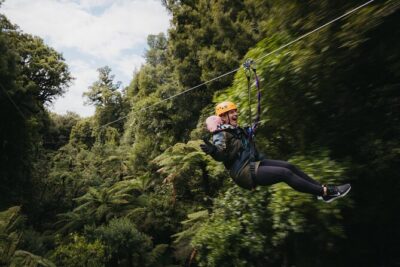
Rotorua Canopy Tours: 2.5Hour Native Forest Zipline Adventure
Read our review →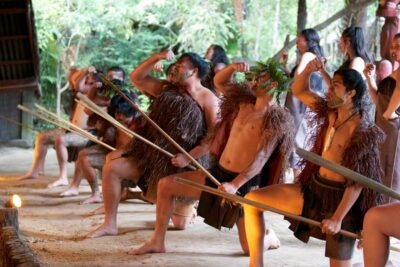
Mitai Maori Village: Cultural Experience and Dinner Buffet
Read our review →
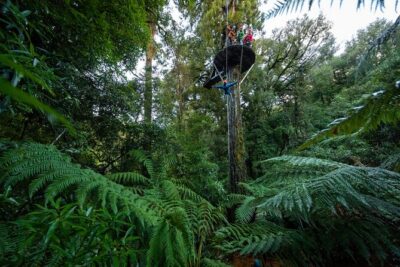
Rotorua’s Ultimate Zipline: 6 ziplines, 400 m Tandem, Cliff Walk
Read our review →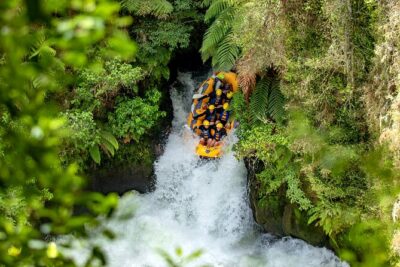
Rotorua Rafting: Kaituna River White Water Rafting & Free Sauna
Read our review →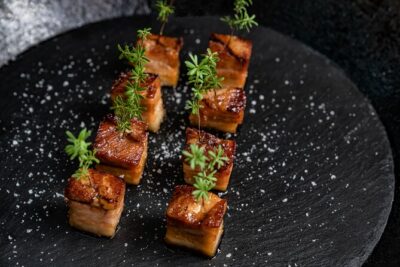
Cultural Experience & Seasonal Māori Cuisine at Te Pā Tū
Read our review →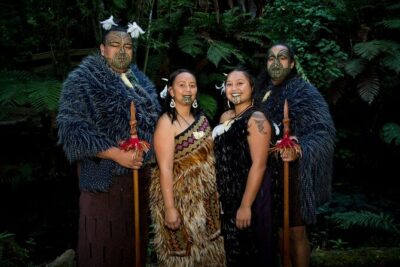
Mitai Maori Village Cultural Experience in Rotorua
Read our review →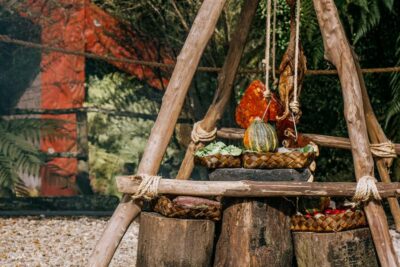
Te Pa Tu Māori Cultural Experience with Dinner
Read our review →Browse the lists this tour appears in