
Reviewed · ROTORUA TOURS
Rotorua: Māori Cultural Performance with Dancing
Rotorua’s Māori culture comes alive in a compact performance of singing, poi dance, stick games, and the famous haka. At Whakarewarewa, the Living Māori Village, you sit close to the action and hear the meaning behind what you see, rather than watching a dance show with no context.
I like the 30-minute length, which fits neatly into a busy Rotorua day, and I like the warm, welcoming mood reported throughout the village. The main consideration is simple: this is a cultural performance, not a full village tour. If you want cooking, daily life, or a longer visit, you’ll need to book those activities separately.
Key points to know before you book
- A focused 30-minute introduction: You see several major Māori performance traditions without giving up half a day.
- The haka is only one part: The program also includes harmonious singing, poi dance, and stick games.
- Free seating makes timing useful: Arrive early if you want a better position near the front.
- Audience participation adds fun: You may be invited to copy some of the movements.
- Set inside a living Māori village: The setting gives the performance more meaning than a stand-alone stage show.
- Good value at $20: It is an inexpensive way to add Māori culture to a Rotorua itinerary.
Entering Whakarewarewa for the performance
Your visit begins at the admissions building, where you check in and receive directions to the performance. The host or greeter speaks English, and the activity is wheelchair accessible.
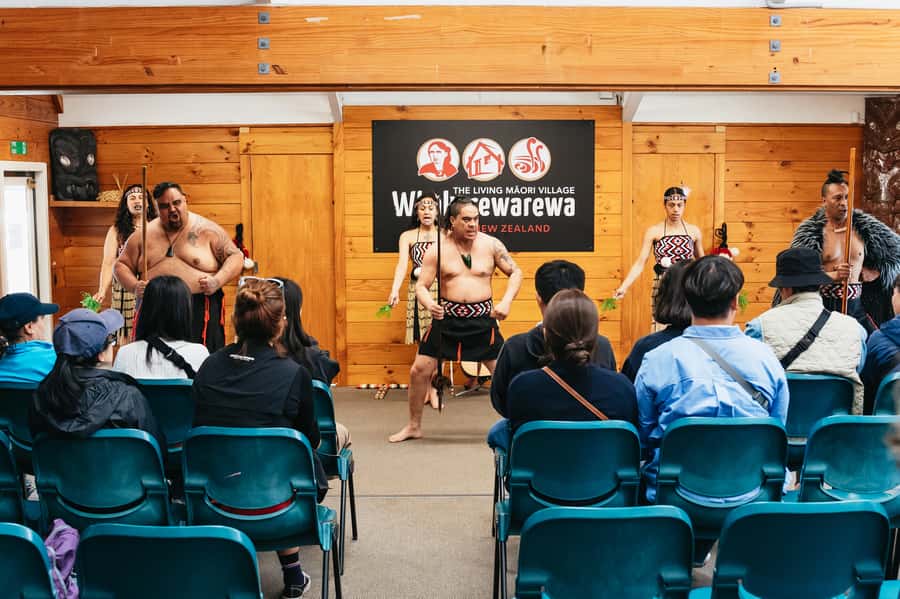
The setting matters. Whakarewarewa is presented as the Living Māori Village, so you are not simply arriving at a theater in a shopping district. The performance takes place within a place connected to Māori community life. That does not turn a short show into a complete cultural visit, but it gives the music and movement a stronger sense of place.
If you are already taking a guided village tour, the performance can fit in easily afterward. One useful detail is that seating is free choice, not assigned. I would arrive early, especially if you care about a clear view of the performers or want to sit in the first rows.
There are limited seats, which can help the atmosphere feel more personal. It also means you should not treat the start time casually. Check the available performance time when booking, arrive at the admissions building with enough time to check in, and head inside promptly.
More Maori Experiences in Rotorua
- Mitai Maori Village: Cultural Experience and Dinner Buffet
★ 4.7 · 3,575 reviews - Cultural Experience & Seasonal Māori Cuisine at Te Pā Tū
★ 5.0 · 1,546 reviews - Mitai Maori Village Cultural Experience in Rotorua
★ 4.5 · 1,294 reviews
The opening songs and cultural explanation
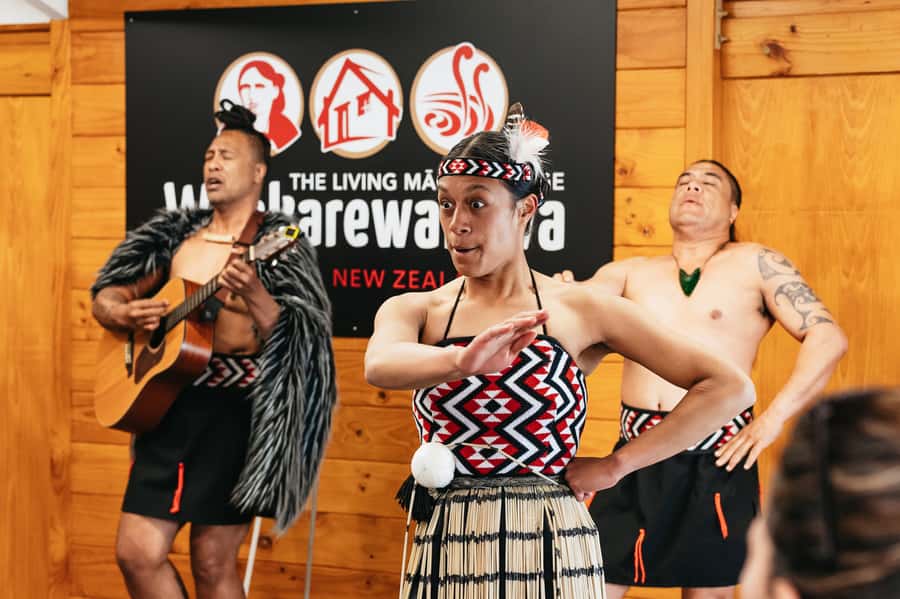
The performance begins with traditional singing and spoken explanation. This introduction is important because Māori performance is not just a collection of dramatic movements. Songs, gestures, facial expressions, and group formations carry meaning, and the English explanation helps you watch with some understanding.
The singing is one of the strongest parts of the experience. The voices create a calm, communal opening before the show moves into more forceful material. One song specifically associated with the performance is Pokarekare Ana, a well-known Māori love song. Hearing its background before the song is performed adds a useful layer, especially if you recognize the melody already.
You should expect a cultural presentation designed for a broad audience. It gives you basic information and clear explanations rather than a long lecture. That balance works well for families, first-time visitors to New Zealand, and anyone who wants a short introduction before deciding if a longer Māori village visit is right for them.
The tone is welcoming rather than formal. The performers explain what you are seeing, but the show keeps moving. You get enough context to follow the program without sitting through a history lesson.
The haka, performed up close
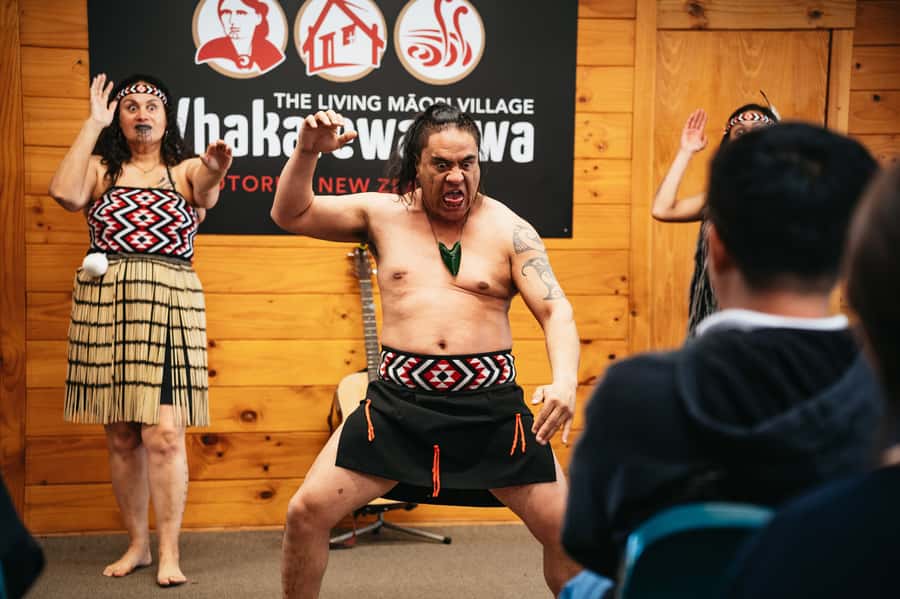
The haka is the moment many people anticipate, and it delivers the force you expect. The performance uses strong group movement, stamping, vocal power, facial expression, and sharp gestures to create a feeling of unity and intensity.
It is worth remembering that the haka is not merely a war dance or a theatrical challenge. Different haka have different purposes, and the meaning depends on the words and setting. Here, the performance gives you a public introduction to a famous Māori tradition within a wider program of song and dance.
The short format helps the haka retain its impact. You are not waiting through a long build-up, and the show does not rely on the haka alone. It appears as part of a larger presentation, which lets you compare its bold energy with the grace of the poi dance and the rhythm of the stick games.
The best seats are likely to give you a stronger sense of the performers’ expressions and coordinated movement. This is another reason to arrive early. From farther back, you can still follow the action, but a closer seat makes the performance feel more immediate.
Poi dance: rhythm, control, and grace
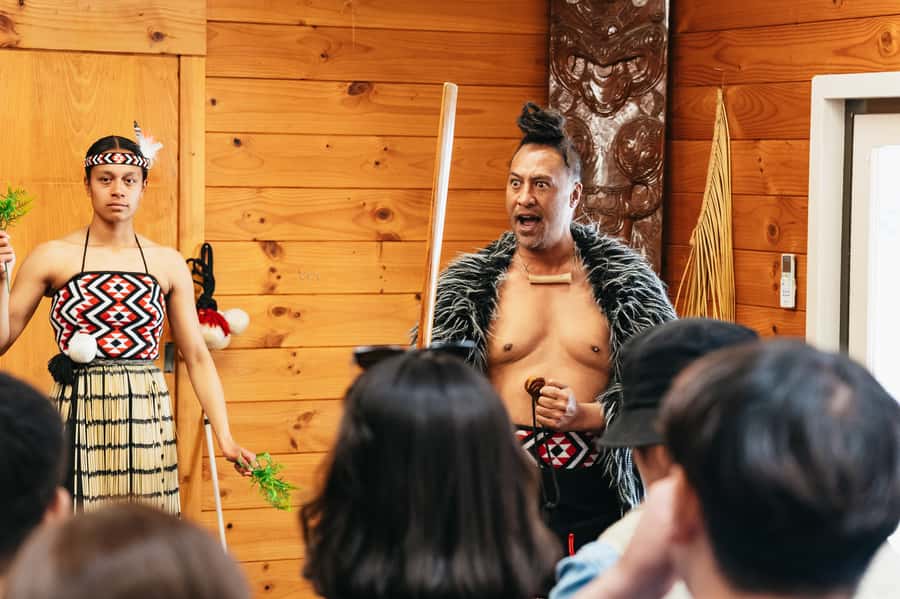
The poi dance brings a very different mood. Performers swing poi in carefully timed patterns, creating rhythm through both movement and sound. The dance calls for coordination, timing, and control, and it provides a softer contrast to the haka.
You may have seen poi in photographs or short videos, but a live performance lets you see how the dancers work as a group. Watch the timing between performers. The appeal is not only the individual skill of swinging the poi, but the way several dancers keep the same rhythm while moving through the choreography.
This section is especially helpful for showing that Māori performance traditions include more than the powerful images most commonly associated with the haka. The singing, poi, and other dances give a fuller picture of the cultural arts presented at Whakarewarewa.
The poi dance is also easy to appreciate without specialist knowledge. The explanation tells you what you are watching, then the movement carries the rest. You can simply enjoy the pattern, rhythm, and precision.
Somewhere else in Rotorua entirely:
- Rotorua Canopy Tours: 2.5Hour Native Forest Zipline Adventure
★ 5.0 · 4,563 reviews - Rotorua: Wai-O-Tapu Geothermal Park Entry Ticket
★ 4.6 · 2,601 reviews - Rotorua’s Ultimate Zipline: 6 ziplines, 400 m Tandem, Cliff Walk
★ 5.0 · 2,557 reviews - Rotorua Rafting: Kaituna River White Water Rafting & Free Sauna
★ 5.0 · 1,952 reviews
Stick games and the livelier middle of the show
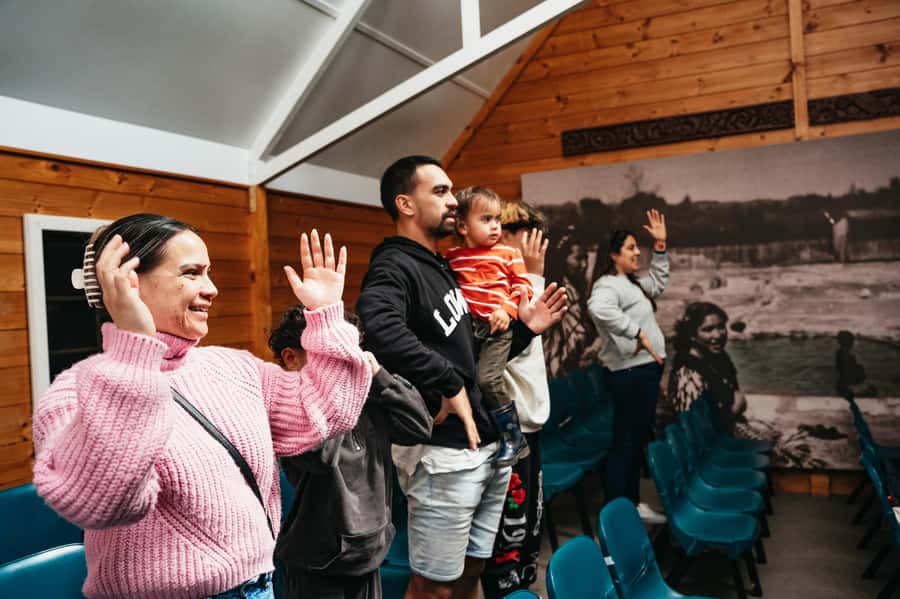
Stick games add speed and playfulness to the program. Performers pass or handle sticks in time with the group, creating a lively display of timing and cooperation.
These games are not presented as random tricks. They show how movement, rhythm, attention, and group trust work together. As with the poi, the pleasure comes from watching everyone stay in sync.
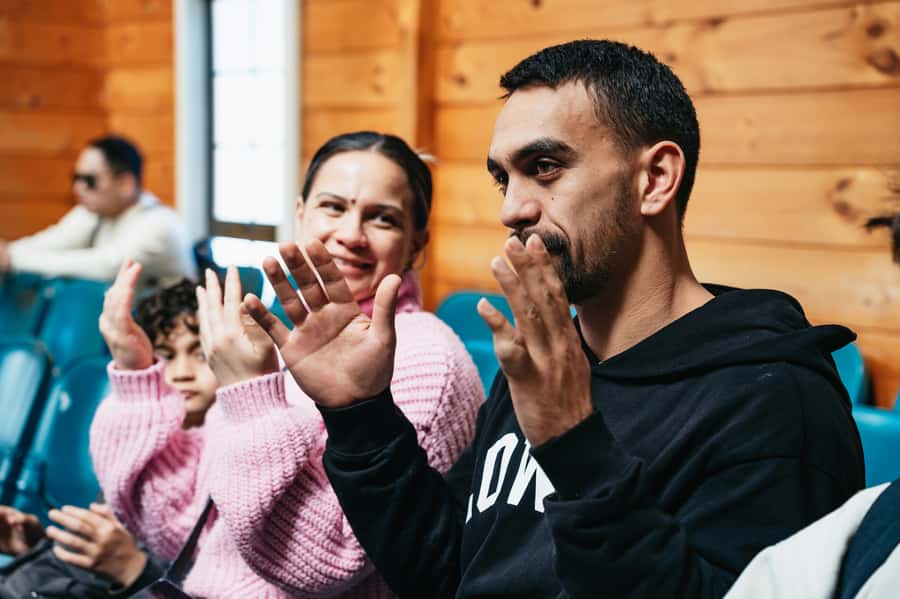
The show may also include audience participation. You could be invited to try some of the movements, which makes this more than a performance viewed from a distance. The participation is described as fun, particularly for families and teenagers, but you can enjoy the show without taking part if you prefer to watch.
That interactive touch helps break down the barrier between stage and audience. It also gives you a modest sense of how much practice lies behind the polished presentation. A simple movement can look easy until you try to keep time with a group.
Why the setting adds value
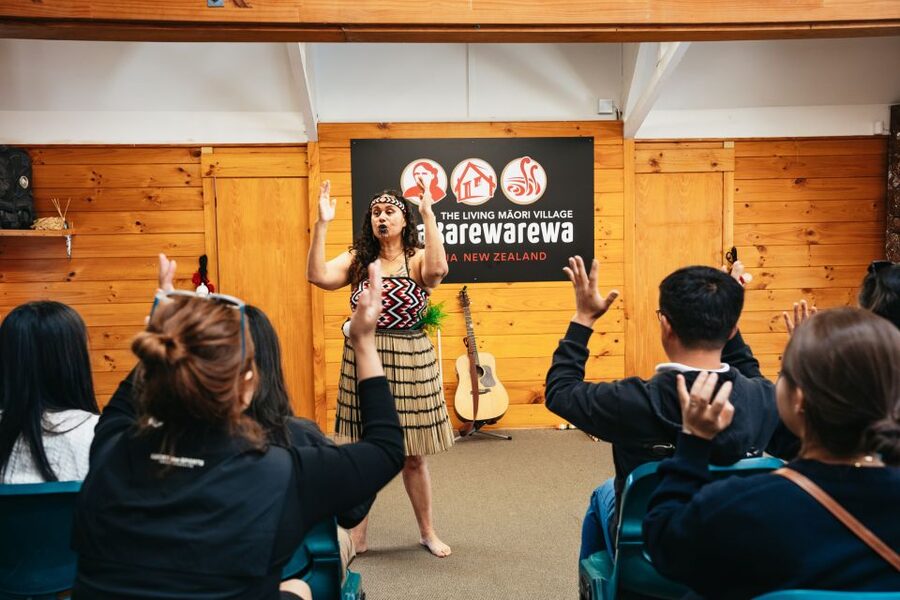
A stand-alone cultural show can be worthwhile, but the village setting gives this activity extra context. Whakarewarewa connects the performance with a living Māori community rather than presenting Māori culture as a display removed from daily life.
You should keep that point in proportion. A 30-minute performance cannot explain every part of Māori society, and it does not replace a longer village tour. Still, the location helps the experience feel connected to Rotorua’s Māori heritage.
The activity is particularly useful if your schedule is tight. You can see traditional songs and dances, hear explanations in English, and get a feel for the village atmosphere without committing to a longer package that includes meals or additional activities.
If you have time, pairing the show with a guided village tour can make the visit more complete. The tour can provide information about communal life, cooking, and the sharing of resources, while the performance focuses on song and dance. They are different experiences, so one does not make the other unnecessary.
What $20 gets you
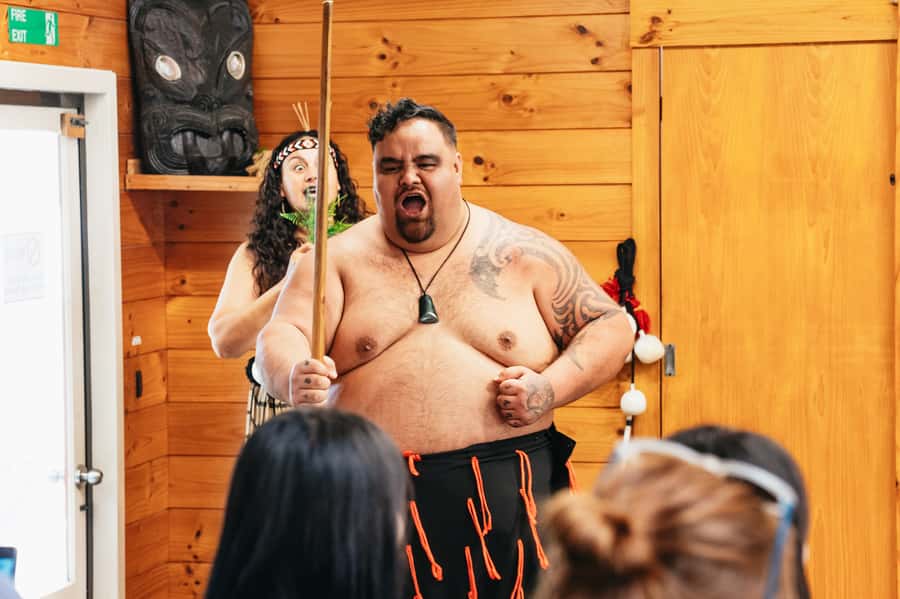
At $20 per person, this is one of the easier Rotorua activities to fit into a sightseeing budget. The price covers the performance and host. It does not include a tour of the village or other village activities, so check your booking carefully if you want more than the show.
The value depends on what you want. If you need a short cultural stop with a clear beginning and end, the price is strong. You receive live singing, the haka, poi dance, stick games, explanations, and possibly a chance to join in.
If you are hoping for a full-day cultural program, a meal, or extensive time with performers, this is not that product. The affordable price reflects the focused format. You are paying for a performance, not an all-inclusive Rotorua visit.
I also like that you do not have to add a buffet dinner or a long list of extras to make the activity worthwhile. For some people, a straightforward half-hour show is exactly what the day needs.
How the 30 minutes feel
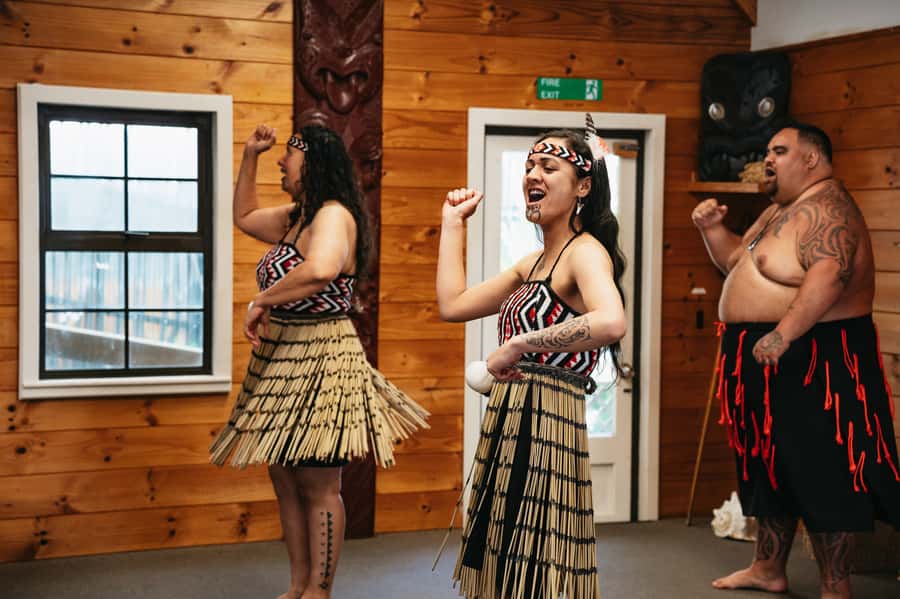
The program moves quickly. After checking in and taking your seat, you watch a sequence of songs and dances that builds from explanation and melody toward stronger group movement and audience engagement.
The length is a real advantage for families with children or teenagers. Young people get to see several different traditions before attention fades, and the interactive element can keep them involved. The show also works well as a first cultural experience for someone who has never encountered Māori performance in person.
The drawback is that you may wish it lasted longer. The material is varied enough that the final song can arrive sooner than expected, particularly if you are enjoying the singing. You will leave with an introduction, not a detailed study.
That is not a fault, as long as you book it for the right reason. Think of the experience as a concentrated sample. It gives you a memorable look at Māori performance and can help you decide if you want to spend more time at Whakarewarewa or explore other Māori cultural activities in Rotorua.
Practical advice for getting the most from it
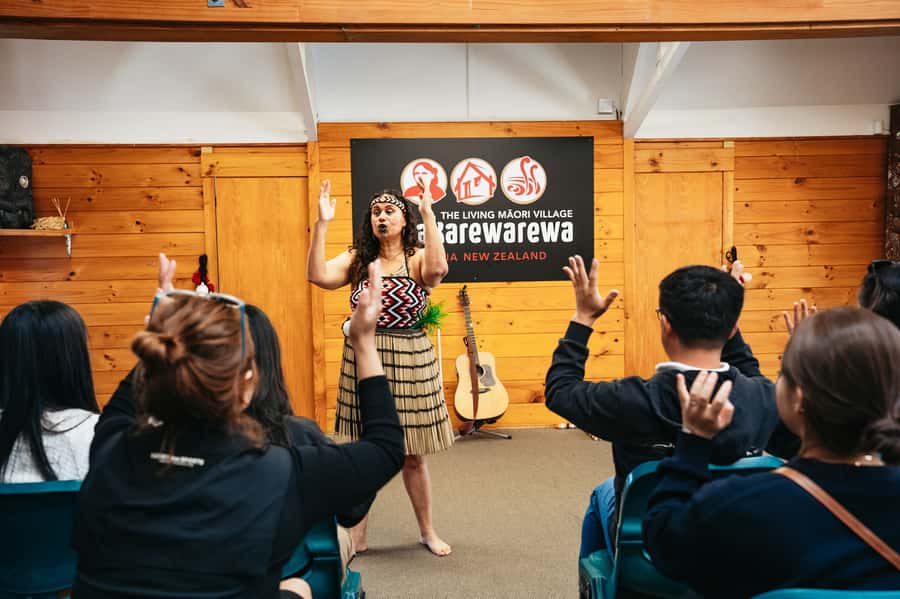
Arrive early for the best chance of securing a front-row seat. Seating is free, and the performance area can have limited capacity.
Wear something that lets you sit comfortably for half an hour. The activity itself is short, but you may be combining it with a village visit, so allow enough time to find the admissions building and complete check-in.
Listen to the spoken explanations as carefully as the songs. The music and movement are enjoyable on their own, but the context helps you understand why the performance includes such different forms, from the force of the haka to the controlled patterns of poi and stick games.
Keep your expectations clear about photography. At least one visitor hoped for a photo opportunity with the performers after the show, but that was not available. Do not assume there will be a meet-and-greet or posed photo session afterward.
The performance is in English, which makes it accessible to international visitors. Wheelchair access is available, though the supplied information does not specify seating arrangements or detailed access conditions, so contact the provider if you need a particular position or assistance.
The booking terms are flexible: you can cancel up to 24 hours before the activity for a full refund, and the reserve-now, pay-later option lets you hold a place without paying immediately. Those terms are useful in Rotorua, where weather and geothermal activities can affect your daily schedule.
Who will enjoy this most
I would recommend this to anyone who wants a clear, inexpensive introduction to Māori culture without spending several hours on one activity. It suits first-time visitors to Rotorua, families, teenagers, and people adding a cultural stop between other attractions.
It is also a good choice for anyone who values live performance. The singing is a major part of the appeal, and the dancers bring energy and warmth to the presentation. The show has enough explanation to be informative, but it remains entertaining.
You might choose something longer if you want a detailed look at village life, food, history, or community traditions. This performance gives you a focused look at Māori song and dance, not a complete account of the culture.
For many people, the best plan is to treat it as one part of a Rotorua day. Pair it with a village tour if you want more detail, or book it alone if you simply want to hear the songs and see the dances.
Should you book the Whakarewarewa Māori performance?
Book it if you want 30 minutes of live Māori music and dance for $20, especially if the haka, poi, and stick games are high on your list. The English explanations, welcoming atmosphere, and audience participation make it easy to follow, even if this is your first exposure to Māori culture.
Skip it only if you are looking for a longer village experience or a meal-inclusive program. For a short, focused cultural performance in Rotorua, this is a practical choice with strong value. Arrive early, take a good seat, and think of it as an appealing first taste rather than the whole story.
FAQ
How long is the Māori cultural performance?
The performance lasts 30 minutes.
How much does the experience cost?
The listed price is $20 per person.
What does the performance include?
It includes the live performance and a host. The program features traditional singing and dancing, the haka, poi dance, stick games, and other cultural elements.
Is a village tour included?
No. A tour of the village and other village activities are not included with this performance.
Where do I check in?
Check in at the admissions building, where you receive your tickets and directions to the performance.
Is the activity wheelchair accessible?
Yes, the activity is listed as wheelchair accessible. The host or greeter speaks English, and the performance language is English.
Newly listed around Rotorua
- Rotorua: White Island, Mount Tarawera & Waimangu Volcanic …★ 4.4 · 5 reviews
- Whirinaki Forest Footsteps: Māori Guided Tour, Picnic & Transfer★ 5.0 · 5 reviews
- Rotorua: Lake View Private Pools Experience★ 4.3 · 6 reviews
- Rotorua: Floatplane Flight with Orakei Korako Landing★ 5.0 · 6 reviews
- Raceline Karting at Off Road NZ★ 5.0 · 6 reviews
- Epic Tandem Kayak Tour down the Kaituna River Waterfalls★ 5.0 · 6 reviews
- Rotorua: Evening Starlight Gourmet Kayak Tour with dinner★ 5.0 · 6 reviews
- From Rotorua: Whirinaki Rainforest Guided Cultural Tour★ 5.0 · 6 reviews
Rotorua Tours, compared.
Rotorua Canopy Tours: 2.5Hour Native Forest Zipline Adventure
Read our review →
Mitai Maori Village: Cultural Experience and Dinner Buffet
Read our review →
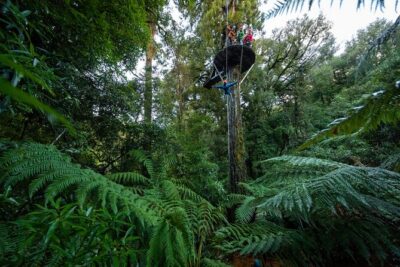
Rotorua’s Ultimate Zipline: 6 ziplines, 400 m Tandem, Cliff Walk
Read our review →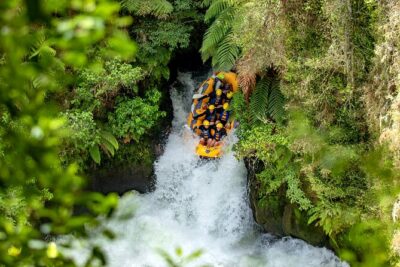
Rotorua Rafting: Kaituna River White Water Rafting & Free Sauna
Read our review →
Cultural Experience & Seasonal Māori Cuisine at Te Pā Tū
Read our review →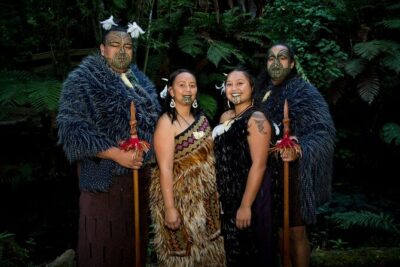
Mitai Maori Village Cultural Experience in Rotorua
Read our review →
Te Pa Tu Māori Cultural Experience with Dinner
Read our review →Browse the lists this tour appears in