
Reviewed · MOUNT COOK & LAKE TEKAPO TOURS
Dark Sky Indoor Maori Cultural Astronomy Experience
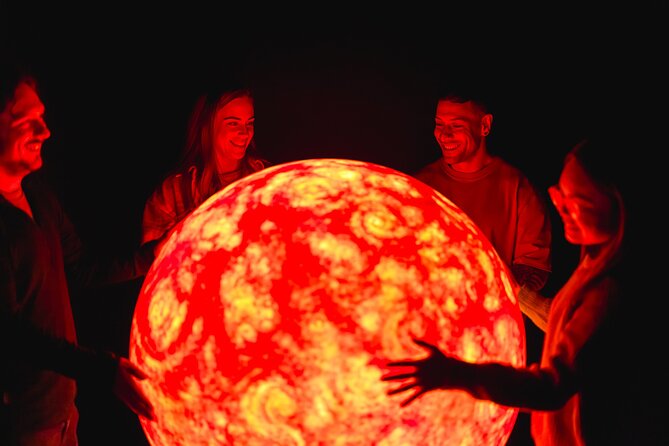
The most useful thing about this indoor astronomy experience is that it lets you explore the southern sky in daylight, rain, or cloud. You move through four zones covering Māori navigation, star clusters, creation stories, and modern science, then see a restored 125-year-old Brashear Telescope.
I like the clear blend of Māori culture and Western astronomy, and I like the guides’ lively delivery. One guide, To, is especially good at inviting questions and keeping the talk informal. The main drawback is simple: this is a guided indoor presentation, not a night under the real stars, so serious stargazers may want to pair it with an outdoor observatory session.
Key points before you book
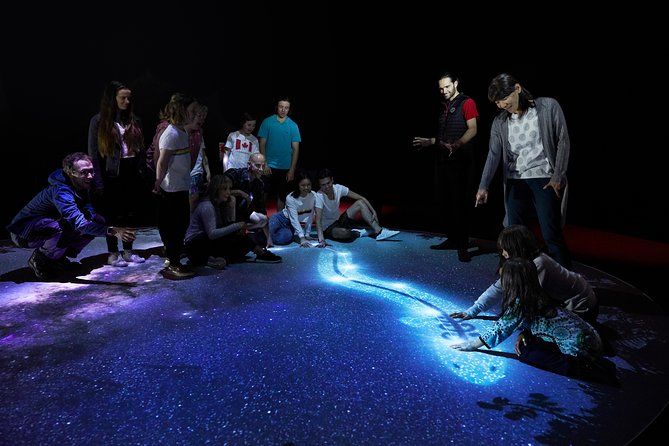
- Four focused indoor zones: Follow Māori ideas about the sky, ocean currents, navigation, agriculture, and life.
- Good rainy-day backup: The experience runs year-round and does not depend on clear skies.
- A guide-led visit: The core presentation lasts about 45 minutes, within an overall visit of roughly one hour.
- The Brashear Telescope: See a nine-meter-tall Victorian-era telescope restored to working display condition.
- Family-friendly format: Multimedia displays and hands-on activities give children something to do as well as watch.
- Small group size: The maximum is 26 people, which helps the guide keep the presentation personal.
Lake Tekapo’s night sky, explained before dark
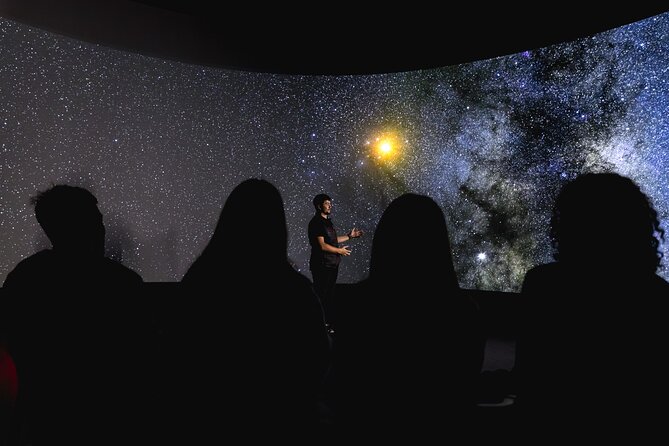
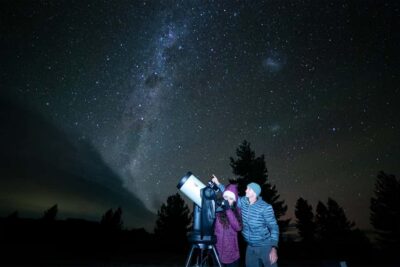
Lake Tekapo sits within the Aoraki Mackenzie International Dark Sky Reserve, a place known for unusually clear and protected night skies. Yet outdoor stargazing is always at the mercy of weather, light, and tired children. This indoor visit solves that problem neatly.
You do not need to wait until evening to learn about the stars. The Dark Sky Experience uses displays, stories, and guided explanations to show how people have made sense of the sky across time. You get the cultural setting first, then the scientific ideas that help explain what you are seeing.
That order matters. Māori astronomy is not treated as a decorative extra added to a science talk. It is part of the main story, with attention to how the sky relates to travel, seasonal work, food production, family life, and the origins of living beings.
I find that approach more useful than a simple list of constellations. You are not just asked to remember star names. You are shown why the sky mattered to the people who lived with it.
More Maori Experiences in Mount Cook & Lake Tekapo:
- Lake Tekapo: Indoor Māori Cultural Astronomy Experience
★ 4.5 · 43 reviews - Mitai Maori Village: Cultural Experience and Dinner Buffet
★ 4.7 · 3,575 reviews - Cultural Experience & Seasonal Māori Cuisine at Te Pā Tū
★ 5.0 · 1,546 reviews
The four zones and what you learn
The visit moves through four interactive areas. The exact balance between talking, viewing, and hands-on activity depends on the guide and the pace of the group, but you should expect a structured tour rather than a free-roaming museum visit.
One zone explains how Māori used constellations and ocean currents to navigate. This gives the stars a practical role. The sky was not only something to admire. It helped people find their way across the Pacific, while knowledge of currents and conditions supported long ocean journeys.
Another area looks at star clusters and their importance. These are useful points of reference in the sky, and the presentation connects them with Māori understanding of time and the natural world. You will hear cultural stories alongside explanations rooted in astronomy.
The remaining zones bring in mythology, creation, and scientific discovery. The experience presents Māori ideas about how living beings came to be, then links those ideas with the scientific story of the universe. The two approaches are not identical, and that is part of the value. You get to consider different ways of asking where we come from and how humans fit into the sky.
The displays are designed for different ages. Children can handle activities and follow the visual material, while adults get more context from the guide’s explanations. The strongest presentations keep the science plain and let the stories carry some of the weight.
Māori astronomy is central, not an afterthought
A common problem with cultural attractions is that they offer a short traditional introduction before switching to a familiar Western account. This experience gives Māori astronomy a much larger role.
You learn about the Māori relationship with the stars and how that relationship shaped navigation, farming, timing, and everyday life. The sky becomes part of a living cultural system rather than a collection of distant objects.
I especially like the link between astronomy and agriculture. Star movements and seasonal changes had direct meaning for food growing and other work. This makes the subject easier to understand because it connects the heavens with decisions made on the ground.
The presentation also gives space to Māori mythology. These stories are not simply entertainment for children. They explain relationships, origins, and the place of people within the natural world. A good guide can help you appreciate the stories on their own terms while still explaining how they relate to current science.
The experience does not ask you to choose between culture and astronomy. It puts both in the same room and encourages you to see how each adds something different.
A guide-led presentation with personality
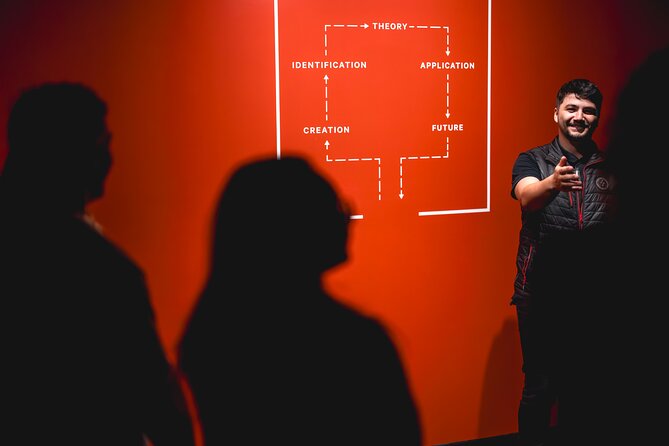
The guide can make or break a short museum visit. Here, the best sessions are energetic, clear, and willing to adapt to the group.
One guide identified in the experience as To is notably relaxed and interactive. The informal tone helps children ask questions without feeling they are interrupting a formal lecture. It also gives adults permission to admit when they have forgotten basic astronomy.
Other guide feedback points to strong storytelling and an easy-to-follow presentation. The information is delivered in plain language rather than loaded with technical terms. That is helpful if you have only a casual interest in astronomy or are visiting with children.
The group limit is 26 people. That is not a private tour, but it is small enough for a guide to keep an eye on the room and respond to questions. If your group prefers quiet, self-directed museum visits, the guided format may feel a little fixed. For most families, though, the structure keeps the visit moving.
Allow about 45 minutes for the guided portion. The total activity is listed at roughly one hour, giving you a little time around the exhibits and telescope.
A few more Mount Cook & Lake Tekapo days to compare
- Lake Tekapo: Alpine Stargazing Experience with a Guide
★ 4.5 · 626 reviews - Lake Tekapo: Stargazing Experience
★ 4.9 · 607 reviews - Mount Cook: Scenic Helicopter Flight with Alpine Landing
★ 4.8 · 442 reviews - Mt Cook Small Group Scenic Day Tour from Queenstown
★ 5.0 · 407 reviews
The restored Brashear Telescope

One of the most memorable objects here is the restored Brashear Telescope, a nine-meter-tall Victorian-era instrument that is about 125 years old. Even if you are not an equipment enthusiast, its size and age help connect the modern attraction with the long history of astronomical observation.
The telescope gives the visit a physical centerpiece. Much of the experience involves screens, explanations, and stories, so a large historic instrument adds texture and scale. It reminds you that astronomy has always involved both careful observation and the tools people build to extend their sight.
Do not expect this daytime ticket to function as a full night observing session. The telescope is included as part of the indoor cultural and scientific experience. If your main goal is to look through a telescope at stars, check that you are booking the correct Dark Sky Project product.
Why this is a strong family activity
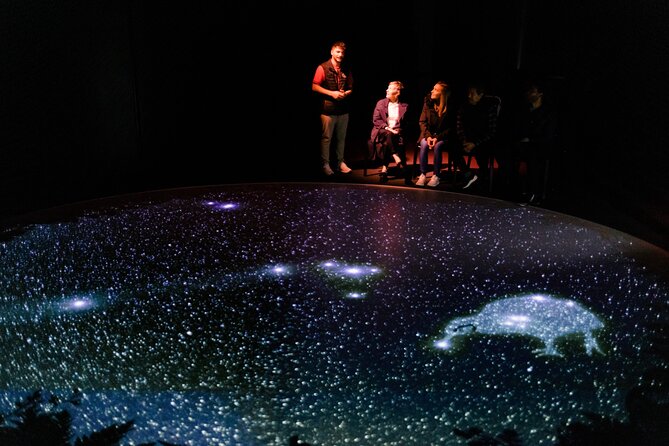
Children often enjoy the idea of space but lose interest when a presentation becomes too technical. This attraction keeps the subject active with multimedia material and hands-on elements.
The four-zone setup also helps. Instead of sitting through one long talk, you move through separate themes. Navigation, star clusters, mythology, and creation each offer a new point of entry.
Parents get practical value from the weather protection. Lake Tekapo’s outdoor activities depend on conditions, and a rainy evening can leave a family searching for something to do. This visit gives you a scheduled cultural activity without requiring warm clothing, darkness, or a clear sky.
The experience suits mixed-age groups because it works on two levels. Children can follow the visual stories and activities, while adults can pay closer attention to the Māori science, navigation, and links with Western astronomy.
Still, keep expectations realistic. It is not a theme-park attraction packed with constant motion. Some parts require listening. A child who needs nonstop activity may enjoy the hands-on zones more than the spoken sections.
When the ticket is worth the price
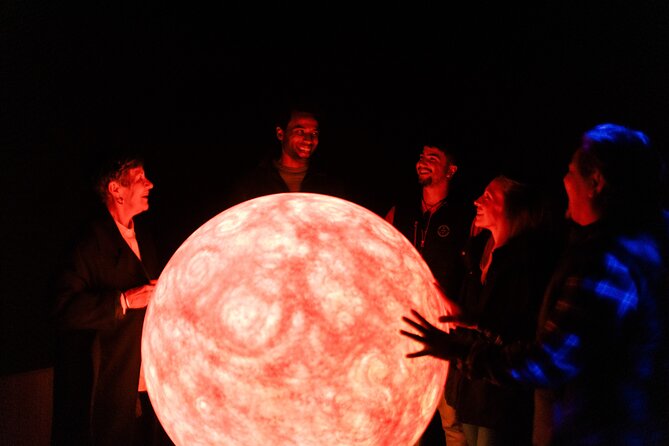
At $37.56 per person, this is not a throwaway stop, particularly for a family paying for several tickets. The value depends on what you want from your time in Lake Tekapo.
I think the price is easier to justify when the weather is poor or when you want more than a standard science display. You receive a guide-led visit, four themed areas, cultural storytelling, science explanations, and access to the historic Brashear Telescope. The year-round schedule also gives the ticket practical value because you are not gambling on a clear night.
The ticket is less compelling if you are already planning several astronomy activities and mainly want outdoor observation. In that case, you may prefer to spend your budget on a night tour, depending on availability and weather.
For families, the cost also buys certainty. You can reserve a set activity and know that everyone has somewhere to go during rain. Booked entry is useful in a popular destination, especially if your visit falls during a busy period.
The mobile ticket makes arrival straightforward. The meeting point is at 1 Motuariki Lane in Lake Tekapo, and the activity returns to that same point. It is near public transportation, and service animals are allowed.
What the experience cannot replace
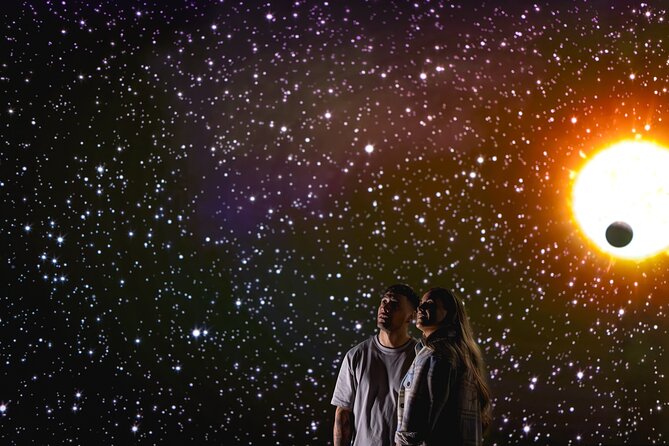
This attraction explains the night sky, but it does not recreate the full feeling of standing outside beneath it. You will not get cold air, silence, changing cloud, or the sudden shock of seeing stars across a truly dark sky.
That is not a fault, as long as you understand the difference. Think of this as a cultural astronomy lesson and a weather-proof introduction. Use it to give meaning to what you later see outdoors.
If clouds cover the sky, the indoor visit becomes particularly useful. You can still learn about southern constellations and the Māori understanding of them. One family chose this option specifically because poor evening weather was expected, and the children still received a proper introduction to the stars.
Rain is another strong reason to book. The indoor setting takes away the need to plan around forecasts. You can also attend during daylight, so it fits well between scenic drives and other Lake Tekapo activities.
Who should book this experience
I would choose this experience for families, first-time astronomy visitors, and anyone who wants cultural context rather than a purely technical lecture. It is also a good pick for people with a short stay who want one compact activity that works in any season.
It suits you particularly well if:
- You want to learn about Māori astronomy in a clear, respectful format.
- You are visiting Lake Tekapo with children.
- The forecast is cloudy or rainy.
- You like guided storytelling more than reading museum labels.
- You want to understand the relationship between Māori navigation and the stars.
- You need a daytime activity.
You may want to skip it if you are seeking only telescope viewing or a long, advanced astronomy seminar. The visit is short and designed for a broad audience. Its strength is the blend of culture, science, and storytelling, not specialist depth.
Practical details for a smoother visit
The advertised duration is about one hour, with around 45 minutes led by a guide. Build a little extra time into your schedule so you are not rushing from another activity.
The attraction is suitable in all weather and operates year-round. That makes it a useful piece of a flexible Lake Tekapo plan. Put it on a wet-day schedule, but do not assume you need bad weather to enjoy it. The cultural material and historic telescope give it enough substance for a clear day too.
Most people can take part, and the maximum group size is 26. The experience is near public transportation, and service animals are permitted. Snacks, coffee, and tea are not included, so plan refreshments separately.
Free cancellation is available if you cancel at least 24 hours before the start time. Changes or cancellations made inside that window are not refunded, and the experience requires a minimum number of participants. If that minimum is not reached, you are offered another date or experience, or a full refund.
Should you book the Dark Sky Experience?
Book it if you want a short, well-organized introduction to Māori astronomy, especially if you are traveling with children or facing poor weather. The combination of four interactive zones, an enthusiastic guide, clear science, and the huge Brashear Telescope gives the visit a purpose beyond filling an empty hour.
I would treat it as a companion to outdoor stargazing, not a replacement for it. The ticket is best value when you want cultural understanding and a dependable indoor activity. If you only want to see stars through a telescope, choose a dedicated night program instead.
FAQ
How long does the Dark Sky Indoor Māori Cultural Astronomy Experience last?
The activity lasts approximately one hour. The guided tour through the four zones takes about 45 minutes.
Where does the experience take place?
It starts at the Dark Sky Project, 1 Motuariki Lane, Lake Tekapo 7999, New Zealand. The activity ends back at the same meeting point.
Is the experience suitable for children?
Yes. The experience is designed for all ages and includes multimedia exhibits and hands-on activities, making it suitable for families.
Does the experience depend on the weather?
No. It takes place indoors, operates year-round, and can be enjoyed during daylight, rain, or cloud.
What is included in the ticket?
The ticket includes the guided tour through four zones, the indoor space and exhibits, the cultural and science presentation, and viewing of the restored Brashear Telescope. Snacks, coffee, and tea are not included.
Can I cancel for a full refund?
Yes, if you cancel at least 24 hours before the experience start time. Cancellations or changes made less than 24 hours in advance are not refunded.
Newly listed around Mount Cook & Lake Tekapo
- Mount Cook: 20-Minute Alpine Vista Helicopter Flight★ 4.2 · 5 reviews
- Lake Tekapo to Mt Cook One-Way Small Group Tour★ 4.0 · 5 reviews
- Mount Cook: Alpine Explorer 35 Minute Flight★ 4.9 · 6 reviews
- Mount Cook: Tasman Glacier and West Coast Helicopter Flight★ 5.0 · 6 reviews
- Mount Cook Scenic 35 Minute Helicopter Flight★ 5.0 · 6 reviews
- Mt Cook: 55-Minute Scenic Flight in Helicopter or Ski Plane★ 4.1 · 6 reviews
- Mount Cook: Glentanner High Country Heli Hike★ 5.0 · 7 reviews
- Mount Cook: Tasman Glacier Helicopter Flight★ 4.3 · 7 reviews
Mount Cook & Lake Tekapo Tours, compared.


Mt Cook Small Group Scenic Day Tour from Queenstown
Read our review →
Tekapo Shuttle: Mt Cook Day Tour via Pukaki & Tasman Lake
Read our review →
Browse the lists this tour appears in