
Reviewed · MOUNT COOK & LAKE TEKAPO TOURS
Lake Tekapo: Indoor Māori Cultural Astronomy Experience
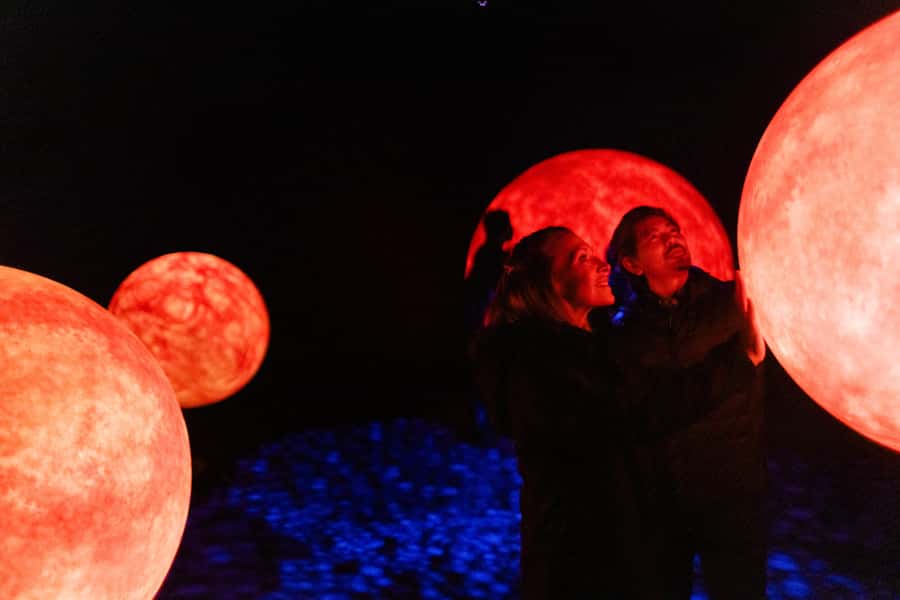
The most interesting part of this Lake Tekapo experience is that you do not need a clear night sky. Inside a purpose-built space, Māori astronomy and modern science come together through storytelling, sound, lighting, and interactive displays. You learn how stars, ocean currents, and creation stories shaped the way Māori understood the world.
I like the 45-minute length, which fits neatly into a day around Lake Tekapo. I also like the chance to see the restored Brashear telescope, a 125-year-old Victorian instrument that gives the experience a real connection to the history of astronomy. The main consideration is the guide’s delivery: a heavy accent or noise from young children may make some explanations hard to follow, so choose a quieter time if you can.
Key points to know before booking
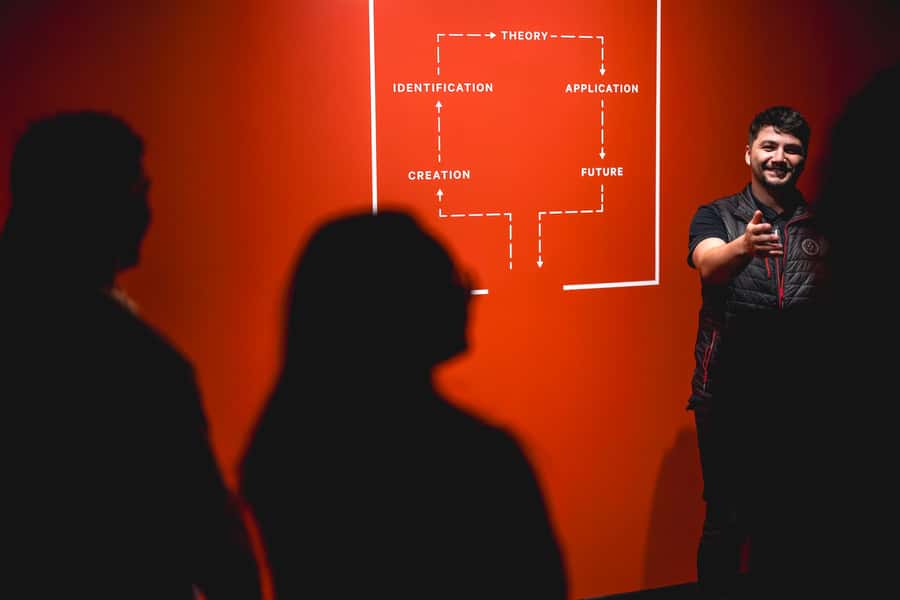
- Four indoor zones explain Māori navigation, star clusters, mythology, and the origins of living beings.
- The historic Brashear telescope is 125 years old and restored for close viewing.
- The tour runs in any weather, making it a reliable daytime choice in Lake Tekapo.
- Live guiding is available in English and Chinese, with theatrical lighting and sound throughout.
- The experience costs $35 per person and lasts 45 minutes, a fair price for a focused cultural and astronomy program.
- Noise can matter, especially during guided storytelling, so families with very young children should keep the sound issue in mind.
What this indoor astronomy experience is really about
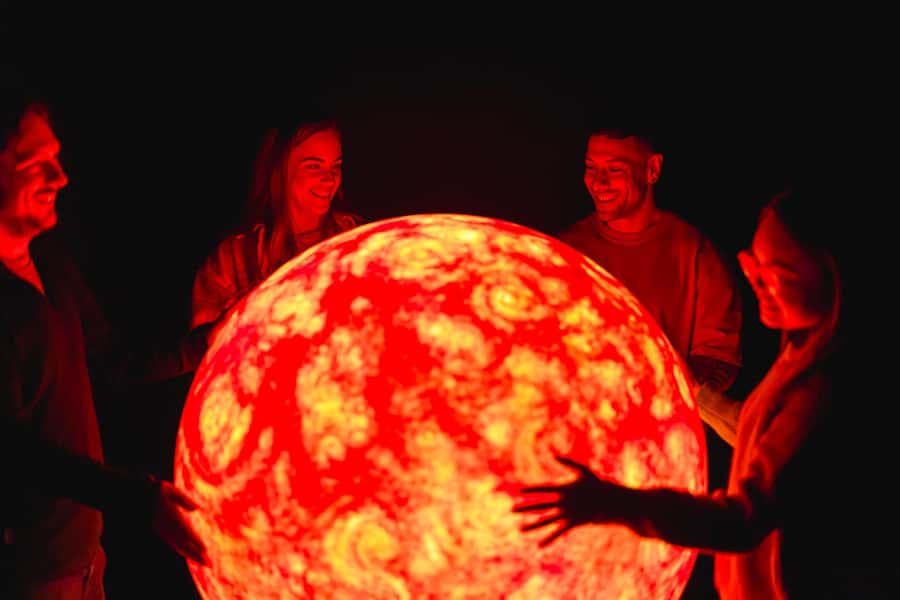
Lake Tekapo is famous for its dark skies, but the night sky is not only a scientific subject. Māori astronomy connects stars with voyaging, seasonal knowledge, ancestry, mythology, and the ordering of life. This experience gives you that cultural frame before you look up at the heavens.
You are not simply shown a set of constellations. The guided presentation explores how Māori used the stars and ocean currents to navigate, how star clusters carry meaning, and how stories in the sky relate to the wider world.
That makes this a different product from a standard planetarium show. The emphasis is on the relationship between people and the sky. Scientific ideas are part of the story, but they are paired with indigenous knowledge and oral tradition.
The indoor setting also changes the rhythm of your visit. You do not need to dress for a cold evening, wait for darkness, or hope that clouds stay away. You can schedule it during daylight, then spend the rest of your day enjoying Lake Tekapo.
More Maori Experiences in Mount Cook & Lake Tekapo:
- Dark Sky Indoor Maori Cultural Astronomy Experience
★ 4.5 · 70 reviews - Mitai Maori Village: Cultural Experience and Dinner Buffet
★ 4.7 · 3,575 reviews - Cultural Experience & Seasonal Māori Cuisine at Te Pā Tū
★ 5.0 · 1,546 reviews
Starting at 1 Motuariki Lane in Lake Tekapo
The meeting point is 1 Motuariki Lane, around 100 metres from the Four Square Supermarket. That central location makes the tour easy to add to a walking day in the village.
There is no hotel pickup or drop-off, so you need to make your own way there. The short distance from the supermarket is useful if you are already shopping, eating, or walking around the centre.
Plan to arrive with enough time to find the entrance and settle in. This is a fully guided experience, so arriving late could mean joining after the opening explanation. The supplied information does not give a recommended arrival time, so checking your booking details is sensible.
The venue is indoors and wheelchair accessible. That matters in Lake Tekapo, where weather can change quickly and outdoor activities may not suit everyone. The tour operates in all weather conditions, so rain, wind, or cloud does not threaten your booking.
Zone one: seeing the sky through Māori knowledge
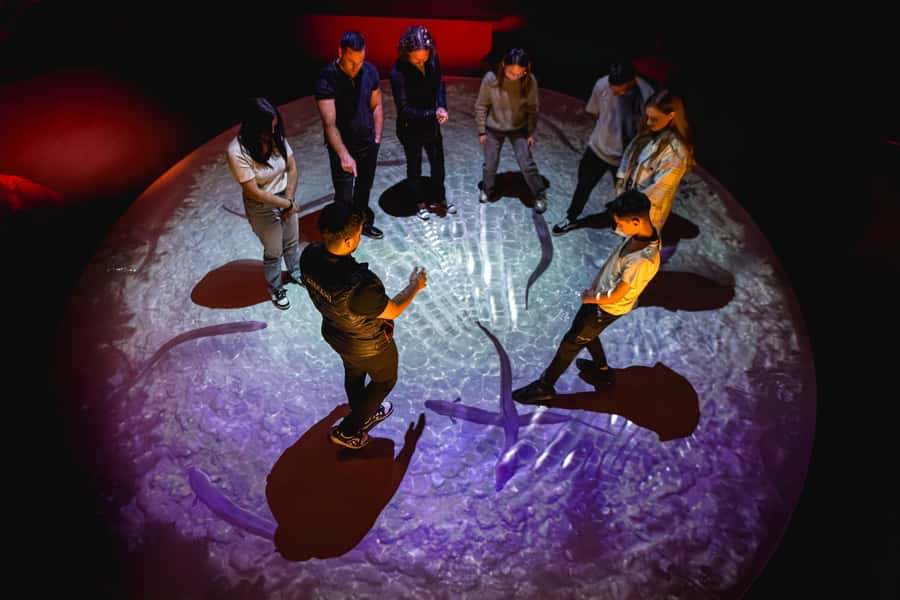
The experience moves through four interactive zones. The exact order is not specified, but the first ideas you encounter are likely to establish the central theme: the sky is both a scientific subject and a cultural guide.
The tour explains the special connection Māori have with the night sky. You hear how star knowledge was passed through stories and how celestial patterns helped people make sense of time, place, and the natural world.
This part is valuable because it gives context before the astronomy becomes more technical. You are not expected to arrive with a working knowledge of Māori star names or traditional navigation. The guide builds the story for you through spoken explanation and staged presentation.
The theatrical lighting and sound help create a sense of movement through the material. This is not an outdoor stargazing session, and you should not expect to spend 45 minutes looking through a telescope. Instead, the atmosphere supports the storytelling and helps turn abstract ideas into a memorable presentation.
The experience is family-friendly, but remember that the guide’s voice is the main way information is delivered. If someone nearby is talking or a small child becomes restless, you may miss a key point. A quieter session would make the most of the cultural content.
Zone two: stars, ocean currents, and navigation
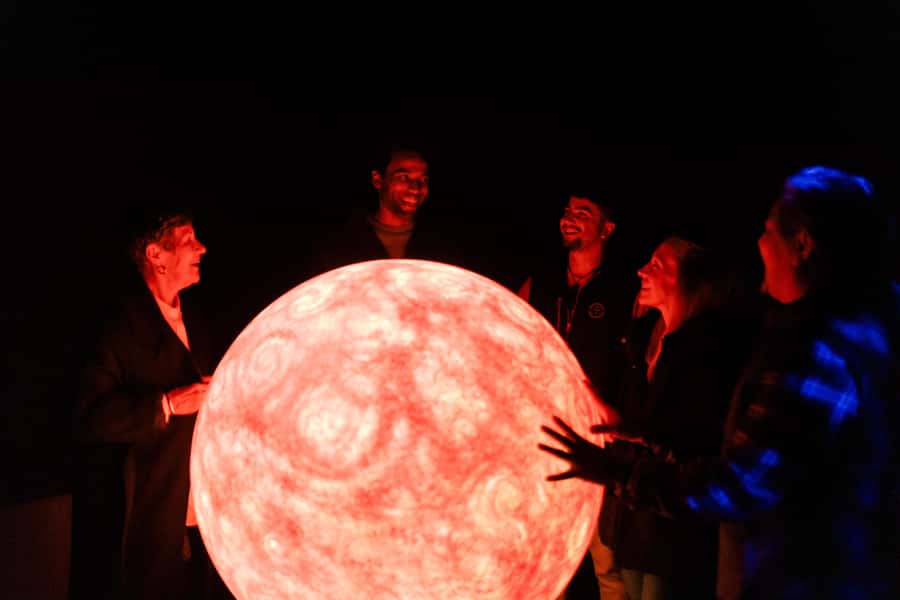
One of the strongest sections explains how Māori used constellations and ocean currents for navigation. This places astronomy in a practical setting. The stars were not just patterns for stories. They could help people understand direction and movement across the Pacific.
The connection with ocean currents is especially useful because it broadens the usual idea of celestial navigation. You are shown how knowledge of the sky worked alongside knowledge of the sea. That combination reflects an understanding of nature based on observation, memory, and careful reading of the environment.
I like this part because it gives the stars a purpose. Afterward, you are more likely to think of the night sky as a guide rather than a distant display.
The interactive format should help families and visitors who prefer something more active than a lecture. Still, the experience remains guided, so do not expect to operate equipment or navigate independently. Your role is to follow the story, respond to the displays, and listen as the guide links the cultural material with scientific discovery.
The strongest value here is interpretation. You could look at the same stars during an outdoor night tour, but without this background, you might miss why particular patterns matter.
A few more Mount Cook & Lake Tekapo days to compare
- Lake Tekapo: Alpine Stargazing Experience with a Guide
★ 4.5 · 626 reviews - Lake Tekapo: Stargazing Experience
★ 4.9 · 607 reviews - Mount Cook: Scenic Helicopter Flight with Alpine Landing
★ 4.8 · 442 reviews - Mt Cook Small Group Scenic Day Tour from Queenstown
★ 5.0 · 407 reviews
Zone three: star clusters and stories in the Milky Way
Another zone looks at the significance of star clusters and the mythology held in the stars. This is where the experience shifts from navigation toward meaning and memory.
The Milky Way is presented as part of a larger story about existence and the origins of living beings. The supplied description also refers to a science-based narrative about how living beings came to be. That combination gives the program a wide reach, moving from individual stars to questions about life and the universe.
Expect the guide to connect scientific ideas with Māori perspectives rather than treating them as competing subjects. For many people, this will be the most memorable part of the tour because it shows how different ways of understanding the world can sit beside one another.
You should also keep your expectations realistic. This is a short experience, not a detailed academic course in Māori astronomy. The guide has only 45 minutes to cover navigation, star clusters, mythology, scientific ideas, and the telescope. You will come away with an introduction and a new way of thinking, not a complete study of the subject.
The live guide matters here. One recent experience was praised for an informative and friendly guide, while another visitor found the spoken English difficult to understand because of a strong accent. That is not a criticism of the content, but it is a practical point. The tour relies heavily on clear narration, and noise can make the storytelling less effective.
Zone four: from the Milky Way to the wider universe
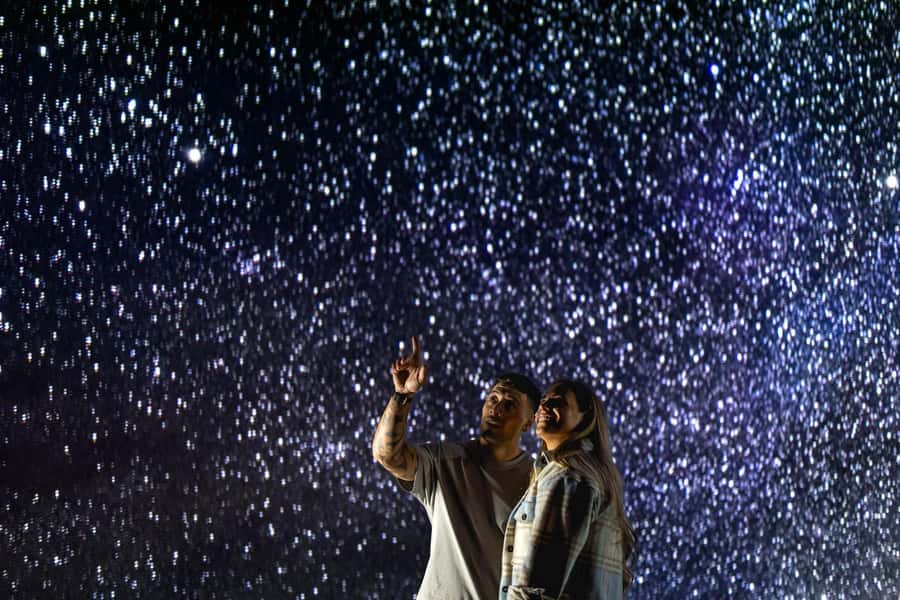
The final zone takes the story toward the depths of the Milky Way and the broader universe. This gives the experience a natural finish, moving from local cultural knowledge to a much larger scientific view.
The strength of this section is the contrast. Māori astronomy begins with a close relationship between people, land, sea, and sky. Science then places those observations within a vast universe. You are encouraged to see both perspectives as ways of asking important questions about place, life, and time.
Lighting and sound help shape the transition. You are not simply reading panels on a wall. The presentation is staged, which makes it more approachable for children and for adults who do not normally choose astronomy programs.
The drawback is that theatrical presentation may not satisfy someone looking for a long, technical astronomy lecture. If you want detailed information about individual planets, telescope operation, or current research, this is probably too short and too culturally focused.
For a first introduction, though, the balance works well. You get a clear storyline, cultural context, and a sense of the scale of the Milky Way without needing to spend a cold night outside.
The Brashear telescope is the physical highlight

The restored Brashear telescope adds an important physical object to the experience. You can get close to this 125-year-old Victorian-era telescope and see the kind of instrument associated with an earlier age of astronomy.
Its value is partly historical and partly visual. After hearing about Māori relationships with the sky, you encounter a piece of European scientific equipment that represents another chapter in humanity’s attempt to understand the heavens.
Do not book this expecting a nighttime telescope viewing session. The information describes the Brashear as something you view up close, not as a promise of live stargazing through the instrument. That distinction matters.
Even so, the telescope helps ground the presentation. The four zones use sound, light, and interactive elements, while the Brashear gives you something tangible to inspect. It is the sort of detail that can make a short tour feel more complete.
I would treat the telescope as one part of the visit rather than the main reason to book. The cultural astronomy and guided storytelling are the core of the experience.
How the $35 price measures up
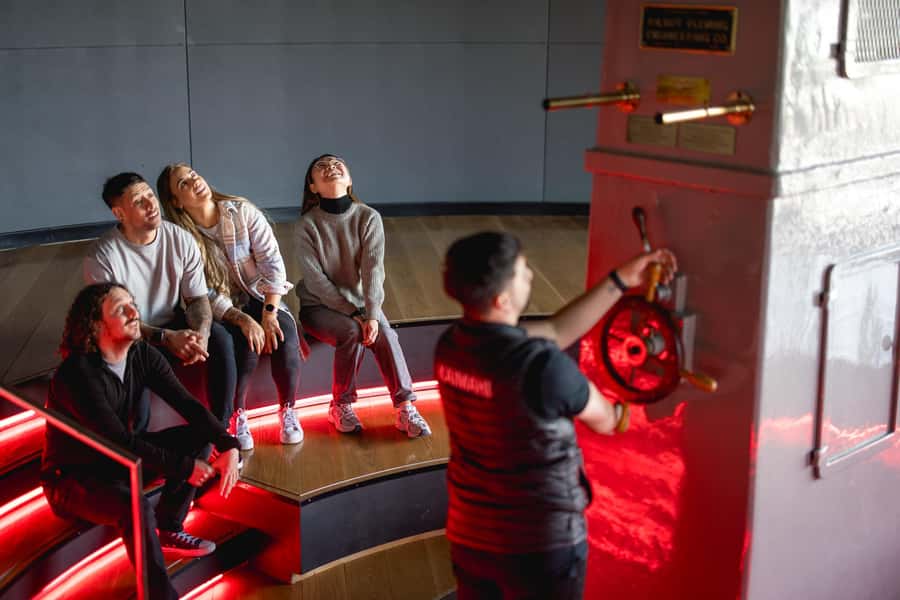
At $35 per person, this is not a major splurge, but it is more than a quick museum entry. You are paying for a 45-minute guided presentation, an interactive route through four zones, live interpretation, theatrical production, and access to the Brashear telescope.
I think the price is reasonable if you value context and storytelling. The tour gives you ideas you can carry into later walks, scenic stops, and nighttime sky viewing around the Mackenzie region. Its value is less about the number of objects you see and more about how it changes your understanding of the sky.
It is also good value as a backup plan. Outdoor astronomy depends on darkness and weather. This program runs during the day and in all conditions, so your booking remains useful when cloud cover spoils outdoor plans.
The calculation changes if you want a full evening astronomy outing. This 45-minute experience does not include food, drinks, transport, or hotel pickup. It is a compact cultural attraction, not an all-night observatory visit.
For families, the short duration is helpful. You can fit it around other plans without giving up half a day. For solo visitors and couples, the price is easiest to justify if you have a real interest in Māori culture, navigation, or astronomy.
Language, sound, and the guide’s role
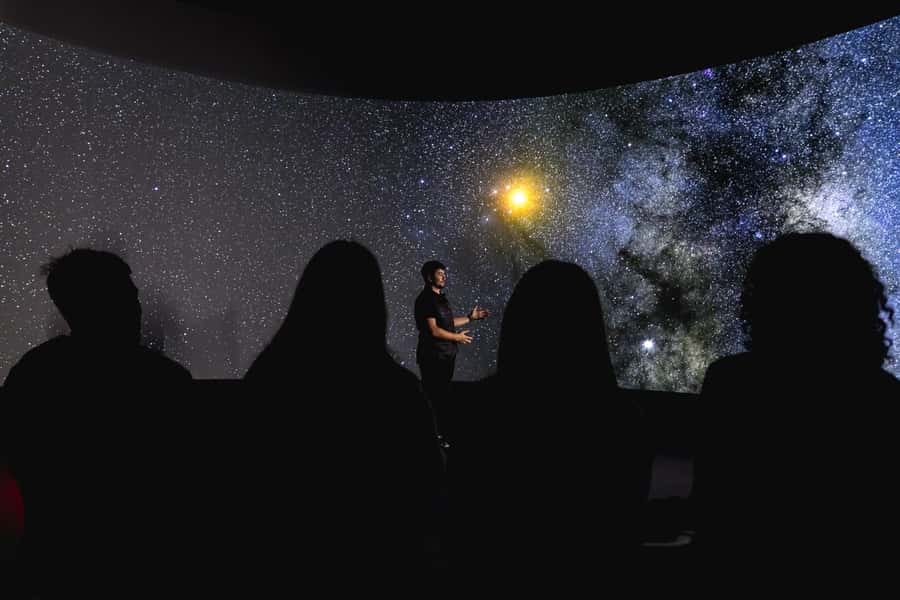
The tour is live guided in English or Chinese. That is a clear advantage over a presentation that depends only on written signs. A good guide can explain the cultural ideas in plain language and keep the four zones connected.
The guide’s role is also the main variable in your experience. One recent booking described the guide as lovely and informative. Another found the guide’s English difficult to understand because of a heavy accent, especially with two children under five making noise.
You should not read this as a problem with every session. It is a reminder to pay attention to the conditions around you. Sit where you can hear clearly, and if you are visiting with very young children, consider how easily they can stay quiet during a story-led presentation.
The program is described as family-friendly, but family-friendly does not mean every moment will hold the attention of a toddler. Older children who enjoy space, stories, and interactive displays are more likely to follow the full 45 minutes.
Who should book this Lake Tekapo experience
I would recommend it most strongly to visitors who want cultural context rather than a basic star map. It suits you if you are curious about Māori traditions, navigation, mythology, and the ways people have used the sky to understand their world.
It also works well for:
- Families looking for an indoor activity
- Visitors with limited time in Lake Tekapo
- People visiting during daylight
- Anyone concerned that clouds may spoil outdoor astronomy
- Wheelchair users seeking an accessible attraction
- Visitors who want an introduction before later night-sky viewing
You may find it less satisfying if you want a long telescope session or highly technical astrophysics. It is also not a substitute for an outdoor stargazing tour if your main aim is to observe stars in the Aoraki Mackenzie International Dark Sky Reserve.
The best approach is to see it as a cultural astronomy introduction. It gives you a framework. Later, when you look at the night sky, you may notice that you are asking different questions about what you see.
Booking details worth keeping in mind
The activity lasts 45 minutes, and starting times vary, so you need to check availability for your preferred day. The $35 price is per person.
You can reserve now and pay later, which is useful when your South Island route is still shifting. Cancellation is free up to 24 hours before the experience for a full refund, according to the booking terms provided.
There is no food or drink included. Since the meeting point is close to the Four Square Supermarket, you can easily arrange refreshments separately, but do not expect them as part of the tour.
The activity takes place indoors in a purpose-built experience zone. It operates in all weather conditions and is wheelchair accessible. English and Chinese guiding is available.
Should you book the Māori astronomy experience?
Book it if you want a short, thoughtful introduction to the sky from a Māori cultural perspective, especially if you need a daytime or rainy-day activity. The four zones, theatrical presentation, and Brashear telescope give the 45 minutes enough variety to feel worthwhile.
I would be cautious only if you want hands-on telescope use or a long, technical astronomy session. For everyone else, $35 is a fair price for a focused cultural experience that can change how you read the stars later that night.
Choose a quieter time if possible, and listen carefully. The storytelling is the heart of the program, and clear sound will make the difference between a pleasant visit and a frustrating one.
FAQ
Where is the Māori Cultural Astronomy Experience located?
It is at 1 Motuariki Lane, Lake Tekapo 7999, New Zealand. The location is approximately 100 metres from the Four Square Supermarket.
How long does the experience last?
The guided tour lasts 45 minutes.
How much does it cost?
The price is $35 per person.
Is the experience indoors?
Yes. It takes place in a purpose-built indoor experience zone.
Does the tour operate in bad weather?
Yes. Tours operate in all weather conditions.
What languages are available?
Live guides are available in English and Chinese.
Is the experience wheelchair accessible?
Yes, the experience is wheelchair accessible.
What does the tour include?
It includes a 45-minute guided tour through four zones, an interactive Māori astronomy presentation, a science-based story about living beings and the Milky Way, and close viewing of the restored 125-year-old Brashear telescope.
Is food or drink included?
No. Food and drinks are not included.
Is hotel pickup available?
No. Hotel pickup and drop-off are not included.
Can I cancel for a refund?
Yes. You can cancel up to 24 hours in advance for a full refund. You can also reserve now and pay later.
Newly listed around Mount Cook & Lake Tekapo
- Mount Cook: 20-Minute Alpine Vista Helicopter Flight★ 4.2 · 5 reviews
- Lake Tekapo to Mt Cook One-Way Small Group Tour★ 4.0 · 5 reviews
- Mount Cook: Alpine Explorer 35 Minute Flight★ 4.9 · 6 reviews
- Mount Cook: Tasman Glacier and West Coast Helicopter Flight★ 5.0 · 6 reviews
- Mount Cook Scenic 35 Minute Helicopter Flight★ 5.0 · 6 reviews
- Mt Cook: 55-Minute Scenic Flight in Helicopter or Ski Plane★ 4.1 · 6 reviews
- Mount Cook: Glentanner High Country Heli Hike★ 5.0 · 7 reviews
- Mount Cook: Tasman Glacier Helicopter Flight★ 4.3 · 7 reviews
Mount Cook & Lake Tekapo Tours, compared.


Mt Cook Small Group Scenic Day Tour from Queenstown
Read our review →
Tekapo Shuttle: Mt Cook Day Tour via Pukaki & Tasman Lake
Read our review →

Browse the lists this tour appears in