
Reviewed · MOUNT COOK & LAKE TEKAPO TOURS
Mount Cook: Tasman Glacier Helicopter Flight
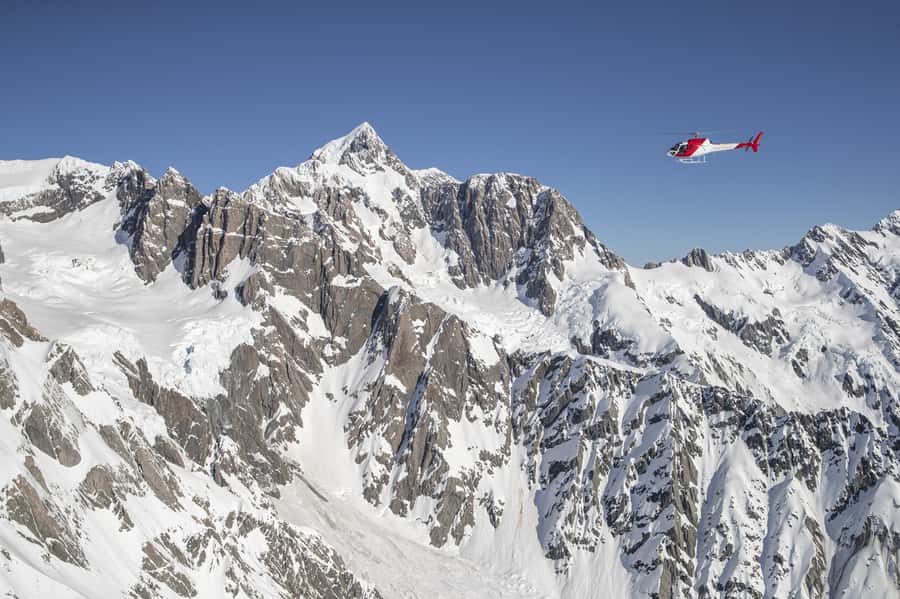
The best part of this 40-minute helicopter flight is the alpine landing on the Tasman Glacier. You do not simply look down at the ice from a window. You get out on it, with Aoraki / Mount Cook, the Burnett Mountains, and the Mackenzie Basin spread around you.
I like the small group size, limited to five people, and the way the flight packs several major sights into a short outing. I also like that pilot Dan has been praised for informative commentary and for taking photos so everyone gets a turn enjoying the views. The main catch is weather: mountain flights can run late or be canceled when conditions turn poor.
Key points to know before booking
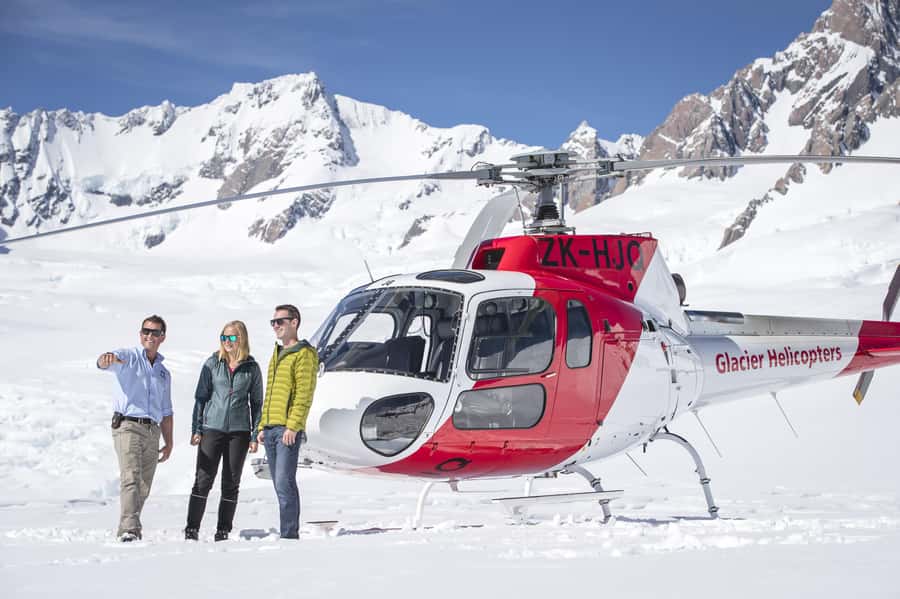
- A glacier landing is included: You step onto the upper Tasman Glacier rather than seeing it only from the air.
- The flight lasts 40 minutes: That is enough time for several sights, but this is a focused scenic flight, not a full-day glacier trip.
- The group is limited to five people: A small cabin makes it easier to see outside and hear the pilot.
- Hochstetter Icefall is a main sight: You fly close to the cascading ice formations on Aoraki / Mount Cook.
- The views reach beyond the glacier: Expect wide views toward the Burnett Mountains and Mackenzie Basin.
- Weather controls the schedule: Check-in closes 30 minutes before departure, and flying depends on suitable conditions.
Taking off from Aoraki / Mount Cook Village
You begin at Glacier Helicopters Ltd, at 81 Bowen Drive in Aoraki / Mount Cook Village. There is no hotel pickup or drop-off, so you need to make your own way to the base and allow enough time to check in.
The important timing detail is easy to miss: check-in closes 30 minutes before departure. Treat that as a firm cutoff. Mountain weather can shift quickly, but that does not make a late arrival any easier for the operator to handle.
At the base, you board the helicopter for a flight led in English. The small group limit of five participants matters here. Helicopter cabins are compact, and a smaller party generally means less crowding and a better chance of getting a clear look outside.
This is not a transport flight from one town to another. It is a scenic circuit designed around the ice, peaks, and high country around Aoraki / Mount Cook. The helicopter gives you access to views that are difficult to understand from the valley floor, where the glacier can seem broad but distant.
More helicopter flights over Mount Cook & Lake Tekapo:
- Mount Cook: Scenic Helicopter Flight with Alpine Landing
★ 4.8 · 442 reviews - Mount Cook: Ski Plane and Helicopter Glacier Combo Flight
★ 4.6 · 271 reviews - Mount Cook and The Glaciers 55-Minute Helicopter Flight
★ 4.5 · 133 reviews
The Hochstetter Icefall from above
One of the first major sights is the Hochstetter Icefall, where ice cascades down the mountainside of Aoraki / Mount Cook. From ground level, you see only part of the mountain system. From the air, the icefall becomes easier to read as a huge, broken route through the upper slopes.
The word icefall is useful here. This is not a smooth frozen river. It is a steep section of moving glacier ice, broken into ice blocks, ridges, and crevasses. The flight gives you a high view of that rough, dramatic pattern without asking you to climb across it.
The mountain setting also gives the flight its scale. You are not looking at an isolated patch of ice. The Hochstetter Icefall sits beneath the high reaches of Aoraki / Mount Cook, known as the Cloud Piercer, and the surrounding peaks help you grasp how large the glacier system is.
Pilot commentary adds value at this stage. You are looking at a lot of white, gray, and blue from the cabin, and a guide can help identify the major features. Pilot Dan has received specific praise for being informative, so listen during the flight rather than treating the ride as silent sightseeing.
Flying across the upper Tasman Glacier
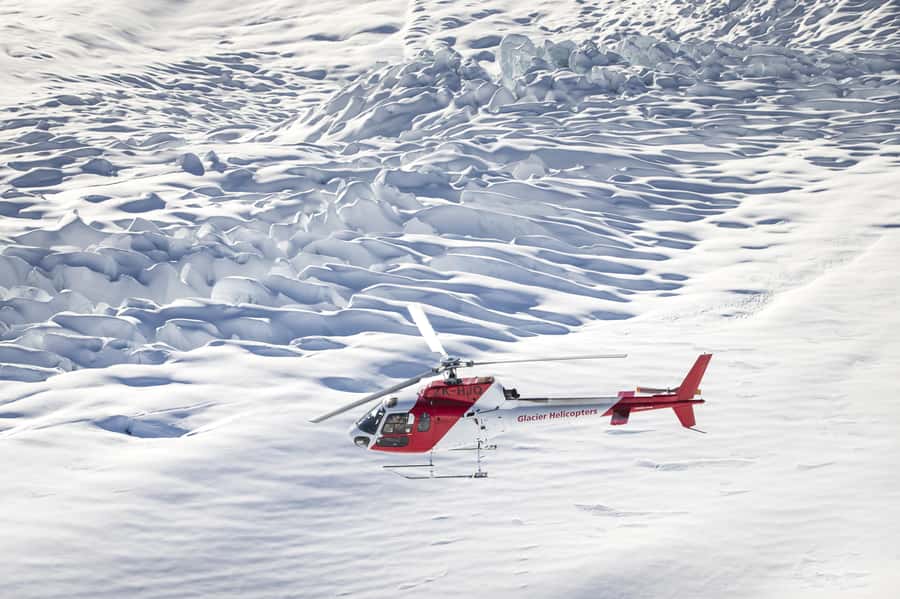
The flight then reaches the upper Tasman Glacier, where old snow becomes compacted ice. The supplied description refers to neves and crevasses formed over centuries. In plain terms, you are seeing the high, snow-fed part of the glacier, along with deep cracks and broken sections shaped by slow movement.
This is the strongest reason to choose the flight over a standard mountain viewpoint. A viewpoint can show you the glacier’s broad length, but the helicopter puts you over the upper ice itself. You see the glacier as a living, changing mass rather than a distant white strip.
Crevasses are especially striking from above. On the ground, they can be difficult to see safely and clearly. From the helicopter, they form lines, shadows, and dark breaks across the ice. The view is spectacular, but it also reminds you that this is serious alpine terrain. The landing is arranged as part of the flight, not an invitation to wander freely across the glacier.
The 40-minute duration gives the pilot time to combine the icefall, upper glacier, landing, and wider mountain views. It is long enough to feel like a proper aerial outing, though you should not expect a long glacier walk or a technical ice experience. The focus is on seeing more from the air and stepping onto the ice briefly.
Stepping onto the Tasman Glacier
The alpine landing is the emotional center of the trip. After viewing the glacier from the helicopter, you land on the ice and take in the surrounding peaks. That change of viewpoint matters. The helicopter shows scale and pattern, while the landing gives you a direct sense of the open, high-altitude setting.
Your strongest view may be toward Aoraki / Mount Cook, if the mountain is visible. The Cloud Piercer is a powerful backdrop for photographs, but mountain weather can place cloud around the summit or reduce visibility. The flight cannot control that, so keep your expectations flexible even if the forecast looks good.
The landing also makes the trip feel more distinctive than a simple scenic flight. You are not just circling the mountain and heading back. You get a short pause in the alpine environment, with the upper Tasman Glacier under your feet and the larger ice-and-mountain setting around you.
Wear comfortable shoes and warm clothing. The supplied guidance also recommends comfortable clothes, sunglasses, a camera, and sunscreen. Those items are practical rather than decorative: bright ice can make sunglasses useful, exposed conditions can feel cold, and high-country sun can catch you by surprise.
Smoking is not allowed. Food and drinks are not included, so plan to eat before or after the flight rather than expecting refreshments as part of the outing.
A few more Mount Cook & Lake Tekapo days to compare
- Lake Tekapo: Alpine Stargazing Experience with a Guide
★ 4.5 · 626 reviews - Lake Tekapo: Stargazing Experience
★ 4.9 · 607 reviews - Mt Cook Small Group Scenic Day Tour from Queenstown
★ 5.0 · 407 reviews - Tekapo Shuttle: Mt Cook Day Tour via Pukaki & Tasman Lake
★ 4.8 · 307 reviews
Looking beyond the ice to Burnett Mountains and Mackenzie Basin
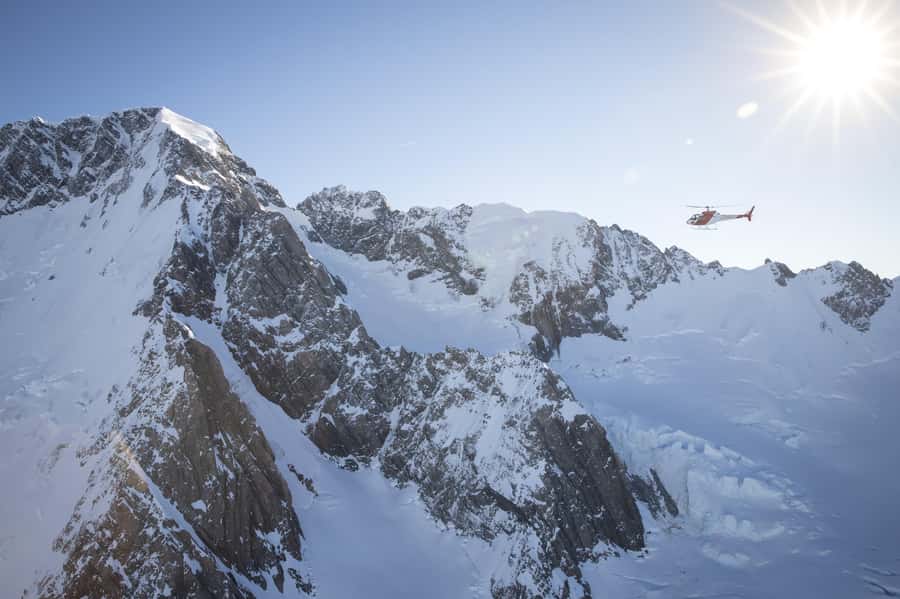
The views are not limited to the glacier. The flight also opens toward the Burnett Mountains and Mackenzie Basin. This wider sweep helps you understand the relationship between the high ice and the lower country around it.
The Burnett Mountains add another layer of peaks to the view. The Mackenzie Basin gives you a broader sense of the region, with the glacier country framed against a much larger expanse. If you have already spent time exploring Aoraki / Mount Cook Village, this aerial angle gives you a useful change of scale.
I like this mix of close and wide views. The Hochstetter Icefall supplies detail and drama. The glacier landing supplies the memorable moment. The Burnett Mountains and Mackenzie Basin keep the flight from becoming a narrow trip focused on one ice feature.
Because the helicopter is moving, the views change quickly. That is exciting, but it also means you should look first and photograph second. Pilot Dan has been praised for taking photos of participants and giving everyone an opportunity to see the same views. Still, bring your camera for the landing and for moments when the helicopter settles into a clear viewing position.
What the small group changes
The maximum group size is five people. That is a useful advantage for a helicopter experience, where space is limited and every seat affects the view.
A smaller group can also make the pilot’s commentary easier to follow. You are not in a large sightseeing crowd, and the experience feels more personal at the glacier landing. The tradeoff is that a small-capacity flight can have fewer departure options than a larger operation, so check the available starting times before building your day around it.
The flight is conducted in English. If you want to know what you are seeing, pay attention to the live guide rather than relying only on the scenery. The named pilot detail is also worth noting: Dan has been singled out for informative guidance and for taking group photos.
That photo help is a nice practical touch. At a glacier landing, you want proof that you were there, but you also do not want to spend the entire stop holding a phone at arm’s length. If the same approach is available on your flight, it lets you enjoy the scene while still coming away with a useful picture.
Is $391 per person good value?
At $391 per person, this is a major splurge. It is not the sort of activity I would add casually to every New Zealand itinerary. The value depends on what you want from your time around Aoraki / Mount Cook.
You are paying for more than a short helicopter ride. The price includes the aerial views, the upper Tasman Glacier route, the Hochstetter Icefall, and an alpine landing. You also get access to a viewpoint that would otherwise require a much more demanding alpine trip.
For someone who wants a memorable first look at the glacier system, the combination is strong. The landing is the feature that helps justify the cost. A flight without landing would still offer fine views, but stepping onto the glacier gives the outing a clear sense of occasion.
The price is harder to justify if you mainly want a quick look at Aoraki / Mount Cook or if you are uncomfortable with weather-related uncertainty. The flight can be delayed or canceled in poor conditions. One recent booking had a later-than-planned departure because of weather, while the actual flight and landing went ahead successfully. Build some flexibility into your schedule rather than booking this immediately before a nonrefundable connection.
The cancellation policy helps reduce some risk. You can cancel up to 24 hours before departure for a full refund, and the reserve-now, pay-later option lets you hold a place without paying immediately. Those terms are useful, but they do not remove the basic alpine reality: the final experience depends on the weather.
Who should book this flight?
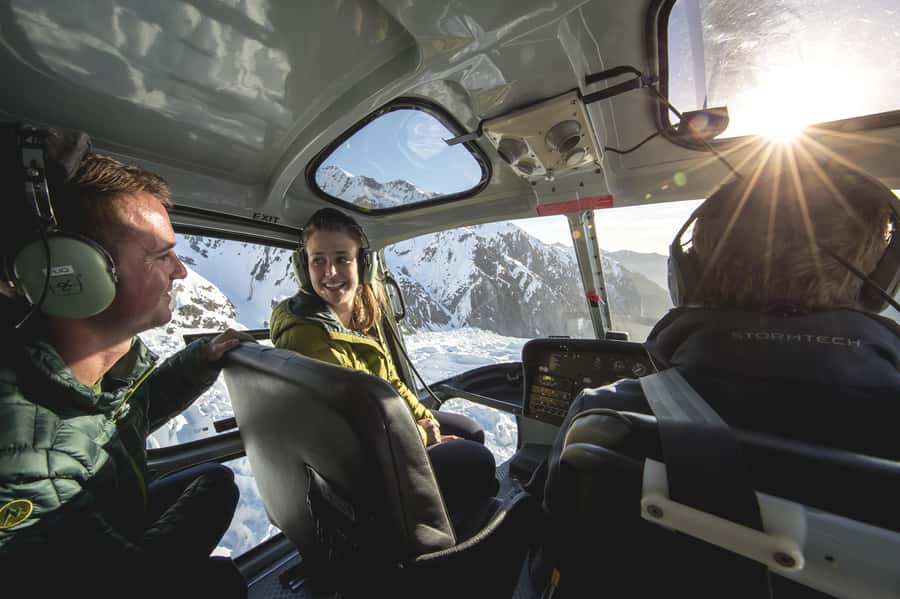
I would recommend it to you if you want to see the Tasman Glacier from several angles in a short amount of time. It suits photographers, first-time visitors to the Aoraki / Mount Cook area, and anyone who wants an alpine experience without committing to a long mountain outing.
It is also a good choice if a glacier landing matters to you. That is the part you cannot reproduce from an ordinary road viewpoint or village walk.
You should think twice if your schedule is tight. A 40-minute flight does not mean the entire activity will take only 40 minutes, since you need to check in 30 minutes before departure and weather may affect the operating time. You also need to reach the meeting point yourself because hotel pickup and drop-off are not included.
This is not a food tour, a hiking trip, or a long guided glacier expedition. Food and drinks are not provided, and the supplied information describes an alpine landing rather than a glacier trek. Choose it for the aerial access, ice formations, mountain scale, and landing.
Practical preparation for the glacier landing
Dress for cold conditions even if the village feels mild. Warm clothing is specifically recommended, along with comfortable shoes and comfortable clothes. The landing takes place in an alpine setting, so practical clothing is more useful than looking polished for the flight.
Bring sunglasses and sunscreen. Snow and ice reflect strong light, and the open setting offers little reason to assume you will be protected from the sun. A camera is also recommended, though try not to let photography replace looking around you.
Arrive early enough to complete check-in before the 30-minute cutoff. The meeting point is Glacier Helicopters Ltd at 81 Bowen Drive in Aoraki / Mount Cook Village. Since there is no included transport, confirm how you will get there before booking.
Keep your schedule flexible around the flight. Weather is the main variable, and a delay can change your plans for the day. If the operator cancels because conditions are unsuitable, the stated policy allows cancellation up to 24 hours ahead for a full refund, but weather-related changes can still create a practical wait for your money to return.
My verdict on the Tasman Glacier flight
Book this flight if you want a compact, high-impact introduction to the upper Tasman Glacier and you can afford the price. The glacier landing, Hochstetter Icefall, and views toward Aoraki / Mount Cook make it more than a standard scenic loop.
I especially like the small group, the 40-minute format, and the chance to see both the close ice formations and the wider Burnett Mountains and Mackenzie Basin. I would leave room in your itinerary for weather delays, arrive at least 30 minutes before departure, and bring warm clothes, sunglasses, sunscreen, and a camera.
Skip it if $391 would put pressure on the rest of your trip, or if your schedule cannot absorb a late departure or cancellation. For the right budget and a flexible day, this is one of the most direct ways to experience the scale of New Zealand’s glacier country.
FAQ
How long is the Tasman Glacier helicopter flight?
The flight lasts 40 minutes.
Where does the experience begin?
You check in at Glacier Helicopters Ltd, 81 Bowen Drive, Aoraki / Mount Cook Village, New Zealand.
Is a glacier landing included?
Yes. An alpine landing on the glacier is included in the experience.
How many people are in the group?
The group is limited to five participants.
What language is the tour conducted in?
The live guide and tour information are provided in English.
What should I bring?
Bring comfortable shoes, warm clothing, comfortable clothes, sunglasses, a camera, and sunscreen.
Can the flight be canceled because of weather?
Yes. The activity is subject to favorable weather conditions. Check-in closes 30 minutes before departure, and you can cancel up to 24 hours in advance for a full refund.
Newly listed around Mount Cook & Lake Tekapo
- Mount Cook: 20-Minute Alpine Vista Helicopter Flight★ 4.2 · 5 reviews
- Lake Tekapo to Mt Cook One-Way Small Group Tour★ 4.0 · 5 reviews
- Mount Cook: Alpine Explorer 35 Minute Flight★ 4.9 · 6 reviews
- Mount Cook: Tasman Glacier and West Coast Helicopter Flight★ 5.0 · 6 reviews
- Mount Cook Scenic 35 Minute Helicopter Flight★ 5.0 · 6 reviews
- Mt Cook: 55-Minute Scenic Flight in Helicopter or Ski Plane★ 4.1 · 6 reviews
- Mount Cook: Glentanner High Country Heli Hike★ 5.0 · 7 reviews
- Lake Tekapo: Virtual Stargazing and Astronomy Experience★ 4.5 · 8 reviews
Mount Cook & Lake Tekapo Tours, compared.
Mt Cook Small Group Scenic Day Tour from Queenstown
Read our review →
Tekapo Shuttle: Mt Cook Day Tour via Pukaki & Tasman Lake
Read our review →
Browse the lists this tour appears in