
Reviewed · MOUNT COOK & LAKE TEKAPO TOURS
Lake Tekapo: Virtual Stargazing and Astronomy Experience
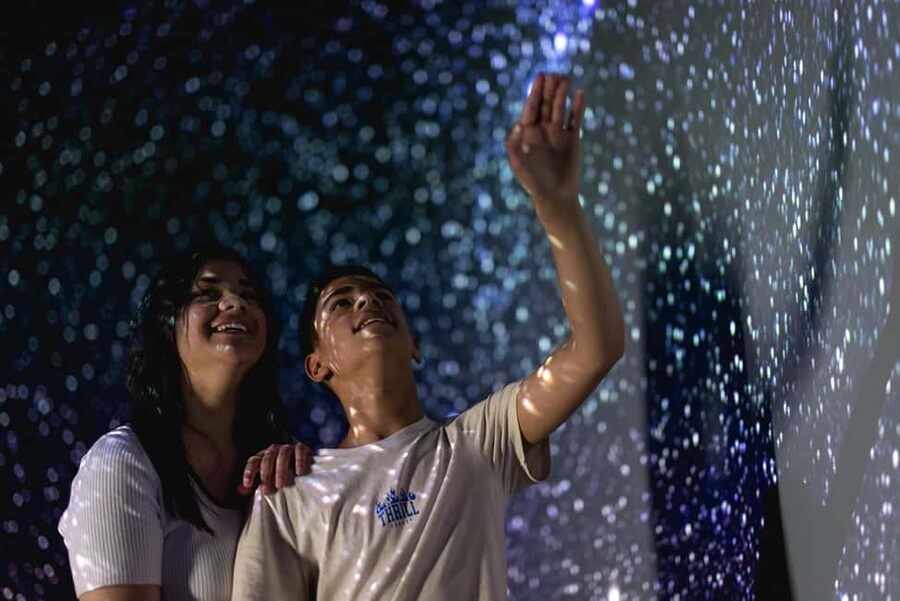
Lake Tekapo’s virtual stargazing experience brings the southern night sky indoors, using advanced projection technology and an astronomy guide to show stars, planets, and galaxies in far more detail than you can see unaided. It is a smart option when clouds, cold, or an early bedtime get in the way of outdoor stargazing.
I like the way the 45-minute format keeps the evening manageable, and I like that the guide can explain the sky instead of leaving you to guess which bright dot is a planet. The warmth and family-friendly setup are real advantages, especially for children and first-time stargazers.
The main thing to consider is the speaking style of the guide. One attendee found a strong accent and fast delivery hard to follow, so clear communication may vary from session to session. You also do not get the full outdoor sensation of standing beneath a real sky.
Key points at a glance
- A weather-proof view of the southern skies: Clouds and cold do not cancel the indoor presentation.
- A 45-minute evening program: You get a focused introduction without needing to stay out until midnight.
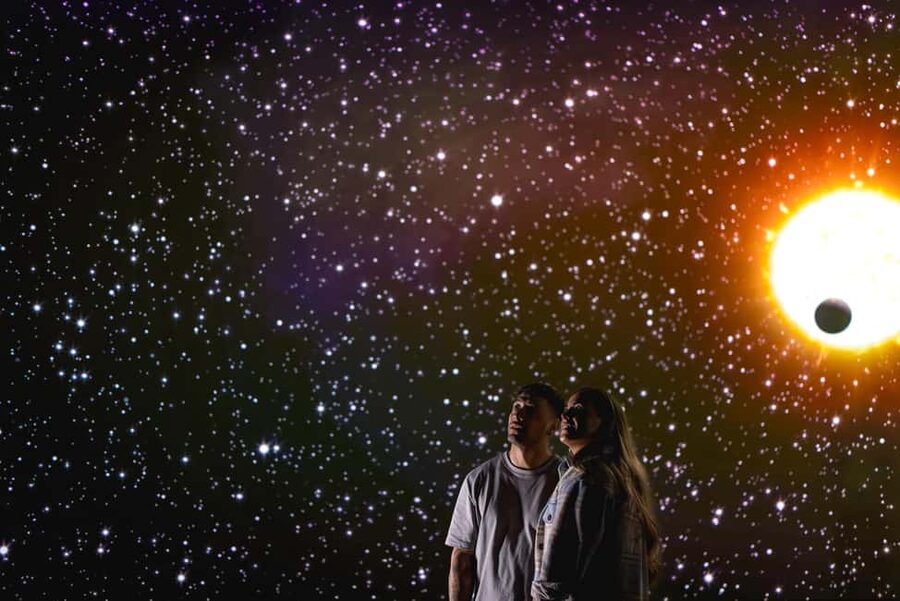
- More detail than the naked eye: Virtual technology helps you see stars, planets, galaxies, and wider views of space.
- Expert guidance in English: Your astronomy guide explains the solar system and the universe through live storytelling.
- A good family choice: Children aged 5 to 17 are included in the child category, while toddlers and younger children go free.
- Inside the Aoraki Mackenzie International Dark Sky Reserve: The setting gives the subject real local meaning, even though the viewing itself happens indoors.
Starting inside Lake Tekapo’s Dark Sky base
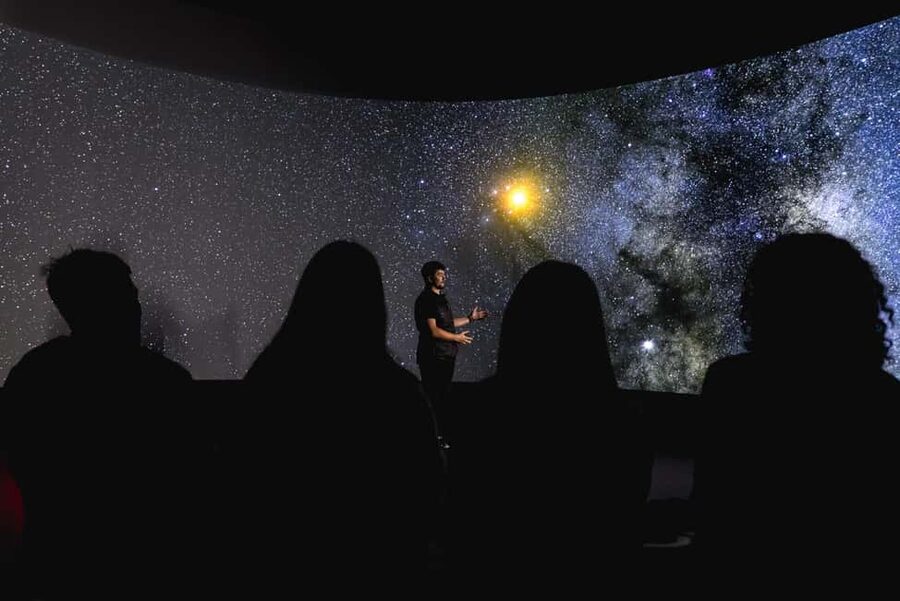
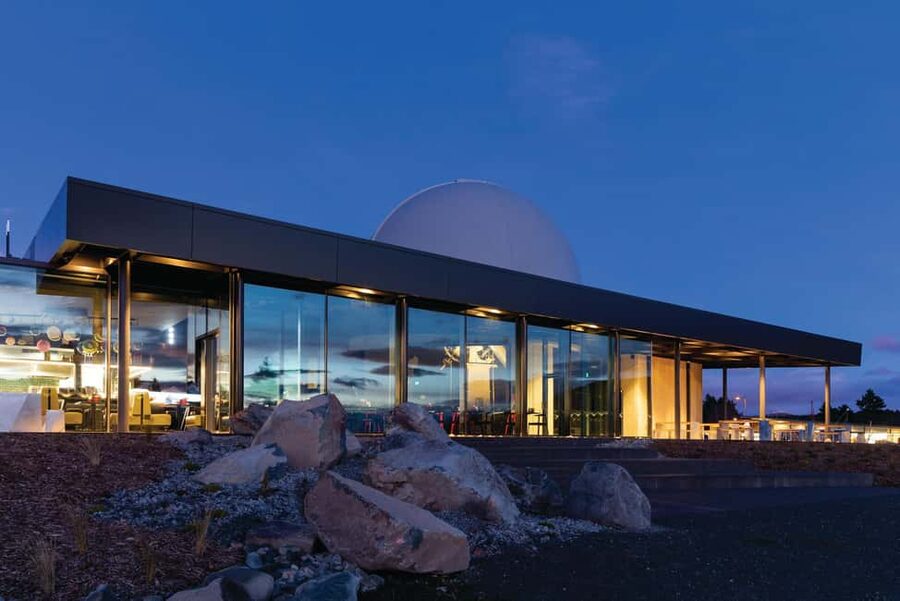
You check in inside the Dark Sky base building in Lake Tekapo, 15 minutes before the scheduled start. That early arrival matters because the activity is short, and you do not want to spend the first few minutes sorting out check-in instead of listening to the guide.
The building provides a useful contrast to outdoor stargazing. You arrive in the setting of one of New Zealand’s best-known dark-sky areas, then settle into a warm indoor room where technology recreates the heavens above you.
That combination makes this more than a simple screen presentation. The location gives the program a strong sense of place, while the indoor format removes the usual problems of night tours. You do not need to dress for a long period outside, wait for your eyes to adjust, or worry that cloud cover will hide the main sights.
The tour is conducted in English with a live guide. Since the guide talks you through the presentation, you can ask questions and follow a planned explanation rather than trying to identify objects alone.
A few more Mount Cook & Lake Tekapo days to compare
- Lake Tekapo: Alpine Stargazing Experience with a Guide
★ 4.5 · 626 reviews - Lake Tekapo: Stargazing Experience
★ 4.9 · 607 reviews - Mount Cook: Scenic Helicopter Flight with Alpine Landing
★ 4.8 · 442 reviews
Recreating tonight’s sky with virtual technology
The central feature is a virtual recreation of the night sky. Your guide uses the system to replicate what should be visible that evening, then takes you across the solar system and beyond.
That is useful because the naked eye has limits. From outdoors, you may spot a bright planet or a familiar pattern of stars, but finer details can be hard to see. Indoors, the technology can show more than a normal glance upward, helping you understand the size, position, and relationship of objects in space.
You can expect the session to cover stars, planets, and galaxies, along with broader stories about the universe. The exact order and emphasis may depend on the guide and the evening, but the stated focus is on the southern skies and the way they connect to the wider cosmos.
I find this format particularly helpful for beginners. You are not expected to arrive knowing star names or the difference between a planet and a distant galaxy. The guide provides the basic framework first, then adds detail through explanation and storytelling.
For children, the virtual format also has a practical benefit. A young person can look at a clear, enlarged view of a celestial object instead of trying to hold a small patch of sky in sight. The presentation turns an abstract subject into something easier to follow.
Why the southern skies matter at Lake Tekapo

Lake Tekapo sits within the Aoraki Mackenzie International Dark Sky Reserve, a place recognized for its dark conditions and strong connection with astronomy. Even though this particular activity is indoors, the location gives you a meaningful introduction to the skies above New Zealand’s South Island.
The southern hemisphere offers stars and sky patterns that visitors from the north may not have seen before. A guide can point out what makes this part of the sky distinctive and explain how the view changes with time and location.
You should keep your expectations clear, though. This is not an outdoor telescope session, and the information provided does not promise a specific constellation, planet, or galaxy on a particular night. The guide recreates the evening sky and chooses how to explain it, so the value comes from the guided presentation rather than from ticking off a fixed list of objects.
If you have already spent time learning astronomy, you may appreciate the chance to see familiar subjects represented with more detail. If you are new to stargazing, the session gives you a useful foundation before you step outside later and try to identify things for yourself.
A short itinerary that fits a busy evening
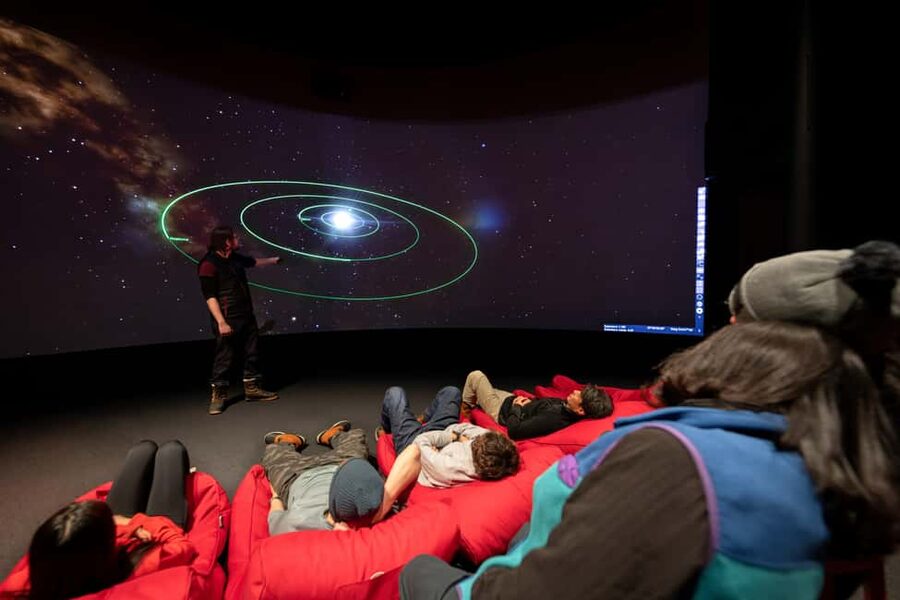
At 45 minutes, this is a compact activity. You check in, take your place indoors, and follow the guided presentation through the night sky, the solar system, and distant space.
The shorter length is one of the strongest practical features. A full outdoor stargazing program can require patience, warm clothing, and a late finish. Here, you can learn the basics and still have time for dinner, rest, or another evening plan.
One attendee specifically appreciated not having to stay out until midnight. That is worth noting if you are visiting with children, managing an early morning departure, or simply prefer not to sacrifice a whole evening to astronomy.
The short duration also limits the risk of information overload. Astronomy can cover enormous subjects, and a session lasting several hours might become tiring for newcomers. Forty-five minutes gives the guide enough time to build a story without asking you to concentrate all night.
The trade-off is that you should not expect an exhaustive astronomy course. The program is an introduction and a guided look at the sky, not a specialist workshop. If you want technical detail on astrophysics or extended telescope observation, you may find the format too brief.
Somewhere else in Mount Cook & Lake Tekapo entirely:
- Mt Cook Small Group Scenic Day Tour from Queenstown
★ 5.0 · 407 reviews - Tekapo Shuttle: Mt Cook Day Tour via Pukaki & Tasman Lake
★ 4.8 · 307 reviews - Mount Cook: Ski Plane and Helicopter Glacier Combo Flight
★ 4.6 · 271 reviews - Mount Cook: 3 Hour Heli Hike to the Tasman Glacier
★ 4.7 · 218 reviews
What makes the guides important
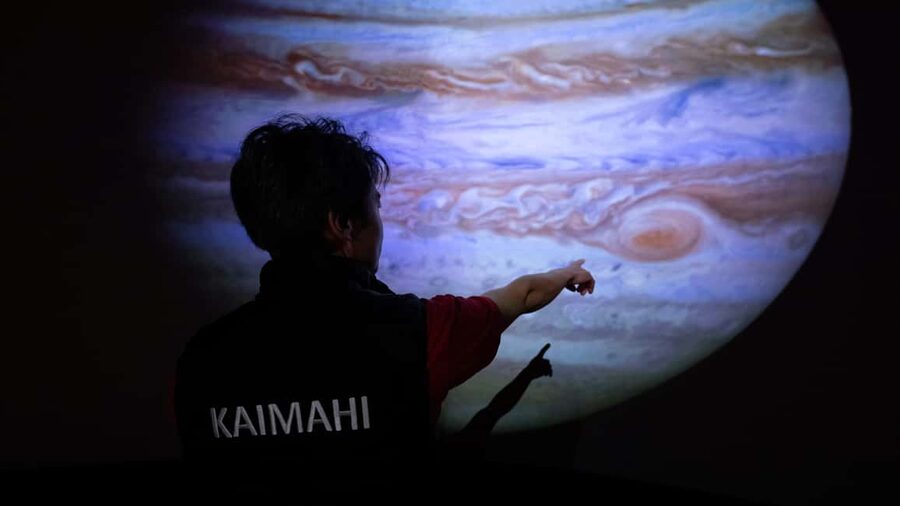
The guide is central to the experience. The technology can display stars and galaxies, but the guide explains what you are seeing, adds stories, and gives the presentation a human voice.
The strongest response to the program praised its educational and interesting nature, along with the presenter’s ability to engage the audience. That points to the main strength of a live session: the guide can make a large subject feel personal and understandable.
You should listen for clear pacing and pronunciation. One attendee found a guide’s strong German accent and fast speech difficult to understand. This appears to have been an individual problem rather than a stated feature of the program, but it is still a fair consideration when much of the value depends on spoken explanation.
If English is not your first language, or if you are booking for someone who has difficulty following fast speech, keep that in mind. The activity is listed as English-language, and no alternate language service is provided.
A warm choice for families and first-time stargazers
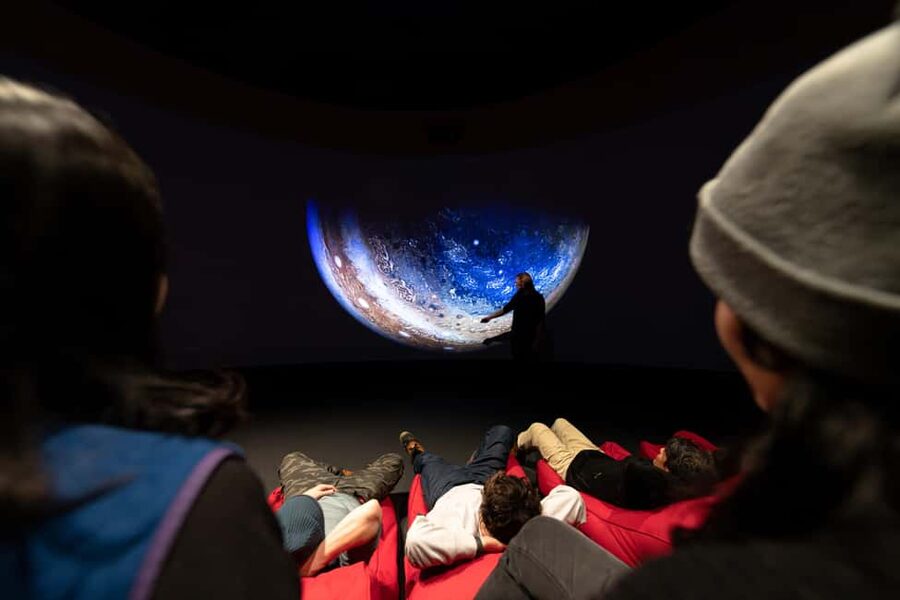
This is a family-friendly activity, with children aged 5 to 17 covered by the child category. Toddlers and younger children go free, which can make the total cost more manageable for families with very young children.
The indoor setting is easier for children than a long outdoor wait. They do not need to stand in the cold, and the clear virtual display can hold attention better than a dark sky that takes time to interpret.
I would also consider this for adults who are curious about astronomy but unsure about booking a more demanding night tour. You get a guided explanation, a warm room, and a predictable 45-minute schedule.
Seasoned stargazers may find it worthwhile for a different reason. The technology can show objects with more detail than the naked eye, and the guide may connect the southern sky to topics you already know. Still, experienced observers should understand that this is not a replacement for actual outdoor viewing.
The activity is wheelchair accessible, another benefit for anyone who needs an indoor, easy-to-manage setting. The supplied information does not give detailed seating or access arrangements, so you should confirm any specific requirements when booking.
The price and what you receive for $52
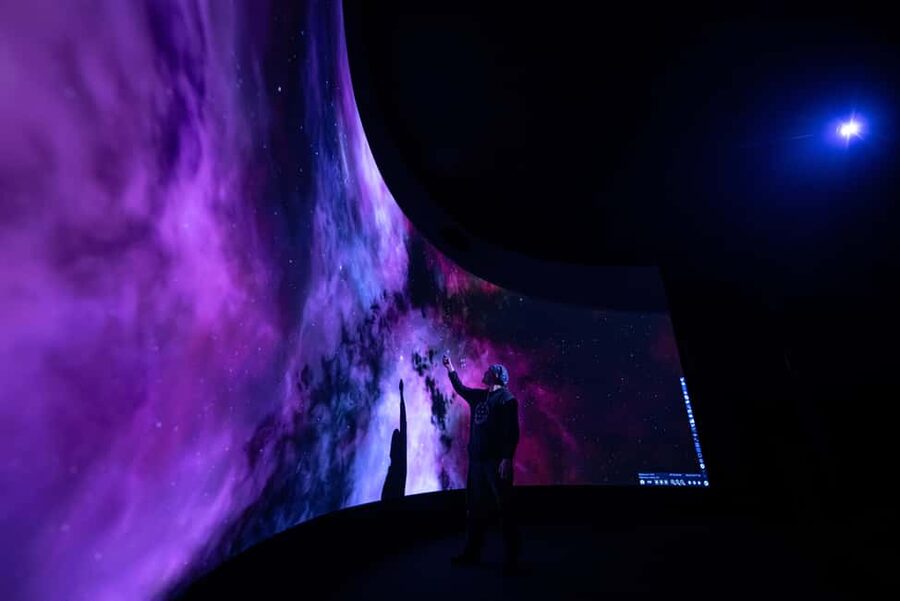
At the stated price of $52 per person, the value depends on what you want from a stargazing evening. You are paying for a 45-minute guided program, an indoor venue, a live English-speaking astronomy guide, and technology that presents the sky with more detail than your eyes can provide on their own.
That is a reasonable proposition if poor weather would otherwise ruin your plans. You are not paying only for a place to sit and look at a screen. The guide supplies the explanation, context, and stories that turn the display into an educational activity.
The price is easier to justify for families, first-time visitors, and anyone with limited evening time. You can fit it into a wider Lake Tekapo itinerary without committing to a long night outside.
The value is less obvious if your main goal is a quiet, authentic outdoor view of the stars. In that case, an indoor virtual show cannot reproduce the feeling of looking up from the ground beneath a real sky.
Food and drink are not included. Since the session lasts only 45 minutes, that is not a major issue, but you should plan refreshments separately if you are booking around dinner.
What happens after you leave
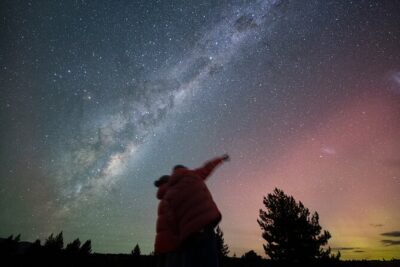
The indoor session may make you more aware of the real sky outside. One person happened to glimpse the Milky Way while walking back to their accommodation after the experience, which shows how the presentation can prepare you to notice more when you are outdoors.
That is one of the nicest reasons to pair this activity with your own later stargazing. The guide gives you a set of ideas to look for, and the dark conditions around Lake Tekapo give you a chance to test your new knowledge.
Your outdoor view will still depend on weather, darkness, and what is visible at that time. The virtual presentation is the reliable part of the evening. Any real-world view afterward is a bonus, not something promised by the activity.
Who should book this Lake Tekapo activity?
I would choose this experience if you want an accessible introduction to astronomy, especially if you are visiting with children or do not want a late night outdoors. It also suits anyone concerned about cloud, cold, or the unpredictability of outdoor stargazing.
You will get the most from it if you enjoy explanations and stories as much as visual spectacle. The guide is not just operating equipment. The spoken presentation is what helps you understand the objects on display.
I would be more cautious if you expect a telescope, an outdoor viewing platform, or a long session under the stars. Those are not part of the information provided for this program.
The activity is available in the evening, though exact times can vary. Plan to arrive 15 minutes early at the Dark Sky base building in Lake Tekapo.
Should you book the virtual stargazing experience?
Book it if you want a warm, short, weather-proof introduction to the southern skies. The combination of expert guidance, virtual detail, and a 45-minute schedule makes it especially practical for families, first-time stargazers, and visitors with busy evenings.
Skip it if you are seeking only the sensation of standing outdoors beneath a natural sky. For the best result, treat this as an informative indoor starting point, then look up outside afterward if the conditions allow.
You can cancel for a full refund up to 24 hours before the activity. That flexible policy is useful when planning around weather and changing holiday schedules, even though the program itself runs indoors in all conditions.
FAQ
Where does the Lake Tekapo virtual stargazing experience take place?
You check in inside the Dark Sky base building in Lake Tekapo, on New Zealand’s South Island.
How long does the activity last?
The guided virtual stargazing experience lasts 45 minutes.
Is the activity available in all weather?
Yes. The experience takes place indoors and uses virtual technology to bring the night sky to life regardless of outdoor weather.
What language is the tour conducted in?
The live tour guide speaks English.
What can I see during the presentation?
The experience explores the southern skies, stars, planets, galaxies, the solar system, and space beyond it. The technology shows more detail than the naked eye.
Is this activity suitable for children?
Yes. It is family-friendly. Children aged 5 to 17 are included in the child age category, while toddlers and younger children go free.
Can I cancel for a full refund?
Yes. You can cancel up to 24 hours in advance for a full refund.
Newly listed around Mount Cook & Lake Tekapo
- Mount Cook: 20-Minute Alpine Vista Helicopter Flight★ 4.2 · 5 reviews
- Lake Tekapo to Mt Cook One-Way Small Group Tour★ 4.0 · 5 reviews
- Mount Cook: Alpine Explorer 35 Minute Flight★ 4.9 · 6 reviews
- Mount Cook: Tasman Glacier and West Coast Helicopter Flight★ 5.0 · 6 reviews
- Mount Cook Scenic 35 Minute Helicopter Flight★ 5.0 · 6 reviews
- Mt Cook: 55-Minute Scenic Flight in Helicopter or Ski Plane★ 4.1 · 6 reviews
- Mount Cook: Glentanner High Country Heli Hike★ 5.0 · 7 reviews
- Mount Cook: Tasman Glacier Helicopter Flight★ 4.3 · 7 reviews
Mount Cook & Lake Tekapo Tours, compared.
Mt Cook Small Group Scenic Day Tour from Queenstown
Read our review →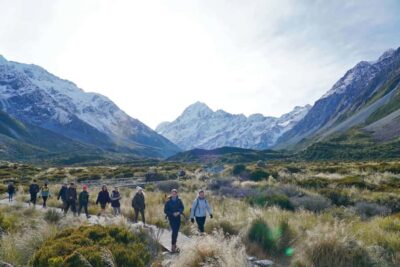
Tekapo Shuttle: Mt Cook Day Tour via Pukaki & Tasman Lake
Read our review →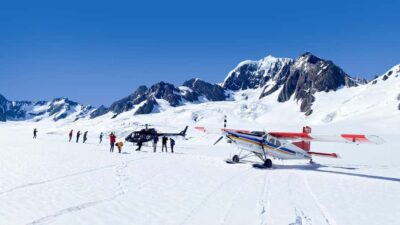
Browse the lists this tour appears in