
Reviewed · WELLINGTON TOURS
Museum of New Zealand Te Papa Tongarewa: Introducing Te Papa Tour
Te Papa’s greatest challenge is also its appeal: there is far too much to take in during one visit. This one-hour guided introduction gives you a clear route through Māori culture, Pacific traditions, New Zealand’s colonial past, art, design, and natural science, rather than leaving you to wander without a plan.
I like the small-group limit of 15, which keeps the pace personal, and I like the two-day entry that lets you return to galleries after the guide has shown you what deserves more time. The main drawback is simple: one hour is only a sample, and some guides may speak quickly or softly. Arrive early and stay close.
Key points
- A smart first look at a huge museum: The guide points out major galleries and helps you choose where to spend your own time later.
- Māori and Pacific culture receive real attention: Expect context about physical objects, spiritual meaning, migration, language, and traditional skills.
- Art, science, and history are mixed together: The tour may move from photography and design to natural history and colonial stories.
- Two-day entry adds practical value: Return after the guided hour to see more at a slower pace.
- Small groups keep the tour manageable: Numbers are limited to 15 people.
- The $46.54 price needs weighing carefully: You are paying for the guide and introduction, not simply admission to the museum.
Why a One-Hour Introduction Helps at Te Papa
Te Papa Tongarewa is New Zealand’s national museum, located at 55 Cable Street on Wellington’s waterfront. Its collections cover art and design, photography, history, Māori and Pacific cultures, and natural science. The range is exciting, but it can also leave you unsure where to begin.
That is where this experience earns its place. Instead of treating the museum as a string of unrelated rooms, your guide explains how its subjects connect. A carved object may lead into Māori beliefs. A science display may point to New Zealand’s unusual plants and animals. A history gallery may explain how migration, colonisation, war, and industry shaped the country.
The tour lasts about 60 minutes. Think of it as an orientation with substance, not a full museum visit. Guides have included Anna, Roger, Susan, Basil, Nancy, Aoife, and Bruce Roberts, and the tone can vary with the person leading your group. The strongest guiding combines clear facts with stories and personal interpretation.
I would not book this expecting to see every major display. I would book it to get your bearings fast, learn what you might otherwise miss, and leave with a sensible plan for the rest of your museum time.
More museums and galleries in Wellington:
- Wellington: Museum of NZ General Admission
★ 4.7 · 156 reviews - Museum of NZ Te Papa Tongarewa: Gallipoli Exhibition Guided Tour
★ 4.5 · 111 reviews - Museum of NZ Te Papa Tongarewa: International Visitor Entry
★ 4.5 · 63 reviews
Meeting Your Guide at 55 Cable Street
You make your own way to Te Papa. There is no hotel pickup or drop-off, and the activity begins and ends at the museum meeting point. The building is on Wellington’s waterfront in the city centre, near public transport.
Pay close attention to the meeting instructions. The address alone may not tell you exactly where to wait, and one poor experience came from waiting outside without finding the guide. I would arrive at least 10 to 15 minutes early, go inside, and ask museum staff where the guided tour is gathering if the location is not obvious.
Being late is a real risk. One person arrived 10 minutes after the start and could not catch up with the group. Since the tour moves through the museum, it may not be possible to join once it has begun.
Several start times are available during the day, so you can fit the tour around your Wellington plans. Your confirmation arrives at booking, and the ticket is mobile, which keeps the process simple.
The group limit is 15 people. That is small enough for a guide to answer occasional questions and keep everyone together, though the experience is still a walking tour in a public museum. Crowded galleries or large displays can make it harder to hear, so stay near the guide.
Māori and Pacific Culture in the First Hour
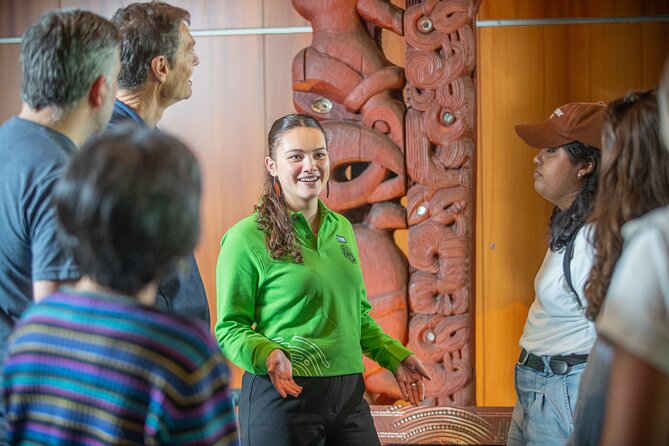
One of the strongest reasons to take this introduction is the attention given to Māori heritage and Pacific cultures. Te Papa’s cultural collections are not presented as decoration. They help explain identity, belief, movement across the Pacific, and the relationship between people and place.
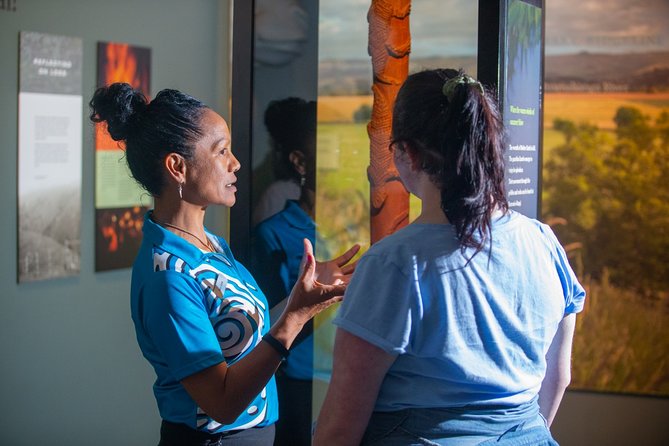
You may see cultural treasures, carvings, artworks, and objects whose meaning is not immediately clear if you are walking alone. A guide can explain both the physical features and the spiritual or cultural ideas connected to them. This added context is especially useful for visitors encountering Māori traditions for the first time.
The tour can also touch on Pacific migration and the links among Pacific Island languages. Traditional sailing and survival skills are part of the story, showing how people crossed large stretches of ocean and adapted to different environments.
This section may be the most valuable part for you if you want more than labels and dates. The museum’s displays provide the objects, but the guide helps explain why they matter.
Do keep your expectations realistic. A one-hour tour cannot give Māori and Pacific cultures the time they deserve. The benefit is that you get an informed starting point, then use your two-day entry to return to galleries that caught your attention.
Art, Design, and New Zealand’s Colonial Past
Te Papa’s art and design collections provide a change of pace from cultural and natural history displays. You might encounter major artworks, photography, and design objects, with the guide explaining how they fit into New Zealand’s wider story.
I particularly like having a guide point out displays I might pass without a second look. One person credited the introduction with revealing an exhibition they would otherwise have missed. That is a useful reminder that a museum guide is not only there to deliver facts. A good guide also helps you notice.
New Zealand’s colonial past is another key theme. The tour introduces the forces that changed the country, including immigration, industry, railways, and the effects of European settlement. The material is not treated as a simple progress story. It sits beside Māori history and culture, giving you a better sense of how different experiences shaped modern New Zealand.
The tour may also include New Zealand’s wartime story. The Gallipoli exhibition has been especially powerful for many people, with large-scale figures and an emotional presentation. The display connects the First World War with the identity of New Zealand and other people of Oceania.
If you have Australian family or national connections, allow extra time for this section afterward. Even if your main interest is art or natural science, the war displays may become one of the most memorable parts of your visit.
A few more Wellington days to compare
- Wellington: Wētā Workshop Guided Tour Ticket
★ 4.7 · 997 reviews - Wētā Workshop Experiences Tour – Wellington
★ 5.0 · 875 reviews - Wellington: Return Cable Car Ticket
★ 4.6 · 714 reviews - Half Day Tour of Wellington
★ 4.5 · 638 reviews
Natural Science, Interactive Displays, and the Colossal Squid
Te Papa is not only a history museum. Natural science displays introduce New Zealand’s environment, wildlife, geology, and unusual species. Interactive features make many areas more active than a traditional case-and-label museum.
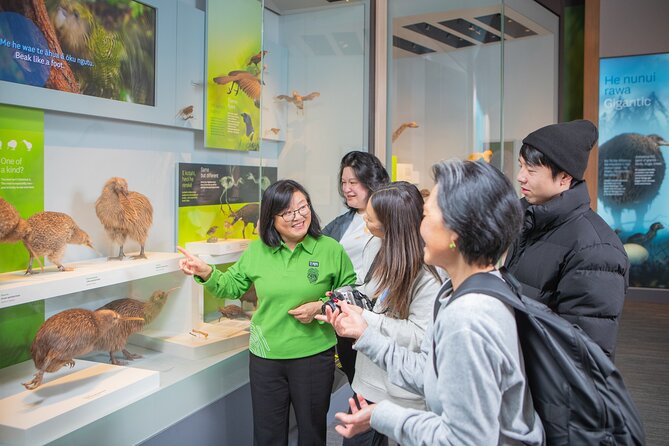
You might see explanations of the kiwi bird’s reproductive cycle, displays about extinct giant birds, and material about the vulnerabilities facing New Zealand’s wildlife. The natural science content works well alongside the cultural galleries because both ask how people and animals survive in an isolated part of the world.
The colossal squid is another possible highlight. A guide may explain its anatomy, unusual features, and reproductive cycle. This is the sort of detail that can turn a large specimen from a curiosity into a story about adaptation and life in the deep sea.
The interactive displays are useful for families and for anyone who learns better by doing than by reading. They also help break up the denser historical material. Still, the guided route will not give you time to stop at every screen or activity. Make a note of the displays you want to revisit once the hour ends.
What the Guided Route Can and Cannot Cover
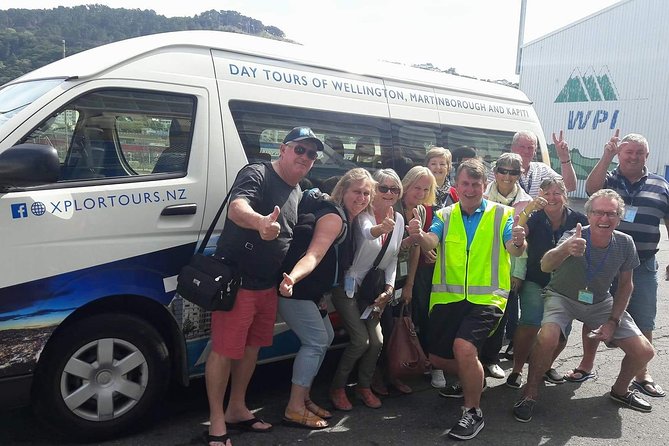
The tour is called an introduction for a reason. In 60 minutes, your guide samples several parts of Te Papa rather than exploring one subject in depth. The route can include:
- Māori and Pacific cultural collections
- Art, design, and photography
- New Zealand’s colonial and industrial history
- Natural science and wildlife
- Interactive museum technology
- War-related displays and major installations
This variety is the chief strength. You can quickly work out which subjects deserve another hour or two. It is also the main limitation. If you want a detailed study of Māori art, the Gallipoli exhibition, or natural science, a single hour will feel short.
Guides have different presentation styles. Anna has been described as engaging, while Roger has offered a broad introduction with humour. Susan has led a one-on-one tour when only one person was booked, and Basil has been praised for a charming introduction. Bruce Roberts has been especially notable for linking subjects that range from the colossal squid and kiwi birds to Pacific migration, railway development, Māori elders, music, and war.
That range shows what a strong guide can do. The content is broad, so the quality depends partly on whether the guide speaks clearly, keeps a steady pace, and matches the group’s interests. Some people found the delivery too fast or too quiet. If you cannot hear, say so early rather than waiting until the tour is nearly over.
Two-Day Entry Is the Tour’s Biggest Practical Benefit
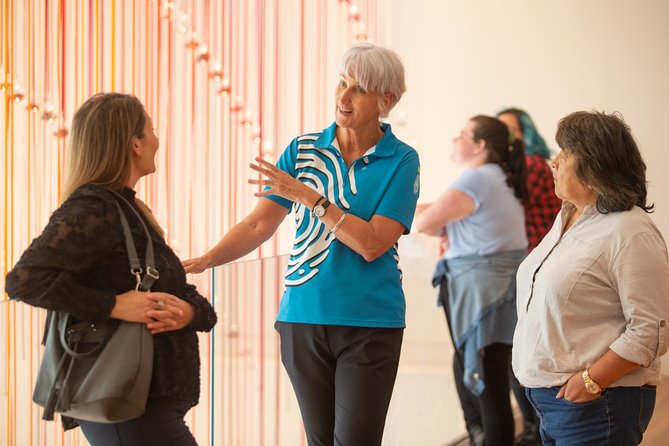
The included international visitor admission fee gives you entry for two days. This changes how you should plan the experience.
On day one, take the guided hour and then follow your own interests. You might spend time with the war displays, return to Māori and Pacific collections, or explore the natural science areas that were only briefly introduced.
On day two, you can come back without paying another admission fee. That is valuable because Te Papa is too large for a rushed single visit. You can also pause for lunch, visit the museum shop, or use one of the on-site cafes rather than trying to force every gallery into one stretch.
The two-day access is particularly helpful if Wellington weather changes your plans. It also suits people arriving on a cruise or fitting the museum around other city sights. You do not need to treat the guided tour as the whole activity. Treat it as the first part of a two-day museum visit.
There is an important price point here. The experience costs $46.54 per person, and basic museum entry is described as free. A free museum tour may also be available directly through the museum, according to the information provided for this experience. If you can arrange that option, this paid booking may not be the best deal.
The paid tour makes more sense if you value a pre-arranged small group, a confirmed mobile ticket, and a guide-led route with two-day admission included. Before booking, compare the direct museum options and check whether the same introduction is available at no charge.
Short-term paid exhibitions are not included. If you want to see one, budget separately.
Who Will Get the Most from This Te Papa Tour
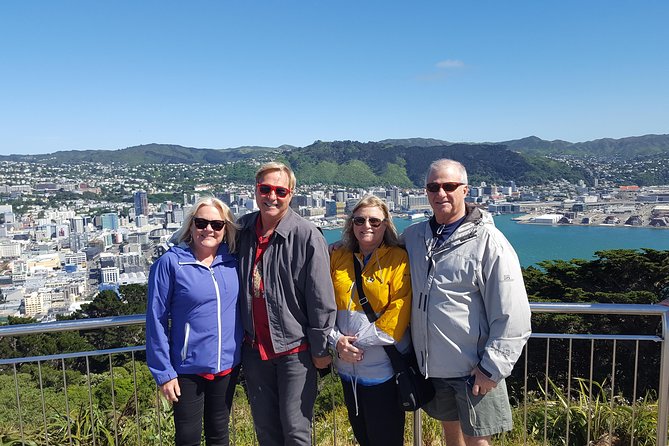
I would recommend this experience most strongly if you are visiting Wellington for the first time and prefer a clear introduction before exploring alone. It is also useful if you have limited museum experience, want cultural context, or dislike wandering through a large building without knowing what matters.
Families may appreciate the interactive science displays and the compact one-hour format. Afterward, you can choose the galleries that suit your children rather than committing them to a long guided visit.
It also works well for history-minded visitors who want an introduction to Māori culture, colonial New Zealand, Pacific migration, and wartime identity. Art lovers receive a useful starting point, though anyone seeking a specialist art tour may find the broad route too general.
You should think twice if you already know Te Papa well, want to move at your own pace, or are mainly concerned with saving money. In those cases, free entry and self-guided exploration may suit you better.
Practical Tips for a Better Visit
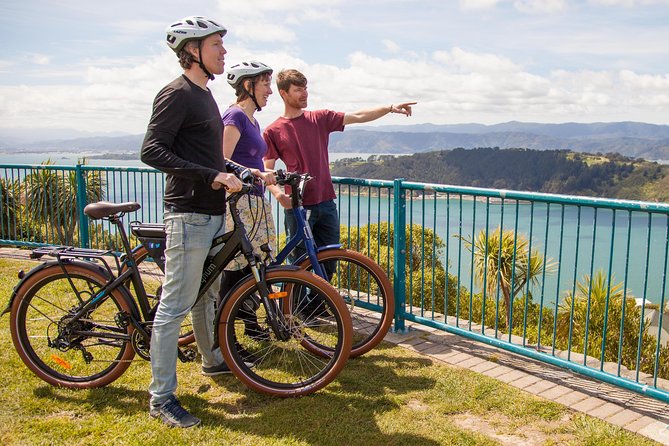
Arrive early and confirm the meeting location inside the museum. The address is 55 Cable Street, but the exact gathering point may not be clear from the booking details.
Choose a time that leaves room afterward. The official guided part is only one hour, but the museum itself can easily fill several more. If possible, keep the following day open for a return visit.
Stay close to the guide, especially in busy galleries. A few people found the pace fast or the voice hard to hear. Asking for slower delivery or repeating a point is sensible, particularly when the guide is moving between displays.
Wear comfortable shoes. You will be walking through several galleries, and the route covers different parts of the museum.
Use the guide’s recommendations. The best result is not memorising every fact. It is leaving with a short list of galleries and exhibits you want to see properly.
Remember that the tour ends where it begins. You can continue exploring, visit the shop, or stop at a cafe without arranging another transfer.
Cancellation and Booking Details
Confirmation is provided at booking, and you can use a mobile ticket. Service animals are allowed, and most people can participate. The group has a maximum of 15 people.
Free cancellation is available up to 24 hours before the local start time for a full refund. Cancellations or changes made less than 24 hours before the start are not accepted for a refund.
Should You Book This $46.54 Introduction?
Book it if you want a guide to connect Te Papa’s many subjects, you value a small group, and you plan to use the included two-day entry. The cultural explanations, natural science stories, interactive displays, and war galleries make this more useful than simply following a guidebook.
Do not book it automatically just because it is called an introduction. Basic museum entry is free, and a direct museum tour may cost less or nothing. Compare those choices first.
My practical call is this: use the paid tour when convenience and interpretation matter more than the admission price. Arrive early, expect a fast overview, and reserve extra time afterward. That is when Te Papa changes from a quick stop into a proper Wellington experience.
FAQ
How long is the Introducing Te Papa Tour?
The guided tour lasts approximately one hour, or 60 minutes.
Where does the tour begin?
It begins at the Museum of New Zealand Te Papa Tongarewa, 55 Cable Street, Te Aro, Wellington 6011.
Where does the activity end?
The activity ends back at the museum meeting point.
Is museum admission included?
The price includes the 60-minute guided tour and international visitor admission with two-day entry.
Can I return to Te Papa after the tour?
Yes. The included admission allows you to continue exploring for two days.
Are short-term paid exhibitions included?
No. Entry to short-term paid exhibitions is not included.
How many people are in the group?
The small-group tour is limited to 15 people.
Is hotel pickup included?
No. You must make your own way to Te Papa, as hotel pickup and drop-off are not included.
Can I cancel for a full refund?
Yes. You must cancel at least 24 hours before the experience start time for a full refund.
Newly listed around Wellington
- Wellington Jewish Heritage sightseeing tour with a kosher lunch★ 5.0 · 5 reviews
- Private Tour in Wellington★ 5.0 · 5 reviews
- Wellington: Lord of the Rings Filming Locations Tour★ 4.0 · 6 reviews
- Star Safari Stargazing Experience, Martinborough★ 5.0 · 6 reviews
- Wellington 90 minute Harbour Cruise★ 5.0 · 6 reviews
- Wharekauhau Heli-lunch from Wellington★ 4.5 · 6 reviews
- Kombucha Rum and Craft Beer Private Tour★ 3.5 · 6 reviews
- Easy Rider Two-Hour Wellington eBike Tour★ 5.0 · 7 reviews
Wellington Tours, compared.

Wellington’s Original LOTR Experience – includes Weta and Lunch
Read our review →
Northern Explorer Train Journey from Wellington to Auckland
Read our review →Browse the lists this tour appears in