
Reviewed · WELLINGTON TOURS
Northern Explorer Train Journey from Wellington to Auckland
The best reason to take the Northern Explorer is simple: it lets you see the North Island without concentrating on a narrow road for 11 hours. The route moves from Wellington’s coast to volcanic country, river gorges, sheep farms, and the Waikato plain, with the Raurimu Spiral providing a fine bit of railway drama along the way.
I like the open-air viewing platforms, which give you a proper sense of the wind, scale, and changing weather. I also like the GPS-triggered commentary, which points out sights as they appear instead of leaving you to guess at every mountain and viaduct. The main drawback is the length. At about 11 hours, this is a scenic day rather than a quick transfer, and food costs extra.
Key points to know before boarding
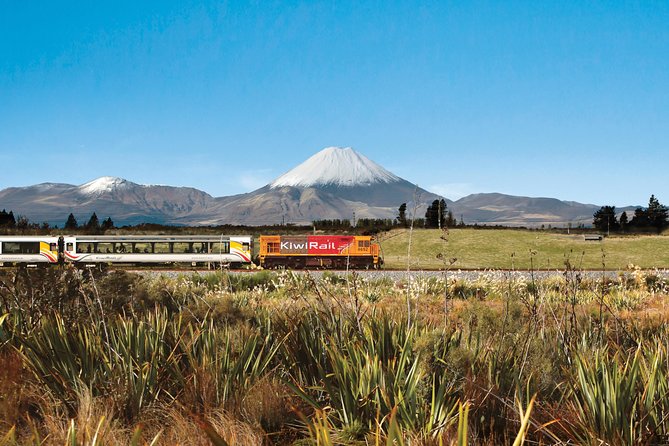
- Tongariro’s volcanic peaks are the headline view: Keep watch for Tongariro, Ngauruhoe, and Ruapehu across the Central Plateau.
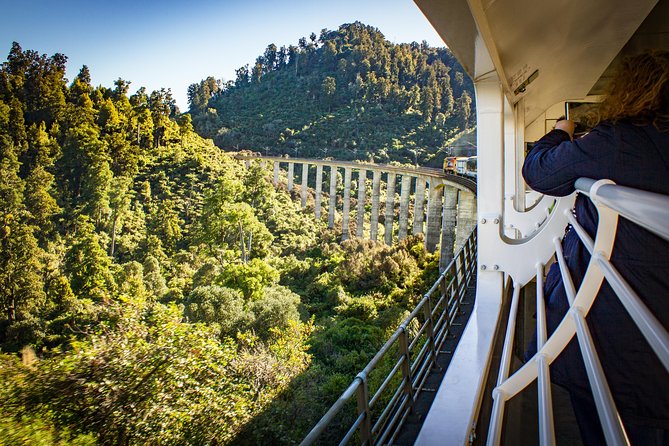
- The open-air deck changes the experience: It is excellent for photographs, but windy, and the viewing area may feel low if you are tall.
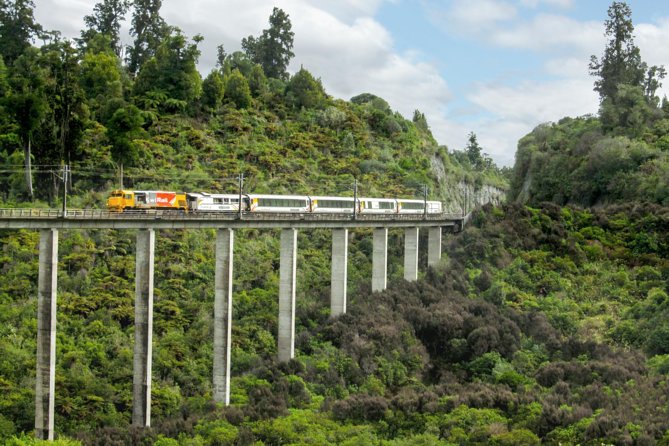
- Sit on the A and B side if possible: This direction can offer better views around viaducts and key scenery.
- The café is useful, but pack food too: Snacks, light meals, and drinks are sold onboard, though prices and selection may not suit every budget.
- The Raurimu Spiral is an engineering highlight: The train winds through steep country near National Park in a remarkable series of curves and tunnels.
- Allow the whole day: The train leaves Wellington at 7:55 am and the journey takes roughly 11 hours.
Wellington Station and the early start
Your morning begins at Wellington Station on Bunny Street. The scheduled departure is 7:55 am, so arrive at least 20 minutes early to check in and receive your boarding pass. Have your booking voucher ready for inspection.
This is a station departure, not a hotel pickup. You need to get yourself to Wellington Station, and you will finish at Auckland Strand in the Parnell area. The early start is worth noting when you plan your accommodation. A hotel within easy reach of the station makes the morning much less rushed.
The train is designed for sightseeing, not just transport. Its large windows and specially designed seats let you settle in with a book, watch the countryside, or move to the viewing carriage when something worth seeing approaches. The ride has a calm rhythm, but you should not expect frequent breaks. It is one long rail day with onboard toilets, a café, and limited opportunities to stretch on the platform.
More train trips in Wellington:
- TranzAlpine Train, Arthur’s Pass and Castle Hill Day Trip
★ 5.0 · 426 reviews - Coastal Pacific Train Journey from Picton to Christchurch
★ 4.5 · 345 reviews - TranzAlpine Train Journey: Christchurch to Greymouth
★ 4.5 · 312 reviews
From Wellington to the Kapiti Coast
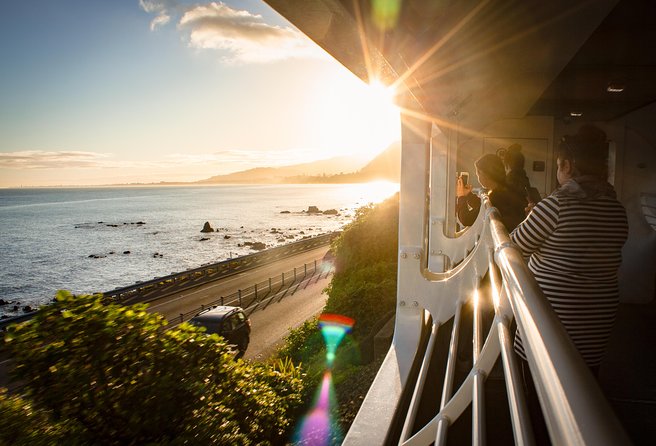
Leaving Wellington, the train heads through the lower North Island toward the Kapiti Coast. This early section gives you a useful introduction to the variety ahead. Rocky coastal views give way to green hills, small settlements, and open farmland.
The coast is especially pleasant in the morning, when the changing light can make the water and hills look quite different from one minute to the next. You will not be getting off to explore the towns, so think of this as a moving panorama rather than a series of stops.
The GPS audio commentary helps here. Plug in the headphones available at your seat and you will receive information triggered by the train’s location. It is a practical feature because the route contains many fleeting sights. You can keep your eyes outside instead of studying a map.
If you want the best chance at clear photographs, keep your camera ready rather than waiting for a formal viewing stop. The train continues moving, and some of the most enjoyable views appear briefly between curves, bridges, and buildings.
Farmland, country towns, and the changing North Island
Beyond the coast, the journey turns inland through rolling green farmland and country towns. This is not the dramatic section people usually picture when they think of a scenic railway, but it gives you a better sense of the North Island than a direct flight ever could.
Sheep fields, river valleys, and broad rural views replace the tighter coastal scenery. The train lets you watch the pattern change without the tiring work of driving. That matters on a route where you would otherwise spend most of the day managing traffic, directions, and unfamiliar roads.
The seats are comfortable, with enough room to make the long ride manageable. The carriage is relatively quiet, though the train can fill up and you may sit opposite another passenger rather than beside an empty seat. That can be pleasant if you enjoy conversation, but it is worth knowing if you expect complete privacy.
The onboard staff are an important part of the day. Service has been warm and attentive, with conductor Bruce receiving particular praise for his care and hospitality. Staff also help people sort out onward transport at the end, though you should still check your own arrival instructions before departure.
The Central Plateau and Tongariro National Park
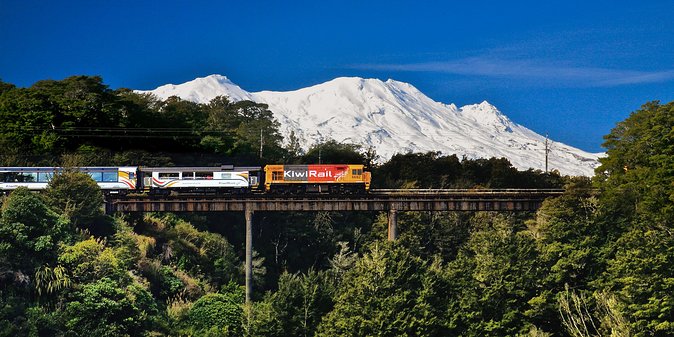
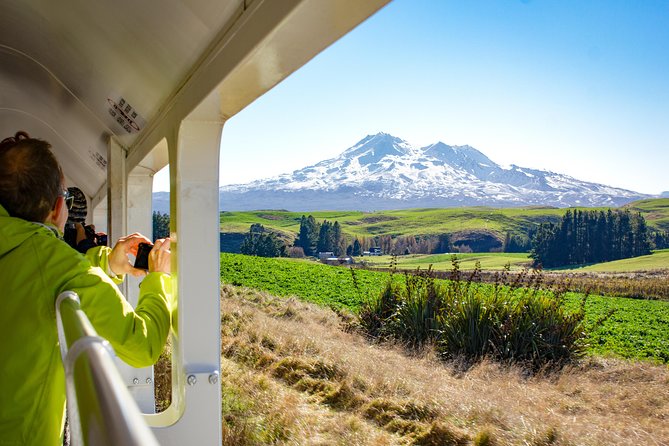
The most memorable portion arrives in the Central Plateau, where the train reaches Tongariro National Park. This is the section to protect your viewing time for. The scenery can shift quickly from snow-covered fields to old lava flows, beech forest, and dark volcanic slopes.
The three major peaks are Tongariro, Ngauruhoe, and Ruapehu. Their appearance depends heavily on the weather. On a clear day, they give the ride its grandest views. On a cloudy day, the area can feel just as dramatic, but you may see only fragments of the mountains through breaks in the weather.
The open-air viewing platforms are the right place to experience this section. You can feel the cold air, smell the countryside, and take wider photographs without glass reflections. The tradeoff is comfort. The deck can be very windy, and a tall person may need to bend down because the viewing area is fairly low.
Do not spend the whole day outside, though. The best approach is to move between the viewing platform and your seat. Use the windows for long stretches, then head outside when the train enters the most scenic parts. The commentary can also add useful context while you watch.
Tongariro is a place of contrasts. Ancient volcanic activity created the broad, severe forms, while forests and snow soften the view. From a train window, you get a quick but powerful look at a region that normally takes much longer to explore on foot.
A few more Wellington days to compare
- Wellington: Wētā Workshop Guided Tour Ticket
★ 4.7 · 997 reviews - Wētā Workshop Experiences Tour – Wellington
★ 5.0 · 875 reviews - Wellington: Return Cable Car Ticket
★ 4.6 · 714 reviews - Half Day Tour of Wellington
★ 4.5 · 638 reviews
The Raurimu Spiral and National Park country
Near National Park, the railway tackles the Raurimu Spiral, one of the route’s cleverest engineering features. The line winds through steep country using curves and tunnels to gain height without a brutally steep climb.
You experience the spiral as a gradual change in direction and elevation rather than as one obvious attraction. Pay attention to the commentary and watch how the terrain shifts around the train. This is a section where the audio guide earns its place.
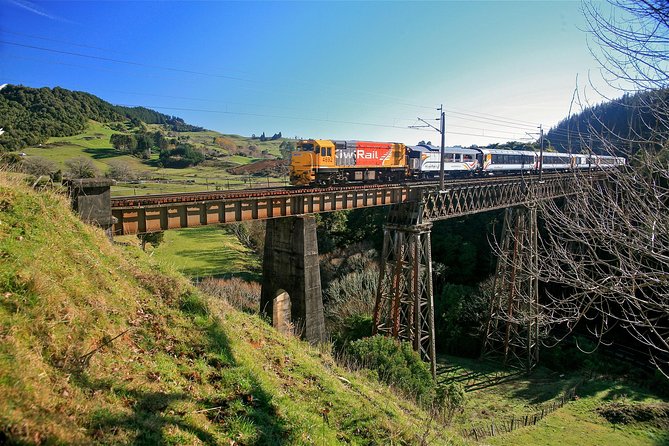
The surrounding country includes river gorges, forest, and rugged volcanic terrain. The train’s slower progress through this area gives you time to look closely. It is not just a matter of snapping one mountain photograph. The appeal comes from seeing how the railway fits into difficult country.
This also explains why the train is a good choice for people who want scenery without a strenuous day outdoors. You can appreciate the mountains and engineering from a comfortable seat, with a toilet and café nearby. You will not get the full walking experience of Tongariro National Park, but you will see parts of the region that are difficult to appreciate from an ordinary highway.
The onboard café and making an 11-hour day work
All trains have a licensed café carriage selling snacks, light meals, and drinks. Alcohol is available to purchase, but food and beverages are not included in the fare.
The café is convenient, particularly when you want a coffee or something small without losing your seat for long. Food quality has been well received overall, and the dining carriage is described as reasonably stocked. Still, prices can feel high, and one passenger found a croissant particularly expensive.
I would bring some food and water with you, then use the café to fill gaps. That gives you better control over cost and timing. Do not assume the train will stop for a long lunch break. The practical information describes onboard catering, and one booking experience included disappointment over an expected hour-long lunch stop that did not happen.
The journey is long enough that planning matters. Bring headphones for the GPS commentary, a phone charger if needed, reading material, and a light layer for the viewing deck. Air conditioning has also been a concern at times, so clothing you can adjust is sensible.
Waikato countryside and the final approach
After the volcanic country, the train continues through the Waikato region. The views become softer and more agricultural, with broad farmland and rural settlements. This gives the final part of the trip a different mood from Tongariro’s sharp peaks and lava country.
The Waikato section is not equally dramatic from start to finish. Some people find the route especially scenic through the earlier sections and less interesting after Hamilton. If your main reason for booking is mountain scenery, the final hours may test your patience.
That does not make the stretch pointless. It shows how quickly the North Island changes from high volcanic country to productive lowland. You also get the satisfaction of crossing a large part of the island without needing to drive.
The train is scheduled to arrive at Auckland Strand after approximately 11 hours. Pay close attention to the exact arrival arrangement supplied with your booking. Some passengers have found the information about a train-to-bus change or a stop near Auckland unclear. The stated end point is Auckland Strand in Parnell, but it is wise to confirm whether your particular booking uses a connection.
How the price works as a travel choice
At $157.47 per person, this is not the cheapest way to move between Wellington and Auckland. A flight can be faster, and a bus may cost less. The value comes from treating the fare as transport plus a full-day sightseeing experience.
You are paying for a one-way rail journey, GPS commentary, onboard toilets, comfortable seating, large windows, and access to the open-air viewing areas. Taxes, fees, and handling charges are included. Food, drinks, alcohol, hotel transfers, and possible excess luggage charges are extra.
I think the price makes sense if you have the time and would otherwise spend a day driving. It is especially useful for anyone uncomfortable driving on unfamiliar roads or who wants to read, rest, and watch the country pass by. It makes less sense if you need to reach Auckland quickly or dislike long periods without getting off the vehicle.
The activity is listed for a maximum of 15 participants, which suggests a small booked group, although the train itself can feel full. Children must be accompanied by an adult. Service animals are allowed, and most people can take part.
Practical tips for a better seat and better views
A few small choices can improve the day:
- Arrive early at Wellington Station: You need to check in and receive your boarding pass before boarding.
- Ask about seating direction: For the Wellington to Auckland run, the A and B side has been recommended for better views around viaducts.
- Use both viewing options: The windows are more comfortable for long periods, while the open deck is best for fresh air and wide photographs.
- Check the deck before taking a photo: It can be windy, and the low viewing position may be awkward for taller people.
- Pack basic food: The café is handy, but you may prefer your own lunch and snacks.
- Keep the whole day free: The scheduled start is early and the ride lasts about 11 hours.
- Confirm the Auckland arrival details: If your voucher refers to a bus connection or an intermediate stop, ask staff at check-in.
The GPS commentary deserves special attention. It is available through headphones at every seat and triggers as the train reaches points of interest. A few technical problems have been reported with headsets, so tell staff if yours is not working. You should not have to spend the day guessing which mountain or viaduct you are looking at.
Who should book the Northern Explorer?
I would choose this train if you enjoy slow travel, photography, changing scenery, and the simple pleasure of letting someone else handle the road. It is also a strong option for an overseas visitor who wants to see more of the North Island than Wellington and Auckland without hiring a car.
It suits couples, solo passengers, families with older children, and anyone who prefers a restful day to a long drive. The comfortable seats and café make the hours manageable, and the viewing carriage gives the trip a special quality that ordinary rail transport lacks.
I would hesitate if your holiday schedule is tight. Eleven hours is a serious commitment, and the Waikato portion may feel repetitive after the more dramatic Central Plateau. I would also compare the fare with a flight if your only goal is to arrive in Auckland.
Should you book this train ride?
Book it if the journey itself matters as much as the destination. The Northern Explorer gives you coast, farmland, volcanic peaks, forest, gorges, viaducts, and a famous railway spiral in one long day. The scenery is the main event, and the train lets you enjoy it without the stress of driving.
Skip it for a fast transfer, or if you need frequent stops and a guaranteed included meal. Pack a few provisions, arrive early, ask about the best side of the train, and confirm the final Auckland connection. With those details handled, this is one of the most relaxed ways to cross New Zealand’s North Island.
FAQ
How long is the Northern Explorer journey from Wellington to Auckland?
The journey takes approximately 11 hours. It departs Wellington Station at 7:55 am and ends at Auckland Strand in Parnell.
Where does the train depart from in Wellington?
The departure point is Wellington Station on Bunny Street, Pipitea, Wellington 6011. You should arrive at least 20 minutes before departure to check in and collect your boarding pass.
Is food included in the train fare?
No. The train has a licensed café carriage with snacks, light meals, and drinks available to purchase. Alcoholic drinks are also available at your own expense.
Does the train have an outdoor viewing area?
Yes. The train has open-air viewing platforms. They are useful for wide photographs and a stronger sense of the scenery, but they can be windy and may feel low for tall passengers.
What is included in the ticket?
The ticket includes the one-way rail journey, GPS-triggered audio commentary, and all taxes, fees, and handling charges. Hotel transfers, food, drinks, alcohol, and possible excess luggage charges are not included.
Can children and service animals take part?
Children must be accompanied by an adult. Service animals are allowed, and most people can participate.
Newly listed around Wellington
- Wellington Jewish Heritage sightseeing tour with a kosher lunch★ 5.0 · 5 reviews
- Private Tour in Wellington★ 5.0 · 5 reviews
- Wellington: Lord of the Rings Filming Locations Tour★ 4.0 · 6 reviews
- Star Safari Stargazing Experience, Martinborough★ 5.0 · 6 reviews
- Wellington 90 minute Harbour Cruise★ 5.0 · 6 reviews
- Wharekauhau Heli-lunch from Wellington★ 4.5 · 6 reviews
- Kombucha Rum and Craft Beer Private Tour★ 3.5 · 6 reviews
- Easy Rider Two-Hour Wellington eBike Tour★ 5.0 · 7 reviews
Wellington Tours, compared.



Wellington’s Original LOTR Experience – includes Weta and Lunch
Read our review →
Half Day Martinborough Winery Tour from Wellington
Read our review →Browse the lists this tour appears in