
Reviewed · WELLINGTON TOURS
Star Safari Stargazing Experience, Martinborough
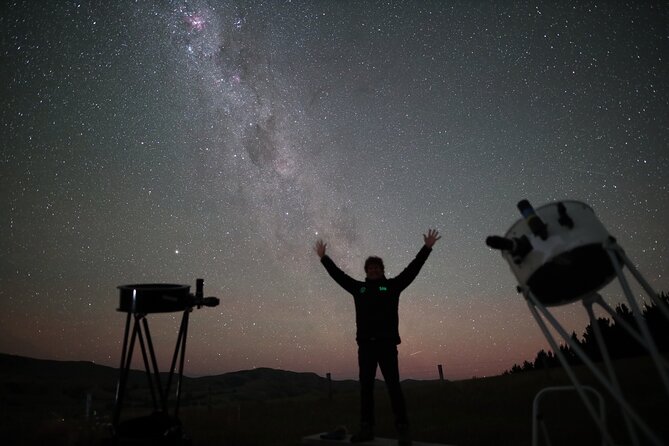
The Wairarapa International Dark Sky Reserve gives this small-group evening a fine setting: far from much of Wellington’s glow, with a darker sky and a better chance of seeing faint stars and deep-sky objects. Sam, an astrophysicist, and Hari, an astrobiologist, lead the session with powerful manual telescopes and plenty of time for questions.
I like the personal scale, with no more than 10 people, and the clever cloudy-weather alternative. I also like the mix of serious equipment, astronomy binoculars, laser-guided explanations, and a hot drink at the end. The main catch is simple: night skies are weather-dependent, and even a good forecast cannot guarantee clear views. Bring warm clothes. It can get very cold.
Key points at a glance
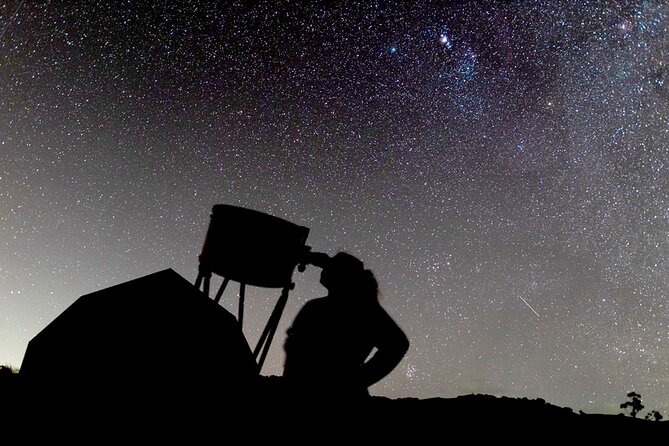
- Two science guides: Astrophysicist Sam and astrobiologist Hari explain the sky, answer questions, and help you find your bearings.
- Powerful 16-inch telescopes: Three or four telescopes may be available, giving you repeated chances to view southern-sky objects.
- A small group of up to 10: The limited size helps keep telescope time and questions flowing.
- A useful cloudy-night plan: Planetarium software, virtual reality, and a collection of New Zealand rocks replace outdoor viewing when weather turns poor.
- A 90-minute session: The telescope portion usually runs for 60 to 90 minutes, with the full experience lasting about an hour and a half.
- Warm drink included: Hot chocolate or another hot drink is a welcome finish after standing outside at night.
Why Martinborough is a smart place for stargazing
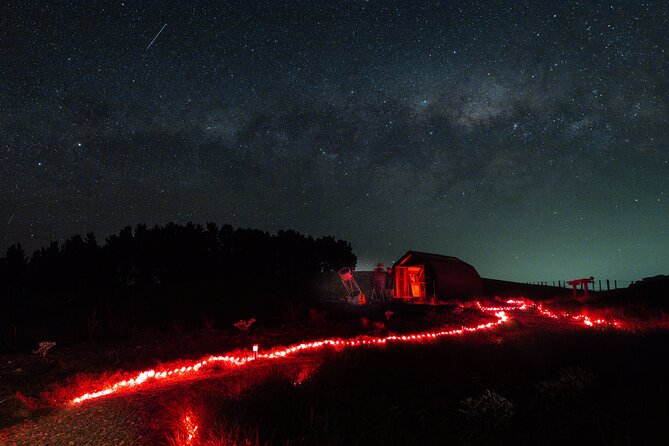
This is not just an evening telescope stop in a town with a marketing label. The Wairarapa International Dark Sky Reserve is recognised for its unusually dark and clear skies, which matters because artificial light washes out the faintest stars, galaxies, and nebulae.
The setting is about 80 kilometres from Wellington Airport, making it possible to add to a Wellington or Wairarapa trip without a long expedition. Still, check the meeting point carefully. The activity begins at VG48+C6 in Ponatahi, Wellington Region, and ends at that same location. The supplied details do not include transport from Wellington, Martinborough, or the airport, so you need to arrange your own way there.
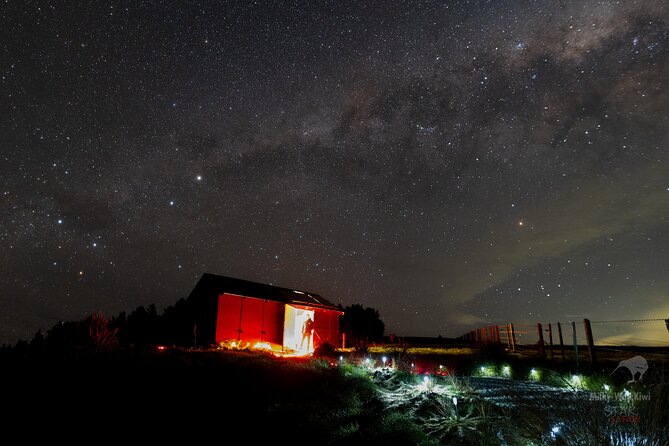
The southern sky is the real prize. New Zealand sits in a good position for objects that are difficult or impossible to see from much of the Northern Hemisphere. Depending on the season and conditions, the evening may include planets, star clusters, nebula clouds, galaxies, red and blue stars, satellites, and the International Space Station if it passes overhead at the right time.
More safaris in Wellington:
- Seal Coast Safari – Exclusive access to Wellington’s secret coast
★ 5.0 · 294 reviews - Wellington: Half Day Seal Coast Safari
★ 4.9 · 245 reviews - Coastal Connoisseur Wellington to Wairarapa Wine & Seal safari
★ 5.0 · 10 reviews
Meeting Sam and Hari in the Moon Garden
You meet the team on arrival before collecting a blanket or finding a jacket through the reception area. The telescope viewing area is about 25 metres away, inside the Moon Garden. That short walk matters more than it sounds. You are not hiking to an isolated mountain lookout, but you should still treat the outing like a short outdoor excursion.
Sam and Hari created Star Safari from a shared interest in space science. Their backgrounds give the session a useful balance. Sam brings astrophysics into the discussion, while Hari adds astrobiology and the search for life beyond Earth. You are not simply shown a bright object through an eyepiece and sent to the next person. The format is designed around questions and explanation.
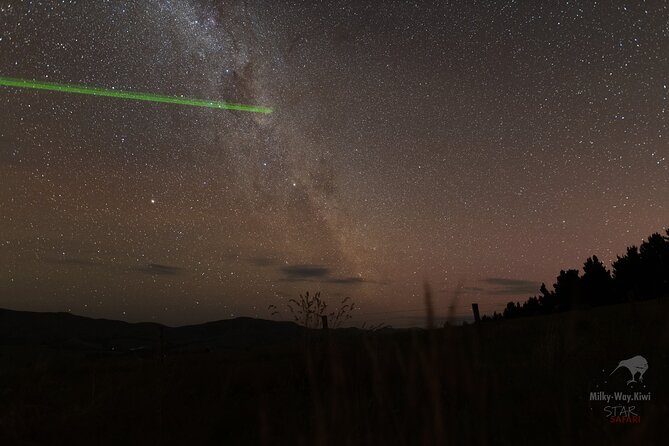
Both guides are licensed to operate laser pointers. That allows them to point out star patterns and help you understand the sky above you, rather than leaving you to stare at a telescope without context. One of the stated aims is that you leave knowing what is in the sky and how to orient yourself among the stars.
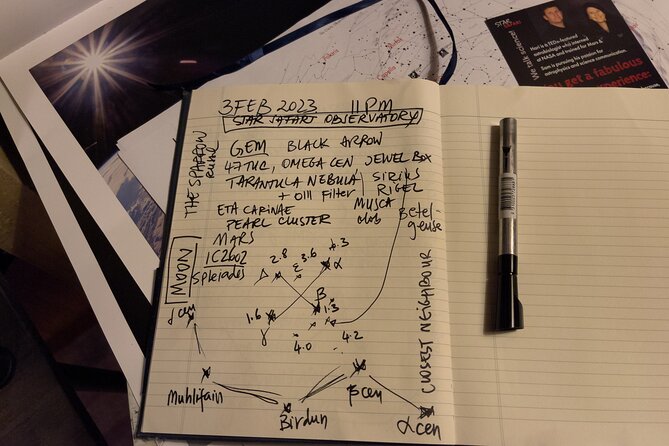
That teaching element is especially useful for first-time stargazers. If you already know your way around a star chart, you can bring an observing list and ask for particular targets. This is a good sign for mixed groups, since beginners and keen amateur astronomers can take different things from the same evening.
The 60 to 90 minutes under the southern sky
Once the sky is suitable, the main session takes place outdoors. You may begin by looking at broad features, such as the Milky Way, before moving to individual objects through the telescopes. The exact lineup will depend on the date, visibility, and what is above the horizon.
The equipment is a major part of the appeal. Star Safari uses two 16-inch manual telescopes, along with as many as three or four telescopes in total and astronomy binoculars. Large telescopes gather more light, which can reveal dimmer objects than ordinary backyard equipment. You should still expect real-world astronomy, not bright computer-generated images. Some objects appear as subtle shapes or small points, and the guide’s explanation helps you understand what you are seeing.
The manual design also changes the mood. Sam and Hari know the night sky and operate the telescopes by hand, so the evening can teach you how people found objects before automated systems did all the work. For an advanced observer, that may be part of the fun. For a beginner, it can make the sky feel less like a list of technical targets and more like a place you can learn to read.
Possible sights include planets, galaxies, nebulae, clusters, and stars in different colours. Saturn is a particularly memorable possibility. One described session included a clear view of Saturn, its rings, and several moons. Another favourite was the Jewel Box cluster, also called Herschel’s Little Jewel Box, a southern-sky cluster known for its contrasting star colours.
You might also see a shooting star. Satellites can cross the view, and the International Space Station may be visible if its route and timing line up with your session. These sightings are never guaranteed, so treat them as bonuses rather than promised targets.
Small groups mean better telescope time
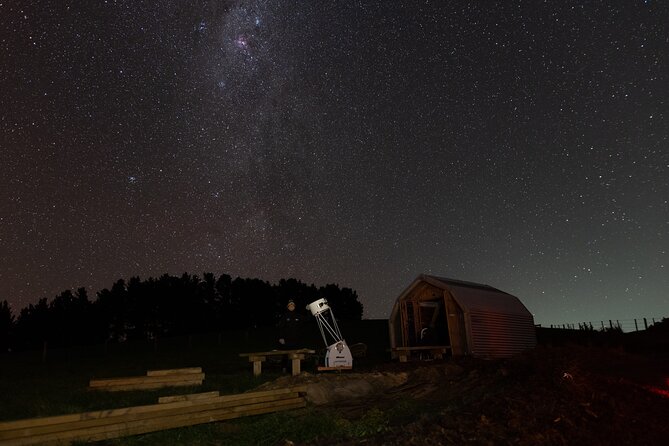
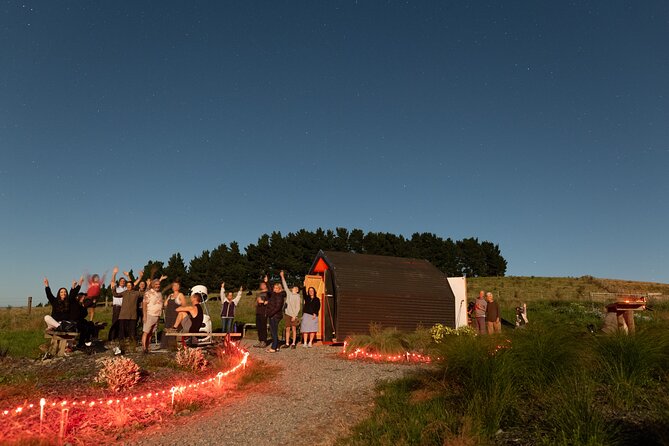
The maximum group size is 10 people. That is a practical advantage for an activity built around shared equipment. With several telescopes available, you should have more than one chance to look rather than spending most of the evening waiting behind a large crowd.
The group format also supports constant questions. You can ask about a planet, a star, the possibility of life elsewhere, or the mechanics of the telescope while the session moves along. Families may find this more engaging than a silent viewing line, and experienced stargazers can bring an observing list for a more focused evening.
The experience has also worked for mixed-age family groups. Children have been welcomed, and young children have been free in at least one family booking. The supplied information does not state a general age policy or guarantee free admission for every child, so confirm the current price rules when booking.
For very young children, think about the cold and the late outdoor setting. A two-year-old may enjoy the lights, stories, and warm drink, but children do not all have the patience to wait for telescope turns. The cloudy-night indoor program may be easier for some families, though virtual reality can cause motion or 3D sickness for some people.
A few more Wellington days to compare
- Wellington: Wētā Workshop Guided Tour Ticket
★ 4.7 · 997 reviews - Wētā Workshop Experiences Tour – Wellington
★ 5.0 · 875 reviews - Wellington: Return Cable Car Ticket
★ 4.6 · 714 reviews - Half Day Tour of Wellington
★ 4.5 · 638 reviews
What happens when clouds cover the stars
The strongest practical feature here is the backup plan. If the weather is unsuitable for stargazing, the evening does not simply disappear. You move to an e-astronomy session using planetarium software and virtual reality.
The planetarium program lets the guides tour the Universe even when clouds block the actual sky. That keeps the science discussion going and gives you a way to understand the objects you might have seen outside. It is not the same as looking through a telescope at Saturn or the Milky Way, so you should book this with realistic expectations. The weather alternative protects the value of the evening, but it cannot reproduce a clear dark sky.
The virtual reality section explores the Solar System. It is a useful change of scale, taking you from objects seen as points of light to a more direct sense of planetary space. One visitor experienced some 3D sickness, so you may want to mention this before taking part if you are sensitive to VR.
There is also a collection of rocks from across New Zealand linked to astrobiology and the search for life on Mars. This gives Hari’s scientific background a tangible role. Instead of treating space as a distant subject, the session connects it to material found here on Earth and to current questions about life elsewhere.
A warm drink after a cold night
The outdoor section can be cold enough to affect your enjoyment. The instructions are clear: dress warmly, and dress as if you were going hiking. Bring layers, a warm hat, and sturdy footwear. Even if the evening begins comfortably, temperatures can fall after sunset, and standing still beside a telescope feels colder than walking.
Blankets are available through the reception area, but I would not rely on that alone. Your own warm clothing gives you more control and makes it easier to stay focused on the sky.
A complimentary hot drink is part of the tradition. Hot chocolate was specifically appreciated after a cloudy or cool session, and it is a small but thoughtful detail. It gives the evening a natural pause and helps you warm up before leaving.
Is the $62.06 price fair?
At $62.06 per person, the price is reasonable if you want a guided introduction rather than simply finding a dark roadside pull-off and looking upward. You are paying for a 90-minute session, specialist guides, several telescopes, astronomy binoculars, a small group, and a cloudy-weather program with planetarium software and VR.
The value is strongest for people who want to understand what they are seeing. A telescope alone can be impressive, but without guidance you may not know which objects to seek or why they matter. Here, the explanations, laser pointers, and question time give the viewing a clear purpose.
The price is less attractive if you only want a guaranteed view through a telescope. Weather can prevent outdoor stargazing, and the alternative program, while thoughtful, will not satisfy someone who has travelled specifically to see the Milky Way or Saturn. The free cancellation policy helps reduce that risk: cancel at least 24 hours before the start time for a full refund. If Star Safari cancels because of poor weather, you are offered another date or a full refund.
Who will enjoy Star Safari most?
I would choose this for a first serious look at the night sky, especially if you are staying in the Wairarapa or can comfortably reach Ponatahi. Beginners get help with basic orientation, while experienced observers can bring a list of targets and make use of the manual 16-inch telescopes.
It also suits families with children who are curious about planets, Mars, or the search for life. The session is not only about waiting for a turn at the eyepiece. The VR, rocks, and question time give younger participants several ways to stay involved.
Couples and small groups will appreciate the intimate scale. With up to 10 people, you are unlikely to feel lost in a crowd. The experience is also suitable for people who are unsure about the weather because the cloudy-night program offers a genuine alternative.
I would be more cautious if you dislike cold outdoor conditions, have no way to reach the meeting point, or need a fully accessible experience without checking details first. Service animals are allowed, and most people can participate, but accessibility questions should be discussed directly with the provider.
Practical details before you book
Allow about 90 minutes for the complete experience. The telescope viewing itself may run for 60 to 90 minutes, depending on conditions and the flow of the evening.
Bring warm layers and outdoor footwear. A mobile ticket is provided, and confirmation arrives when you book. The activity returns to its starting point, so do not expect a separate drop-off elsewhere.
The weather policy is important. You can cancel for a full refund up to 24 hours before the start time. Late cancellations and changes are not accepted for a refund. If poor weather forces Star Safari to cancel, you can choose a new date or receive a full refund.
Should you book Star Safari?
Book it if you want more than a quick look through a telescope. The combination of a dark-sky setting, Sam and Hari’s science-led guidance, multiple manual telescopes, and a proper indoor alternative makes this a well-rounded introduction to the southern sky.
Go with flexible expectations. A clear night may bring Saturn, colourful star clusters, the Milky Way, or even the ISS. A cloudy night brings planetarium software, VR, and astrobiology instead. You cannot control the sky, but you can control your clothing, arrival plans, and attitude. For the price, that makes Star Safari a sensible choice for curious beginners, families, and anyone who wants to learn how to find their way among the stars.
FAQ
Where does Star Safari meet?
The meeting point is VG48+C6 in Ponatahi, in the Wellington Region of New Zealand. The activity ends back at the same location.
How long does the experience last?
The experience lasts about 1 hour and 30 minutes. Outdoor telescope viewing may run for 60 to 90 minutes when conditions are suitable.
How much does Star Safari cost?
The listed price is $62.06 per person.
How many people can join the experience?
The maximum group size is 10 people.
Who leads the stargazing session?
The session is led by Sam, an astrophysicist, and Hari, an astrobiologist.
What equipment is available?
Star Safari uses powerful 16-inch manual telescopes, with three or four telescopes available for viewing. Astronomy binoculars are also provided.
What can I see during the stargazing session?
Possible sights include the Milky Way, planets, galaxies, nebulae, star clusters, coloured stars, shooting stars, satellites, and the International Space Station when it passes overhead.
What happens if the weather is cloudy?
If the weather is unsuitable for outdoor stargazing, the session changes to an e-astronomy program with planetarium software, virtual reality exploration of the Solar System, and astrobiology-related rocks from across New Zealand.
What should I wear?
Dress warmly and as if you were going hiking. Night temperatures can be very cold, so bring suitable outdoor clothing.
Can I cancel for a refund?
You can cancel at least 24 hours before the start time for a full refund. Cancellations or changes made less than 24 hours before the start time are not accepted for a refund. If poor weather causes Star Safari to cancel, you will be offered another date or a full refund.
Newly listed around Wellington
- Wellington Jewish Heritage sightseeing tour with a kosher lunch★ 5.0 · 5 reviews
- Private Tour in Wellington★ 5.0 · 5 reviews
- Wellington: Lord of the Rings Filming Locations Tour★ 4.0 · 6 reviews
- Wellington 90 minute Harbour Cruise★ 5.0 · 6 reviews
- Wharekauhau Heli-lunch from Wellington★ 4.5 · 6 reviews
- Kombucha Rum and Craft Beer Private Tour★ 3.5 · 6 reviews
- Easy Rider Two-Hour Wellington eBike Tour★ 5.0 · 7 reviews
- Wellington Zoo General Entry Tickets★ 3.9 · 7 reviews
Wellington Tours, compared.

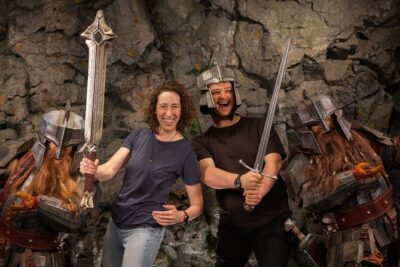
Wellington’s Original LOTR Experience – includes Weta and Lunch
Read our review →
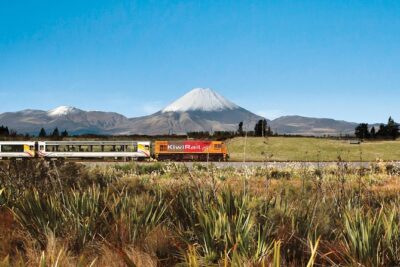
Northern Explorer Train Journey from Wellington to Auckland
Read our review →Browse the lists this tour appears in