
Reviewed · MOUNT COOK & LAKE TEKAPO TOURS
Mount John Observatory Stargazing Experience, Tekapo
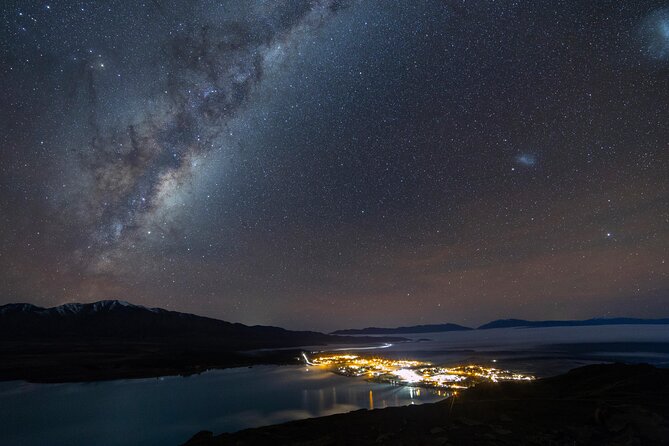
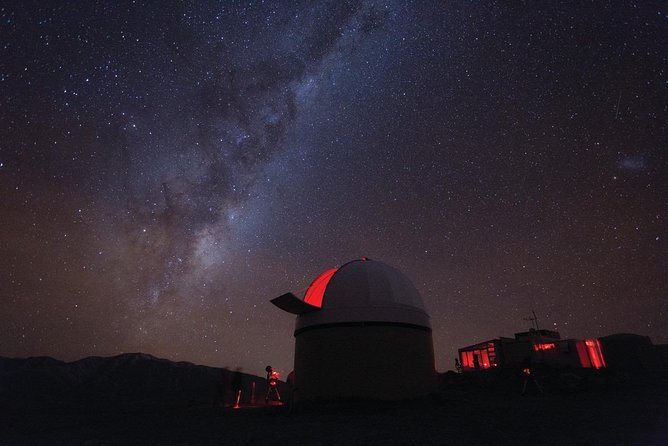
Mount John Observatory puts you beneath one of the world’s finest night skies, high above Lake Tekapo in the Aoraki Mackenzie International Dark Sky Reserve. You’ll look first with your own eyes, then through powerful telescopes at sights such as Jupiter’s moons, star clusters, and perhaps a far-off galaxy.
I like the expert-led explanations, which make Southern Hemisphere stars easier to understand even if you know little about astronomy. I also like the access to the summit and the observatory equipment, rather than simply standing in a field with a basic telescope.
The main catch is the weather. Clouds, wind, and a bright full moon can reduce what you see, and poor conditions can cancel the outdoor session. It is also cold, dark, and not a good fit if walking on uneven ground is difficult.
Key points to know before booking
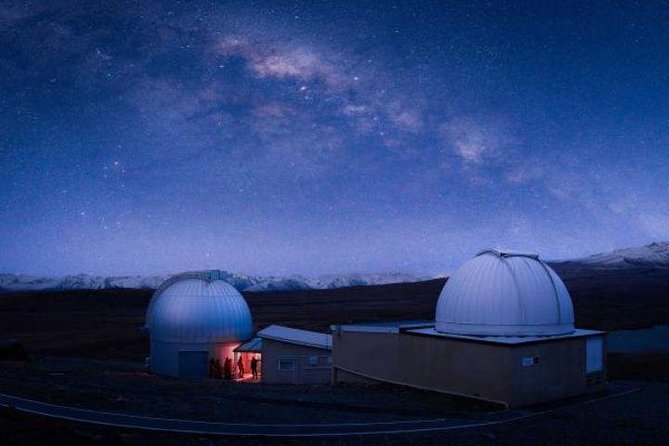
- Mount John summit access: Travel from Lake Tekapo up to the 1,029-metre University of Canterbury observatory site.
- Three ways to see the sky: Your guide combines naked-eye stargazing, laser-pointer instruction, and telescope viewing.
- Southern Hemisphere highlights: Learn to identify the Southern Cross, the true southern star, planets, star clusters, and other features.
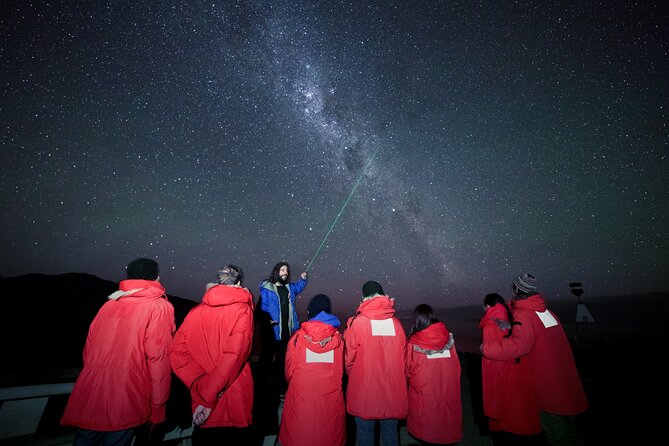
- Cold-weather clothing supplied: Extreme-weather jackets are provided, but you should still wear warm layers.
- Small but shared experience: The usual trip limit is 22 people, with a stated maximum of 30.
- Weather controls the evening: A replacement date, full refund, or indoor alternative may be offered if clouds stop the summit session.
Why Mount John is the right place for stargazing
Lake Tekapo sits inside the Aoraki Mackenzie International Dark Sky Reserve, a protected area known for limiting artificial light. Mount John rises to 1,029 metres above the town, giving the Dark Sky Project a high, open setting for its summit experience.
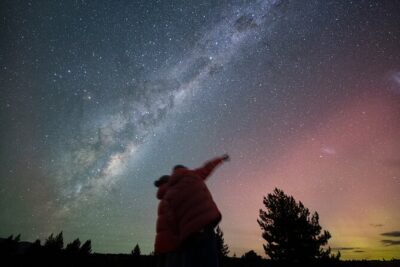
That location matters. A dark sky lets you see far more than the brightest stars. The Milky Way can appear as a broad band rather than a faint smudge, and familiar constellations look different from the Southern Hemisphere. The sky also changes with the season, so the exact sights depend on your date and the weather.
I like that this is not presented as a silent technical exercise. The guide explains what you are looking at, points out stars with a laser, and connects the objects in the sky with basic astronomy. You do not need to arrive with a working knowledge of constellations.
The University of Canterbury operates the Mount John Observatory as an astronomical research centre. This is still a working scientific site, not only a visitor attraction. Your visit gives you access to a place with a real research role, while the guide translates the science into a format that works for a general audience.
A few more Mount Cook & Lake Tekapo days to compare
- Lake Tekapo: Alpine Stargazing Experience with a Guide
★ 4.5 · 626 reviews - Lake Tekapo: Stargazing Experience
★ 4.9 · 607 reviews - Mount Cook: Scenic Helicopter Flight with Alpine Landing
★ 4.8 · 442 reviews
The 15-minute ride from Lake Tekapo
You begin at the Dark Sky Project in Lake Tekapo township. Check-in is followed by transport up to the summit, and the total experience lasts about one hour and 45 minutes.
The transfer is short, but it solves a practical problem. You do not need to arrange your own way up the mountain, and you can focus on the evening rather than driving on a dark road after looking at the sky. Hotel pickup and drop-off are not included, so you need to reach the Lake Tekapo meeting point yourself.
As you climb, the setting changes from town to mountain. The summit overlooks Lake Tekapo and the surrounding peaks, though the nighttime focus is the sky rather than daytime sightseeing. If you arrive early, allow enough time to find the check-in point and prepare for the cold.
The group size can reach 22 people for a departure, with a stated activity maximum of 30. That is not a private tour, but it is more manageable than a large coach outing. Stay close to your guide once you are outside. The ground is very dark, and white torches are not allowed because they interfere with night vision.
Learning the Southern Sky with a laser pointer
The summit session lasts around 90 minutes. Your guide begins with naked-eye viewing, helping you find major stars and constellations before moving to the telescopes.
This order is important. It is easy to spend an evening looking through an eyepiece without understanding where the object sits in the wider sky. The laser-pointer session gives you a map first. You may learn to pick out the Southern Cross, compare it with nearby stars, and find the true southern star rather than relying on a misleading bright point sometimes called the fake southern star.
The Southern Cross is one of the pleasures of observing from New Zealand, but it is only the start. Guides explain the movement and position of stars, then help you connect broad ideas with what is directly above you. The talks are designed to be educational and entertaining, not a university lecture.
Guides such as Kieran, Alice, and Olive have led sessions praised for their clear explanations and engaging style. The exact guide depends on your departure, but the experience includes English and Mandarin options. You must be able to speak the language of the selected tour for health and safety reasons.
If clouds move across the sky, the guide may work around them. A partly cloudy evening does not always mean a lost night. Gaps can reveal the Southern Cross, individual stars, or a planet for a few minutes at a time. Still, you should book with realistic expectations. Astronomy is controlled by weather, not by a timetable.
What you can see through the telescopes
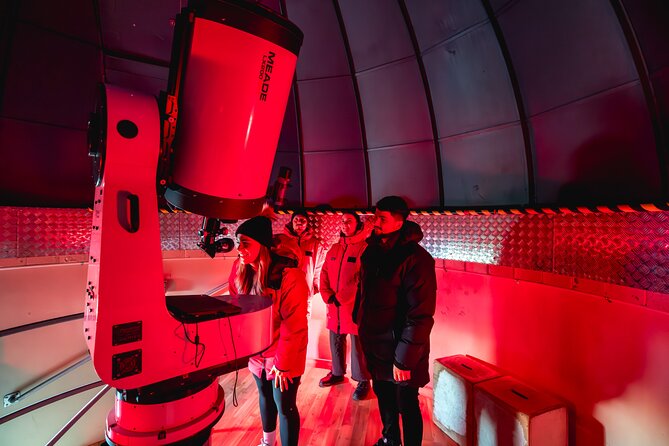
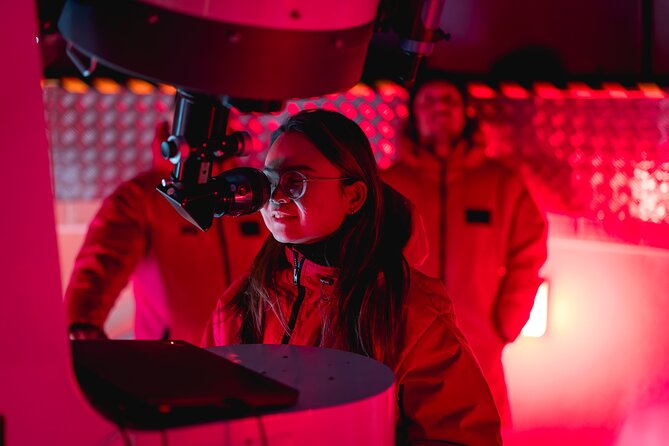
After the naked-eye introduction, the guide uses advanced observatory equipment for telescope viewing. The exact objects change with the season and conditions, but the experience can include planets, moons, star clusters, solar systems, constellations, and possibly a distant galaxy.
The moons of Jupiter are one example. Through a telescope, you may see several small points arranged near the planet, a simple sight that becomes much more interesting once the guide explains what you are seeing. Star clusters provide another strong moment. One session included a very old cluster made up of stars dating from shortly after the early formation of the universe.
You may use three telescopes during the session, according to the practical experience described by participants. That variety adds value because each instrument can offer a different view. You are not simply given one quick look and sent back to the bus.
The equipment does not guarantee a dramatic image every time. Clouds, wind, and moonlight can affect clarity. A full moon can wash out some of the Milky Way, even if the weather is clear. If your main goal is to photograph the sky, note that staff may avoid taking pictures on your camera when there is wind.
The strongest part of the telescope viewing is often the combination of image and explanation. A small bright point can seem ordinary until you learn that it is a planet, a cluster, or a distant object far outside our own solar system.
Somewhere else in Mount Cook & Lake Tekapo entirely:
- Mt Cook Small Group Scenic Day Tour from Queenstown
★ 5.0 · 407 reviews - Tekapo Shuttle: Mt Cook Day Tour via Pukaki & Tasman Lake
★ 4.8 · 307 reviews - Mount Cook: Ski Plane and Helicopter Glacier Combo Flight
★ 4.6 · 271 reviews - Mount Cook: 3 Hour Heli Hike to the Tasman Glacier
★ 4.7 · 218 reviews
Cold, darkness, and the practical side of the summit
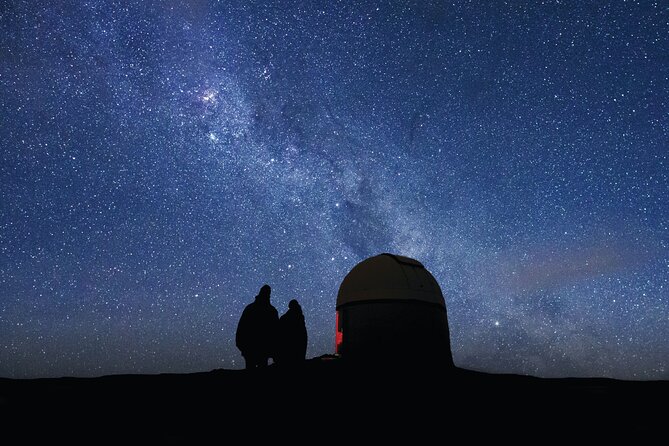
Mount John can be freezing even in spring. The tour supplies extreme-weather jackets, which are a major help, but you should wear warm layers underneath. Bring closed shoes and clothing that lets you stand outside for an extended period.
The cold is not a minor detail. You may be focused on the sky for 90 minutes, with pauses while the guide aims equipment or explains a constellation. A warm jacket makes it easier to pay attention instead of counting the minutes until you can get indoors.
The summit is also very dark. That is the point, but it can make walking harder. White lights and phone torches are not suitable because they spoil night vision for everyone nearby. Follow the guide and remain with the group, especially when moving between viewing areas.
This experience is not recommended if you have mobility issues. The tour takes place at a mountain observatory, and the combination of darkness, cold, and outdoor walking requires reasonable stability. Children can participate but must be accompanied by an adult.
There are no meals or snacks included. For a short evening activity, that is not a serious gap, but eat beforehand if you tend to get hungry late at night. The supplied jacket is useful, but it does not replace food, sturdy footwear, or your own warm clothing.
When the weather does not cooperate
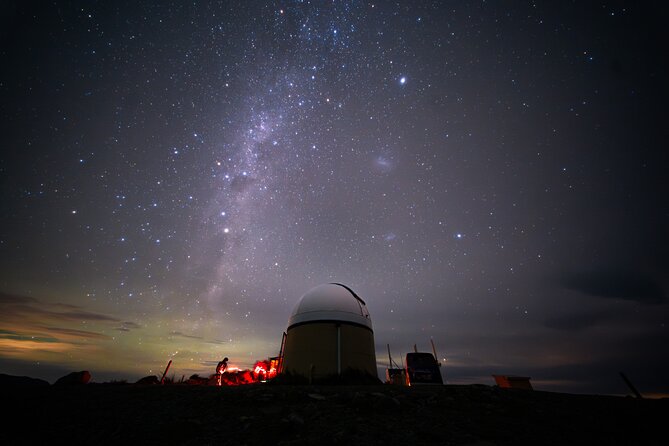
Cloud cover is the biggest risk. If conditions prevent the summit session from operating, Dark Sky Project may offer an indoor alternative, another date, or a full refund.
The indoor option is worth understanding before you book. It can preserve some of the astronomy content, but it is not the same as standing under a dark sky or looking through the Mount John telescopes. If outdoor stargazing is the main reason you are booking, ask about the available alternatives if the forecast turns bad.
A cloudy evening does not always stop the tour. Guides can sometimes use breaks in the cloud to show stars and constellations. One partly cloudy session still included the Southern Cross and telescope views. But full cloud cover can lead to cancellation, and that is simply part of booking an outdoor astronomy activity.
If your New Zealand itinerary allows it, keep some flexibility around your Lake Tekapo nights. A visitor who had to wait an extra night for clearer weather was able to go up later. That approach works better than scheduling the experience on your only evening in town.
The cancellation policy is straightforward for your own plans: cancel at least 24 hours before the start time for a full refund. Changes or cancellations inside 24 hours are not accepted for a refund. If the operator cancels because of poor weather, you can be offered a different date or a full refund.
Is $139.39 a fair price?
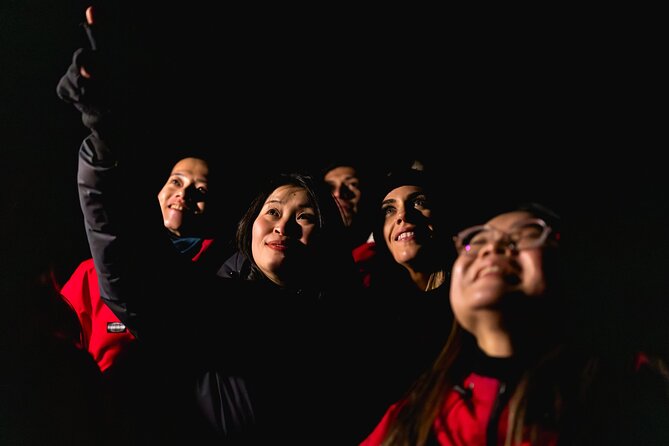
At $139.39 per person, this is not a casual add-on. You are paying for transport from Lake Tekapo, summit access, a guide, supplied cold-weather clothing, and use of observatory equipment in a protected dark-sky area.
I consider the price fair if you care about the setting and the teaching. The value is not just the number of stars you see. You are visiting the summit of a research observatory with a guide who can identify the sky and explain what the telescope is showing. For someone new to astronomy, that structure can make the night far more rewarding than trying to identify stars alone.
The value becomes less certain if you mainly want a perfect Milky Way photograph. Weather and moonlight can limit the view, and staff may not take camera photos in windy conditions. A clear, moonless night offers the best chance of seeing the Milky Way at its strongest, but no departure can promise that.
The stated rating is 4.3 from 160 reviews, which fits the experience’s strengths and risks. The teaching, telescope access, and guides receive the strongest praise. The lower marks tend to follow cloud cancellations, a disappointing indoor substitute, or a crowded feeling on a less successful night.
Who will enjoy the Mount John experience most?
I would choose this tour for a first serious introduction to astronomy, a family with older children, or anyone who wants more than a quick look at the stars from the lakeshore. The guide-led format makes it accessible, and you do not need to know the names of stars before arriving.
It also suits people who already enjoy astronomy. A keen observer may appreciate the quality of the dark sky and the chance to see objects through several powerful telescopes. The guide can add context even when you already recognize common constellations.
You should think twice if you dislike cold outdoor activities, need easy walking conditions, or have only one night in Tekapo during a cloudy spell. You should also avoid booking if you cannot speak the language of the tour, since language ability is required for safety.
For families, remember that children must remain with an adult. The group is shared, so this is not a private, child-paced astronomy lesson. Still, the mix of laser pointers, planets, and telescope views gives younger participants something concrete to watch.
My verdict on this Tekapo stargazing tour
Book the Mount John Observatory Stargazing Experience if you want the best chance of learning what you are seeing, not simply standing outside and hoping the sky explains itself. The summit location, dark reserve, observatory equipment, and strong guides make this one of Lake Tekapo’s most worthwhile evening activities.
Keep your expectations tied to nature. Choose a date with flexibility, dress more warmly than you think necessary, and accept that clouds can change the plan. If the sky clears, you may see the Southern Cross, Jupiter’s moons, ancient star clusters, the Milky Way, and perhaps a distant galaxy. If weather cancels the outdoor session, ask for another date or take the refund rather than assuming the indoor alternative will feel equal.
FAQ
Where does the Mount John Observatory experience begin?
You check in with the Dark Sky Project team in Lake Tekapo township. Return transport to the summit is provided from there.
How long does the experience last?
The full experience lasts approximately one hour and 45 minutes. About 15 minutes is allocated to the initial check-in and transport stage, followed by around 90 minutes at the summit.
How high is Mount John Observatory?
The summit is 1,029 metres above Lake Tekapo.
What can I see during the stargazing session?
Depending on the season and conditions, you might see the Milky Way, planets, star clusters, solar systems, constellations, and possibly a distant galaxy. Telescope viewing has included the moons of Jupiter and very old star clusters.
Are telescopes included?
Yes. The guides provide telescope viewing through advanced observatory equipment, along with naked-eye stargazing and laser-pointer instruction.
Are warm clothes provided?
Extreme-weather jackets are provided. You should still wear warm layers because the summit can be very cold, including during spring.
What happens if the weather is poor?
If poor weather stops the outdoor experience, you may be offered another date or a full refund. An indoor alternative may also be offered.
Can children or people with mobility issues join?
Children must be accompanied by an adult. The experience is not recommended for people with mobility issues, and most people can participate if they can manage the conditions at the summit.
Newly listed around Mount Cook & Lake Tekapo
- Mount Cook: 20-Minute Alpine Vista Helicopter Flight★ 4.2 · 5 reviews
- Lake Tekapo to Mt Cook One-Way Small Group Tour★ 4.0 · 5 reviews
- Mount Cook: Alpine Explorer 35 Minute Flight★ 4.9 · 6 reviews
- Mount Cook: Tasman Glacier and West Coast Helicopter Flight★ 5.0 · 6 reviews
- Mount Cook Scenic 35 Minute Helicopter Flight★ 5.0 · 6 reviews
- Mt Cook: 55-Minute Scenic Flight in Helicopter or Ski Plane★ 4.1 · 6 reviews
- Mount Cook: Glentanner High Country Heli Hike★ 5.0 · 7 reviews
- Mount Cook: Tasman Glacier Helicopter Flight★ 4.3 · 7 reviews
Mount Cook & Lake Tekapo Tours, compared.
Mt Cook Small Group Scenic Day Tour from Queenstown
Read our review →
Tekapo Shuttle: Mt Cook Day Tour via Pukaki & Tasman Lake
Read our review →
Browse the lists this tour appears in