
Reviewed · AUCKLAND TOURS
Māori Cultural Experience & Auckland Museum General Admission
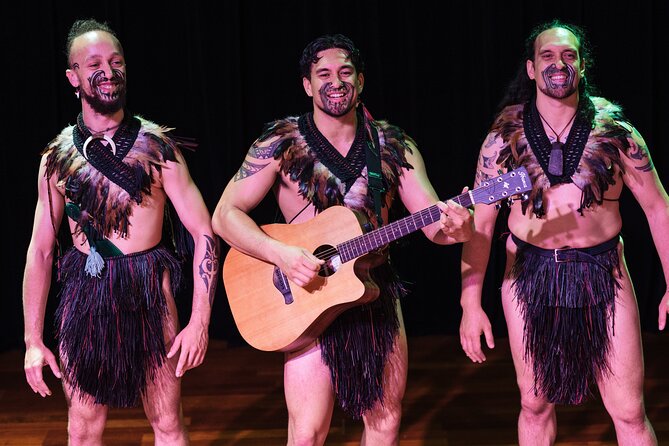
The heart of this Auckland experience is a live Māori cultural performance built around waiata, poi, storytelling and the haka. It gives you a clear first look at Māori customs and values, then adds Auckland Museum admission so you can place the performance in a wider New Zealand setting.
I like two things here: the meaning behind the movements is explained rather than left as stage spectacle, and the museum ticket makes the $38.48 price easier to justify. The main caution is that the show can feel brief, and the haka may be abbreviated or presented differently from what you expect.
Key points to know before you book
- The performance lasts about 30 to 45 minutes in practice, while the full visit can take from 45 minutes to three hours depending on museum time.
- Waiata, poi and haka are explained, giving you cultural context instead of only a song-and-dance display.
- Auckland Museum admission is included, covering natural history, New Zealand heritage and many cultural treasures.
- The Māori Court and Pacific Galleries are temporarily closed, which reduces the museum’s Māori and Pacific content for now.
- The haka may not be a long, full-stage routine, so book this for an introduction, not a large theatrical production.
- Free cancellation is available up to 24 hours before the start time, subject to the stated conditions.
The performance gives you more than a haka
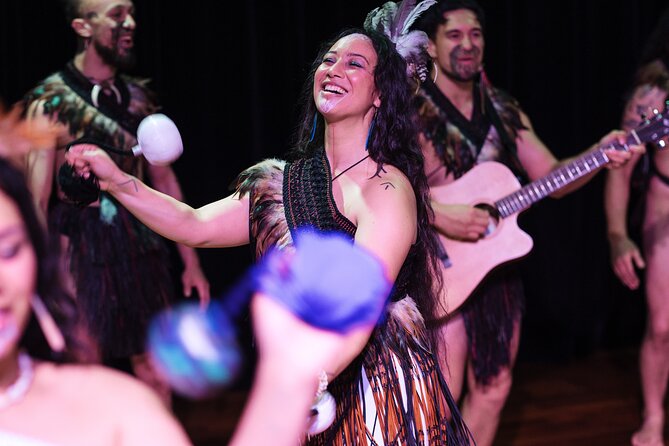
Many people arrive expecting a powerful haka and little else. You do get an explanation of the haka’s origins, traditional uses and different forms, but the experience also makes room for singing, movement, implements and welcome.
That wider approach is useful. The haka is often reduced to fierce facial expressions and stamping feet in popular culture. Here, the aim is to show it as a ritual tied to strength, unity and identity. You may see a shortened version rather than a lengthy performance, but the explanation helps you understand why the form matters.
The group is described as a team of Māori artists and orators. Their work combines spoken narration with waiata, or traditional songs, and the graceful skill of poi. The poi section is likely to be a visual highlight, especially if you have not seen the controlled rhythm and movement before.
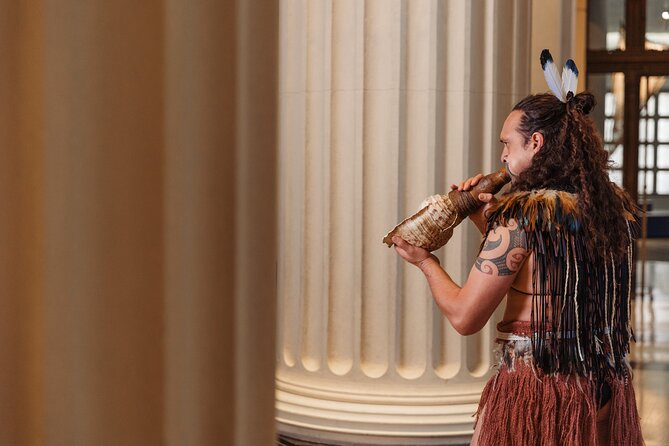
The spoken parts matter just as much as the dancing. The performers explain some of the beliefs and customs behind what you see, including the meaning of gestures and the use of cultural implements. This makes the program a better choice for a first introduction than a performance with no explanation.
I would approach it with respect and patience. This is not designed as a loud entertainment package built around a famous war dance. It is a compact cultural presentation that asks you to listen as well as watch.
More Maori Experiences in Auckland
- Waitomo Caves & Rotorua – Te Puia Small-Group Tour from Auckland
★ 4.5 · 681 reviews - Auckland: Waitomo Caves & Rotorua – Te Puia Small-Group Tour
★ 4.8 · 223 reviews - Hobbiton & Rotorua Small Group Tour including Te Puia from Auckland
★ 5.0 · 190 reviews
What the 30-minute format can and cannot do
The experience is advertised within a wider visit of roughly 45 minutes to three hours. The performance itself is commonly described as about 30 minutes, though some accounts found it shorter. That difference matters when you plan your day.
A short format works well if you have limited time in Auckland. You can learn the basic role of waiata, poi and haka, then move on to the museum without giving up half a day. It also suits families and first-time visitors who want a focused introduction rather than a long lecture.
The trade-off is depth. Māori culture, language, identity and history cannot be covered fully in half an hour. Some people find the presentation too brief, with perhaps 10 minutes of music and dance and about 20 minutes of speaking. Others appreciate the careful pace and clear structure.
You should also know that the haka may be abbreviated rather than presented as a full extended routine. If seeing a large haka is your main reason for booking, this may leave you wanting more. If you want to understand the role of the haka as part of a wider cultural presentation, the format makes more sense.
The songs are not necessarily translated word for word. Explanations cover the ideas and actions, but you should not expect every Māori lyric to appear in English. That is not a flaw by itself, though it can be frustrating if you want a close translation of the waiata or haka words.
Auckland Museum adds real value to the ticket
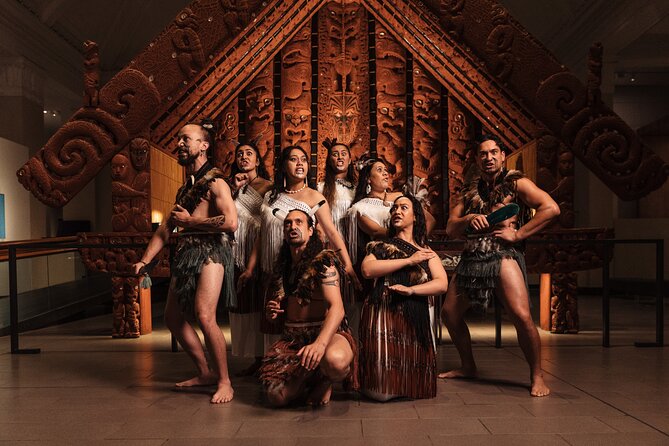
The performance ticket includes general admission to Auckland War Memorial Museum, often called Tāmaki Paenga Hira. This is the part that turns a short show into a fuller Auckland outing.
The museum covers New Zealand’s natural history, heritage and cultural treasures. You can use it to place the performance in a broader setting, looking at the country’s geology, wildlife and human story after the presentation. You also get access to war-related displays, a major part of the museum’s identity.
I like this pairing because the two parts answer different questions. The performance shows living culture through voices, movement and ceremony. The museum gives you objects, displays and wider historical context. One is immediate and personal; the other lets you take your time and follow your own interests.
Allow more than the minimum time if the museum matters to you. A quick visit might take 45 minutes to an hour including the performance, but three hours gives you room to explore without rushing. The ticket does not include special exhibitions that require separate admission, and guided tours are not part of the package.
One important warning is already in place: the Māori Court and Pacific Galleries are temporarily closed for essential maintenance. Those closures may be a major consideration if your main goal is to see the museum’s Māori and Pacific collections. The remaining displays can still make the visit worthwhile, but the experience is not currently the full museum program.
Following the visit from Parnell
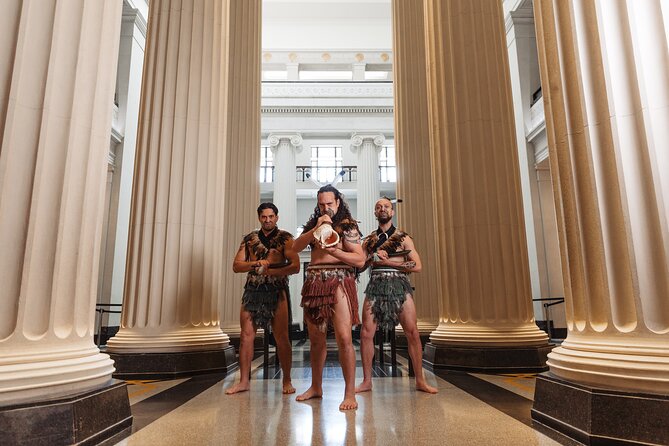
The meeting and ticket redemption point is Auckland Museum in Parnell, Auckland 1010. The activity ends at the same place, so there is no transfer between separate attractions to worry about.
The museum is near public transport, which helps if you are staying elsewhere in Auckland. The supplied information does not specify a particular bus route, train connection or parking arrangement, so check your route on the day rather than assuming every transport option is equally convenient.
Confirmation is sent within 48 hours of booking, subject to availability. That timing is worth noting if you are arranging a tight Auckland schedule. You will want the confirmed performance time before building the rest of your day around the museum.
Most people can take part, and service animals are allowed. Since the performance is held at the museum and the museum’s own displays form the second part of the visit, check directly if you have specific mobility or seating needs that are not covered by the general booking information.
Somewhere else in Auckland entirely:
- Waiheke Island: Ferry & Hop-On Hop-Off Explorer Bus Tickets
★ 4.6 · 3,311 reviews - Hobbiton & Waitomo Caves Guided Day Trip from Auckland incl lunch
★ 5.0 · 2,677 reviews - From Auckland: Hobbiton & Waitomo Caves Day Trip with Lunch
★ 4.9 · 2,505 reviews - Auckland Dolphin and Whale Watching Eco-Safari Cruise
★ 4.5 · 1,790 reviews
How the cultural content is handled
The best part of the presentation is its effort to connect performance with meaning. You are not simply shown poi and told that it is traditional. You hear about the practice, see the technique, and gain a little understanding of how Māori culture continues in modern New Zealand.
That word, living, is important here. Māori culture is presented as an ongoing part of Aotearoa New Zealand, not as something locked in the past. The narration also addresses endurance and the continuing assertion of Māori identity in present-day life.
Some visitors find the performance moving, particularly when the singing and group movement build together. The voices are a central feature, and the presentation can have a strong emotional effect even when you do not understand every word. You may find the experience more affecting if you focus on the tone, rhythm and gestures while listening for the explanations.
The presentation also aims to create a welcoming setting. It covers inclusion and gives overseas visitors a starting point for learning. That makes it suitable for someone arriving in New Zealand with little knowledge of Māori traditions.
Still, expectations matter. A compact museum performance is not the same as a full marae visit, a longer cultural program or a specialist lecture. If you already know Māori culture well, you may find the general introduction familiar. Even so, the songs, costumes and live performance can give the visit a human dimension that exhibits alone cannot provide.
A closer look at the haka, poi and waiata

The haka is the headline subject, but it should not be treated as the only reason to attend. You are introduced to its origins, traditional uses and differences, with an emphasis on what the ritual communicates.
The performance may explain the relationship between posture, facial expression, vocal force and group unity. These details help you read the haka as a structured form rather than a spontaneous burst of aggression. A shorter haka still has value if it is placed in that setting.
Poi provides a very different mood. The rhythmic movement of the poi brings precision and flow, and it gives the program visual variety. The contrast between poi and haka helps show that Māori performance traditions include more than one style or emotional register.
Waiata adds the musical center. The singing may be beautiful and stirring, though English translations are limited. If you want every lyric translated, ask yourself if that is essential before booking. If you are happy to receive the main ideas and cultural setting, the program should give you a useful foundation.
The spoken narration ties these parts together. It explains actions, music and objects so you are not left guessing. The strongest version of this experience is therefore not a sequence of dances, but a guided introduction using performance as the teaching tool.
What could disappoint you
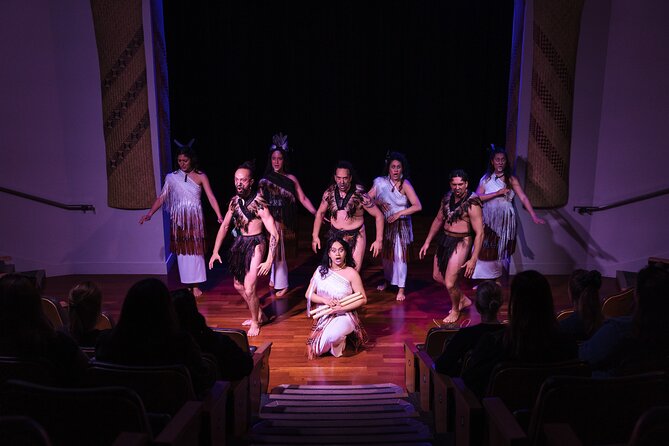
The most obvious risk is a mismatch between the advertised idea of a haka performance and what you actually hope to see. Some sessions may feature a brief or abbreviated haka. The number of performers can also vary, with one account noting four performers rather than the eight expected.
That does not automatically make the show poor. A smaller group can still deliver strong singing, movement and narration. But if you picture a large ensemble with a long haka, adjust that picture before you pay.
The other issue is authenticity in presentation. This is offered as a Māori cultural experience led by indigenous artists and orators, but the format is still a scheduled museum performance for a mixed public audience. Some people find it respectful and sincere; others may feel it is too polished or staged.
I would not book it expecting an unscripted encounter with Māori life. Book it as a structured introduction presented by performers who explain the cultural material. That distinction is fairer to the program and helps you decide if it suits your interests.
The temporary closure of the Māori Court and Pacific Galleries is another real limitation. If you have visited Auckland Museum before, or if those galleries are your priority, check whether they have reopened before booking.
Is $38.48 good value?

At $38.48 per person, the price is reasonable if you plan to spend at least an hour or two in the museum. You are paying for the live performance and general museum entry, not only for a 30-minute stage program.
The value drops if you attend only the performance and leave immediately. A short show on its own may feel expensive, especially if the haka is brief or the cast is smaller than expected. The ticket makes more sense when you treat the museum as the main second half of your visit.
It is also useful for an arrival day in Auckland. You get a set cultural introduction, then freedom to explore displays at your own pace. There is no need to arrange separate museum admission, and the combined booking can be cheaper and quicker than buying museum entry directly online.
Special exhibitions are extra, and guided tours are not included. Keep that in mind if you want a particular temporary display or a staff-led route through the museum.
Who should book this Auckland experience?
I would recommend it to you if this is your first visit to New Zealand and you want a respectful starting point for Māori culture. It works especially well for couples, families and overseas visitors who want context before exploring Auckland’s other sights.
It also suits anyone who enjoys a mix of live performance and museum time. The performance gives you a fixed focal point, while the general admission lets you slow down and choose displays that match your interests.
You may want a different option if you already have a longer Māori cultural visit planned, or if you want a full-length haka show with a large cast. The same applies if your main reason for visiting Auckland Museum is the Māori Court or Pacific Galleries while they remain closed.
Book with enough time around the performance. The museum can fill three hours comfortably, but the actual program may take only about 30 minutes. Free cancellation applies when you cancel at least 24 hours before the start time. Cancellations or changes inside that window are not accepted for a refund, and the experience may also be changed or refunded if its minimum number is not met.
Should you book it?
Book it if you want a concise, thoughtful introduction to Māori performance, followed by one of Auckland’s major museums. The strongest reasons are the explanation of haka, poi and waiata, the live singing and movement, and the useful museum combination.
Do not book it expecting a long theatrical haka or a complete account of Māori culture. Check the gallery closure before you commit, and allow extra museum time so the $38.48 ticket earns its keep. For a first cultural encounter in Auckland, this is a sensible choice when your expectations are set to introduction rather than full immersion.
FAQ
How long does the Māori Cultural Experience and museum visit take?
The full activity is listed as approximately 45 minutes to three hours. The performance itself is often around 30 minutes, so the total time depends on how long you spend exploring Auckland Museum.
Is Auckland Museum admission included?
Yes. General admission to Auckland Museum is included with the Māori cultural performance ticket.
Does the ticket include special exhibitions?
No. Special exhibitions that require separate ticketed entry are not included.
Are guided tours included?
No. The booking includes the performance and general museum admission, but not guided museum tours.
Where does the experience take place?
It begins and ends at Auckland War Memorial Museum, Parnell, Auckland 1010, New Zealand. The ticket redemption point is also Auckland Museum.
Can I cancel for a full refund?
Yes, if you cancel at least 24 hours before the experience start time. Cancellations or changes made less than 24 hours beforehand are not accepted for a refund.
More museums and galleries in Auckland
- Auckland War Memorial Museum Entry Ticket
★ 4.5 · 293 reviews - Explore gardens & galleries filled with incredible art, Matakana
★ 5.0 · 186 reviews - Skip the Line: Auckland Museum General Admission Ticket
★ 4.5 · 183 reviews - Auckland: Maritime Museum Entry Ticket
★ 4.6 · 29 reviews
Newly listed around Auckland
- Kumeu Winery Boutique Tour with Gourmet Lunch from Auckland★ 4.0 · 5 reviews
- Private tour – Hobbiton Movie Set Evening Banquet Return from Auckland★ 5.0 · 5 reviews
- Private 2 Day Tour: Hobbiton, Waitomo, Rotorua Geothermal & Hamilton Gardens★ 4.0 · 5 reviews
- Private Auckland Luxury Tour★ 5.0 · 5 reviews
- Private Transfer From Auckland Airport To Rotorua★ 5.0 · 5 reviews
- Auckland City Halfday Tour★ 5.0 · 5 reviews
- Ex Auckland: TE PUIA Geothermal, Redwood & Blue Springs★ 4.4 · 5 reviews
- Auckland: Rotoroa Island and Man O’War Vineyard Combo Tour★ 4.6 · 5 reviews
Auckland Tours, compared.
Hobbiton & Waitomo Caves Guided Day Trip from Auckland incl lunch
Read our review →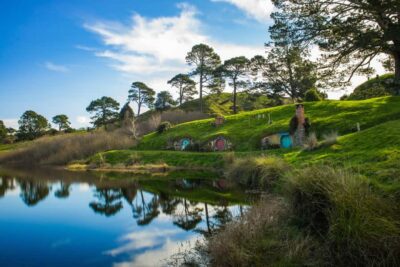
Hobbiton & Waitomo Caves Day Trip with Lunch
Read our review →
Auckland Dolphin and Whale Watching Eco-Safari Cruise
Read our review →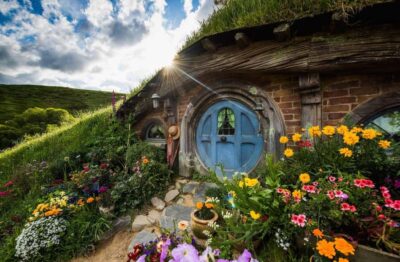
Hobbiton Movie Set Day Trip with Festive Lunch
Read our review →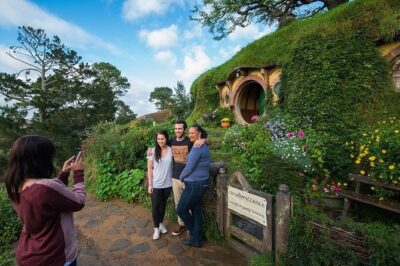
Hobbiton & Waitomo Caves Small-Group Tour W Lunch from Auckland
Read our review →
Half-day Discover Auckland City Sightseeing Tour
Read our review →
Whale and Dolphin Watching Half-Day Eco Cruise
Read our review →
Browse the lists this tour appears in