
Reviewed · AUCKLAND TOURS
Skip the Line: Auckland Museum General Admission Ticket
Auckland Museum brings together Māori culture, Pacific heritage, natural history, and New Zealand’s military past under one grand roof. The Māori collections are the main draw, with treasured objects such as Te Rā giving the displays a strong sense of place and purpose. I like the freedom to set your own pace, and I like that the museum can fill three or four hours without feeling like a quick stop. The main catch is that skip-the-line access may save little time on a quiet day, and redeeming the voucher can sometimes take longer than expected.
I also like the museum’s honest approach to difficult subjects. Its galleries look at war, colonization, Māori culture, volcanoes, and national identity without turning everything into a tidy tourist story. Keep a little flexibility in your schedule, though, since some areas may close for maintenance and paid activities such as guided tours or the Māori cultural performance are not part of general admission.
Key points to know before you go
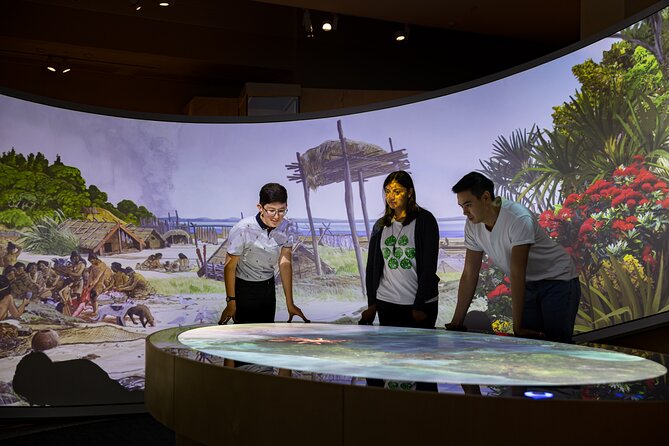
- Three floors of New Zealand stories: Follow the country’s story from Polynesian voyages to the cultures and communities of Auckland today.
- Māori and Pacific collections: Expect carved treasures, cultural objects, art, and displays that give useful context for the wider Pacific.
- A serious war memorial: The military galleries add a solemn layer, especially for anyone interested in New Zealand’s role in world wars.
- Plan for three to four hours: You can make a shorter visit, but the museum rewards an unhurried route through several subject areas.
- General admission only: Special exhibitions, guided tours, and Māori cultural performances require separate payment.
- Skip-the-line is not always essential: Lines can be short, and some voucher holders have still waited at the counter for redemption.
A grand building with a serious purpose
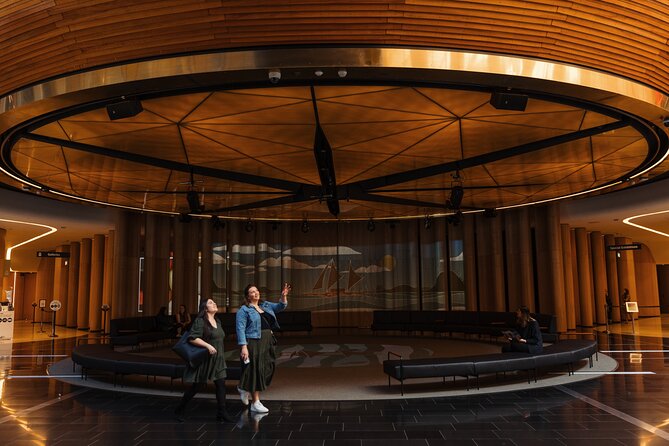
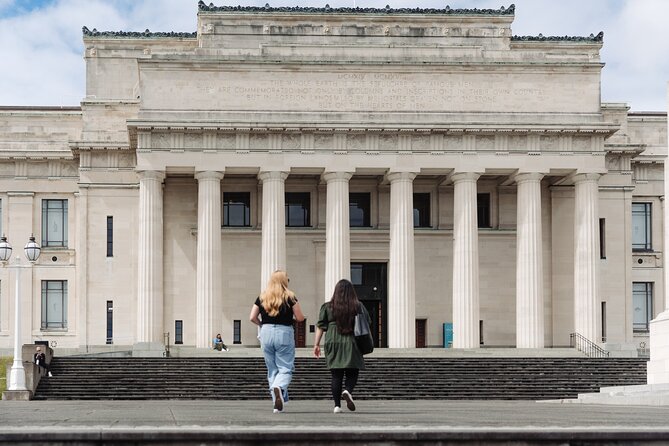
The setting prepares you for the museum before you reach the galleries. Auckland War Memorial Museum is housed in one of New Zealand’s finest heritage buildings, and its formal appearance fits the subject matter inside. This is not a small collection you can glance through between lunch and your next ferry. Give it room in your day.
The museum tells the story of Aotearoa through several connected threads. You begin with the great Polynesian voyages that brought the first people to these islands. From there, the displays move through Māori culture, Pacific communities, natural history, art, and New Zealand’s military past.
That range is the museum’s greatest strength, though it can also make your visit feel broad rather than tightly focused. If you only have an hour, choose one or two floors and accept that you will miss parts of the collection. With three to four hours, you can take in the major themes without racing.
More museums and galleries in Auckland:
- Auckland War Memorial Museum Entry Ticket
★ 4.5 · 293 reviews - Explore gardens & galleries filled with incredible art, Matakana
★ 5.0 · 186 reviews - Māori Cultural Experience & Auckland Museum General Admission
★ 4.5 · 92 reviews
Start with Māori treasures and Polynesian voyaging
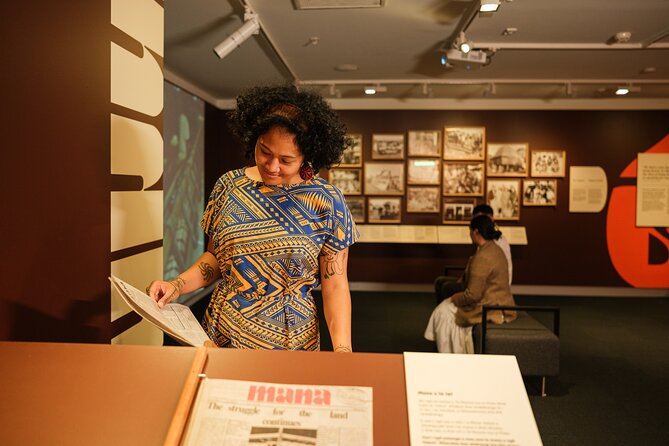
The Māori galleries deserve your best attention. They offer a direct introduction to the people, objects, stories, and traditions that form the foundation of New Zealand culture. The collection includes Māori treasures, and the displays help place those objects within a wider story of migration, community, craftsmanship, and identity.
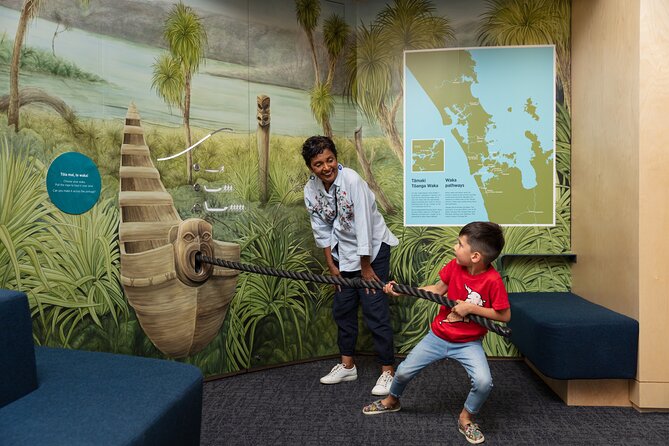
The opening story of Polynesian voyaging is especially useful if you are new to New Zealand. It explains that Aotearoa is part of a much larger Pacific world, not an isolated country at the bottom of a map. That context changes how you read the rest of the museum.
Look closely at the objects rather than treating the galleries as a parade of attractive carvings. Their value is not only visual. The displays connect art and daily life with family, land, ancestry, ceremony, and authority. Some visitors have found the information beside certain artefacts too limited, so you may occasionally need to pause and consider the objects without a full explanation.
One particularly memorable item is Te Rā, a large Māori woven treasure whose story has drawn strong attention. Seeing it is not simply a matter of admiring fine work. It raises questions about ownership, cultural return, and the way museums hold important objects connected to their original communities.
Allow time for Pacific culture and Auckland today
The museum does not stop with Māori history. Its Pacific collections widen the picture, showing the many cultures linked across the ocean and represented in Auckland. You will find art and cultural material that help explain the city’s Polynesian connections and its present-day identity.
This section works best after the Māori galleries, since the sequence gives you a clearer sense of shared Pacific roots and distinct cultural traditions. It also helps prevent a common mistake: treating all Pacific cultures as one broad category. The museum’s separate references to communities and traditions encourage a more careful look.
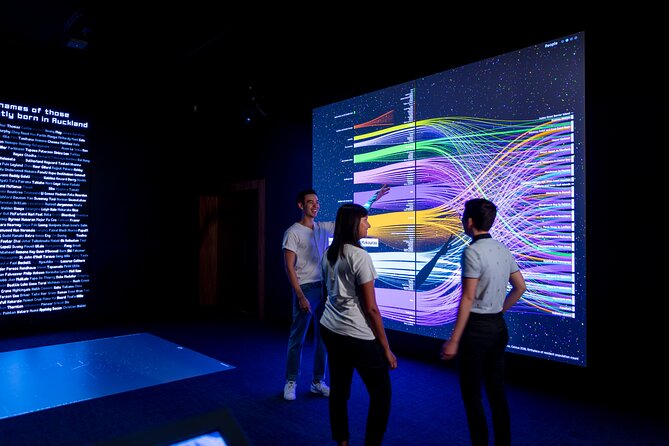
The final part of the museum’s overall story reaches toward the diverse cultures and communities that make up Auckland today. That makes the visit more than a look backward. You are also being shown how New Zealand continues to define itself.
I appreciate that the museum presents culture as living and current, not as something frozen in a display case. You might find the amount of information uneven from one gallery to the next, but the broad structure gives you a useful introduction before exploring New Zealand further.
Natural history, volcanoes, and the physical country
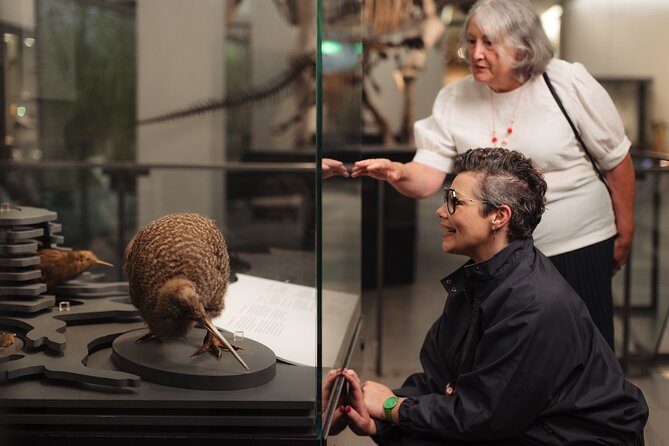
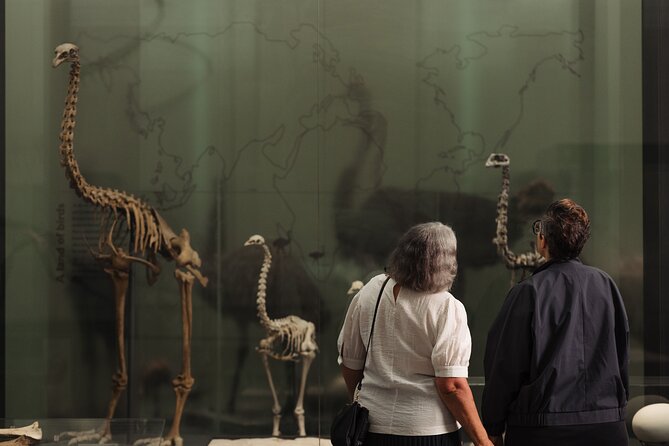
The natural history displays add a different kind of context. After seeing how people reached and shaped Aotearoa, you can look at the country’s geology and natural world. One appealing feature is the way the museum connects volcanoes with both spiritual understanding and geological science.
That combination matters. A museum can easily separate cultural belief from scientific explanation, as if one belongs in a ceremonial gallery and the other in a laboratory. Here, the two perspectives can sit beside each other, giving you a fuller sense of how people understand the land.
Do not expect every natural history display to feel equally central to your visit. If Māori and Pacific culture are your priorities, this section may be a change of pace rather than the main event. Still, it gives families and curious first-time visitors another reason to stay longer.
The natural history material also helps you see New Zealand as a place shaped by powerful natural forces. The museum’s story is not only about people arriving, settling, and building communities. It is also about the country beneath their feet.
More skip the line tickets in Auckland:
- Skip the Line: Franz Josef Wildlife Center Ticket with Optional Backstage Pass
★ 4.5 · 160 reviews - Skip the Line:WWI & WWII Combo Exhibitions at the Omaka Aviation Heritage Centre
★ 5.0 · 86 reviews - Skip the Line: Shantytown Heritage Park Experience Ticket
★ 4.0 · 59 reviews - Skip the Line: Dangerous Skies WWII Exhibition – Omaka Aviation Heritage Centre
★ 4.5 · 25 reviews
The war memorial galleries call for a slower pace
The Auckland War Memorial Museum has a solemn military role, and the war galleries are not a decorative add-on. They place New Zealand’s participation in several world wars within the larger national story.
I like the direct tone of this section. The museum does not need to romanticize war to make it moving. It presents military service and sacrifice as part of the country’s past while leaving room for the human cost and difficult questions that come with it.
If you arrive expecting only Māori and Pacific displays, the military galleries may surprise you. They can also be the most emotionally demanding part of the visit. Give yourself time to move through them without trying to turn the entire museum into a checklist.
The building’s memorial purpose adds weight here. You are not just looking at military objects in a general history museum. You are visiting an institution designed to remember New Zealand’s war dead and place that memory within national life.
How long should you spend inside?
The suggested visit runs about three to four hours, and that is realistic if you want more than a quick look. A shorter visit can still work, but you will need to choose your priorities.
For a focused first visit, I would begin with Māori and Pacific collections, then continue to natural history or the military galleries based on your interests. If you have the full afternoon, move through all three floors at a steady pace and leave time to return to displays that deserve a second look.
The museum’s size makes it suitable for different types of visitors:
- First-time visitors to Auckland: You get a strong introduction to Māori culture, Pacific connections, and national history in one place.
- Families: The range of subjects gives different age groups something to follow, though younger children may not stay engaged for the full three or four hours.
- Museum fans: You can spend a full visit with the collections rather than treating the building as a brief sightseeing stop.
- History-minded visitors: The military galleries and national story offer substantial material.
- Visitors with limited time: Admission still makes sense, but choose your floors before entering.
Because the museum is near public transportation, it is practical to add to a day of central Auckland sightseeing. One useful tip from the experience is that the hop-on hop-off bus stops directly at the museum, making it an easy stop if that service is already part of your plans.
Does skip-the-line access earn its keep?
The ticket costs $16.76 per person, including general admission, fees, and taxes. That is a reasonable price if you plan to spend several hours inside and make use of the major collections.
The value of the skip-the-line feature is less certain. On busy days, avoiding a long queue can be worthwhile. On quieter days, the regular line may only take a few minutes, so the extra convenience may not matter much.
There is another practical wrinkle. Some voucher holders have had to wait at the counter while staff located or redeemed the booking. In one case, museum staff could not find the tickets and eventually admitted the party without completing the normal process. That is not the smoothest version of skip-the-line service.
I would treat the ticket as a convenient advance purchase rather than a guaranteed time saver. Keep your confirmation ready, allow a little extra time at the entrance, and do not book a tightly timed activity immediately afterward.
Buying directly from the museum may be simpler if you are already at the entrance and the line is short. The third-party ticket still has value if you want to arrange admission ahead of time or prefer having the booking settled before your sightseeing day.
Cultural performances and guided tours require planning
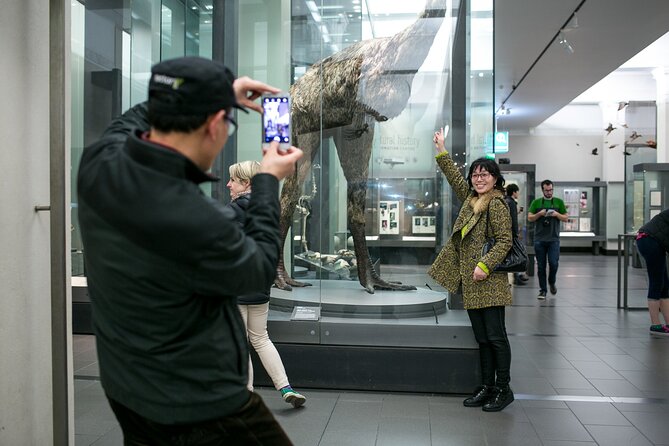
General admission does not include guided tours or the Māori cultural performance. Both can be purchased separately on site, so check the times when you arrive if either matters to you.
The performance has received strong praise for its dancing and cultural presentation, and the museum itself recommends attending one. At the same time, the experience is not described as a simple background show. Some audience members found the performers’ firm instructions about photography and applause unfriendly once people were seated.
That is a useful expectation to set. Follow the rules, listen carefully, and treat the performance as a cultural presentation rather than a casual photo opportunity. If you want to include it, arrive early enough to understand the day’s schedule.
The timing can affect your plans. Guided tours have been offered at 11 a.m. and 1 p.m., while cultural performances have been offered at 11:15 a.m. and 1:45 p.m. Depending on the day, these times can overlap enough that fitting both into one visit is difficult. Ask at the desk before committing to one.
Guided tours can add real value if you want the museum’s large collection explained in a clear sequence. A paid guide has been described as informative, enthusiastic, and a strong advocate for the museum and New Zealand culture. If you prefer your own pace, general admission gives you that freedom.
What can affect your visit?
The museum is a working institution, not a frozen display set. Galleries can close for maintenance, and that has affected some of the areas visitors most wanted to see. Before you arrive, it is sensible to check the current situation if one particular collection is the main reason for your visit.
Staff familiarity with voucher redemption can also vary. The museum itself is the provider, but an advance ticket does not remove every step at the entrance. Bring your confirmation and expect that the actual time saved may depend on the day’s crowd level and the smoothness of the check-in process.
Children must be accompanied by an adult. Service animals are allowed, the museum is near public transportation, and most people can take part without special arrangements. The supplied opening information lists Monday hours from 10 a.m. to 8:30 p.m. during the stated operating period, but you should confirm the hours for your own date before setting out.
The ticket allows general admission only. Special ticketed exhibitions are extra, as are guided tours and the cultural performance. If you are comparing prices, count those add-ons before deciding what your full museum day will cost.
My practical plan for a first visit
I would arrive with three hours available, start with the Māori collections, and then move into the Pacific displays. That gives you the cultural foundation first, before you decide how much time to spend with natural history and military subjects.
Next, I would check the day’s performance and tour times. If the Māori cultural performance is a priority, build the rest of the museum around it rather than hoping to fit it in at the end. If the tour and performance overlap, choose one based on whether you want cultural presentation or collection interpretation.
Bring patience for the entrance process. The skip-the-line claim may work well when there is a real queue, but it may not eliminate the need to visit the counter. Since the museum can easily occupy four hours, avoid scheduling another important attraction too soon afterward.
Most important, do not judge the museum by the first gallery you enter. Its appeal comes from the way several subjects build on one another: Pacific voyaging, Māori culture, Auckland’s communities, the natural forces shaping the country, and the wars that shaped its national memory.
Should you book the Auckland Museum ticket?
Book it if you want a broad, serious introduction to New Zealand and can give the museum at least two or three hours. The Māori and Pacific collections are the strongest reason to go, while the natural history and military galleries make the admission useful for families and history fans with different interests.
The $16.76 price is fair for a long self-guided visit, but do not buy solely for the promise of skipping a queue. On many days, the line is short, and voucher redemption may still require patience.
I would choose this ticket if you value arranging admission ahead of time and want the option of exploring at your own speed. If you are already outside the museum and there is no line, buying directly may be the simpler choice. Either way, the museum itself is worth your Auckland schedule, especially if you want cultural context rather than another quick city viewpoint.
FAQ
How long does the Auckland Museum visit take?
The approximate duration is three to four hours, though you can spend less time by focusing on selected floors or collections.
What does general admission include?
It includes entry to Auckland Museum and all applicable fees and taxes for general admission.
Are special exhibitions included?
No. Special ticketed exhibitions are not included in this admission ticket.
Are guided tours included?
No. Guided tours are available to purchase separately on site.
Is the Māori cultural performance included?
No. The Māori cultural performance is a separate activity and is not part of general admission.
Does the ticket always let me skip a long line?
Not necessarily. The line may be short on some days, and voucher redemption can still require a wait at the entrance counter.
Can children enter alone?
No. Children must be accompanied by an adult.
Can I cancel for a full refund?
Yes. You can cancel at least 24 hours before the experience start time for a full refund. Cancellations or changes made less than 24 hours in advance are not accepted for a refund.
Newly listed around Auckland
- Kumeu Winery Boutique Tour with Gourmet Lunch from Auckland★ 4.0 · 5 reviews
- Private tour – Hobbiton Movie Set Evening Banquet Return from Auckland★ 5.0 · 5 reviews
- Private 2 Day Tour: Hobbiton, Waitomo, Rotorua Geothermal & Hamilton Gardens★ 4.0 · 5 reviews
- Private Auckland Luxury Tour★ 5.0 · 5 reviews
- Private Transfer From Auckland Airport To Rotorua★ 5.0 · 5 reviews
- Auckland City Halfday Tour★ 5.0 · 5 reviews
- Ex Auckland: TE PUIA Geothermal, Redwood & Blue Springs★ 4.4 · 5 reviews
- Auckland: Rotoroa Island and Man O’War Vineyard Combo Tour★ 4.6 · 5 reviews
Auckland Tours, compared.
Hobbiton & Waitomo Caves Guided Day Trip from Auckland incl lunch
Read our review →
Hobbiton & Waitomo Caves Day Trip with Lunch
Read our review →
Auckland Dolphin and Whale Watching Eco-Safari Cruise
Read our review →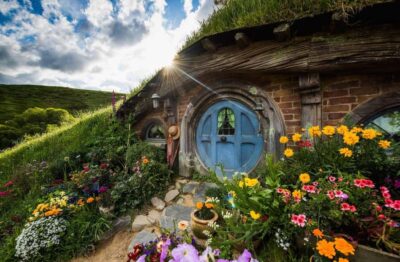
Hobbiton Movie Set Day Trip with Festive Lunch
Read our review →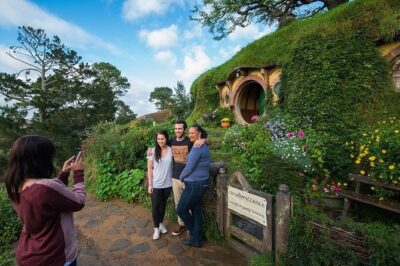
Hobbiton & Waitomo Caves Small-Group Tour W Lunch from Auckland
Read our review →
Half-day Discover Auckland City Sightseeing Tour
Read our review →
Whale and Dolphin Watching Half-Day Eco Cruise
Read our review →
Browse the lists this tour appears in