
Reviewed · DUNEDIN TOURS
Dunedin Wildlife Cruise-Albatross, seals and harbour
The best part of this Otago Harbour cruise is the chance to see serious ocean wildlife from a small, low boat rather than from a large sightseeing vessel. Albatross may soar close overhead, fur seals can play near the boat, and lucky departures have spotted little blue penguins, Hector’s dolphins, sea lions and several types of sea birds.
I like the personal scale of the trip and the fact that Rachel often handles the boat, navigation and commentary herself. I also like the practical touches: binoculars for everyone, warm jackets, indoor seating, a toilet onboard and a pictorial checklist to help you identify what you saw. The main consideration is the weather. Wind can make the sea rough, reduce wildlife sightings and occasionally cancel the cruise for safety.
Key points before you book
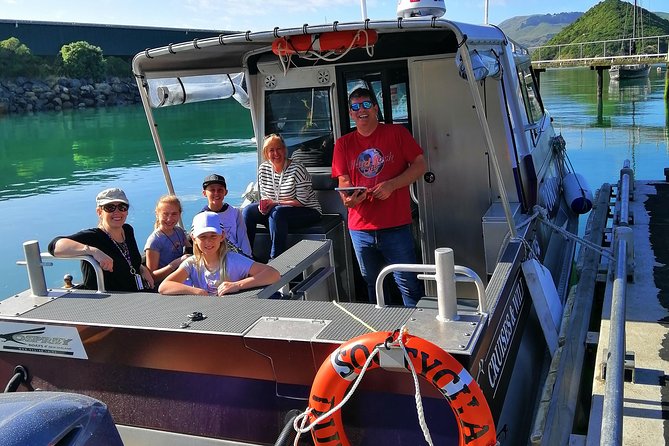
- Small groups of up to 14 people: You get a better chance at clear views and direct questions than on a large harbour boat.
- Two departure points: Choose Port Chalmers or Portobello, depending on your plans in Dunedin and the Otago Peninsula.
- Albatross are the star attraction: You might see Northern Royal Albatross and other ocean birds near Taiaroa Head.
- Rachel does more than narrate: She pilots the vessel, watches for wildlife and explains the harbour’s natural and working life.
- Useful gear is supplied: Binoculars, warm jackets, wildlife information sheets and a restroom are included.
- Weather matters: A calm, sunny day is not guaranteed, and strong winds can make the trip uncomfortable or unsafe.
Why this small boat works so well
Otago Harbour is unusually generous with wildlife. You do not need to travel far from Dunedin before the city gives way to open water, rocky shores, headlands and the outer harbour around Taiaroa Head. This is one of the rare places where a short boat ride can combine local history, working harbour views and large ocean birds.
The boat carries no more than 14 people. That limit matters. You can move between indoor and outdoor seating without being lost in a crowd, and you have a better chance of seeing the animals Rachel points out. Several departures have brought albatross or giant petrels close to the boat, sometimes only a few feet away.
A low boat also gives you a more direct view of the water. It can be an advantage when seals or sea lions surface nearby. It also means you may feel spray, especially when the harbour is choppy. Bring warm layers even if Dunedin looks bright from shore.
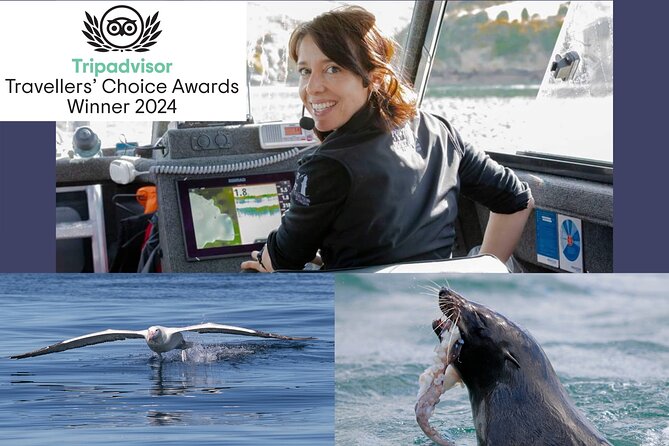
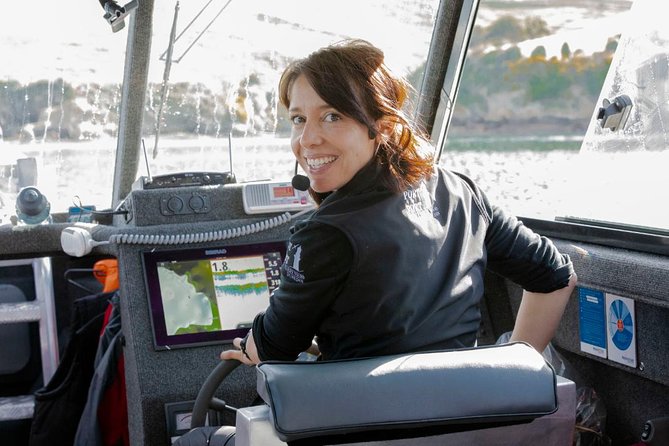
Rachel receives the strongest praise for her eye and enthusiasm. She has been described as able to spot birds at a distance, then guide the boat close enough for a good look. Her commentary covers more than animal names. You can expect information about the harbour, local industry, history and the behavior of the birds and marine mammals around you.
More Boat Tours in Dunedin
- Otago Peninsula Wildlife Cruise with Monarch
★ 4.5 · 227 reviews - Albatross, seals, and sea birds-Wildlife Cruise
★ 5.0 · 189 reviews - Cruise Dunedin City and Castle Tour
★ 5.0 · 142 reviews
Choosing Port Chalmers or Portobello
The experience can leave from Port Chalmers or Portobello. The choice is useful because it lets you fit the cruise around a day in Dunedin or a visit to the Otago Peninsula.
If you arrive by cruise ship, Port Chalmers is particularly practical. The meeting point is a flat, easy walk of about five to ten minutes from the cruise ship terminal building. You are responsible for making that walk yourself, since transport from the cruise building is not provided.
Check your pickup point carefully when booking. Rachel has helped passengers who selected the wrong location and needed to change it, but you should not rely on a last-minute correction. The two locations are not interchangeable for a rushed schedule.
Portobello places you closer to the peninsula side of the harbour. The information provided does not promise transport between the two departure points, so plan your own route and allow enough time to arrive.
Departure choices normally include late morning, early afternoon and late afternoon. A cruise of 90 minutes to two hours is short enough to fit into a busy day, but you should leave some breathing room around it. Wildlife watching cannot be timed to the minute, and weather can affect the length and comfort of the outing.
Otago Peninsula, where harbour and ocean meet
The first part of the trip takes you around the Otago Peninsula and the wider harbour. The scenery includes shoreline, ocean water, shipwrecks, harbour heritage sites and many kinds of birds.
This section is not simply a transfer to Taiaroa Head. Rachel uses the time to explain what you are seeing and to scan the water and rocks for movement. You might find shags, black-backed gulls, black swans, fur seals, sea lions or penguins. Some sightings are distant, so the supplied binoculars are not a minor extra. They help you turn a small shape on the water into a recognizable animal.
The harbour also gives the cruise a useful sense of place. You see an active port rather than a wildlife park. The mix of working water, historic sites and exposed shoreline helps explain why this area attracts both marine life and people.
The animal list is impressive, but it is not a guarantee. One departure produced albatross, seals and a sea lion in close view. Another had Hector’s dolphins, fur seals, shags and nesting albatross. On a gray, rainy day, the main reward was birdlife, with no penguins, seals or albatross clearly seen.
That variation is normal for a wild setting. If you need guaranteed wildlife, this is the wrong kind of activity. If you enjoy looking carefully and learning how to identify what appears, the changing conditions are part of the experience.
Taiaroa Head and the albatross search
Taiaroa Head is the cruise’s main wildlife focus. From the water, you can look toward the lighthouse and the headland while watching for albatross, seals and other sea birds.
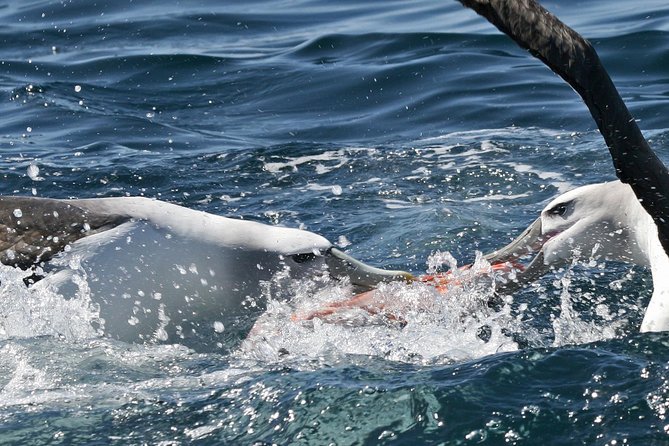
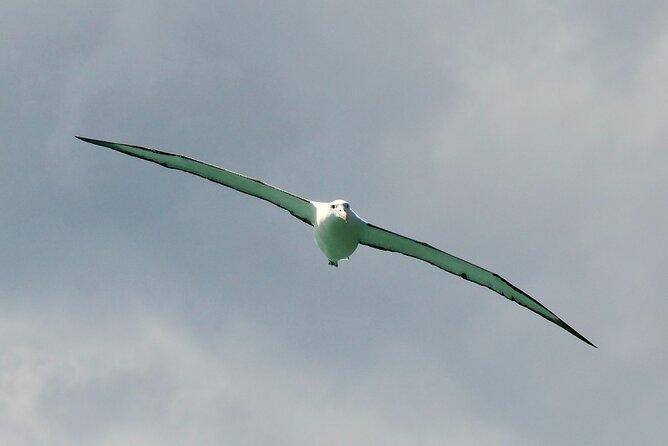
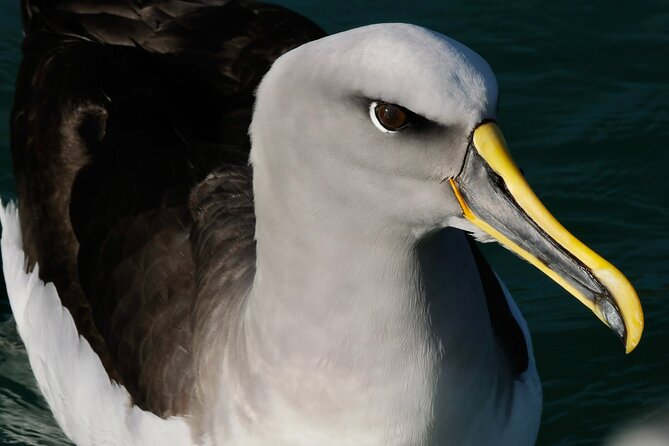
The Northern Royal Albatross is the big prize. These birds are enormous, powerful fliers, but they may not always come close or remain in one place. You could see them soaring overhead, sitting on the water or moving across the outer harbour. Some departures have seen several varieties of albatross, including four types on one especially successful trip.
The close encounters are memorable because they are not routine. Northern Royal Albatross do not always interact with boats, so seeing three nearby is an exceptional stroke of luck rather than something you should expect. Rachel’s experience improves your odds because she knows where to look, but she cannot control the birds.
You may also see giant petrels, shags, gulls and other ocean birds. A pictorial checklist at the end helps you sort out the species. I find this especially useful if you are not already a birdwatcher. It changes the trip from a series of quick sightings into a clearer record of what you actually saw.
Taiaroa Head can be exposed. The sea may feel rougher as the boat approaches more open water, and spray is possible. On choppy days, you may have trouble keeping binoculars steady or watching birds for long. Rachel has been praised for handling the boat carefully in rough conditions, but even a skilled skipper cannot make a rolling sea perfectly smooth.
More Wildlife Tours in Dunedin
- Clearwater Wildlife Tours (small group 10max) Otago Peninsula
★ 5.0 · 531 reviews - Dunedin: Wildlife and Penguin Tour
★ 4.6 · 239 reviews - Dunedin City, Wildlife and Larnach Castle
★ 4.5 · 96 reviews - Larnach Castle & Otago Wildlife Cruise from Dunedin
★ 5.0 · 66 reviews
Seals, sea lions, penguins and surprise sightings
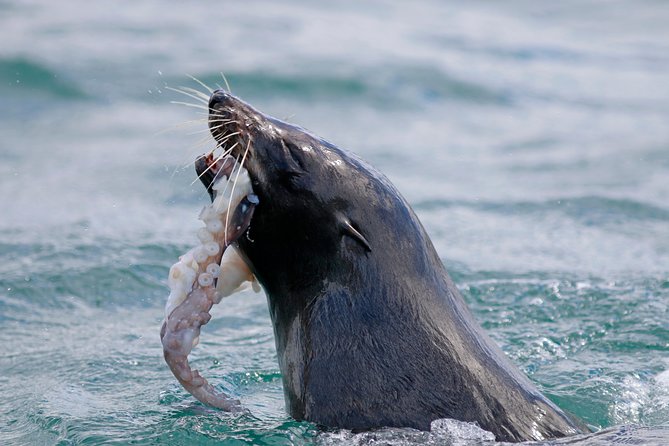
Albatross receive top billing, but the smaller and lower animals can provide the most entertaining moments. Fur seals may play in the water or gather near the shoreline. Sea lions can be much larger and more imposing, although they may also be resting and difficult to spot.
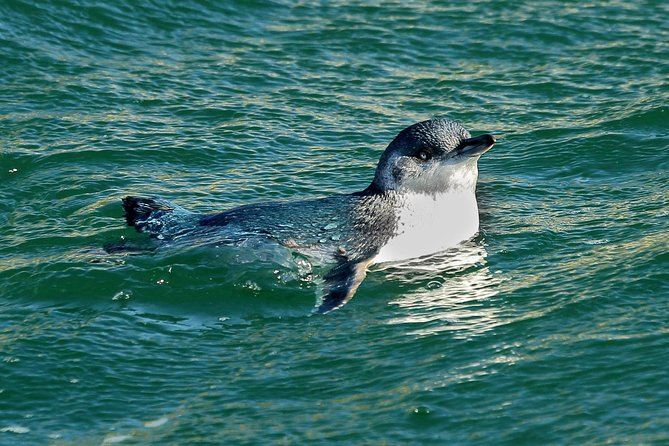
Penguins are possible, including little blue penguins. They are small, quick and easy to miss, particularly in poor light or choppy water. A sighting is a bonus, not the central promise of the cruise.
Hector’s dolphins have also appeared unexpectedly. They are not listed as a guaranteed sighting, so treat them as a fortunate extra. The same applies to seal pups and black swans, both of which have added variety to successful trips.
The wildlife comes with an important rule: you are watching free-ranging animals. Some days produce several albatross, seals, sea lions and many birds. Other days are quieter. The best approach is to value the setting and commentary even when the animal count is modest.
Commentary from a working skipper
Rachel’s role is unusually hands-on. She has piloted the boat, acted as deckhand and narrated the trip, sometimes all on her own. That gives the cruise a direct, personal feel, though it also means the experience depends heavily on one person’s judgment, energy and ability to manage several tasks.
Her strongest subject is local wildlife, especially albatross and other sea birds. She also explains the harbour’s industry and history, which gives the scenery more meaning. I would choose this cruise over a simple boat ride if you want to understand what you are looking at rather than just point a camera toward it.
The tone appears friendly and informal. Rachel has been praised for answering questions, spotting animals from far away and sharing her enthusiasm without limiting the trip to expert birdwatchers. Families can also benefit from the shorter Port Chalmers option, particularly if children need a manageable outing rather than a full-day excursion.
A wildlife information sheet is provided, and the checklist can help you continue identifying birds after you return to shore. One departure even included oatmeal cookies, but snacks are not part of the stated inclusions, so bring your own food if you need something to eat.
Comfort, seating and what to wear
The boat has both indoor and outdoor seating. That is important in Dunedin, where conditions can change quickly and sea spray can reach the open areas.
Warm jackets and binoculars are provided. You should still dress warmly, ideally with layers and a water-resistant outer layer. The operator specifically warns about sea spray, and several outings have encountered rough water. Indoor seating can keep you dry, but it does not remove all motion from the boat.
A restroom is available onboard. That makes a two-hour trip easier, especially for families or anyone who prefers not to be committed to an outing without basic facilities.
You must be able to step down into the vessel by about 300 millimeters. The cruise is not recommended for people with significant mobility problems. Service animals are allowed, and the activity is near public transportation.
Is $105.50 good value?
At $105.50 per person, this is not the cheapest way to see Otago Harbour. The value comes from the combination of a small group, a specialist skipper, supplied equipment and access to wildlife areas around Taiaroa Head.
You are paying for more than transport on the water. The binoculars, jackets and restroom remove some of the costs and inconveniences you might face on your own. The live commentary also matters, especially when a bird is distant or a seal appears for only a few seconds.
The small group is the main value point. With a maximum of 14 people, you have less competition for viewing space and more chance to ask Rachel about what you see. A large boat may offer more room, but this experience is designed around close observation and personal guiding.
Check the currency before paying. One booking experience involved confusion because the online price appeared in US dollars rather than New Zealand dollars. Confirm the final amount and compare it with booking directly through Port to Port Cruises and Wildlife Tours Ltd if possible.
Weather, cancellations and timing
This cruise requires suitable weather. Strong winds can cancel the departure, and that is a safety decision rather than a minor scheduling issue. One reported cancellation involved winds above storm force, more than 120 kilometers per hour. A sunny appearance at the terminal does not tell you what conditions are like farther out in the harbour.
If poor weather cancels the cruise, you can be offered another date or a full refund. The same applies if the minimum number of participants is not reached. Confirmation is sent within 48 hours of booking, subject to availability.
You can cancel for a full refund up to 24 hours before the start time. Changes or cancellations made inside that 24-hour window are not accepted for a refund. If you are visiting Dunedin from a cruise ship, avoid placing this outing immediately before your ship’s departure. Leave time for weather changes, walking to the meeting point and a late return.
Who should book this cruise?
I would choose this trip if you want a compact wildlife outing with real local commentary rather than a long, formal excursion. It suits birdwatchers, families, photographers and curious visitors who like learning as they go.
It is also a good choice for people arriving by cruise ship, provided you select Port Chalmers and allow enough time around the sailing. The short format makes it easier to fit into a port day.
You should think twice if you get seasick, dislike spray or need guaranteed sightings. Rough water is possible, and wildlife is unpredictable. The boat requires a step down, so it is not suitable for significant mobility limitations.
Should you book the Dunedin Wildlife Cruise?
Book it if you value a small boat and a sharp-eyed local skipper more than a guaranteed checklist of animals. The strongest reasons to go are the chance of close albatross sightings, the personal commentary from Rachel, the low passenger limit and the easy access from Port Chalmers.
I would keep expectations realistic. You might see several albatross species, seals, sea lions, penguins, dolphins and many birds, or you might spend more time watching empty water and distant birds in poor conditions. Even then, the harbour scenery, lighthouse views, shipwrecks and explanations of local life give the trip substance.
For most people who can manage a small boat and dress for cool, wet weather, this is a worthwhile Dunedin experience. Check the departure point, confirm the currency, watch the forecast and keep your schedule flexible.
FAQ
How long does the Dunedin Wildlife Cruise last?
The cruise lasts approximately 90 minutes to two hours.
Where does the cruise depart?
You can depart from Port Chalmers or Portobello. Passengers leaving from Port Chalmers walk about five to ten minutes from the cruise ship terminal building.
Is transport provided from the cruise ship terminal?
No. You need to make your own way from the cruise terminal building to the departure point. The walk from the building at Port Chalmers is flat and easy.
What wildlife might I see?
Possible sightings include albatross, fur seals, sea lions, penguins, shags, black-backed gulls, black swans, giant petrels and other sea birds. Hector’s dolphins have also been seen, but wildlife is not guaranteed.
Are binoculars and jackets included?
Yes. Binoculars and warm jackets are provided. Wildlife information sheets are also included.
Is there a restroom on the boat?
Yes. The boat has a restroom onboard.
How many people can join the cruise?
The maximum group size is 14 participants.
Is the cruise suitable for people with mobility problems?
The boat requires you to step down approximately 300 millimeters. The cruise is not recommended for people with significant mobility problems.
What happens if the cruise is canceled because of weather?
If poor weather makes the cruise unsafe, you will be offered a different date or a full refund. The same options apply if the minimum number of participants is not reached.
More penguin and seal encounters
- Guided Evening Penguin Viewing Otago Peninsula, Dunedin, New Zealand
★ 5.0 · 471 reviews - Otago Peninsula In-Depth Tour & Blue Penguins Pukekura Experience
★ 5.0 · 163 reviews - Dunedin City Highlights, Otago Peninsula Scenery & a Guided Penguin Reserve Tour
★ 4.5 · 77 reviews - Dunedin: Otago Peninsula with Guided Penguin Reserve Tour
★ 4.7 · 66 reviews
Newly listed around Dunedin
- Dunedin Private Fullday Tour★ 5.0 · 5 reviews
- Twilight at the Opera★ 5.0 · 5 reviews
- Shared Small Group Dunedin City and Peninsula Scenery Day Tour★ 5.0 · 5 reviews
- Dunedin to Te Anau via the Catlins One Way Small Group Tour★ 5.0 · 6 reviews
- Electric Bike Rental★ 5.0 · 6 reviews
- Private Dunedin & Otago Peninsula Day Tour Up to 4★ 5.0 · 6 reviews
- Dunedin to Queenstown One Way Tour Including Taieri Gorge Train★ 5.0 · 6 reviews
- Clearwater Private Penguin & Wildlife Tour from Port Otago (5hrs)★ 5.0 · 7 reviews
Dunedin Tours, compared.
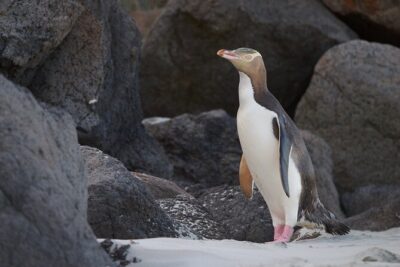
Clearwater Wildlife Tours (small group 10max) Otago Peninsula
Read our review →
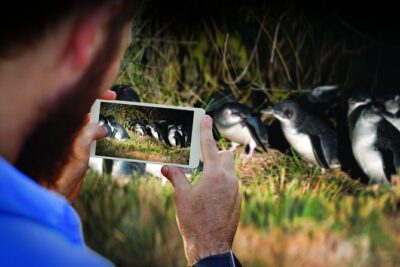
Guided Evening Penguin Viewing Otago Peninsula, Dunedin, New Zealand
Read our review →
Dunedin Shore Excursion: Small-Group Tour of Dunedin and the Otago Peninsula
Read our review →

Shore Excursion: V8 Trike, Peninsula and City Tour
Read our review →Browse the lists this tour appears in