
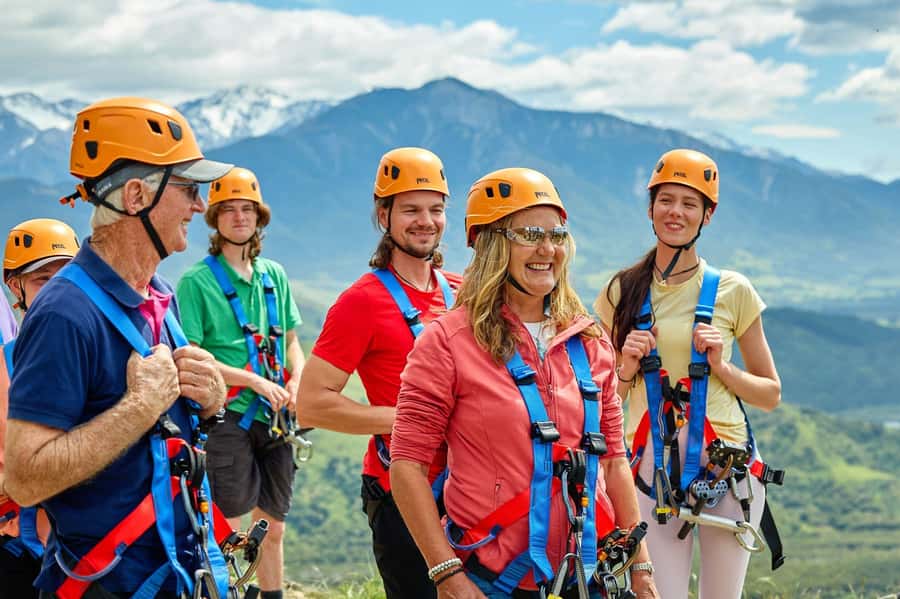
Reviewed · KAIKOURA TOURS
Kaikōura: Zipline and Native Forest Adventure Trip
Kaikōura’s best zipline experience begins before you ever leave the ground. You ride a 4X4 through a working farm, cross rivers and fords, walk a short native-forest trail, then launch across five long ziplines with the ocean and mountains spread out below. The setting does much of the talking, but your guides add the useful local details.
I like the mix of adventure and conservation, rather than a zipline course that feels bolted onto a theme park. I also like the calm, encouraging guiding style, especially for first-timers and nervous flyers. The main consideration is that this is a three-and-a-half-hour activity with a bushwalk, transport, and exposure to weather, so it is not simply five quick rides and back to town.
Key points at a glance
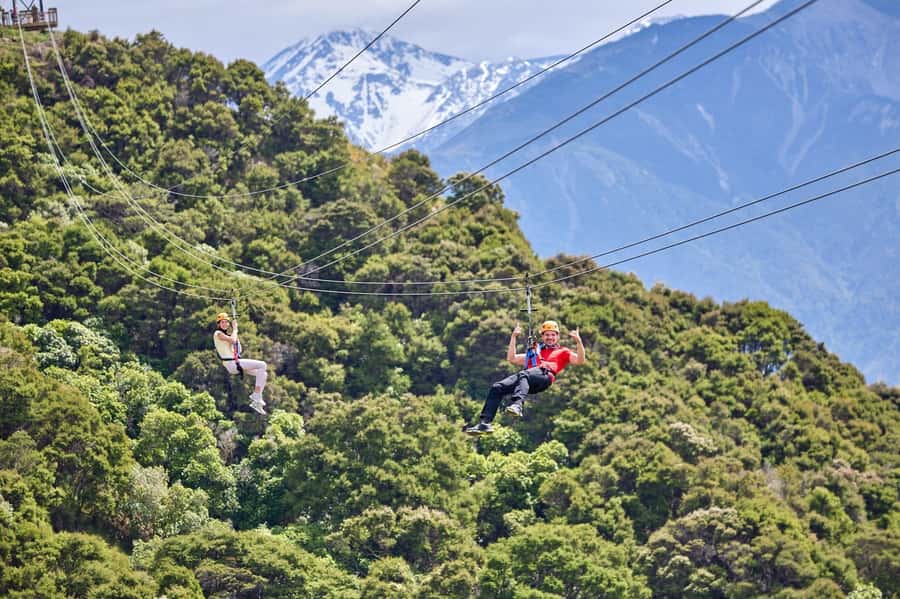
- Five giant dual ziplines: Lines range from 250 to 620 metres, giving you several rides rather than one brief flight.
- A proper rural approach: Reach the course by guided drive, 4X4 farm tracks, river crossings, and rolling paddocks.
- Coastal and mountain views: The platforms reveal wide views toward Kaikōura’s ocean and surrounding hills.
- Nature with context: Guides explain native plants, wildlife, local history, and conservation work along the way.
- A reassuring choice for beginners: Safety reminders continue throughout, and guides including Katie, Olive, Andi, and Alex have been praised for helping nervous participants.
- Practical limits matter: You must weigh between 30 and 125 kilograms, wear secure closed-toe shoes, and be ready for changing weather.
From Kaikōura town to Rakanui Station
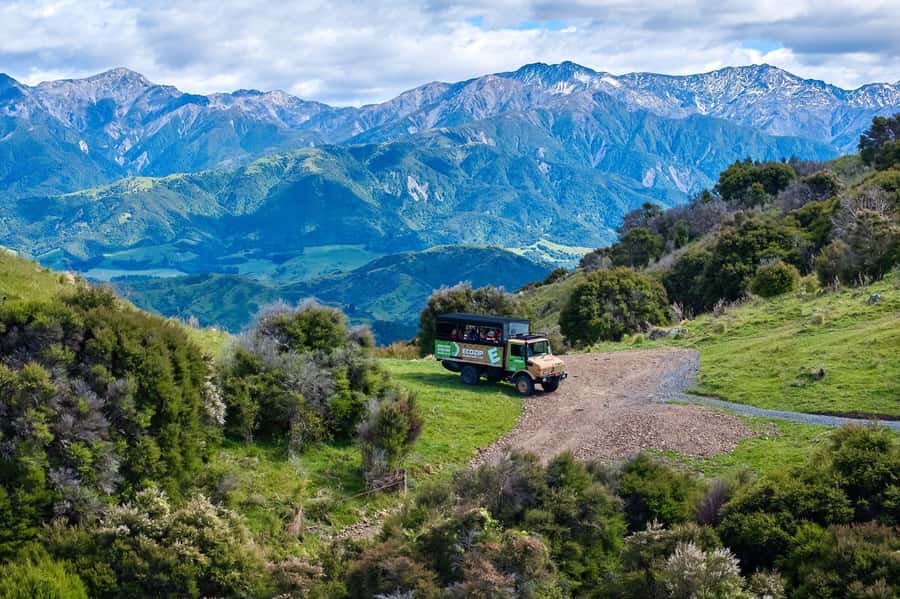
The experience starts at EcoZip Adventures HQ at 75 West End in Kaikōura. Round-trip transport is included, with a guided drive toward Kaikōura airfield before the farm section begins. That means you do not need to arrange your own way to the course, and the trip feels like a full outing rather than a stand-alone ride.
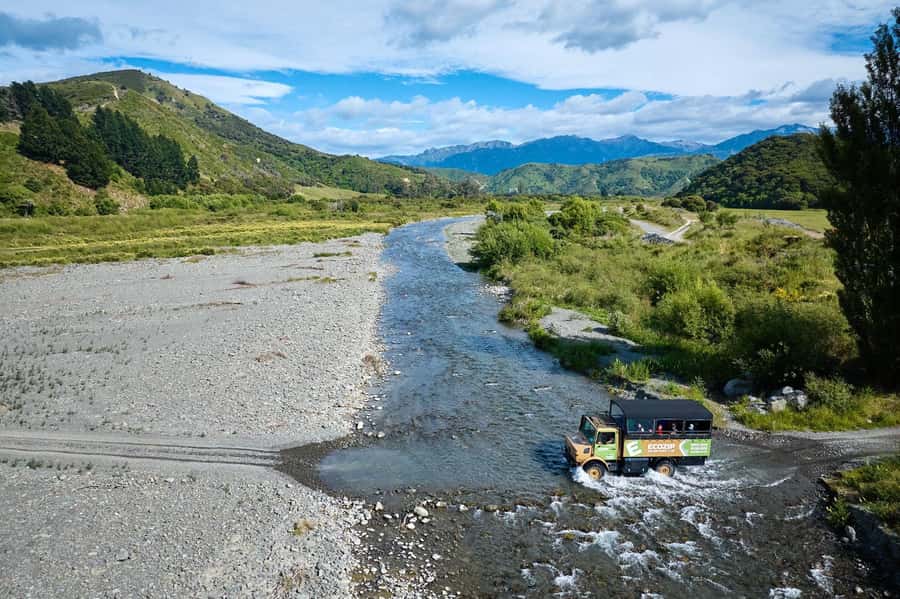
The route to Rakanui Station is part of the attraction. This is a 3,000-acre working farm with valleys, hills, native trees, streams, waterfalls, and pasture used by grazing livestock. You are not simply driven to a platform hidden behind a car park. The setting gives you a clearer sense of how farm country, forest, waterways, and conservation work sit together around Kaikōura.
The transport is not luxury touring. The 4X4 is practical, and the farm tracks can be part of the rough-and-ready fun. You cross rivers and fords and pass through paddocks, so expect a real rural ride rather than a smooth highway transfer. I would see this as a bonus if you like seeing how an adventure property works, but a minor drawback if all you want is maximum time on the cables.
More zip lines in Kaikoura:
- Half Day Zipline Adventure in Kaikoura
★ 5.0 · 258 reviews - Rotorua Canopy Tours: 2.5Hour Native Forest Zipline Adventure
★ 5.0 · 4,563 reviews - Rotorua’s Ultimate Zipline: 6 ziplines, 400 m Tandem, Cliff Walk
★ 5.0 · 2,557 reviews
The 4X4 ride adds more than transport
The guided farm drive gives the staff room to explain the property and the area before the ziplining begins. Several guides, including Alex, Olive, and Andi, have been praised for sharing information about local plants, wildlife, the property, and Kaikōura itself during the ride.
Keep your eyes open during this section. One group spotted young deer along the track, which gives you an idea of the kind of wildlife encounter that might occur. It is not presented as a wildlife tour, so you should not book this expecting guaranteed animal sightings. Still, the combination of livestock, native vegetation, waterways, and open views makes the drive feel worthwhile even before the first cable.
The farm ride also helps spread the pace of the day. You get a change from town, a little time to take in the countryside, and a gradual build-up before being fitted into safety gear. For families, this can be useful because the outing has several stages. Younger participants are not asked to go straight from a minibus to a high platform with no transition.
A short forest walk with a purpose
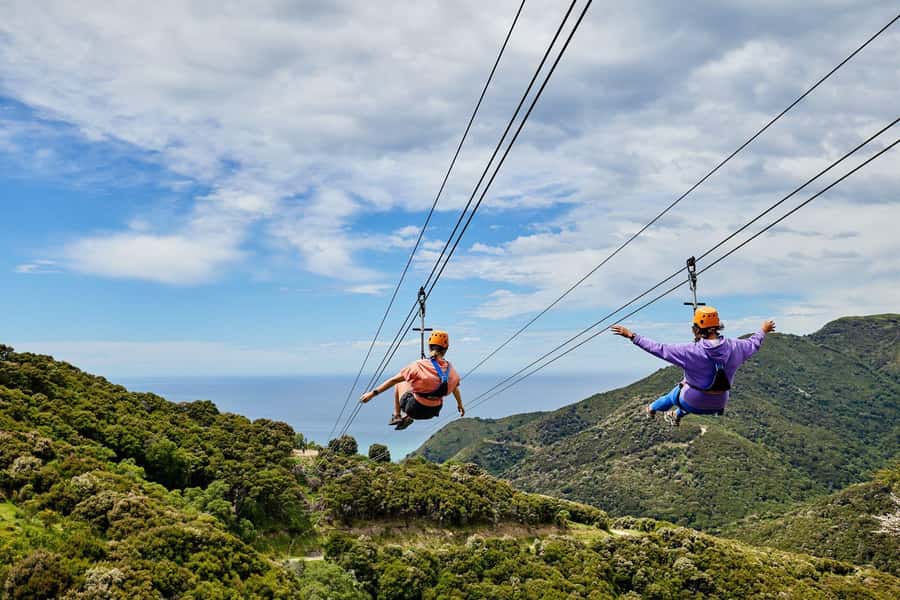
After the 4X4 section, you follow a short natural trail through native New Zealand forest. The walk connects the farm road to the zipline course and lets you see the plants at ground level before looking down on them from above.
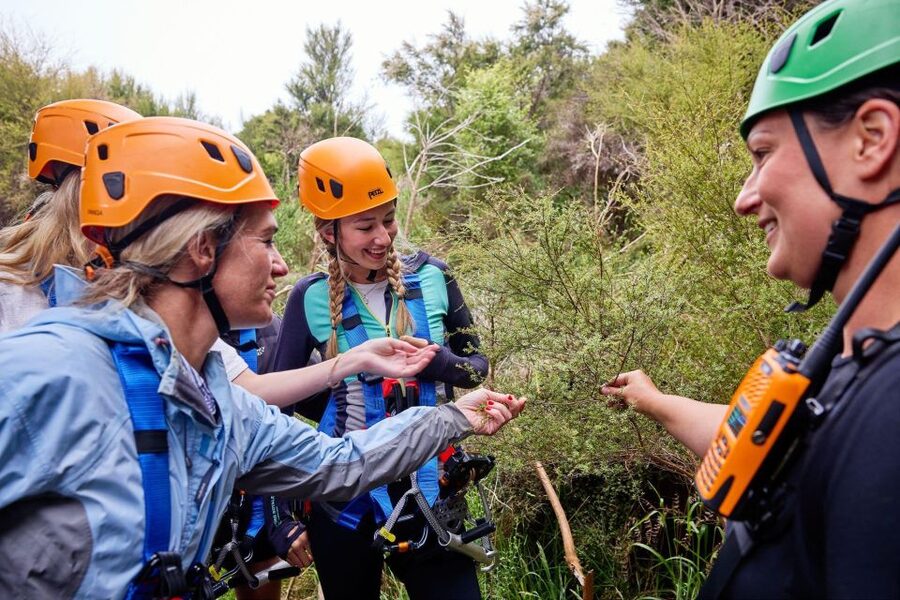
The guides use these walking sections to explain native shrubs, flora, fauna, and the conservation work carried out on the property. You may also have the chance to plant a tree, depending on the season. That seasonal qualification matters: tree planting is part of the conservation experience, but it is not available every time of year.
The walk is described as short and easy to navigate, but it is still a bush track. Wear comfortable clothes and secure, closed-toe footwear. In winter, take warm layers and a waterproof jacket. In summer, sunscreen and a water bottle are sensible additions. Sandals, flip flops, bare feet, and high heels are not allowed, and this is not the place for footwear that slips around.
Five ziplines, from 250 to 620 metres
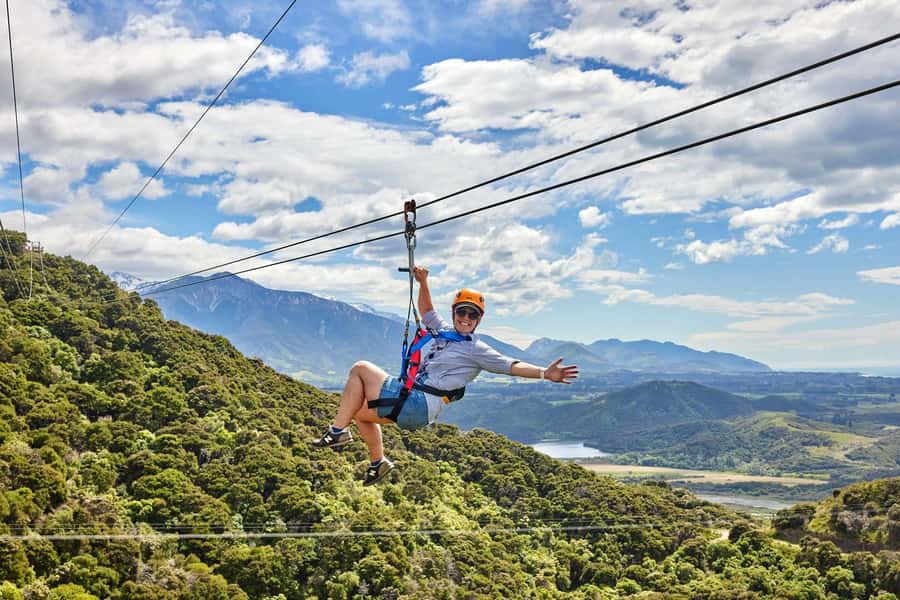
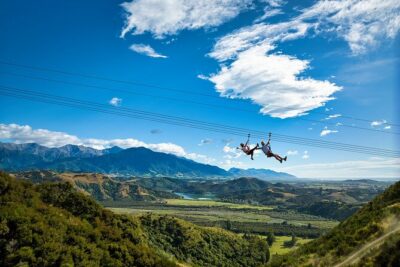
The main event is a sequence of five giant, dual flying-fox ziplines. The lines range from 250 metres to 620 metres, so you get a genuine progression of rides rather than a single short launch followed by a long wait.
Because the ziplines are dual, you travel beside another participant rather than alone on a solitary cable. All participants travel independently, not in tandem, so you control your own ride while still sharing the moment with someone nearby. That format can make the first launch less intimidating, especially when your group is cheering each other on.
The views are the real prize between the bursts of speed. From the platforms, you can look across the native bush toward the Kaikōura coast and surrounding mountains. The exact conditions will shape what you see, of course. Clear weather should give you the broadest views, while cloud or rain can make the forest feel more enclosed and atmospheric.
Do not expect five identical rides. The different line lengths and changing positions through the forest provide variety. One line may feel like a quick rush, while a longer cable gives you more time to take in the countryside. The course also includes walks between lines, so the experience is not nonstop flying. That pause is useful for catching your breath, hearing the next instructions, and looking around.
A few more Kaikoura days to compare
- Kaikoura: Whale Watching Cruise
★ 4.6 · 3,089 reviews - Whale Watching in Kaikoura by Boat
★ 4.5 · 2,906 reviews - Kaikoura: Whale Watching Flight with Commentary
★ 4.6 · 823 reviews - Wildlife Sea Kayaking Tour – Kaikoura
★ 5.0 · 467 reviews
Guides who keep the nerves under control
A zipline can look simple from the ground and feel rather different when you are clipped in above the trees. The strongest part of this experience is the guiding style. Names that appear repeatedly in the operation include Katie, Olive, Andi, Alex, Kerri, Charlotte, Finn, Jen, Eden, and others. The important point is not memorizing the roster. It is that the guides combine clear safety work with an easy manner.
Katie has been especially reassuring with nervous participants, while Olive has been praised for warmth and clear local information. Andi and Alex have been noted for making the group feel at ease, and guides such as Kerri, Charlie, Chloe, Tayla, and Charlotte have been singled out for encouraging younger or anxious participants.
Expect a proper safety talk, harness fitting, and reminders at each stage. The guides explain what to do, check the equipment, and ask you to speak up if you have concerns. That repeated attention is valuable. It means you do not have to remember one briefing from the start of the afternoon and hope it covers every situation.
The safety system cannot remove every risk. You may slip, trip, bruise, or strain yourself, and there is a risk of concussion from moving too fast. A current medical condition can worsen, and serious injury or death from a fall is possible. Follow instructions carefully, tell the staff about concerns, and read EcoZip’s published ziplining risk information before booking.
How much time and money should you allow?
The activity lasts 210 minutes, or three and a half hours. At $118 per person, that works out to roughly $34 an hour, including transport, guiding, the farm drive, the forest walk, five ziplines, and the conservation element. That is a reasonable package if you value a full outing with scenery and interpretation, not just the seconds spent on the cables.
The price is less attractive if you are comparing it with a short urban zipline that offers one or two rides at a lower headline cost. Here, you are paying for the setting and the whole route to it. The 4X4 journey, farm access, guide time, equipment, and return transport all help explain the cost.
Food and drinks are not included, so eat beforehand or bring what you need according to your plans. A phone bungy for attaching your phone to your harness is also extra. I would not let the lack of phone footage decide the booking. The safety rules and the need to keep your hands and attention where instructed matter more than filming every ride.
Free cancellation is available up to 24 hours before departure, and you can reserve now and pay later. Check the available starting times when you book, since the 210-minute duration takes a substantial part of your day.
Is it suitable for families and older participants?
The minimum weight is 30 kilograms and the maximum is 125 kilograms. These are firm participation limits, so check everyone’s weight before making plans. Anyone aged 15 or under must zip with and be supervised by at least one paying adult in the booking.
Anyone under 18 needs a parent, guardian, or properly authorized adult present to sign the disclosure form. Non-zipping spectators are not permitted, so a family member who wants to watch without participating cannot simply come along to the course.
The experience can suit a wide age range within those rules. Families have taken children aged 8 and 10, and older participants have found the guides helpful even when fitness was limited. That does not mean the activity is effortless. You will walk on a natural trail, climb around platforms, wear a harness, and manage outdoor conditions. If you have a heart condition, are pregnant, have a concussion, or have another current medical concern, read the risk information and discuss your suitability before booking.
Nervousness is not a reason to rule it out automatically. The guides are used to helping people who are uneasy with heights, and the staged format gives you time to settle in. Still, nobody should feel pressured to continue after raising a genuine safety concern.
Weather, clothing, and small practical choices
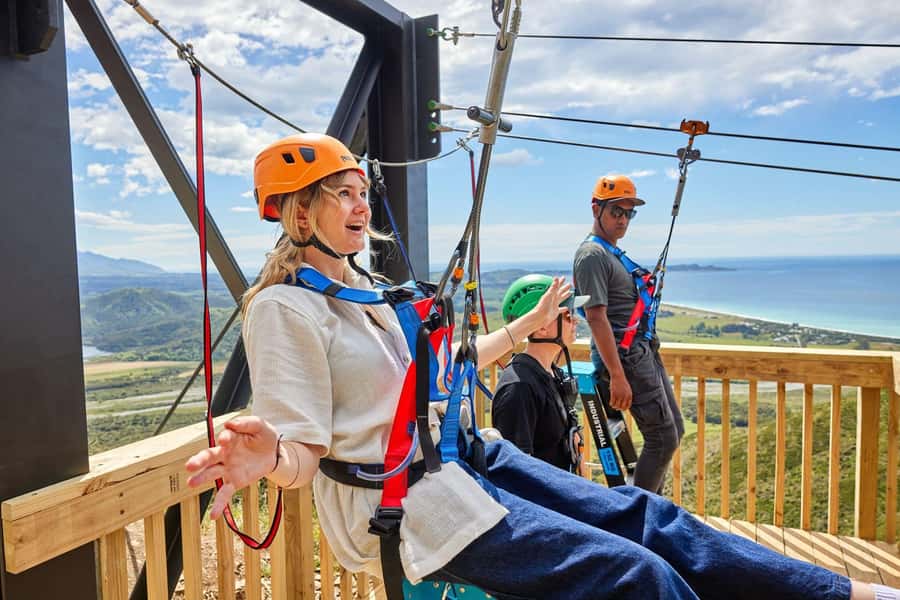
The activity operates throughout the year, which gives you flexibility but also makes clothing important. Summer brings stronger sun, so use sunscreen and carry water. Winter can be cold and wet, especially during the bushwalk and open farm transport, so bring warm clothing, a waterproof jacket, and suitable shoes.
Choose comfortable clothing that allows movement around a harness. Secure closed-toe shoes are required. Leave high heels, sandals, flip flops, open-toe shoes, and loose footwear at your accommodation.
The course is outdoors, and views depend on the day. Good weather should make the ocean and mountain outlook especially impressive, but a changeable day does not necessarily spoil the forest portion. Go prepared for conditions instead of booking this as a weather-proof activity.
What makes the conservation angle worthwhile?
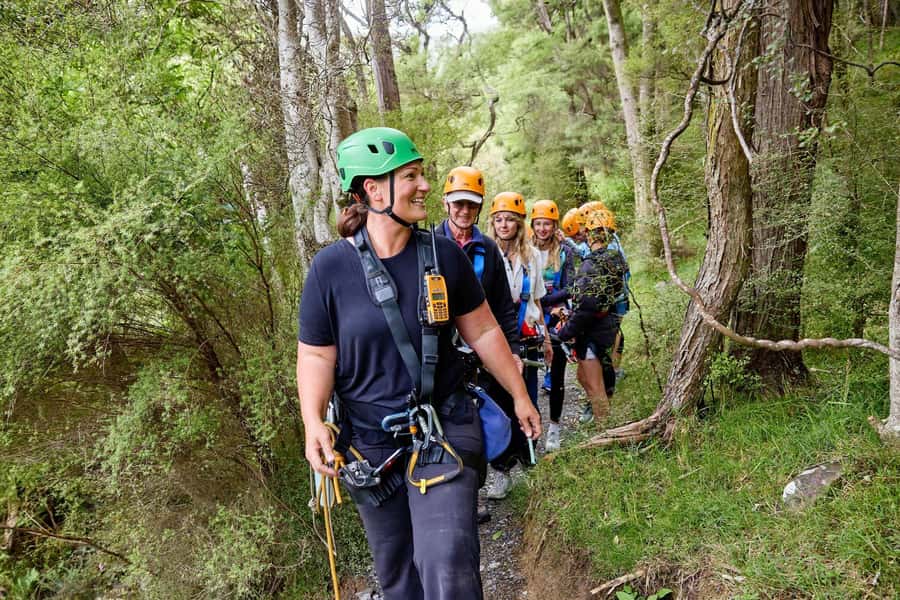
The conservation message works because it is tied to what you are actually seeing. You travel through working farmland, pass native trees and waterways, walk through bush, and then move above the canopy. Guides connect those pieces by discussing local flora, fauna, and the work being done on the property.
Tree planting may be available seasonally. If it is offered during your visit, it gives the environmental theme a practical side rather than leaving it as a short talk. Even when planting is not available, the explanations about native vegetation and wildlife add meaning to the route.
I also appreciate that the education does not appear to swamp the fun. Guides share local history and nature facts during the drive and walks, then let the ziplines provide the adrenaline. Visitors who already know New Zealand’s native plants may still pick up something new, while people seeing them for the first time get useful context.
Who should book this Kaikōura adventure?
I would recommend it to you if you want more than a quick thrill, enjoy being outdoors, and like knowing where an attraction fits into the local environment. It is particularly good for first-time zipliners, families within the weight and supervision rules, and people who want coastal views without signing up for a strenuous mountain activity.
It is also a strong choice for anyone nervous about heights, provided you meet the health requirements and are willing to follow instructions. The guides’ steady approach is a major part of the experience, and the combination of safety checks, short walks, and varied transport keeps the day from feeling like one long test of nerve.
You may want to skip it if you dislike heights, cannot manage a bush track, are outside the weight limits, or want a quiet sightseeing trip. It is an adventure activity, and the risk disclosure should be taken seriously. You will also spend only part of the 210 minutes actually moving along a cable, since transport, briefings, walking, and explanations are built into the schedule.
Should you book the five-line course?
Book it if you want a well-rounded Kaikōura outing that joins farm country, native forest, conservation, and real zipline speed. The five lines, including a 620-metre run, give you enough flying time to feel the $118 price is about the whole experience, not a single novelty ride.
I would book early for a preferred time, wear proper shoes, and arrive ready for sun, cold, or rain. If your group includes a nervous beginner, tell the guides early and listen closely to their advice. For the right person, this is one of Kaikōura’s more memorable ways to see the coast and bush from several very different angles.
FAQ
Where does the Kaikōura zipline tour meet?
Meet at EcoZip Adventures HQ at 75 West End, Kaikōura. Round-trip transportation is included from the meeting point.
How long does the activity last?
The experience lasts 210 minutes, or three and a half hours. Check the available starting times when booking.
How many ziplines are included?
You get five giant, dual flying-fox ziplines. They range from 250 metres to 620 metres in length.
What weight limits apply?
Participants must weigh at least 30 kilograms and no more than 125 kilograms.
What should I wear and bring?
Wear comfortable clothes and secure closed-toe shoes. Bring water and any personal medication. In winter, bring warm clothing and a waterproof jacket. In summer, use sunscreen and bring a water bottle.
Can children participate?
Yes, provided they meet the weight requirement and other safety rules. At least one paying adult must zip with and supervise anyone aged 15 or under, and an authorized parent or guardian must be present to sign the disclosure form for anyone under 18.
Newly listed around Kaikoura
- Private Seal Kayaking and Wildlife Tour in Kaikoura★ 5.0 · 7 reviews
- Kaikoura Helicopters Top n Tail Whale Watch flight★ 5.0 · 7 reviews
- Kaikōura Whale Watching – 1hr 20min Ultimate Adventure★ 5.0 · 8 reviews
- Kaikoura: Coastal and Alpine Scenic Airplane Flight★ 5.0 · 8 reviews
- Kaikōura: 45-Minute Whale Watching Helicopter Tour★ 5.0 · 8 reviews
- Kaikoura: Guided Family Kayaking Adventure★ 5.0 · 9 reviews
- Kaikoura: 1-Hour Whale Watching Helicopter Tour★ 5.0 · 9 reviews
- Kaikoura Helicopters Extended Whale Watch★ 4.5 · 15 reviews
Kaikoura Tours, compared.
Kaikōura Whale Watching Scenic Flight (40 Minutes)
Read our review →Browse the lists this tour appears in