
Reviewed · KAIKOURA TOURS
Kaikoura: Whale Watching Cruise
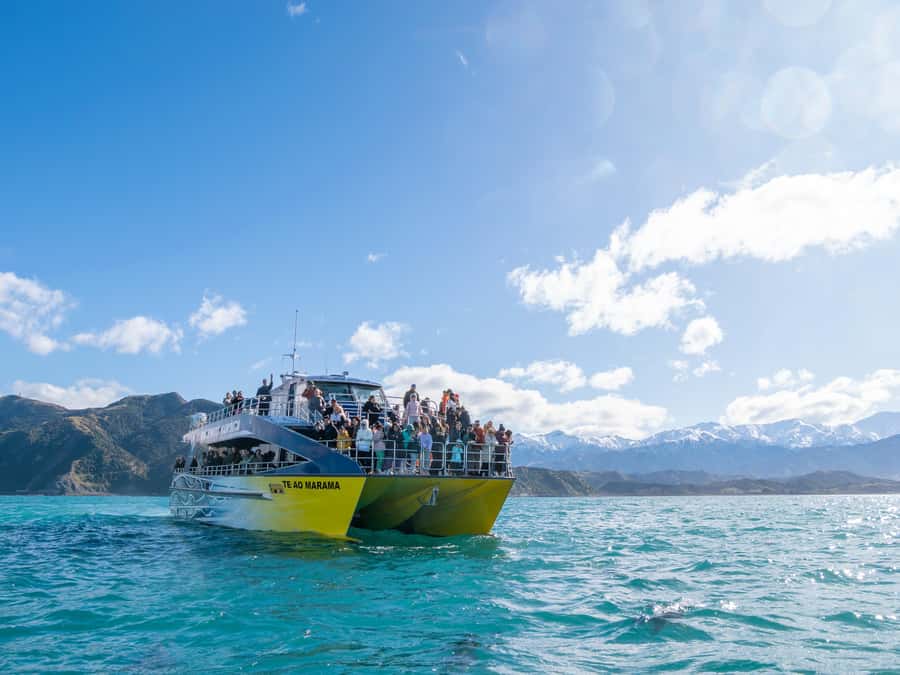
Kaikoura’s great draw is the chance to watch a giant sperm whale breathe at the surface, then raise its tail before heading down into the deep. I like the spacious catamaran, with outdoor viewing decks, comfortable indoor seats, and screens that explain what is happening below. I also like the mix of science and Māori knowledge in the commentary, delivered by crew members such as Captain Jack, Caolan, and Mikayla.
The main caution is the sea. Even a modern, powerful boat cannot smooth out choppy water, and several people found the ride rough enough to cause serious motion sickness. Bring the right medication, keep your expectations tied to nature rather than a schedule, and remember that whales may be distant or absent on a particular outing.
Key points to know before you book
- Sperm whales are the main event: Kaikoura is known for close encounters with these huge toothed whales, but sightings remain wild and unpredictable.
- Expect more than whales: Dolphins, fur seals, wandering albatross, Cape petrels, penguins, orcas, and other species may appear.
- Allow 3 hours 15 minutes: The advertised cruise is two hours, but check-in, safety instructions, and the bus ride to the boat add time.
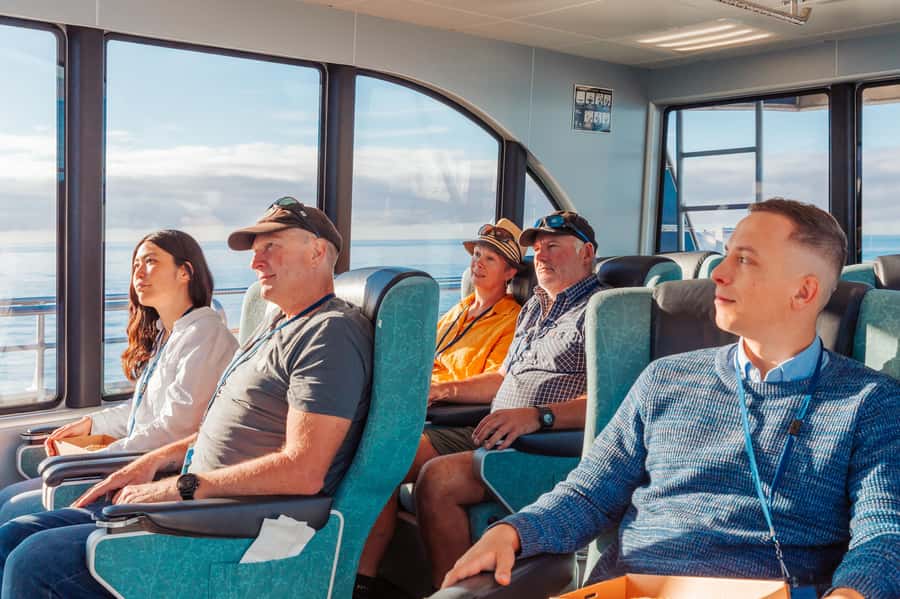
- The vessel has room to spread out: You can use the outdoor decks for views or return to the air-conditioned cabin with comfortable seats and marine-life animations.
- Sea conditions matter: The minimum age is three, but younger children may not be accepted if conditions are poor.
- The refund policy reflects the wildlife risk: If no whale is found, a substantial partial refund may be offered, as happened on one reported trip.
Why Kaikoura is such a strong whale-watching base
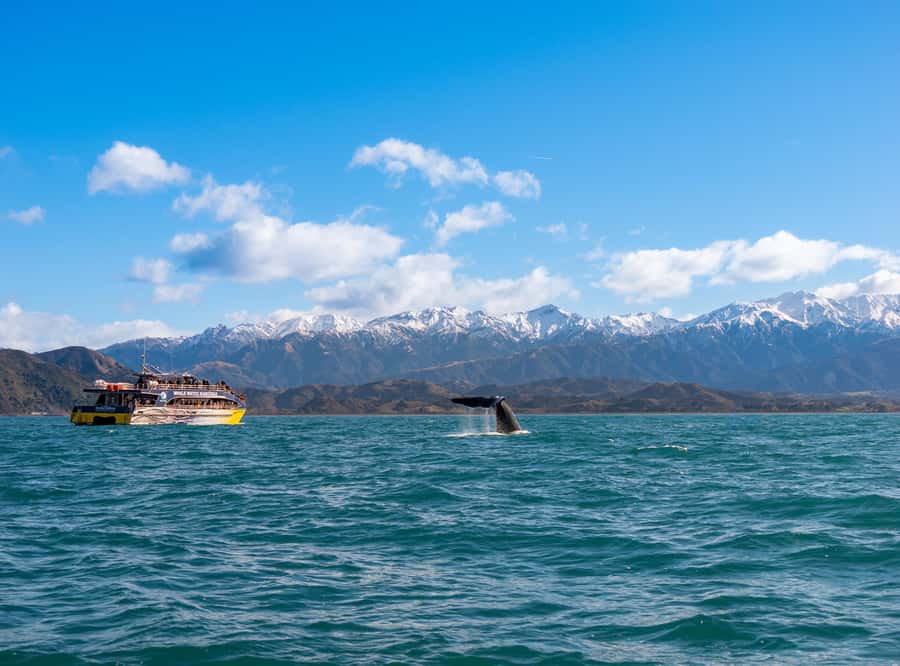
Kaikoura sits on New Zealand’s South Island coast, backed by steep mountains and facing productive offshore waters. That combination gives you a memorable setting even before the first whale appears. From the boat, the coastline becomes a long sweep of hills and peaks, while the open water offers a clear sense that you are visiting an animal’s home rather than entering a staged attraction.
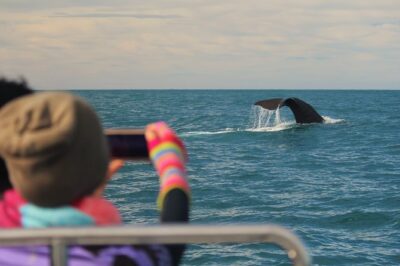
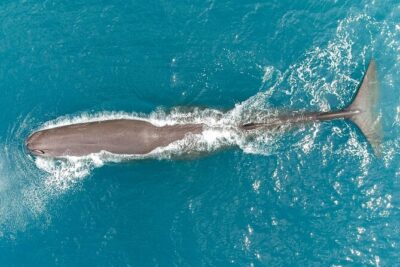
The star here is the sperm whale. It is the largest toothed predator in the world, and its routine is different from the quick surface appearances many people picture when they hear whale watching. You may watch one breathe for several minutes, wait for the warning that it is about to descend, and then see the broad tail lift clear of the water.
That moment is why a sperm whale sighting can feel so satisfying. The animal may spend a short time at the surface, yet the crew helps you understand what you are seeing and when to have your camera ready. The excursion is not simply a hunt for a large shape on the horizon. It is a lesson in patience, timing, and animal behavior.
More whale watching from Kaikoura:
- Whale Watching in Kaikoura by Boat
★ 4.5 · 2,906 reviews - Kaikoura: Whale Watching Flight with Commentary
★ 4.6 · 823 reviews - Kaikōura Whale Watching Scenic Flight (40 Minutes)
★ 5.0 · 221 reviews
Check-in, bus transfer, and the first minutes aboard
You begin at the Whale Watch Kaikōura office, not directly at the boat. From there, a short bus transfer takes you to the departure point. Allow extra time for check-in and the safety briefing, since the full experience lasts about 210 minutes rather than only the two hours spent at sea.
This arrangement works well because the shore team can manage boarding before you reach the vessel. Clear directions and organized transfers were repeatedly praised, and that matters in Kaikoura, where your exact sailing time may change with weather or availability. The operator confirms the final time by email after booking, so check your messages before setting out.
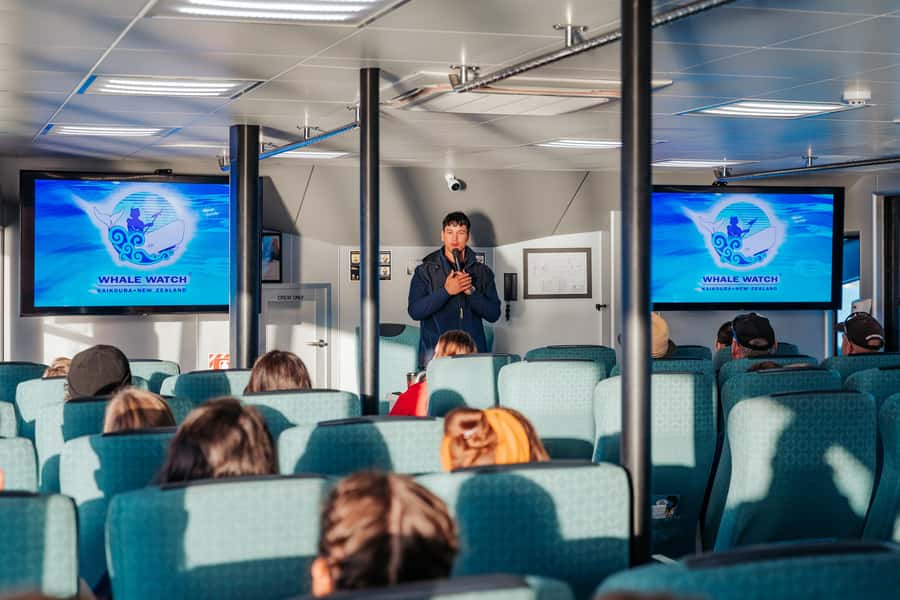
Once aboard, you receive commentary from the English-speaking crew. Guides explain the local marine habitat, the species you may see, and the methods used to locate whales. The tone can be serious and scientific, but it is not all lecture. Specific crew members, including Caolan, Mikayla, and Captain Jack, earned praise for clear explanations, humor, and an obvious interest in helping people understand the animals.
The boat also uses a tracker and, on some trips, sonar-based information to help identify whale locations. That gives the search a purpose. Instead of simply racing offshore and hoping for luck, you get a sense of how the crew follows sounds and surface activity.
The catamaran and where to watch
The catamaran is designed for both comfort and viewing. Its engines are intended to reduce underwater noise, and nonpolluting toilets are fitted aboard. Passenger numbers are kept below the vessel’s full capacity, which helps prevent the outdoor railings from becoming too crowded.
You have two main choices. Outside, large decks give you a better chance to spot a whale, dolphin, or seabird as soon as the crew points one out. They also offer the best views of the Kaikoura coast, though wind and spray can make this the less comfortable option when the weather turns rough.
Inside, air-conditioned seating provides a useful break. Plasma screens show marine wildlife animations, so you can keep learning while the boat moves between locations. The indoor space is especially helpful if you need to sit down, warm up, or step away from the railings after a spell of looking at the sea.
The vessel is spacious and clean, but space does not remove the need to be considerate. You may need to move between viewing areas as the crew directs the boat toward an animal. Keep your camera ready, but do not spend the whole trip staring at a screen. A whale’s surface appearance can be brief.
Finding the sperm whales
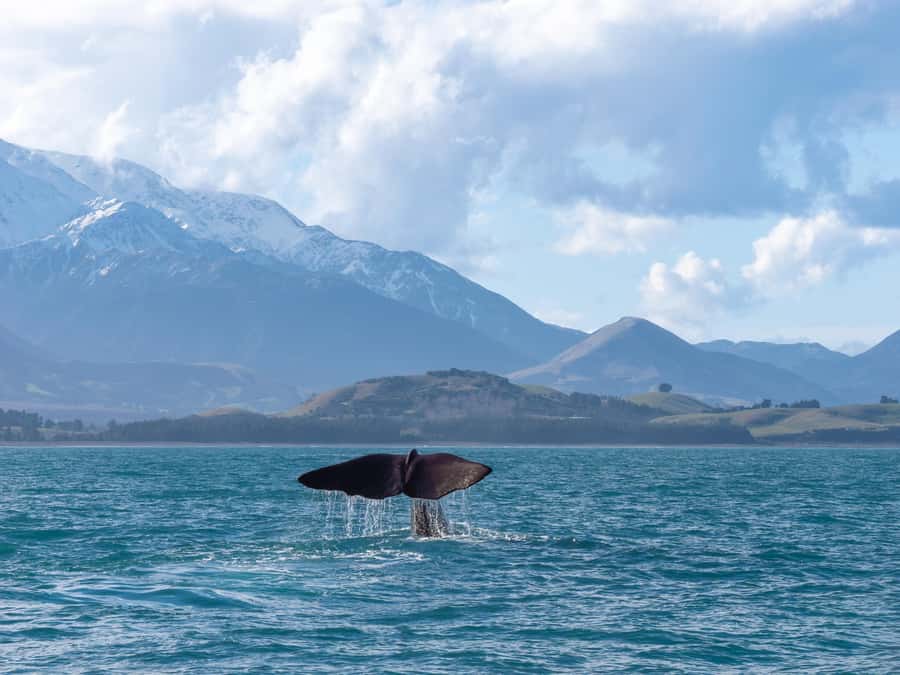
The crew’s ability to locate whales is central to the experience. Sperm whales are not brought to the boat, and they do not perform on cue. The captain and guides use experience, tracking information, and underwater sounds to work out where to go.
A typical sighting may begin with a pause in open water. The guide watches the surface and explains what to expect. You might first see a small blow, then the whale’s back. If it remains up long enough, the crew may warn you before the tail rises and the animal heads down.
Several trips recorded one or two sperm whales, while others encountered three or more. A whale may also be seen twice, giving you another chance to watch its breathing and tail movement. Distance varies. Some sightings are close enough to feel powerful, while others remain farther away, with the dolphin activity becoming the highlight.
That variation is important when you consider the price. The experience costs $104 per person, which is a sizeable part of a day’s budget, but you are paying for a specialized vessel, crew, transport, safety procedures, marine interpretation, and more than two hours offshore. The value is high when the whales cooperate, yet you should not treat the cost as a guarantee of a close encounter.
The operator’s approach to unsuccessful trips helps soften that risk. One person reported receiving an 80 percent refund after the boat failed to find a whale. The supplied details do not promise a fixed refund in every case, so ask about the current policy if whale sightings are your main reason for booking.
A few more Kaikoura days to compare
- Wildlife Sea Kayaking Tour – Kaikoura
★ 5.0 · 467 reviews - Seal Kayaking Adventure in Kaikoura
★ 5.0 · 422 reviews - Kaikoura: Half-Day Wildlife Kayaking Tour
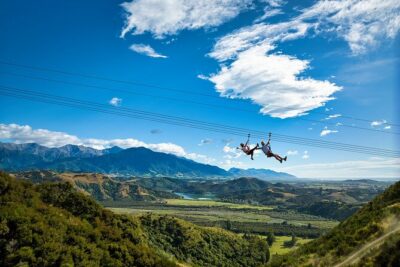
★ 4.6 · 390 reviews - Half Day Zipline Adventure in Kaikoura
★ 5.0 · 258 reviews
Dolphins, seals, birds, and surprise sightings
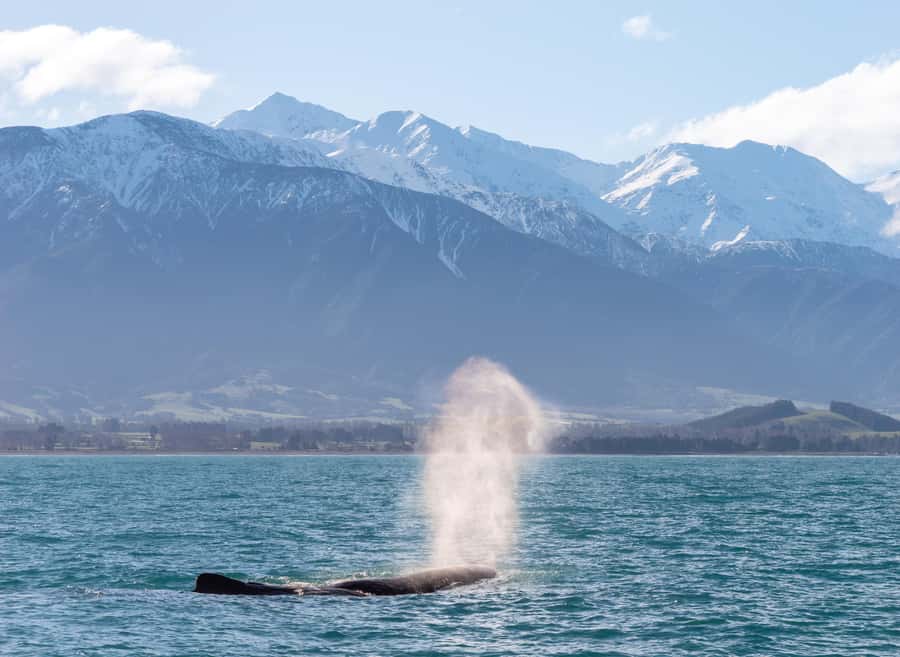
The supporting cast can make the trip memorable even when a whale stays distant. Dusky dolphins are a frequent highlight, sometimes appearing in large pods and leaping beside the boat. One outing encountered roughly 300 dolphins and watched them for 15 to 20 minutes. Another saw around 100 dolphins swimming and flipping near the vessel.
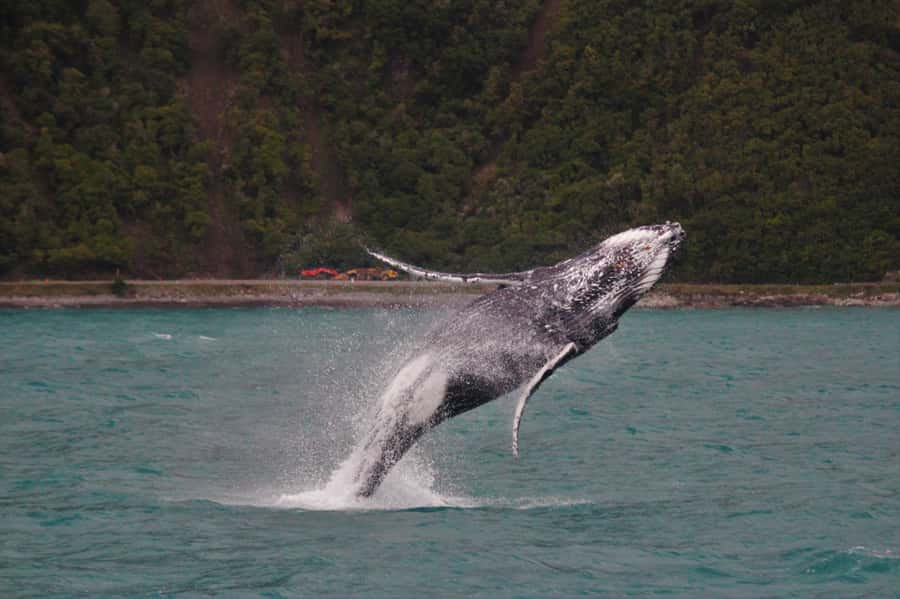
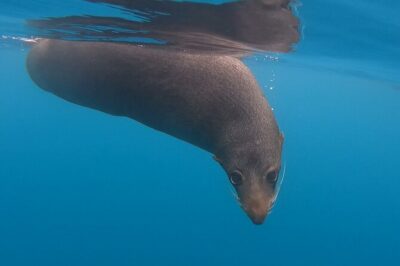
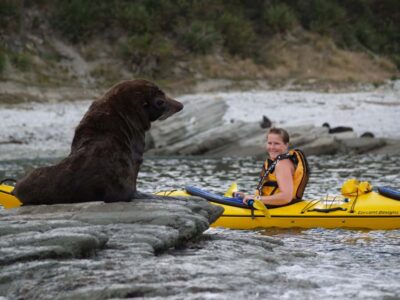
You may also see New Zealand fur seals close to the boat. Their presence adds variety to the day and gives you something to watch while the crew searches for whales. Blue penguins, pilot whales, humpback whales, orcas, and sharks have also appeared on particular outings, though none should be treated as a standard part of every departure.
Birdlife is another reason to keep scanning the water and sky. The wandering albatross is a key possibility, and sightings have also included several kinds of albatross and Cape petrels. These birds can be easy to miss if you only watch for a blow, so listen when the guide shifts attention toward the air.
The crew’s commentary helps connect these sightings to the wider habitat. You are not simply ticking off species. You learn why the waters support such varied marine life and how the animals share this offshore environment. The inclusion of Māori knowledge and Ngāi Tahu connections gives the experience a stronger local identity than a generic boat trip.
What happens when the sea turns rough
Sea conditions are the biggest practical issue. The cruise operates only in favorable weather, and the local partner may reschedule your departure if wind or waves make the trip unsuitable. Rescheduling after bad weather was handled well on several occasions, with timely notices and alternative options.
A cancellation caused by weather is inconvenient, especially if your South Island route is tight. Leave flexibility in your Kaikoura schedule rather than booking this on the final morning before a long drive. The exact sailing time may also change because of availability, so do not build a complicated connection around the first time you request.
Even when the boat goes out safely, the water may be choppy. Some people found the catamaran powerful and stable in high wind and waves, while others became very sick. Motion sickness tablets are available for purchase at the office, but it is better to take precautions before you arrive if you already know you are sensitive.
I would choose a light meal beforehand, carry water, and avoid assuming that a large vessel means a calm ride. Use the indoor seating if needed, and tell the crew when you feel unwell. The staff have helped people who became seasick, but no crew can remove the motion from the sea.
Children must be at least three years old, and the minimum age can depend on the conditions at check-in. The tour is wheelchair accessible, although you should confirm any specific mobility needs with the operator before arrival.
Timing, cost, and what to bring
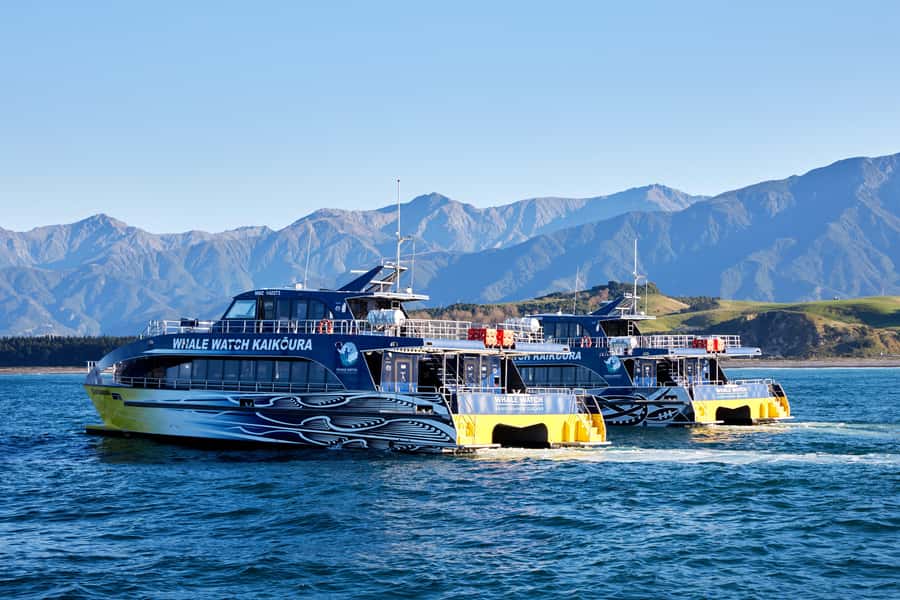
The cruise itself lasts just over two hours. From office check-in through the safety briefing, bus transfer, time offshore, and return, plan for about three hours and 15 minutes.
At $104 per person, this is not a casual add-on for every budget. I think the price makes sense if you place a high value on wildlife, want expert help finding sperm whales, and appreciate a comfortable vessel with proper interpretation. It is less appealing if you need a guaranteed close sighting or dislike spending several hours on open water.
Food and drinks are not included. Bring what you need, along with layers for changing conditions. The outdoor decks may be windy even when the shore feels mild, while the air-conditioned cabin can feel much cooler than expected if you are wet from spray.
For photographs, keep expectations realistic. You may capture a dramatic tail, a dolphin beside the hull, or an albatross in flight, but marine animals do not pose for cameras. Several people found that putting the camera down helped them enjoy the moment more fully.
Book with some schedule flexibility. The tour offers free cancellation up to 24 hours before departure and a reserve-now, pay-later option, which can help while you are still arranging a South Island itinerary. Weather changes and limited availability can still affect the final time.
Who will get the most from this cruise
I recommend this trip most strongly to you if you have a real interest in marine life and can accept uncertainty. You will get more from the experience if you enjoy listening to explanations, watching animal behavior, and waiting for something wild to appear rather than expecting constant action.
It also suits photographers who understand that a good shot depends on timing and luck. Families with children aged three and older may enjoy the dolphins, seals, and screens, but rough conditions can make the outing hard for young children.
This is not the best choice if you suffer badly from motion sickness, have no flexibility for a weather change, or need a guaranteed whale encounter. The boat is well equipped, but the open sea remains the open sea.
Should you book Whale Watch Kaikoura?
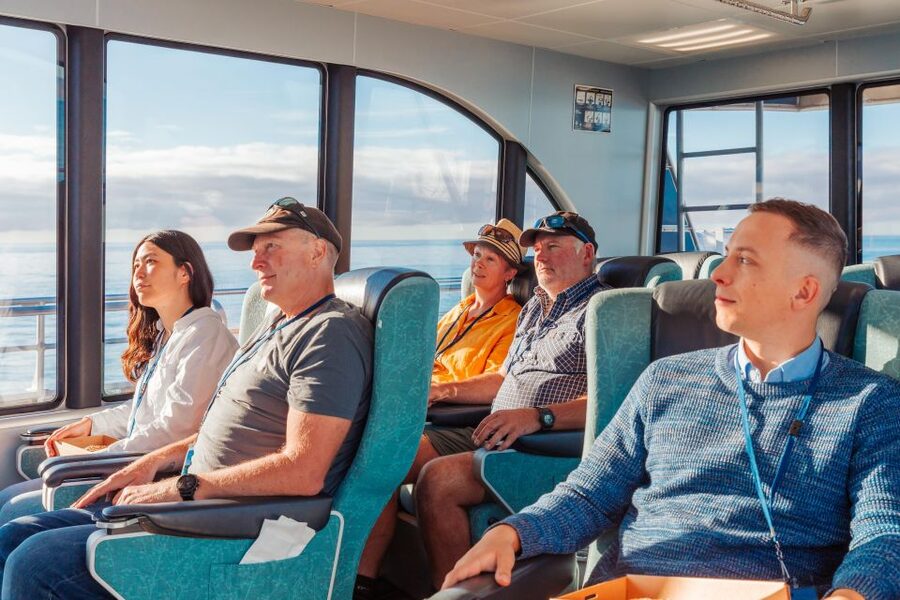
Book it if the chance to see a sperm whale is one of your South Island priorities. The combination of expert tracking, local knowledge, spacious viewing areas, and possible encounters with dolphins, seals, albatross, and other whales gives the trip strong value.
Go in with the right promise to yourself: you are buying time in a productive marine habitat, not a guaranteed performance. Take seasickness precautions, allow the full three hours and 15 minutes, leave room in your itinerary for weather changes, and keep your eyes off the camera long enough to watch the tail disappear.
FAQ
How long does the Kaikoura whale-watching experience last?
The full experience lasts 210 minutes, or about three hours and 15 minutes. This includes check-in, the safety briefing, bus transfers, and just over two hours on the water.
What animals might I see?
The main target is the giant sperm whale. You may also see fur seals, dolphins, wandering albatross, Cape petrels, blue penguins, pilot whales, humpback whales, orcas, sharks, and other seabirds.
Where does the tour begin?
You meet at the Whale Watch Kaikōura office. A short bus transfer takes you from the office to the boat.
Is the tour suitable for young children?
Children must be at least three years old. The minimum age may also depend on sea and weather conditions at check-in.
What happens if the weather is poor?
The trip operates only in favorable weather. The local partner may reschedule the cruise and will confirm the exact tour time by email after booking.
Can I take the tour if I use a wheelchair?
The activity is listed as wheelchair accessible. Contact the local partner before arrival if you need to confirm particular access arrangements.
Are food and drinks included?
No. Food and drinks are not included in the price.
How can I prepare for motion sickness?
Take precautions before arriving if you are prone to motion sickness. Tablets are available for purchase at the Whale Watch Kaikōura office.
Newly listed around Kaikoura
- Private Seal Kayaking and Wildlife Tour in Kaikoura★ 5.0 · 7 reviews
- Kaikoura Helicopters Top n Tail Whale Watch flight★ 5.0 · 7 reviews
- Kaikōura Whale Watching – 1hr 20min Ultimate Adventure★ 5.0 · 8 reviews
- Kaikoura: Coastal and Alpine Scenic Airplane Flight★ 5.0 · 8 reviews
- Kaikōura: 45-Minute Whale Watching Helicopter Tour★ 5.0 · 8 reviews
- Kaikoura: Guided Family Kayaking Adventure★ 5.0 · 9 reviews
- Kaikoura: 1-Hour Whale Watching Helicopter Tour★ 5.0 · 9 reviews
- Kaikoura Helicopters Extended Whale Watch★ 4.5 · 15 reviews
Kaikoura Tours, compared.
Kaikōura Whale Watching Scenic Flight (40 Minutes)
Read our review →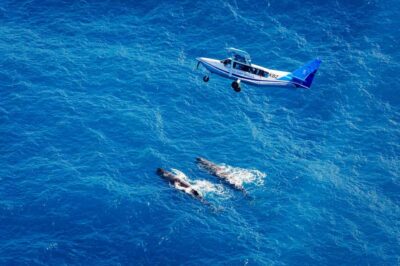
Browse the lists this tour appears in