
Reviewed · KAIKOURA TOURS
Whale Watching in Kaikoura by Boat
Kaikoura’s sperm whales do not perform on command. They surface, breathe, rest, and disappear into the Pacific on their own schedule. Your boat may wait quietly beside one as it prepares to return below the surface, giving you a chance to see the spout, broad back, or dramatic tail lift. That wild unpredictability is the point.
I like two things here. First, the crew uses a fast, purpose-built catamaran and adjusts its route as animals are located. Second, the running commentary explains the whales’ habits, the sea around Kaikoura, and the unusual underwater canyons that bring so much food into the area. Captain Malena and Captain Fred are among the crew members praised for their spotting and local commentary.
The main drawback is rough water. Even on a day described as moderate, the ride can be choppy, and seasickness is a real possibility. Take motion-sickness medicine before departure, dress warmly, and keep your expectations realistic: a whale sighting may be a spout, back, or tail rather than a full television-style performance.
Key points to know before you book
- Sperm whales are the main attraction: Kaikoura offers a strong chance of seeing these resident whales, with an advertised 95 percent success rate and an 80 percent refund if no whale is found.
- The trip lasts about three and a half hours: Allow for check-in, a safety briefing, a bus transfer to the marina, and up to 2.5 hours at sea.
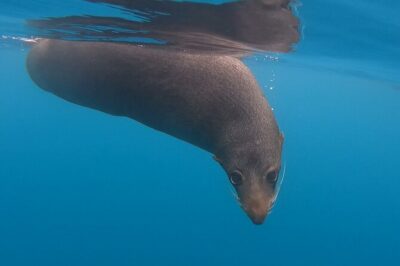
- The wildlife list can be long: Depending on the day, you might see dusky dolphins, orcas, humpback whales, pilot whales, fur seals, albatross, petrels, and other seabirds.
- The boat holds up to 116 people: The catamaran provides indoor seating and outdoor viewing areas, but popular sightings can feel crowded.
- Sea conditions matter: Children, passengers with medical concerns, and the whole trip are subject to safety decisions made at check-in.
- The early departures can be appealing: Check-in times include 7:15 a.m., 10:00 a.m., and 12:45 p.m. year-round, with a 3:30 p.m. option from November through March.
Why Kaikoura is such a good place for whales
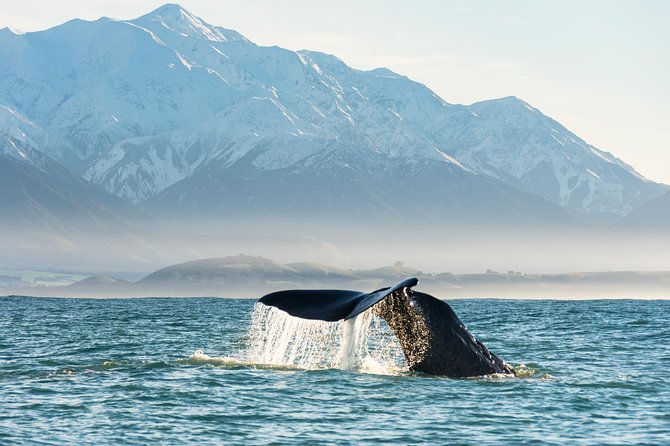
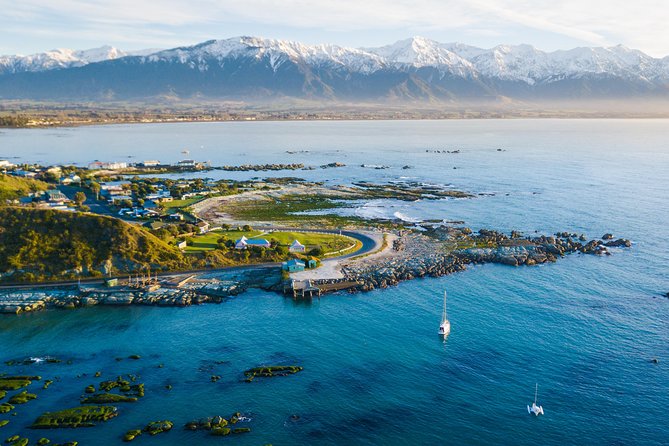
Kaikoura sits on New Zealand’s eastern South Island coast, where steep mountains meet the sea. Just offshore, the seabed drops into a network of underwater canyons. Ocean currents push nutrients into this area, supporting the fish and squid that attract large marine animals.
That setting gives the trip a strong sense of place. You are not simply taking a boat ride in search of a famous animal. The guide explains how the sea floor, currents, and food chain fit together, so the whale encounter makes more sense.
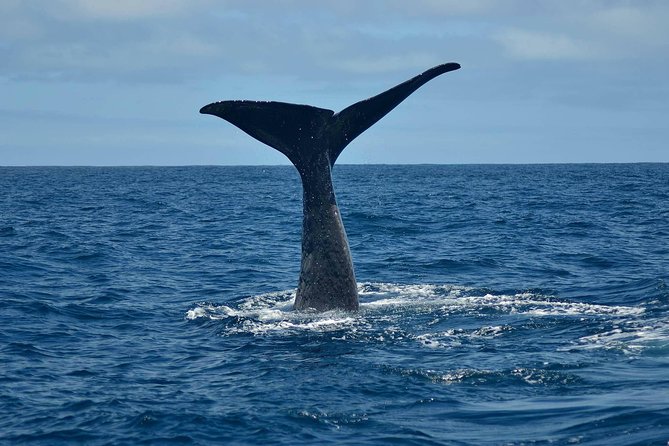
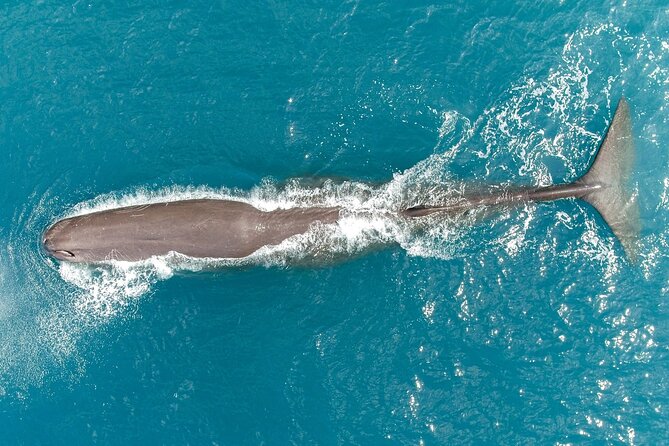
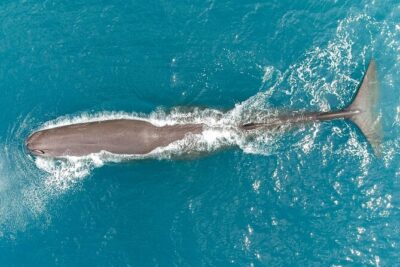
Sperm whales are the signature sighting. They can remain at the surface for several minutes, breathing and resting, before heading down to feed. You might watch one for five or ten minutes, then see its tail rise as it leaves. You might also see only a blow and a dark back. Both are genuine sightings, but they are very different from the close, extended encounters shown in wildlife films.
Kaikoura also has a strong Māori connection to whales. The story of Paikea, the Māori ancestor who came to New Zealand on a whale, remains part of the cultural identity of the region. That connection adds meaning to the trip, especially when the guide links the animals to Kaikoura’s people and traditions.
More whale watching from Kaikoura:
- Kaikoura: Whale Watching Cruise
★ 4.6 · 3,089 reviews - Kaikoura: Whale Watching Flight with Commentary
★ 4.6 · 823 reviews - Kaikōura Whale Watching Scenic Flight (40 Minutes)
★ 5.0 · 221 reviews
From Whaleway Station Road to the marina
Your day begins at Whaleway Station Road in Kaikoura. The check-in time is not an invitation to arrive early, so pay attention to the time printed on your booking. From the station, a bus takes you to the marina, where you receive the safety briefing before boarding.
The total outing is listed at about three hours and 30 minutes. The actual time on the water can reach 2.5 hours, but the transfer, check-in, and briefing account for the rest. I would keep at least half a day open rather than trying to squeeze this into a tight driving schedule.
The organization is one of the tour’s strongest features. The staff coordinate the bus, boarding, safety instructions, and wildlife search as one operation. That matters in Kaikoura, where sea conditions can change and the animals may be spread across a large area.
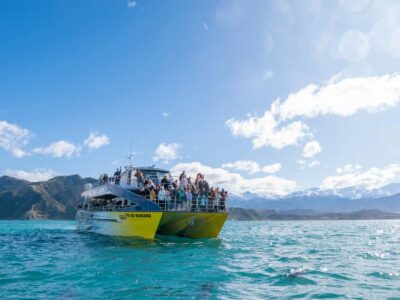
The boats are modern catamarans built for whale watching. You can remain inside during the faster ride out and back, then move outside when wildlife is located. Flat shoes are required, and warm clothing is sensible at any time of year. A light waterproof layer is useful if you plan to spend time on the outside decks.
The ride offshore and the first sightings
The trip out can take around 40 minutes, depending on conditions and the location of the animals. This is often the roughest part of the trip. The boat moves quickly, but speed does not mean a smooth ride, so take seasickness tablets before boarding if you are at all prone to motion sickness.
The company sells motion-sickness medication at its retail store, but taking it before the boat leaves is the safer plan. Once nausea starts, it is much harder to control. The staff warn passengers about this for good reason.
As you head offshore, the guide provides live commentary. Award-winning onboard animations are also used between sightings, giving you something useful to watch while the crew searches. The commentary covers whale behavior and life cycles, as well as the water around Kaikoura.
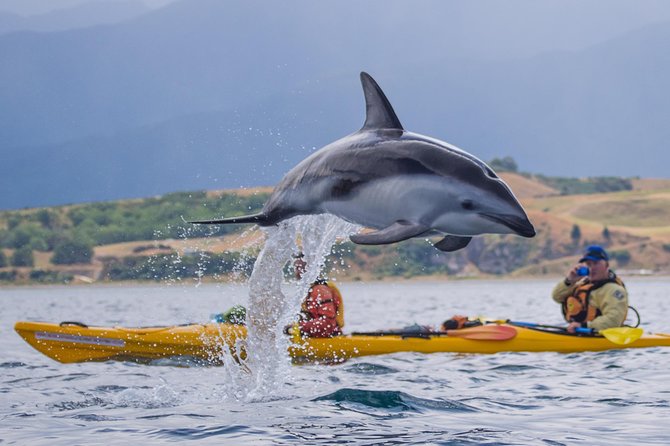
The first animal you see may not be a whale. Dusky dolphins are common possibilities, and several outings have encountered large pods racing alongside the boat, leaping, and turning through the wake. Fur seals may appear near the boat, while albatross and petrels can make the open water feel just as rewarding for bird lovers.
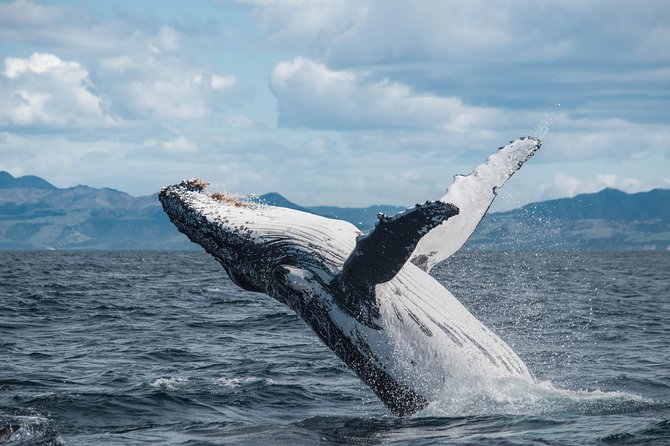
Some trips have produced an extraordinary mix of animals. Sightings have included pilot whales, orcas, humpback whales, a smaller whale identified as a right whale, seals, albatross, and large groups of dusky dolphins. None of these can be promised, but the variety is one reason this is more than a single-species outing.
Waiting beside a sperm whale
The crew’s job is not to chase an animal at high speed. They track activity, communicate with one another, and position the boat so passengers can watch without interfering with natural behavior. When a sperm whale rests at the surface, the catamaran may remain alongside it until the animal is ready to move.
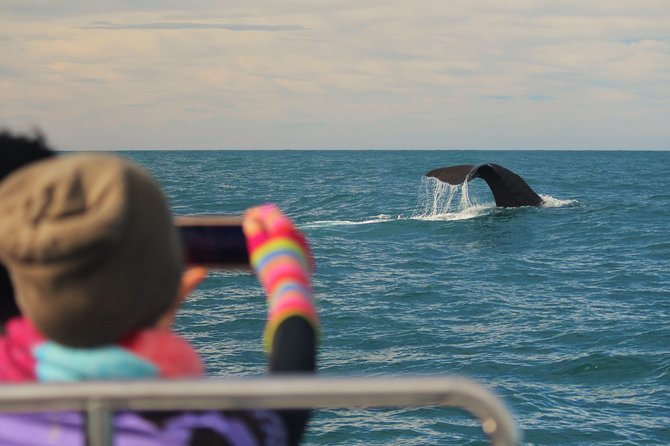
This is where patience pays off. The whale might surface with a burst of mist, settle low in the water, and gradually prepare for its next feeding trip. Keep your camera ready, but do not spend the whole encounter looking through a screen. The tail lift can happen quickly, and it is often the clearest sign that the whale is heading down.
The crew’s timing can make a major difference. One account describes a sperm whale resting at the surface for roughly ten minutes before lifting its tail. Another describes two separate encounters followed by a large pod of dusky dolphins. On a less generous day, you may see one whale for a few minutes and then spend time searching again.
That uncertainty is worth stating plainly. The 95 percent success rate is impressive, but it does not guarantee a close encounter, multiple whales, or a perfect photograph. The 80 percent refund if no whale is seen softens the financial risk, but it does not replace the experience of seeing one.
A few more Kaikoura days to compare
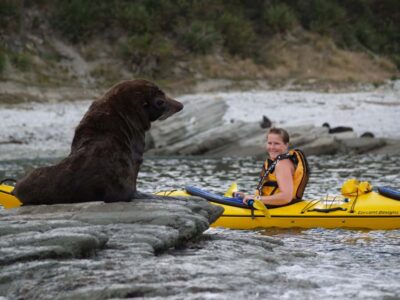
- Wildlife Sea Kayaking Tour – Kaikoura
★ 5.0 · 467 reviews - Seal Kayaking Adventure in Kaikoura
★ 5.0 · 422 reviews - Kaikoura: Half-Day Wildlife Kayaking Tour
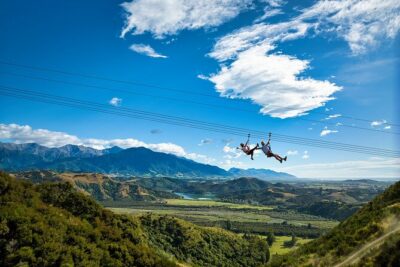
★ 4.6 · 390 reviews - Half Day Zipline Adventure in Kaikoura
★ 5.0 · 258 reviews
The commentary makes the trip more than a sighting
A strong wildlife guide helps you understand what you are seeing. Here, the commentary explains how sperm whales live, hunt, breathe, and spend time at the surface. It also gives context about Kaikoura Bay and its underwater canyons.
The marine information is presented through spoken explanation and visual animation. That is particularly useful during the search periods, when the boat may be moving through open water without an obvious animal in view.
Captain Malena received special praise for spotting a sperm whale, while Captain Fred was noted for clear commentary and local knowledge. Crew members also receive positive attention for their safety focus and calm handling of passengers. The overall style is informative without turning the trip into a lecture.
I especially like the way the guide can connect different sightings. A whale is not treated as an isolated spectacle. The seabirds, seals, dolphins, currents, and canyon system all help explain why the animal is here.
What the boat is like when wildlife appears
The catamaran offers an indoor area, which is helpful during the ride out, the ride back, or periods of poor weather. Outdoor decks provide better chances for photographs and a wider view, but they expose you to wind, spray, and cold.
The maximum group size is 116 people. That is not a small, intimate wildlife cruise. Most of the time, the boat’s size helps the operation run safely and gives you several places to look. When a whale appears, however, many people may move toward the same viewing side.
This can make photography and personal space harder. One passenger specifically found the boat crowded around a whale and would have preferred a smaller vessel. If you want a quiet, private outing, this is not the right format. If you value a professional operation with indoor shelter, stable facilities, and a higher chance of locating wildlife, the larger catamaran has clear benefits.
The crew manages the viewing process, but you should still be considerate. Move when asked, share railing space, and step back after taking your photos. A whale can vanish for everyone if the crowd blocks the view.
Weather, comfort, and safety
All departures depend on favorable weather and sea conditions. If poor weather cancels the trip, you can choose another date or receive a full refund. The company also monitors conditions closely and may place restrictions on children or passengers with medical problems.
Children must be at least three years old, although the minimum age can be raised at check-in if the sea is rough. Most people can take part, but this is not a calm harbor cruise. Anyone with a medical concern should contact the operator and check conditions before setting out.
Dress in layers. Wear flat shoes, bring a waterproof jacket, and plan for colder conditions than you might expect on shore. The outside deck is where you get the best viewing angles, but you do not need to remain outside for the whole trip.
If you are susceptible to motion sickness, this is the most important practical advice in the whole article: take medication before departure. Do not wait until the boat begins rolling. The rough ride is the one consistent concern, even on outings that produce excellent wildlife encounters.
Is the $111.39 price good value?
At $111.39 per person, this is not a throwaway activity, but whale watching in Kaikoura requires a specialized boat, trained crew, marina transport, safety systems, and people who can locate animals in a large stretch of ocean. The price includes the bus ride to and from the marina, the catamaran trip, live commentary, and onboard visual material.
The 80 percent refund policy if no whale is seen also gives the booking some protection. It does not cover the disappointment of an empty search, but it shows that the main promise is tied to finding a whale.
Value improves if you treat the outing as a marine wildlife trip rather than a guaranteed sperm-whale portrait session. Dolphins, seals, seabirds, and occasional orcas or humpback whales may make the day worthwhile even after a short whale encounter.
Food and drinks are not included, so plan those separately. The tour returns to the original meeting point, making it easy to continue exploring Kaikoura afterward.
Which departure should you choose?
The available check-in times are 7:15 a.m., 10:00 a.m., and 12:45 p.m. throughout the year. From November through March, there is also a 3:30 p.m. departure.
An early trip can be a smart choice if you want more room on the boat and time to continue your day in Kaikoura. One early outing had plenty of space for viewing, with mist clearing as the boat left the marina. Still, weather and animal movement change from day to day, so no departure time guarantees better sightings.
The afternoon option may suit a slower schedule, but allow enough time afterward if you are driving onward. Since the complete activity takes about 3.5 hours, a 3:30 p.m. check-in can occupy much of the evening during the longer summer days.
Who will enjoy this most?
You should book this if you care about wildlife, enjoy learning from a guide, and can accept that nature controls the schedule. It suits couples, families with older children, photographers, bird enthusiasts, and anyone who wants a well-organized introduction to Kaikoura’s offshore wildlife.
It is less suitable if you dislike boats, suffer badly from motion sickness, need a quiet private experience, or expect whales to surface close beside the boat on demand. The vessel can become crowded during a sighting, and the sea can be rough.
For families, the three-year minimum age is only a starting point. The operator can raise the age limit in poor conditions, so check on the day. For passengers with medical concerns, safety restrictions may apply.
Should you book Whale Watching in Kaikoura by Boat?
I would book this tour if seeing a sperm whale is high on your New Zealand list and you want a professional operation with a strong chance of success. The combination of purpose-built boats, marine commentary, flexible wildlife tracking, indoor seating, and an 80 percent refund if no whale appears gives it solid value.
Go prepared for a real ocean journey, not a theme-park ride. Take seasickness medicine beforehand, wear warm layers, and accept that the best moment may last only a few seconds. If you can do that, the sight of a sperm whale’s tail slipping beneath the Kaikoura sea, perhaps followed by dolphins or an albatross, can become one of the defining memories of your South Island trip.
FAQ
Where does the whale-watching tour begin?
The tour begins at Whaleway Station Road, Kaikōura 7300, New Zealand.
Where does the tour finish?
The activity ends back at the original meeting point.
How long does the experience take?
You should allow about three and a half hours in total. The actual time on the water can be up to 2.5 hours, with the remaining time used for check-in, the safety briefing, and bus transfers.
What animals might I see?
The main target is the sperm whale. You might also see dusky dolphins, fur seals, orcas, humpback whales, pilot whales, albatross, petrels, and other seabirds.
How likely is it that I will see a whale?
The tour advertises a 95 percent success rate. If you do not see a whale, you are eligible for an 80 percent refund.
What happens if no whale appears?
You receive an 80 percent refund if your tour does not see a whale. Other wildlife may still be present, but the refund applies to the whale-sighting condition.
Does the tour operate all year?
Yes. Tours operate throughout the year. Check-in times include 7:15 a.m., 10:00 a.m., and 12:45 p.m., with a 3:30 p.m. option from November through March.
What is the minimum age for children?
Children must be at least three years old. The operator may raise the age limit at check-in if sea or weather conditions require it.
What should I wear?
Wear warm clothing and flat shoes. Light waterproof clothing may be useful if you plan to spend time on the outside decks.
What happens if bad weather cancels the tour?
You can choose an alternative date or receive a full refund if the tour is canceled because of poor weather or sea conditions.
Can I cancel my booking?
You can cancel up to 24 hours before the experience start time for a full refund. Cancellations or changes made less than 24 hours beforehand are not accepted for a refund.
Newly listed around Kaikoura
- Private Seal Kayaking and Wildlife Tour in Kaikoura★ 5.0 · 7 reviews
- Kaikoura Helicopters Top n Tail Whale Watch flight★ 5.0 · 7 reviews
- Kaikōura Whale Watching – 1hr 20min Ultimate Adventure★ 5.0 · 8 reviews
- Kaikoura: Coastal and Alpine Scenic Airplane Flight★ 5.0 · 8 reviews
- Kaikōura: 45-Minute Whale Watching Helicopter Tour★ 5.0 · 8 reviews
- Kaikoura: Guided Family Kayaking Adventure★ 5.0 · 9 reviews
- Kaikoura: 1-Hour Whale Watching Helicopter Tour★ 5.0 · 9 reviews
- Kaikoura Helicopters Extended Whale Watch★ 4.5 · 15 reviews
Kaikoura Tours, compared.
Kaikōura Whale Watching Scenic Flight (40 Minutes)
Read our review →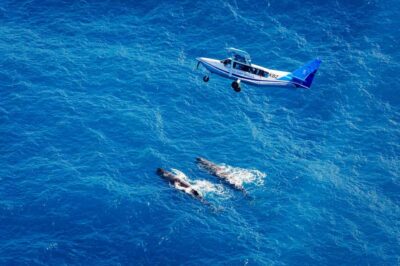
Browse the lists this tour appears in