
Reviewed · KAIKOURA TOURS
Kaikoura: 1-Hour Whale Watching Helicopter Tour
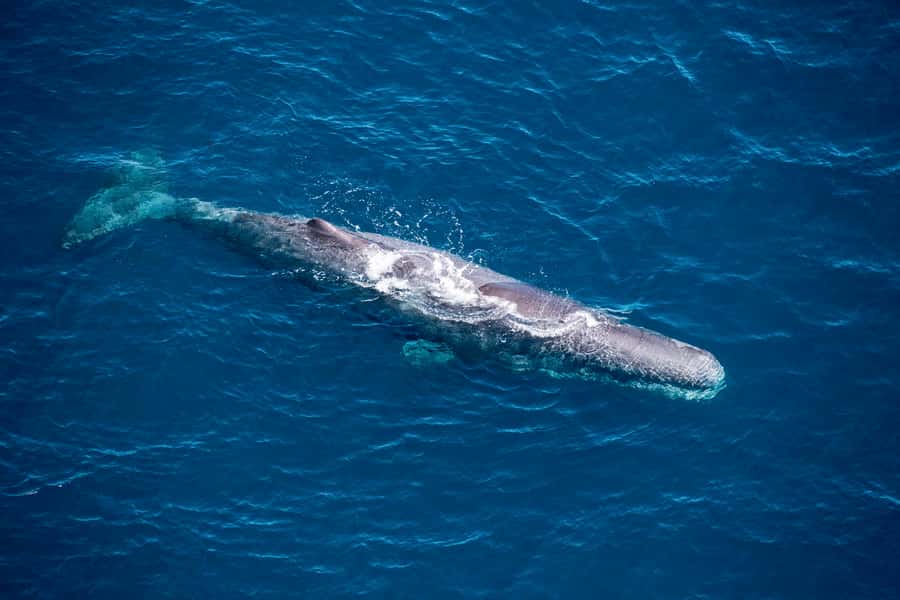
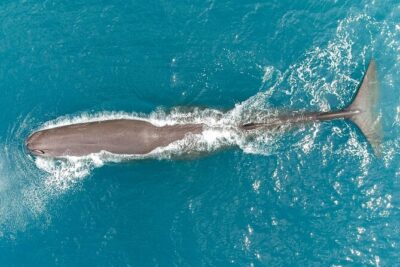
Kaikōura’s great attraction is right below you: sperm whales resting in the Pacific, seen from tip to tail rather than as a brief splash beside a boat. Then the helicopter turns inland for a mountain landing at about 1,600 meters, giving you a sharp change of scene within one hour.
I like the small six-person format and the way an aerial view lets you watch whales without crowding them. I also like the local commentary. Pilots such as Daniel and Peter have explained whale habits, the Kaikōura Canyon, earthquake damage, and the coastline while flying. The main catch is the price, $792 per person, and part of your hour is used for the mountain stop rather than whale watching.
Key points
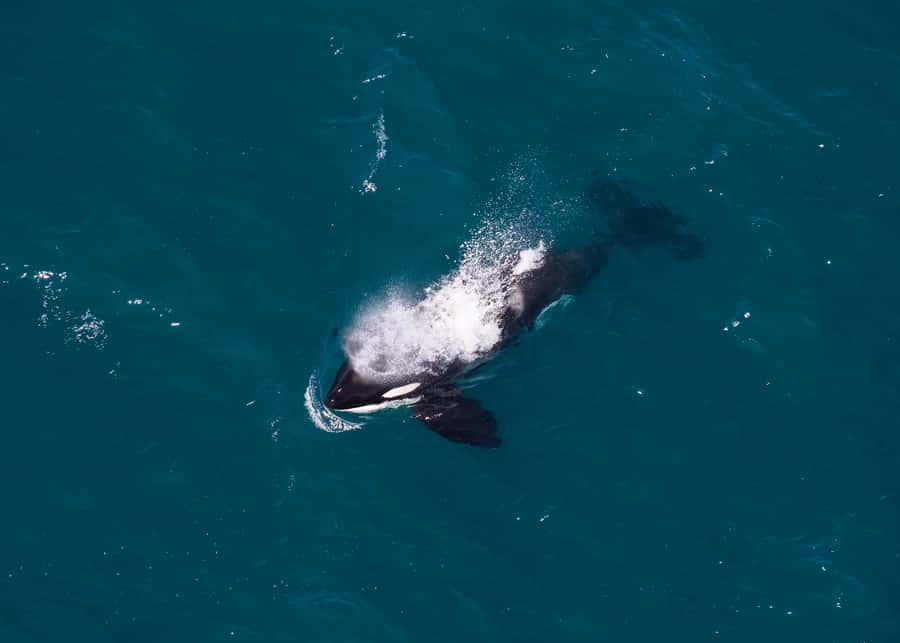
- Whales seen from above: You can see a sperm whale’s full body and watch its tail as it returns below the surface.
- Kaikōura Canyon below: The underwater canyon helps explain why sperm whales remain in the area year-round.
- Six people maximum: The small cabin gives each person a better chance at a window and a clear view.
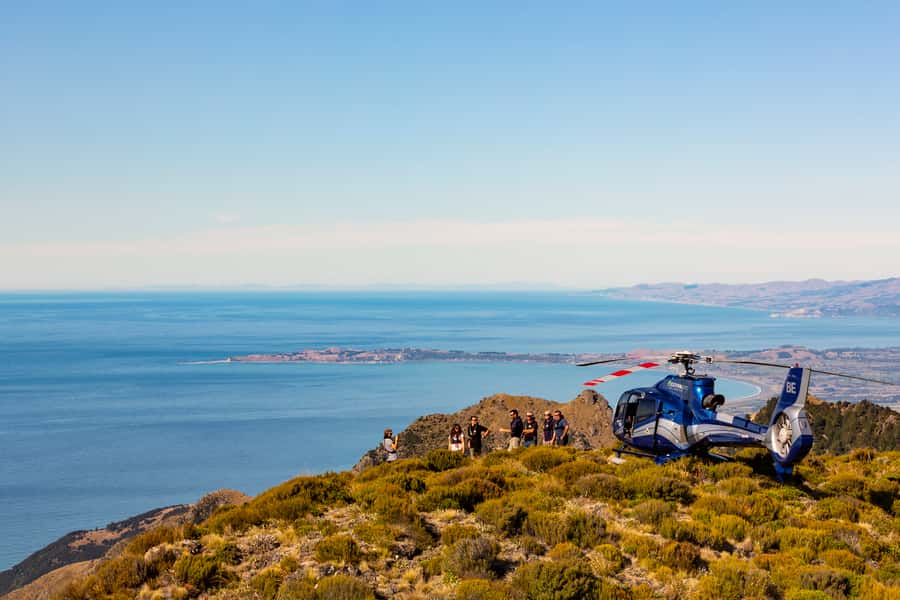
- Mountain landing included: The helicopter stops in the Seaward Kaikōura Range, with snow possible at certain times of year.
- Dolphins and seals along the peninsula: Dusky dolphins and New Zealand fur seals are part of the search from the air.
- Weather matters: Flights may move to another time or date, and wildlife sightings cannot be promised.
Why an aerial whale trip works so well in Kaikōura
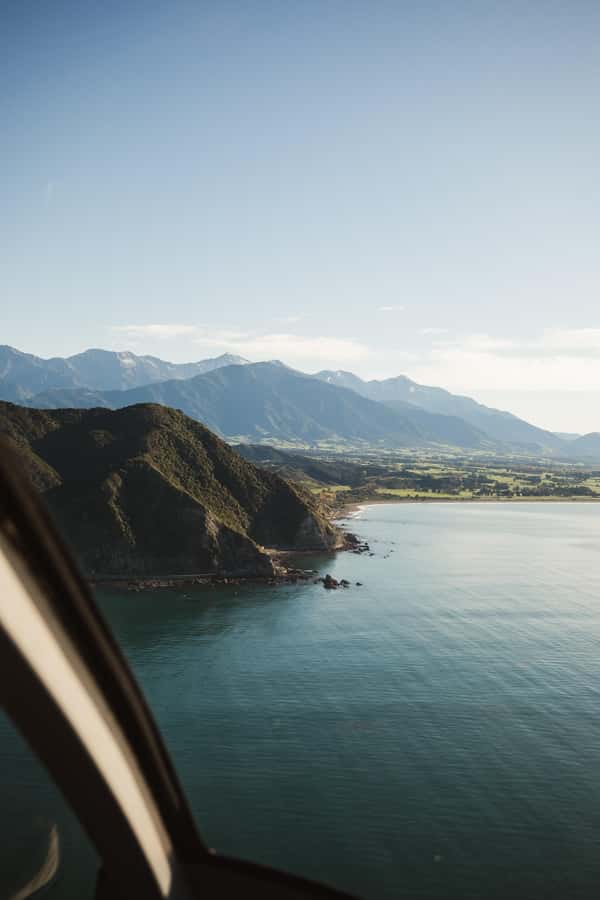
A boat puts you close to the sea. A helicopter gives you the larger picture. From above, you can see the whale’s body, its position in relation to the boat, and the broad stretch of water around it. That makes the animal easier to understand, not just easier to photograph.
The Kaikōura area is especially suited to this kind of trip because the sea floor drops sharply offshore. The Kaikōura Canyon creates a productive marine zone, and sperm whales live here throughout the year. Your pilot explains this before takeoff, so the whale search has some useful context rather than feeling like a random hunt over open water.
The aerial view also keeps the aircraft away from the animals. The operator follows New Zealand Department of Conservation marine mammal rules, and the flight is designed to watch natural behavior without bringing a boat right alongside a whale. That does not remove the need for patience, but it does make the experience feel more respectful.
More whale watching from Kaikoura:
- Kaikoura: Whale Watching Cruise
★ 4.6 · 3,089 reviews - Whale Watching in Kaikoura by Boat
★ 4.5 · 2,906 reviews - Kaikoura: Whale Watching Flight with Commentary
★ 4.6 · 823 reviews
Starting at Kaikōura Airport
You meet at the Kaikōura Airport terminal on State Highway 1 in Peketa, just outside Kaikōura. The experience begins with a safety briefing from the pilot. You are fitted with a headset, and the crew explains the helicopter procedures, life jackets, and other safety features.
The check-in team must weigh everyone because of aircraft weight limits. It is a practical aviation requirement, not a comment on anyone’s size, but it is worth knowing before you arrive. Plan to wear comfortable shoes and warm clothing. Sunglasses, a sun hat, a camera, and water are also sensible choices.
The helicopter carries no more than six participants. That is a real advantage on a scenic flight. You avoid the feel of a large sightseeing aircraft, and the pilot can usually keep the commentary personal and direct. The cabin is still compact, so do not expect unlimited room for large bags or bulky camera equipment.
The flight includes English commentary and headsets. Real-time flight tracking is also included. Food and drinks are not provided, so have water with you and eat before arriving if you need something substantial.
Watching sperm whales over the marine reserve
Once airborne, the helicopter heads over the Whale Sanctuary and Hikurangi Marine Reserve. This is the part most people have in mind when they see the tour name, and it can be remarkable.
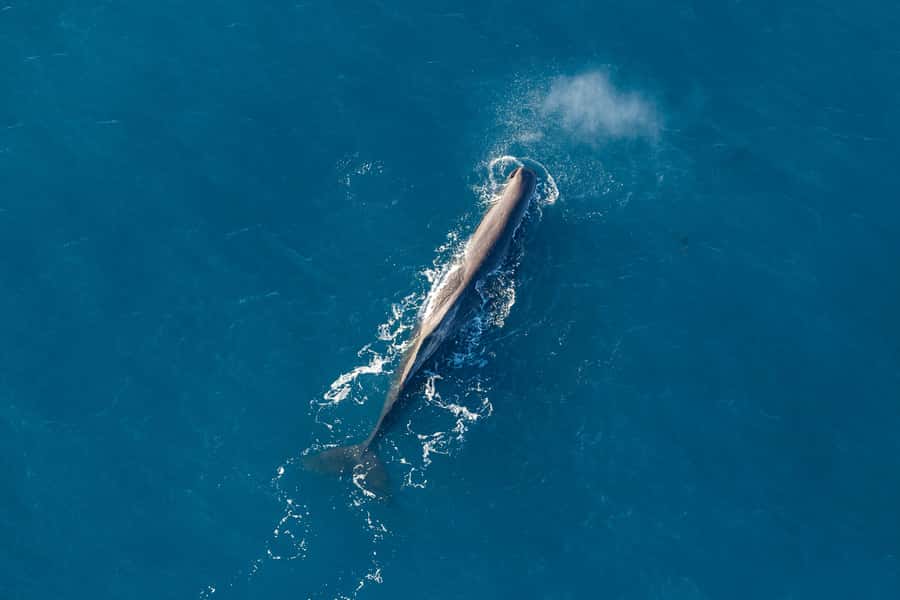
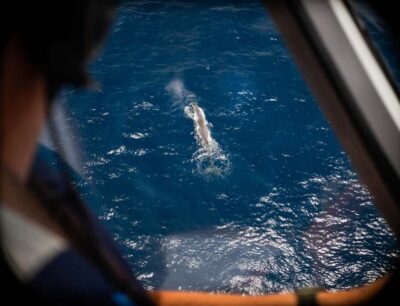
From the air, a sperm whale is not just a dark shape appearing for a few seconds. You may see its full length, its movement through the water, and the telltale tail as it submerges. One flight recorded several whales and gave the pilot enough time to explain when one was likely to return below the surface. That kind of countdown can help you prepare your camera instead of reacting too late.
Sightings are never guaranteed. The wildlife is free to move, and the flight must also meet safety and conservation rules. Still, the aircraft’s height gives the pilot a wider search area than you get from the deck of a boat. The crew can share information with other pilots and boat operators, which helps with locating animals while respecting the regulations.
The main tradeoff is time. This is a one-hour tour, not an all-day whale search. The helicopter also continues to the mountains, so you may spend less total time over whales than you would on a trip devoted only to marine wildlife. One booking was very positive but made exactly this point: the passenger would have preferred to use the full hour for whale watching.
That is the decision you need to make. If your only goal is maximum whale time, compare this with a dedicated boat trip. If you want whales plus mountains, the helicopter gives you a much broader Kaikōura experience.
Searching for dusky dolphins and fur seals
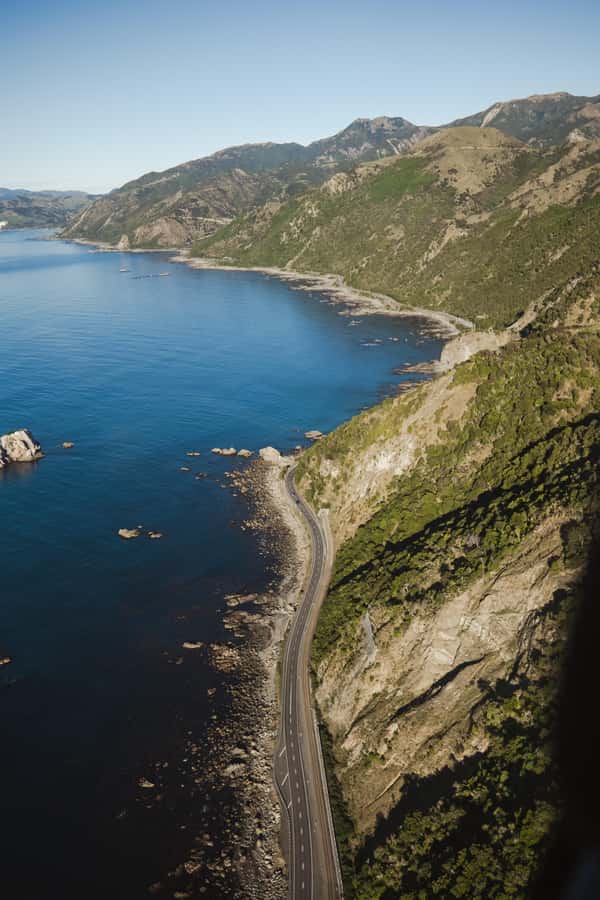
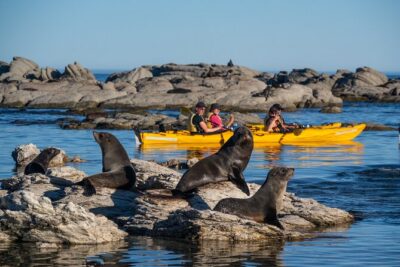
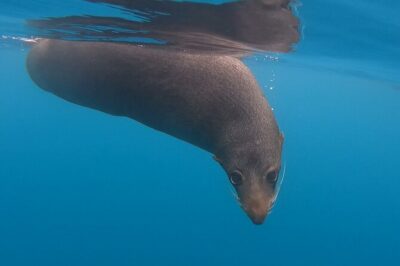
The route continues along the Kaikōura Peninsula. Keep watching the water for dusky dolphins and New Zealand fur seals. Dolphins can be hard to photograph from a moving helicopter, but seeing a pod from above gives you a better sense of its size and motion.
A flight once found large groups of dusky dolphins following a swim-with-dolphins boat. That is a useful reminder that the air view can show more than one isolated animal. You might see the dolphins gathering, spreading out, or moving beside a boat below.
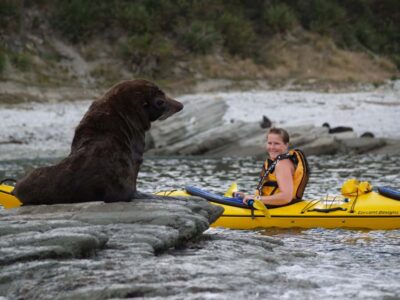
Fur seals are another possibility along the coast. The commentary helps you know where to look and adds detail about Kaikōura’s marine life. The pilot is not simply flying a fixed line and leaving you to scan the sea alone. The guide helps turn the flight into a natural history outing.
Still, keep your expectations sensible. Whales, dolphins, and seals are wildlife, not scheduled performances. The best approach is to enjoy each sighting and treat anything extra as a bonus.
More helicopter flights over Kaikoura:
- Kaikōura: 45-Minute Whale Watching Helicopter Tour
★ 5.0 · 8 reviews - Franz Josef Glacier: Helicopter Flight & Alpine Landing
★ 4.8 · 619 reviews - Franz Josef: 35min Helicopter Trip over Two Glaciers
★ 4.8 · 451 reviews - Mount Cook: Scenic Helicopter Flight with Alpine Landing
★ 4.8 · 442 reviews
Landing high in the Seaward Kaikōura Range
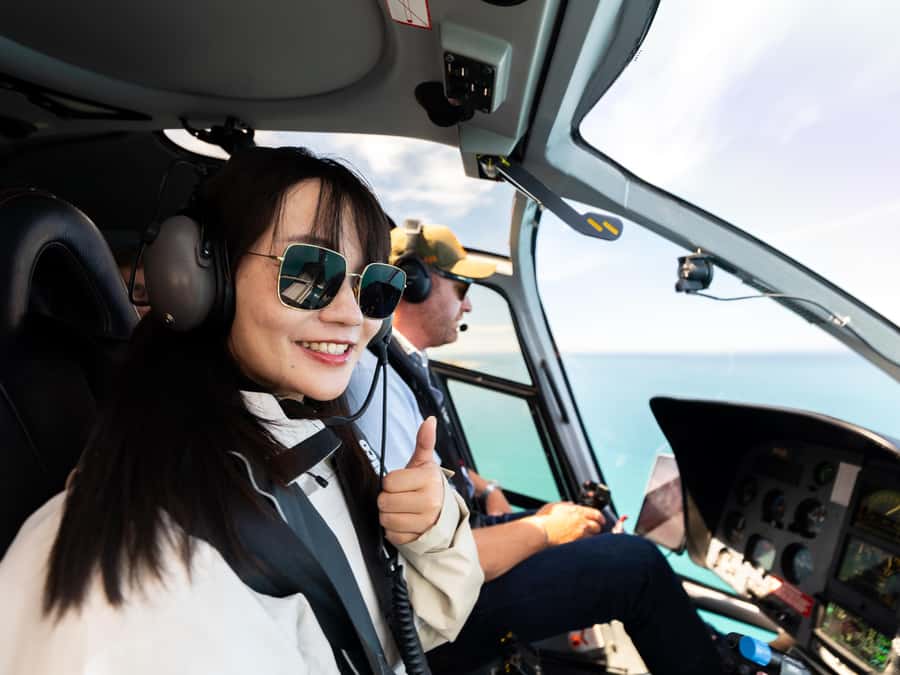
After the marine portion, the helicopter heads inland toward the Seaward Kaikōura Range. The mountain landing is the feature that separates this trip from a standard whale flight.
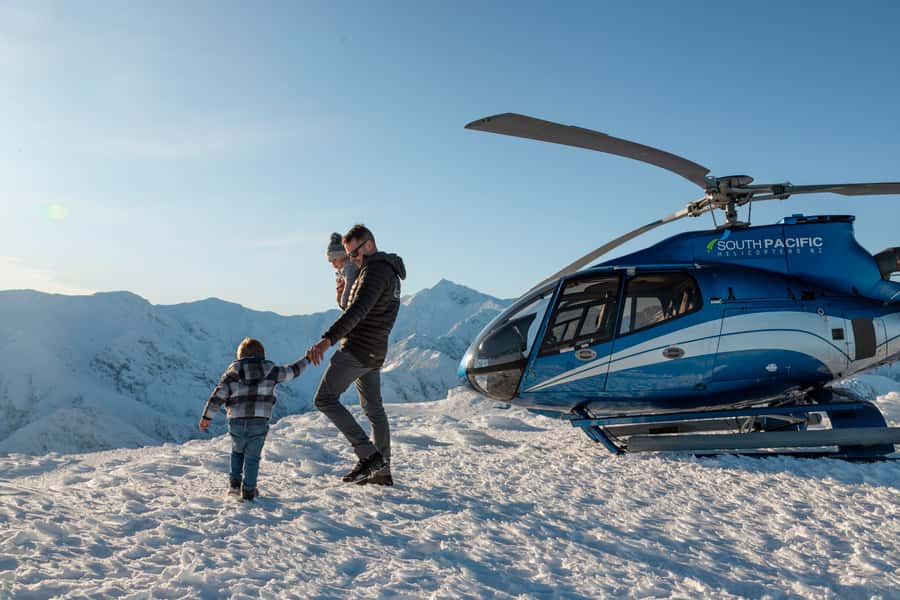
At roughly 1,600 meters on Mt Fyffe, you can step out and look across the peaks, Kaikōura Peninsula, and the Pacific Ocean. The change is dramatic. You begin with a view into the sea and finish with open alpine scenery and rugged ground under your feet.
At certain times of year, the landing may be on snow. Bring warm clothing even if Kaikōura feels mild at the airport. Conditions at altitude can be far colder, and the stop is intended for getting out, walking around, and taking photographs rather than sitting inside the aircraft.
The exact feel of the landing can depend on conditions. One flight included a stop on a steep hill in a farm area, while the advertised highlight is a summit landing around Mt Fyffe. The common feature is the high mountain viewpoint, but you should understand that weather and aircraft conditions control the final landing place.
This stop also creates the tour’s biggest compromise. The mountains are not an afterthought. They take meaningful time from the one-hour flight. I think that makes the tour more varied and memorable, but if you are paying nearly $800 mainly to see whales, you may find the alpine stop less useful.
Commentary that adds more than scenery
The quality of this trip depends heavily on the pilot. Daniel received especially strong praise for clear safety instructions, friendly flying, and his explanations of local wildlife. Peter was also noted for explaining whale habits and helping position the helicopter for photographs.
The commentary can cover more than whales. Past flights have included explanations of the Kaikōura earthquake fault line, landslides, a barrier lake, and road restoration work. These details give you a better sense of how the region has changed and why the coastline looks the way it does.
You also have a guide who knows how to watch whale behavior. A good pilot can tell you where to look, when an animal may return to the surface, and how to frame the shot. That matters because photographing from a helicopter is difficult. You are dealing with aircraft movement, glare, distance, and a whale that does not wait for your camera.
For photos, use a fast shutter speed if your camera allows it. One person who brought a telephoto lens found the results good but not as sharp as hoped, which is understandable from a moving aircraft. Keep the camera ready, but do not spend the whole flight staring through it. The full view is often better than a single frame.
Is $792 per person a fair price?
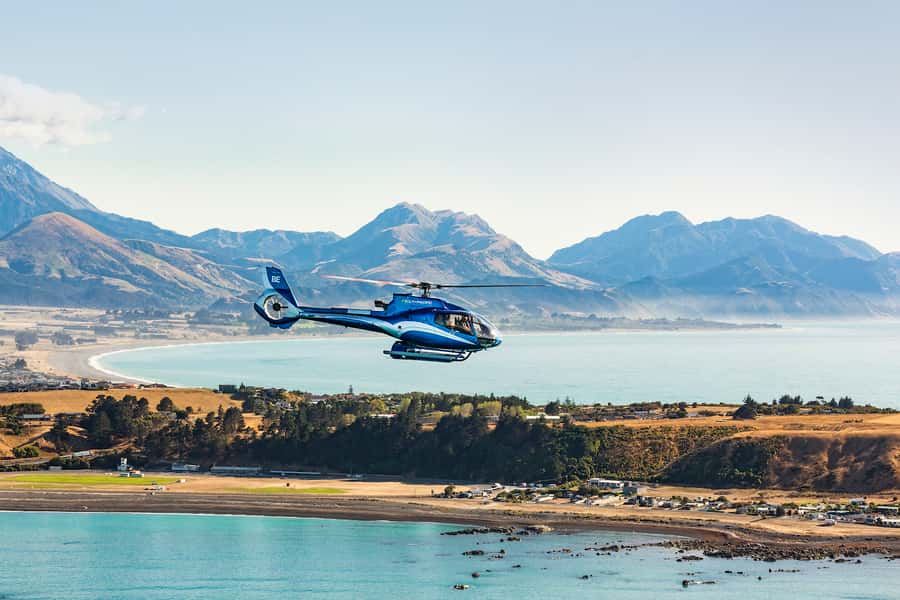
At $792 per person, this is a major splurge. You are paying for a short flight, a small group, an experienced pilot, specialist aircraft operation, wildlife searching, and a mountain landing. It is not a budget way to see Kaikōura.
The price makes more sense if you value two different experiences in one hour. You get marine wildlife from above, a scenic flight along the peninsula, local interpretation, and an alpine stop. Booking a separate whale outing and mountain flight could also cost a great deal, though the supplied information does not give prices for those alternatives.
The value is weaker if your priority is simply sitting over whales for as long as possible. The tour title may lead you to expect a full hour devoted to whale watching, but the mountain landing is a central part of the route. Read the experience as a combined whale and mountain flight.
I would reserve it for a special occasion, a short Kaikōura stay, or a trip where you want a memorable aerial view rather than the lowest-cost wildlife option. The small group and strong pilot commentary help justify the expense, but only if you want the whole package.
Who should book this flight?
I think it suits adults and older children who enjoy aircraft, scenery, and wildlife in equal measure. Children must be at least eight years old. The operator describes the activity as wheelchair accessible, but the important restrictions also say it is not suitable for people with mobility impairments, so ask the operator directly about your particular needs before paying.
The flight may suit people prone to seasickness better than a boat trip, since you are not on the ocean. However, the supplied safety information specifically lists people prone to seasickness among those for whom the activity is not suitable, so do not assume a helicopter automatically solves that problem.
You should also be comfortable with weather changes. Flights operate only in favorable conditions, and the date or time may need to change. For that reason, avoid placing this flight on the final morning of a tightly packed New Zealand itinerary.
Free cancellation is available up to 24 hours before departure, and you can reserve now and pay later. Those policies make it easier to protect your schedule, but they do not remove the need to keep some flexibility for weather.
The good and the less good
The best parts are clear:
- Whales are easier to see in full from above than from sea level.
- The mountain landing adds real variety, not just another pass over the coast.
- The six-person limit keeps the trip personal.
- Pilot commentary is a major strength, especially with guides such as Daniel and Peter.
- The flight follows marine mammal regulations, so the viewing is designed to limit disturbance.
The limitations are just as important:
- The cost is high, at $792 per person.
- The hour is shared between wildlife and mountains, so whale time is limited.
- Sightings depend on nature and weather, not a fixed schedule.
- Photography is tricky from a moving helicopter.
- Warm clothing matters, especially for a snow landing or high mountain stop.
I like that the tour does not pretend to offer a guaranteed wildlife show. The best flights can include several sperm whales, pods of dolphins, fur seals, and even unusual sightings such as orcas feeding on a swordfish. But those exceptional moments are bonuses, not promises.
Should you book the Kaikōura helicopter tour?
Book it if you want the full Kaikōura picture in a single, polished hour: whales below, the peninsula and Pacific along the route, then a high landing among the Seaward Range. The flight is especially appealing if you value a small group and personal guidance more than saving money.
Skip it if you want the longest possible whale-watching session or if $792 feels hard to justify for a one-hour activity. In that case, look at a whale-focused option and use your remaining budget elsewhere.
For the right person, this is a memorable splurge. Go in expecting a combined marine and mountain flight, not an uninterrupted whale search. Bring warm layers, keep your camera ready, and leave room in your schedule in case the weather changes.
FAQ
Where does the helicopter tour begin?
The tour begins at the Kaikōura Airport terminal, 617 State Highway 1, Peketa, Kaikōura.
How long is the experience?
The helicopter tour lasts one hour and returns to Kaikōura Airport.
How many people are in the group?
The group is limited to six participants.
What wildlife might I see?
You may see sperm whales, dusky dolphins, and New Zealand fur seals from the air. Wildlife sightings are not guaranteed.
Does the tour include a mountain landing?
Yes. The flight includes a landing in the Seaward Kaikōura Mountain Range, with views from around 1,600 meters at Mt Fyffe. Snow landings are possible at certain times of year.
What language is the tour offered in?
The live guide and audio guide are in English.
What should I bring?
Bring comfortable shoes, warm clothing, sunglasses, a sun hat, a camera, and water.
Can the flight time change?
Yes. Flights depend on favorable weather, and the date or time may differ from the one requested.
Are children and people with mobility impairments allowed?
Children under eight are not allowed. The activity is not suitable for people with mobility impairments. The supplied information also describes the tour as wheelchair accessible, so contact the operator to discuss your specific requirements.
More quick one hour outings in Kaikoura
- One Hour Cathedral Cove Boat Tour in Hahei
★ 5.0 · 340 reviews - Queenstown: 1-Hour Zipline Tour with 2-Lines & 21-Meter Drop
★ 4.6 · 119 reviews - Lake Wanaka 1-Hour Cruise Including Wine and Cheese
★ 4.5 · 95 reviews - Russell: 1-Hour Sightseeing Tour by Coach & Long Beach
★ 4.8 · 61 reviews
Newly listed around Kaikoura
- Private Seal Kayaking and Wildlife Tour in Kaikoura★ 5.0 · 7 reviews
- Kaikoura Helicopters Top n Tail Whale Watch flight★ 5.0 · 7 reviews
- Kaikōura Whale Watching – 1hr 20min Ultimate Adventure★ 5.0 · 8 reviews
- Kaikoura: Coastal and Alpine Scenic Airplane Flight★ 5.0 · 8 reviews
- Kaikōura: 45-Minute Whale Watching Helicopter Tour★ 5.0 · 8 reviews
- Kaikoura: Guided Family Kayaking Adventure★ 5.0 · 9 reviews
- Kaikoura Helicopters Extended Whale Watch★ 4.5 · 15 reviews
- Kaikoura: Coastal and Alpine Scenic Airplane Flight★ 5.0 · 24 reviews
Kaikoura Tours, compared.
Kaikōura Whale Watching Scenic Flight (40 Minutes)
Read our review →Browse the lists this tour appears in