
Reviewed · WELLINGTON TOURS
Wellington: Half Day Seal Coast Safari
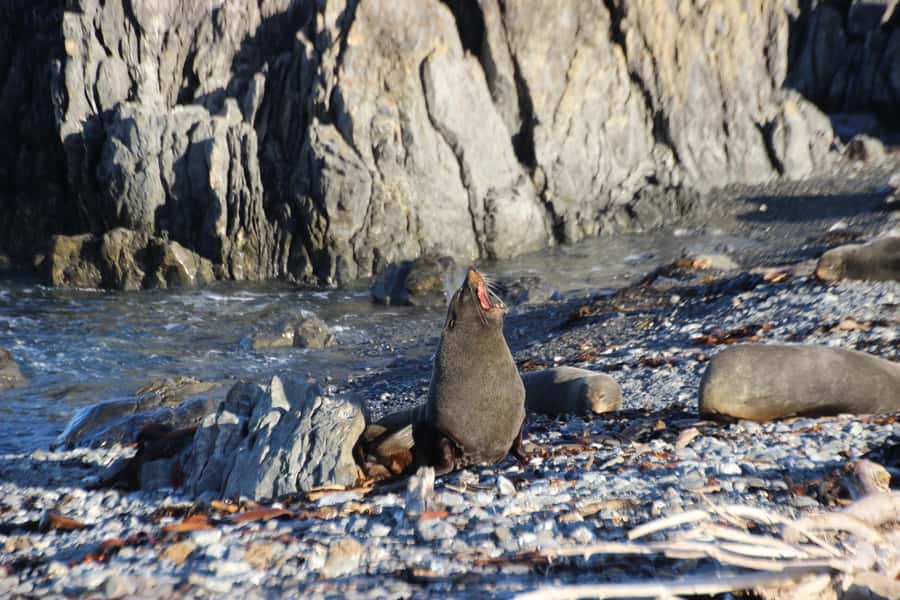
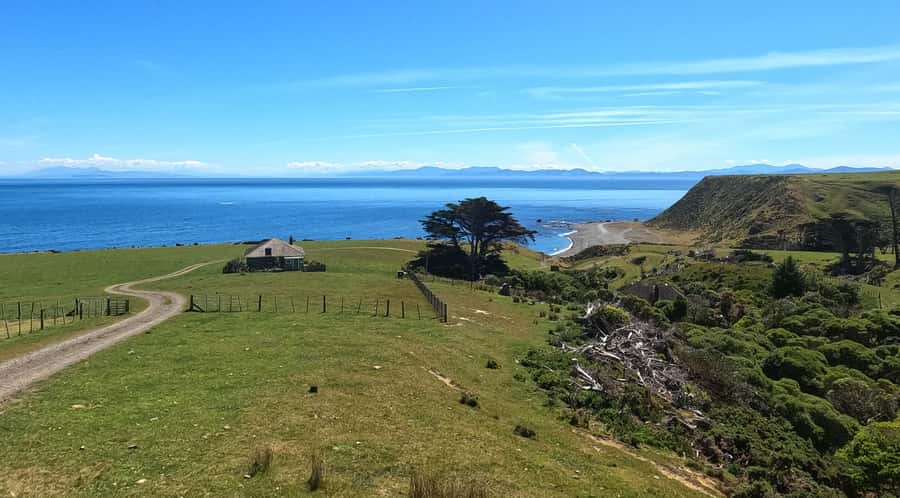
Wellington’s fur seals are the headline, but the real pleasure is reaching them by 4WD through private farmland that most visitors cannot enter. The route crosses steep hills above Cook Strait, with views toward the South Island and Kaikoura Ranges before dropping to a rough coastal track.
I like the mix of native forest and remote coast, and I like the small group size, capped at 10 people. The main drawback is the price: at $116 per person, this is not a cheap seal stop, and the bumpy farm roads can be tiring if you prefer a smooth ride.
The weather is another consideration. Wellington can be wet, windy, and foggy, yet the safari runs in all conditions and may change route when needed. Bring warm layers, even on a sunny morning.
Key points to know before booking
- Seals at Tongue Point: Watch New Zealand fur seals sunbathe, swim, and play from a safe distance on a rugged beach.
- Private Terawhiti access: Cross one of New Zealand’s oldest and largest working stations by 4WD rather than following a public road.
- Otari-Wilton’s Bush: Walk across a forest skybridge and learn about native plants, birds, Māori use of the land, and conservation.
- South Island views: On a clear day, look across Cook Strait toward the snow-capped Kaikoura Ranges.
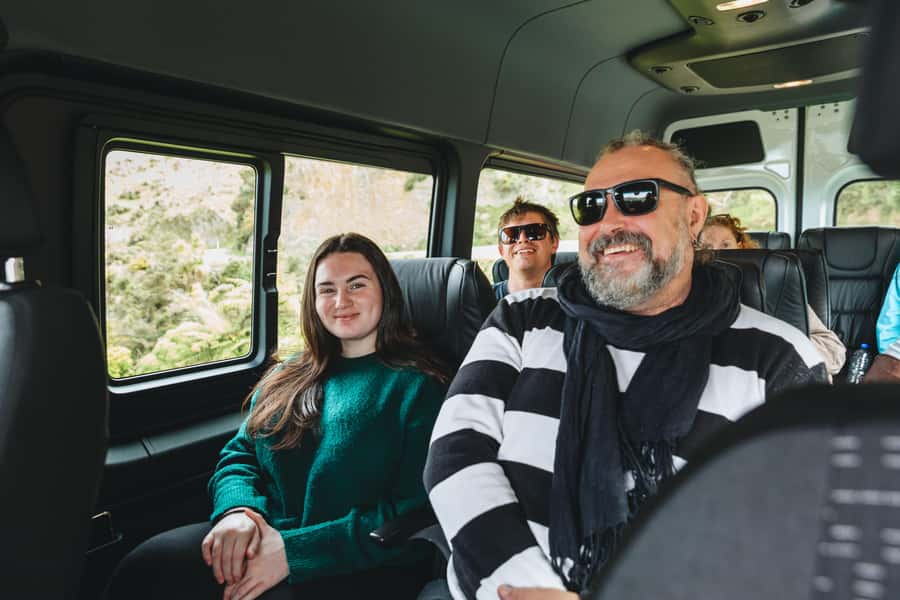
- Small-group transport: Mercedes 4WD vans carry no more than 10 people, with pickup from central Wellington or the cruise terminal.
- Minimal walking, plenty of bumps: You do not need to be a serious hiker, but the rough tracks make comfortable shoes and warm clothing essential.
Why the seals are only half the story
If you book this tour only to see seals, you will get what you came for. The colony near Tongue Point is the emotional payoff, with animals resting on the rocks and beach, sliding into the water, or lumbering around in their wonderfully ungainly way.
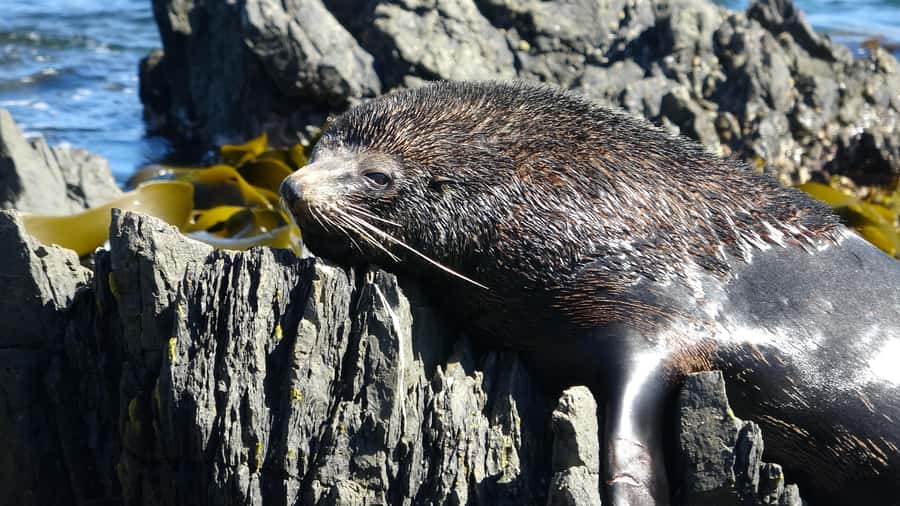
You stay at a respectful distance, usually close enough for good photographs but far enough to avoid disturbing the animals. One outing described a viewing distance of about 10 to 15 metres, though the exact distance depends on the seals and the conditions.
The setting matters. This is not a staged wildlife encounter or a quick stop beside a busy road. You reach the coast across private station land, then follow a rough track toward the colony. That access gives the outing a sense of discovery, even though the tour is carefully organized.
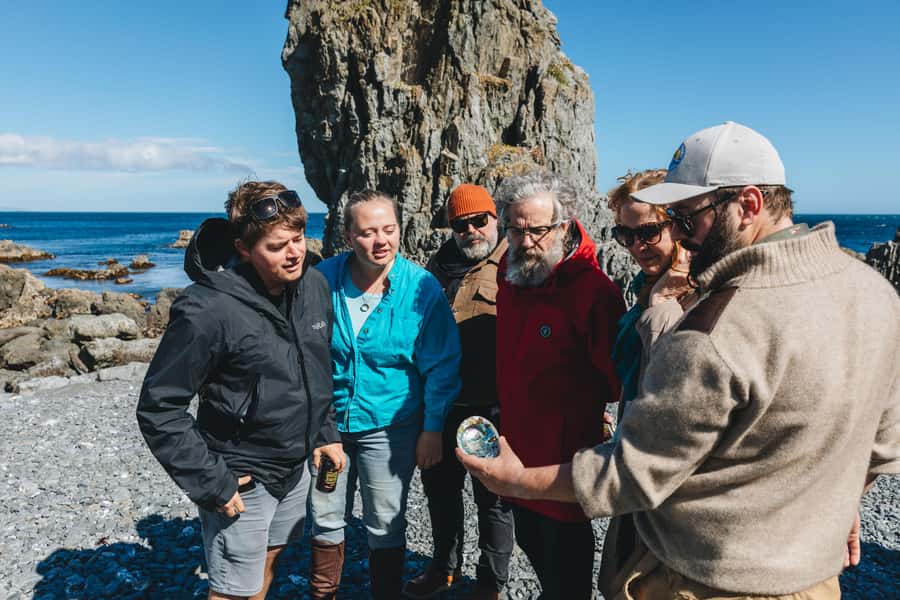
Your guide explains the seals’ place in the local ecosystem and the conservation work that has helped their numbers recover. Light refreshments are served while you watch the beach and the ferries crossing between New Zealand’s two main islands.
The time at the seals can vary with weather, road conditions, and animal behavior. You should not expect every seal to perform for the camera. Often the charm is simply watching them loaf in the sun, bark at one another, and move at their own pace.
More safaris in Wellington:
- Seal Coast Safari – Exclusive access to Wellington’s secret coast
★ 5.0 · 294 reviews - Coastal Connoisseur Wellington to Wairarapa Wine & Seal safari
★ 5.0 · 10 reviews - Star Safari Stargazing Experience, Martinborough
★ 5.0 · 6 reviews
Otari-Wilton’s Bush puts Wellington’s plants first
The safari begins in central Wellington and heads to Otari-Wilton’s Bush, a 100-hectare area of ancient and regenerating forest. It is New Zealand’s only botanical garden devoted solely to native plants, and it has been given a 6-star Garden of International Significance rating by the New Zealand Gardens Trust.
This opening stop gives the day useful context. Before Europeans arrived, much of New Zealand was covered in native forest, and Māori developed detailed knowledge of the plants, trees, and food sources around them. Your guide uses the forest to explain what early Māori and European settlers encountered in the Wellington area.
A skybridge crosses the tree canopy, giving you a higher view of the forest and a good chance to look for birds. Tui, kaka, kakariki, kereru, and sometimes karearea may appear. The exact sightings depend on the day, so treat the birdwatching as a possibility rather than a promise.
I like this stop because it prevents the tour from becoming a simple drive to a seal colony. You start with plants, birds, and the work of restoring native habitat, then see how those ideas continue along the coast.
The walk is not presented as a demanding hike. Minimal walking is required overall, but you should still wear comfortable shoes. If you have limited mobility, ask before booking, since the tour is not suitable for wheelchair users.
Crossing Terawhiti Station by Mercedes 4WD
After the forest, the route turns toward Wellington’s south coast. The key change comes when the van leaves the public road and enters Terawhiti Station, a large working farm with private access to the coast.
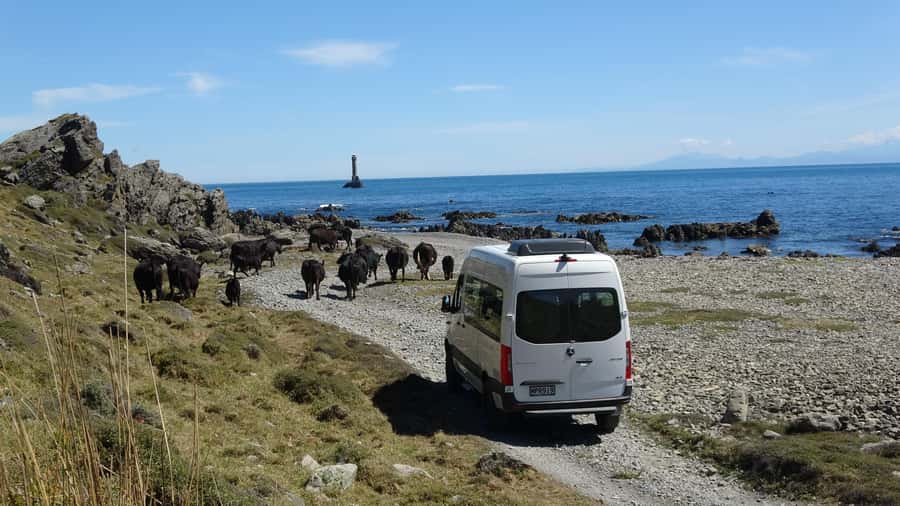
Sheep, cows, and goats may appear as you climb through the station. The farm is not simply scenery placed between city and sea. It is a working operation in an exposed part of New Zealand, where strong winds, steep ground, and rough tracks shape daily life.
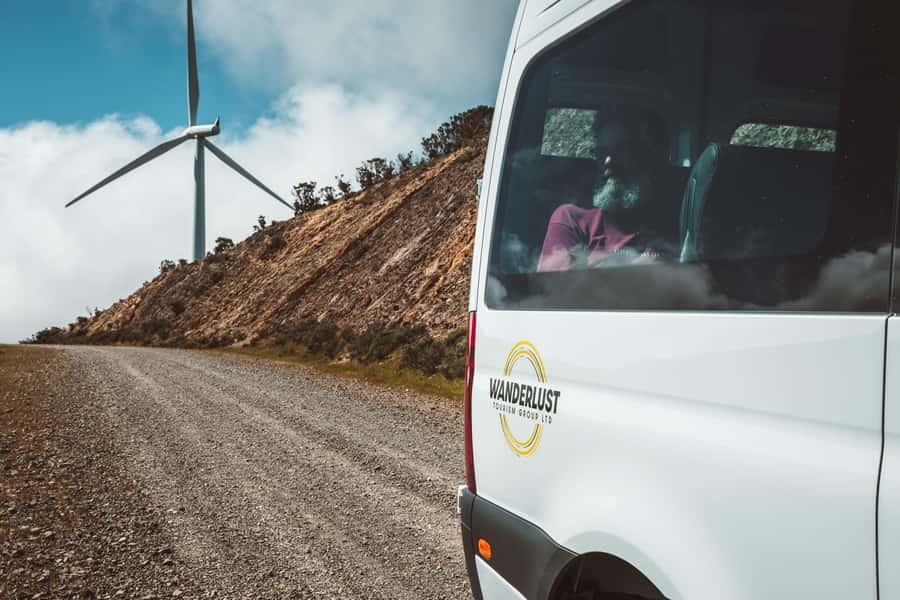
The 4WD is essential here. The roads are bumpy, and one part of the journey follows rough farm tracks before reaching the beach. I would not choose this trip if you need a smooth, quiet vehicle ride, but the jolts are part of the access story. A normal sightseeing bus could not take you this way.
The Mercedes vans are described as offering comfort and safety, and the small group limit makes it easier to hear the guide and ask questions. Several guides have received strong praise for careful driving on the winding roads, especially in poor weather.
Guides have included Sarah, Chewy, Grant, Marc, Gina, Andy, Blue, Hamish, Natalie, and Emily. You cannot select a particular person unless the operator confirms it, but the guiding style is a major part of the experience. Expect English commentary about Wellington, Māori culture, native plants, farming, wildlife, and local stories.
One useful detail: the operator may suggest a different departure time when bird and seal viewing conditions are likely to be better. That kind of adjustment can make a difference, so it is worth paying attention to messages before the tour.
Cook Strait, the South Island, and the wind farm
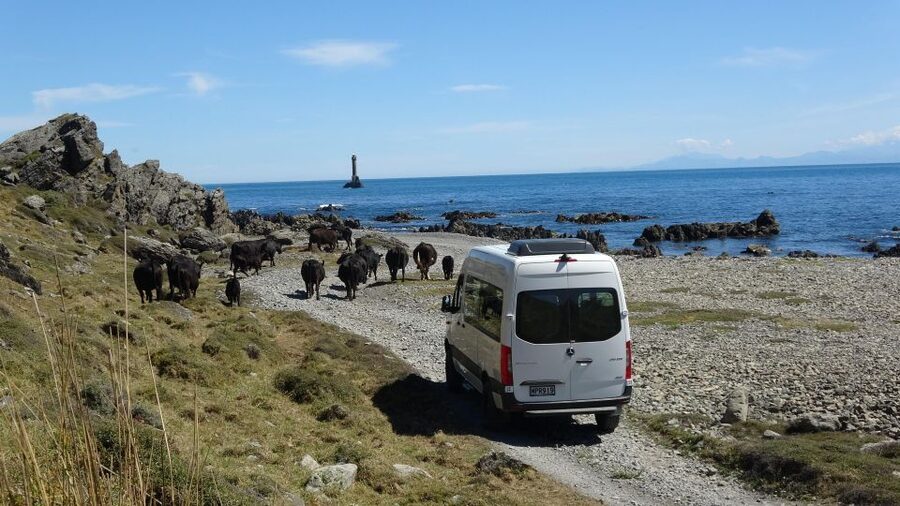
At the higher points of Terawhiti Station, the views open across Cook Strait. On a clear day, you may see the South Island and the snow-capped Kaikoura Ranges in the distance.
This is one of the strongest reasons to take the safari. You are not just looking at a beach from a car park. You are up on a high ridgeline, surrounded by open country, with water and distant mountains spreading across the horizon.
Fog and rain can erase much of this view. That is not a flaw in the tour, but it is a real Wellington possibility. On a wet outing, the experience shifts toward forest, farm roads, stories, and wildlife rather than wide views. Several departures have still gone ahead in heavy rain and fog, with the guide adjusting the pace and route.
The ridge road was built for Project West Wind, a wind farm that produces enough electricity to power homes across the Wellington region. The huge turbines explain Wellington’s nickname, Windy Welly, in practical terms. Your guide also explains how the wind project and the farm operation work together in a harsh setting.
This section adds an unexpected layer to the outing. You see farming, renewable energy, conservation, and tourism occupying the same remote hills. It is a more useful view of the region than a short photo stop in town.
The area is also connected with the Capital Kiwi project, which has reintroduced wild kiwi to the hills after about 100 years without them. You are not promised a kiwi sighting, but learning about the project helps explain the value of protecting habitat close to a capital city.
A few more Wellington days to compare
- Wellington: Wētā Workshop Guided Tour Ticket
★ 4.7 · 997 reviews - Wētā Workshop Experiences Tour – Wellington
★ 5.0 · 875 reviews - Wellington: Return Cable Car Ticket
★ 4.6 · 714 reviews - Half Day Tour of Wellington
★ 4.5 · 638 reviews
The leaning lighthouse and the final coastal track
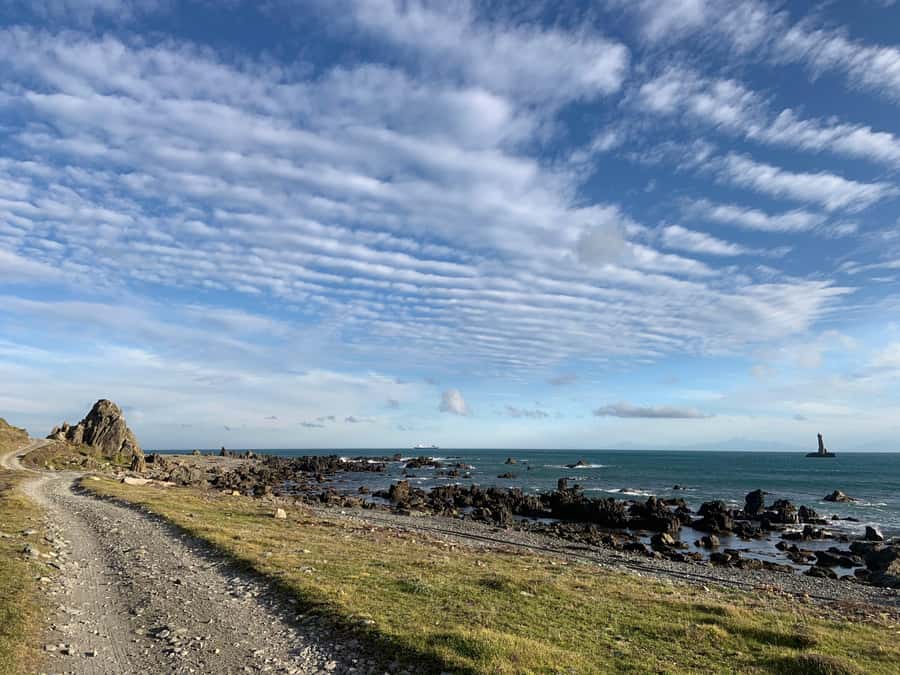
As the van descends toward sea level, you may spot the Karori Rock Lighthouse in the distance. Locally, it is often called the leaning lighthouse, and it really does tilt.
The lighthouse is one of New Zealand’s early automated examples, and it gives the coastal approach a memorable marker. You do not need to make this the focus of the trip, but it is a fun detail to watch for as the road drops toward the water.
The final approach to Tongue Point uses a rocky and sandy track. This is where the 4WD earns its keep. Expect some shaking as the vehicle works over uneven ground, and keep your camera and other loose items secure.
At the beach, your guide leads you to a suitable viewing area and explains how to behave around the seals. Keep your distance, avoid trying to approach them, and follow the guide’s instructions. The animals are wild, and their comfort comes before getting a closer photograph.
The beach itself is rugged rather than polished. There are no claims of a café, paved viewing platform, or elaborate visitor center. That simplicity is part of the appeal, but it also means you need to dress for exposure and changing weather.
What the guides add to the three-and-a-half-hour outing
The listed duration is 210 minutes, or three and a half hours. That is long enough to reach the coast and include the forest and farm sections without using up an entire day in Wellington.
The guide’s commentary links the stops together. At Otari-Wilton’s Bush, you hear about native plant life and bird recovery. At Terawhiti, the subject turns to farming, wind power, fault lines, and the return of kiwi. At the coast, the focus moves to seals, lighthouses, ferries, and conservation.
That range is important for you if you want more than photographs. Some guides also include Māori cultural references and information about native food plants. One guide offered visitors a chance to taste native tucker rather than simply describing it, though this should not be treated as a guaranteed part of every departure.
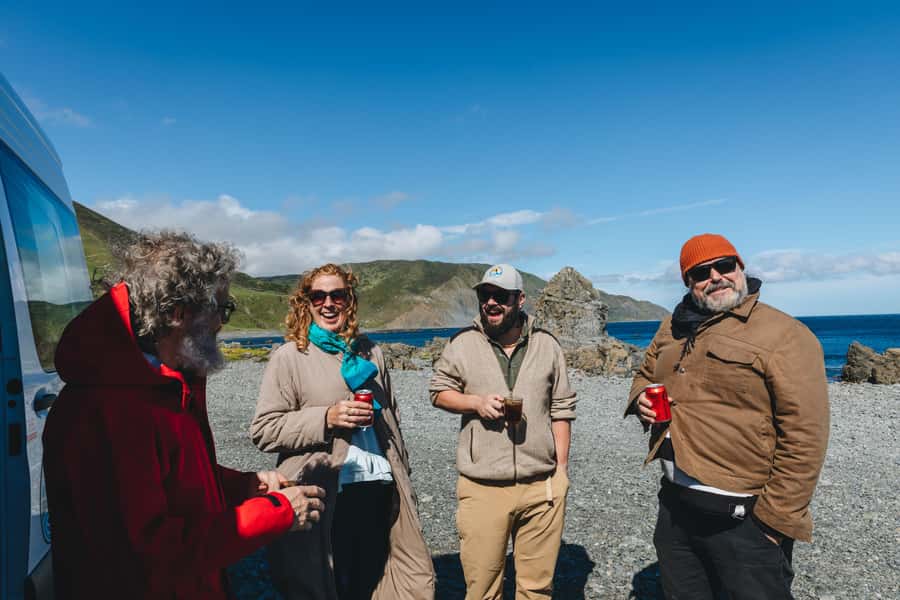
The names that come up most often in the tour’s operating history include Sarah, Marc, Grant, Andy, Blue, Hamish, and Chewy. Guides are also praised for making coffee or tea at the coast, taking photographs, answering questions, and keeping people comfortable when rain interrupts the schedule.
Because the group is limited to 10, the experience can feel personal. You are not lost in a large coach crowd, and the guide can usually respond to individual questions. That small group format also helps with cruise passengers who need to return to the ship on time.
Is $116 good value?
At $116 per person, the safari costs more than a basic city sightseeing ride. You are paying for a small group, a 4WD vehicle, private farmland access, an English-speaking guide, three and a half hours of transport and interpretation, and light refreshments.
The price makes the most sense if you do not have a car and want to reach parts of Wellington that are difficult to access independently. The private station roads are the key value. You cannot simply recreate this route with a normal rental car or a standard public excursion.
It is also good value for a cruise stop when you want a substantial half-day outing without committing to a full-day trip. Pickup is available at the Wellington cruise ship port, and the operator schedules the return with ship timing in mind. You should still confirm your pickup point and allow enough time for the return to the vessel.
The price may feel high if your main goal is a guaranteed close-up seal sighting. Wildlife never works that way, and some of the route’s appeal depends on clear weather. One useful way to judge the cost is to ask yourself if the forest, farm, mountain views, wind turbines, and coastal access are worth almost as much as the seals. For me, the full route makes the cost easier to justify.
Pickup, clothing, and practical details
Pickup is available from central Wellington locations and the cruise terminal. Listed city points include Bunny Street outside McDonald’s near Hotel Waterloo, Wakefield Street near the old Amora Hotel, Te Papa, Naumi Studio on Cuba Street, and the TRYP by Wyndham pickup point for the Courtenay Place area.
Hotels served include the InterContinental, DoubleTree by Hilton, Ibis, Mercure Abel Tasman, Naumi Studio, and others, with some pickups grouped at nearby street corners. Give your preferred location when booking because the exact time varies by pickup point.
If you drive into central Wellington, the suggested meeting point is the main entrance of Te Papa, with parking recommended on Barnett Street beside the museum. Large bags and luggage are not allowed in the vehicle, so this is not a convenient choice immediately before a flight or if you need to bring cruise luggage along.
Bring:
- Comfortable shoes
- Warm clothing
- Sunscreen
- Sunglasses
- A camera
I would add a waterproof outer layer for Wellington’s changeable weather. The safari runs in rain, and conditions can lead to route changes. The coast can feel chilly even when the city is mild.
You can cancel up to 24 hours in advance for a full refund, or move a confirmed booking to another day at no charge when you give the operator at least 24 hours notice. Reserve-now, pay-later booking is also available.
Who should book the Seal Coast Safari?
I would choose this tour if you want wildlife, open country, and local stories in one compact outing. It suits people without a car, cruise passengers, couples looking for a more unusual Wellington activity, and families or small groups who prefer a guide to handle the rough roads.
It is especially good for nature lovers who want to understand the setting around the seals. The birds and plants at Otari-Wilton’s Bush, the working farm, the wind farm, and the kiwi restoration project give the day more substance.
I would think twice if you dislike bumpy rides, exposed beaches, uncertain weather, or paying for scenery that may disappear behind cloud. It is also not suitable for wheelchair users, and large bags are not permitted.
Final call: book it for access, not just seals
Book the Wellington Seal Coast Safari if you want to see a wilder side of the city without spending a full day away. The seals are the highlight, but the private route through Terawhiti Station, the Cook Strait views, Otari-Wilton’s Bush, and the guide’s local stories make the outing feel complete.
Skip it if you only want a quick, inexpensive wildlife stop or if rough 4WD tracks sound unpleasant. For everyone else, the $116 fare is reasonable when you value access, transport, and interpretation as much as the animals themselves.
FAQ
How long is the Wellington Seal Coast Safari?
The tour lasts 210 minutes, or three and a half hours.
How much does the tour cost?
The listed price is $116 per person.
Where does the tour begin?
Pickup is available from central Wellington locations and the Wellington cruise ship port. You provide your pickup location when booking.
Can cruise ship passengers join the tour?
Yes. Cruise passengers should select Wellington Cruise Ship Port for pickup directly from the ship.
How many people are in each group?
The tour is limited to 10 participants.
What language is the tour conducted in?
The live tour guide provides commentary in English.
Will I definitely see fur seals?
The tour visits a native fur seal colony at Tongue Point, but wildlife sightings and animal behavior cannot be guaranteed.
How much walking is involved?
Only minimal walking is required, including the stop at Otari-Wilton’s Bush and the walk near the coastal seal viewing area.
Does the safari operate in bad weather?
Yes. The safari runs in all weather, though weather and other conditions may require a route change.
What should I bring?
Bring comfortable shoes, a camera, sunscreen, sunglasses, and warm clothing. Large bags and luggage are not allowed.
Is the tour wheelchair accessible?
No. The activity is not suitable for wheelchair users.
Can I cancel or change my booking?
You can cancel up to 24 hours in advance for a full refund. A confirmed booking can also be transferred to another day without charge when the supplier receives at least 24 hours notice.
Newly listed around Wellington
- Wellington Jewish Heritage sightseeing tour with a kosher lunch★ 5.0 · 5 reviews
- Private Tour in Wellington★ 5.0 · 5 reviews
- Wellington: Lord of the Rings Filming Locations Tour★ 4.0 · 6 reviews
- Star Safari Stargazing Experience, Martinborough★ 5.0 · 6 reviews
- Wellington 90 minute Harbour Cruise★ 5.0 · 6 reviews
- Wharekauhau Heli-lunch from Wellington★ 4.5 · 6 reviews
- Kombucha Rum and Craft Beer Private Tour★ 3.5 · 6 reviews
- Easy Rider Two-Hour Wellington eBike Tour★ 5.0 · 7 reviews
Wellington Tours, compared.

Wellington’s Original LOTR Experience – includes Weta and Lunch
Read our review →
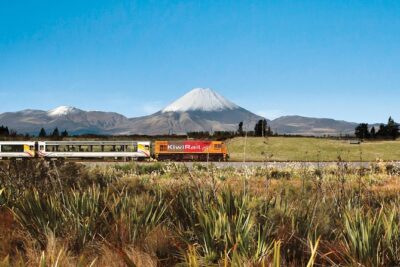
Northern Explorer Train Journey from Wellington to Auckland
Read our review →Browse the lists this tour appears in