
Reviewed · WELLINGTON TOURS
Guided Small Group Walking Tour in Wellington
Wellington reveals itself best on foot, and this route connects its big civic sights with places most visitors simply pass by. You start at the grand railway station, walk past Parliament and Premier House, cross the Botanic Garden and Wellington fault line, then descend through hillside neighborhoods to Cuba Street and Te Papa.
I like the way the tour combines politics and geography with plants, architecture, and Māori culture. I also like the small-group limit of 10, which makes it easier to ask questions and adjust the walk. The catch is clear: this is a hilly 2.5-hour walk, not a gentle city stroll.
Key points to know before you book

- A full city introduction on foot: Connect Wellington Station, Parliament, the Botanic Garden, the cable car viewpoint, Cuba Street, and Te Papa in one continuous route.
- The Botanic Garden is a major highlight: You walk through areas where native New Zealand bush meets exotic plantings.
- Expect serious uphill walking: The route climbs toward the top of the gardens, and one report counted 22,000 steps over the day.
- Small groups keep the tour personal: The maximum is 10 people, with guides such as Louis, also called Louie, and Von leading past groups.
- You finish in a useful part of town: The walk ends at Te Papa on the waterfront, after a refreshment stop around Cuba Street.
- Good value if you want context: At $52.75 per person, the tour costs more than a self-guided walk, but adds local explanation across several parts of the city.
From Wellington Station into the story of the city
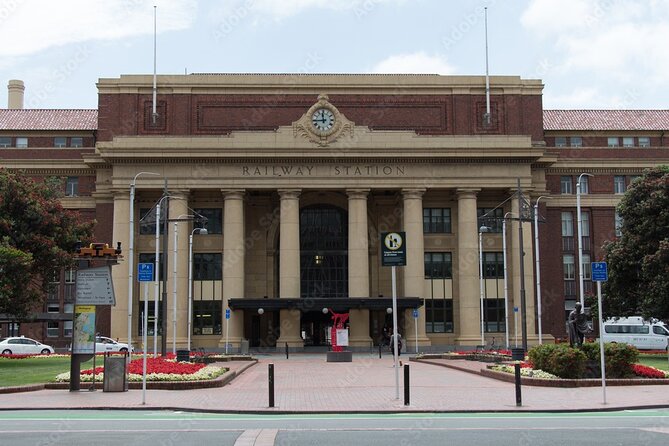
The meeting point is the main entrance of Wellington Railway Station on Bunny Street. That is a practical start for cruise passengers staying near the waterfront, people arriving by train, and anyone based around the central business district.
The station itself gives the tour a fitting opening. Its Neo-classical design offers an immediate lesson in Wellington’s civic character: formal, grand, and built to make an impression. From there, you pass through the station and use a nearby underpass before emerging close to Parliament.
This opening is brief, about 10 minutes, but it gets you moving quickly. You are not spending half the tour on introductions or transport. The route begins with a real sense of place.
More Walking Tours in Wellington:
- Walking Food Odyssey Wellington
★ 5.0 · 46 reviews - Wellington: 3 Hour Walking Food Tour
★ 4.8 · 23 reviews - Wellington’s Walking Food Odyssey
★ 4.6 · 11 reviews
Parliament grounds and New Zealand politics
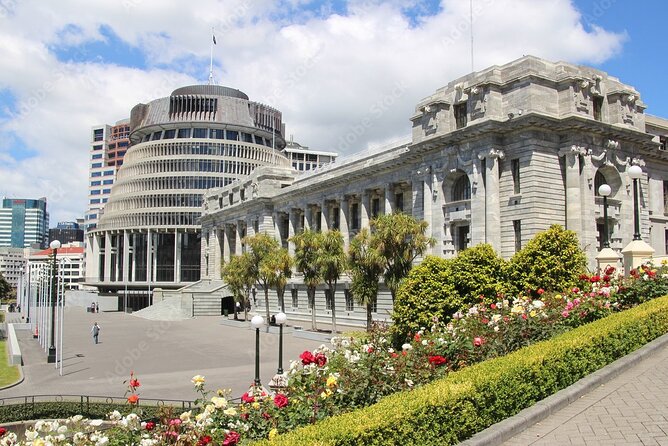
At the Parliament grounds, the guide explains how New Zealand politics shapes Wellington and how the surrounding buildings function. You also get context for the architecture, rather than simply stopping for a photograph.
That matters because Wellington can feel compact on a map but important in practice. Parliament, government offices, and nearby civic buildings give the city much of its purpose. This stop lasts about 15 minutes, enough for a useful orientation without turning into a long lecture.
The political discussion is one of the tour’s strongest features. The focus is not just on dates or names. It links New Zealand’s political culture to the city around you, which helps explain why Wellington has the atmosphere of a working capital rather than only a sightseeing center.
Guides Louis, also referred to as Louie, and Von have been praised for mixing facts with humor and for answering questions fully. The quality of any walking tour depends heavily on the person leading it, but this experience is designed around conversation rather than a recorded script.
Premier House and Wellington’s fault line
The walk continues along Tinakori Road toward Premier House, the official residence of New Zealand’s prime minister. The stop lasts around 15 minutes and adds another layer to the political side of the tour.
The more unusual detail comes from the ground beneath you. This historic road sits on the Wellington seismic fault line, so the walk connects national politics with the physical forces that shape the city.
That combination is valuable. You are not just moving from one attraction to another. You are learning why Wellington’s buildings, hills, streets, and neighborhoods look and feel the way they do.
The route now begins to rise. If you have limited mobility, a heart or breathing condition, or simply dislike hills, this is the point to take the physical demand seriously. The tour description calls for moderate fitness, and that is a fair expectation.
The Botanic Garden is more than a green break
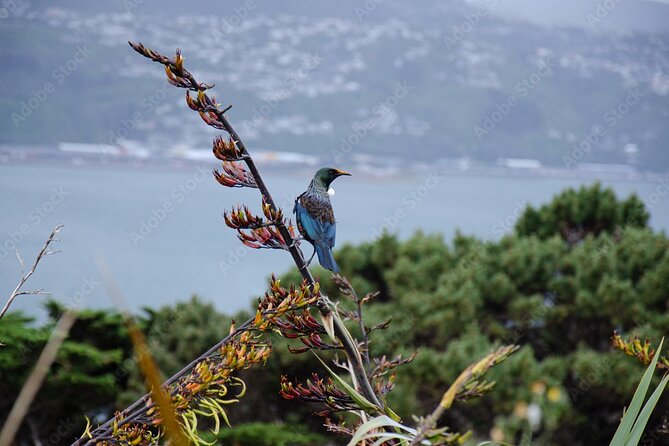
The Wellington Botanic Garden receives about 30 minutes, making it the longest formal stop before the final walk toward Te Papa. This is likely to be the most rewarding section for anyone interested in plants, birds, or New Zealand’s natural character.
You move through gardens, open areas, and denser New Zealand bush. The plantings bring together exotic species and native flora, giving you a quick look at the contrast between imported garden traditions and the country’s distinctive natural life.
The guide also discusses New Zealand’s biodiversity and the relationship between native plants and fauna. That explanation gives the garden purpose. Instead of treating it as a pleasant shortcut uphill, you begin to see it as a small lesson in the country’s isolation and unusual ecology.
The Botanic Garden is also where the physical effort becomes most obvious. You are walking uphill toward the cable car’s upper station. One person described the walk as gentle in pace but tiring for older walkers, with roughly half the route uphill. That is useful advice for anyone booking with a parent or grandparent.
Bring water and wear shoes you trust. The experience is not described as a technical hike, but it is still a sustained city walk over slopes and narrow streets. A café stop later provides a break, but do not count on that as your first chance to rest.
A few more Wellington days to compare
- Wellington: Wētā Workshop Guided Tour Ticket
★ 4.7 · 997 reviews - Wētā Workshop Experiences Tour – Wellington
★ 5.0 · 875 reviews - Wellington: Return Cable Car Ticket
★ 4.6 · 714 reviews - Half Day Tour of Wellington
★ 4.5 · 638 reviews
The cable car viewpoint gives you your bearings

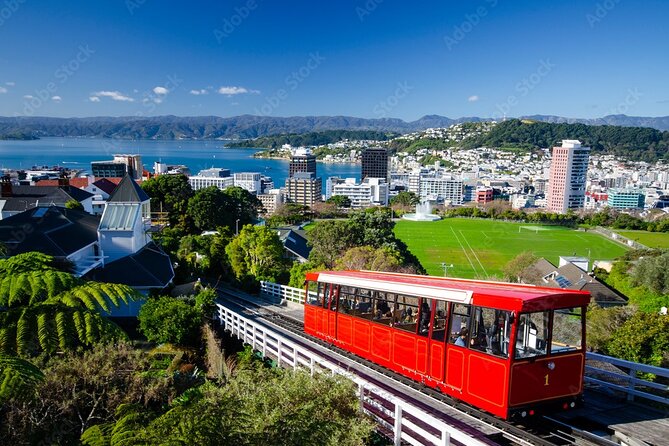
After working through the gardens, you reach the top of the historic Wellington Cable Car. The scheduled stop is about 10 minutes, focused on the view and orientation.
This is an important pause. Wellington’s hills and harbor can be confusing when you first arrive, especially if your visit is short. From this higher point, the guide points out landmarks and explains how the central city fits together.
You are not riding the cable car as part of the tour. You reach its upper station on foot through the Botanic Garden. That distinction matters if you were hoping for the classic cable car ride. The reward here is the view and the walk through the gardens, not a ticketed cable car journey.
The viewpoint also works as a natural midpoint. You have covered the station, Parliament, Premier House, the fault line, and the gardens. From here, the route changes character as you head through suburbs toward central Wellington.
The downhill route shows a quieter side of Wellington
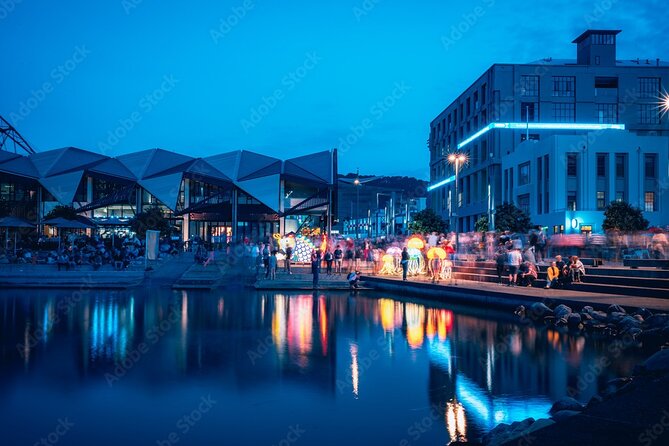
The final hour is the most distinctive part of the experience. Rather than taking the cable car back down or following a standard sightseeing route, you walk through Wellington suburbs, narrow streets, and areas with houses positioned on steep hillsides.
This gives you a side of Wellington that a bus tour cannot easily provide. You see how the city’s residential neighborhoods fit into the hills, and you get a closer feel for the everyday shape of the place. The route is described as taking you through areas that most tourists do not reach.
The houses and streets are part of the visual interest, but they also mean more uneven grades and turns. Downhill walking can be tiring in a different way from climbing, especially if your knees are sensitive. You should still expect a steady pace and a fair amount of standing while the guide explains what you are seeing.
This section is where the tour feels least like a checklist. You are not stopping at a famous façade every few minutes. Instead, the guide uses the neighborhoods to explain architecture, topography, and Wellington life.
Cuba Street adds a welcome pause
The route eventually reaches Cuba Street, described as the heart of the city. You stop for a quick refreshment, with one recorded stop at Olive for cold drinks.
The break is short, but well placed. After the climb and the suburban walk, you will appreciate sitting down or pausing somewhere central. Cuba Street also gives the guide a chance to offer restaurant and shopping suggestions for the rest of your stay.
Do not expect a full food tour. The refreshment stop is a pause, not an included meal or a sequence of tastings. The useful part is the chance to ask where to eat and what to see next while you are already in one of Wellington’s main central areas.
The stop also makes the tour more flexible. Guides have adjusted the route when people have asked to see particular places, as long as that could be done within the walk. You should not assume every request can be added, but a small group gives the guide more room to respond than a large coach tour.
Finishing at Te Papa on the waterfront

The formal endpoint is the Museum of New Zealand Te Papa Tongarewa at 55 Cable Street. The tour generally ends around the waterfront by the museum, though the exact final point can be adjusted to suit the group’s wants and needs.
This is a useful finish. Te Papa is one of Wellington’s major attractions, and the waterfront is a convenient place to continue your day. You can visit the museum afterward, explore the harbor area, or head back toward central accommodation.
The tour does not include admission into Te Papa. Think of the museum as the endpoint and a practical next stop, not part of the guided visit.
Ending here also gives the route a satisfying shape. You start with the country’s government, cross its gardens and hills, pass through residential Wellington, and finish beside the national museum. In about two and a half hours, you get a physical and cultural outline of the city.
What $52.75 buys you
The price is $52.75 per person. For a self-guided walk, that is a noticeable spend, since Wellington’s public streets, Parliament grounds, and Botanic Garden can be explored without an admission charge.
The value comes from the range of subjects covered and the route between them. You get a guide explaining politics, architecture, Māori culture, flora, fauna, geography, and the seismic fault line while also helping you understand where the main parts of the city sit.
It is especially useful early in your visit. You finish with restaurant and shopping ideas, a sense of the hills, and a better idea of how the station, government quarter, gardens, Cuba Street, and waterfront connect.
The small group limit of 10 also matters. A guide can usually hear your questions and make minor adjustments more easily than with a large group. Some people have even ended up with a private walk when other bookings dropped out, without the route being shortened.
Still, price this against your walking ability. If you are likely to stop often or need frequent transport, the value drops because the route depends on covering ground on foot. The tour earns its price for someone who wants context and exercise together, not for someone seeking an easy sightseeing loop.
Who will enjoy this walk most
I would choose this tour if you want a broad introduction to Wellington and prefer local explanation to a fixed hop-on, hop-off route. It suits curious first-time visitors, solo visitors who like asking questions, and people who want to see neighborhoods beyond the central sights.
It is also a strong choice if you enjoy gardens and city views. The Botanic Garden receives real time on the route, and the upper cable car viewpoint gives you a useful look across the city.
You should think twice if you are not comfortable with hills. One person described the outing as tiring for seniors, and another estimated 22,000 steps. The published expectation of moderate fitness is not a formality.
The tour may also suit families with older children who can manage a long walk, though the available information does not give a minimum age. Service animals are allowed, and the start is near public transportation.
The experience requires good weather. If poor weather cancels it, you are offered another date or a full refund. It also requires a minimum number of people, so a low booking count can lead to a date change, another experience, or a full refund.
Practical booking advice for Wellington
The activity uses a mobile ticket, and confirmation is received when you book. Arrive at the main entrance of Wellington Station on Bunny Street, not at the cable car or Parliament.
Allow the full two hours and 30 minutes. The route can be organic near the end, especially around the waterfront, but you should not book a tight appointment immediately afterward unless you are comfortable with some uncertainty.
Free cancellation is available up to 24 hours before the local start time. Changes or cancellations inside that window are not accepted for a refund.
One serious reliability warning deserves attention. A reported booking was canceled by the operator only 10 minutes before the start, despite an earlier message confirming the meeting details. That appears to be an isolated but important risk, so keep your phone available on the day and avoid arranging an expensive, nonrefundable activity immediately afterward.
Should you book this Wellington walking tour?
Book it if you want Wellington explained as a whole city rather than reduced to a few postcard stops. The strongest parts are the Botanic Garden, the views from the cable car’s upper station, the political context around Parliament, and the route through hillside suburbs to Cuba Street.
Skip it if you want a flat walk, a ride on the cable car, or a tour focused mainly on interiors and admissions. You will be walking uphill, covering a lot of ground, and finishing at Te Papa rather than spending the afternoon inside attractions.
For fit visitors with limited time, $52.75 is reasonable for the amount of ground and context covered. Wear good shoes, carry water, and book early in your stay so the food, neighborhood, and sightseeing advice can help shape the rest of your Wellington visit.
FAQ
Where does the Wellington walking tour start?
It starts at the main entrance of Wellington Railway Station on Bunny Street, Pipitea, Wellington 6011.
Where does the tour finish?
It finishes at the Museum of New Zealand Te Papa Tongarewa, 55 Cable Street, Wellington 6011. The guide usually ends near the waterfront and may adjust the exact final point to suit the group.
How long does the walking tour last?
The tour lasts approximately two hours and 30 minutes.
How many people can join the tour?
The maximum group size is 10 people.
How physically demanding is the route?
You should have a moderate level of physical fitness. The route includes uphill walking through the Botanic Garden and toward the top of the cable car, followed by streets and hills in Wellington suburbs.
Does the tour include a cable car ride or admission to Te Papa?
The route reaches the top of the Wellington Cable Car on foot, but the provided details do not include a cable car ride. Te Papa is the endpoint, and admission to the museum is not listed as included.
What happens if the weather is poor or the minimum group size is not reached?
If bad weather or an insufficient number of participants causes cancellation, you are offered another date or experience, or a full refund.
Newly listed around Wellington
- Wellington Jewish Heritage sightseeing tour with a kosher lunch★ 5.0 · 5 reviews
- Private Tour in Wellington★ 5.0 · 5 reviews
- Wellington: Lord of the Rings Filming Locations Tour★ 4.0 · 6 reviews
- Star Safari Stargazing Experience, Martinborough★ 5.0 · 6 reviews
- Wellington 90 minute Harbour Cruise★ 5.0 · 6 reviews
- Wharekauhau Heli-lunch from Wellington★ 4.5 · 6 reviews
- Kombucha Rum and Craft Beer Private Tour★ 3.5 · 6 reviews
- Easy Rider Two-Hour Wellington eBike Tour★ 5.0 · 7 reviews
Wellington Tours, compared.


Wellington’s Original LOTR Experience – includes Weta and Lunch
Read our review →
Northern Explorer Train Journey from Wellington to Auckland
Read our review →Browse the lists this tour appears in