
Reviewed · MOUNT COOK & LAKE TEKAPO TOURS
Mount Cook Alpine Explorer Helicopter Flight with Alpine Landing
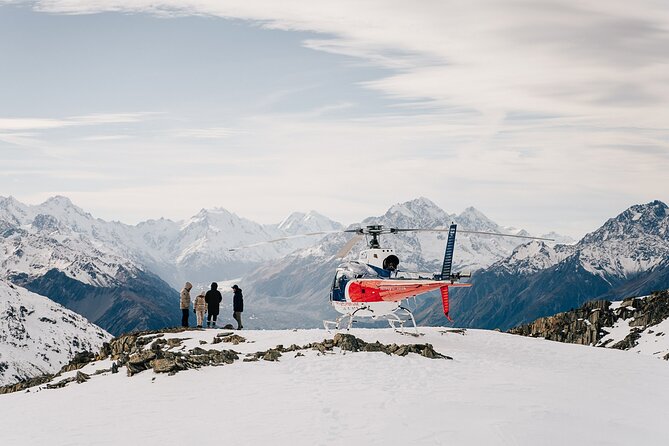
A helicopter lifts you above the scarred ridges of the Ben Ohau Range, carries you through a mountain pass, then sets you down in Aoraki Mount Cook National Park. If conditions are right, you can step onto a snowfield with Aoraki/Mount Cook rising among the Southern Alps. That is the part of this trip you simply cannot reproduce from a roadside lookout.
I like the small maximum group of six, which gives the flight a personal feel, and I like the pilot commentary, which helps turn a fast ride into a lesson in glaciers, valleys, and mountain routes. The main catch is clear: the snow landing is weather and season dependent, and in warmer months you may land on bare alpine ground or limited snow rather than a broad white field.
Key points to know before you fly
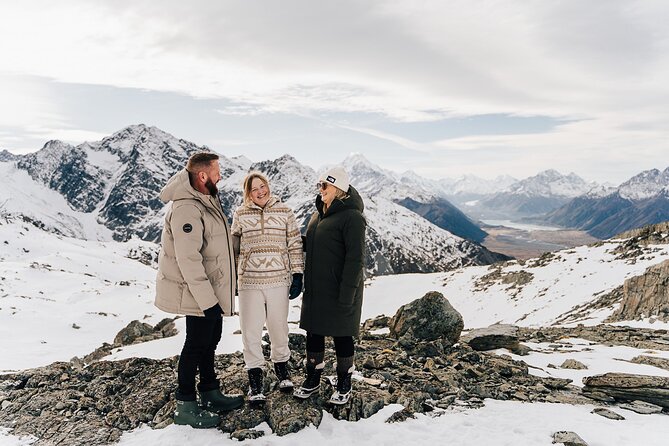
- The alpine landing lasts about 10 minutes, giving you time to step outside, take photographs, and enjoy the high mountain air.
- The helicopter carries up to six passengers, so this is a more intimate flight than a large sightseeing aircraft.
- The advertised flight time is 20 to 25 minutes, within a total trip of about 35 minutes.
- Pilot commentary is included, with guides such as Greg and Dan pointing out peaks, glaciers, valleys, and landmarks.
- The route includes the Ben Ohau Range, a mountain pass, the Southern Alps, and views down the Tasman Valley toward Lake Pukaki.
- Weather can cancel or change the flight, and minimum numbers are required before the helicopter leaves.
What the $359.62 price buys you
At $359.62 per person, this is not a casual add-on to a Mount Cook day. It costs real money, but you are paying for access to places that would take serious mountaineering skill, equipment, and time to reach on foot. The value rests in the combination of flight time, the alpine landing, the small aircraft, and the views rather than in the number of minutes alone.
I would compare it with a standard scenic flight before booking. If the snow landing matters to you, this experience gives you a more physical moment than a flight that stays in the air. You do not merely look at the Southern Alps through a window. You get a short chance to stand in the alpine environment, provided the conditions cooperate.
The experience is commonly booked about 17 days ahead. That is useful planning information, especially if your New Zealand route has little spare time. I would not leave it until the final morning if this is a priority, since weather can affect the schedule and the flight requires a minimum number of passengers.
The price includes the scenic helicopter flight, alpine landing, pilot guide and commentary, and New Zealand GST. Personal purchases are extra. If the operator cancels because of poor weather or insufficient numbers, you are offered another date or experience, or a full refund.
More helicopter flights over Mount Cook & Lake Tekapo:
- Mount Cook: Scenic Helicopter Flight with Alpine Landing
★ 4.8 · 442 reviews - Mount Cook: Ski Plane and Helicopter Glacier Combo Flight
★ 4.6 · 271 reviews - Mount Cook and The Glaciers 55-Minute Helicopter Flight
★ 4.5 · 133 reviews
Starting at Glentanner Park
You meet at The Helicopter Line base at Glentanner Park on State Highway 80, near Mount Cook Village. The activity returns to this same meeting point, so you do not need to arrange a separate pickup at the end.
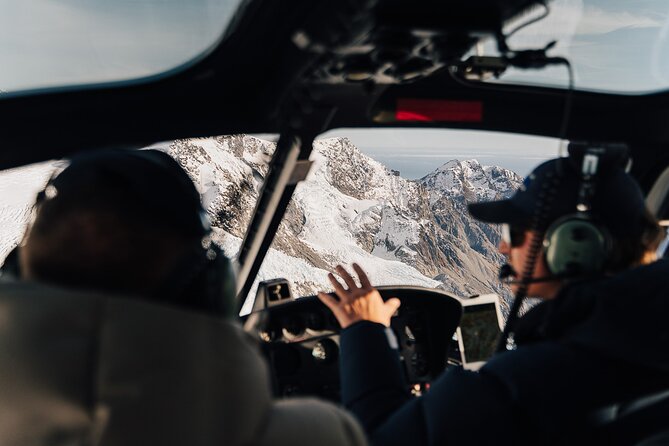
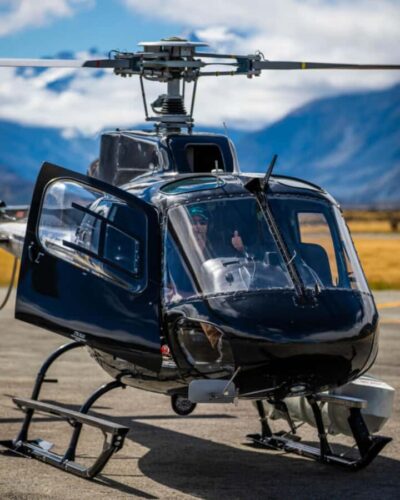
Allow time to check in, receive the safety briefing, and get ready for the aircraft. The helicopter is a twin-engine model with room for up to six passengers. That small capacity matters: you are not being moved through a large sightseeing operation, and the pilot can speak directly to the group while showing you points along the route.
The operator may sometimes shift departures to the Mount Cook aerodrome if conditions are better there. One family found fog at Glentanner but was able to fly from the aerodrome instead. That flexibility can save the outing on a marginal day, though you should listen carefully to any instructions from the local team.
Wear warm clothing and sturdy footwear. Temperatures can change sharply once you leave the helicopter, even if the valley feels mild. Sunglasses are useful around snow because the glare can be strong. Children must have an adult with them, and children under 15 kilograms must sit on a parent’s lap.
There is also a total passenger weight limit of 276 pounds per person. If that applies to you, check the requirement at booking rather than waiting until departure.
Flying over the Ben Ohau Range
Once airborne, the helicopter heads over the Ben Ohau Range and toward the Southern Alps. From the valley floor, these mountains can look like a solid wall. From above, the ridges separate into folds, passes, snowfields, and channels shaped by ice.
The pilot’s narration gives the scenery some order. Instead of seeing a sequence of impressive peaks with no names, you receive explanations of the area and points of interest. Greg, one of the pilots praised for his commentary, was noted for sharing local history and identifying features during the ride. Dan was also singled out for a smooth flight and careful takeoff and landing.
The aircraft’s position is part of the experience. A helicopter can hover and change height in ways a fixed-wing plane cannot. That lets you examine steep ridges and ancient glacier scars at a closer, slower pace. You still need to keep expectations sensible: this is a short flight, not an extended expedition, and visibility depends entirely on the day.
The route rises over a mountain pass with aerial views toward the Ben Ohau Range. You then get broader views into the Mount Cook area, including peaks around Aoraki/Mount Cook and the valleys running away from them. The changing perspective is valuable. One minute you are looking across a ridge, and the next you are looking down a long valley shaped by ice and water.
The 10-minute alpine landing
The landing in Aoraki Mount Cook National Park is the heart of the trip. The helicopter sets down in an alpine area, and you have about 10 minutes outside. You can take in the huge valleys, high peaks, and winding rivers from a viewpoint that feels far removed from the roads below.
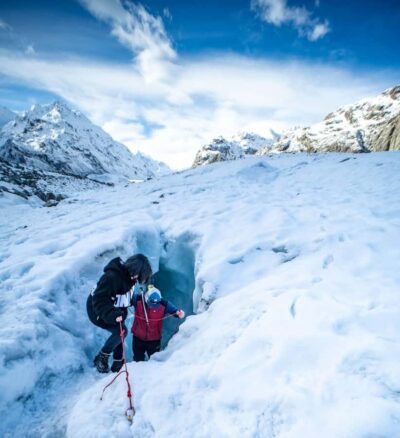
If snow is present, this is your chance to step onto a snowfield, play in the snow, and take photographs beside the helicopter. For many people, this brief stop turns a scenic flight into a genuine mountain experience. The guide can also help arrange photographs, and the operator may offer a photo card for purchase at the end.
Do not treat snow as guaranteed. One summer flight had no snow landing in the sense many people expect, even though the day was clear and the flight ran successfully. The operator explained that seasonal snow landings do not always have snow at that time of year. You may still land in an alpine setting, but the surface could be bare or have only patches of snow.
This distinction matters if you are booking the flight as a first chance to touch snow. Ask about current conditions before departure, and keep your plans flexible. If snow is essential, the experience carries a risk that a standard scenic flight does not.
The stop is short, so use the time well. Take your photographs early, then put the camera down for a moment and look around. At altitude, the scale of the Southern Alps is easy to underestimate in pictures. The brief landing gives you a physical sense of the cold, open setting that an aircraft window cannot provide.
A few more Mount Cook & Lake Tekapo days to compare
- Lake Tekapo: Alpine Stargazing Experience with a Guide
★ 4.5 · 626 reviews - Lake Tekapo: Stargazing Experience
★ 4.9 · 607 reviews - Mt Cook Small Group Scenic Day Tour from Queenstown
★ 5.0 · 407 reviews - Tekapo Shuttle: Mt Cook Day Tour via Pukaki & Tasman Lake
★ 4.8 · 307 reviews
A higher view of Aoraki/Mount Cook
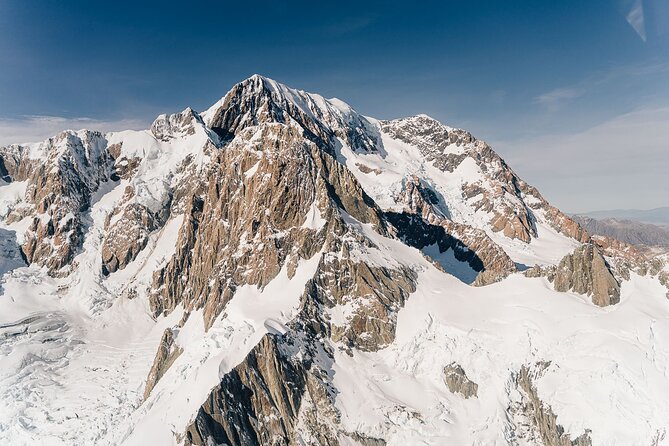
Aoraki/Mount Cook reaches 12,217 feet, or 3,724 meters, and Māori named it the cloud piercer. The mountain can be hidden by cloud, framed by cloud, or completely clear. A helicopter flight gives you a chance to see it from angles unavailable on the valley tracks.
The exact view will depend on the route and weather. One flight took an alternative route that brought the aircraft closer to Mount Cook, making the mountain a stronger part of the experience. This is a useful reminder that the standard path may be adjusted for weather and visibility, and that a changed route is not automatically a lesser one.
You should also keep your expectations realistic about glaciers. The flight reveals glacier-carved ridges, snowfields, and the Tasman Valley, but the short landing does not promise a walk on a glacier. You might stand on snow in the national park without actually walking across glacial ice.
That difference is not a flaw, but it is important when comparing tours. If your goal is a true glacier walk, this is the wrong product. If your goal is a short alpine landing with wide mountain views, it fits much better.
Returning through the Tasman Valley
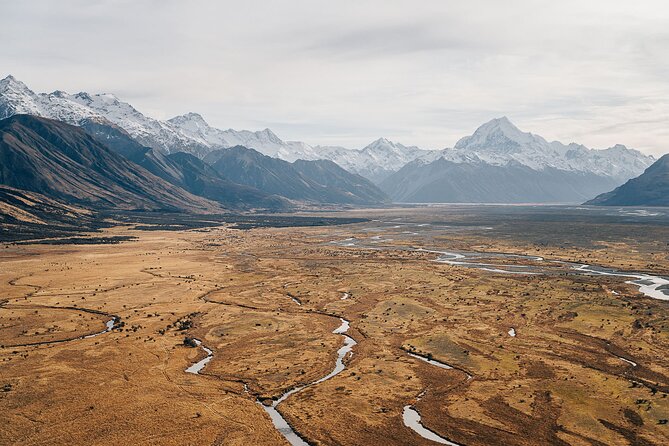
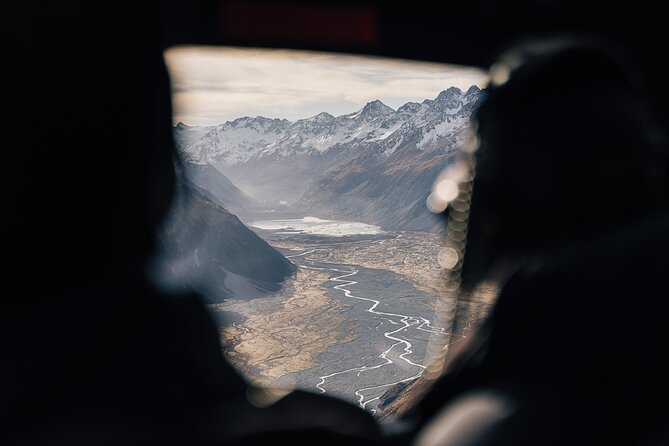
On the return to Glentanner Park, the helicopter looks down the Tasman Valley toward Lake Pukaki. This gives the flight a useful final change of scale. After concentrating on peaks and ridges, you see the long valley lines and the blue lake stretching into the distance.
The Tasman Valley is also where the flight’s glacier story becomes easier to read. From above, rivers and valleys connect the high country with the lake basin. The pilot’s narration helps you understand what you are seeing, rather than leaving you to guess at every white patch and winding channel.
The return leg is not just a ride back to base. It completes the visual sequence: rugged mountain ridges on departure, an alpine landing in the middle, and long valley views on the way home. Since the entire outing lasts about 35 minutes, each section moves quickly. Keep your camera ready, but do not let it take over the experience.
Weather, cancellations, and waiting
The Southern Alps make their own schedule. Wind, cloud, and poor visibility can ground every helicopter in the area. The operator requires good weather, and a cancellation for weather brings the choice of another date or a full refund.
You should build some flexibility into your Mount Cook plans if possible. Several flights have been cancelled or shifted because of wind and cloud, and one planned departure did not operate because the weather stayed unsafe. Another flight went ahead after fog at Glentanner led staff to suggest the Mount Cook aerodrome instead.
There can also be a wait if the minimum number of passengers has not been reached. A small aircraft is pleasant once you are in it, but the tradeoff is that the operator may need enough people before departure. If your day is tightly packed, ask how much time you should allow around the scheduled flight.
For a full refund on a cancellation you make yourself, cancel at least 24 hours before the start time. Changes or cancellations inside that window are not accepted for a refund. Weather and minimum-number cancellations are handled differently, with a new date, another experience, or a full refund offered.
Who will get the most from this flight
I would recommend this to you if you want a short, high-impact view of Aoraki/Mount Cook and do not want to hike for hours to reach a high viewpoint. It also suits families, couples, photographers, and anyone who values the chance to step outside in the mountains rather than remain in the aircraft.
The small group helps couples and families feel less anonymous. It also means the aircraft has limited seats, so you should book ahead if your schedule is fixed. Most people can take part, but the weight rule, child seating rule, cold conditions, and footwear advice deserve attention.
This is less suitable if you need a guaranteed snow experience, dislike weather-related uncertainty, or want a long glacier walk. It is also a poor match for a rushed itinerary that cannot absorb a delay or route change.
Simple ways to make the experience better
Book early enough to protect your preferred day, especially since the experience is often reserved around 17 days ahead. Choose a departure time that leaves room for a weather change or a possible move between Glentanner and the Mount Cook aerodrome.
Wear layers, warm trousers, and shoes that can handle snow or wet alpine ground. Bring sunglasses and keep your phone or camera accessible, but follow the crew’s instructions around the aircraft and during the landing.
If you are taking this flight mainly to see snow, ask what the current snow conditions are before you commit. If the answer suggests little or no snow, compare the price with a scenic-only flight. If you mainly want the mountain views, the landing can still be worthwhile even without a thick snowfield.
Pay attention to the pilot’s commentary. The flight is short, and the named ranges, passes, valleys, and glaciers can blur together if you are not listening. A pilot such as Greg or Dan can help you connect the view in front of you with the geography below.
Should you book the Mount Cook Alpine Explorer?
Book it if you want an intimate helicopter flight, strong pilot commentary, and a real chance to stand in an alpine setting. The flight offers a rare view of Aoraki/Mount Cook, the Ben Ohau Range, the Southern Alps, and the Tasman Valley in a compact 35-minute outing.
Think twice if the snow landing is the only reason you are going. Snow depends on season and conditions, and clear weather does not always mean a white landing site. At $359.62, you should be comfortable paying for the aerial views first, with the snow as an excellent bonus rather than a promise.
FAQ
Where does the helicopter flight start?
The flight starts at The Helicopter Line at Glentanner Park, State Highway 80, Glentanner 7999, near Mount Cook Village.
Where does the activity finish?
The activity ends back at the same meeting point at Glentanner Park.
How long is the Mount Cook helicopter experience?
The total trip takes about 35 minutes. Actual flight time is approximately 20 to 25 minutes, with an alpine landing of about 10 minutes.
Is the snow landing guaranteed?
No. The alpine landing depends on weather and seasonal snow conditions. You may land in an alpine area without finding a large snowfield.
How many people can join the flight?
The helicopter carries a maximum of six passengers.
Is pilot commentary included?
Yes. The pilot provides narration about the mountains, valleys, glaciers, and other sights along the route.
What should I wear?
Warm clothing and suitable footwear are recommended because temperatures can be cold, especially outside the helicopter during the alpine landing.
What happens if bad weather cancels the flight?
If poor weather prevents the flight, you are offered another date or experience, or a full refund. The activity also requires a minimum number of passengers, and the same options apply if that minimum is not met.
Newly listed around Mount Cook & Lake Tekapo
- Mount Cook: 20-Minute Alpine Vista Helicopter Flight★ 4.2 · 5 reviews
- Lake Tekapo to Mt Cook One-Way Small Group Tour★ 4.0 · 5 reviews
- Mount Cook: Alpine Explorer 35 Minute Flight★ 4.9 · 6 reviews
- Mount Cook: Tasman Glacier and West Coast Helicopter Flight★ 5.0 · 6 reviews
- Mount Cook Scenic 35 Minute Helicopter Flight★ 5.0 · 6 reviews
- Mt Cook: 55-Minute Scenic Flight in Helicopter or Ski Plane★ 4.1 · 6 reviews
- Mount Cook: Glentanner High Country Heli Hike★ 5.0 · 7 reviews
- Mount Cook: Tasman Glacier Helicopter Flight★ 4.3 · 7 reviews
Mount Cook & Lake Tekapo Tours, compared.
Mt Cook Small Group Scenic Day Tour from Queenstown
Read our review →
Tekapo Shuttle: Mt Cook Day Tour via Pukaki & Tasman Lake
Read our review →
Browse the lists this tour appears in