
Reviewed · MOUNT COOK & LAKE TEKAPO TOURS
Silver River Stargazing Experience in Lake Tekapo
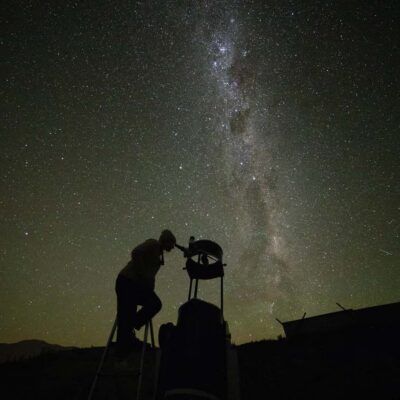
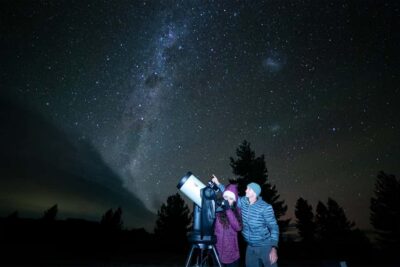
Lake Tekapo gives you one of the finest places in New Zealand to see the night sky without city glare. The Aoraki Mackenzie International Dark Sky Reserve turns an ordinary look at the stars into a proper lesson in the southern heavens, with a 14-inch Meade telescope, laser pointers, and time for questions.
I like the small-group format, which keeps the wait for the telescope short. I also like the practical touches: a free shuttle from Go Tekapo’s office, warm winter jackets, and a group photo sent to you later. The main catch is simple: clouds, wind, and moonlight can limit what you see, and this is an outdoor activity in a cold place.
- A 14-inch Meade telescope brings planets, stars, and deep-space objects closer.
- Groups are capped at 10 for the advertised tour format, although some departures may be larger.
- Guides such as Wilson, Jacob, Sakura, Dan, and Kieran are praised for clear explanations and patient answers.
- Warm jackets are supplied, but you should still dress for a chilly night, even in summer.
- A personal group photo is included, weather permitting, and is uploaded within 48 hours.
- Weather has a real effect, with full or partial refunds offered when poor conditions cancel or reduce the experience.
Why Lake Tekapo’s Dark Sky Matters
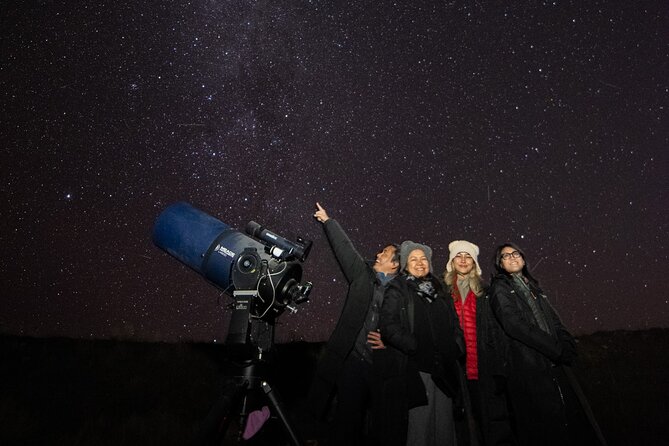
This is not simply a night bus ride followed by a quick look through a telescope. Lake Tekapo sits within the Aoraki Mackenzie International Dark Sky Reserve, where strict control of artificial light helps preserve the view overhead.
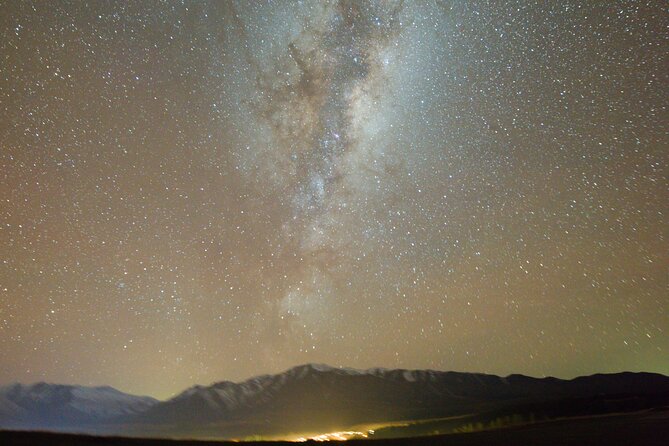
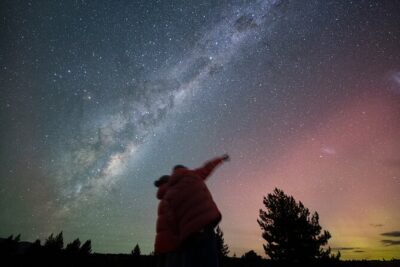
That matters because your eyes need darkness to pick out faint stars. In a bright town, you may see a few familiar points and perhaps the Moon. At Tekapo, you have a far better chance of spotting the Milky Way, the Southern Cross, the Magellanic Clouds, and a much fuller spread of stars.
The best part is that the guide does not rely only on the telescope. Using an astro-laser, the guide points out constellations and explains how the stars relate to navigation, distance, and time. This gives you a useful map of the sky before you look at individual objects through the scope.
I particularly like this balance. A telescope can show you something impressive, but it can also leave you standing in line without understanding what you are seeing. The naked-eye portion helps you get your bearings, while the telescope adds detail.
The 75-Minute Trip to the Viewing Site
You begin at Go Tekapo, 12 Rapuwai Lane, in Lake Tekapo. From there, a complimentary shuttle takes you to a private stargazing location. The tour ends back at the same meeting point, so you do not need to arrange a separate ride into the dark.
The activity lasts about 1 hour and 15 minutes. That is long enough for an introduction, several telescope views, and questions, but it is not a full-night astronomy program. You should think of it as a focused evening outing that fits neatly around dinner or other Tekapo plans.
The exact feel of the trip depends on the group and the night. The advertised limit is 10 people, and several accounts describe groups of about eight to twelve. One poor rating describes a larger group and too few telescope turns, so I would confirm the group size if that detail is especially important to you.
The smaller the group, the more useful the telescope becomes. With fewer people, you spend less time waiting and more time asking follow-up questions. Families and first-time stargazers will likely appreciate that relaxed pace.
A few more Mount Cook & Lake Tekapo days to compare
- Lake Tekapo: Alpine Stargazing Experience with a Guide
★ 4.5 · 626 reviews - Lake Tekapo: Stargazing Experience
★ 4.9 · 607 reviews - Mount Cook: Scenic Helicopter Flight with Alpine Landing
★ 4.8 · 442 reviews
What You See With the Naked Eye
The southern hemisphere sky is the star of this experience. The guide may point out the Southern Cross, Orion’s Belt, planets, the Milky Way, and the Magellanic Clouds. What appears depends on the season, the Moon, and the clouds.
You do not need to know anything about astronomy before you arrive. The guide explains the basic ideas in plain terms, then takes questions. Dan, Wilson, Jacob, Sakura, Tara, Kieran, Simon, and other guides are singled out for being approachable and clear, with several able to handle many questions without rushing the group.
This is especially useful if you are visiting from the northern hemisphere. Constellations may look unfamiliar, and the southern sky has its own landmarks. Learning to identify the Southern Cross, for example, gives you a small but satisfying sense of direction.
The guides also help you understand scale. A star that looks like a tiny pinprick may be many light-years away. A cloudy patch may be a separate galaxy rather than a simple mark in the sky. These explanations make the view more than a pretty backdrop.
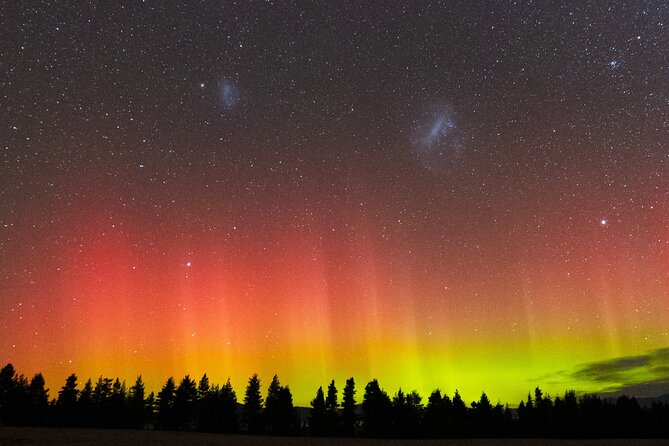
On a clear night, you might see the Milky Way’s galactic core, bright planets, and a spread of stars that is difficult to match in an ordinary town. One particularly lucky departure also had an active aurora. That is not promised, but it shows how much the sky can add when conditions line up.
Looking Through the 14-Inch Meade Telescope
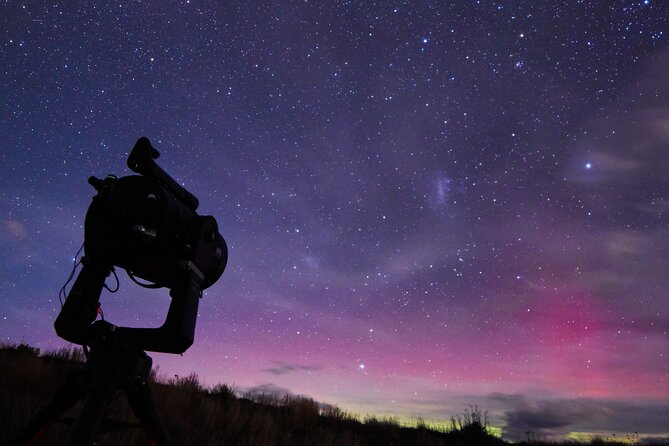
The 14-inch Meade telescope is the technical centerpiece. Its size allows the guide to show more than you can usually pick out with your eyes alone, including planets, stars, and deep-space objects.
You should keep expectations sensible. A telescope does not turn the night sky into a high-resolution photograph. Objects may still appear small, faint, or less colorful than images you have seen online. One critical account found the view too small, while other accounts describe repeated telescope turns and impressive sights such as Jupiter.
Both reactions are possible. The quality of the experience depends on what is visible, the guide’s skill, the number of people waiting, and your own expectations. If you want a detailed scientific observation session, a longer specialist astronomy program with a larger instrument may suit you better. If you want a friendly introduction with several good looks through a strong telescope, this outing offers solid value.
The small-group promise is important here. One account specifically valued a low guest-to-guide ratio because nobody had to wait long. If your departure really is limited to around 10, you should have a better chance to look through the scope more than once.
Guides Who Make the Difference
The guide shapes this tour as much as the equipment. The strongest praise goes to people who explain clearly, answer questions patiently, and keep the mood warm when the weather becomes difficult.
Wilson is praised for combining telescope views with plenty of naked-eye observations. Jacob receives credit for being friendly, approachable, and informative, including on a night when rain cleared only later. Sakura is described as both friendly and well informed, while Dan is praised for an entertaining presentation and clear explanations for beginners.
Tara is noted for teaching the constellations, and Kieran for explaining the Milky Way and taking a good group photo. Simon and Sam Blair are also described as capable guides who answer questions carefully.
That range of names tells you something useful: the company has several guides who can make the session work for different kinds of people. You do not need to arrive with a science background. This is aimed at people who want to understand the southern sky without taking an astronomy course.
The tone seems more conversational than formal. That is good for families and curious beginners, but it may feel basic if you already know constellations, stellar distances, and telescope equipment well.
Somewhere else in Mount Cook & Lake Tekapo entirely:
- Mt Cook Small Group Scenic Day Tour from Queenstown
★ 5.0 · 407 reviews - Tekapo Shuttle: Mt Cook Day Tour via Pukaki & Tasman Lake
★ 4.8 · 307 reviews - Mount Cook: Ski Plane and Helicopter Glacier Combo Flight
★ 4.6 · 271 reviews - Mount Cook: 3 Hour Heli Hike to the Tasman Glacier
★ 4.7 · 218 reviews
Weather, Wind, Clouds, and the Moon
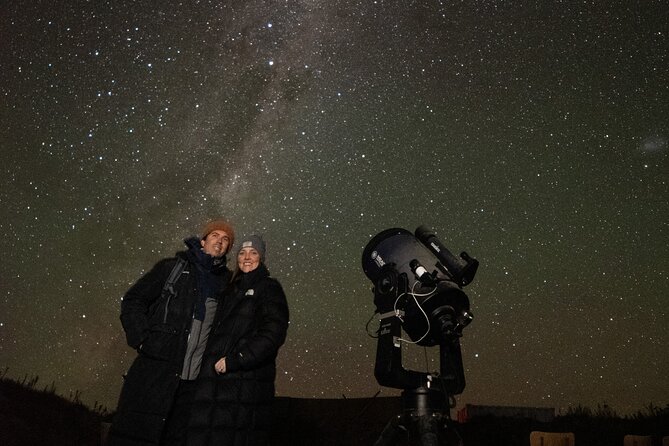
Weather is the biggest issue to weigh before booking. This is an outdoor activity, and a cloud bank can erase the main attraction in minutes. Wind can also make telescope work and photography harder, while a bright Moon reduces the contrast of faint stars.
The operator cancels in poor weather and offers a different date or a full refund. Accounts describe full refunds being offered quickly when the sky was completely overcast. In another case, a partial refund was given after clouds arrived partway through the session. A separate departure received a 75 percent refund when the sky stayed mostly cloudy.
That approach is a strong point, but you should still read the terms carefully. You can cancel for a full refund up to 24 hours before the start time. Cancellations or changes inside 24 hours are not refundable under the stated policy. If the company cancels because of weather, you are offered another date or a full refund, though one customer had to follow up about the timing of the bank refund.
Do not assume summer means warm conditions. The tour supplies jackets, and one summer departure was still chilly. Take the extra coat, wear warm layers, and remember that standing outside for 75 minutes feels colder than walking around town.
Cloudy conditions do not always mean a wasted evening. A skilled guide may still explain visible stars, wait for openings, or photograph the group before the weather closes in. But if the sky is completely covered, the tour may be cancelled or shortened, and that is the right result for a stargazing activity.
The Group Photo and Small Extras
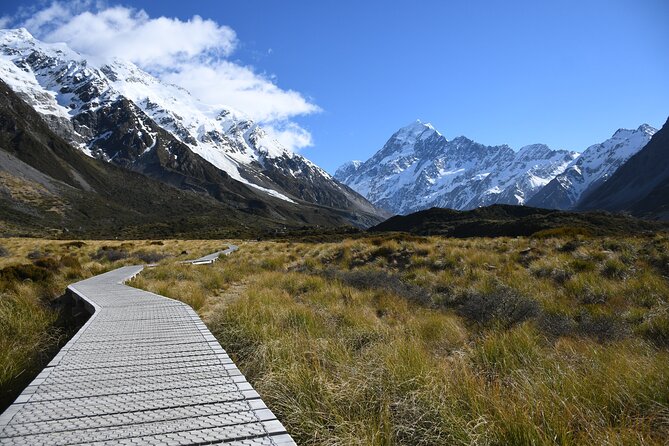
Each party can receive an individual photo under the stars, weather permitting. The digital image is uploaded to a public Flickr website within 48 hours, and you receive a link to download it.
This is a nice extra rather than the reason to book. It gives you a keepsake that is more personal than a generic night-sky picture, especially if you are visiting Lake Tekapo as a family or marking a special trip.
The photo also depends on the weather and the guide’s ability to work quickly. High winds and approaching storms have made this part challenging, though guides have still managed to take photographs before conditions worsened.
The shuttle is another small but useful benefit. You check in at the Go Tekapo office, then ride to a private site and return to the meeting point. That removes the worry of driving on unfamiliar dark roads or finding a suitable place away from town lights.
Is $61.44 Good Value?
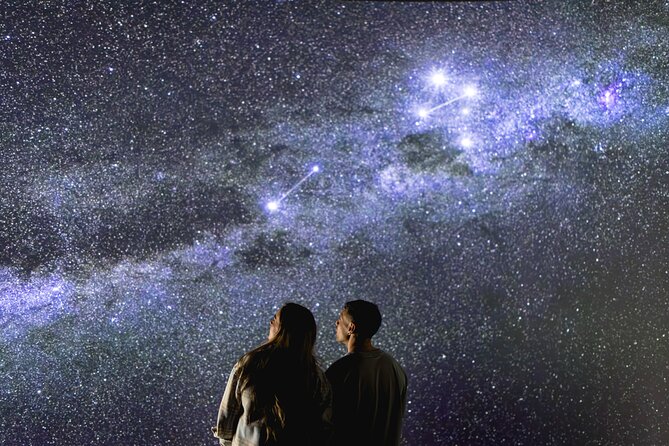
At $61.44 per person, the tour sits in a reasonable range for a guided evening activity with transport, equipment, jackets, and a digital photo. The value is strongest on a clear night when you see the Milky Way, several constellations, and multiple objects through the 14-inch telescope.
You are also paying for access to a private viewing location inside a major dark-sky reserve, plus someone who can explain what you are seeing. If you simply want to stand outside and look upward, you can do that around Lake Tekapo without booking anything. The fee makes sense when you want structure, equipment, and help reading the sky.
The price is less satisfying if clouds cut the session short or your group is larger than expected. The refund approach reduces that risk, but it cannot give you back an evening of clear skies.
For families, the earlier departure can matter. One family chose a 10:45 p.m. option because other companies offered tours at midnight or later. Check the available start time when booking, especially if you are visiting with children.
Who Should Book Silver River Stargazing?
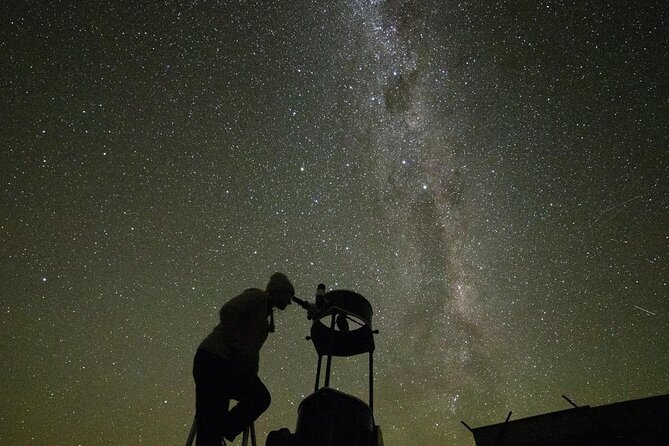
I would recommend this experience to first-time stargazers, families, couples, and anyone visiting Lake Tekapo who wants a guided introduction to the southern sky. You will get the most from it if you enjoy asking questions and are happy to spend a cold hour outdoors.
It is also a good choice if you want a small group rather than a large, commercial astronomy session. The lower number of people means more access to the telescope and a better chance to speak directly with the guide.
You may want another option if you already have strong astronomy knowledge, need guaranteed clear skies, or expect large, colorful telescope images. You should also think twice if standing outside in cold or windy conditions will spoil the evening.
Book with a flexible plan. Keep the following morning or evening free enough to handle a weather change if possible. A clear night can make this one of the most memorable activities in Tekapo, but the sky always has the final say.
FAQ
Where does the Silver River Stargazing Experience begin?
It begins at Go Tekapo, 12 Rapuwai Lane, Lake Tekapo 7999, New Zealand.
Where does the tour end?
The activity ends back at the Go Tekapo meeting point.
How long does the stargazing tour last?
The experience lasts approximately 1 hour and 15 minutes.
How many people can join the tour?
The tour format is described as an intimate group capped at 10 people. The additional information also lists a maximum of 30 participants for the activity, so group size may vary by departure.
What telescope is used?
The tour uses a 14-inch Meade telescope, along with astro-lasers for pointing out stars and constellations.
Are jackets provided?
Yes. Warm winter jackets are bundled into the experience. You should still wear warm clothing because the tour takes place outdoors and can feel cold even in summer.
Is a photo included?
Yes. A personalized photo of you and your party is included when weather permits. The digital photo is uploaded to a public Flickr website within 48 hours, with a download link provided.
What happens if the weather is bad?
The experience requires good weather. If the operator cancels because of poor conditions, you are offered another date or a full refund. You can also cancel your own booking for a full refund up to 24 hours before the start time. Cancellations within 24 hours are not refundable.
Should You Book It?
Book the Silver River Stargazing Experience if you want a friendly, well-organized introduction to Lake Tekapo’s dark sky, with a strong telescope, transport, warm jackets, and a guide who can explain the southern constellations without making the subject feel heavy.
The clearest nights offer the best value, especially when the Milky Way and planets are visible. Just dress warmly, keep your expectations realistic, and remember that clouds are part of the bargain. For most first-time stargazers, this is a worthwhile way to look up and finally understand what you are seeing.
Newly listed around Mount Cook & Lake Tekapo
- Mount Cook: 20-Minute Alpine Vista Helicopter Flight★ 4.2 · 5 reviews
- Lake Tekapo to Mt Cook One-Way Small Group Tour★ 4.0 · 5 reviews
- Mount Cook: Alpine Explorer 35 Minute Flight★ 4.9 · 6 reviews
- Mount Cook: Tasman Glacier and West Coast Helicopter Flight★ 5.0 · 6 reviews
- Mount Cook Scenic 35 Minute Helicopter Flight★ 5.0 · 6 reviews
- Mt Cook: 55-Minute Scenic Flight in Helicopter or Ski Plane★ 4.1 · 6 reviews
- Mount Cook: Glentanner High Country Heli Hike★ 5.0 · 7 reviews
- Mount Cook: Tasman Glacier Helicopter Flight★ 4.3 · 7 reviews
Mount Cook & Lake Tekapo Tours, compared.
Mt Cook Small Group Scenic Day Tour from Queenstown
Read our review →
Tekapo Shuttle: Mt Cook Day Tour via Pukaki & Tasman Lake
Read our review →
Browse the lists this tour appears in