
Reviewed · MOUNT COOK & LAKE TEKAPO TOURS
Stargazing Experience at Cowan’s Private Observatory
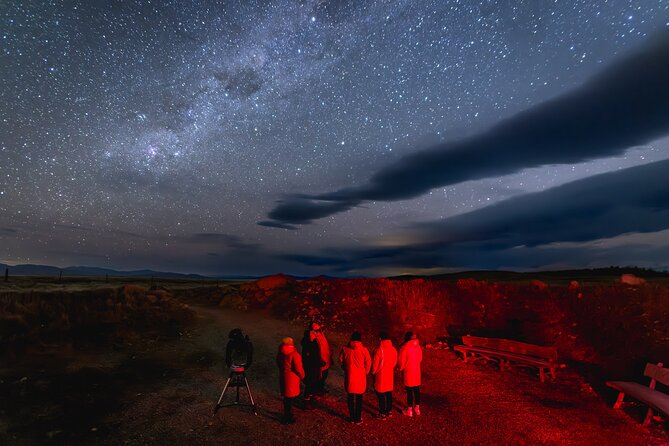
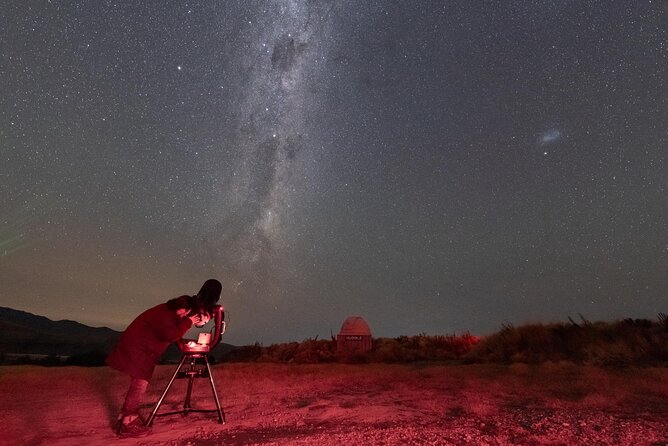
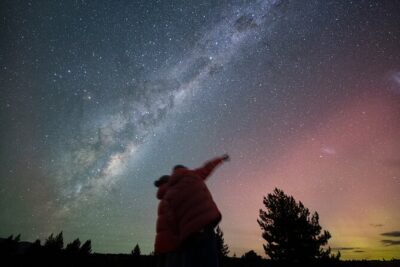
The best part of Cowan’s Private Observatory is the setting: you are looking up from the Aoraki Mackenzie International Dark Sky Reserve, where very little artificial light interferes with the southern sky. With a guide pointing out the Southern Cross, planets, star clusters, and the Milky Way, even a first-time stargazer can get oriented quickly. On a clear night, Saturn’s rings or Jupiter through a telescope can be the evening’s big moment.
I like the short shuttle ride from the Dark Sky Project base, since you do not need to drive into the countryside after dark. I also like the sheltered crater viewing areas, which take some bite out of the wind and make this easier for families and children. The main catch is simple: astronomy depends on weather, and a cloudy or unsettled night can limit the outdoor viewing or replace it with an indoor alternative.
Key points to know before you book
- Five-minute transfer: Check in at the Dark Sky Project in Lake Tekapo, then ride to Cowan’s Private Observatory.
- Sheltered crater viewing: Purpose-built craters protect you from wind and nearby light while you watch the sky.
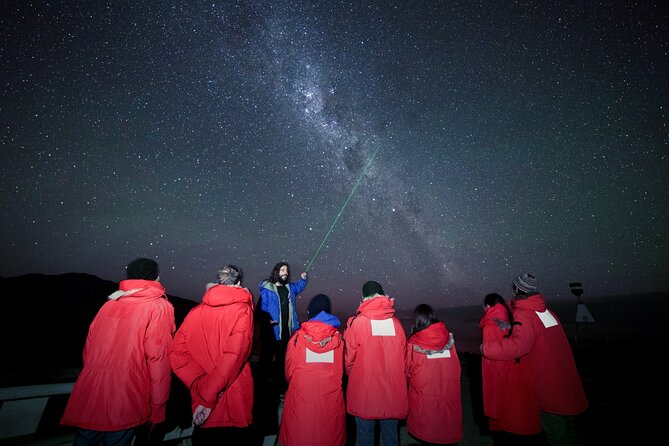
- Southern stars and planets: Guides use handheld lasers and powerful telescopes to show what is visible that night.
- Good first stargazing outing: The explanations are designed for beginners, families, and children aged five and up.
- Small maximum group: The experience allows up to 22 people, so the telescope time is not built around a huge crowd.
- Weather matters: If conditions stop the tour, you can receive a full refund or be offered another date or an indoor option.
Why Lake Tekapo is such a good place to see stars
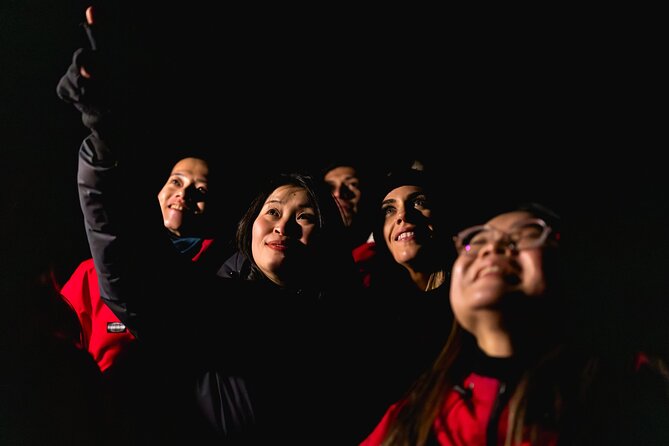
Lake Tekapo sits inside the Aoraki Mackenzie International Dark Sky Reserve, a huge protected area in New Zealand’s South Island. Its Gold Standard status reflects the quality of the night sky, with low light pollution and conditions that can make faint stars, the Milky Way, and distant objects easier to see.
That location matters more than fancy equipment. A telescope can magnify a planet, but it cannot remove the glow of a town or a nearby road. At Cowan’s Observatory, the private viewing area and surrounding darkness give the equipment a fair chance to show you something worthwhile.
You should still keep your expectations sensible. The sky changes with the season, the time of night, and the cloud cover. One evening may offer the Moon, Jupiter, Saturn, and a bright star cluster. Another may be better for learning the constellations with a laser while the telescopes focus on fewer targets.
This is not a visit to a giant science museum with rows of displays. It is a guided look at the real sky above you. That makes the outing especially useful if you want an introduction rather than a technical astronomy lecture.
A few more Mount Cook & Lake Tekapo days to compare
- Lake Tekapo: Alpine Stargazing Experience with a Guide
★ 4.5 · 626 reviews - Lake Tekapo: Stargazing Experience
★ 4.9 · 607 reviews - Mount Cook: Scenic Helicopter Flight with Alpine Landing
★ 4.8 · 442 reviews
Starting at the Dark Sky Project in Lake Tekapo
Your evening begins at the Dark Sky Project base in Lake Tekapo, close to the township and easy to find in Lake Tekapo Park. This central meeting point is practical because you do not have to search for an isolated observatory in the dark.
After check-in, the team takes you by shuttle to Cowan’s Private Observatory. The drive takes about five minutes. Return transport is included, so you can leave the car at your accommodation or near the meeting point and concentrate on the experience.
The transfer also helps keep the timing tidy. The advertised duration is about one hour and 30 minutes, with roughly 15 minutes for the first stop and 75 minutes at the observatory. The first portion includes the transfer and arrival process, while the main part is spent under the sky.
Pay close attention to the booking time if you choose a late session. If your start time falls after midnight, double-check the date, since it is easy to think of the outing as part of the previous evening.
Entering the private craters at Cowan’s Observatory
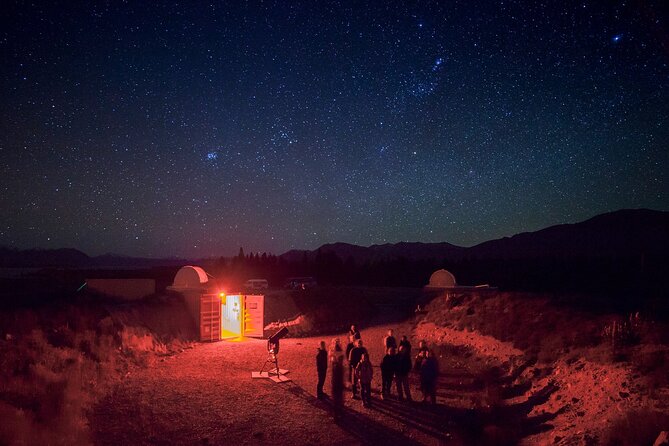
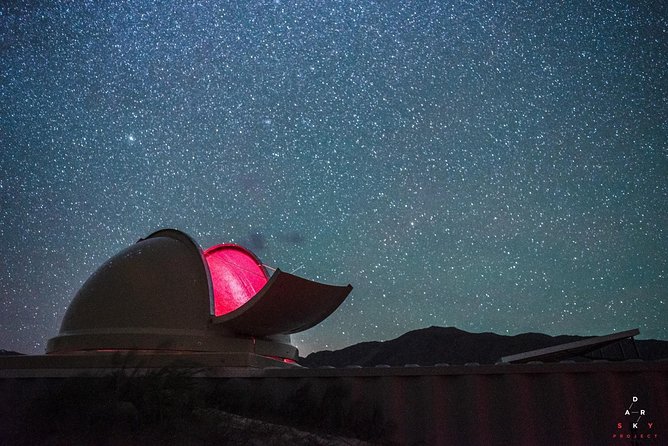
Cowan’s Observatory uses purpose-built craters as its viewing areas. They shelter you from wind and help block nearby light, which is a real comfort in a place where nighttime temperatures can feel sharp.
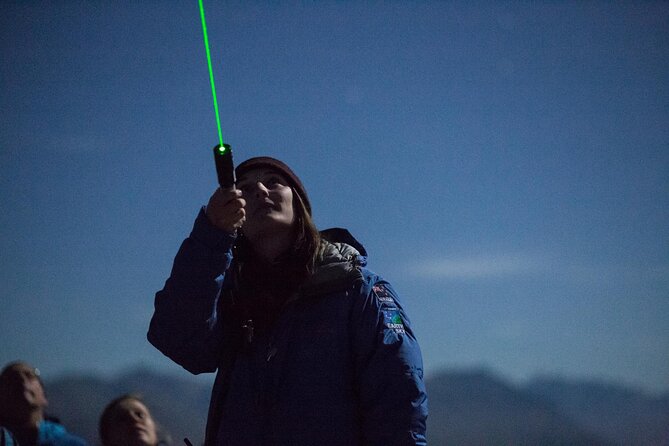
You are not simply left outside to work out what you are seeing. The astronomy guide sets the pace and explains the sky using handheld lasers and telescopes. For a beginner, that guidance is valuable because the southern constellations may not look familiar at first.
The craters also make the format suitable for families. Children aged five and older can join, as long as they are accompanied by an adult. Visitors aged 17 and under receive discounted tickets, which lowers the cost of introducing children to astronomy.
The sheltered design does not mean you can skip warm clothing. You should dress warmly all year, and bring layers even if the afternoon in Tekapo felt mild. One evening in mid-April was described as particularly cold, with outdoor time lasting well over an hour. The wind protection helps, but it does not turn the observatory into an indoor attraction.
The observatory is accessible to wheelchair users. That is an important practical point, though you should still consider contacting the provider if you have specific access needs that go beyond general wheelchair access.
Using the telescopes to find planets and star clusters
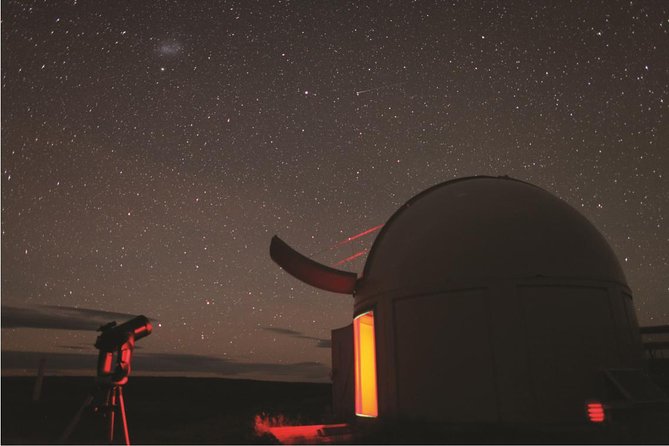
The telescopes are the main reason to choose this experience rather than simply stepping outside your accommodation. The guide adjusts the session to what is visible that night, so the exact lineup is not fixed.
On suitable evenings, you might look at the Moon, Jupiter, Saturn, star clusters, galaxies, and parts of recognizable constellations. Saturn can be a thrilling sight through a telescope, since its rings give the planet a shape that is difficult to mistake. Jupiter is another strong target when visible.
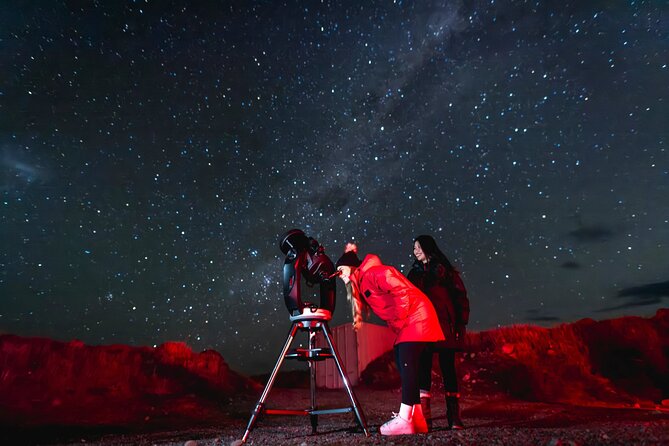
You may also spend time looking without a telescope. The Southern Cross, the Milky Way, and bright star patterns can be impressive on their own in a dark reserve. The guide’s laser helps connect those scattered points of light into a map you can understand.
That combination is one of the experience’s strengths. A telescope gives you a close look at a specific object, while the laser talk helps you understand the wider sky. If clouds reduce telescope viewing, the explanation can still give the night some value.
The experience does not promise a particular planet or galaxy. If Saturn is below the horizon, or if clouds move across the sky, the guide has to work with different targets. That is not a flaw in the observatory, but it is a reason to book this for the overall experience rather than for one single object.
Somewhere else in Mount Cook & Lake Tekapo entirely:
- Mt Cook Small Group Scenic Day Tour from Queenstown
★ 5.0 · 407 reviews - Tekapo Shuttle: Mt Cook Day Tour via Pukaki & Tasman Lake
★ 4.8 · 307 reviews - Mount Cook: Ski Plane and Helicopter Glacier Combo Flight
★ 4.6 · 271 reviews - Mount Cook: 3 Hour Heli Hike to the Tasman Glacier
★ 4.7 · 218 reviews
How the weather can change the evening
Clear skies are essential, so weather is the biggest uncertainty. If poor conditions prevent the outdoor session, the operator may offer an indoor experience instead. A separate date may also be offered, or you can receive a full refund if the tour is canceled because of weather.
An indoor alternative can still be useful. It gives you a chance to learn about the night sky when clouds block the view, and one reported evening even improved later after an indoor explanation, allowing some outdoor stargazing in the countryside.
Still, you should not assume a weather cancellation will turn into a full outdoor session later that same night. The decision depends on viewing conditions and the provider’s operating judgment. If this is your only evening in Lake Tekapo, book with that risk in mind.
The refund policy helps protect the value of the booking. If the experience cannot operate because of weather, you are not simply expected to accept a poor substitute. For a weather-dependent activity, that is an important safeguard.
Is the $82.11 price good value?
At $82.11 per person, this is not a casual, free look at the stars. You are paying for the dark-sky location, return transport, a private facility, an astronomy guide, and access to powerful telescopes.
I think the price makes the most sense if you are new to stargazing or have limited time in Lake Tekapo. The guide saves you from guessing which stars you are seeing, and the telescopes give you a chance to view objects you might not identify from the roadside.
The value is also stronger for families. Children receive discounted tickets, the session is designed for younger participants, and the sheltered craters make the evening more manageable than standing in an exposed field. The astronomy talk can turn a simple night outdoors into a shared activity with a clear focus.
The calculation is less favorable if you already own good astronomy equipment or mainly want to photograph the sky. This experience is built around guided viewing, not a dedicated photography setup. You may find the fee harder to justify if the weather is poor and the indoor alternative is your only option.
A maximum of 22 participants keeps the group from becoming enormous. That does not guarantee uninterrupted telescope time, but it is a reasonable limit for a guided session using several viewing tools.
Who will enjoy this experience most
I would recommend Cowan’s Private Observatory to first-time stargazers, families, and anyone staying in Lake Tekapo who wants a structured night activity. You do not need prior astronomy knowledge, and the guide can explain the sky at an accessible level.
It also suits visitors who do not want to drive after dark. The central meeting point and five-minute shuttle remove much of the hassle, while the return ride means you can enjoy the evening without navigating unfamiliar roads.
Children aged five and older can participate, but remember that the session takes about 90 minutes and includes outdoor time. Younger children who struggle with cold or late nights may find it tiring. Adults should plan warm clothing for everyone, not just the children.
The experience is less suitable if you need a guaranteed sighting of a particular planet. The guide works with the season, time, and weather. You may see Saturn, Jupiter, the Moon, or a star cluster, but the provider cannot promise a set list.
You also need to speak the language of the tour for health and safety reasons. If you cannot do that, you will not be allowed to join.
Booking, tickets, and small practical details
The mobile ticket is convenient. You receive a downloadable ticket, so there is no need to find a printer before your evening outing. Confirmation is provided when you book.
The meeting point is near public transportation, though hotel pickup and drop-off are not included. Plan your own way to the Dark Sky Project base in Lake Tekapo Park.
Free cancellation is available if you cancel at least 24 hours before the local start time. Cancellations or changes made inside that window are not refunded or accepted. The activity also requires a minimum number of participants, so if the operator cancels for that reason, you can choose another date or experience, or receive a full refund.
The advertised group limit is 22 people. Children must be accompanied by an adult, and the minimum age is five.
How to make the most of your stargazing session
Arrive at the meeting point with warm layers already on. The craters offer shelter, but you will still be outside for much of the main session. A warm jacket, hat, and suitable footwear are sensible choices in every season.
Try not to judge the experience only by the first few minutes. The guide’s explanation of the Southern Cross or the Milky Way may make later telescope views easier to appreciate. Once you know what you are looking at, a small patch of sky can become much more interesting.
Keep your schedule flexible if possible. A clear afternoon does not guarantee a clear night, and conditions may change during the session. If the sky turns cloudy, the indoor alternative can still provide useful context, but the outdoor viewing is naturally the highlight.
Finally, book this as a guided introduction to the Mackenzie Basin’s night sky, not as a guaranteed planet-spotting appointment. On the right night, the telescopes may show Saturn’s rings, Jupiter, or striking clusters. Even without those highlights, the darkness, the Southern stars, and the explanations give the outing a solid purpose.
Should you book Cowan’s Private Observatory?
Book it if you want an easy, family-friendly introduction to stargazing in one of New Zealand’s finest dark-sky areas. The short shuttle, sheltered craters, expert guidance, and powerful telescopes give you more than a self-guided look from town.
I would be especially keen to book on a clear evening when the Moon or planets are visible, while accepting that the sky controls the final result. If you have only one night in Lake Tekapo, the refund policy softens the weather risk, but you should still be ready for an indoor alternative.
For first-time stargazers, families, and visitors without astronomy equipment, the $82.11 fee is reasonable. For serious photographers or people seeking one guaranteed celestial object, it may not be the best match.
FAQ
Where does the stargazing experience begin?
You check in at the Dark Sky Project base in Lake Tekapo Park, near Tekapo township.
How do I reach Cowan’s Private Observatory?
The provider transports you from the Dark Sky Project base by shuttle. The drive takes about five minutes, and return transport is included.
How long does the experience last?
The full experience lasts approximately one hour and 30 minutes.
What can I see through the telescopes?
Depending on the season, time, and weather, you might see planets, galaxies, the Moon, star clusters, constellations, and parts of the Milky Way. Past viewing examples include Jupiter and Saturn.
Is the observatory suitable for children?
Yes. The experience is designed to suit families and younger children. The minimum age is five, and children must be accompanied by an adult.
Is the observatory wheelchair accessible?
Yes. Cowan’s Private Observatory is accessible to wheelchair users.
What should I wear?
Dress warmly all year. The stargazing takes place outdoors, although the private craters provide shelter from wind and nearby light.
What happens if the weather is bad?
If poor weather prevents the tour from operating, you may be offered another date or an indoor experience. If the experience is canceled because of weather, a full refund is available.
Is hotel pickup included?
No. Hotel pickup and drop-off are not included. You need to make your own way to the Dark Sky Project base.
Can I cancel my booking?
Yes. You can cancel for a full refund up to 24 hours before the experience start time. Cancellations or changes made less than 24 hours before the start time are not accepted or refunded.
Newly listed around Mount Cook & Lake Tekapo
- Mount Cook: 20-Minute Alpine Vista Helicopter Flight★ 4.2 · 5 reviews
- Lake Tekapo to Mt Cook One-Way Small Group Tour★ 4.0 · 5 reviews
- Mount Cook: Alpine Explorer 35 Minute Flight★ 4.9 · 6 reviews
- Mount Cook: Tasman Glacier and West Coast Helicopter Flight★ 5.0 · 6 reviews
- Mount Cook Scenic 35 Minute Helicopter Flight★ 5.0 · 6 reviews
- Mt Cook: 55-Minute Scenic Flight in Helicopter or Ski Plane★ 4.1 · 6 reviews
- Mount Cook: Glentanner High Country Heli Hike★ 5.0 · 7 reviews
- Mount Cook: Tasman Glacier Helicopter Flight★ 4.3 · 7 reviews
Mount Cook & Lake Tekapo Tours, compared.
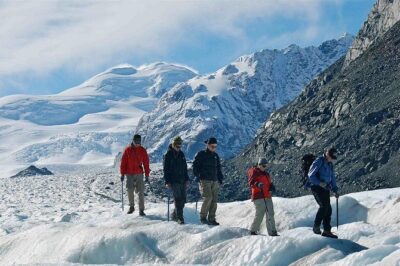
Mt Cook Small Group Scenic Day Tour from Queenstown
Read our review →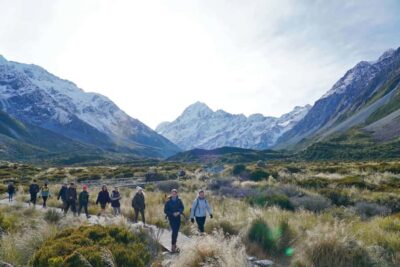
Tekapo Shuttle: Mt Cook Day Tour via Pukaki & Tasman Lake
Read our review →
Browse the lists this tour appears in