
Reviewed · DUNEDIN TOURS
Dunedin City – Settlers & Voyages Tour
Dunedin’s story begins long before its grand railway station and Scottish-looking streets. This compact tour links Māori navigation, European settlement, city landmarks, beaches, and university life in about three hours. It is a useful way to see the city while learning how people reached and shaped Aotearoa New Zealand.
I like the small maximum of eight people, which gives the guide room to explain local history rather than recite a script. I also like the included picnic lunch at St Kilda, a simple pause that breaks up the sightseeing and lets you take in Dunedin’s city beaches.
The main drawback is time. You see many places, but most stops are brief, and this is not the tour for a long visit inside buildings or a full Otago Peninsula wildlife trip. Weather can also affect the scenic viewpoints and beach stop.
Key points to know before booking
- Māori navigation is central: The tour explains how Polynesian navigators reached New Zealand from islands thousands of kilometres away with remarkable accuracy.
- Small-group transport: A modern mini bus carries no more than eight people, making the route more personal and easy to follow.
- Lunch at St Kilda: You get a light picnic-style lunch during a 45-minute stop near Dunedin’s city beaches.
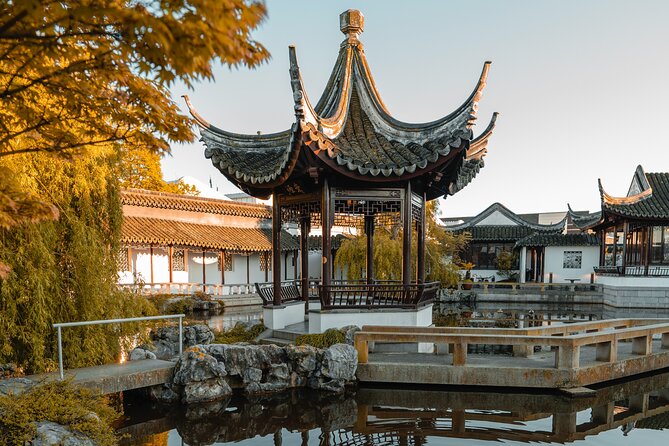
- Classic Dunedin sights: The route passes First Church, Speight Brewery, Otago Boys High School, Dunedin Railway Station, the Chinese Gardens, and other central landmarks.
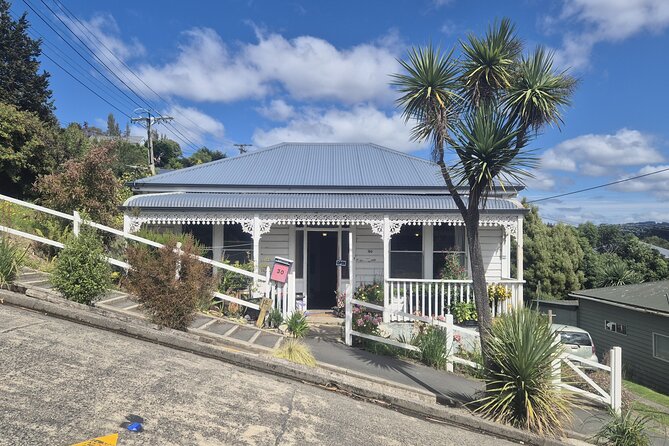
- Baldwin Street stop: You have 25 minutes at the famous steep street after passing the Botanic Gardens.
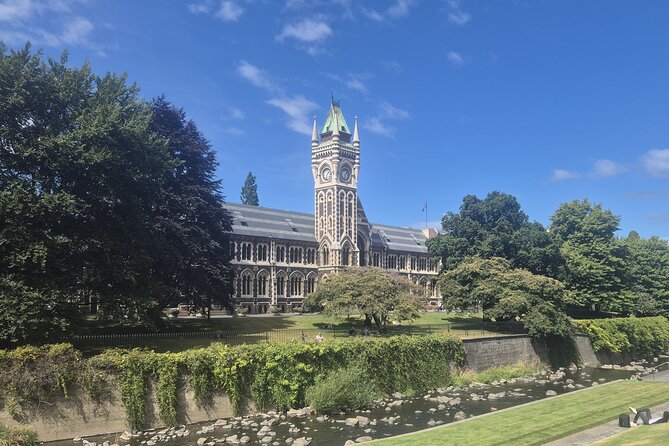
- Otago University finish: A 20-minute guided walk brings you around the old university buildings and its well-known clock tower.
A short tour with a big human story

The most interesting part of this Dunedin tour is its focus on people and movement. Instead of treating the city as a string of photo stops, it explains how Polynesian navigators crossed huge stretches of ocean to reach New Zealand, then connects that story with later settlement in Dunedin.
That approach gives the route a clear thread. You begin in the Octagon, see the city’s civic and religious landmarks, head toward the Otago Peninsula for wider views, stop at the beaches, and return through the Botanic Gardens and Baldwin Street before ending at the University of Otago.
The tour lasts about three hours and begins at 11:00 a.m. from 50 The Octagon. It returns to the same meeting point, a useful arrangement if you are staying in central Dunedin or need to continue sightseeing on foot afterward.
At $86.26 per person, the cost is higher than simply walking around Dunedin with a map. The value comes from the combination of transport, a guide, a planned route, history commentary, viewpoints, and lunch. You are paying to cover several parts of the city without arranging separate buses or working out the route yourself.
A few more Dunedin days to compare
- Clearwater Wildlife Tours (small group 10max) Otago Peninsula
★ 5.0 · 531 reviews - Speight’s Brewery Tour & Guided Tasting
★ 5.0 · 508 reviews - Guided Evening Penguin Viewing Otago Peninsula, Dunedin, New Zealand
★ 5.0 · 471 reviews
Starting in the Octagon and central Dunedin
The Octagon is a sensible starting point. It places you in the middle of Dunedin, close to several of the city’s most recognizable buildings and within reach of public transportation.
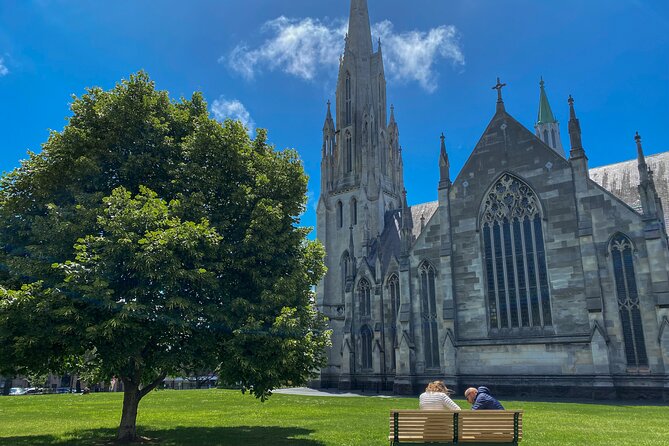
As the mini bus leaves central Dunedin, the route passes Otago Boys High School, Speight Brewery, First Church, Dunedin Railway Station, the Chinese Gardens, and other city sights. These are not all formal stops, so you should think of this section as a guided orientation rather than a building-by-building tour.
That distinction matters. If you want extended time to photograph the railway station or walk through the Chinese Gardens, you will need to return on your own. The benefit here is context. You see how the city’s major landmarks fit together before heading out toward the peninsula.
Dunedin Railway Station is especially useful as a visual introduction to the city’s past, while First Church and the school help show the civic and institutional side of Dunedin. Speight Brewery adds another part of the city’s story, though the tour does not include a brewery visit or tasting.
The guide’s commentary is an important part of this opening drive. Jono, also referred to as Jonathan, explains not only settlement and history but subjects such as agriculture, schools, and economics. That wider scope should suit you if you want to understand how Dunedin functions today, not just memorize dates.
Māori navigation and the human story of Aotearoa
The tour’s educational focus begins with Polynesian navigation. You learn how Māori navigators reached New Zealand from islands thousands of kilometres away with remarkable precision.
This subject gives the rest of the outing more meaning. Dunedin is not presented as a place that simply appeared with European buildings. The story starts with ocean travel, settlement, and the people who established lives in Aotearoa long before the later development of the city.
For me, this is the strongest reason to choose this tour over a basic city loop. A good guide can turn a view from a hill into part of a larger story about movement, settlement, and adaptation. The information is also presented alongside modern topics, including farming, education, and the economy, so the commentary is not limited to the distant past.
You should expect an educational tour rather than a specialist archaeological program. The supplied details do not promise museum visits, cultural performances, or a dedicated Māori heritage site. Instead, the history is carried by the guide as you move through Dunedin and the Otago Peninsula.
Otago Peninsula viewpoints from the mini bus
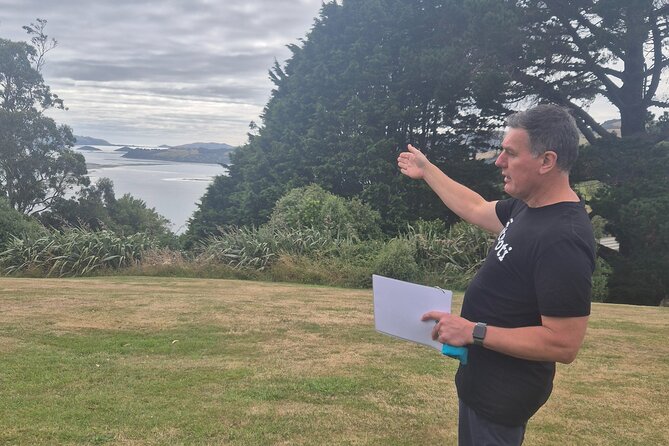
After the central city sights, the route climbs high on the Otago Peninsula for scenic viewpoints. This is where the small vehicle helps. A maximum of eight people means the group remains compact, and the guide can keep the experience more conversational than a large coach tour.
The peninsula portion adds space and open views to a route that begins among city buildings. It also gives you a better sense of Dunedin’s setting than a central walking tour can provide.
The exact amount of time at the viewpoints is not specified, so do not book this expecting a long viewpoint session with extensive walking. The tour has several stops still to come, and the whole experience lasts only around three hours.
Weather is worth keeping in mind. One outing took place on a showery day, and the group managed to avoid some of the rain. That suggests the tour can continue in changeable conditions, but your views and comfort may depend on the day. Bring clothing suitable for wet weather if the forecast is unsettled.
Somewhere else in Dunedin entirely:
- Larnach Castle and Gardens Admission Ticket
★ 4.5 · 279 reviews - Dunedin Shore Excursion: Small-Group Tour of Dunedin and the Otago Peninsula
★ 4.5 · 270 reviews - Dunedin: Wildlife and Penguin Tour
★ 4.6 · 239 reviews - Otago Peninsula Wildlife Cruise with Monarch
★ 4.5 · 227 reviews
St Kilda, St Clair, and the 45-minute lunch break

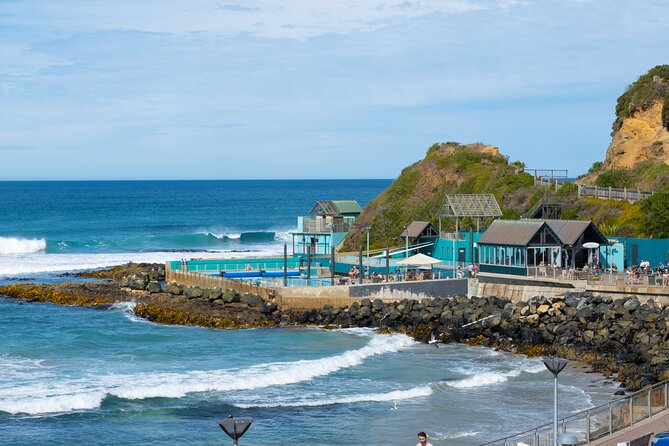
The tour then heads to St Kilda and St Clair surf beaches. The scheduled stop is at St Kilda, where you have 45 minutes for a picnic-style lunch and a look at Dunedin’s city beaches.
The lunch is included and described as light. That makes it a practical midday break rather than a restaurant meal. You can eat, enjoy the beach setting, and reset before the second half of the tour.
I like this pause because it keeps the day from becoming a nonstop sequence of landmarks. A short lunch outdoors gives the route a more relaxed pace, especially after the drive through the city and up onto the peninsula.
At the same time, you should not expect a beach day. The stop is one part of a broad city tour, and the schedule does not include swimming, surfing, or extended time at both beaches. St Clair is passed as part of the beach section, while St Kilda is the stated lunch stop.
The beach visit also gives the guide a chance to connect Dunedin’s urban life with its coastal setting. You get a different view of the city here than from the historic center or peninsula viewpoints.
Passing the Botanic Gardens to Baldwin Street

After the beach stop, the mini bus passes Dunedin’s Botanic Gardens on the way to Baldwin Street. The gardens are a passing sight rather than a dedicated visit, so you will need to plan another stop if you want time among the plants and paths.
Baldwin Street is the next main stop, with 25 minutes at the street known as the world’s steepest. This is a quick, specific visit, and it works well for photographs and a short walk.
The stop also gives the tour a lighter moment after the more serious historical discussion. Baldwin Street is an unusual piece of Dunedin geography, and its steepness is easy to appreciate in person.
Twenty-five minutes is enough to see the street without letting one attraction take over the whole route. It is not enough for a leisurely neighborhood exploration, and the tour does not promise a longer walk in the surrounding area.
Wear sensible shoes if you plan to walk up or down part of the street. That is practical advice rather than a special tour requirement, as the defining feature here is the gradient itself.
Otago University and the clock tower walk
The final stop is the University of Otago, New Zealand’s oldest university. Here you take a guided walk of about 20 minutes around a collection of old, iconic buildings, including the familiar clock tower.
This short walk adds another layer to Dunedin. The city is not only about churches, railway architecture, beaches, and steep streets. The university remains a major part of its identity, and its older buildings provide a strong closing image.
The 20-minute format keeps the tour moving, but it also limits how much you can see. You are getting an introduction to the university buildings, not a full campus tour or an academic history program.
I like the choice of ending here. After seeing how Dunedin developed as a city, you finish with an institution tied to education and public life. It also gives the tour a clear final chapter before the mini bus returns to the Octagon.
What the small group changes
The maximum group size is eight people. That is one of the clearest advantages of this experience.
A small group usually makes it easier to hear the guide and ask questions, especially during the drive between stops. It also avoids the slow loading and unloading that can come with a large coach.
The guide’s role matters even more in a small vehicle. Jono is described as friendly and informative, with commentary covering Dunedin’s history as well as agriculture, schools, and economics. If you enjoy asking about local life, this format should work better than a fixed audio guide.
There is one trade-off. A small-group tour is still a scheduled tour. You do not control how long you stay at Baldwin Street, the beach, or the university. If you prefer to linger over one site, a self-guided day may suit you better.
Price, timing, and practical value
The price is $86.26 per person. For that amount, you receive roughly three hours of transport, a guide, multiple city sights, Otago Peninsula viewpoints, a beach stop, a light lunch, Baldwin Street, and a guided walk at the University of Otago.
The value is strongest if you have limited time in Dunedin. You cover parts of the city that are spread out, including the peninsula, beaches, Botanic Gardens area, and university, without piecing together separate transport.
It is also useful for anyone who prefers explanation to simple sightseeing. The route includes many recognizable places, but the human story and guide commentary are what turn the outing into more than a drive past buildings.
The price is less compelling if you already have several days in Dunedin and plan to walk the central sights at your own pace. The city landmarks in the opening section are mostly viewed from the vehicle, and the tour does not include paid admissions or a lengthy attraction visit.
Booking patterns suggest people commonly reserve about six days ahead. That is not a rule, but it is sensible to book in advance if the small eight-person limit matters to you.
Confirmation is provided at booking, and the ticket is mobile. The meeting point is 50 The Octagon, the start time is 11:00 a.m., and the tour ends back there.
Free cancellation is available up to 24 hours before the start time for a full refund. Cancellations or changes made less than 24 hours before departure are not accepted for a refund, with cut-off times based on local time.
Who will get the most from this Dunedin tour
I would choose this tour if you have one day or less in Dunedin and want a broad first look without renting a car or planning several connections. It is also a good match if you care about how Māori settlement, European development, education, farming, and the modern city connect.
The route should suit most people, since most participants can take part and service animals are allowed. It is near public transportation, though the supplied details do not give specific vehicle or walking-access information.
You may want something else if your main goal is wildlife. The tour reaches the Otago Peninsula, but it does not advertise penguin, albatross, seal, or other wildlife encounters.
It is also not the best pick for a long food stop, a full beach outing, or extended access to the university and historic buildings. The strength is the range of subjects and sights packed into a short, guided route.
Should you book the Settlers & Voyages Tour?
Book it if you want history with a city overview, especially the story of Māori ocean navigation and the later growth of Dunedin. The small mini bus, included lunch, peninsula viewpoints, Baldwin Street, and university walk make the $86.26 fare reasonable for a compact introduction.
Skip it if you want to set your own pace, spend hours at one attraction, or focus mainly on wildlife and remote peninsula scenery. For everyone else, this is a practical first outing that gives you the city’s main outlines and enough context to decide what deserves a closer look later.
FAQ
Where does the Dunedin Settlers & Voyages Tour start?
It starts at 50 The Octagon in central Dunedin, Dunedin 9016, New Zealand.
What time does the tour begin?
The tour starts at 11:00 a.m.
How long does the experience last?
It lasts approximately three hours.
Where does the tour finish?
The activity ends back at the meeting point in the Octagon.
How many people can join the tour?
The tour has a maximum of eight participants.
Is lunch included?
Yes. A light picnic-style lunch is provided during the 45-minute stop at St Kilda.
What are the main stops?
The main stops are St Kilda, Baldwin Street, and the University of Otago. The route also passes central Dunedin sights, the Botanic Gardens, St Clair beach, and viewpoints on the Otago Peninsula.
Can I cancel for a full refund?
Yes. You can cancel at least 24 hours before the experience start time for a full refund. Changes or cancellations made less than 24 hours before the start time are not accepted for a refund.
Newly listed around Dunedin
- Dunedin Private Fullday Tour★ 5.0 · 5 reviews
- Twilight at the Opera★ 5.0 · 5 reviews
- Shared Small Group Dunedin City and Peninsula Scenery Day Tour★ 5.0 · 5 reviews
- Dunedin to Te Anau via the Catlins One Way Small Group Tour★ 5.0 · 6 reviews
- Electric Bike Rental★ 5.0 · 6 reviews
- Private Dunedin & Otago Peninsula Day Tour Up to 4★ 5.0 · 6 reviews
- Dunedin to Queenstown One Way Tour Including Taieri Gorge Train★ 5.0 · 6 reviews
- Clearwater Private Penguin & Wildlife Tour from Port Otago (5hrs)★ 5.0 · 7 reviews
Dunedin Tours, compared.

Clearwater Wildlife Tours (small group 10max) Otago Peninsula
Read our review →

Guided Evening Penguin Viewing Otago Peninsula, Dunedin, New Zealand
Read our review →
Dunedin Shore Excursion: Small-Group Tour of Dunedin and the Otago Peninsula
Read our review →

Shore Excursion: V8 Trike, Peninsula and City Tour
Read our review →Browse the lists this tour appears in