
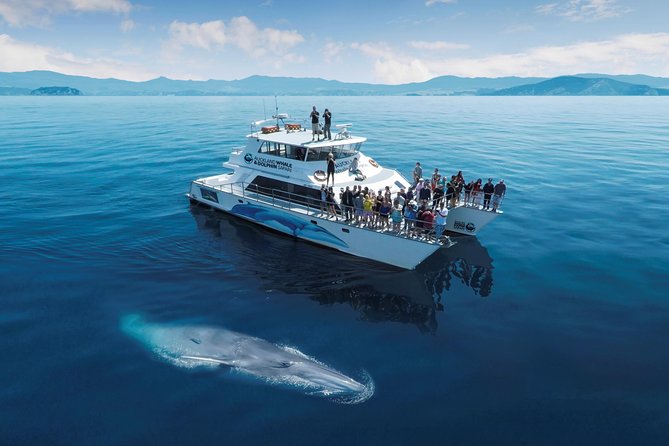
Reviewed · AUCKLAND TOURS
Auckland Dolphin and Whale Watching Eco-Safari Cruise
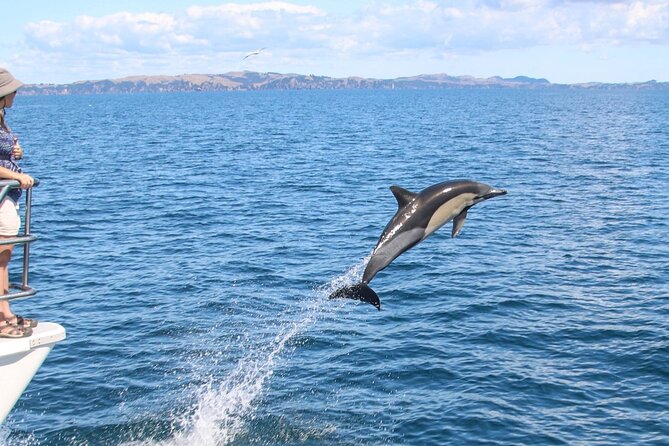
A pod of dolphins racing beside a catamaran is the star of this Auckland outing, but the real value is the combination of wildlife watching, marine science, and spectacular Hauraki Gulf scenery. You may see bottlenose dolphins, Bryde’s whales, seals, blue penguins, sharks, or rare seabirds. You may also spend four and a half hours looking at empty water.
I like the marine research connection, which gives the commentary a purpose beyond pointing out animals. I also like the custom-built 65-foot catamaran, with indoor and outdoor viewing areas and enough stability for a long trip on the gulf. The catch is simple: whale sightings are never guaranteed, and rough weather can make the ride tiring even when the crew works hard.
Key points to know before you book
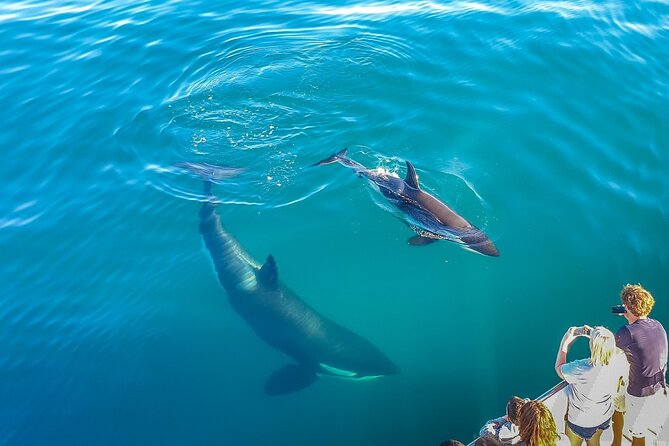
- Dolphins are the most dependable highlight: Pods may swim close to the boat and sometimes remain nearby for up to 30 minutes.
- Marine scientists join the crew: You hear about local research, tracked whales, conservation, and the Hauraki Gulf ecosystem.
- The full outing lasts about 4.5 hours: Allow extra energy for wind, sun, and changing sea conditions.
- The boat can carry up to 99 people: This offers plenty of company but may feel crowded around the rails during a wildlife encounter.
- No marine mammals means a free second chance: The operator offers another trip at no extra charge, though that helps less if you are leaving Auckland soon.
- Check-in closes 15 minutes before departure: Arrive early at the New Zealand Maritime Museum area in Viaduct Harbour.
Why this safari is more than a whale hunt
Auckland’s Hauraki Gulf Marine Park is a fine setting for a boat trip even before an animal appears. The gulf is dotted with islands and includes five marine preserves, creating a changing view of volcanic peaks, wooded shores, open water, and Auckland’s harbor entrance.
The area is home to about 23 marine species. That does not mean you will see all of them, of course, but it explains why the crew searches beyond whales. Dolphins, seals, penguins, sharks, and seabirds all count as worthwhile sightings here.
I like that the boat crew works with marine research scientists. You hear about the animals being tracked and about research carried out with local scientists and conservation partners. That makes the trip feel less like a simple hunt for a photograph and more like an introduction to a living marine environment.
The crew also follows a sensible wildlife policy. They try to give animals room and allow them to choose whether to approach the boat. That matters when dolphins are close enough for excellent photographs. Good wildlife watching is not just about getting near an animal. It is about avoiding unnecessary pressure.
More Boat Tours in Auckland
- Auckland: Whale and Dolphin Watching Half-Day Eco Cruise
★ 4.5 · 1,072 reviews - Auckland Harbour Sailboat Cruise Including Three Course Dinner
★ 4.5 · 476 reviews - America’s Cup 2-Hour Sailing Experience Waitemata Harbour
★ 4.8 · 370 reviews
Leaving Viaduct Harbour on a 65-foot catamaran
You meet the crew near the New Zealand Maritime Museum at Eastern Viaduct, in central Auckland. The boat is a custom-built 65-foot, or 20-meter, catamaran. It has seating inside, outdoor viewing areas, toilets, and a shop selling snacks and drinks.
The departure point is convenient if you are already exploring downtown Auckland. Hotel pickup is not included, so you need to make your own way to Viaduct Harbour. Public transport is nearby, but the important timing rule is easy to miss: check-in closes 15 minutes before departure. Arriving late can mean losing your allocated seat.
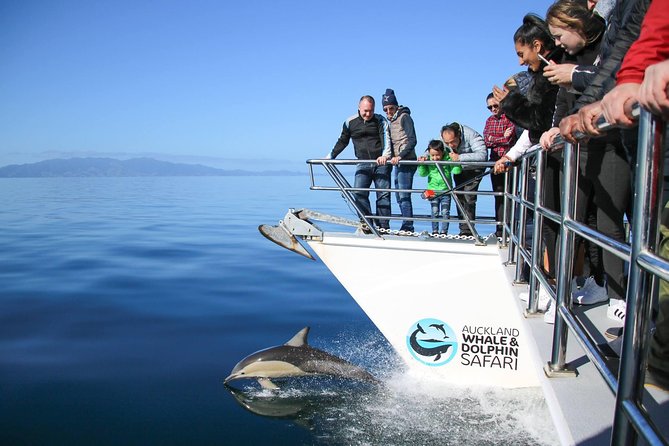
Once underway, the catamaran gives you several ways to watch. The front deck is popular because it puts you close to the action and gives a strong sense of speed as the boat moves across the gulf. It is also the most exposed spot, so expect more wind and spray.
The vessel is described as stable, and that is a real advantage on a 4.5-hour trip. Still, stability does not eliminate motion. One outing had rough seas, and even a good boat can feel lively when the water turns choppy. If you are sensitive to seasickness, sit where you feel most comfortable, keep your eyes on the horizon, and avoid treating the front deck as your permanent seat.
Viaduct Harbour and the Auckland Harbour Bridge
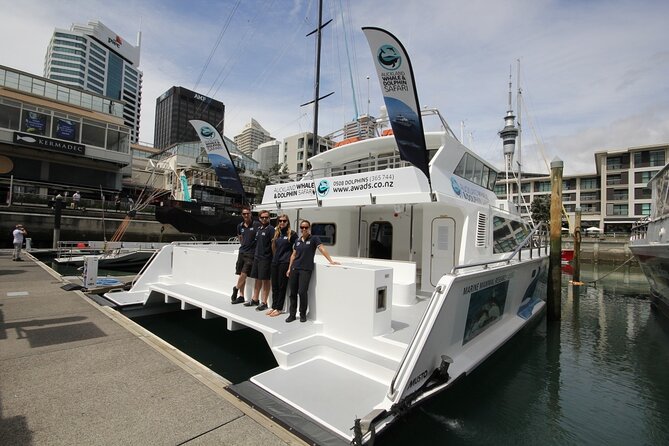
The first part of the journey gives you a different view of Auckland. Viaduct Harbour’s waterfront buildings and working harbor recede as the boat heads toward the Auckland Harbour Bridge.
The bridge is familiar from land, but its scale makes more sense from the water. This early section also lets you settle into the boat before the crew begins the longer search for marine life.
The captain and guides explain the route, safety rules, and the role of the gulf’s protected waters. Listen carefully at the beginning. Later, when the boat is moving quickly or passengers gather outside, commentary can be harder to hear.
One practical issue is crowding. The boat may carry as many as 99 people, and a full sailing can feel tight when everyone moves to one side for a dolphin or whale. Staff ask people to rotate and share the rail, which is fair, but you should not expect an uninterrupted front-row view.
Rangitoto Island and the open gulf
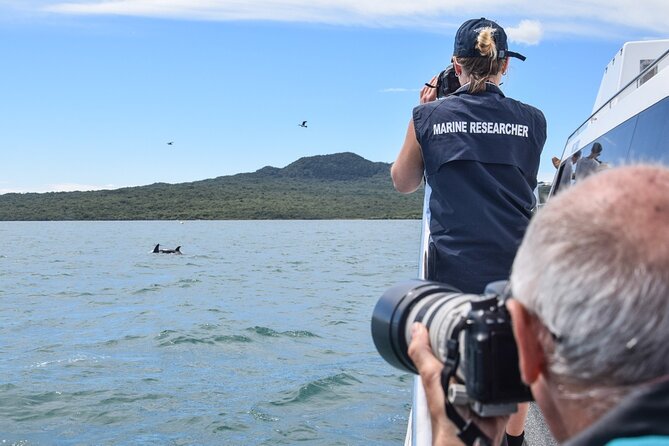
Rangitoto is one of the most recognizable islands in the Auckland area. Its volcanic form makes a strong marker as the boat leaves the inner harbor behind.
The route then opens into wider water around Waitemata Harbour and the Hauraki Gulf. This is where the outing begins to feel like a proper safari rather than a harbor cruise. The city becomes part of the distant view, while islands and open sea take over.
The scenery is a major part of the value. If wildlife stays hidden, you still have a four-hour-plus boat journey through one of Auckland’s best natural settings. That said, you need to be comfortable with the possibility that long stretches will involve watching, waiting, and listening rather than constant action.
Bring a camera, but keep it ready rather than fixed on one spot. Dolphins can appear suddenly and may move across the bow or alongside the hull. A phone with a wide lens is useful for groups, while a zoom lens helps with distant whales and seabirds.
More whale watching from Auckland:
- Auckland: Tikapa Moana Whales, Dolphins and Islands Cruise
★ 3.9 · 292 reviews - Auckland: Tikapa Moana Dolphin, Whale and Island Cruise
★ 4.0 · 17 reviews - Kaikoura: Whale Watching Cruise
★ 4.6 · 3,089 reviews - Whale Watching in Kaikoura by Boat
★ 4.5 · 2,906 reviews
Searching the Hauraki Gulf for whales and dolphins
The crew commonly looks for bottlenose dolphins and Bryde’s whales, a species native to New Zealand waters. The gulf can also produce sightings of other whale types, seals, blue penguins, sharks, and several seabirds.
Dolphins are often the most rewarding encounter. They may travel in pods, play near the front of the boat, or appear with young animals. Several successful outings have included large nursery pods and repeated appearances lasting close to half an hour.
Whales are a different proposition. A whale may surface only briefly, remain distant, or simply avoid the search area. Some trips produce two whale sightings alongside several dolphin pods. Other trips see no whales at all, and a few have seen only a small number of dolphins.
The crew does not control those odds. The operator says dolphins and whales are often present in these waters, but the animals remain wild and free to move elsewhere. You should book this as a wildlife search, not as a guaranteed whale performance.
The free return-trip policy softens the risk. If no marine mammals are seen, you can go again on another day without paying another fare. That is a meaningful safeguard for people staying in Auckland for several days. It is less useful if you are visiting from overseas on a tight schedule and cannot return.
Motuihe, Motutapu, and the island views
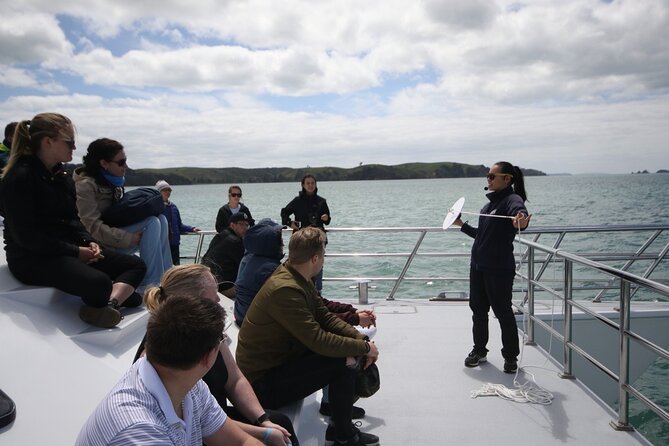
Motuihe Island and Motutapu Island add variety to the route. Their shores provide more protected scenery and show how close Auckland’s city waters are to quiet island environments.
The crew uses the islands as part of the wider search area, not as conventional sightseeing stops where you get off the boat. You remain onboard, so think of them as moving viewpoints rather than beach visits or walks.
This distinction matters when you compare the trip with a standard island cruise. You are paying for wildlife searching and scientific interpretation, with island scenery as part of the journey. You are not getting a series of shore excursions.
The islands also make good reference points while the crew explains the marine park. Keep an eye on the water near the shorelines, where seals or seabirds might appear. The boat’s pace and route can change according to weather and animal sightings, so the listed sequence should not be treated as a rigid sightseeing schedule.
Tiritiri Matangi and rare seabirds
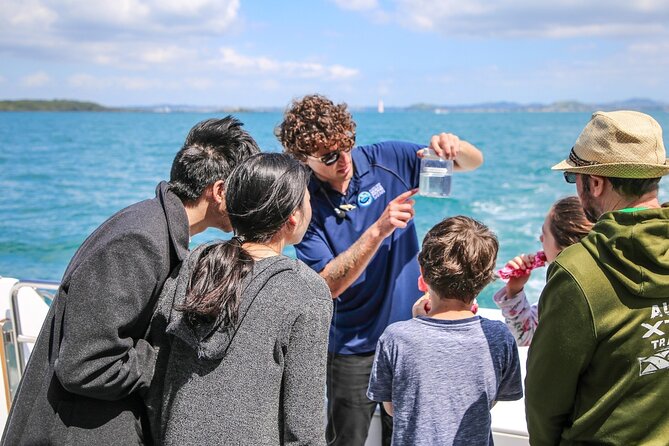
Tiritiri Matangi Island is one of the most interesting names on the route because it places the trip within the gulf’s wider conservation story. You do not land there during this cruise, but its presence underlines the connection between island protection and marine life.
Look upward as well as outward. The crew may point out Australasian gannets, petrels, shearwaters, and white-fronted terns. These birds can soar over the water, plunge toward the surface, or gather around feeding activity.
Blue penguins are another possible sighting. They are small and easy to miss, so binoculars help. You might see only a quick glimpse, while a seal or dolphin is easier to follow.
This is where the expert commentary earns its keep. Without guidance, many seabirds look like fast-moving specks. The scientists and guides can help you understand what you are seeing and explain why feeding birds may signal activity below the surface.
North Head and the return to Auckland
North Head Historic Reserve marks another scenic part of the return route. From the water, the headland offers a fresh angle on Auckland’s harbor entrance and the meeting point between city, coast, and gulf.
After the final wildlife search, the catamaran returns to Viaduct Harbour. The advertised duration is about 4 hours and 30 minutes, and the experience ends back at the same meeting point.
The schedule is usually intended to run on time, but wildlife trips sometimes stretch when the crew is still searching. One outing returned around 10 minutes late while the captain continued looking. If you have a restaurant booking, theater ticket, or airport connection, leave a buffer.
What the price delivers at $135.91
At $135.91 per person, this is not a cheap harbor ride. The price makes more sense when you consider the length of the trip, the custom catamaran, the specialist crew, the research element, and the direct contribution from each ticket to marine mammal conservation.
You also get a full half-day on the water rather than a short sightseeing loop. For a successful day with dolphins, whales, birds, and island views, the fare can feel fair. One particularly strong outing included whales, a shark, a large dolphin feeding event, and blue penguins. You cannot count on that exact mix, but it shows the range of wildlife possible.
The value drops if you see very little. A four-and-a-half-hour ride with only a few dolphins can feel disappointing, especially for a visitor who will not be able to use the free return voucher. The conservation contribution and good commentary still provide substance, but they do not replace the excitement of seeing animals.
Food and drinks are not included, although you can buy snacks and drinks onboard. Bring your own water if you prefer, and do not count on a full meal during the trip.
Weather, clothing, and the best place to sit
Auckland’s weather can change quickly on the water. Wear warm layers and weatherproof clothing, even if the waterfront feels mild when you leave. Wind makes the open deck much cooler than the dock.
Use sunscreen, wear sunglasses, and bring a sun hat with a chin strap. A loose hat can become a hazard in strong wind. Flat-soled, sturdy shoes are the sensible choice on a moving boat.
Binoculars are useful for birds, distant whales, and penguins. A camera is worth bringing, but protect it from spray and keep one hand free when moving around the deck.
If the boat is full, claim a sensible viewing position early, but be willing to share it. Passengers naturally gather at the rails when animals appear. Moving inside for a drink or toilet break may mean someone else takes your place, so agree on a meeting spot with your group rather than expecting to hold a particular seat.
Most people can participate, and service animals are allowed. The main physical concern is the combination of wind, boat movement, sun, and a long period outdoors.
Who will enjoy this trip most
I would choose this safari for anyone who values wildlife, science, and scenery in equal measure. It suits families, photographers, birdwatchers, and curious first-time visitors who want more context than a simple boat ride provides.
It is also a good choice if you have several days in Auckland. The free return trip gives you some protection against an empty wildlife day, provided you have time to use it.
I would hesitate if your only goal is a guaranteed whale photograph. I would also think twice if rough water causes you serious discomfort or if your Auckland schedule is packed with fixed appointments.
The experience works best when you treat the animals as wild encounters, not scheduled attractions. Dolphins may put on an unforgettable show. Whales may surface once in the distance. Some days bring beautiful scenery and little else.
Should you book the Auckland Dolphin and Whale Watching Eco-Safari?
Book it if you want a serious, well-supported search for marine life in Auckland’s Hauraki Gulf, and if you can accept uncertain results. The strongest reasons are the marine research scientists, the conservation contribution, the long route through island waters, and the frequent chance of close dolphin encounters.
Before paying, check your own schedule and tolerance for weather. Arrive early, dress for wind, bring sun protection, and reserve a later part of the day in case the boat returns a little late.
At $135.91, this is worthwhile for a half-day wildlife experience with a strong educational purpose. Just keep your expectations honest: the best memory may be a pod of dolphins at the bow, but it may also be a seabird, a glimpse of a penguin, or a beautiful ride through the gulf without a whale.
FAQ
How long does the Auckland Dolphin and Whale Watching Eco-Safari last?
The cruise lasts approximately 4 hours and 30 minutes.
Where does the safari depart from?
You meet the crew at Eastern Viaduct near the New Zealand Maritime Museum in Auckland’s Viaduct Harbour.
Where does the tour end?
The boat returns to the same meeting point at Viaduct Harbour.
What animals might I see?
Possible sightings include whales, bottlenose dolphins, seals, blue penguins, sharks, Australasian gannets, petrels, shearwaters, and white-fronted terns.
Are whale and dolphin sightings guaranteed?
No. Wildlife sightings cannot be guaranteed. If you do not see any marine mammals, you can take the trip again on another day at no extra charge.
Is food included?
No. Food and drinks are available to purchase onboard but are not included in the ticket price.
What should I wear and bring?
Wear warm layers and weatherproof clothing. Bring a sun hat with a chin strap, sunscreen, sunglasses, a camera, binoculars, and flat-soled shoes.
How early should I arrive?
Check-in closes 15 minutes before the stated departure time. Arriving late may put your allocated seat at risk.
More safaris in Auckland
- Seal Coast Safari – Exclusive access to Wellington’s secret coast
★ 5.0 · 294 reviews - Wellington: Half Day Seal Coast Safari
★ 4.9 · 245 reviews - Akaroa: 4WD Safari and Guided Sea-Kayaking Experience
★ 4.8 · 120 reviews - Wild Hills Off Road Safari
★ 5.0 · 92 reviews
More dolphin trips from Auckland
- Auckland: Bay of Islands Day Tour with Dolphin Cruise
★ 5.0 · 11 reviews - Akaroa Dolphins ~ Harbour Nature Cruise
★ 5.0 · 2,143 reviews - Akaroa: Dolphin Nature Cruise
★ 4.9 · 440 reviews - Swimming with Wild Dolphins in Akaroa
★ 4.5 · 261 reviews
Newly listed around Auckland
- Private tour – Hobbiton Movie Set Evening Banquet Return from Auckland★ 5.0 · 5 reviews
- Kumeu Winery Boutique Tour with Gourmet Lunch from Auckland★ 4.0 · 5 reviews
- Private 2 Day Tour: Hobbiton, Waitomo, Rotorua Geothermal & Hamilton Gardens★ 4.0 · 5 reviews
- Private Transfer From Auckland Airport To Rotorua★ 5.0 · 5 reviews
- Private Auckland Luxury Tour★ 5.0 · 5 reviews
- Auckland City Halfday Tour★ 5.0 · 5 reviews
- Ex Auckland: TE PUIA Geothermal, Redwood & Blue Springs★ 4.4 · 5 reviews
- Private 2 Hour Surf Lesson★ 5.0 · 5 reviews
Auckland Tours, compared.
Hobbiton & Waitomo Caves Guided Day Trip from Auckland incl lunch
Read our review →
Hobbiton & Waitomo Caves Day Trip with Lunch
Read our review →
Hobbiton Movie Set Day Trip with Festive Lunch
Read our review →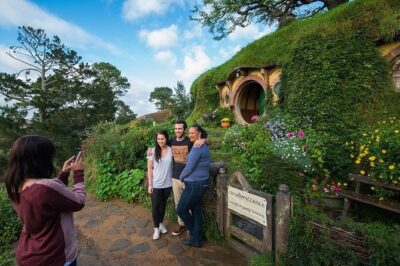
Hobbiton & Waitomo Caves Small-Group Tour W Lunch from Auckland
Read our review →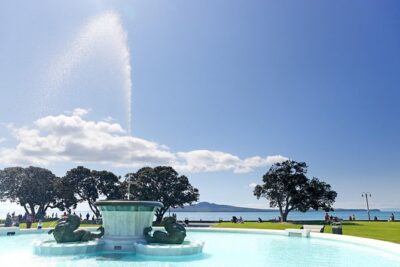
Half-day Discover Auckland City Sightseeing Tour
Read our review →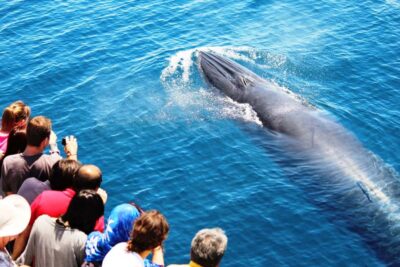
Whale and Dolphin Watching Half-Day Eco Cruise
Read our review →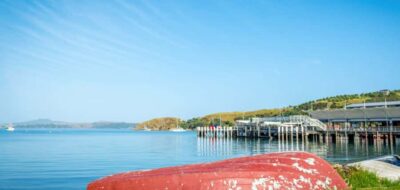
Browse the lists this tour appears in