
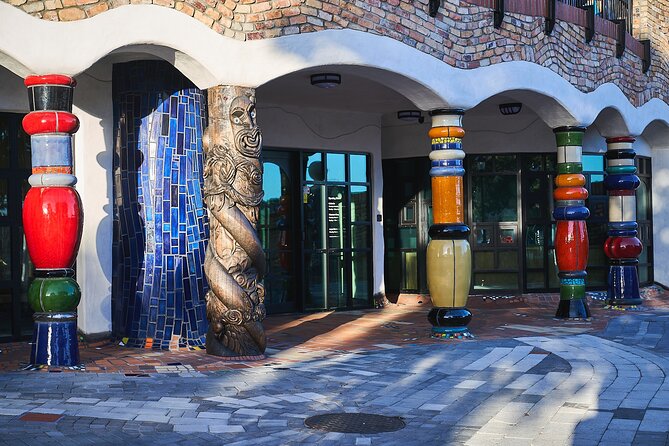
Reviewed · NEW ZEALAND
Explore the legacy of artist, ecologist, architect, visionary
Whangarei’s Hundertwasser Art Centre is more than a gallery. It is a colorful lesson in how art, architecture, and nature can share the same address. You’ll see the largest collection of Friedensreich Hundertwasser’s work outside Vienna, then climb to an afforested rooftop for wide views over the Hātea River and city.
I like the freedom here. Your admission lasts all day, so you can make a quick visit, take your time, or leave for lunch and return. I also like the chance to pair Hundertwasser’s work with Wairau Māori Art Gallery, a changing exhibition space devoted to contemporary Māori artists.
The main drawback is value for visitors expecting a large traditional museum. The collection is focused, and some people may find the indoor architecture less exciting than the colorful exterior. If you mainly want to see the building, the outside costs nothing.
Key points to know before you go
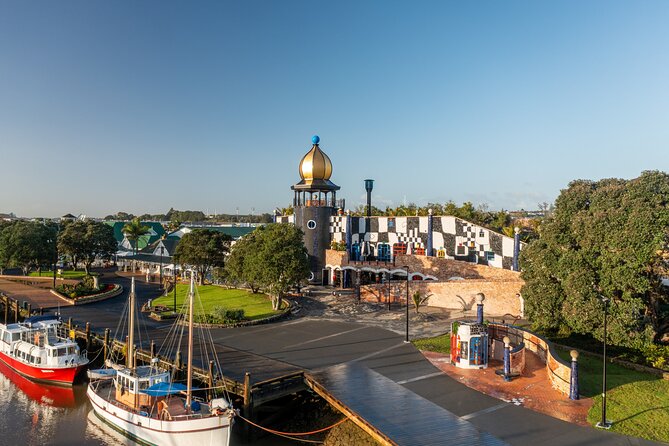
- The building is part of the artwork: Expect curved forms, bright tiles, unusual railings, and an Afforested Roof topped by a golden cupola.
- Two art experiences share one admission: You’ll see Hundertwasser in New Zealand 1973 to 2000 and changing contemporary Māori exhibitions.
- Choose your pace: Explore independently or arrange an additional one-hour interactive guided tour.
- The rooftop is the visual payoff: The Afforested Roof gives 360-degree views over Whangarei, the Hātea River, and the surrounding city.
- Your ticket lasts all day: That makes it easy to break up the visit with time around the Town Basin.
- Allow at least an hour: A short visit covers the main galleries, but a slower visit adds the film theatre, rooftop, shop, and time to study the building.
Why Hundertwasser belongs in Whangarei
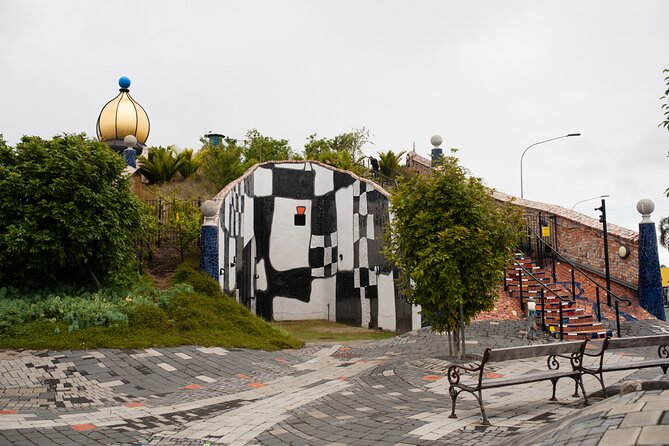
Friedensreich Hundertwasser is best understood as an artist who worked across several fields. He painted, designed buildings, planted trees, and argued for a closer relationship between people and the natural world.
That idea shapes this visit. You are not simply walking through rooms filled with paintings. You are looking at a building designed around irregular forms, color, planting, and the belief that architecture should not flatten nature into straight lines and bare concrete.
Hundertwasser spent time in New Zealand, and the main exhibition focuses on his work there between 1973 and 2000. That local connection matters. You are not seeing a random collection placed in a New Zealand city. You are seeing work tied to his relationship with Aotearoa and his long interest in ecological living.
His message may feel especially timely. The centre presents his belief that people are guests of nature and should behave accordingly. You do not need to be an art specialist to grasp the point. The art is playful, but the environmental argument behind it is serious.
I would come with an open mind rather than a checklist. Some pieces may charm you immediately. Others may seem odd, rough, or deliberately childlike. That is part of Hundertwasser’s appeal. He wanted art to interrupt routine and make ordinary surroundings feel less mechanical.
Other North Island trips that fill the same day:
- Hobbiton™ Movie Set Walking Tour from Shires Rest
★ 5.0 · 3,577 reviews - Gannet Safaris Overland tour to Cape Kidnappers Gannet Colony
★ 5.0 · 942 reviews - Cathedral Cove Kayak Tour
★ 5.0 · 887 reviews
The building comes before the gallery
Start outside and walk around the building before you enter. This is one of the most important tips for getting value from the admission. The exterior gives you the clearest first impression of Hundertwasser’s approach.
Look for curving stairways, colorful tiles, sculptural railings, and uneven brickwork. The building avoids the polished, formal feel of a standard museum. It has movement and personality, with details that reward a slow look.
The design also makes a point about nature. The planted roof is not just decoration added after construction. It is part of the centre’s ecological message and one of the living examples of Hundertwasser’s practices presented during the visit.
This is also where expectations matter. If you are interested mainly in architecture, you may find the exterior more satisfying than the indoor spaces. The building is striking from the street, while the internal rooms are more conventional in comparison.
That does not make the inside a waste of time. It simply means you should not rush past the façade to reach the ticket desk. Take photographs from different angles, notice the small decorative details, and then enter with a clearer sense of what the building is trying to do.
Hundertwasser in New Zealand, 1973 to 2000
The main exhibition gives you the largest collection of Hundertwasser’s work outside Vienna. For an artist with a distinctive style, that concentration is useful. Instead of seeing one famous building or a handful of isolated works, you get a better look at recurring ideas across his career.
Expect color, organic shapes, unusual lines, and a strong connection between visual art and the built world. The exhibition also places his work in a New Zealand setting, which helps explain why the centre is located in Whangarei rather than being a generic art museum.
I like this part of the visit best when it is taken slowly. Look for the relationship between his paintings, applied art, architectural models, and ecological ideas. The centre is not only asking you to admire attractive objects. It is asking you to think about how cities might make room for trees, uneven forms, and individual expression.
The collection is not enormous, so do not expect hours of gallery rooms. One criticism is that the amount of original work may feel limited for the price if you arrive expecting a major national museum. The ticket makes more sense when you count the whole visit: the Hundertwasser exhibition, Wairau Māori Art Gallery, film theatre, rooftop, and all-day access.
A good approach is to read the explanatory material, then step back from it. Hundertwasser’s work can become less interesting if you treat it only as a lesson. It works best when you allow yourself to enjoy the strange shapes and strong colors first, then consider the ideas underneath.
Wairau Māori Art Gallery adds a second voice
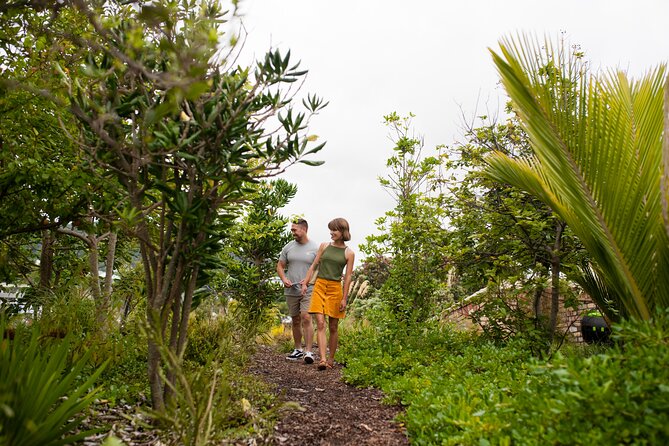
Wairau Māori Art Gallery is the world’s first dedicated Māori public art gallery. Its exhibitions change, so the exact work on display depends on when you visit.
That changing program gives the centre a wider purpose. You are not seeing European art in isolation. You also have a space focused on contemporary Māori artists, indigenous themes, and the history of Aotearoa.
I would give this gallery real time rather than treating it as an extra room on the way to the roof. Contemporary Māori art can ask different questions from Hundertwasser’s work, but both parts of the centre encourage you to think about place, identity, culture, and the relationship between people and the natural world.
Because exhibitions change, the experience will not be identical on every visit. That is useful if you are spending more time in Northland or returning to Whangarei later. It also means you should avoid planning your visit around a particular artwork unless you have checked the current exhibition details separately.
The combination is one of the strongest reasons to pay for entry. If you only want colorful architecture, you may feel the ticket is expensive. If you care about both Hundertwasser and contemporary Māori art, the admission offers a more rounded cultural visit.
Somewhere else in North Island entirely:
- Kaituna Cascades – Grade 5 Wairoa River near Tauranga
★ 5.0 · 437 reviews - One Hour Cathedral Cove Boat Tour in Hahei
★ 5.0 · 340 reviews - 15,000ft Tandem Skydive in Tauranga – Bay of Plenty
★ 5.0 · 305 reviews - Timber Trail – Ongarue to Pureora Shuttle 2 Day Ride
★ 5.0 · 186 reviews
Take the Afforested Roof slowly
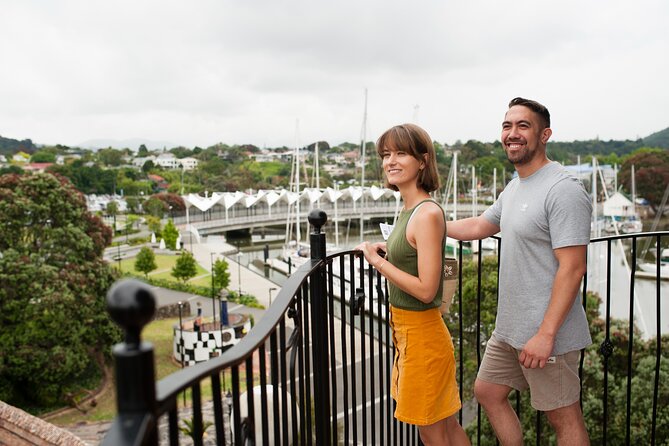
The Afforested Roof is the high point of the visit in both senses. This award-winning rooftop includes trees and planting, along with a golden cupola that gives the building its memorable finishing touch.
From up there, you get sweeping views of the Hātea River and Whangarei. The 360-degree outlook helps you understand the centre’s place in the city. You are not looking at a sealed-off museum. You are looking back over the town and the natural setting that Hundertwasser wanted architecture to respect.
The roof is worth more than a quick photograph. Walk around, look back at the building, and notice how the greenery changes your view of the structure. From street level, the centre looks like a piece of colorful sculpture. From above, its planted roof becomes easier to understand as an ecological idea.
This is also a good reason to avoid squeezing the visit into the shortest possible time. The galleries may take less than an hour for some people, but the rooftop rewards a pause, especially if the weather is clear.
The views are broad rather than dramatic mountain scenery. You’ll see the river, city, and nearby urban surroundings. That makes the roof a pleasant Whangarei viewpoint, but it should not be confused with a remote nature lookout.
Films, models, and the MuseumShop
A small film theatre runs documentaries on a loop. It can add useful background, especially if you know little about Hundertwasser or want context for his New Zealand connection.
The film content is not the strongest part for everyone. Some visitors may find the presentation short on narrative, so I would treat it as an optional supplement rather than the main reason to visit. Watch it if the timing works, but do not build your whole schedule around the screening.
Architectural models of other Hundertwasser buildings are also on display. These help explain how his ideas translated from paintings and sketches into actual structures. They are particularly useful if you are curious about his work beyond Whangarei.
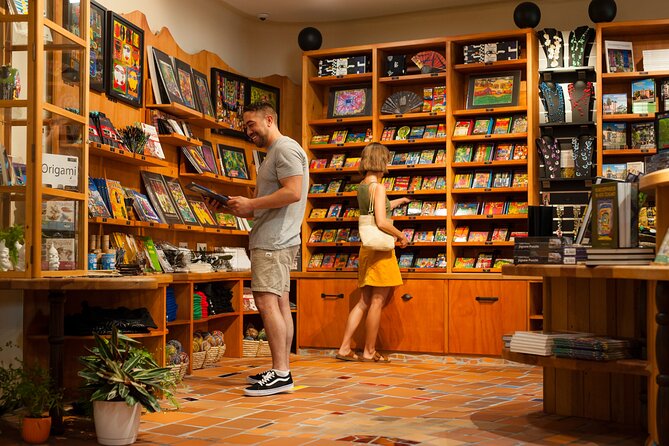
The MuseumShop has a large selection of Hundertwasser applied art, unusual objects, gifts, and items connected with Wairau Māori Art Gallery. It is more substantial than a basic postcard counter, though that also makes it easy to spend extra time and money there.
I would save the shop for the end. That way you can decide what you genuinely want after seeing the exhibitions, rather than shopping before you know what has caught your attention.
How long should you plan?
The advertised visit can take from one to three hours, but your actual timing depends on your interest in art and architecture.
For a quick first look, allow about an hour. You can see the main Hundertwasser exhibition, visit Wairau Māori Art Gallery, and go to the Afforested Roof.
For a more satisfying visit, plan closer to two hours. That gives you time to study the artworks, watch part of a documentary, inspect the models, walk around the roof, and browse the shop without rushing.
The all-day admission gives you another option. You can visit earlier, spend time around Whangarei’s Town Basin, and return later. This flexibility is valuable because the centre sits near an active waterfront area with places to eat and walk.
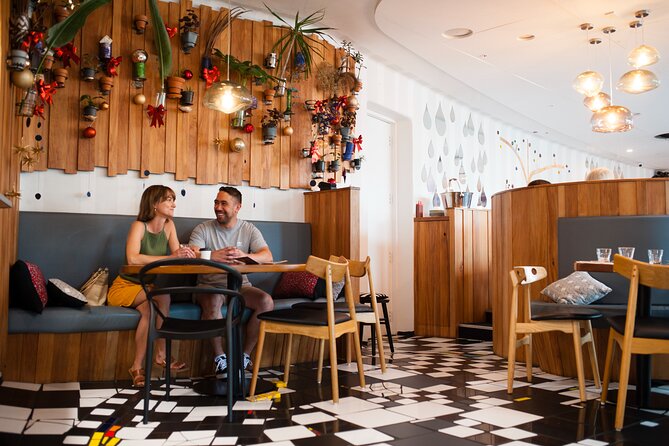
An on-site restaurant is also available. Food such as sashimi and chowder has been singled out positively, along with the service and views. I would consider it a useful add-on if you want to turn the visit into a relaxed half-day stop, though the restaurant is not included in the admission price.
Self-guided visit or the extra guided hour?
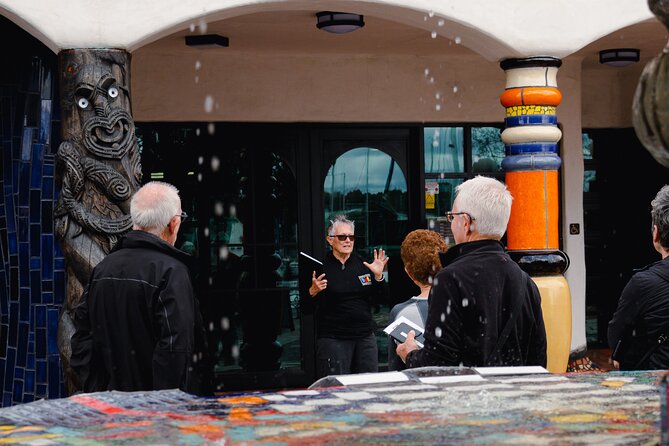
The self-guided option suits people who want to move at their own pace. You can linger over a favorite work, skip the film, spend longer on the roof, or leave and return during the day.
The optional one-hour interactive guided tour costs extra. The supplied information does not name the guides, so you should confirm the guide and added price when arranging it.
A guided tour may be worthwhile if you want help connecting Hundertwasser’s art to his ecological beliefs and New Zealand life. It could also make the architectural models and unusual design choices easier to read.
I would choose the self-guided visit if you already know Hundertwasser’s work or prefer quiet time with art. Pick the guided option if this is your first encounter with him and you want a clear explanation rather than learning from labels and films alone.
Is $18.62 good value?
At $18.62 per person, the admission is reasonable if you plan to use the full centre. You are paying for access to two gallery programs, the Hundertwasser collection, the rooftop, documentary films, and the building itself.
The price feels less convincing if you only want to photograph the exterior. You can appreciate much of the architectural character from outside, and some people may find the indoor collection too limited for the cost.
The best value comes from combining several parts of the visit. Spend time in both galleries, watch the film if useful, inspect the models, and take in the roof views. The all-day policy improves the deal because you do not have to consume everything in one rushed stretch.
Families and older children may also find the centre easier to enjoy than a formal art museum. The bold colors, odd shapes, and building details give younger visitors something to look at, while the environmental ideas provide useful conversation for adults.
The centre is near public transportation, and service animals are allowed. Most people can participate. Confirmation is received at booking, and mobile tickets make entry simple.
Who should book this Whangarei visit?
You should book if you enjoy architecture that refuses to be plain, contemporary Māori art, environmental ideas, or unusual city attractions. It is especially useful on a day when you want culture without committing to a long guided excursion.
I would also recommend it to families, design students, photographers, and anyone already interested in Hundertwasser’s buildings in Vienna or elsewhere. The New Zealand focus adds a local reason to visit rather than offering only a repeat of his European work.
You may want to skip the paid entry if you have very little interest in art, or if you only have a few minutes to spare. In that case, admire the exterior and the surrounding Town Basin instead.
For most people, I would plan a two-hour visit and treat the rooftop as essential. Free cancellation is available up to 24 hours before the start time, which gives you some flexibility if your Whangarei plans change.
FAQ
How long does the visit take?
The visit is expected to take approximately one to three hours. Admission provides all-day access, so you can leave and return during the same day.
Is a guided tour included?
No. Admission includes self-guided access, while the optional one-hour interactive guided tour costs extra.
What does the admission ticket include?
The ticket includes full-day access to the Hundertwasser Art Centre, the Hundertwasser in New Zealand 1973 to 2000 exhibition, Wairau Māori Art Gallery, the Afforested Roof, the small film theatre, and the other public spaces.
What is special about Wairau Māori Art Gallery?
Wairau Māori Art Gallery is the world’s first dedicated Māori public art gallery. It presents changing exhibitions by contemporary Māori artists exploring indigenous themes and the history of Aotearoa.
Can I see views of Whangarei from the building?
Yes. The Afforested Roof has a golden cupola and provides 360-degree views over the Hātea River and Whangarei city.
Can I cancel for a refund?
You can cancel up to 24 hours before the experience start time for a full refund. Cancellations and changes made less than 24 hours before the start time are not accepted for a refund.
Newly listed around North Island
- Bullswool Heritage Farm General Entry Ticket★ 5.0 · 6 reviews
- Wool Sheep Farm Experience with Handmade Wool Hat in New Zealand★ 5.0 · 9 reviews
- Private tour to Cape Kidnappers Gannet Colony★ 5.0 · 10 reviews
- Cathedral Cove Dive & Snorkel- Marine Reserve specialised trips★ 5.0 · 11 reviews
- Leigh: Goat Island Clear Kayak Rental★ 4.0 · 16 reviews
- Fine Wine Tour in Napier, New Zealand★ 5.0 · 17 reviews
- Puketi Rainforest Guided Walks .This is not a Shore Excursion product .★ 5.0 · 20 reviews
- Rangitaiki River White Water Scenic Rafting from Rotorua★ 5.0 · 23 reviews