
Reviewed · TRANZALPINE & SCENIC RAIL
Arthur’s Pass Tour From Christchurch via CHC-GRZ TranzAlpine
The best part of this day is the change of viewpoint: you cross the Southern Alps by train, then return by road through Arthur’s Pass. The TranzAlpine gives you time to watch braided rivers, plains, mountains, and the Otira Tunnel roll past without worrying about driving.
I like the small group limit of 11 and the return route over the Great Alpine Highway. I also like the chance to see a kea, New Zealand’s famously cheeky alpine parrot. The catch is the length: 13 hours is a very full day, and train delays can shorten time at places such as Cobden.
Key points
- Train one way, coach the other: Take the TranzAlpine from Christchurch to Greymouth, then return by road.
- Arthur’s Pass in context: Follow a route once used by iwi trading pounamu, or greenstone, between the east and west coasts.
- Castle Hill stop: See striking limestone formations beside the Great Alpine Highway.
- Small-group transport: Travel with no more than 11 people in a Mercedes Sprinter or similar vehicle.
- Guide quality matters: Grant, Logan, and Willem have each been praised for friendly, useful local commentary.
- Weather can change quickly: Bring warm layers, comfortable shoes, water, and a camera.
A Southern Alps crossing with two very different views
This tour makes sense because the outward and return journeys do not repeat one another. The TranzAlpine carries you across the Canterbury Plains and into the mountains, while the coach follows the Great Alpine Highway on the way back to Christchurch.
That variety is the main reason to choose this day over a simple train ride. You get the comfort and broad windows of a famous rail journey, then the flexibility of a small road vehicle for photo stops and short visits at Castle Hill and Arthur’s Pass.
The trip is sold at $310 per person. That is a serious day-trip price, but it includes the train, return transport, a guide, lunch, bottled water, Kiwi snacks, WiFi, and USB charging. If you tried to arrange the same combination yourself, you would still need to solve the one-way transport problem between Greymouth and Christchurch.
The value depends on your priorities. If you mainly want the TranzAlpine, booking the train separately may give you more control. If you want the train plus a guided return through the pass, this package is easier and more complete.
More scenic rail journeys:
- TranzAlpine Train, Arthur’s Pass and Castle Hill Day Trip
★ 5.0 · 426 reviews - TranzAlpine Train Journey: Christchurch to Greymouth
★ 4.5 · 312 reviews - Arthur’s Pass Discovery and TranzAlpine Train – Small Group Tour
★ 5.0 · 272 reviews
Christchurch to Greymouth aboard the TranzAlpine
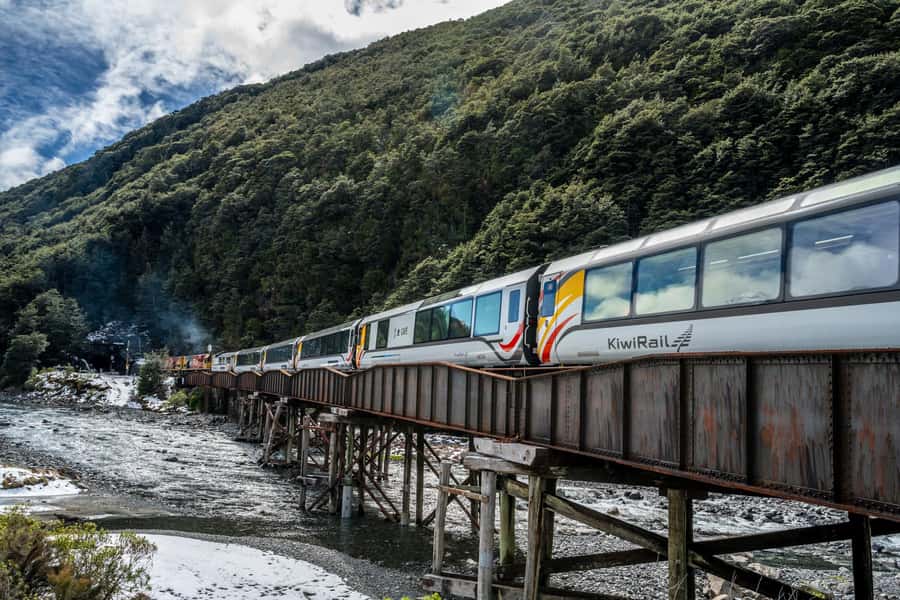
Your day begins with the Christchurch to Greymouth section of the TranzAlpine. This is the slow, scenic part of the morning, when you can sit back and watch the Canterbury Plains give way to the Southern Alps.
The train crosses braided rivers and open farmland before reaching the mountain country. These wide riverbeds are a distinctive South Island sight. From a road vehicle, you get quick glimpses. From the train, you have more time to watch the channels, gravel bars, and changing colors.
The route also passes Lake Brunner and enters the 8-kilometre Otira Tunnel. The tunnel is one of the trip’s memorable engineering features, carrying the railway through the main divide before the train reaches the West Coast.
A viewing carriage is part of the appeal of the train. It lets you take in the scenery in a more open way, though conditions may be cool and windy. Keep a warm layer handy rather than burying it in your bag.
The train is not simply a way to reach the next stop. It is the first major sightseeing section of the day, and it works best if you resist trying to photograph every passing view. Pick a few moments, then watch the scenery change.
Greymouth, Cobden, and the West Coast edge
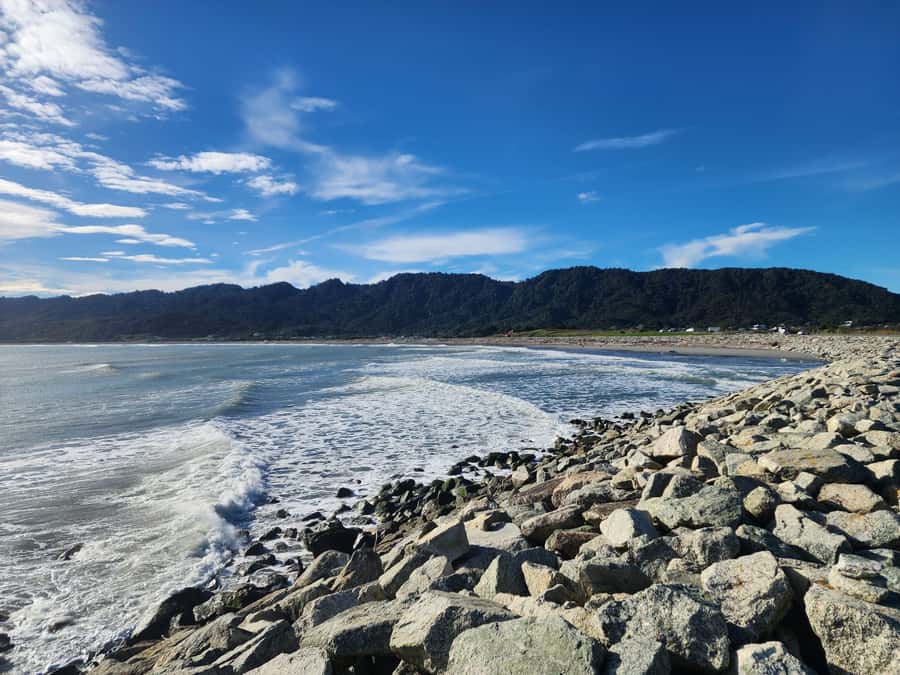
After arriving in Greymouth, the road portion begins. Cobden is included as a picture stop, with the breakwater providing a different view of the West Coast than the mountain scenery you have just left behind.
This stop is worth keeping in the plan because it gives the day some variety. You are not looking only at peaks and forest. You also get the broad, exposed coastal setting around Greymouth.
There is one practical warning here. Train delays of 30 minutes or more can happen, and the Cobden stop may be shortened or skipped if the schedule slips. The stated TranzAlpine service leaves Greymouth at 2:15 pm and is due into Christchurch at 7 pm, but delays can affect onward arrangements and sightseeing time.
The pickup point in Greymouth also deserves attention. It has not always been obvious, so confirm exactly where to meet the driver before leaving Christchurch. One passenger had to wait about 10 minutes because the location was unclear. That is not a disaster, but after a long train ride, clear instructions are welcome.
Castle Hill and its strange limestone shapes
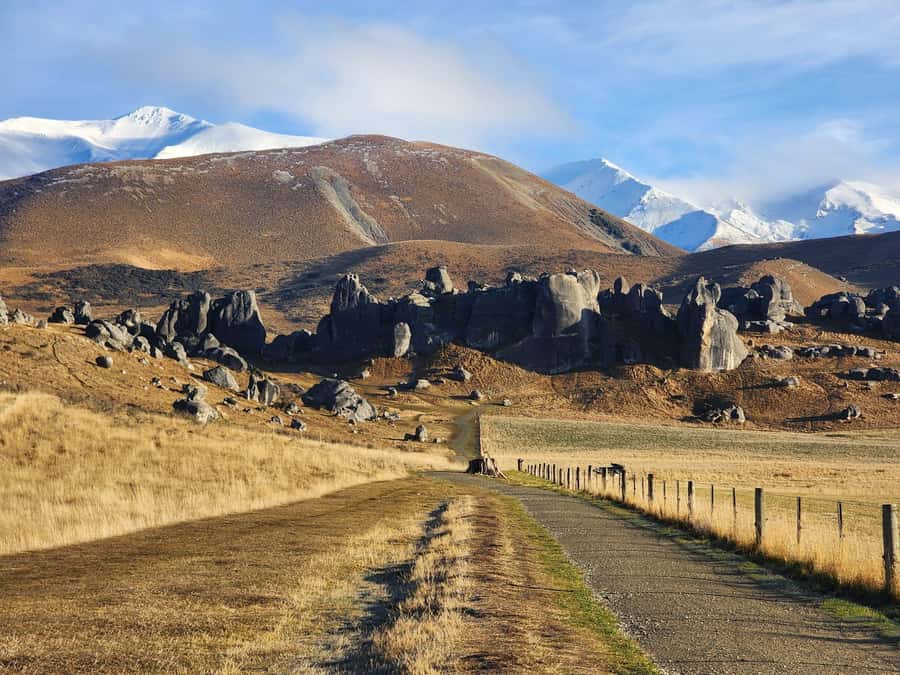
Castle Hill is one of the most rewarding road stops. The area is known for unusual limestone formations scattered across open ground, giving you a chance to walk around and study the rock rather than view it through a coach window.
The stop adds a geological layer to the day. The Southern Alps are not only about tall mountains and snow. Around Castle Hill, erosion has shaped the limestone into forms that can look like towers, walls, and weathered sculptures.
Wear shoes that can handle uneven ground. The tour specifically recommends comfortable footwear, and this is where that advice matters most. You may want to walk beyond the first viewpoint for a better look, although the amount of time available depends on the overall schedule and road conditions.
Castle Hill also works well as a photography stop. The open setting gives you room to frame the rock formations against the surrounding hills. A camera is useful, but so is simply looking up from the screen.
Somewhere else in New Zealand entirely:
- Hobbiton Movie Set: Guided Tour Ticket
★ 4.9 · 8,167 reviews - Rotorua Canopy Tours: 2.5Hour Native Forest Zipline Adventure
★ 5.0 · 4,563 reviews - Hobbiton™ Movie Set Walking Tour from Shires Rest
★ 5.0 · 3,577 reviews - Mitai Maori Village: Cultural Experience and Dinner Buffet
★ 4.7 · 3,575 reviews
Entering Arthur’s Pass National Park
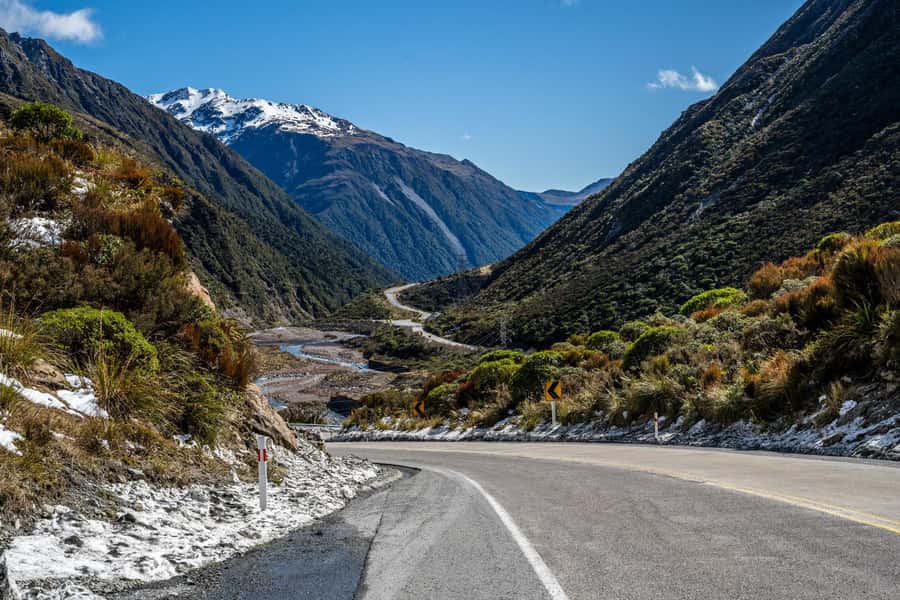
Arthur’s Pass is the heart of the tour. The route connects the east and west coasts across Kā Tiritiri o te Moana, the Southern Alps, and has a long history before modern roads and railways arrived.
I like that the trip presents Arthur’s Pass as more than a scenic photo stop. The route was originally used by iwi trading pounamu, or greenstone. Later, surveyor Arthur Dudley Dobson helped bring the pass to wider attention in 1864.
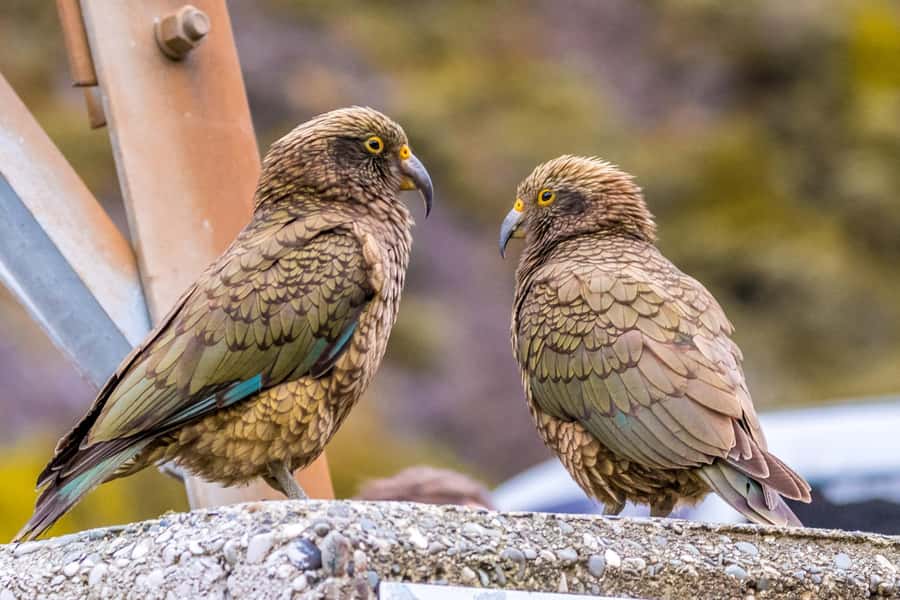
The national park’s appeal comes from its rough terrain, waterfalls, native beech forest, and unusual birdlife. The kea is the local star. It is the world’s only truly alpine parrot, and you may have a chance to spot one in the wild. A sighting is never guaranteed, so enjoy the park even if the birds stay out of view.
Your guide can make a real difference here. Grant has been praised for filling the drive with useful local observations. Logan has been noted for explaining the communities and places along the route, while Willem has been described as friendly and informative. The operator does not promise a particular guide, but these accounts show how much the return journey can depend on the person behind the wheel.
The road through Arthur’s Pass is also where weather matters most. Conditions can shift quickly in alpine country. Bring warm clothing even if Christchurch begins with mild weather, and keep rain protection close by if you have it.
Lake Lyndon, Otira, and the Great Alpine Highway
Lake Lyndon is another scenic point on the return drive. It gives you a chance to see the high-country setting from the road, with the water and surrounding slopes offering a quieter pause between the larger attractions.
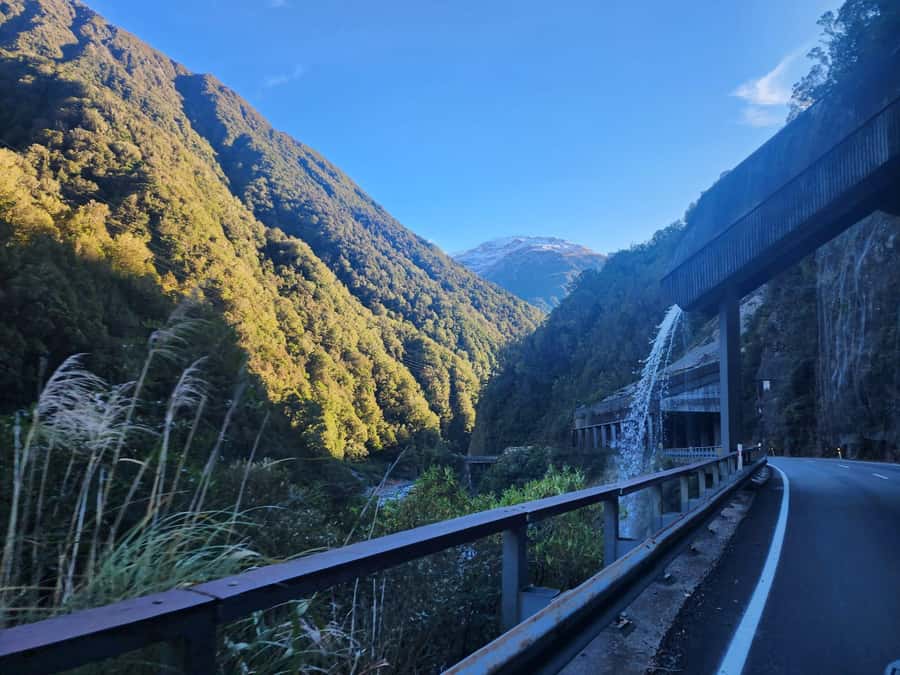
The Otira Viaduct is an important engineering feature along the route. It carries the highway through steep terrain and reflects the practical challenge of crossing the divide. The train gives you the Otira Tunnel; the coach lets you see a different part of the road system that makes this crossing possible.
These stops are especially valuable because the coach can pull over where a train cannot. You are not locked into one viewpoint for the entire return. On the other hand, road conditions, traffic, weather, and train delays can reduce the time available at each place.
That is the tradeoff of fitting so much into one day. You see a wide slice of the region, but you will not have long hiking time at Arthur’s Pass or Castle Hill. This is a sightseeing sampler, not a walking holiday.
What the small group and vehicle add
The tour is limited to 11 participants and uses a modern Mercedes Sprinter or similar vehicle. That is a useful middle ground. You avoid the scale of a large coach, but you also do not have to handle the long return drive yourself.
The vehicle includes WiFi and USB charging, which are small comforts on a 13-hour outing. Lunch, bottled water, and Kiwi snacks are included as well. You should still bring your own snacks and water, especially if you prefer specific food or need something between stops.
Small groups also make guide commentary easier to hear. You can ask questions without trying to catch the driver’s attention from the back of a full-size bus. The downside is that the vehicle still involves a long period of sitting, and the return drive can feel rushed if the train arrives late.
Toilets are included at points during the tour. That helps, but do not treat the day like a flexible road trip with unlimited stops. The schedule is built around the train and the long distance back to Christchurch.
The main concern: timing and the long return
The largest weakness is the schedule. You leave Christchurch, cross the island by train, see the West Coast, and then drive back across the mountains all in one day.
That makes for a memorable route, but it can also make the final hours tiring. One booking was described as enjoyable but poor value because the return felt rushed. Another raised concerns about driving and safety. Those concerns should not be ignored, even though other bookings praised the drivers for being swift and safe during the long journey.
A delay on the TranzAlpine creates a chain reaction. Less time in Greymouth can mean less time at Cobden, a later departure by road, and a more compressed return. Do not book a flight, separate tour, or other fixed connection that depends on arriving in Christchurch at an exact time.
The operator specifically warns that Great Journeys New Zealand manages the train and cannot accept responsibility for missed onward connections caused by delays. If you need to reach an airport or catch another service, build in a generous buffer.
Who will get the most from this day
I would recommend this tour to you if you want to see both the TranzAlpine and Arthur’s Pass but have limited time in the South Island. It is also a good fit if you prefer having a guide, lunch, and return transport arranged in one booking.
You should enjoy it if you like changing scenery, short scenic stops, and local commentary more than long walks. The small group format suits you if you want a quieter vehicle and the chance to ask questions.
I would hesitate if your priority is a relaxed pace. You will spend many hours on the train and in the vehicle, and the road return can feel compressed. I would also hesitate if you have mobility limitations, since the tour is not suitable for people with mobility impairments.
Dress for several seasons. Comfortable shoes, warm clothing, a camera, snacks, and water are the sensible basics. The alpine weather may not match the conditions you see at your pickup point in Christchurch.
Is the $310 fare good value?
At $310 per person, the cost is fair only if you want the whole package. The fare covers a major train journey, return coach transport, a guide, food and drinks, and several road stops. You also avoid arranging a one-way transfer from Greymouth back to Christchurch.
The price feels less attractive if you see the train as the only essential part. In that case, compare the cost of booking the TranzAlpine alone with the value of having a guide and return vehicle.
The strongest value comes from the route design. You travel by rail in one direction and road in the other, so the day does not simply retrace itself. That is a much better use of a long day than taking the same transport both ways.
Should you book it?
Book this tour if you want an efficient first look at the Southern Alps, the TranzAlpine, Arthur’s Pass, Castle Hill, and the West Coast in one demanding day. The guides can add real character, with Grant, Logan, and Willem each praised for friendly, useful commentary.
Skip it if you need a slow pace, long walks, or a guaranteed arrival time in Christchurch. Confirm the Greymouth meeting point, avoid tight onward connections, and accept that Cobden may disappear from the schedule after a train delay.
For the right kind of visitor, this is a smart way to cover a lot of South Island scenery without driving the whole route yourself. Just treat it as a full expedition day, not a casual outing.
FAQ
How long is the Arthur’s Pass tour from Christchurch?
The tour lasts approximately 13 hours.
What route does the train take?
The TranzAlpine travels from Christchurch to Greymouth, crossing the Canterbury Plains and Southern Alps, passing braided rivers and Lake Brunner, and going through the 8-kilometre Otira Tunnel.
How do I return to Christchurch?
You return by road via the Great Alpine Highway in a Mercedes Sprinter or similar vehicle.
Is Arthur’s Pass included?
Yes. The road portion includes Arthur’s Pass, along with Castle Hill and scenic points such as Lake Lyndon and the Otira Viaduct.
Is the TranzAlpine included in the price?
Yes. The Christchurch to Greymouth TranzAlpine journey is included.
Is lunch provided?
Yes. Lunch, bottled water, and Kiwi snacks are included.
How large is the group?
The tour is limited to 11 participants.
What language is the tour conducted in?
The live tour guide provides commentary in English.
Can I see a kea?
You have a chance to spot a kea in the wild, but a sighting is not guaranteed.
What should I bring?
Bring comfortable shoes, warm clothing, a camera, snacks, and water. Alpine weather can change quickly.
Are toilet breaks included?
Yes. Toilet breaks are included during the tour.
Is the tour suitable for someone with mobility impairments?
No. The tour is listed as unsuitable for people with mobility impairments.
What happens if the train is delayed?
The TranzAlpine can experience delays of 30 minutes or more. A delay may reduce time at Cobden, and the train operator is not responsible for missed onward connections.
Newly listed around New Zealand
- Kumeu Winery Boutique Tour with Gourmet Lunch from Auckland★ 4.0 · 5 reviews
- Private tour – Hobbiton Movie Set Evening Banquet Return from Auckland★ 5.0 · 5 reviews
- Wellington Jewish Heritage sightseeing tour with a kosher lunch★ 5.0 · 5 reviews
- Ex Queenstown: Mavora Lakes Middle Earth Full Day Adventure★ 5.0 · 5 reviews
- Private 2 Day Tour: Hobbiton, Waitomo, Rotorua Geothermal & Hamilton Gardens★ 4.0 · 5 reviews
- Milford Sound Earnslaw Burn Helicopter Tour from Queenstown★ 5.0 · 5 reviews
- Private Auckland Luxury Tour★ 5.0 · 5 reviews
- Private Transfer From Auckland Airport To Rotorua★ 5.0 · 5 reviews
TranzAlpine & Scenic Rail, compared.
TranzAlpine Train, Arthur’s Pass and Castle Hill Day Trip
Read our review →
TranzAlpine Train Journey: Christchurch to Greymouth
Read our review →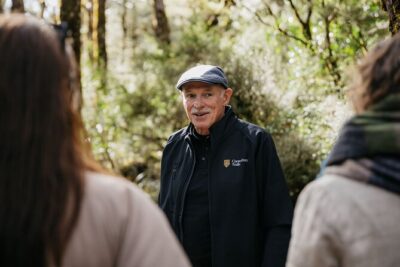
Arthur’s Pass Discovery and TranzAlpine Train – Small Group Tour
Read our review →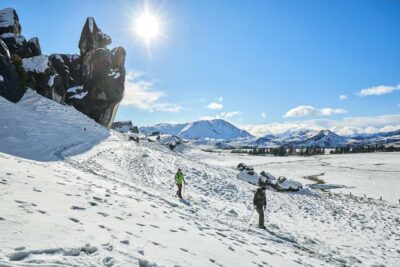
Arthur’s Pass: TranzAlpine Train and Castle Hill Day Tour
Read our review →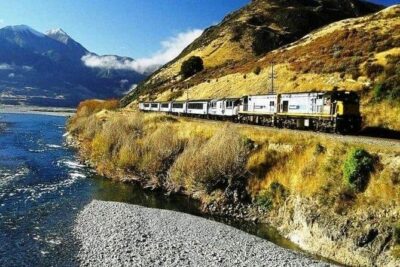
Arthur’s Pass and TranzAlpine Train Day Tour from Christchurch
Read our review →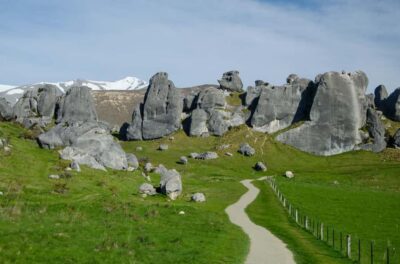
Arthur’s Pass Day Tour From Christchurch with TranzAlpine
Read our review →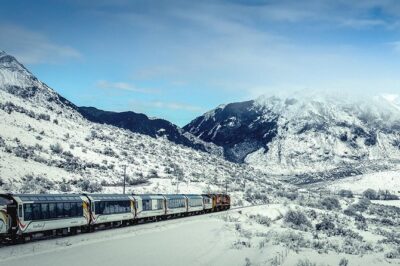
TranzAlpine Train Journey from Greymouth to Christchurch
Read our review →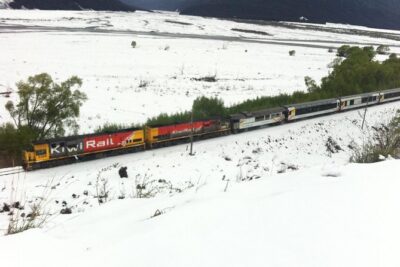
Browse the lists this tour appears in