
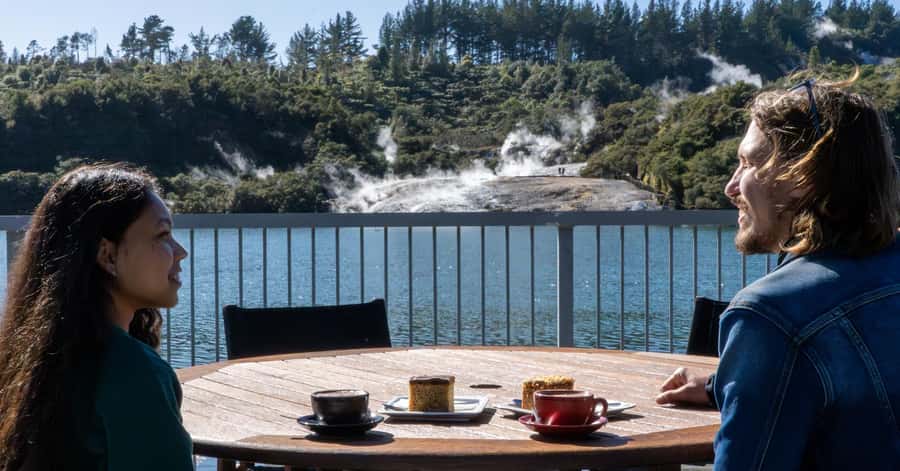
Reviewed · GEOTHERMAL PARKS & HOT POOLS
Taupo: Orakei Korako Geothermal Park and Cave Entry Ticket
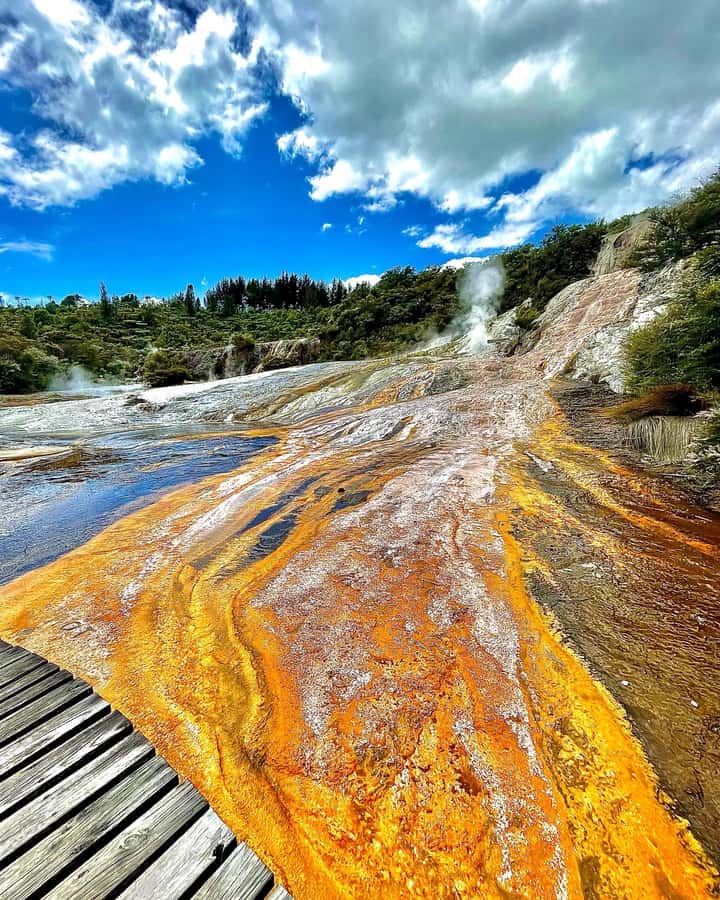
The rare Ruatapu Cave is the star of Orakei Korako, a 35-meter-deep geothermal cavern ending at a clear hot pool. Around it, you’ll find bubbling mud, boiling springs, colorful silica terraces, and up to 23 active geysers, more than at any other geothermal park in New Zealand.
I like the short on-demand ferry ride and the freedom to set your own pace on the island. I also like that the park feels quiet and low-key rather than tightly managed into a large guided group. The main caution is the number of steps and the moderate fitness level needed, plus the fact that geothermal activity and colors can look less dramatic in poor weather.
Key points at a glance
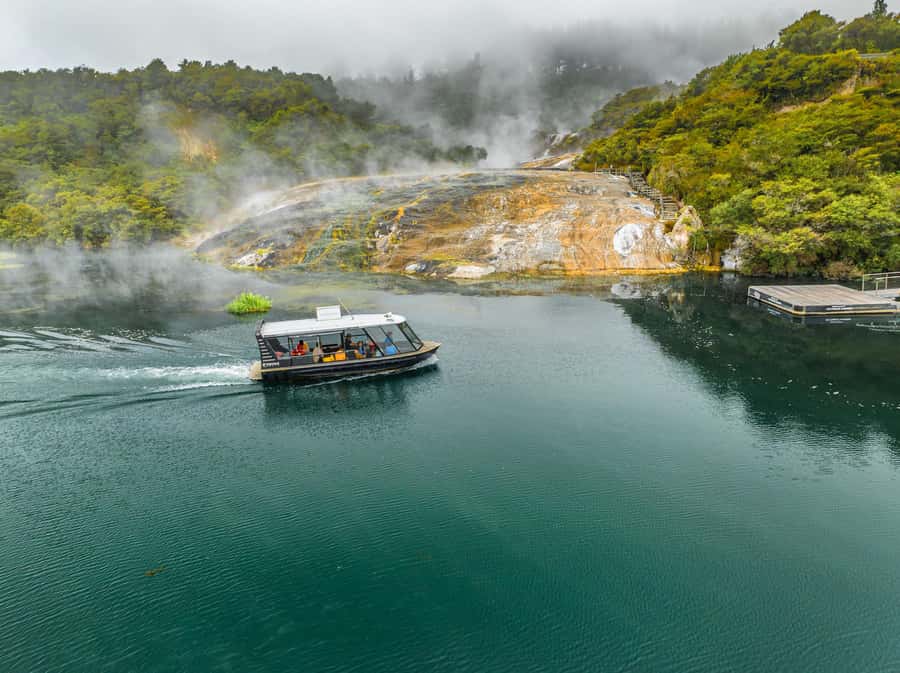
- Ruatapu Cave drops 35 meters to a clear, hot pool in one of only two known thermal caves in the world.
- A three-minute ferry ride links the visitor center with the geothermal valley.
- The self-guided walk takes about 1.5 hours, though some people finish in 45 to 60 minutes.
- Up to 23 natural geysers may be active across the park, along with mud pools and hot springs.
- The trail is well marked, but it includes many steps and is not suitable for wheelchair users.
- Dogs are welcome, making this a useful stop for visitors exploring the North Island with a pet.
Why Orakei Korako feels different from Taupo’s busier thermal stops
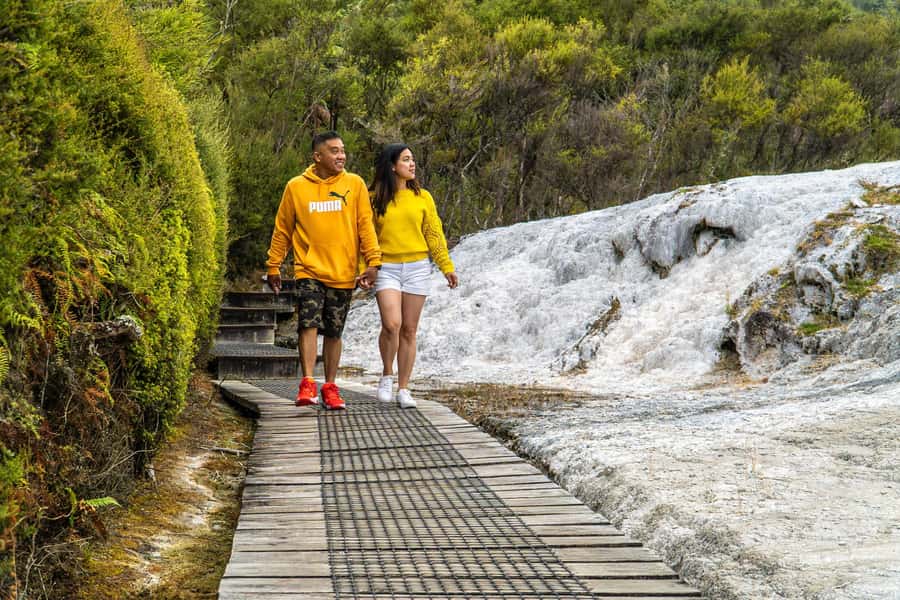
Orakei Korako, also called Hidden Valley, sits between Taupo and Rotorua in New Zealand’s Taupo Volcanic Zone. You reach the geothermal area by ferry, which immediately gives the visit a more remote feel than a park beside a main road.
The ferry crossing takes only about three minutes, but it changes the rhythm of the outing. You leave the visitor center, cross the water, and arrive at a thermal valley where your main job is simply to follow the path and look carefully.
I like this setup because it makes the visit feel like an outing, not just a quick roadside stop. You are not rushed from one display to the next, and there is no requirement to stay with a large walking group. The signs explain what you are seeing, while the trail lets you pause for photos or sit and watch the steam.
The setting is also relatively quiet. That does not mean you will have the place entirely to yourself, but the park can feel calm and unhurried, especially when visitor numbers are light. If you prefer a more understated geothermal visit, Orakei Korako is a good fit.
More geothermal parks and hot pools:
- Rotorua: Wai-O-Tapu Geothermal Park Entry Ticket
★ 4.6 · 2,601 reviews - Auckland: Hobbiton, Rotorua and Wai-O-Tapu Day Tour
★ 4.8 · 458 reviews - Hobbiton & Rotorua including Wai-O-Tapu – Small Group Tour from Auckland
★ 5.0 · 450 reviews
Starting at the visitor center
Your visit begins at the Orakei Korako Geothermal Park and Cave visitor center. Staff handle check-in and give a brief safety explanation before you head to the ferry.
This is also where you will find the café area and shopping facilities. The activity information allows time for brunch, lunch, or a break before or after the walk, so you do not have to treat the thermal trail as a tightly timed excursion.
The ferry operates on demand from 8 am each morning. You do not need to wait for a large scheduled departure, although the exact timing depends on when you arrive and how the service is running.
Pay attention to the last ferry times. During winter, the final trips leave at 4 pm. During Daylight Saving, they leave at 4.30 pm. That matters if you arrive late or plan to linger over lunch.
The visitor center is also your return point. After the walk, you take the ferry back and can pause at the café or shop before leaving.
The three-minute ferry across the water
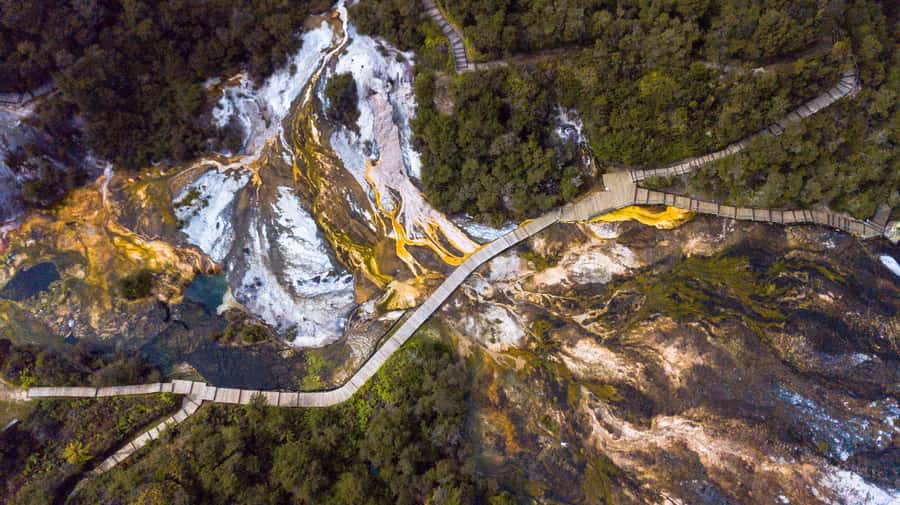
The ferry is short, but it is one of the most memorable practical details of the visit. You board at the visitor center and cross to the geothermal area, with return trips available on demand.
I like the ferry because it creates a clear beginning and end. You are not walking beside parking lots or passing through a standard entrance gate directly into the thermal area. The crossing adds a small sense of occasion without taking much time.
It also means you should keep the ferry schedule in mind. The service is included in your admission, but you cannot simply walk back if you miss the final departure. Check the operating hours when you arrive, especially in winter.
Following the 2.5-kilometer thermal trail
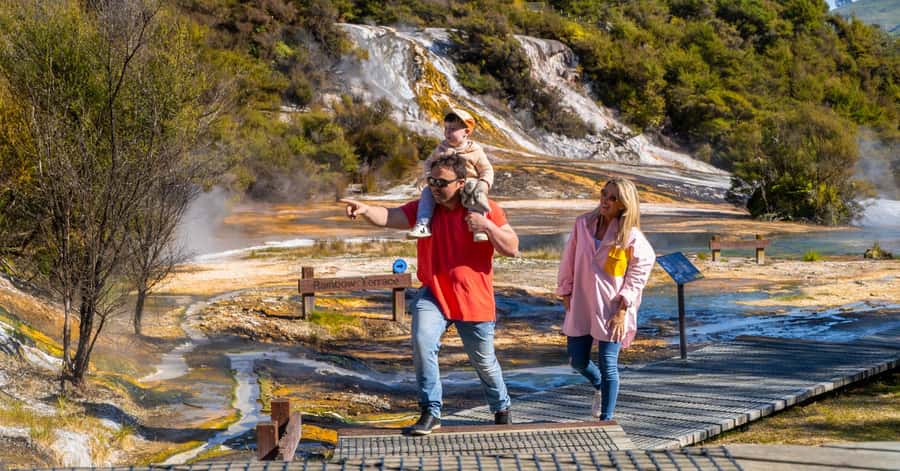
Once across the water, you explore independently. The full trail is about 2.5 kilometers around the geothermal features, while the activity schedule allows roughly 1.5 hours for the self-guided walk.
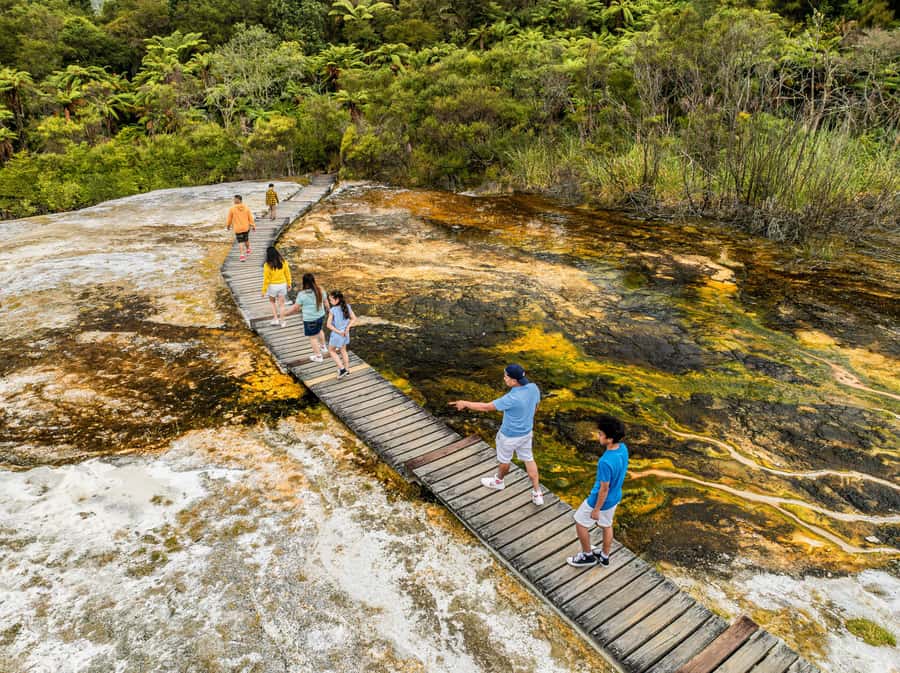
The path is clearly marked, and boardwalk sections make it easier to approach the thermal features without wandering into unsafe ground. Informational plaques explain the sights as you go, so you can learn something about the activity without needing a live guide.
The walk is not difficult for a reasonably fit person, but it is not completely flat. You will encounter a lot of steps, and some people may want more than the suggested 1.5 hours. Benches along the route give you places to rest and take in the views.
If you walk quickly, you might finish in 45 to 60 minutes. I would not rush it. The appeal is in noticing the changing colors, steam, textures, and sounds rather than simply checking off each feature.
Wear trainers or other sturdy walking shoes. Flip-flops are a poor choice here, especially on a route with steps and changing weather. Bring water, since the combination of walking and geothermal heat can leave you thirsty even on a cool day.
A few more New Zealand days to compare
- Hobbiton Movie Set: Guided Tour Ticket
★ 4.9 · 8,167 reviews - Waiheke Island: Ferry & Hop-On Hop-Off Explorer Bus Tickets
★ 4.6 · 3,311 reviews - Auckland: Hop-On Hop-Off Explorer Bus Ticket
★ 4.4 · 1,064 reviews - Wellington: Wētā Workshop Guided Tour Ticket
★ 4.7 · 997 reviews
Ruatapu Cave and the Sacred Hole
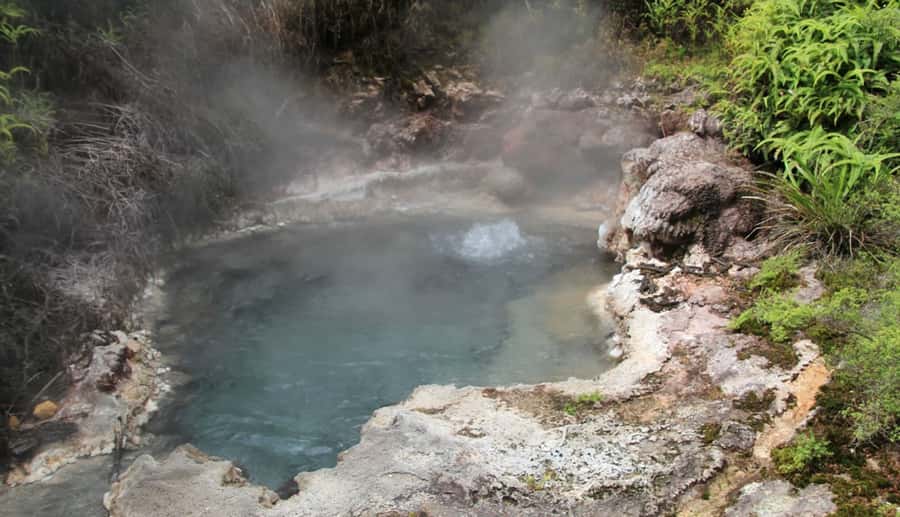
Ruatapu Cave is the feature that gives this park a strong reason to visit. The name means Sacred Hole, and the cavern plunges roughly 35 meters down to a clear hot pool.
Thermal caves are extremely rare. The park describes Ruatapu as one of only two thermal caves in the world, which makes it more than just another viewpoint along the route.
The cave feels very different from the open geysers and steaming pools. You look down into a natural opening shaped by geothermal forces, with the hot pool far below. The contrast between the dark depth of the cave and the bright mineral colors elsewhere in the park makes it one of the most unusual stops on the walk.
Take your time here, but stay on the marked path and follow the safety instructions. The cave is a viewing point, not a place to enter or approach the water.
For many people, Ruatapu will be the moment that separates Orakei Korako from a standard thermal park visit. The geysers are impressive, but the cave gives the outing a rare and memorable centerpiece.
Geysers, mud pools, and silica terraces
Orakei Korako has up to 23 active natural spurting geysers. Activity can vary, so you should not expect every geyser to perform during your visit. One person may see lively thermal action, while another may find the park quieter.
That unpredictability is part of the experience, but it is also the main reason to set your expectations correctly. This is a natural geothermal area, not a timed show with guaranteed eruptions.
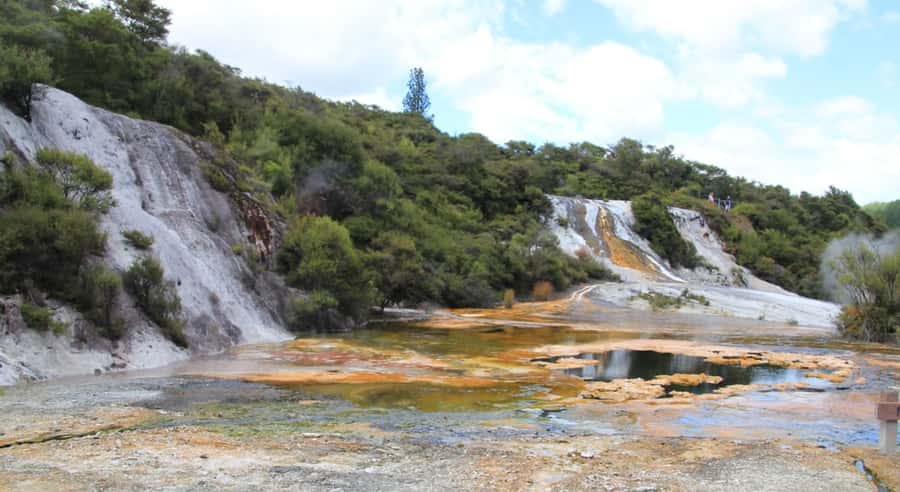
The mud pools provide a different kind of spectacle. They bubble and churn rather than shoot upward, and the smell of sulfur is part of the setting. Hot springs add steam and movement, while silica terraces bring the strongest colors and patterns.
Sunlight can make the mineral colors appear clearer. On a cloudy or rainy day, the tones may seem more muted, though the weather can make the heated pools and steam feel especially inviting. Bring weather-appropriate clothing, since the park operates in all conditions.
The best approach is to look at the whole setting rather than wait for one dramatic burst. You will see small changes in bubbling water, steam, mineral deposits, and surface color as you move along the path.
How much time should you allow?
The listed duration is one day, meaning your entry is valid for the day rather than limited to a short timed slot. The actual park visit is much shorter.
A practical plan is:
- Allow about 15 to 30 minutes at the visitor center for check-in and the ferry.
- Allow 45 minutes to 1.5 hours for the thermal walk.
- Add time for the ferry return, photographs, food, and a break at the café.
If you want a relaxed visit, plan for two to three hours overall. That gives you room to wait for the ferry, stop at the cave, read the signs, rest on the benches, and browse at the visitor center.
The park can be completed faster, but rushing works against the self-guided format. You are paying for access to the area, not for a nonstop performance, so the value improves when you give yourself time to notice the details.
Is the $34 admission good value?
At $34 per person, the ticket is reasonably priced for a distinctive geothermal attraction that includes the return ferry. You are getting entry to the thermal park, the self-guided route, and ferry transport without paying extra for each part.
The value is strongest if you appreciate freedom and unusual natural features. You can move at your own pace, stop when you like, and get closer to the pools and terraces than you might on a tightly controlled group outing.
It may feel less worthwhile if you expect a polished show with guaranteed geyser eruptions, a live guide, or a full-day schedule. The active features are natural, and the walk itself may take only an hour for a fast visitor.
I would consider it a good choice for a North Island road trip, especially if you are comparing thermal parks and want a quieter option with a ferry crossing and a rare cave. The price also works well for families who want an outing that combines walking, scenery, and something genuinely unusual.
Who will enjoy this park most?
Orakei Korako suits people who like independent sightseeing. You receive a short safety briefing and clear information, then explore without being directed through the park in a large group.
It is also a good family outing, provided children stay with an adult and everyone is comfortable with steps. The trail gives you regular opportunities to pause, and the walk is short enough for many families to manage at a relaxed pace.
People with dogs can bring them, which is an unusual advantage for a geothermal attraction. Keep in mind that children cannot be left unaccompanied, and the activity is not suitable for wheelchair users.
You should have a moderate level of fitness. The distance is manageable, but the steps may be more important than the total kilometers. If you walk slowly and use the seats, the route should feel more comfortable than the distance alone suggests.
Weather, clothing, and practical limits
The park operates in all weather conditions, so your clothing matters. Bring a waterproof layer if rain is possible, and wear comfortable shoes with a secure grip.
Water is essential. The trail passes hot pools and steaming features, and you may feel warmer than expected even when the air is cool. A hat and sun protection may also be useful in bright weather, though these are not specifically required for entry.
The geothermal colors can change with the weather. Bright sun may bring out the strongest tones in the silica terraces, while overcast conditions can make the area look more subdued. Rain does not cancel the experience, but it can affect how long you want to linger outdoors.
Do not treat the thermal area like an ordinary walking track. Stay on the marked route and observe all signs. The hot pools, geysers, and mud features are active natural hazards.
Comparing the self-guided format with a guided tour
The self-guided format is the heart of this experience. You do not have to keep up with a guide or wait while a large group gathers around every feature.
That freedom is useful for photographers, families, and anyone who prefers a quiet pace. You can spend extra time at Ruatapu Cave, move quickly past a less active area, or sit on a bench without feeling that you are holding up the group.
The tradeoff is that the experience depends on your own attention. The plaques provide explanations, but there is no live guide included to answer questions or build a story around each feature. If personal commentary is important to you, a guided thermal tour may suit you better.
For me, the independent format fits Orakei Korako well. The park is about observing natural activity, and the freedom to pause makes the place feel less manufactured.
Booking flexibility and arrival planning
The ticket is valid for one day, and you can reserve now and pay later. Free cancellation is available up to 24 hours in advance for a full refund, which is useful when North Island weather or road plans are uncertain.
The host or greeter language is English. The two-minute safety briefing is short, so most of your time is spent walking rather than waiting for an introduction.
Try to arrive with enough time before the final ferry departure. Winter visitors should note the 4 pm final trips, while Daylight Saving extends that to 4.30 pm. If you want lunch or shopping time at the visitor center, include it in your plan rather than arriving just before closing.
Should you book Orakei Korako?
Book it if you want a quiet, self-guided geothermal walk with unusual features and a short ferry ride. Ruatapu Cave alone gives the park a point of difference, while the mud pools, geysers, hot springs, and silica terraces fill out a worthwhile outing.
Think twice if you need step-free access, a guaranteed geyser show, or a live guide. Also remember that weather affects the colors and that natural thermal activity may be subdued on the day.
For most fit visitors driving between Taupo and Rotorua, I would make room for it. Wear proper shoes, carry water, allow at least 1.5 hours for the trail, and resist the temptation to hurry back to the car.
FAQ
How long does the Orakei Korako visit take?
The self-guided walk takes about 1.5 hours, although a faster visit may take 45 to 60 minutes. Add time for the visitor center, two ferry rides, food, shopping, and breaks.
Is the ferry included in the ticket?
Yes. The ticket includes return on-demand ferry rides between the visitor center and the geothermal area.
How often does the ferry run?
The ferry operates on demand from 8 am each morning. The last trips leave at 4 pm during winter and 4.30 pm during Daylight Saving.
Is Orakei Korako suitable for children?
Yes, it can be a good family outing, but children must be accompanied by an adult. Unaccompanied minors are not allowed.
Is the walking trail wheelchair accessible?
No. The activity is not suitable for wheelchair users, and the route includes many steps.
What should I bring?
Bring comfortable walking shoes, water, and clothing suited to the weather. Trainers are a better choice than flip-flops.
Are dogs allowed at Orakei Korako?
Yes, dogs are welcome at the park.
Newly listed around New Zealand
- Kumeu Winery Boutique Tour with Gourmet Lunch from Auckland★ 4.0 · 5 reviews
- Private tour – Hobbiton Movie Set Evening Banquet Return from Auckland★ 5.0 · 5 reviews
- Wellington Jewish Heritage sightseeing tour with a kosher lunch★ 5.0 · 5 reviews
- Ex Queenstown: Mavora Lakes Middle Earth Full Day Adventure★ 5.0 · 5 reviews
- Private 2 Day Tour: Hobbiton, Waitomo, Rotorua Geothermal & Hamilton Gardens★ 4.0 · 5 reviews
- Milford Sound Earnslaw Burn Helicopter Tour from Queenstown★ 5.0 · 5 reviews
- Private Auckland Luxury Tour★ 5.0 · 5 reviews
- Private Transfer From Auckland Airport To Rotorua★ 5.0 · 5 reviews
Geothermal Parks & Hot Pools, compared.

Hobbiton & Rotorua including Wai-O-Tapu – Small Group Tour from Auckland
Read our review →
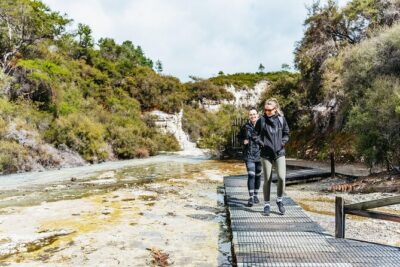
Wai-O-Tapu Thermal Wonderland, Rotorua, New Zealand
Read our review →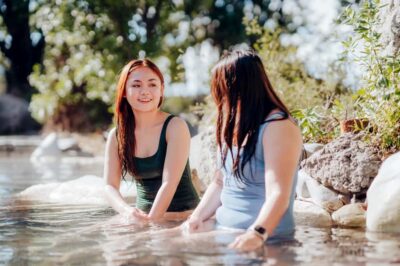
Rotorua Lake: Deluxe Lake Spa Geothermal Hot Spring Bathing
Read our review →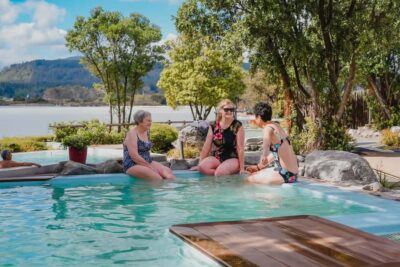
Geothermal Mineral Baths Experience: Pavilion Pools for 12+
Read our review →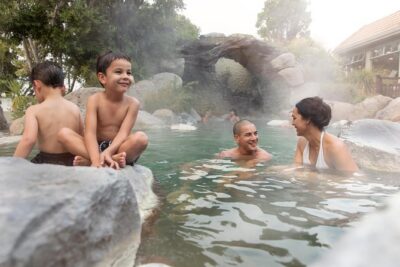
Polynesian Spa Rotorua: Deluxe Lake Spa Hot Spring Bathing
Read our review →Browse the lists this tour appears in