Reviewed · AUCKLAND TOURS
Nocturnal Wonders Tawharanui Kiwi Spotting and Stargazing Tour
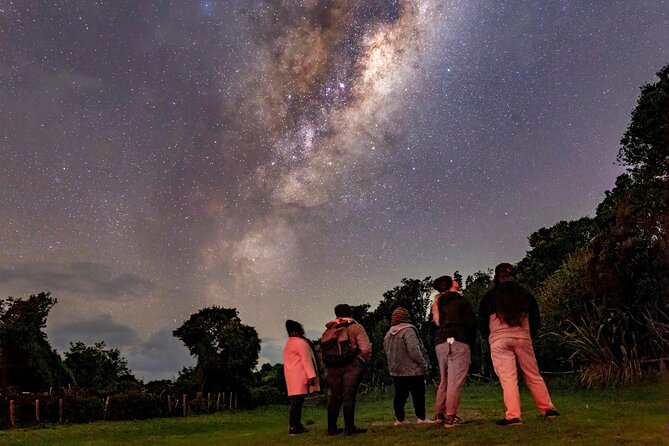
Tawharanui takes on a different character after dark. This three-hour walk leads you through native bush in search of North Island brown kiwis, then out to a dark viewing spot for stars, planets, and constellations. It is a rare chance to see the park when the daytime crowds and bright city skies have faded.
I like the small group of no more than 10, which gives you room to ask questions and stay attentive during quiet wildlife watching. I also like the two-part design: kiwi tracking gives the evening a purpose, while the telescope and binocular session adds a calm, sky-wide finish.
The main drawback is simple: wildlife sightings and clear stars are never guaranteed. The tour also begins and ends at Tawharanui Regional Park, and optional glamping costs extra, so you need to arrange your own transport and campsite booking.
Key points to know before booking
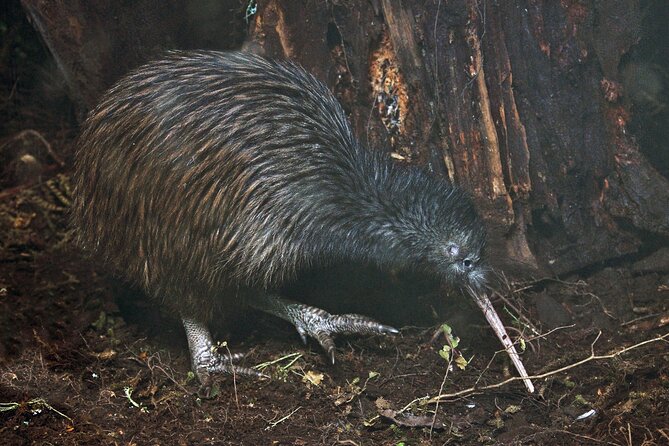
- Kiwi spotting after sunset: Follow signs of kiwi activity through Tawharanui’s native bush as darkness arrives.
- A maximum of 10 people: The small group makes it easier to hear the guide and ask questions.
- Two different night experiences: The walk focuses on birds, insects, and reptiles, while the second stop turns your attention to the sky.
- Telescopes and binoculars supplied: You do not need to bring specialist viewing equipment.
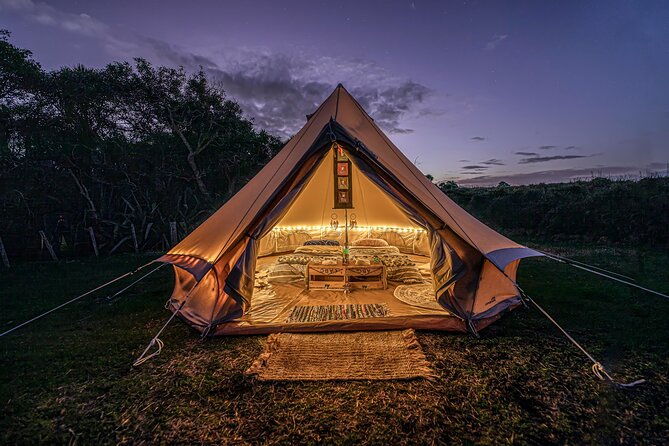
- Optional glamping: You can extend the night with glamping tents, but campsite reservations and fees are separate.
- Strong customer score: The experience holds a 4.9 rating from 23 reviews, with 100 percent recommending it.
Why Tawharanui is worth seeing after dark
Tawharanui Regional Park is often treated as a daytime destination, a place for coastal scenery, walking, and open-air wildlife watching. This tour changes the timing rather than simply repeating the usual park visit at night.
After twilight, your senses have to work differently. You are listening for movement, watching the edges of the bush, and looking for small signs rather than scanning broad views. That slower pace suits kiwi spotting, since the point is not to rush from one viewpoint to another.
The park also gives the tour two natural settings in one evening. First comes the native bush and its nocturnal life. Later, you move to a secluded point away from city glare, where the focus shifts upward. The contrast makes the short outing feel more varied than a standard night walk.
I would choose this tour if you have already seen Auckland’s main sights and want an outing with a strong sense of place. It is also a good option if you enjoy learning how a guide reads the bush rather than simply being shown a scenic lookout.
A few more Auckland days to compare
- Waiheke Island: Ferry & Hop-On Hop-Off Explorer Bus Tickets
★ 4.6 · 3,311 reviews - Hobbiton & Waitomo Caves Guided Day Trip from Auckland incl lunch
★ 5.0 · 2,677 reviews - From Auckland: Hobbiton & Waitomo Caves Day Trip with Lunch
★ 4.9 · 2,505 reviews
Following kiwi signs as twilight fades
The first part of the evening is the kiwi discovery walk. You meet at Tawharanui Regional Park, 1181 Takatu Road, on the Tāwharanui Peninsula, and follow your guide into the park’s native bush as daylight fades.
The focus is on finding traces of kiwi activity and learning about these distinctive birds. That matters because kiwi spotting is not a guaranteed parade of animals. The experience is built around patience, careful observation, and an understanding of where and how nocturnal birds may move.
You should expect the walk to feel quiet and watchful. Keep your attention on the guide, listen for instructions, and avoid treating the outing like a fast-paced hike. A small group helps here. With up to 10 people, the guide can answer questions without trying to manage a large crowd.
The best outcome is a close kiwi sighting. One particularly strong result reported for this activity was seeing three kiwis, including one at very close range. That is an exceptional wildlife moment, but you should treat it as a possibility, not a promise.
The guide also discusses other night-active life in the park, including insects and reptiles. Even if kiwi remain out of sight, you still have a wider set of things to notice. That broader focus gives the walk more value than a single-species search.
What makes a North Island brown kiwi sighting special
The North Island brown kiwi is one of New Zealand’s best-known native birds, but seeing one in the wild requires the right conditions and a great deal of luck. Kiwi are nocturnal, which is why this tour begins when many conventional park activities have ended.
The format also encourages respect for the animal. You are not visiting a display or walking through a controlled exhibit. You are entering a natural setting with a guide who helps you look for signs and understand the bird’s behavior.
I like that the experience does not frame the kiwi search as a guaranteed show. The supplied details make clear that the guide leads you through the bush while you stay alert for activity. That is a more honest way to approach wildlife, even if it means the evening may not deliver the exact sighting you hoped for.
If seeing a kiwi is your only reason for booking, you should be comfortable with uncertainty. If you enjoy the process of looking, listening, and learning, the first half of the tour is likely to feel worthwhile even before the astronomy begins.
From native bush to a dark sky viewing site
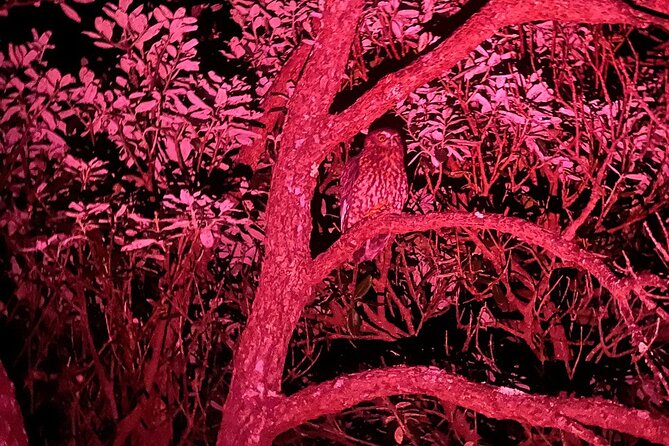
After the wildlife portion, the tour moves to a secluded stargazing site within the park. The location is chosen to reduce the effects of city light, giving you a better view of the night sky than you would get from central Auckland.
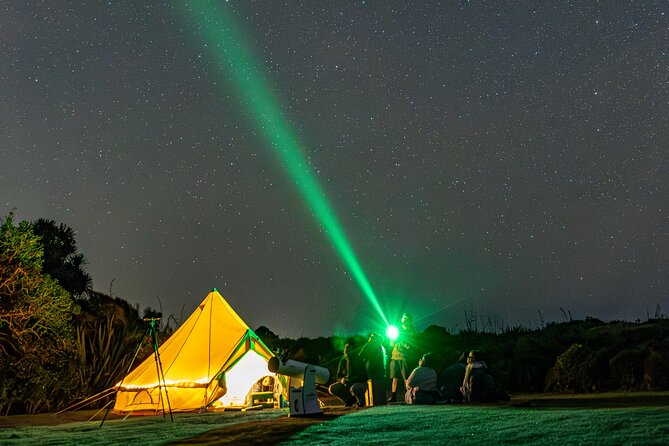
Your guide provides telescopes and binoculars. Those tools matter because they let you examine more than the brightest stars with the naked eye. The session covers stars, planets, and constellations, along with stories connected to indigenous astronomy.
This is not simply a pause while you wait for the kiwi walk to finish. It gives the evening a second subject and a different rhythm. The bush walk asks you to focus close to the ground and listen for small sounds. Stargazing asks you to look outward and upward, with more time to think about the larger pattern of the sky.
Weather is important. The activity requires good conditions, and poor weather can lead to a different date or a full refund. That policy is practical because clouds or rain could affect both the wildlife walk and the telescope session.
Even on a clear night, visibility can vary. The information provided does not promise specific planets, constellations, or astronomical events on your chosen date. You should regard the equipment and instruction as useful additions, not a guarantee of a particular celestial sight.
Somewhere else in Auckland entirely:
- Auckland Dolphin and Whale Watching Eco-Safari Cruise
★ 4.5 · 1,790 reviews - Auckland: Hobbiton Movie Set Day Trip with Festive Lunch
★ 4.8 · 1,431 reviews - Hobbiton Movie Set Small Group Tour from Auckland
★ 5.0 · 1,380 reviews - Auckland Explorer: Sightseeing Hop-on Hop-off Tour
★ 4.0 · 1,180 reviews
A small group changes the feel of the evening
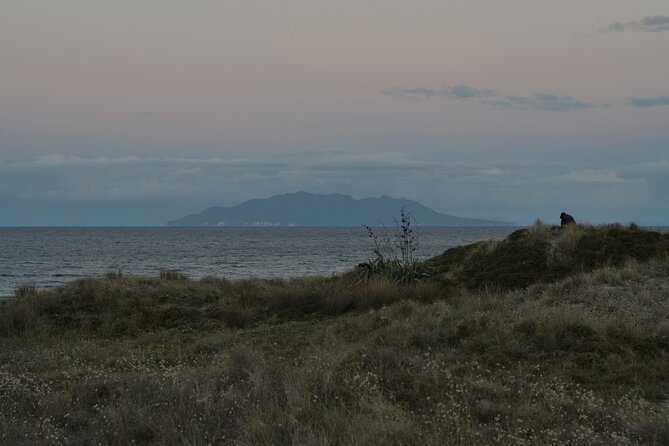
The tour accepts a maximum of 10 people. That is one of its strongest practical features.
A smaller group makes it easier to stay quiet during wildlife watching and easier to hear explanations in the bush. It also gives you a better chance to ask about kiwi behavior, local wildlife, stars, or Māori astronomy without waiting through a long line of questions.
The activity is described as suitable for most people, but it is still a walking tour in a park after dark. You should be prepared to spend the evening outdoors and follow the guide through native bush. The supplied details do not specify the walking distance, trail surface, or level of steepness, so ask the provider if those points matter for your plans.
The group size also affects the social mood. This is not a private tour, but it should feel more personal than a large coach outing. If you like meeting a few other people while keeping the focus on nature, the format is a good fit.
Price and what the $93.09 covers
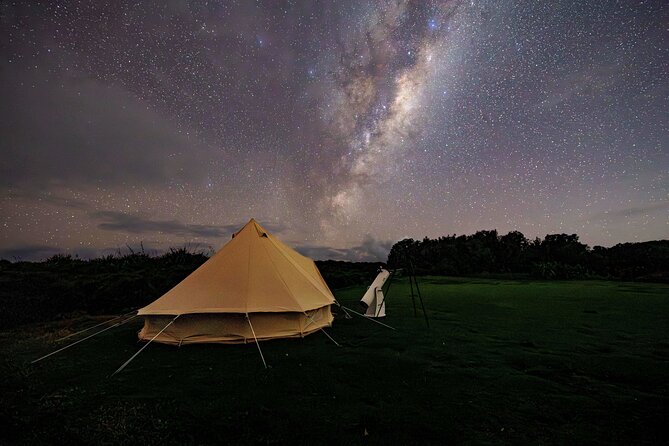
At $93.09 per person, the experience sits in the moderate range for a guided evening activity near Auckland. The price includes the guide and specialized viewing equipment, as well as the roughly three-hour program.
The value comes from the combination of access, timing, and instruction. You are not simply paying for entry to the park. You are paying for an organized attempt to find nocturnal wildlife, plus use of telescopes and binoculars at a dark-sky site.
That said, the price does not include campsite bookings or fees. If you choose the optional glamping arrangement, your total cost will be higher. Confirm the camping details before you commit, especially if you are planning an overnight stay around the tour.
You also need to reach the meeting point at Tawharanui Regional Park yourself. No pickup or transfer is listed. For anyone staying in Auckland, the location on the Tāwharanui Peninsula means you should plan the evening carefully and allow enough time to arrive before the start.
The rating is 4.9 from 23 reviews, with 100 percent recommending the activity. One especially strong report describes seeing three kiwis and getting very close to one, while also praising the guide’s knowledge. That points to the tour’s main strength: a good guide can turn a dark walk into an informed search rather than a simple hike with a flashlight.
Optional glamping for a longer park stay
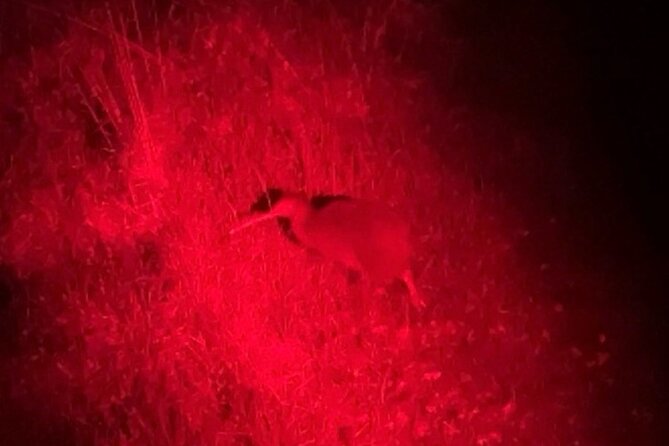
The tour lets you add a glamping stay in tents, but the camping component is not included in the $93.09 price. You must handle campsite bookings and fees separately.
This option makes sense if you want to avoid ending the evening with a long journey back to Auckland. It also gives you more time in the park and pairs naturally with a night-focused activity.
Still, do not assume that booking the tour automatically reserves a tent. The supplied information specifically separates the campsite arrangements from the guided experience. Check availability and costs before booking, particularly during busy periods.
If you are only interested in the three-hour activity, you can skip the camping option. The tour returns to the meeting point at the end, so glamping is an add-on rather than a requirement.
Who should book this night walk
I would recommend this experience to you if you enjoy wildlife, astronomy, and guided walks that leave room for questions. It is especially appealing if you have already visited Auckland’s more familiar attractions and want an evening connected to New Zealand’s native wildlife.
It suits couples, solo visitors, and small groups who prefer a quiet outdoor activity to nightlife or a standard sightseeing tour. The combination of kiwi tracking and Māori astronomy also gives the evening more substance than a simple stargazing session.
Families may find it interesting as well, but the provided information does not give a recommended minimum age or details about child pricing. If you are booking with young children, ask the provider about the evening walk, darkness, and expected quiet periods.
I would be more cautious if you need a guaranteed animal sighting, dislike being outdoors at night, or have difficulty with walking on unspecified park trails. The tour is also less convenient if you are not prepared to arrange your own transport to Tāwharanui Peninsula.
Social Nature Movement runs the experience. Confirmation arrives at booking, and the activity requires a minimum number of participants. If that minimum is not met, you can choose another date or experience, or receive a full refund.
Booking and cancellation advice
You can cancel up to 24 hours before the start time for a full refund. Changes or cancellations made less than 24 hours before the start are not accepted and are not refunded.
The weather rule is worth noting. Because both wildlife watching and stargazing depend on outdoor conditions, poor weather may cause the activity to be canceled. In that case, you are offered another date or a full refund.
The same choice applies if the minimum group size is not reached. Keep your confirmation details handy and check the local start time carefully, since the cutoff is based on local time in New Zealand.
Should you book Nocturnal Wonders Tawharanui?
Book it if you want a focused night in nature and understand that kiwi spotting is a search, not a staged encounter. The strongest reasons are the small group, the guide-led wildlife walk, the supplied astronomy equipment, and the chance to experience Tawharanui after dark.
The tour offers particularly good value for someone who wants both wildlife and stars in one outing. The possible close kiwi sighting can be unforgettable, but you should also value the guide’s explanations and the setting if no bird appears.
Skip it if your schedule makes the Tāwharanui Peninsula difficult to reach, or if you need certainty about what you will see. For everyone else, this is a thoughtful way to trade Auckland’s city lights for a quieter, darker, more natural evening.
FAQ
How long does the Tawharanui kiwi and stargazing tour last?
The activity lasts approximately three hours. It includes a kiwi discovery walk through native bush and a stargazing session at a secluded site in the park.
Where does the tour start and finish?
It starts at Tawharanui Regional Park, 1181 Takatu Road, Tāwharanui Peninsula 0986, New Zealand. The activity ends back at the meeting point.
What is included in the price?
The price includes an experienced guide and specialized equipment, including telescopes and binoculars for the stargazing session.
Is camping included?
No. Glamping tents are an optional addition, but campsite bookings and fees are not included in the tour price.
How many people can join the tour?
The activity has a maximum of 10 participants. It also requires a minimum number of participants to operate.
Can I cancel for a full refund?
Yes. You can cancel at least 24 hours before the start time for a full refund. If poor weather causes a cancellation, or if the minimum group size is not met, you can choose another date or receive a full refund.
Newly listed around Auckland
- Kumeu Winery Boutique Tour with Gourmet Lunch from Auckland★ 4.0 · 5 reviews
- Private tour – Hobbiton Movie Set Evening Banquet Return from Auckland★ 5.0 · 5 reviews
- Private 2 Day Tour: Hobbiton, Waitomo, Rotorua Geothermal & Hamilton Gardens★ 4.0 · 5 reviews
- Private Transfer From Auckland Airport To Rotorua★ 5.0 · 5 reviews
- Private Auckland Luxury Tour★ 5.0 · 5 reviews
- Auckland City Halfday Tour★ 5.0 · 5 reviews
- Ex Auckland: TE PUIA Geothermal, Redwood & Blue Springs★ 4.4 · 5 reviews
- Private 2 Hour Surf Lesson★ 5.0 · 5 reviews
Auckland Tours, compared.
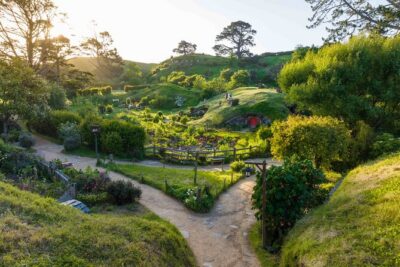
Hobbiton & Waitomo Caves Guided Day Trip from Auckland incl lunch
Read our review →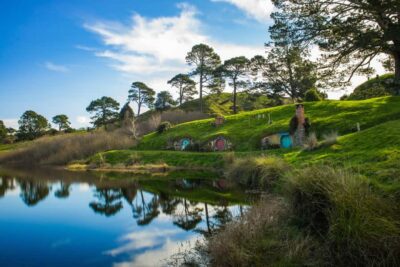
Hobbiton & Waitomo Caves Day Trip with Lunch
Read our review →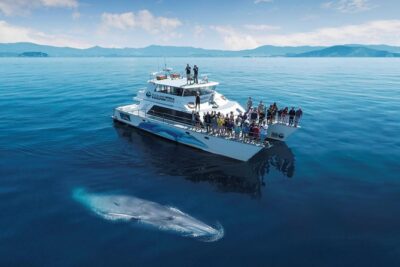
Auckland Dolphin and Whale Watching Eco-Safari Cruise
Read our review →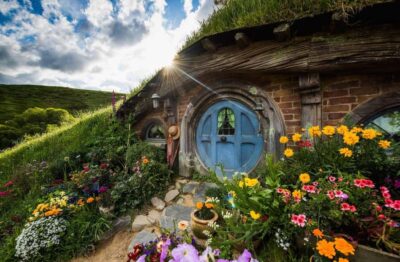
Hobbiton Movie Set Day Trip with Festive Lunch
Read our review →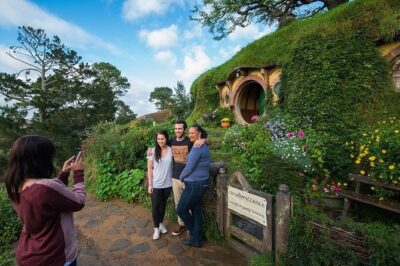
Hobbiton & Waitomo Caves Small-Group Tour W Lunch from Auckland
Read our review →
Half-day Discover Auckland City Sightseeing Tour
Read our review →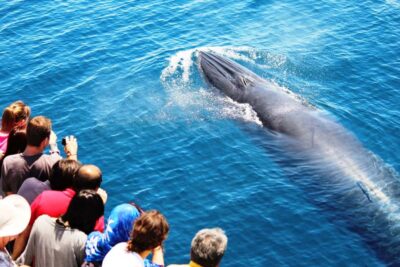
Whale and Dolphin Watching Half-Day Eco Cruise
Read our review →