Reviewed · QUEENSTOWN TOURS
Kiwi Park Queenstown Admission
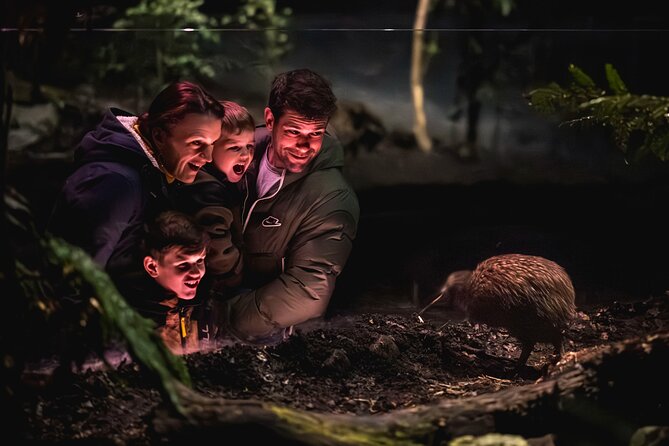
Seeing a live kiwi is the main reason to visit Kiwi Park Queenstown, and the darkened enclosure gives you a real chance to spot New Zealand’s famously shy national bird. You may need several minutes for your eyes to adjust, but the kiwi’s quick steps, long bill, and active search for food make the encounter memorable.
I like the park’s central location beside the gondola and the fact that your ticket lasts all day. I also like the mix of kiwi viewing, tuatara, native birds, keeper talks, and conservation work, rather than a single short exhibit. The main drawback is size: this is a small, five-acre park, and the kiwi house is intentionally very dark, so some people see only shadows at first.
Key points to know before you go
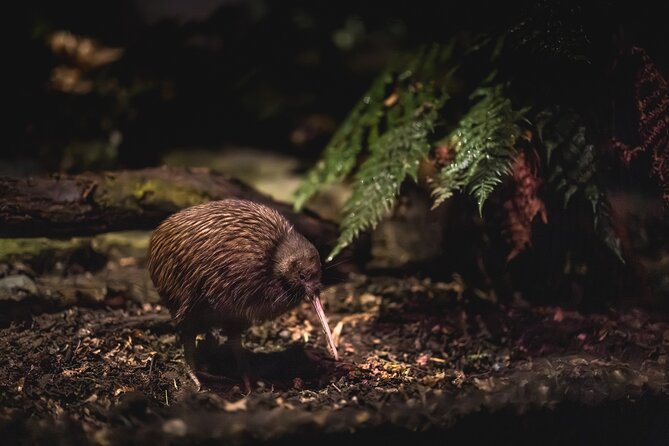
- Kiwi viewing is in a dark nocturnal enclosure, so give your eyes time to adjust before deciding the birds are hard to see.
- Conservation shows are included and feature native birds such as kakariki and kereru, along with birds of prey and other wildlife.
- The park sits in central Queenstown, close to the Skyline gondola and public transportation.
- All-day admission gives you flexibility, which helps if you want to plan around the kiwi encounter and scheduled shows.
- The free audio guide supports several languages, including Mandarin, and adds useful detail as you walk.
- Some paths are steep, so comfortable walking shoes matter, especially for visitors with mobility concerns.
Why the kiwi encounter is worth planning around
Kiwi Park is built around a simple challenge: how do you show people a nocturnal bird without harming the bird’s natural habits? The answer is a darkened kiwi house, designed to mimic nighttime conditions while allowing you to watch the birds moving through their enclosure.
You will not walk into a brightly lit display and see a kiwi sitting still for photographs. Instead, you enter a low-light room and wait for your eyes to adjust. At first, the birds can be difficult to make out. After a few minutes, their shapes become clearer, and you may see them walking, probing the ground with their bills, or searching for food.
That darkness is not a flaw in the exhibit. It is the reason you can see kiwi behaving more naturally during daylight hours. Kiwi sleep in underground burrows during the day, so this carefully controlled setting gives you a rare look at an animal you would be very unlikely to spot in the wild.
The park schedules kiwi encounters throughout the day. From October through April, listed times include 10am, 11am, 12:15pm, 1pm, 2:15pm, 3pm, 4:15pm, and 5pm. From May through September, times include 10am, 11am, 12:15pm, 1pm, 2pm, 3:45pm, and 4:43pm.
Schedules can change with the season, so check the current timetable when you arrive. I would plan my visit around one of the earlier encounters, then explore the rest of the park without rushing. Arriving early also gives you time to find the kiwi house and get settled before the first presentation.
A few more Queenstown days to compare
- Queenstown: Walter Peak Gourmet BBQ & Lake Whakatipu Cruise
★ 4.8 · 2,713 reviews - Queenstown: Milford Sound Coach & Cruise Full-Day Trip
★ 4.7 · 2,592 reviews - Shotover River Extreme Jet Boat Ride in Queenstown
★ 5.0 · 2,540 reviews
A small park with more than just kiwi
The Kiwi Birdlife Park covers about five acres, or two hectares, in central Queenstown. That makes it easy to explore in a few hours, but it also sets the right expectation. This is not a large zoo with dozens of habitats and a full day of exhibits.
The park works better as a focused introduction to New Zealand wildlife. You walk through native bush, pass trout-filled streams, and visit enclosures that hold birds and reptiles you may never see in the wild. The compact size is useful if you are travelling with children or fitting the visit between the gondola, shopping, and other Queenstown plans.
You can complete the main walk in about two hours if you keep moving. Allow closer to two and a half or three hours if you attend a conservation show, listen to the audio guide, spend time in the kiwi house, and stop at the exhibits.
The grounds also give the park a calmer feel than the streets nearby. The setting is not remote, but the bush paths and running water make a pleasant change from Queenstown’s busy town centre.
Start with the conservation show
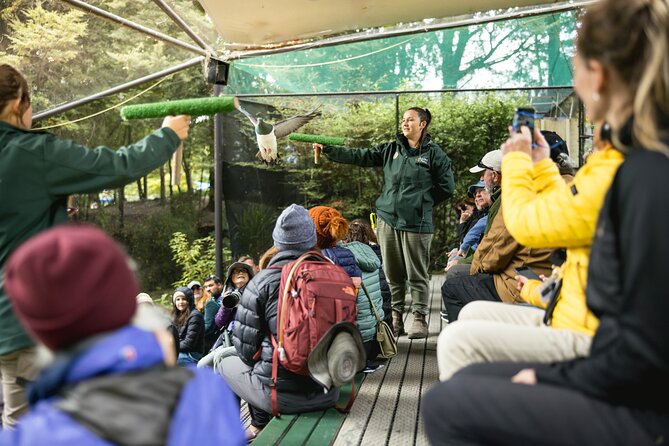
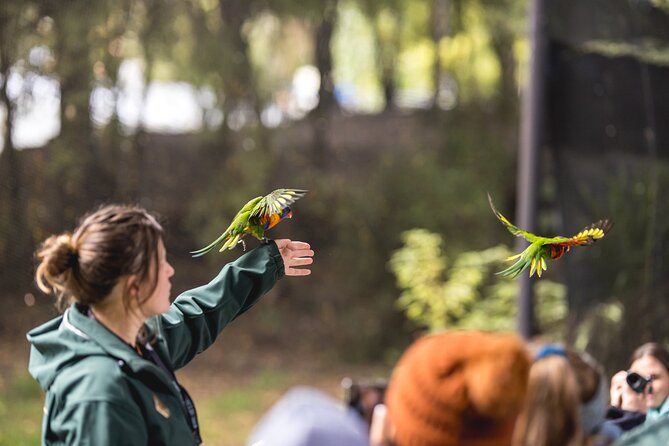
The conservation show is one of the strongest parts of the visit. It takes place in an outdoor area enclosed with netting, allowing some birds to fly freely while keepers explain their habits and the work needed to protect them.
The show schedule is listed as 11:30am, 1:30pm, and 3:30pm from October through April. From April through September, the listed times are 11:30am and 3pm. Since the seasonal dates overlap in the supplied schedule, confirm the day’s times at the entrance.
The show may include kakariki, a native parakeet, and kereru, the large New Zealand pigeon. You also learn about pateke, a native duck, buff weka, a flightless bird, and Antipodes Island parakeets. Birds of prey are part of the program too, giving you a closer look at species that are often seen only high above the bush.
I recommend starting here if the timing works. The show explains why native New Zealand birds need special protection and helps you understand what you are seeing later in the park. It also adds a human element, since the keepers answer wildlife questions and bring some animals close to the viewing area.
The outdoor setting has one practical catch: weather matters. Queenstown can be cold or wet, and the show area is outdoors, though enclosed in netting. Wear a warm layer and bring sun protection on bright days. The park is still a useful wet-weather choice, but you should not expect every part of the visit to happen indoors.
Meet the tuatara, a reptile from another age
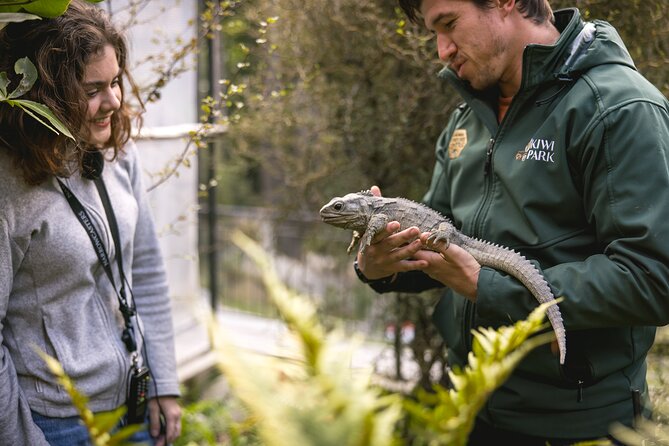
The Tuatara Encounter introduces one of New Zealand’s most unusual animals. The tuatara is often described as a living dinosaur, though it is a distinct reptile rather than a dinosaur. Its ancient-looking features make it an especially good stop for children, who may find it easier to remember than a standard lizard exhibit.
You can get an up-close look at the tuatara and learn why it is so unusual. The encounter adds variety to the visit, breaking up the bird exhibits and showing that New Zealand’s native wildlife is not limited to kiwi and parrots.
This is also a good example of why the park is more useful than a quick kiwi photograph. The animal exhibits give you a broader sense of the country’s native species and the pressures they face.
Somewhere else in Queenstown entirely:
- Small Group, Award Winning Milford Sound Day Experience & Cruise
★ 5.0 · 2,416 reviews - Milford Sound Fly-Cruise-Fly Tour from Queenstown
★ 5.0 · 1,792 reviews - Queenstown: Shotover River and Kawarau River Jet Boat Ride
★ 4.7 · 1,682 reviews - From Queenstown: Milford Sound Full-Day Trip by Plane & Boat
★ 4.9 · 1,558 reviews
Walk the bird enclosures at your own pace
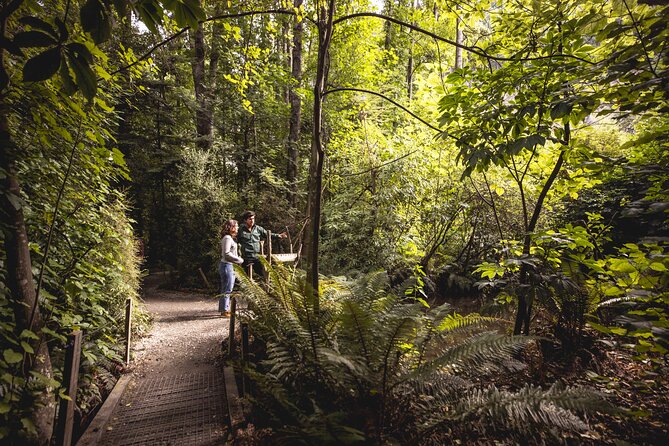
After the scheduled activities, follow the forest walk through the park. The free audio guide gives you background as you go, and a map helps you keep track of the route. Audio guides are available in different languages, with Mandarin specifically noted as an option.
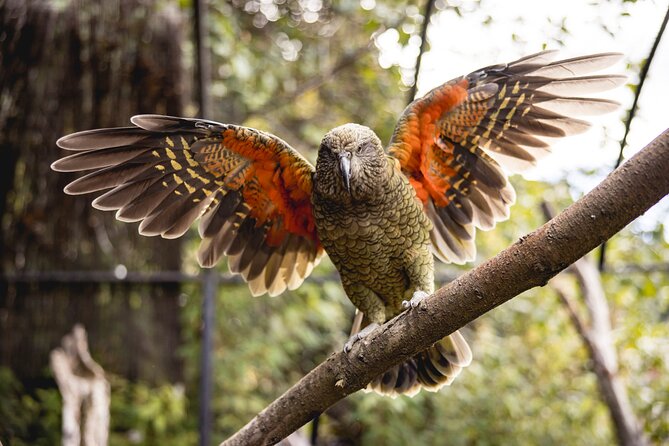
Some bird areas let you step inside the enclosure, bringing you much closer to the animals than a distant viewing window would. The kea exhibit is a highlight because kea are intelligent, bold alpine parrots with strong personalities. Seeing one nearby gives you a better sense of its size and character than a picture ever could.
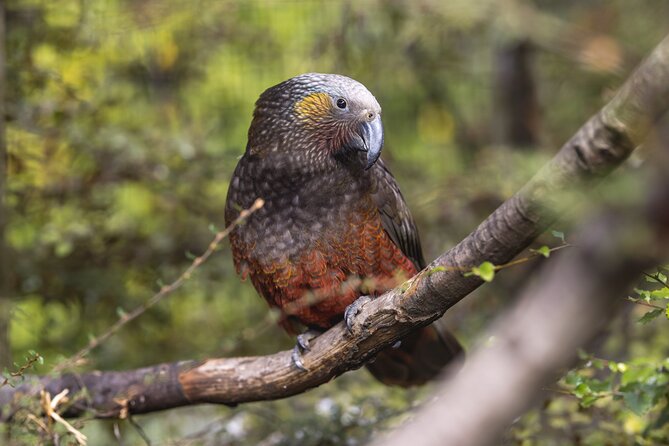
Other parts of the walk focus on native birds such as kereru, kakariki, pateke, buff weka, and Antipodes Island parakeets. The range is not enormous, but it is well chosen. You get a useful introduction to birds that are distinctive to New Zealand and often hard to identify in the wild.
The audio guide lets you set your own pace. If you are travelling with children, you can move quickly between the animals that hold their attention. If you care about conservation, you can take more time with the information and follow the park’s work in greater detail.
Conservation is part of the visit, not a side note
Kiwi Park supports conservation in several ways, including rehabilitation of injured wildlife and breeding kiwi for release into the wild. That work changes the meaning of the admission fee. You are not only paying to see animals in enclosures, but also helping support a park focused on protecting native species.
The kiwi breeding program is especially important to the visit. Keeper talks explain how young kiwi are cared for before they are released once they reach a suitable age. You also hear about kiwi burrows, feeding habits, and the challenges faced by flightless birds in New Zealand.
This information is most useful when it connects directly with what you see. Watching a kiwi search for food in the nocturnal enclosure, then hearing how conservation teams prepare birds for release, gives the visit a clear purpose.
The park is supported by donations as well as admission income. That does not make the ticket inexpensive, but it helps explain why the experience may feel smaller than a commercial zoo while still providing a valuable conservation service.
What the $39.72 admission includes
The listed price is $39.72 per person. For that fee, you receive all-day admission, the audio guide, kiwi viewing, and the conservation show. Hotel pickup, drop-off, and parking are not included.
The value depends on how you use the ticket. If you arrive, spend 30 minutes trying to see a kiwi, and leave, the price may feel high for the park’s size. If you attend the show, join a kiwi encounter, walk the bush paths, listen to the guide, and visit the tuatara and bird exhibits, the cost becomes easier to justify.
The all-day ticket is helpful because you do not need to hurry through every exhibit in one pass. You can plan the park around the gondola or another Queenstown activity, then return later the same day if the timing allows. Confirm the park’s re-entry rules at the entrance if you intend to leave and come back.
The park is open daily from 9:30am to 5:30pm. It is close to public transportation and the gondola, so you can reach it without arranging a separate tour vehicle. Since parking is not included, public transportation or walking may be simpler than bringing a car into central Queenstown.
A practical visit plan for two to three hours
Here is the order I would use:
- Check the day’s kiwi encounter and conservation show times at the entrance.
- Attend the conservation show if one begins soon.
- Visit the kiwi house while you still have plenty of time and patience for the low light.
- See the tuatara and walk through the bird enclosures.
- Finish with the audio guide sections and any exhibits you want to revisit.
You can reverse the first two steps if the kiwi encounter starts earlier. The main mistake is treating the kiwi house like a quick photo stop. Allow time for your eyes to adjust, and keep noise low so the birds are not disturbed.
The park is family-friendly, but children may need a reminder that the kiwi house is a quiet space. Talking and loud noises make it harder for everyone to see the birds and can disturb the animals. The keeper talks help keep younger children engaged because they add stories and direct explanation to the exhibits.
Wear comfortable walking shoes. Some paths are steep, and the park’s natural setting is not perfectly flat. Most people can take part, but visitors with mobility issues should consider the slopes before booking.
Rainy-day value and weather planning
Queenstown is famous for outdoor activities, but the weather does not always cooperate. Kiwi Park gives you a useful alternative when a boat trip, hike, or lookout is less appealing.
The bird enclosures and kiwi house provide shelter, while the forest walk and conservation show remain partly exposed. On a cold day, the park can still work well if you wear warm clothes. On a wet day, bring rain protection rather than assuming the entire experience is indoors.
Sun protection matters too. The park advises wearing it, and the outdoor show and walking paths can expose you to strong sun. Comfortable shoes are more important than dressing up.
Who should book Kiwi Park Queenstown?
I would recommend this experience if you want to see a kiwi without joining a long wildlife excursion. It suits families, first-time visitors to New Zealand, bird lovers, and anyone with a spare morning or afternoon in central Queenstown.
It is also a good choice if your priority is conservation and native species rather than a large collection of exotic animals. The park’s strongest moments are the kiwi encounter, the keeper presentations, the tuatara, and the chance to see native birds at close range.
I would think twice if you expect a big zoo, many mammals, or hours of entertainment. The site is compact, and the price can feel steep if you do not attend the talks or spend time with the audio guide.
Book with a clear plan: check the seasonal schedule, arrive early enough for the first suitable kiwi encounter, and allow at least two hours. Free cancellation is available up to 24 hours before the experience start time for a full refund. Changes or cancellations inside that 24-hour window are not refunded.
Should you book Kiwi Park?
Book it if seeing a kiwi is high on your Queenstown list, especially if you want a convenient central location and a conservation-focused visit. The dark enclosure may test your patience, but it gives the birds the conditions they need, and the reward is a genuine look at a species that is extremely difficult to find in the wild.
Skip it if you want a large animal park or a low-cost quick stop. For most people who use the full admission, attend the conservation show, and take time with the kiwi house, Kiwi Park offers a thoughtful introduction to New Zealand’s native wildlife.
FAQ
How long should I allow for Kiwi Park Queenstown?
Allow about two to three hours. You can walk through the park more quickly, but the extra time lets you attend a conservation show, join a kiwi encounter, use the audio guide, and wait for your eyes to adjust in the darkened kiwi house.
What is included with admission?
Admission includes the audio guide, kiwi viewing, and the conservation show. The ticket also provides access to the park for the day. Hotel transportation and parking are not included.
When can I see the kiwi?
Kiwi encounters run several times daily, with different schedules for October through April and May through September. Listed times range from 10am through late afternoon, so check the current schedule when you arrive.
Are conservation shows included?
Yes. Conservation shows are included with admission. They run two or three times daily depending on the season and take place in an outdoor netted area.
Is Kiwi Park suitable for children?
Yes. The park is family-friendly, and children can see kiwi, tuatara, native birds, and wildlife presentations. Mandarin audio equipment is also available for children who do not listen to English.
Can I cancel for a refund?
You can cancel at least 24 hours before the experience start time for a full refund. Cancellations or changes made less than 24 hours before the start time are not refunded.
Newly listed around Queenstown
- Ex Queenstown: Mavora Lakes Middle Earth Full Day Adventure★ 5.0 · 5 reviews
- Milford Sound Earnslaw Burn Helicopter Tour from Queenstown★ 5.0 · 5 reviews
- Queenstown: Walter Peak Farm Tour and Lake Cruise★ 5.0 · 5 reviews
- From Queenstown: Guided Gin Tour with Tastings★ 4.8 · 5 reviews
- Queenstown: 2.5 Hour Flight to Fiordland’s Iconic Locations★ 5.0 · 5 reviews
- Queenstown: Shotover River Rafting & Skippers Canyon Tour★ 5.0 · 5 reviews
- Queenstown Hop-on Hop-off Evening Beer Tour★ 5.0 · 5 reviews
- Queenstown: Remarakbles Helicopter Tour with Alpine Landing★ 4.6 · 5 reviews
Queenstown Tours, compared.
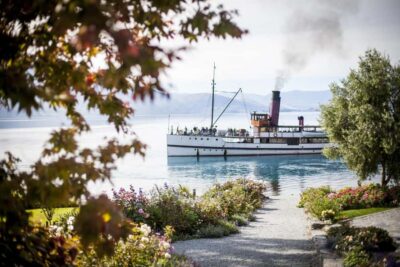
Walter Peak Gourmet BBQ & Lake Whakatipu Cruise
Read our review →

Shotover River Extreme Jet Boat Ride in Queenstown
Read our review →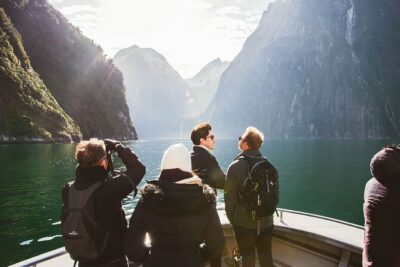
Small Group, Award Winning Milford Sound Day Experience & Cruise
Read our review →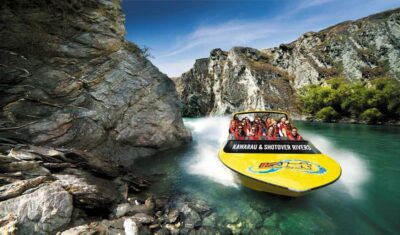
Shotover River and Kawarau River Jet Boat Ride
Read our review →