
Reviewed · WEST COAST TOURS
Hokitika: The National Kiwi Centre Tickets
The National Kiwi Centre gives you something rare: a close look at New Zealand’s nocturnal kiwi in a purpose-built house, right in the centre of Hokitika. You’ll also see tuatara, giant eels, crayfish, and whitebait, so this is more than a single-bird stop.
I like the giant eel feeding, which gives the visit a lively moment and helps explain these unusual native fish. I also like the quiet, careful kiwi viewing, including Brown Kiwi and Little Spotted Kiwi. The catch is simple: there are only two kiwi, and one may appear for just a few seconds.
Key points
- Two kiwi species: See Brown Kiwi and Little Spotted Kiwi in a protected nocturnal house.
- Scheduled eel feedings: Feeding takes place at 10:00 AM, 12:00 PM, and 3:00 PM.
- More than kiwi: The centre also features tuatara, giant eels, crayfish, and whitebait.
- About one hour: The visit fits neatly into a Hokitika stop without taking up half your day.
- Practical access: Entry costs $23 per person, the centre is wheelchair accessible, and the host or greeter speaks English.
- Photography limits: You are not allowed to photograph the kiwi, though one recent booking included a free kiwi picture and chocolate as an extra.
Meeting Hokitika’s national symbol
The kiwi is New Zealand’s most famous native bird, yet it is not easy to see in the wild. It is nocturnal, flightless, shy, and active in thick bush. At the National Kiwi Centre, you can see one at close range in a controlled nocturnal house designed to protect the birds and give you a better chance of spotting them.
The room is kept dark to match the kiwi’s natural active hours. Your eyes may need a moment to adjust, and you should expect the birds to move in and out of view rather than pose in a bright exhibit. That is part of the point. This is a living animal, not a display that performs on demand.
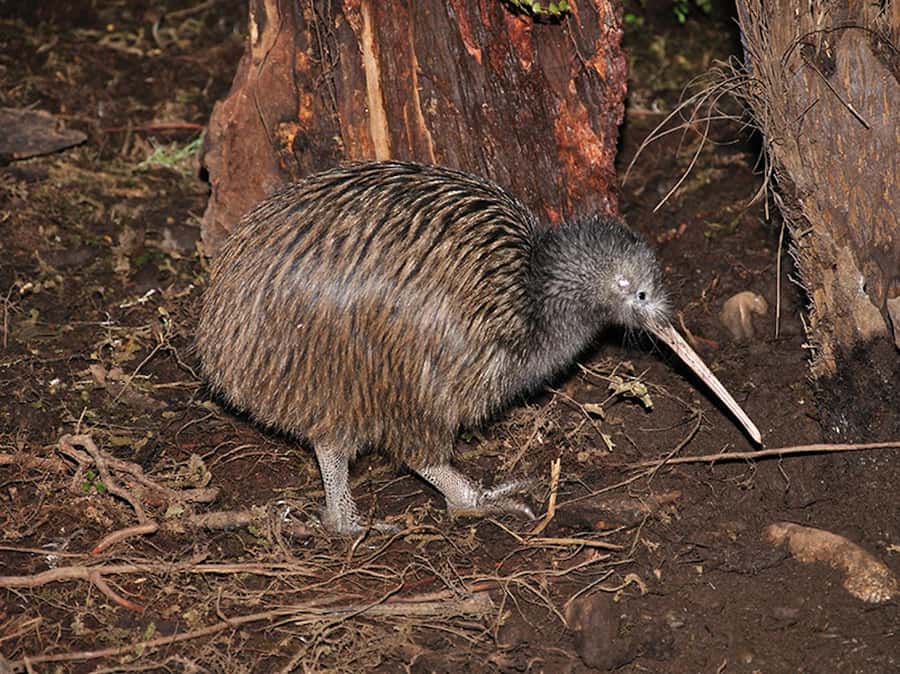
The centre has both Brown Kiwi and Little Spotted Kiwi. Seeing the two types in one place adds useful context, especially if you know little about New Zealand birds. You can compare their size and appearance, while the centre’s team explains why these birds need careful protection.
The most important practical note is patience. A recent booking found one kiwi difficult to see and another visible for only a few seconds. Another visitor had a much better view of a larger kiwi. Both experiences are realistic. You may get an excellent close look, but you should not book this expecting a guaranteed, long viewing session.
A few more West Coast days to compare
- TranzAlpine Train Journey from Greymouth to Christchurch
★ 4.5 · 182 reviews - West Coast Treetop Walk
★ 4.5 · 131 reviews - Monteith’s Brewery Tour
★ 4.5 · 93 reviews
Why the dark kiwi house matters
A nocturnal house is not just a clever way to make a daytime attraction work. It lets the birds follow a routine closer to their natural pattern, while keeping them safe from the noise and hazards they would face outdoors.
That arrangement also makes the visit more respectful. Flash photography is not allowed, and you cannot take your own pictures of the kiwi. This may disappoint you if you are hoping for a souvenir photo, but it protects the birds from bright flashes and repeated disturbance.
One recent booking included a free kiwi picture and free chocolate, which made the no-photo rule easier to accept. Treat that as a possible extra rather than something to count on. The core value is the chance to see the bird, not to leave with a large collection of photographs.
If you have children with you, prepare them before entering. The room may be dark, the kiwi may be quiet, and the best moment might last only a short time. A little patience makes a big difference.
The giant eel feeding is the lively part
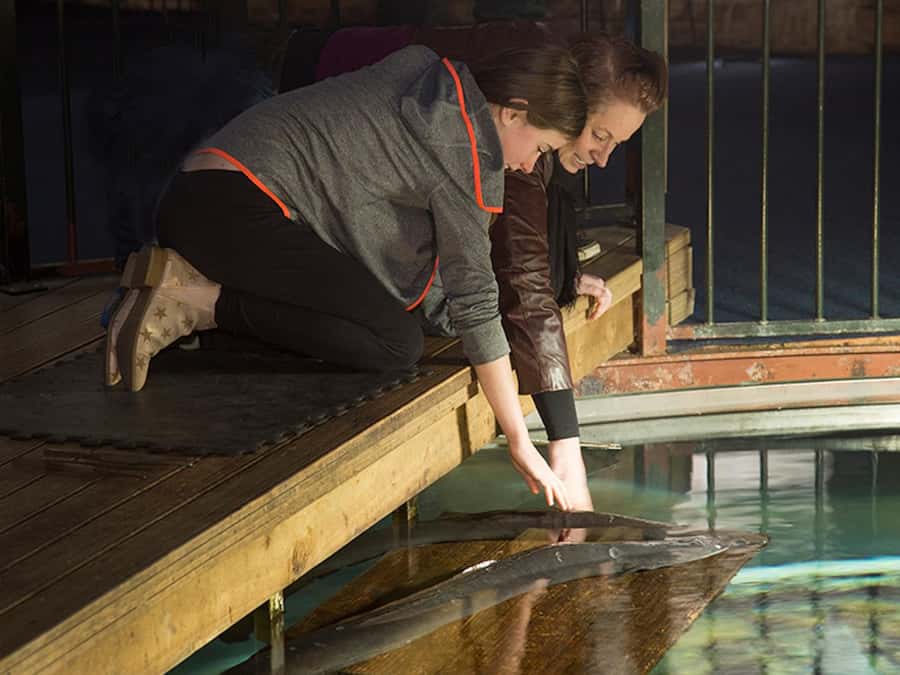
The giant eels provide the most active part of the visit. Feeding takes place three times daily, at 10:00 AM, 12:00 PM, and 3:00 PM. Plan your arrival around one of these times if you want the full experience.
The feeding adds movement and drama after the quieter kiwi house. You can watch the eels respond to food, and the team explains more about them as the activity takes place. One particularly positive account describes a very good eel talk and an enjoyable feeding session.
This is also where the centre feels most interactive. The staff are described as friendly and welcoming, and the feeding gives you a reason to ask questions rather than simply walk past a tank. One account also mentions feeding and touching the eels, though the exact level of visitor interaction may vary.
At $23, the eel feeding helps make the ticket feel worthwhile. If you visit outside the three feeding times, the displays are still part of admission, but you miss the most engaging scheduled moment. Check the start time before you book, especially if you are fitting the centre between other West Coast stops.
Tuatara, crayfish, and whitebait add real variety
The kiwi gets the name on the door, but the other animals keep the visit from feeling too narrow. You will also see tuatara, giant eels, crayfish, and whitebait.
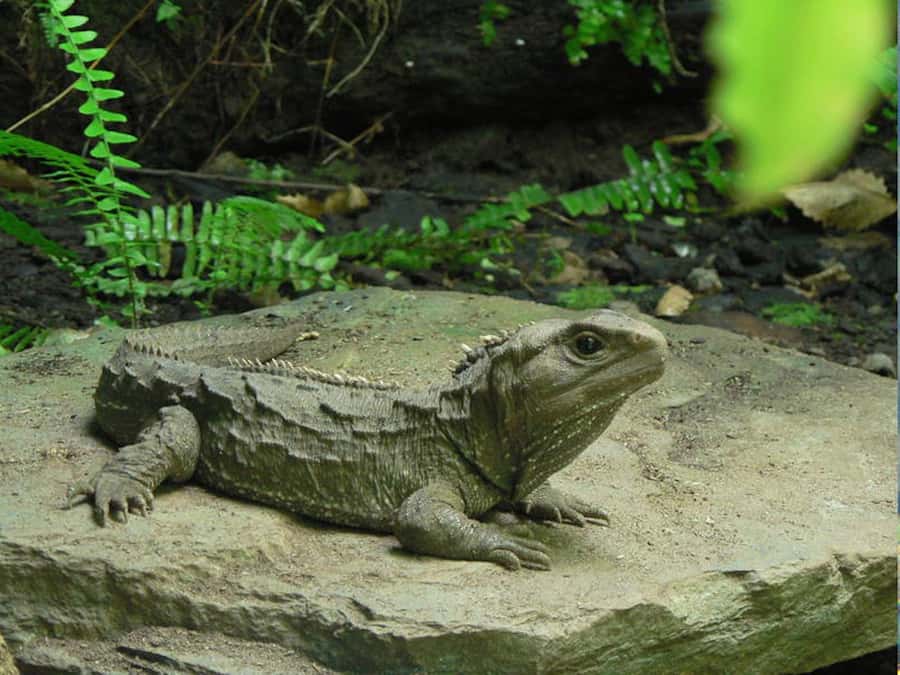
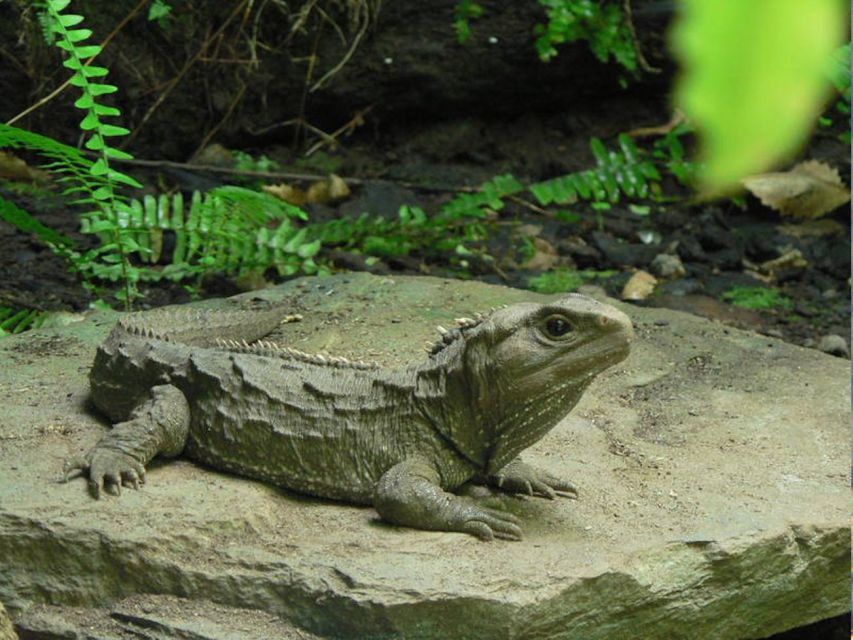
Tuatara are especially interesting because they are ancient-looking reptiles found only in New Zealand. They have a distinctive appearance and a strong connection to the country’s native wildlife story. Seeing one at close range gives you a better sense of how different New Zealand’s animal life is from what you may know elsewhere.
The aquatic displays provide a useful change of pace. Giant eels are easy to appreciate during the feeding, while crayfish and whitebait show smaller parts of the native freshwater world. The centre is not only about one famous bird. It gives you a compact introduction to several species that are easy to overlook during a road trip.
Some visitors have been pleasantly surprised by the quality and variety of the fish and eel exhibits. That matters if your kiwi viewing is brief. Even with only two kiwi, you still have several other displays to explore during the hour.
The centre works best if you approach it as a small native wildlife collection rather than a large zoo. You will not find a long list of animals or a full-day schedule. What you get is a focused visit with a few unusual species and staff who can add meaning to what you are seeing.
Somewhere else in West Coast entirely:
- Punakaiki Blow Holes & Pancake Rocks Scenic Tour
★ 5.0 · 60 reviews - Skip the Line: Shantytown Heritage Park Experience Ticket
★ 4.0 · 59 reviews - Hokitika: West Coast Tree Top Tower Zip Line and Walk
★ 4.2 · 55 reviews - From Greymouth: Highlights West Coast Day Tour
★ 4.9 · 54 reviews
A one-hour stop in the heart of Hokitika
The advertised duration is one hour, which is a practical length for most visitors. It is long enough to see the main exhibits and catch an eel feeding, but short enough to fit into a day exploring Hokitika and the West Coast.
That short duration is part of the value. You do not need to set aside an entire morning or afternoon, and you are unlikely to feel trapped in a long guided program. At the same time, you should not expect an expansive attraction with hours of activities.
The best plan is to arrive close to an eel feeding time, then give yourself room to see the kiwi and the other exhibits without rushing. For example, a 10:00 AM feeding may work well if you are starting your Hokitika sightseeing early. The noon or 3:00 PM sessions may suit you better if the centre is one stop among several.
The host or greeter speaks English. The team is described as passionate about protecting the animals, and the experience includes interactive displays as well as direct viewing. No guide names are provided, so you should expect assistance from the centre staff rather than a named private guide.
The centre is wheelchair accessible. That makes it a practical choice for visitors who need step-free access, though the supplied information does not give further details about individual exhibit layouts or restroom facilities.
Is $23 a fair price?
At $23 per person, the ticket is fairly priced if you value a close kiwi viewing and plan to attend an eel feeding. The price includes entry and giant eel feeding, with no separate charge listed for those parts of the visit.
The value depends heavily on your expectations. If you want to see many kiwi, you may feel disappointed because the centre has only two. If one stays hidden or appears briefly, the ticket can feel expensive for the bird portion alone.
If you treat the ticket as access to a compact native wildlife centre, the calculation looks better. You get kiwi, tuatara, eels, crayfish, and whitebait in one stop, plus staff interaction and the scheduled feeding. The additional exhibits are important because they give the visit substance beyond a few minutes in the dark.
The strongest case for booking is simple: you are already in Hokitika, you have about an hour, and one of the feeding times fits your schedule. The weaker case is a tight budget combined with a single-minded wish to photograph or spend a long time watching kiwi.
Food and drinks are not included. The supplied details do not describe an on-site meal, so plan to handle refreshments separately.
How to get the most from your visit
Start by choosing your feeding time. The three options are 10:00 AM, 12:00 PM, and 3:00 PM. Arriving for one of them makes the visit more memorable and gives you a natural anchor for the hour.
Next, slow down in the nocturnal house. The light is low for a reason, and rushing through it will make a brief sighting even harder to appreciate. Keep your attention on movement near the ground, since kiwi are not birds that sit in obvious, well-lit places.
Do not bring the wrong expectations about photography. You cannot take your own kiwi pictures, so focus on seeing the bird directly. If a complimentary picture is offered during your visit, it can serve as a better keepsake than a blurry shot taken in the dark.
Give the other exhibits a proper look. The eels are the most obvious highlight after the kiwi, but the tuatara, crayfish, and whitebait help explain the wider network of native life the centre is trying to protect.
If you are visiting with children, the eel feeding may be the easiest part for them to follow. The kiwi house requires quiet attention, while the eels provide visible action and a clear explanation from the team.
Who will enjoy this most?
I would recommend the centre to you if you want a short, accessible wildlife stop with a strong New Zealand focus. It suits families, first-time visitors to Hokitika, and anyone who has not had a realistic chance to see a kiwi.
It also works well for people who prefer a small attraction with staff contact rather than a large, impersonal park. The English-speaking team and interactive displays make it easier to understand why the animals need protection.
You may want to skip it if your only goal is to see a large number of kiwi. There are two birds, and sightings can be brief. The centre cannot control when a nocturnal animal chooses to appear.
It may also be a poor fit if you need a long, full-day activity. The visit lasts about an hour, and the attraction is focused rather than extensive. That is a strength for a quick stop, but a limitation if you want a major wildlife park.
The rating is 4.2 from 48 reviews, which matches the balanced picture: strong appreciation for the eel feeding, friendly staff, and overall exhibit quality, alongside a few complaints about limited kiwi visibility. I would read that as a sign to book for the complete experience, not for a guaranteed perfect kiwi encounter.
Should you book the National Kiwi Centre?
Book it if you are in Hokitika and can attend the 10:00 AM, 12:00 PM, or 3:00 PM eel feeding. The combination of kiwi, tuatara, eels, crayfish, and whitebait gives you a useful introduction to native wildlife in a manageable one-hour visit.
Go in expecting two kiwi, a dark viewing room, and the possibility of a very short sighting. If you can accept that, the eel feeding and the wider collection make $23 reasonable.
I would especially choose this experience for a first visit to the West Coast, a family outing, or a rainy-day plan. I would be more cautious if you are paying mainly for photography or expect a large kiwi sanctuary. Reserve with the right expectations, and the centre offers a focused, thoughtful look at animals that are difficult to see elsewhere.
FAQ
How much does entry to the National Kiwi Centre cost?
Entry costs $23 per person.
How long does the experience last?
The experience lasts about one hour.
What animals can I see?
You can see Brown Kiwi, Little Spotted Kiwi, tuatara, giant eels, crayfish, and whitebait.
When are the giant eel feedings?
Giant eel feedings take place at 10:00 AM, 12:00 PM, and 3:00 PM.
Is giant eel feeding included in the ticket?
Yes. Entry to the centre and giant eel feeding are included.
Can I take pictures of the kiwi?
No. Visitors are not allowed to take their own photographs of the kiwi to help protect the birds.
Is the centre wheelchair accessible?
Yes. The National Kiwi Centre is wheelchair accessible.
What language is used during the experience?
The host or greeter speaks English, and the listed language for the experience is English.
Newly listed around West Coast
- West Coast Full Day Tour★ 5.0 · 6 reviews
- Christchurch to Franz Josef 1 Way Tour inc TranzAlpine Train★ 4.8 · 13 reviews
- Greymouth: Glacier, Heritage & Wildlife Centre Guided Tour★ 3.8 · 13 reviews
- West Coast Tower Zipline & Treetop Walk Combo★ 4.5 · 19 reviews
- Full Day Tour of the Sights and Tastes of the West Coast★ 5.0 · 20 reviews
- Greymouth: Full-Day Best Of The West Tour★ 4.8 · 20 reviews
- Greymouth: Hokitika Gorge and Tree Top Walkway Half-Day Tour★ 4.6 · 24 reviews
- From Greymouth: Punakaiki Blowholes & Pancake Rocks Tour★ 4.8 · 28 reviews
West Coast Tours, compared.

TranzAlpine Train Journey from Greymouth to Christchurch
Read our review →

Punakaiki Blow Holes & Pancake Rocks Scenic Tour
Read our review →
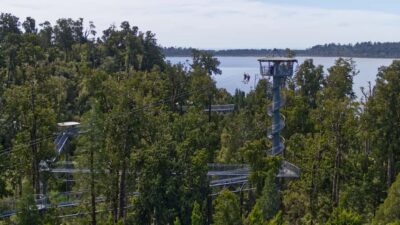
Hokitika: West Coast Tree Top Tower Zip Line and Walk
Read our review →
Browse the lists this tour appears in