
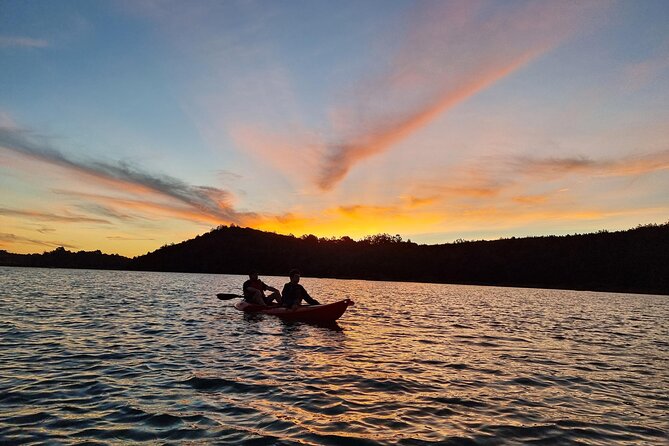
Reviewed · AUCKLAND TOURS
Bioluminescence Kayak Tour – Est. 1994
The main event arrives when you trail your paddle through the black water and tiny points of blue-green light flicker around the blade. This bioluminescent kayak tour takes you away from Auckland’s city lights and into the protected waters around Long Bay and the Okura Marine Reserve.
I like the small one-to-six guide ratio, which gives beginners room to ask questions and settle into a sea kayak without feeling rushed. I also like that all equipment and instruction are included, so you pay for a complete outing rather than renting a boat and figuring out the rest yourself.
The one thing to keep in mind is that bioluminescence is a natural event, not a stage show. Some nights produce brilliant sparkles, while others offer only brief flashes. Your photos may also show far less light than your eyes see.
Key points to know before booking
- The glow appears when the water moves: Paddle strokes, splashes, and small waves can trigger the plankton.
- First-time kayakers are welcome: Guides teach the basics and keep safety at the center of the outing.
- The tour uses calm, protected waters: The route is around Long Bay and Okura Marine Reserve, rather than an exposed open-ocean crossing.
- Small groups make a real difference: One guide is assigned for every six participants, with a maximum group size of 24.
- Bring clothes you do not mind getting wet: Several outings include splashes or a short rain shower, and jeans are not suitable.
- Expect a natural, changing display: The glow can be strong, subtle, or limited by weather and water conditions.
Why Auckland’s night water can look like a galaxy
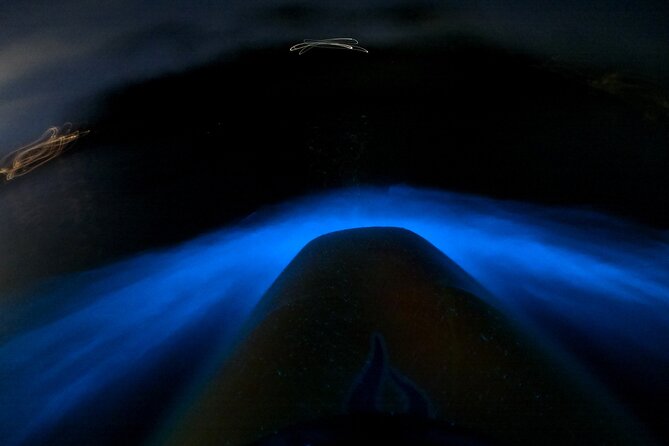
Bioluminescent plankton are tiny living organisms that produce light when the water is disturbed. At night, your paddle gives them plenty of movement to work with. A stroke through the water can create a short trail of sparks, while a small wave may flash along its edge.
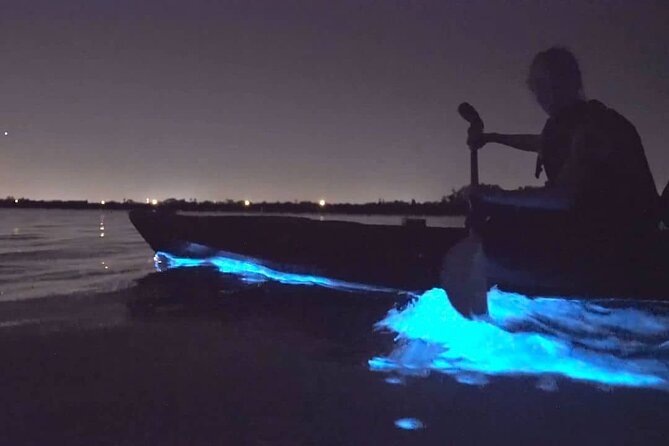
The effect is usually more like scattered stars than a constant blue glow. That distinction matters. Promotional photos can make the water look lit from below, but the real sight may be a series of quick blue flickers around your paddle, fingers, or the bow of the kayak.
That subtlety is part of the charm, but it also sets the right expectation. On a strong night, the water can look like it is full of underwater stars. On a weaker night, you may see only a few flashes. The experience still includes the quiet of night paddling, the dark coastline, and the sky above, but the plankton display cannot be guaranteed at a fixed brightness.
Some outings have also included sightings of glowworms, stars, and visible planets. Those are extra gifts, not promised parts of the route. The most dependable feature is the night paddle itself.
More Kayak Tours in Auckland
- Auckland: Night Kayak Tour in Glowing Bioluminescent Waters
★ 4.9 · 259 reviews - Sunset kayak tour to Rangitoto Island
★ 5.0 · 168 reviews - Day sea kayak tour Rangitoto Island
★ 5.0 · 79 reviews
Meeting in Rosedale, then heading toward the reserve
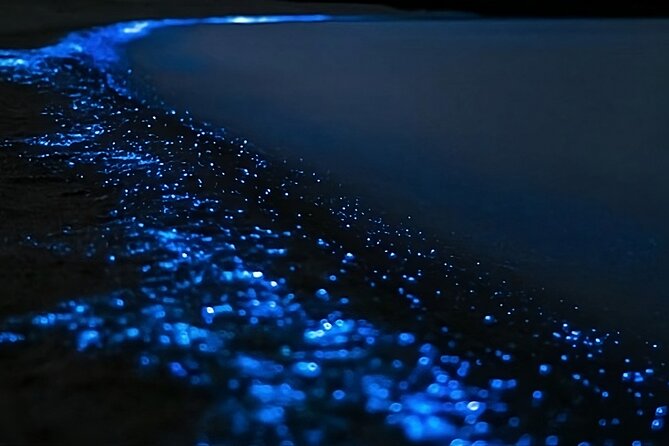
The listed meeting point is 2/20 Ascension Place, Rosedale, Auckland 0632. From there, the activity takes place within about 6 miles, or 10 kilometers, of the North Shore Canoe & Kayak Store in Mairangi Bay. The exact location is confirmed before 3:30pm on the day of the tour.
This detail is easy to overlook when planning your evening. You are not simply walking from central Auckland to a fixed beach launch. Check the final instructions on the day, allow time to reach the North Shore, and keep your phone available for updates.
The meeting area is near public transportation. One outing was reached by Auckland bus, with an Uber used afterward to return to central Auckland. That gives you options, but the return trip is not described as a group transfer, so plan your own way back.
The tour ends at the meeting point. The advertised duration is about two hours, which includes setup, instruction, paddling, and the return. It is long enough to feel like a proper evening activity without swallowing your entire night.
Learning to kayak before the sun goes down
You do not need prior kayaking experience. The guides provide tuition and safety instruction before you head out, and the stable sea kayaks or sit-on-top kayaks are intended to make the first steps manageable.
For a beginner, the first challenge is often not paddling. It is getting in and out of the kayak. One first-time paddler found getting out harder than expected, while another family felt safe and confident after the instruction. Listen closely during the setup, move slowly, and ask for help rather than trying to prove you can manage it alone.
The small guide ratio is useful here. With one guide for every six people, the staff can watch how you handle the boat and offer tips before a small problem becomes a big one. Guides including Gareth, Madison, Josh, Elena, Eloise, Paul, Peter, Ben, Keith, Maddy, and Sam have been praised for clear instruction, patience, good humor, and attention to safety.
You will receive the kayak and all necessary safety equipment. A backrest is worth requesting if you have back trouble, since one participant specifically found that kayak choice mattered for comfort. If the outfitter gives you a choice between boats, speak up before launching.
Two hours in the Long Bay and Okura Marine Reserve
The main outing is a night paddle in the protected waters of the Long Bay and Okura Marine Reserve. This setting gives the activity more substance than a quick look at glowing water from a beach.
At first, you may still have enough fading light to see the bay and surrounding coast. Then darkness takes over, and your attention shifts from the scenery to the water around your boat. The change is gradual and pleasing. You get a little time to learn the rhythm of the kayak before the night becomes fully dark.
Once the group reaches areas with visible plankton, the guides show you how to make the most of it. Move your paddle through the water, watch for flashes near the kayak, and pay attention to the wakes made by other boats. The light often appears only after movement, so sitting still and waiting for a permanent glow may leave you disappointed.
The reserve also gives the guides a quieter setting for explaining what you are seeing. Several outings included information about the different kinds of bioluminescence and conservation in the area. You are not just paddling through dark water without context. The explanation helps you understand why the light appears and why conditions can change from one evening to the next.
The route is not a sightseeing cruise with bright lighting. You will lose much of the coastal scenery once night arrives. That is a trade-off. The darkness is what makes the plankton visible, but it also hides the bays and shoreline that would be attractive on a daytime paddle.
Somewhere else in Auckland entirely:
- Waiheke Island: Ferry & Hop-On Hop-Off Explorer Bus Tickets
★ 4.6 · 3,311 reviews - Hobbiton & Waitomo Caves Guided Day Trip from Auckland incl lunch
★ 5.0 · 2,677 reviews - From Auckland: Hobbiton & Waitomo Caves Day Trip with Lunch
★ 4.9 · 2,505 reviews - Auckland Dolphin and Whale Watching Eco-Safari Cruise
★ 4.5 · 1,790 reviews
What the glow really looks like
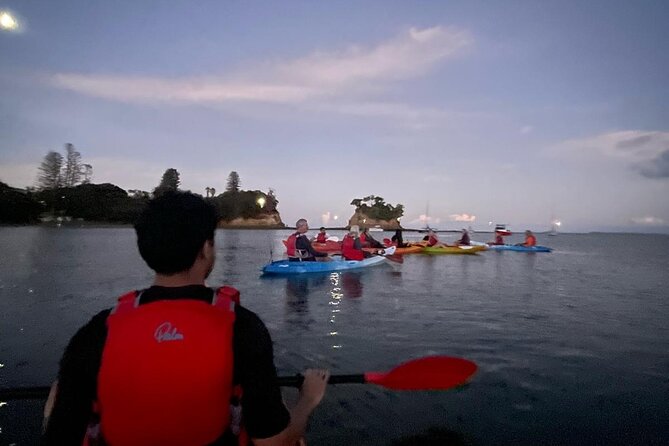
The most useful mental picture is underwater stars, not a glowing swimming pool. When conditions cooperate, a paddle stroke may look like a handful of sparks. A wave can break into blue points, and movement near mangroves may produce small flashes.
Some nights have produced what participants described as an Avatar-like glow, with plenty of visible bioluminescence. Other outings had only a few half-second flashes. Both reports can be true because light levels depend on natural conditions, including weather and the state of the water.
This is also why photography is difficult. Phone cameras struggle from a moving kayak in near darkness, especially when the glow is brief and faint. You may capture a black frame where your eyes clearly saw sparks. Treat the outing as something to watch in the moment, not as a photo assignment.
I would not book this tour mainly to produce social media images. Book it because you want the chance to see a rare natural effect while quietly moving through Auckland’s coastal waters. If the glow is strong, you get a memorable bonus. If it is weak, the night paddle, stars, and setting still carry the evening.
Guides, safety, and the beginner experience
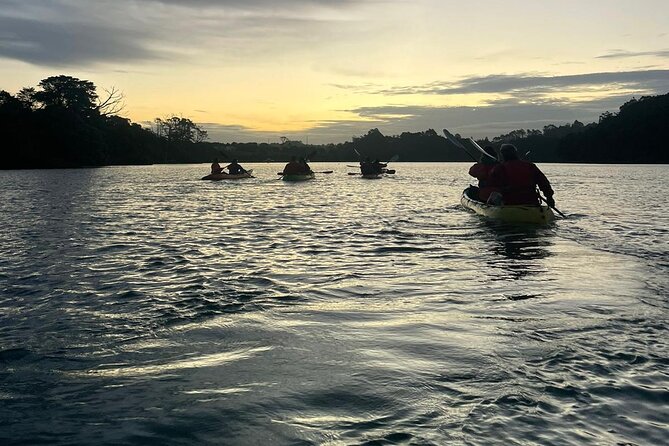
Safety is one of the strongest reasons to choose a guided outing instead of trying to arrange a night paddle on your own. The guides provide the boats, safety gear, instruction, and supervision. They also adjust their approach to the group, helping nervous beginners and offering practical tips once everyone is on the water.
The six-to-one ratio is especially helpful after dark. Visibility is limited, and you want a guide close enough to answer questions and keep the group together. The maximum group size is 24, so the total outing can still feel fairly large, but the ratio prevents one guide from being responsible for an unwieldy line of boats.
You should still take personal responsibility for comfort. Wear clothing suitable for getting wet, and bring a change of clothes. One participant arrived in jeans and needed extra clothing from the guide, while other outings included rain and splashes. Changing facilities may not be open after the activity, so having dry clothes ready is sensible.
The tour is suitable for most people, according to the supplied participation information. Still, kayaking requires you to get into and out of a boat, use a paddle, and remain comfortable on the water for roughly two hours. If you have back concerns, ask for a kayak with a backrest.
Is $73.85 good value?
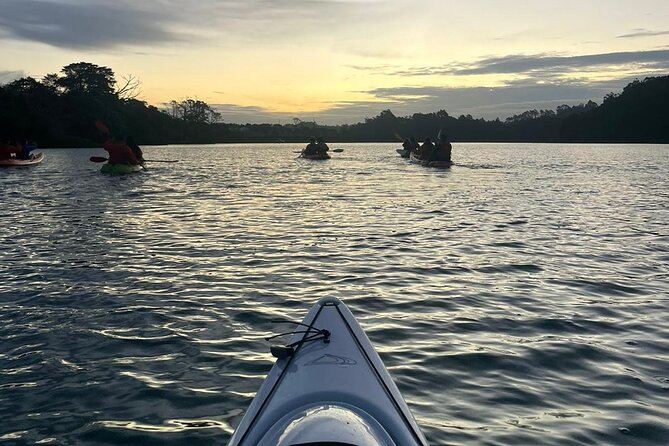
At $73.85 per person, the price is fair for an approximately two-hour guided outing that includes the kayak, safety equipment, instruction, and a small guide ratio. You are not paying only for access to a beach. You are paying for trained supervision, a stable boat, nighttime logistics, and an attempt to reach the best available areas for the glow.
The value depends heavily on your expectations. If you want a guaranteed, bright light show, the price may feel high on a weak night. Bioluminescence is not controlled by the operator, and the display may be much dimmer than photographs suggest.
If you see the tour as a beginner-friendly coastal activity with the chance to witness something unusual, the price makes more sense. You get a guided experience close to Auckland, rather than needing to travel farther to a remote destination. The calm reserve setting, safety support, and included gear are useful benefits for visitors who do not own equipment or have kayaking experience.
I would compare it with the cost of another organized evening activity in Auckland, not with a simple kayak rental. On that basis, it offers reasonable value, especially if the weather is good and the plankton is active.
Weather, timing, and the best way to prepare
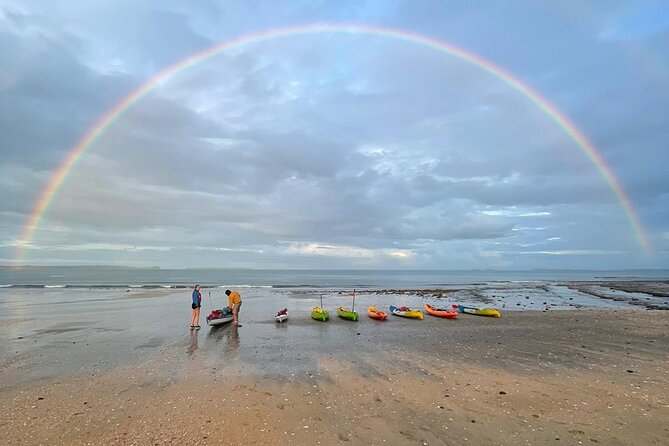
The experience requires good weather. If poor conditions force a cancellation, you can choose another date or receive a full refund. The same applies if the minimum number of participants is not reached.
For your part, cancellation is free when made at least 24 hours before the start time. Changes or cancellations inside that 24-hour window are not accepted for a refund, so do not leave the decision until the last minute.
The precise launch site is confirmed before 3:30pm on the day. This is sensible for a weather-sensitive activity, but it means you should not build a rigid evening schedule around a particular beach. Keep the late afternoon flexible and check the message before setting out.
Wear clothing that can handle spray and possible rain. Bring a dry change of clothes, avoid jeans, and consider comfort after the tour as much as comfort during it. Your phone may be useful for communication, but do not expect it to record the light well.
Who will enjoy this Auckland kayak tour?
This outing suits you if you want an unusual night activity, have little or no kayaking experience, or prefer a guided introduction rather than arranging equipment yourself. It also works well for families and mixed-ability groups because the kayaks are stable and the guides provide instruction.
It is a good choice for anyone who enjoys natural events that vary from night to night. The stars, quiet water, and dark reserve add to the experience even when the plankton is faint.
I would hesitate if your main goal is bright, reliable bioluminescence or polished photographs. The glow may be brief, and the darkness hides much of the coastal scenery. If you would rather see the bays clearly, the company also offers daytime tours with clear-bottom kayaks, but that is a different experience and does not provide the same night-sky effect.
My call: book it for the experience, not a guarantee
I would book this tour if I had an evening in Auckland and wanted something more memorable than another city attraction. The chance to see your paddle send sparks across the water is special, and the guides make the activity approachable for first-time kayakers.
Book with realistic expectations. You may get a spectacular display, or you may see only subtle flashes. Check the launch details on the day, prepare to get wet, arrange your return transport, and leave your best photos to your memory. If that sounds like a fair bargain for two quiet hours on the North Shore, the tour is worth taking.
FAQ
Where does the bioluminescence kayak tour meet?
The listed meeting point is 2/20 Ascension Place, Rosedale, Auckland 0632, New Zealand.
Where does the kayaking take place?
The night paddle takes place in the protected waters of the Long Bay and Okura Marine Reserve, within about 6 miles, or 10 kilometers, of the North Shore Canoe & Kayak Store in Mairangi Bay.
When is the exact launch location confirmed?
The exact location is confirmed before 3:30pm on the day of the tour.
How long does the activity last?
The tour lasts approximately two hours and ends back at the meeting point.
Do I need previous kayaking experience?
No. The guides provide kayaking instruction and safety tuition, and first-time kayakers can participate.
What equipment is included?
All kayaking and safety equipment is included. The company uses stable sea kayaks or sit-on-top kayaks.
How many people are in each guide group?
The guide-to-participant ratio is one guide for every six participants. The maximum total group size is 24 people.
Can the tour be canceled because of weather?
Yes. The activity requires good weather. If it is canceled because of poor weather, you can choose another date or receive a full refund.
What is the cancellation policy?
You can cancel at least 24 hours before the start time for a full refund. Cancellations or changes made less than 24 hours before the start time are not accepted for a refund.
Newly listed around Auckland
- Private tour – Hobbiton Movie Set Evening Banquet Return from Auckland★ 5.0 · 5 reviews
- Kumeu Winery Boutique Tour with Gourmet Lunch from Auckland★ 4.0 · 5 reviews
- Private 2 Day Tour: Hobbiton, Waitomo, Rotorua Geothermal & Hamilton Gardens★ 4.0 · 5 reviews
- Private Auckland Luxury Tour★ 5.0 · 5 reviews
- Private Transfer From Auckland Airport To Rotorua★ 5.0 · 5 reviews
- Auckland City Halfday Tour★ 5.0 · 5 reviews
- Ex Auckland: TE PUIA Geothermal, Redwood & Blue Springs★ 4.4 · 5 reviews
- Private 2 Hour Surf Lesson★ 5.0 · 5 reviews
Auckland Tours, compared.
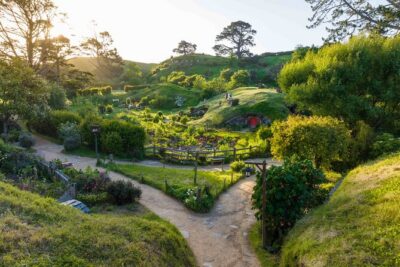
Hobbiton & Waitomo Caves Guided Day Trip from Auckland incl lunch
Read our review →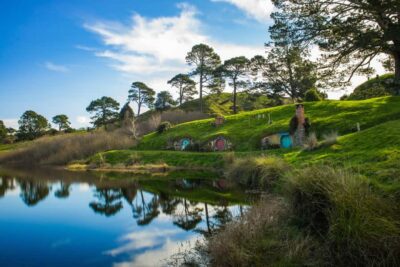
Hobbiton & Waitomo Caves Day Trip with Lunch
Read our review →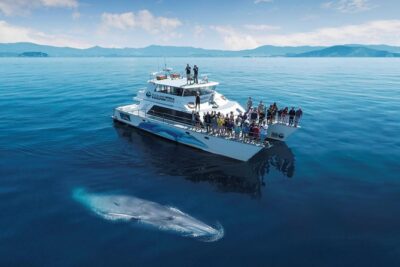
Auckland Dolphin and Whale Watching Eco-Safari Cruise
Read our review →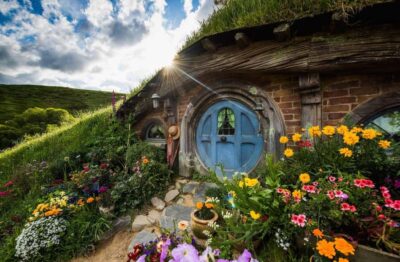
Hobbiton Movie Set Day Trip with Festive Lunch
Read our review →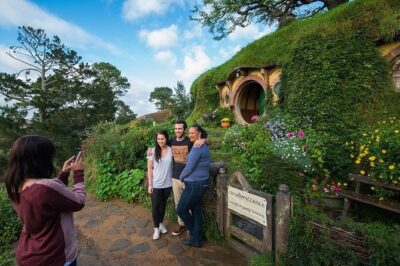
Hobbiton & Waitomo Caves Small-Group Tour W Lunch from Auckland
Read our review →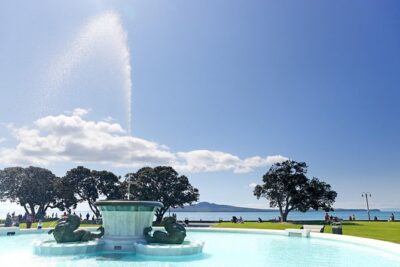
Half-day Discover Auckland City Sightseeing Tour
Read our review →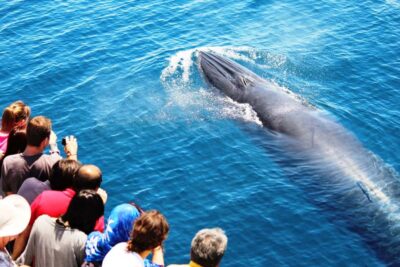
Whale and Dolphin Watching Half-Day Eco Cruise
Read our review →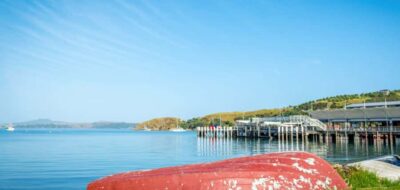
Browse the lists this tour appears in