
Reviewed · TAUPO & TONGARIRO TOURS
Self-Guided Geothermal Tour in Orakei Korako
Orakei Korako gives you a close look at New Zealand’s volcanic power without putting you in a tour group. A short ferry ride carries you across the lake to a 2.5-kilometre boardwalk lined with steaming vents, boiling mud, hot springs, geysers, and remarkable silica terraces. The rare Ruatapu Cave, one of only two geothermal caves known in the world, is the unusual star of the visit.
I like the freedom to stop whenever you want, and I like the setting, which feels quieter and less staged than some of the region’s larger thermal attractions. The ferry adds a small sense of adventure, too. The main caution is physical: stairs and sloping paths make this a moderate walk, and the route is not suited to pushchairs.
Key points to know before you go
- Ruatapu Cave is the rare feature: Look for its thermal mirror pool inside one of only two geothermal caves in the world.
- The ferry is part of the experience: Return crossings are included and operate on demand between the visitor centre and the geothermal area.
- You set the pace: There is no guide or group schedule once you arrive, so you can pause for photographs, read the signs, or move along quickly.
- Expect active geothermal ground: Up to 23 natural geysers can play across the area, but their eruptions are unpredictable.
- Allow about two hours: The route covers roughly 2.5 kilometres, with steps and uphill sections that can make the walk feel longer.
- Bring sensible clothing: The park operates in all weather, and the thermal area can feel warmer than the visitor centre.
Crossing the lake to Orakei Korako
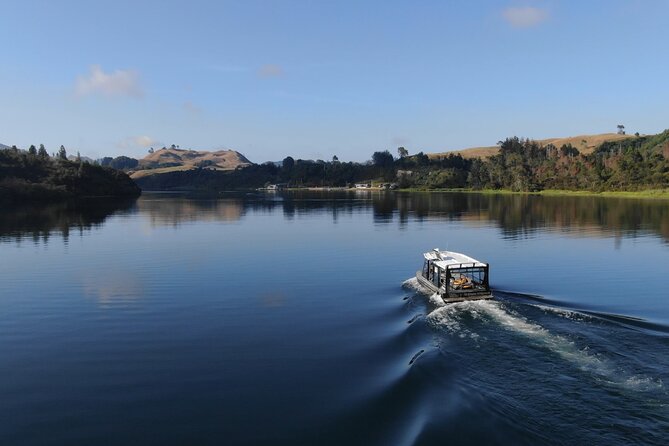
The visit begins at Orakei Korako Geothermal Park and Cave, at 494 Orākei Kōrako Road, near Taupo. From the visitor centre, you take a short ferry across the lake. The crossing is included in the admission price, and return rides are available on demand, so you are not tied to a formal departure time.
That boat ride matters more than it might seem. It separates the road and visitor facilities from the geothermal area, giving the walk a clear beginning. You are not simply stepping out of a car beside a line of pools. You cross open water, look back toward the shore, and arrive at a place that feels more removed from the everyday world.
The ferry is small and practical rather than a sightseeing cruise. Still, the views across the lake add a pleasant extra layer, especially when steam rises beyond the shoreline. Allow a little time for the crossing and for getting ready before you start the boardwalk.
More geothermal parks and hot pools:
- From Rotorua: Taupo Day Trip with Orakei Korako or Waiotapu
★ 4.7 · 35 reviews - Rotorua: Wai-O-Tapu Geothermal Park Entry Ticket
★ 4.6 · 2,601 reviews - Auckland: Hobbiton, Rotorua and Wai-O-Tapu Day Tour
★ 4.8 · 458 reviews
A 2.5-kilometre boardwalk through active ground
Once across the lake, the route follows a well-marked boardwalk through the thermal area. The path is easy to understand without a guide, with signs and explanations helping you identify what you are seeing. You can stop at each viewpoint, take photographs, or continue at your own speed.
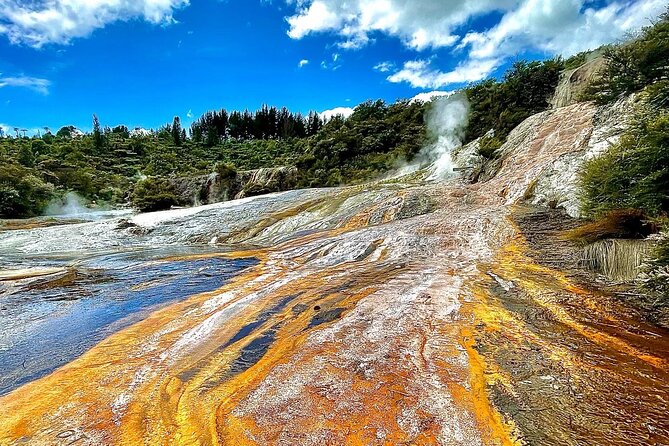
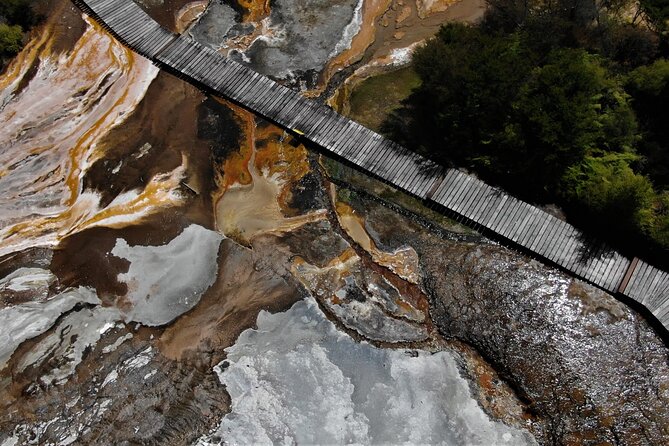
The boardwalk brings you close to the action while keeping you on a defined route. Steam vents hiss from the ground. Mud pools bubble and pop. Hot springs show mineral colours that shift from pale white to yellow, orange, green, and blue-green tones. The silica terraces are especially striking, with layered surfaces that look almost painted.
The setting is not polished into a manicured garden. Native bush surrounds parts of the route, and the geothermal features appear spread through a natural area. That combination gives Orakei Korako a wilder feel than a compact thermal pool complex. You still have a safe, maintained path, but the hot ground, fumes, and sudden changes in colour remain very present.
The route takes about an hour and a half for many people, though the full visit is usually closer to two hours once you include the ferry crossings and stops. If you like photography or want to read every sign, allow extra time. The boardwalk is larger than it first appears, so do not rush through the opening pools and assume you have already seen the best of it.
Geysers that do not follow a timetable
Orakei Korako has up to 23 active natural geysers. This is one of the park’s most exciting features, but it also requires realistic expectations. The geysers play freely, and eruptions may occur anywhere from roughly 35 minutes apart to months apart.
You might see a sudden burst during your visit, or you might see only steam, bubbling water, and the constant movement of the hot ground. There is no dependable show schedule to plan around. That unpredictability is part of the appeal, but it can disappoint anyone expecting a guaranteed eruption at a set time.
I would treat a geyser sighting as a bonus rather than the main reason to buy a ticket. The terraces, mud pools, cave, and steam vents make the walk worthwhile even when the geysers remain quiet. If one erupts, you get a memorable natural event. If not, the park still offers plenty to examine at close range.
The lack of a staged timetable also helps the place feel less like a performance. You are watching an active volcanic area on its own terms. Keep your attention moving along the path, since an eruption could happen while you are looking at a nearby pool.
Ruatapu Cave and the thermal mirror pool

Ruatapu Cave is the feature I would make sure not to miss. It is described as one of only two geothermal caves in the world, which gives the stop genuine rarity rather than simply another unusual photo opportunity.
Inside, a thermal mirror pool creates a still, reflective surface amid the steam and rock. The contrast is memorable: outside, mud bubbles and vents hiss; inside, the pool offers a quieter and more mysterious scene. You do not need a long explanation to appreciate it, but the signs help put the cave in context.
Because the tour is self-guided, nobody will gather your group and point out the cave for you. Follow the route carefully and watch for the marked stops. This is one of the places where taking your time pays off. The cave is easy to treat as a quick photograph, but its unusual geological setting deserves a proper pause.
More self guided tours in Taupo & Tongariro:
- Queen Charlotte Track: Cruise & Self-Guided Hike from Picton
★ 4.8 · 383 reviews - Self-Guided Wine Tours by Bike with Lorelle & Greg
★ 5.0 · 304 reviews - Volcanic Valley Self Guided Walking and Hiking at Waimangu
★ 4.5 · 248 reviews - Abel Tasman National Park: Sailing and Self-Guided Walk
★ 4.8 · 238 reviews
Silica terraces, mud pools, and close-up colour
The silica terraces are among the most photogenic parts of the park. Mineral deposits build up around hot water, creating ridges and stepped surfaces. Their colours can look especially strong in clear light, while mist, cloud, or rain gives the area a moodier character.
Do not expect every visit to look identical. Weather affects how clearly you see the colours, and steam can hide parts of the scenery. A foggy winter morning may make the site feel more mysterious, but it can also soften the contrast in the terraces. Bring a camera, but remember that the atmosphere changes from one hour to the next.
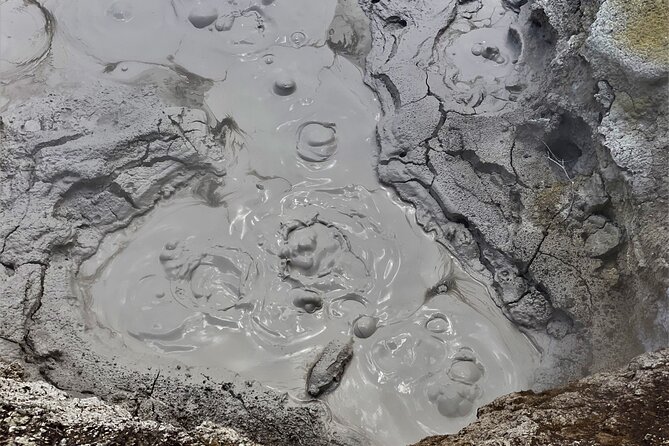
The mud pools are less tidy and more dramatic. They bubble, churn, and release steam without much warning. The hot springs show another side of the same activity, with clear water and mineral-stained edges. Together, these features make the route varied. You are not walking past one type of pool repeatedly.
The boardwalk also gives you changing views over the lake. At some points, the water and surrounding bush balance the harsh geothermal ground. That contrast is part of what makes the visit feel like a walk through nature rather than a display arranged in a building.
How strenuous is the walk?
The route is best described as moderate. The boardwalk itself is well made, but there are plenty of steps, steady climbs, and downhill sections. One practical concern is the descent, which can jar your knees even when the steps are safe and flat.
You should be comfortable walking for around two hours and handling uneven effort. The route is not suitable for pushchairs or buggies. Young children can be carried in backpacks, and children must be accompanied by an adult. A child who enjoys walking and outdoor sights can have a good time, but this is not a short, level stroll.
Wear shoes with a secure grip. Keep water with you, since the route can feel warmer than the visitor centre, particularly near the thermal features. The walk includes no toilets on the explored side, so use the facilities before crossing the lake.
You may also find yourself removing a layer. Steam and hot ground can make the geothermal area warmer than the entrance area, while the weather by the lake may be cooler or wetter. Dress so you can adjust easily.
Self-guided freedom, with a few trade-offs
The self-guided format is the heart of this experience. You do not need to keep up with a guide, wait for a group, or follow a fixed explanation. If a pool catches your eye, stop. If you are moving between other Taupo activities, you can keep the visit efficient.
This format suits independent visitors who prefer to read signs and make their own route decisions. It also works well for photographers and families, since different people can pause for different reasons. The clear path makes the park straightforward to follow.
The trade-off is that you do not have a guide to explain the geology in detail or point out every subtle feature. If you want a lecture about volcanic processes, this is not the right format. You will get the basic information along the route, but the experience depends on your own attention.
For many people, that is a fair exchange. The geothermal activity is easy to understand at a basic level because you can see, hear, and smell it directly. The absence of a guide also helps keep the visit quiet and personal.
Price and practical value near Taupo
At $35.37 per person, this is a reasonable paid attraction if you want more than a quick roadside view of geothermal activity. The price includes GST, self-guided access, and both ferry rides. You are paying for a maintained 2.5-kilometre route, access to the cave and thermal features, and the unusual lake crossing.
The value is strongest for people who will use the freedom of the self-guided format. You can take roughly two hours, or spend longer if you are interested in photography and natural details. If you only have time for a brief stop, the admission may feel less worthwhile because the site rewards a complete circuit.
The area is also a useful alternative to more crowded thermal attractions around Rotorua. It is not empty, and the visitor centre provides organised access, but the ferry and open setting help it feel less like a busy attraction. Proper transportation is important because the park is outside the main Taupo centre.
Opening hours listed for the operating period are 8:00 a.m. to 3:30 p.m., Monday through Sunday. Check the local time when planning your day, and do not arrive at the last minute if you want to complete the walk without rushing.
Weather, crowds, and the best kind of visitor
The park operates in all weather, so rain does not automatically spoil the visit. Wet conditions can make the colours less clear and the steps more slippery, but steam, fog, and cloud can also give the area a dramatic look. Wear a waterproof layer and shoes suitable for walking.
The site has a maximum capacity of 100 people, though your experience may still vary by time of day. The self-guided format spreads people along the route, which helps prevent the walk from feeling like one large procession.
I would recommend this experience to:
- Independent visitors who want to explore without a guide
- People interested in geology, photography, and unusual natural features
- Families with older children who can manage steps
- Anyone comparing Orakei Korako with busier thermal attractions
- Visitors with enough time for a two-hour stop near Taupo
I would hesitate to recommend it to anyone needing a flat, fully accessible route, or to someone who wants a guaranteed geyser eruption. The walk is safe when you follow the boardwalk, but it still demands reasonable fitness and attention.
Should you book the Orakei Korako walk?
Book it if you want an active, close-up geothermal experience with a strong sense of place. The ferry crossing, rare Ruatapu Cave, changing silica terraces, bubbling mud pools, and freedom to set your own pace give the visit more variety than a simple lookout stop.
Skip it if your priority is a guided explanation, a short level path, or a scheduled geyser show. For everyone else, Orakei Korako is a good use of about two hours near Taupo, especially if you bring water, wear layers, and leave enough time to enjoy the boardwalk rather than race through it.
Free cancellation is available when you cancel at least 24 hours before the start time. Changes or cancellations made later are not accepted for a refund.
FAQ
Where does the Orakei Korako tour start?
The tour starts at Orakei Korako Geothermal Park and Cave, 494 Orākei Kōrako Road, Taupo 3083, New Zealand.
How long does the experience take?
The visit takes approximately two hours. The geothermal walking route is about 1.5 miles, or 2.5 kilometres, and the listed visit time is about one hour and 30 minutes, not including all stopping and ferry time.
Is the ferry included?
Yes. Return ferry rides are included in the admission price and operate on demand.
Is this a guided tour?
No. The visit is completely self-guided. You follow the marked boardwalk and information provided around the park.
What geothermal features can I see?
You can see mud pools, hot springs, geysers, silica terraces, steam vents, and the Ruatapu geothermal cave.
Are geyser eruptions guaranteed?
No. Up to 23 natural geysers are active in the area, but they erupt unpredictably. Activity can range from about 35 minutes apart to months apart.
Is the walk suitable for children?
Children must be accompanied by an adult. Young children can be carried in backpacks, but the route has many steps and is not suitable for pushchairs or buggies.
What happens if the weather is poor?
The park operates in all weather conditions. You should dress appropriately and bring suitable footwear for the boardwalk and steps.
Newly listed around Taupo & Tongariro
- Taumarunui: Railcart and Jetboat Adventure with lunch★ 4.7 · 6 reviews
- Chasing Waterfalls The Adventurer from Kinloch Marina★ 5.0 · 6 reviews
- Escape Room Experience Taupo – The Cursed Cabin★ 4.5 · 7 reviews
- Shuttle Park n Ride to Whakapapa Ski fields★ 4.5 · 7 reviews
- Taupo: Huka Falls Helicopter Ride★ 5.0 · 9 reviews
- Escape Room Experience Taupo – The Hunting Lodge★ 5.0 · 9 reviews
- Premium Mt Ruapehu Summit Plateau Guided Group Hike★ 5.0 · 9 reviews
- Escape Room Experience Taupo – The Enchanted Candy Forest★ 5.0 · 9 reviews
Taupo & Tongariro Tours, compared.

Lake Taupo: Sailboat Trip to the Maori Rock Carvings
Read our review →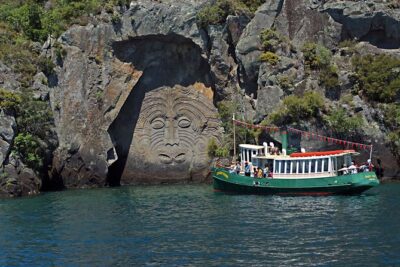
Lake Taupō Māori Rock Carvings Scenic Cruise aboard Ernest Kemp
Read our review →
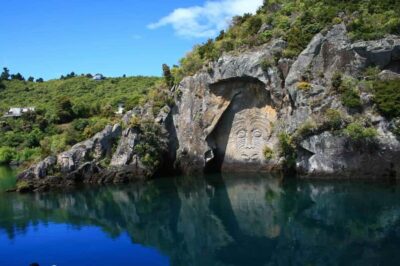
Lake Taupo: Maori Rock Carvings 10.30 AM 1.5-Hour Cruise
Read our review →
Browse the lists this tour appears in