
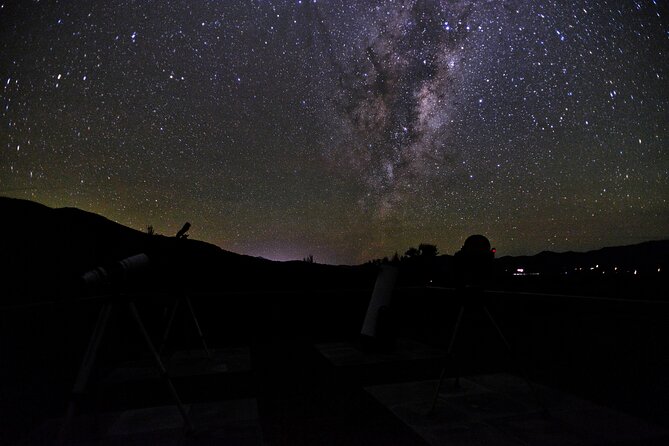
Reviewed · HANMER SPRINGS TOURS
Hanmer Springs Star Tours at Manuka Skies
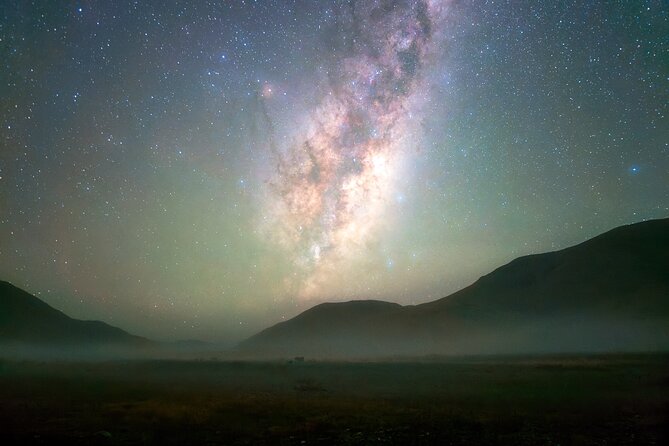
Manuka Skies takes you beyond Hanmer Springs into a low-light sanctuary where the sky, native forest, and spring-fed stream share the same stage. You begin with the naked eye, learning stars such as the Southern Cross, then move to telescopes that reveal objects hidden from unaided sight.
I like the small maximum of 10 people, which gives the evening a personal feel, and I like the mix of guided astronomy and quiet natural sounds. Guide Brent brings clear passion to the subject, while the chance to recline with astro binoculars makes this more than a quick look through one telescope.
The main drawback is weather. Clouds can cancel the tour, and the dark setting means the experience depends on clear skies. Keep enough flexibility in your Hanmer Springs schedule to accept another date or a refund if conditions turn poor.
Key points at a glance
- Manuka Skies location: A low-light site outside Hanmer Springs, surrounded by native forest and a spring-fed stream.
- Naked-eye introduction: Learn to identify stars and constellations, including the Southern Cross, before using optical equipment.
- Several ways to view the sky: Use a Celestron electronically guided telescope, manual telescopes, and astro binoculars.
- Objects beyond ordinary stargazing: The equipment may reveal the Omega Cluster and Sombrero Galaxy.
- Small group size: The tour accepts a maximum of 10 people, helping the guide give more direct attention.
- Weather-sensitive booking: Cancel at least 24 hours ahead for a full refund, or receive a new date or full refund if poor weather cancels the tour.
Leaving Hanmer Springs for a darker sky
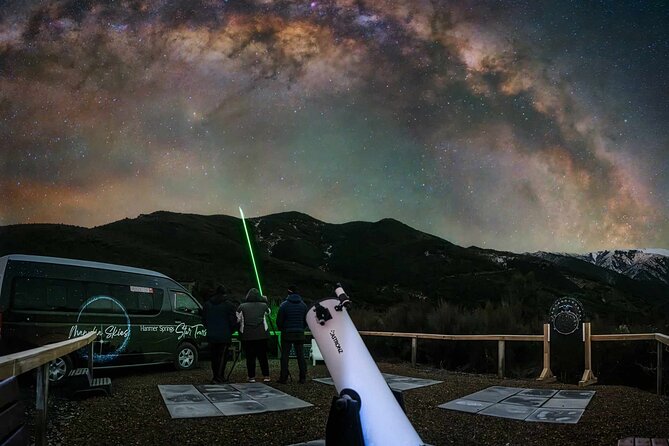
The tour begins in Hanmer Springs, with pickup offered from the town area. That matters because you do not need to arrange your own way to a remote viewing site after dark. A short transfer takes you toward Manuka Skies and away from the brighter lights of the settlement.
The setting is part of the experience, not just a place to park a telescope. Manuka Skies is cared for as a sanctuary, with native forest and local wildlife around the viewing area. The sound of a spring-fed stream running down the mountain can continue in the background while you look upward.
That combination gives the night a slower pace. You are not simply ticking off planets or constellations. You are being asked to connect the sky with the ground beneath it, which is central to Manuka Skies’ role as kaitiaki, or guardian, of the site.
You might also hear morepork owls in the area. The birds nest nearby, so the setting has a genuine wildlife element, even though the main subject is astronomy. I would treat any owl call as a welcome extra rather than something promised on every visit.
A few more Hanmer Springs days to compare
- Hanmer Springs Thermal Pools & Spa
★ 4.5 · 218 reviews - Amuri Adventure Jet Boating in Hanmer Springs
★ 5.0 · 191 reviews - Hanmer Springs: Thermal Pools Single or Return Entry Ticket
★ 4.7 · 107 reviews
The first lesson begins without a telescope
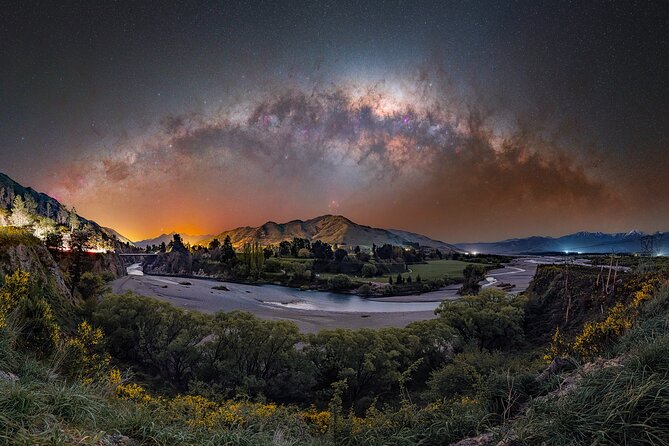
The tour starts with a naked-eye look at the night sky. This is a smart order for a beginner because it helps you get your bearings before an eyepiece narrows your view.
Your guide can point out stars and constellations such as the Southern Cross and explain how people use them to find their way around the southern sky. If you are visiting from the Northern Hemisphere, this is especially useful. The Southern Cross is one of the key patterns to learn in New Zealand, and it looks very different from the familiar star groups of northern Europe or North America.
This opening also gives the group time to adjust to the darkness. At a dark-sky site, your eyes need a little while to become comfortable. Starting without equipment lets you notice the scale of the sky rather than rushing straight to a magnified image.
Guide Brent has been praised for his passion and clear grasp of the subject. The value here is not just knowing the names of stars. A good guide helps you understand what you are seeing and where to look next, so the sky becomes easier to read after the tour ends.
What the Celestron telescope adds
After the naked-eye introduction, the group uses a quality Celestron electronically guided telescope. This is the main tool for finding distant targets that you cannot see clearly with your eyes alone.
The telescope is suited to deep-sky objects, including the Omega Cluster and the Sombrero Galaxy. These names can sound grand, but the important point is practical: the equipment gives you access to parts of the sky that ordinary stargazing cannot show in the same way.
An electronically guided scope can locate selected objects and keep them in view, which is helpful when several people need a turn. It also means you do not have to spend the evening learning how to operate a large telescope before seeing anything through it.
Still, the view through a telescope is not the same as a bright, full-color photograph. Expect the satisfaction of finding a distant object rather than a screen-like image. The appeal comes from seeing light that has crossed a vast distance to reach the instrument in front of you.
If your interest is serious astrophotography, this is not described as a photography session. If you simply want help finding objects such as the Omega Cluster or Sombrero Galaxy, the Celestron equipment gives the night a clear focus.
Manual telescopes keep the evening flexible
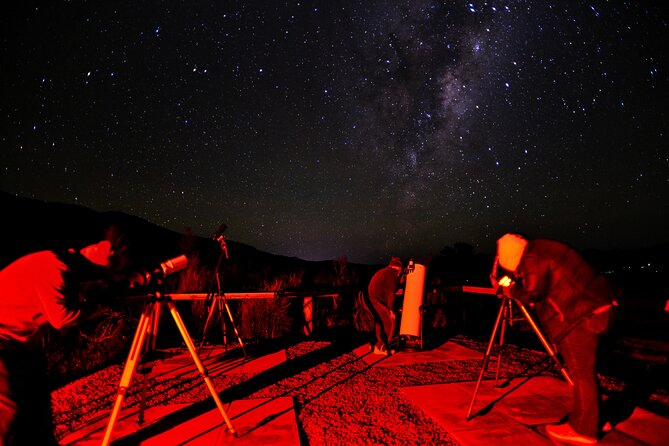
Manuka Skies also has manual telescopes. These offer a freer way to explore because the guide is not limited to a fixed list of electronically located targets.
That can suit you if you enjoy learning through trial and observation. A manual scope gives the experience a more hands-on feel, even if you are not operating it for long periods. You can move from a planned object to another part of the sky as conditions and group interest allow.
The two telescope types serve different purposes. The electronic Celestron is useful when the group wants to locate a particular deep-sky target with confidence. The manual scopes add a sense of discovery and allow more open-ended viewing.
I like this mix because it avoids making the night too technical or too passive. You get guided help when you need it, with room for curiosity when you want to look around.
Somewhere else in Hanmer Springs entirely:
- Hanmer Springs Quad Bikes
★ 5.0 · 104 reviews - Hanmer Springs Jet Boat Adventure Tour
★ 4.9 · 81 reviews - Hanmer Springs Bungy Jump, New Zealand
★ 5.0 · 57 reviews - Amuri Jet Adventures – Hanmer Springs Quad Biking tour
★ 5.0 · 49 reviews
Reclining with astro binoculars

One of the more distinctive features is the use of astro binoculars from lounges where you can lie back and gaze upward. This changes your posture and your sense of the sky.
Standing at a telescope can feel focused and deliberate. Reclining with binoculars is more relaxed, and it lets you scan a wider area above you. The binoculars can help bridge the gap between looking with your eyes and using a high-powered telescope.
An interactive star finder is available alongside the binoculars. You can use it to test your ability to locate patterns and navigate the sky. That gives you something to do between guided telescope views, rather than waiting for your turn without a clear purpose.
This part should appeal to families, beginners, and anyone who prefers an informal introduction to astronomy. It also suits people who want a quiet evening rather than a lecture packed with technical terms.
A two-hour format with room to look around
The experience lasts about two hours. That is long enough to move through the main stages without turning the night into a full late-evening expedition.
You can expect the time to be divided between the naked-eye orientation, guided telescope viewing, manual telescope use, and astro binoculars. The exact order may change with weather, darkness, and what the group wants to see.
A two-hour tour works well for a short stay in Hanmer Springs. You can fit it into an evening without giving up an entire night. Pickup also removes the need to think about driving to a dark site and then finding your way back in the dark.
The small group limit of 10 is important here. With fewer people around each telescope, you should have a better chance to ask questions and take your turn without feeling hurried. It does not guarantee private guiding, but it is a much more manageable size than a large coach group.
The tour is listed at $80.05 per person. I see the value in that price if you want an organized introduction to the southern sky, transport from town, several forms of viewing equipment, and access to a carefully protected low-light site. It is less attractive if you already own good astronomy equipment or only want a short, casual look at the stars.
Why the native setting matters
Many stargazing activities focus only on darkness. Manuka Skies adds a sense of place by linking the night sky with forest, water, and wildlife.
The stream is spring fed and runs down the mountain beside the sanctuary. Its sound can make the pauses between explanations feel natural rather than empty. The morepork owls add another layer, reminding you that night belongs to local animals as well as human observers.
The sanctuary is also cared for through the idea of kaitiakitanga. In plain terms, Manuka Skies acts as guardian of the area. That gives the experience an environmental purpose, even though you are there primarily to see stars.
I find this important because dark skies are not only useful for astronomy. They also support nocturnal wildlife and preserve a quieter setting. A visit here connects those ideas without requiring a separate wildlife tour.
Weather is the decision you cannot control
Clear skies are essential. Clouds can block both naked-eye constellations and telescope targets, so this is not an activity to book tightly against your departure from Hanmer Springs.
The operator handles poor-weather cancellations with either another date or a full refund. That is reassuring, but you still need time in your schedule to take the alternate date. If your stay is only one night, the refund may be more useful than a rescheduled tour.
You can cancel for a full refund if you do so at least 24 hours before the start time. Changes or cancellations inside that 24-hour window are not accepted for a refund, so check the local start time carefully.
I would book this early in a stay of several nights, not on your final evening. The experience is booked on average 44 days in advance, which suggests you should not assume a last-minute place will be available, especially with only 10 spaces.
Who will enjoy Manuka Skies most
This tour suits first-time stargazers who want guidance without needing any astronomy background. You learn a few useful constellations, then see how different tools change what is visible.
It is also a good fit for couples and families looking for a calm evening activity. The lounge-based binocular viewing gives the night a restful side, while the telescopes provide enough variety to keep the experience from becoming repetitive.
You should also consider it if you are visiting Hanmer Springs for the natural setting and want an evening activity that matches the area. The native forest, stream, and possible morepork calls make it feel tied to this place rather than like a standard indoor astronomy presentation.
I would be more cautious if you dislike cold or darkness, though the supplied information does not specify what clothing or shelter is provided. Ask the operator what to bring before you go. The same advice applies if you have mobility concerns, since the site is in a forested area and full access details are not provided.
Practical tips before you book
Choose a night early in your visit if your schedule allows. That gives you a chance to move to another date if clouds cancel the first attempt.
Keep your expectations realistic about what you will see. The tour can show remarkable deep-sky objects, but the experience depends on natural conditions, and telescope views are not guaranteed to resemble professional photographs.
Pickup is offered, and the meeting point begins in Hanmer Springs. Confirmation is provided when you book, and most people can participate. The group is capped at 10, which helps keep the session focused.
If you want to make the most of the naked-eye section, arrive ready to pay attention to the guide’s directions. The Southern Cross and other constellations are easier to remember when you actively follow the pattern rather than simply hearing its name.
Should you book this Hanmer Springs star tour?
Book Hanmer Springs Star Tours at Manuka Skies if you want a small-group introduction to the southern night sky in a genuine low-light setting. The combination of Brent’s enthusiastic guiding, several kinds of equipment, forest sounds, and a spring-fed stream gives the two-hour visit more character than a basic telescope stop.
The $80.05 price makes the most sense when you value pickup, expert help, and access to equipment you may not have yourself. Give yourself weather flexibility, book at least 24 hours ahead if plans change, and avoid placing it on the last possible night of your trip.
Skip it if your schedule cannot handle a weather cancellation or if you expect guaranteed views of a particular galaxy. For most visitors with a clear evening and a little patience, Manuka Skies offers a thoughtful way to meet the southern sky.
FAQ
Where does Hanmer Springs Star Tours at Manuka Skies begin?
The experience starts in Hanmer Springs, New Zealand. Pickup is offered.
How long does the stargazing tour last?
The experience lasts approximately two hours.
How much does the tour cost?
The listed price is $80.05 per person.
How many people can join the tour?
The maximum group size is 10 travelers.
What can I see without a telescope?
The guide begins with naked-eye viewing and discusses stars and constellations such as the Southern Cross.
What telescope equipment is available?
The experience includes a Celestron electronically guided telescope, manual telescopes, and astro binoculars used from lounges.
What deep-sky objects might the telescope show?
The Celestron telescope is suitable for viewing objects such as the Omega Cluster and Sombrero Galaxy.
What happens if poor weather cancels the tour?
You will be offered a different date or a full refund. You can also cancel at least 24 hours before the start time for a full refund.
Newly listed around Hanmer Springs
- Hanmer Springs: River Jet Boat Ride★ 4.5 · 6 reviews
- Hanmer Springs Jetboat & Quad Bike Combo★ 4.8 · 10 reviews
- Hanmer Springs Rafting and Quad Bike combo★ 5.0 · 14 reviews
- Hanmer Springs: Waiau Gorge Rafting Tour★ 4.3 · 24 reviews
- Hanmer Springs 2-Hour Quad Bike Safari★ 4.4 · 45 reviews
- Amuri Jet Adventures – Hanmer Springs Quad Biking tour★ 5.0 · 49 reviews
- Hanmer Springs Jet Boat Adventure Tour★ 4.9 · 81 reviews
- Hanmer Springs Quad Bikes★ 5.0 · 104 reviews
Hanmer Springs Tours, compared.




Amuri Jet Adventures – Hanmer Springs Quad Biking tour
Read our review →
Browse the lists this tour appears in