
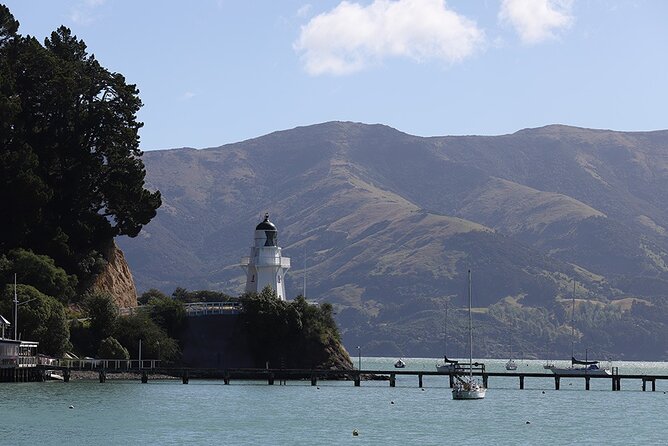
Reviewed · AKAROA TOURS
Solar Explorer in Akaroa – Sun-Viewing Tour with Telescopes
The unusual part is the subject: the Sun in daylight, viewed from Akaroa Lighthouse through equipment designed for solar observation. In about 30 minutes, an astronomer guides you through sunspots, flares, and surface activity instead of asking you to wait for stars after dark.
I like the small group limit of eight people, which gives you a fair chance at the telescope. I also like the instant digital images and smartphone adapter, since you leave with something more useful than a quick memory of a view. The catch is simple: this tour needs clear enough weather, so clouds can mean a delay, a new time, or a refund.
Key points to know before booking
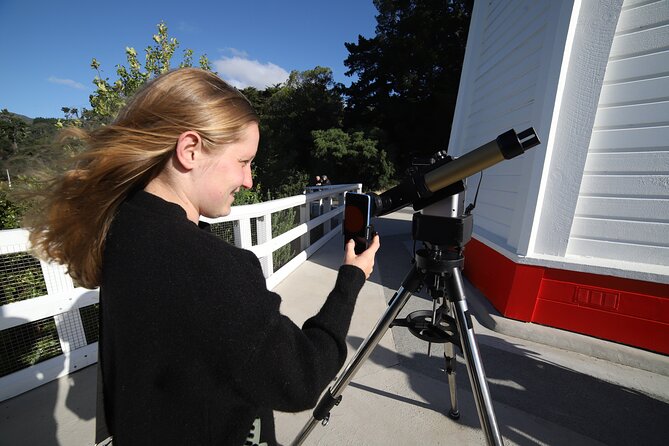
- Daylight astronomy at Akaroa Lighthouse: See the Sun during a short stop in the historic harbor town.
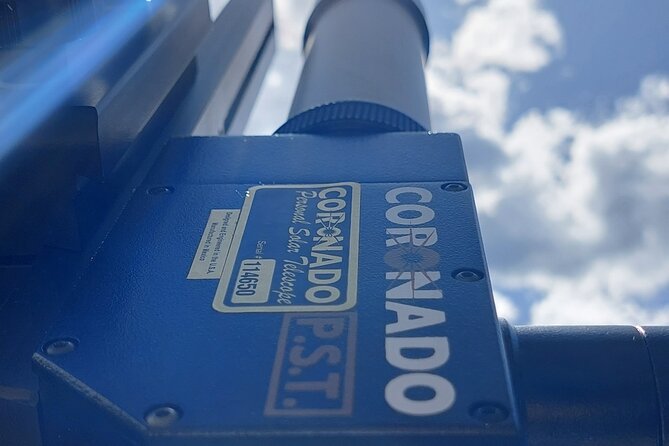
- A specialist solar telescope: View sunspots, solar flares, and other activity safely through dedicated equipment.
- Live images from a ZWO Seestar S50: High-resolution digital photos are captured during the session and shared with you.
- Phone photography included: A smartphone adapter lets you take your own images through the telescope.
- Small groups and personal guidance: The maximum is eight people, with an expert astronomer leading the session.
- Weather matters: The operator may move your booking to another time or date if clouds prevent useful viewing.
Seeing the Sun from Akaroa Lighthouse
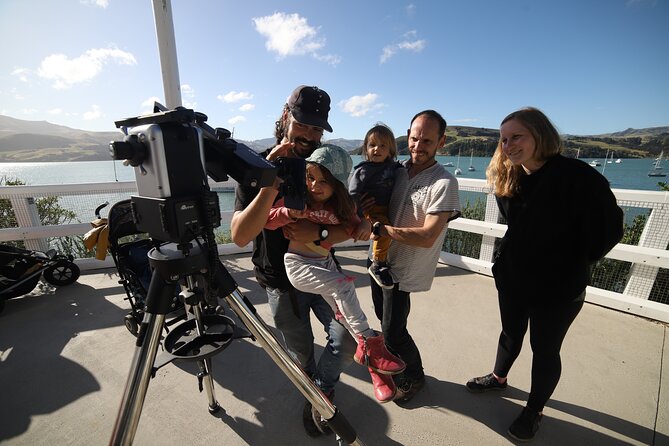
Akaroa Stargazing meets you at the Akaroa Lighthouse, at 145 Beach Road. The lighthouse gives this short tour a memorable setting, but the real attraction is what the telescope shows you overhead.
Most people think of astronomy as a nighttime activity. Here, the Sun becomes the subject. With the correct solar equipment, you can look for sunspots, solar flares, and changing details on the Sun’s visible surface without waiting for darkness. That makes this a practical choice for a family day out, a shore excursion, or anyone with only a short time in Akaroa.
The setting also keeps the tour easy to fit into a wider visit. Akaroa is about a 90-minute scenic drive from Christchurch, so you could make the solar session part of a longer day trip. The tour itself lasts roughly 30 minutes, and it ends back at the lighthouse meeting point.
That short length is both a benefit and a limit. You do not need to give up half a day, and children are less likely to lose interest. On the other hand, this is an introduction to solar astronomy, not a long observatory visit with several activities.
A few more Akaroa days to compare
- Akaroa Dolphins ~ Harbour Nature Cruise
★ 5.0 · 2,143 reviews - Akaroa: Dolphin Nature Cruise
★ 4.9 · 440 reviews - Akaroa Harbour Nature Cruise
★ 5.0 · 332 reviews
What the telescope can show you
The main viewing tool is a specialized solar telescope. It is built for safe observation of the Sun, which matters more than simply placing an ordinary telescope outdoors and pointing it upward. Your astronomer guides you through the viewing process and explains what you are seeing.
The sights can change from one day to the next. You might see dark sunspots, bright solar flares, or other surface activity. One particularly useful part of the session is that you are not left to interpret a tiny, unfamiliar image by yourself. The guide helps you connect the shapes and movements in the eyepiece with basic facts about the Sun and the solar system.
This makes the tour work for people starting from zero. You do not need to know astronomy terms in advance. If you already enjoy space science, the appeal is more hands-on: you can look directly through the telescope and compare what you see with the digital image being produced at the same time.
The equipment includes a ZWO Seestar S50 smart telescope, which captures high-resolution images of the Sun live. Those images are shared with you instantly. That is a useful touch because a short viewing session can otherwise leave you with only a hazy recollection of what appeared in the eyepiece.
The 30-minute session, step by step
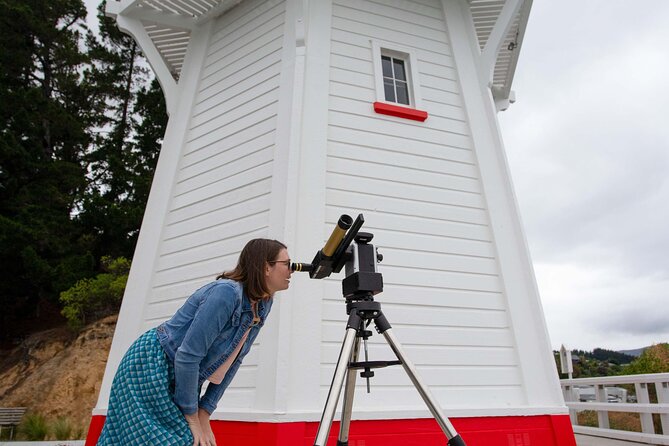
The meeting point is the Akaroa Lighthouse. Once the equipment is set up, the guide introduces the solar viewing process and explains the activity overhead.
You then take turns looking through the solar telescope. With a maximum of eight people, the group should remain small enough for the session to feel personal, though the exact amount of time each person gets at the eyepiece will depend on the group and the conditions.
As you observe, the astronomer points out features such as sunspots and flares. The commentary is aimed at all ages, and the format is hands-on rather than a talk where you simply listen. That matters if you are bringing children or if you learn better by seeing the subject directly.
The smart telescope works alongside the main viewing. It records high-resolution solar images and shares them digitally. You can also attach your smartphone using the included adapter, allowing you to take your own photo through the telescope.
At the end, the activity finishes at the same lighthouse meeting point. There is no private transportation included, so you need to make your own way to Beach Road. The tour is near public transportation, and service animals are allowed.
Why the small group makes a difference
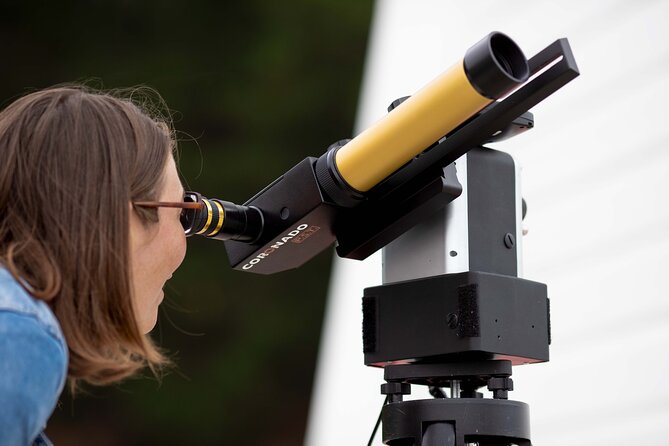
Eight people is a useful maximum for this kind of activity. A solar telescope is not something you casually walk past and inspect at your own pace. You need a turn, a clear explanation, and enough time to understand what the guide is showing you.
A small group also gives you more room to ask questions. The supplied information identifies Luca as one of the astronomers involved. His role goes beyond operating the telescope. He has helped people adjust plans around cloud cover and has been praised for his passion for the solar system.
That weather communication is worth noting. If conditions look poor, the team may keep you informed and offer another time slot. One booking was moved until a clearer sky arrived, which is the sensible approach for a tour that depends on seeing a specific target.
Still, eight is a maximum, not a promise that you will have the site entirely to yourself. If you want the most relaxed session, book early. The tour is booked on average 23 days ahead, which suggests that advance planning is wise during busy periods.
Somewhere else in Akaroa entirely:
- Swimming with Wild Dolphins in Akaroa
★ 4.5 · 261 reviews - Akaroa Harbour 2-Hour Dolphin Nature Cruise
★ 4.7 · 235 reviews - Akaroa Shore Excursion: Banks Peninsula and Christchurch City Sights Tour
★ 4.0 · 228 reviews - Shore Excursion Guided Sea Kayaking through Akaroa Marine Reserve
★ 5.0 · 160 reviews
Weather is part of the booking decision
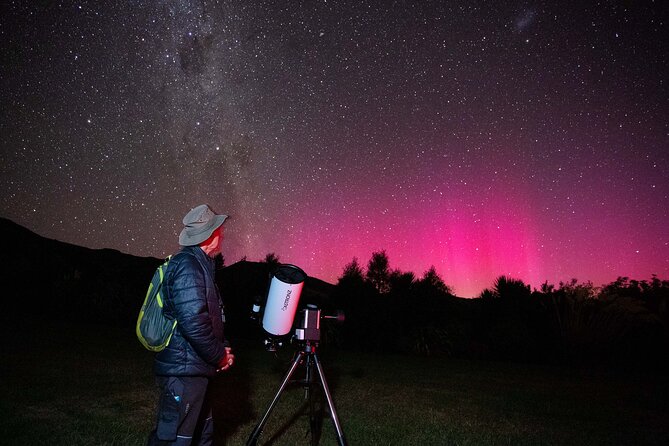
The Sun may be above you, but that does not mean the telescope can use it. Clouds can block the view or make the image too poor for a worthwhile session. This is the main uncertainty in booking Solar Explorer.
If bad weather forces cancellation, you are offered another date or a full refund. The operator may also work with you to find another time slot when conditions change. That flexibility is a real advantage, especially if your visit to Akaroa is not tied to a strict cruise departure or fixed transport plan.
You should still think carefully about your schedule. A weather change may require you to wait or return at another time. If you have only a narrow window in Akaroa, ask yourself how much flexibility you have before booking.
The cancellation terms are straightforward. You can cancel for a full refund up to 24 hours before the start time. Changes or cancellations made less than 24 hours before the tour are not accepted for a refund. The weather exception applies when the operator cancels the activity because conditions are unsuitable.
How much value do you get for $24.20?
At $24.20 per person, this is priced as a short add-on rather than a major day tour. You are paying for specialist equipment, an astronomer’s guidance, digital solar images, and access to a subject that is difficult to observe safely without the right setup.
The value is strongest if you want a focused activity that fits around other Akaroa plans. A 30-minute session does not consume your morning or afternoon. You can pair it with time around the waterfront, a meal, or another local outing without committing to a long guided program.
The price may feel less attractive if you expect a full observatory visit. There is one stop, the session is short, and there is no private transport. You are paying for the quality and purpose of the solar viewing, not for a large number of included attractions.
For families, the included phone adapter and digital photos add practical value. You can show the images later instead of trying to explain what a sunspot looked like. For space enthusiasts, the chance to see live solar activity through a dedicated telescope is likely the main reason to book.
Who will enjoy Solar Explorer most?
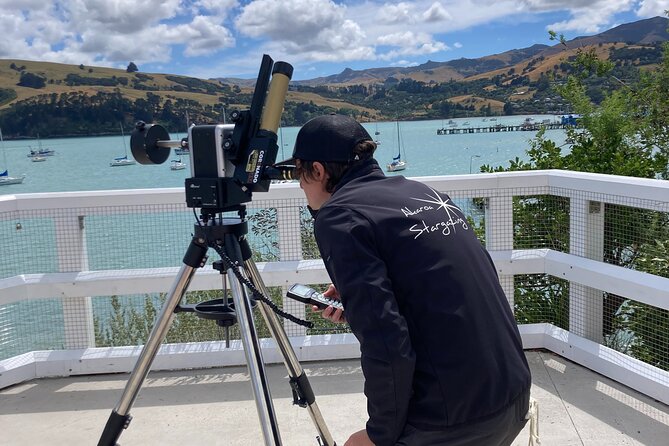
This is a good fit for families because the subject is immediate and the tour is short. Children can see the Sun directly, hear clear explanations, and take part in the photography rather than sitting through a long astronomy lecture.
It also suits adults who already enjoy space, photography, or unusual local activities. The tour is not just a scenic stop at the lighthouse. You get a chance to use the telescope, see solar features, and take home a digital record of the session.
First-time astronomy visitors should find the format approachable. You do not need previous knowledge, and the guide explains what appears in the telescope. The hands-on aspect makes this more accessible than a technical presentation.
You may want to skip it if your schedule is rigid, your party cannot tolerate a weather-related change, or you are looking for a long tour with transport and several stops. The experience is precise and compact. That is its strength, but also its boundary.
Making the most of your Akaroa stop
Plan to arrive at the Akaroa Lighthouse meeting point rather than expecting a pickup. Private transportation is not included, and the activity begins and ends at 145 Beach Road.
Because the session lasts only about 30 minutes, punctuality matters. You do not have much spare time built into the format, particularly if the group is waiting for clear skies or the guide is working around changing cloud cover.
Keep your phone ready if you want to use the telescope adapter. The tour supplies the adapter, but your own device is needed for personal photos. You will also receive digital images captured with the ZWO Seestar S50, so you do not need to depend entirely on getting a perfect phone shot.
It is also worth keeping expectations realistic. The Sun does not look identical every day. Some sessions may show clear sunspots or flares, while other days may offer less dramatic activity. The value comes from seeing a real astronomical target through suitable equipment and learning how to read what is there.
Akaroa Stargazing beyond the daytime tour
Solar Explorer is part of a broader astronomy interest in Akaroa Stargazing. If you enjoy the daytime session, the company also offers nighttime stargazing, which gives you a chance to look at the southern sky after dark.
The two activities serve different purposes. Solar Explorer is short, bright, and easy to fit into a day visit. Night stargazing is likely to require a different schedule and weather window. If your time in Akaroa allows only one, choose the Sun tour for a compact family activity or choose a nighttime option if your main goal is stars and the southern sky.
The daytime format also works well for people who cannot stay out late. You get an astronomy lesson without building your entire evening around it.
Should you book this solar telescope tour?
Book Solar Explorer if you want an unusual, affordable Akaroa activity that lasts only 30 minutes and gives you something concrete to see and photograph. The small group, solar telescope, live ZWO Seestar S50 images, and phone adapter make the $24.20 price reasonable for a focused astronomy session.
I would be most cautious about the weather and your schedule. Clouds can change the plan, and the tour is not a substitute for a full observatory program or private sightseeing transfer. If you can handle some flexibility, this is a clever addition to a Christchurch to Akaroa day trip and a friendly first step into solar astronomy.
FAQ
Where does Solar Explorer begin?
The tour begins at Akaroa Lighthouse, 145 Beach Road, Akaroa 7520, New Zealand.
Where does the tour finish?
The activity ends back at the Akaroa Lighthouse meeting point.
How long does the solar viewing tour last?
The tour lasts approximately 30 minutes.
How many people can join the tour?
The tour has a maximum group size of eight people.
What can I see through the telescope?
Depending on solar activity and viewing conditions, you can see sunspots, solar flares, and other details on the Sun’s surface.
Can I take my own photos?
Yes. A smartphone adapter is included so you can take photos through the telescope. The team also shares digital images captured live with the ZWO Seestar S50.
What happens if the weather is poor?
If poor weather causes the tour to be canceled, you will be offered another date or a full refund. You can also cancel up to 24 hours before the start time for a full refund.
Newly listed around Akaroa
- Discover Akaroa: Self Guided Audio Tour★ 4.0 · 6 reviews
- Akaroa Explorer: Guided Electric Mountain Bike Tour★ 4.7 · 9 reviews
- Akaroa Nature and History Private Tour – The 7th Generation★ 5.0 · 10 reviews
- Akaroa Shore Excursion: Akaroa Harbour and Sheep Farm Local Tour★ 4.5 · 11 reviews
- Akaroa Shore Excursion: Banks Peninsula, Christchurch City and Giants House Tour★ 3.5 · 14 reviews
- Akaroa: Stargazing Tour with 2 Telescopes & Souvenir Photos★ 5.0 · 17 reviews
- Akaroa Explorer- Guided Electric Bike Tour in Akaroa★ 5.0 · 18 reviews
- Akaroa Shore Excursion: Akaroa Harbour and Giants House Local Tour★ 4.5 · 19 reviews
Akaroa Tours, compared.



Akaroa Shore Excursion: Banks Peninsula and Christchurch City Sights Tour
Read our review →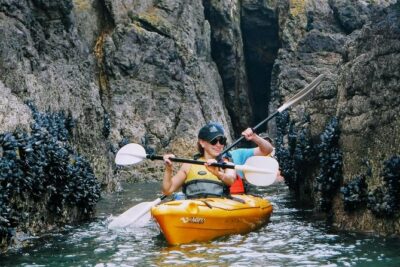
Shore Excursion Guided Sea Kayaking through Akaroa Marine Reserve
Read our review →
Akaroa Shore Excursion: Banks Peninsula, Christchurch City Tour and the International Antarctic Centre
Read our review →Browse the lists this tour appears in