
Reviewed · FRANZ JOSEF & FOX GLACIER TOURS
Mount Cook: Aoraki/Mt Cook & The Glaciers 55 Minute Flight
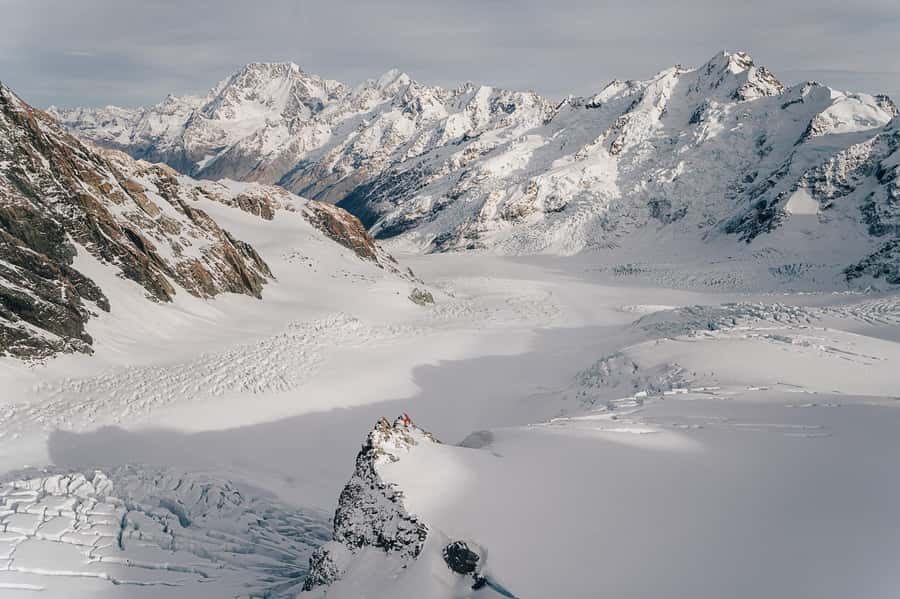
The best part of this flight is its scope. In less than an hour, you see Tasman Glacier, Aotearoa New Zealand’s longest glacier, cross the Southern Alps, reach the West Coast, and return with Aoraki/Mt Cook in view. If conditions allow, the helicopter lands in the snow, putting you in a place that is otherwise hard to reach.
I like the small six-person group, which gives you a better chance of seeing the mountains without a crowded cabin. I also like the route itself: you are not simply circling Mount Cook, but linking the Tasman, Fox, and Franz Josef Glaciers in one flight.
The catch is weather. The route, landing, and flight time can change at the pilot’s discretion, and poor conditions can cancel the trip. A reported refund took 11 days to arrive, so I would book early in your South Island plans and leave room for a second attempt.
Key points before you book
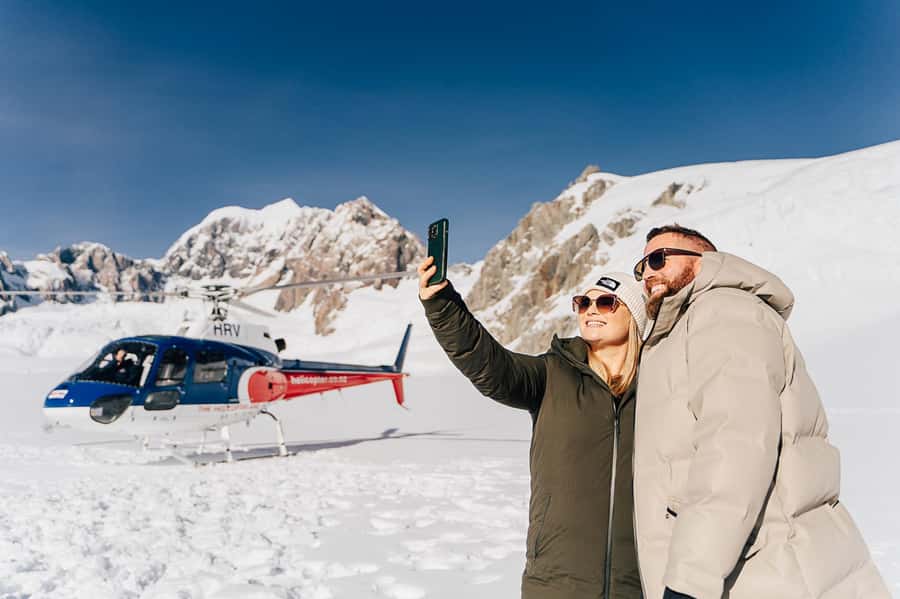
- Three major glaciers in one flight: See the Tasman, Fox, and Franz Josef Glaciers from the air.
- A snow landing is included: The helicopter may land at an alpine site, subject to snow levels and weather.
- Aoraki/Mt Cook is the star: You get views of New Zealand’s tallest peak from the air and from the landing area.
- A 55-minute mountain route: The flight includes Tasman Glacier Lake, the Southern Alps, and the West Coast.
- Small group size: The helicopter carries no more than six participants.
- The price reflects access: At $523 per person, you are paying for a rare wilderness flight, not a simple sightseeing loop.
Starting at Glentanner Park Centre near Mount Cook
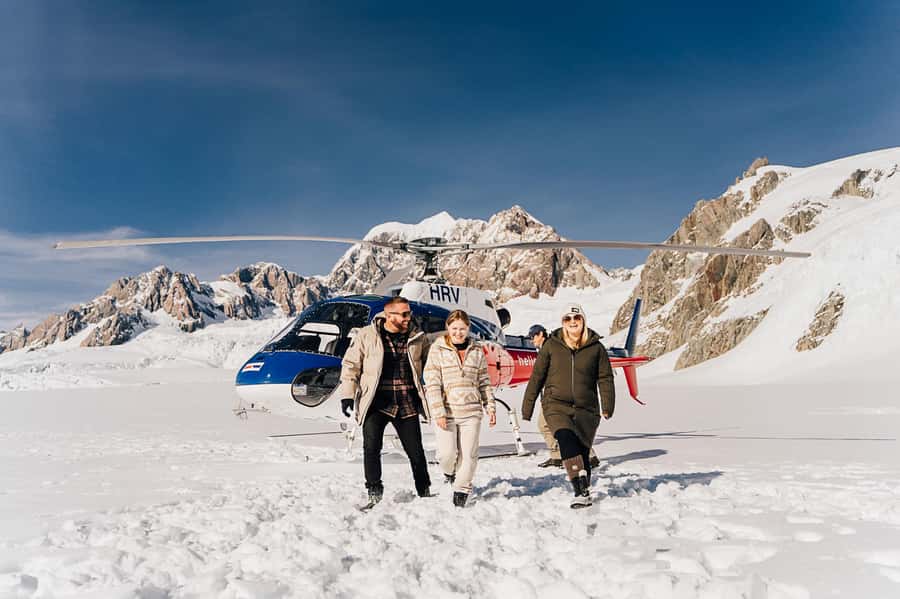
Your flight begins at Glentanner Park Centre, close to Aoraki/Mt Cook. If you are staying in Aoraki/Mt Cook Village, complimentary transport can be provided to and from the village, which makes the experience easier to fit into a day without arranging your own ride.
The flight lasts 55 minutes, and that time includes the alpine landing. That detail matters. You are not getting 55 minutes of continuous movement through the air, followed by a separate landing on top. Some of the time is used to settle at the landing site, take photographs, and look around.
You should arrive ready for a mountain environment. Bring warm clothing, sunglasses, a camera, and closed-toe shoes. Even in summer, the snow-capped peaks and cold alpine air can make the landing feel very different from the conditions at the airfield.
The small group limit of six is a practical advantage. It keeps the flight more personal and helps reduce the feeling that you are being processed through a large sightseeing operation. The pilot provides live commentary in English, so you get some context as the route unfolds rather than simply looking down in silence.
A few more Franz Josef & Fox Glacier days to compare
- Franz Josef Glacier: Helicopter Flight & Alpine Landing
★ 4.8 · 619 reviews - Franz Josef Glacier Heli-Hike
★ 4.5 · 618 reviews - Heli Hike Fox Glacier
★ 5.0 · 563 reviews
Flying over Tasman Glacier Lake
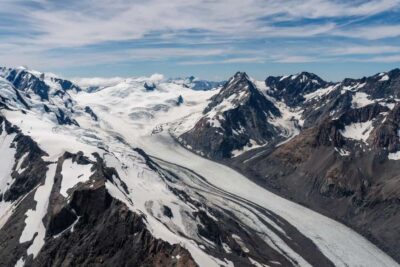
The first major sight is Tasman Glacier Lake. From above, the lake gives you an immediate sense of how ice shapes the Mount Cook region. The route then follows the path of the Tasman Glacier, allowing you to see the glacier as part of a much larger mountain system.
Tasman Glacier is New Zealand’s longest glacier, measuring about 23 kilometres long and reaching up to 4 kilometres wide in places. Those figures are easier to understand from the helicopter than from a roadside lookout. The glacier is not just a bright strip of ice. It is a huge route through the mountains, with the surrounding ridges and peaks showing its scale.
I like this opening because it gives the flight a clear visual story. You begin at the lake, trace the glacier upward, and then move farther into the mountains. Instead of ticking off isolated sights, you see how the water, ice, and high peaks fit together.
The pilot’s route can change with conditions. That is normal for a mountain flight, but it means you should not treat every listed sight as a guaranteed photo stop. The Tasman Glacier, Fox Glacier, and Franz Josef Glacier are part of the planned experience, while the precise line of flight depends on weather and the pilot’s judgment.
Landing in the snow beneath Aoraki/Mt Cook
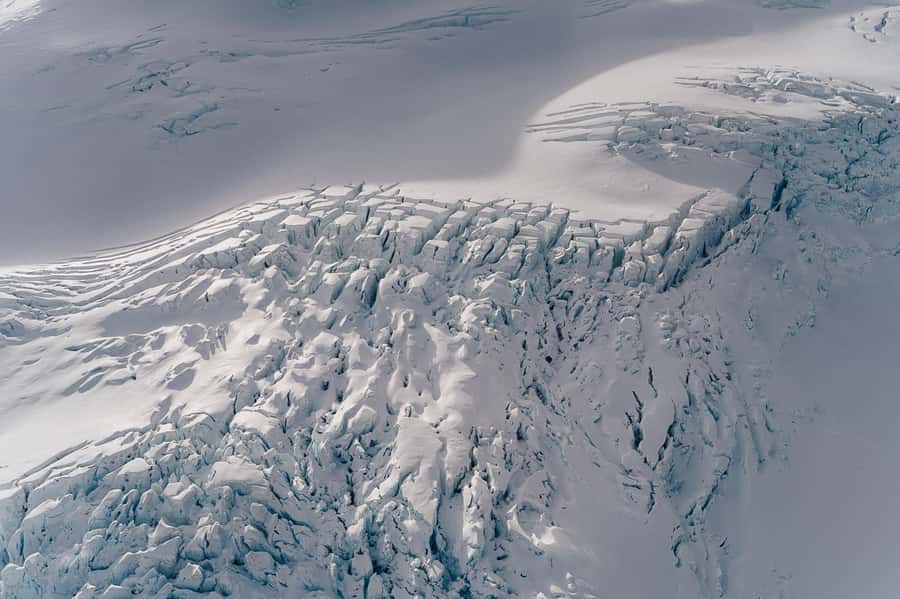
The alpine landing is the emotional center of the trip. If snow levels permit, the helicopter lands in an alpine location with Aoraki/Mt Cook before you. You have time to get out, take photographs and videos, and absorb the setting before returning to the helicopter.
Aoraki/Mt Cook is New Zealand’s tallest peak, and seeing it from an isolated snow landing gives the mountain a different presence than viewing it from below. From the air, you appreciate its setting among the Southern Alps. On the ground, even briefly, you feel the scale and cold of the high country more directly.
Do not assume the landing will always be on snow. The information for this flight clearly says that the snow landing depends on snow levels. Weather can also affect the landing site or remove the landing altogether. The flight can still be worthwhile for the aerial views, but you should book with the right expectation: the exact landing is not fixed.
This is also the point where warm clothing matters most. You may be standing on snow with bright light reflecting off the surface, so sunglasses are useful for comfort as well as photographs. Closed-toe shoes are required, and they are the sensible choice for an uneven alpine landing area.
Crossing the Southern Alps to Fox Glacier
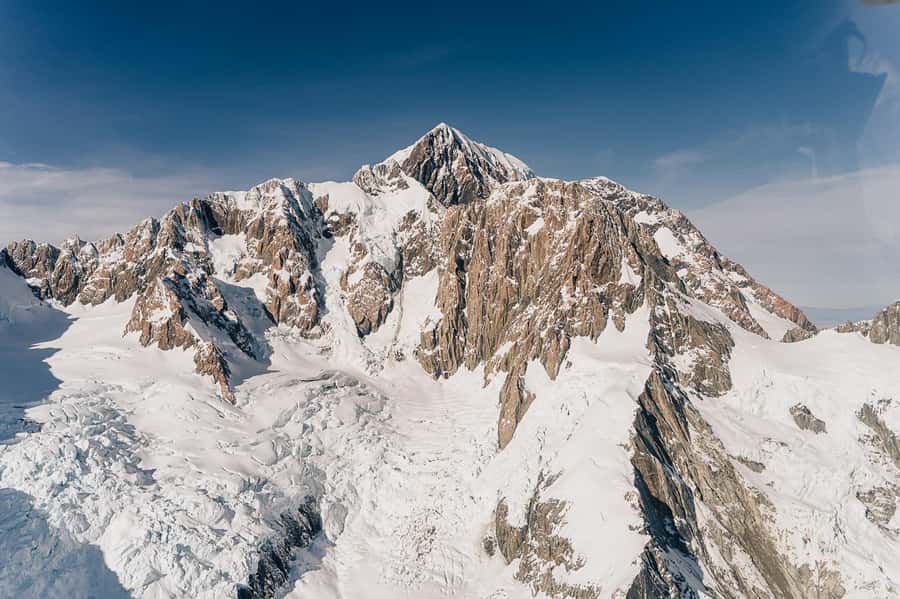
After the Mount Cook area, the helicopter crosses the rugged Southern Alps toward the West Coast. This section adds variety to the flight. You move from the inland glacier country around Aoraki/Mt Cook toward a different side of the mountain range, where Fox Glacier and Franz Josef Glacier come into view.
Fox Glacier is one of the major sights on this route. Seeing it from the helicopter lets you understand its position within the wider alpine system instead of viewing it only from a ground access point. The flight gives you a high, moving viewpoint, so you can follow the glacier’s course and see the surrounding ridges at the same time.
The crossing is one reason this trip offers more than a short Mount Cook scenic loop. You get a sense of the range as a connected barrier between the inland South Island and the West Coast. The views change as you pass over the mountains, which helps keep the 55-minute route varied.
The drawback is that the amount of time spent over each glacier is not specified. This is a flight route, not a series of long hovering stops. If you want extended time beside one glacier, a ground walk or a dedicated glacier activity may suit you better. If you want to compare several glaciers in one compact outing, this flight makes better sense.
Somewhere else in Franz Josef & Fox Glacier entirely:
- Franz Josef: 35min Helicopter Trip over Two Glaciers
★ 4.8 · 451 reviews - Small-Group Kayak Adventure from Franz Josef Glacier
★ 5.0 · 393 reviews - Franz Josef & Fox Glaciers Helicopter Flight & Snow Landing
★ 4.7 · 342 reviews - Pilot’s Choice: 2 Glaciers & Snow Landing – 35min
★ 5.0 · 336 reviews
Seeing Franz Josef Glacier from the air
Franz Josef Glacier is the second major West Coast glacier on the route. Together with Fox Glacier, it gives you a chance to see the glacial character of the West Coast before the helicopter turns back toward the Mount Cook area.
The value here is comparison. Tasman Glacier begins near the high inland peaks and stretches toward Tasman Glacier Lake, while Fox and Franz Josef belong to the West Coast side of the Southern Alps. You are seeing three named glaciers in the same flight, but not from the same angle or setting.
The pilot’s commentary adds useful orientation, especially during the crossing. Mountains can be difficult to identify from the air, and the spoken explanation helps you understand what you are seeing. Pilot Mike is specifically associated with a calm, informative flight, and a smooth landing and clear commentary can make a real difference on a route this busy with scenery.
Clear weather produces the strongest experience. Recent flights have been described with no wind, blue sky, turquoise lakes, and snow-covered peaks even during summer. Those conditions cannot be promised, but they show what the route can look like on a good day. In poor visibility, the flight may be shortened, rerouted, delayed, or canceled.
Returning with the Aoraki/Mt Cook summit ridge in view
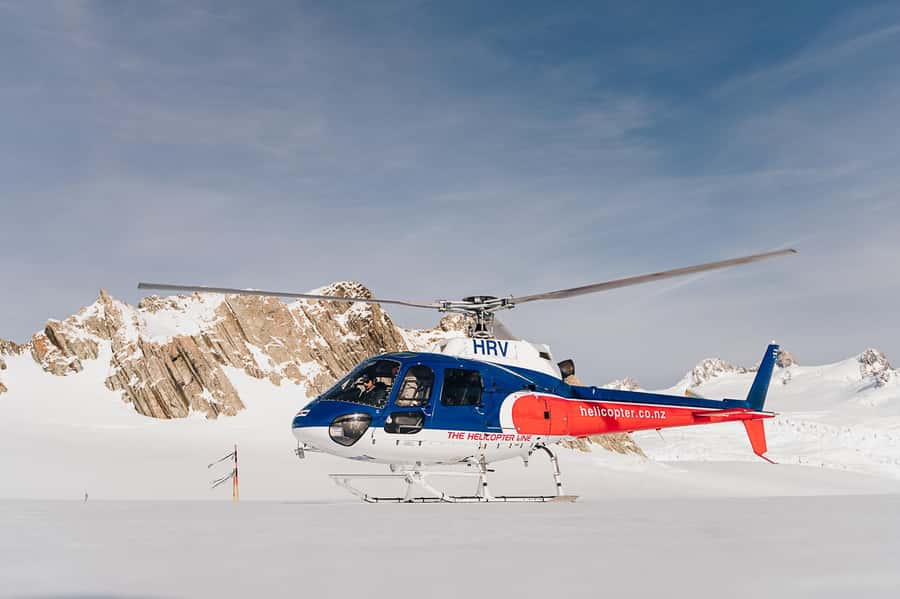
The flight comes full circle with views of the summit ridge of Aoraki/Mt Cook before returning to Glentanner Park Centre. This final pass gives you another chance to see the mountain from a different angle.
That changing viewpoint is important. A mountain can look completely different when you approach it from the Tasman side, cross the main range, and then return toward its summit ridge. The flight is designed around that sense of movement, so keep your camera ready throughout rather than assuming the best view will happen at the landing.
You should also expect to spend much of the flight looking through the helicopter windows. Photography is possible, but glare, reflections, changing light, and the movement of the aircraft can make some images difficult. Bring a camera if you want one, but do not let it keep you from watching the peaks directly.
Drones, selfie sticks, and tablets or iPads are not allowed. That keeps the small cabin less cluttered and avoids equipment creating problems around the helicopter and landing site. A camera and phone are the practical choices.
Is $523 per person good value?
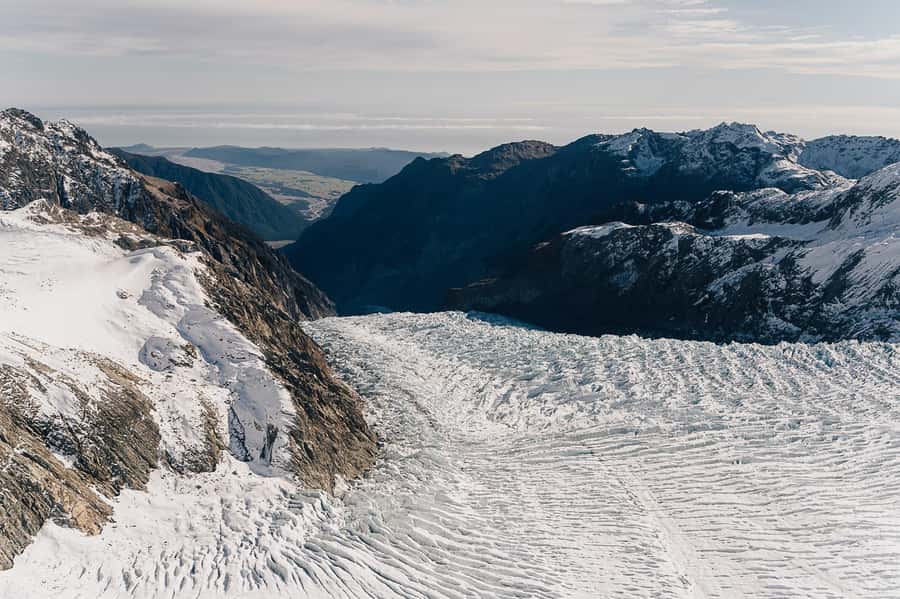
At $523 per person, this is an expensive outing. I would not call it a casual add-on for every South Island itinerary. The price makes more sense if you value access to remote alpine scenery and want to see several major glaciers without spending days on separate walks or drives.
You are paying for several things at once:
- A 55-minute scenic helicopter flight
- A route over Tasman Glacier Lake and Tasman Glacier
- Views of Aoraki/Mt Cook and the Southern Alps
- A flight across to Fox and Franz Josef Glaciers
- An alpine landing when conditions allow
- Pilot commentary
- A small group capped at six
- Possible transport from Aoraki/Mt Cook Village
The value is strongest when the weather is clear enough to show the full route. With blue skies, the combination of turquoise water, white peaks, glacier ice, and a snow landing can become one of the defining experiences of a New Zealand trip. Several recent bookings describe it as the highlight of a two-week visit, which fits the kind of impact this flight can have when conditions cooperate.
The value is weaker if your main goal is simply to see Mount Cook from the air. In that case, a shorter flight may be enough, if one is available for your dates. This particular route earns its higher price through distance and variety, especially the crossing to the West Coast glaciers.
Weather, cancellations, and practical planning
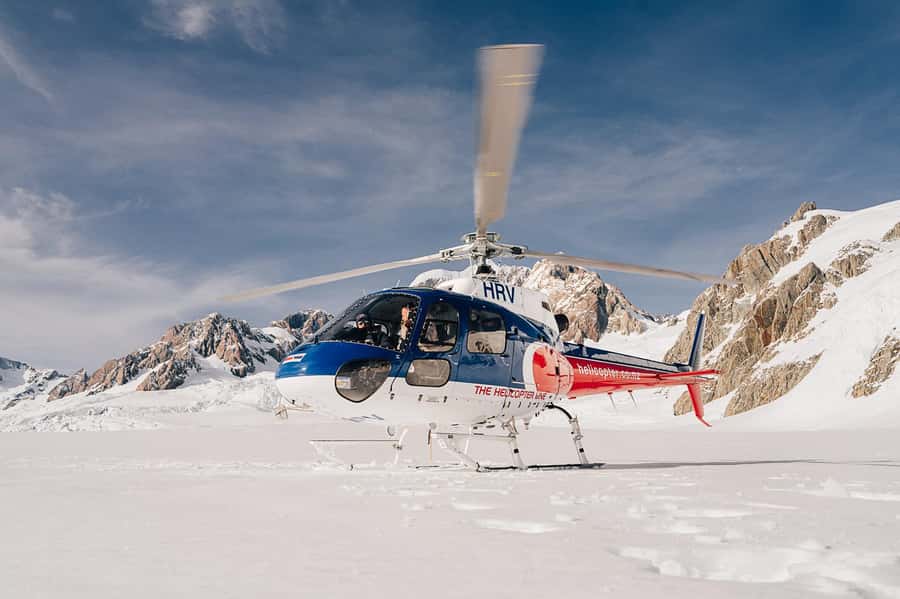
Weather is the main factor to plan around. Flights, routes, landing sites, and exact flight times may change because of mountain conditions and the pilot’s decision. Poor weather can lead to a cancellation, with the choice of another date or a full refund.
I would schedule this near the beginning of your time around Aoraki/Mt Cook, not on the final morning before you leave. The operator recommends building in flexibility, and that is sound advice. A spare day gives you a much better chance of flying if wind, cloud, or snow interrupts the first booking.
The listed 55 minutes is approximate and includes the landing. Minimum passenger numbers also apply, so bookings may be coordinated to form a viable flight. That is not unusual for a small scenic flight, but it means the exact departure arrangements may need some flexibility.
The price includes concession fees that support conservation and sustainability management. That does not remove the high cost, but it explains part of the charge and connects the activity to the care of the public mountain environment it uses.
Wheelchair accessibility is listed, but the information does not explain the exact transfer process or conditions at the alpine landing. If you need specific assistance, confirm the arrangements before booking.
Children must be with a paying adult. Infants under four years old and under 15 kilograms sit on an adult’s knee. Infants over 15 kilograms need their own seat.
Free cancellation is available up to 24 hours before departure, and you can reserve now and pay later. Those terms help if your plans are still moving, but they do not remove the bigger issue: mountain weather can disrupt the flight after the cancellation window has passed.
Who should book this Mount Cook helicopter flight?
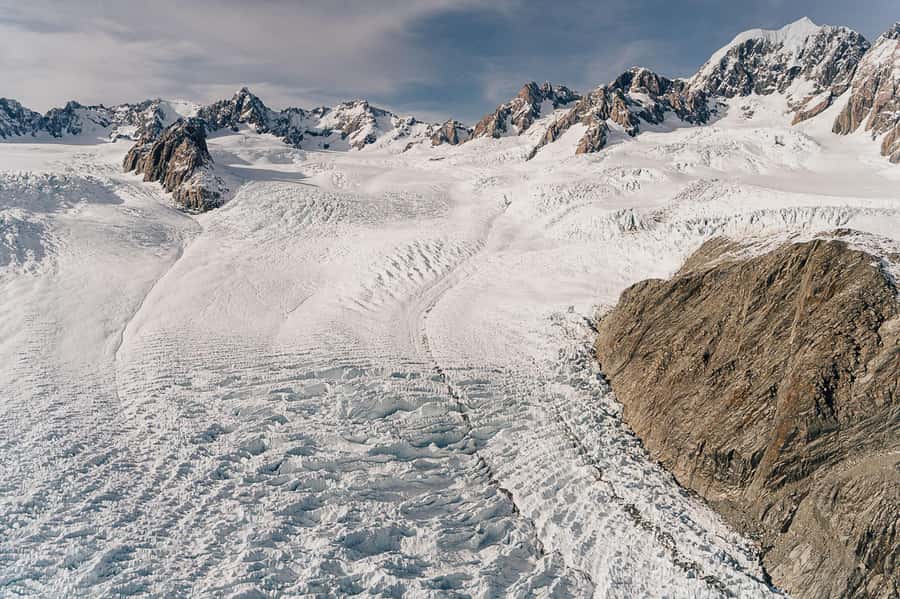
I would recommend it most strongly if you have limited time in the Mount Cook region and want a broad view of the Southern Alps. It suits you if you want one polished experience that combines glaciers, high peaks, a possible snow landing, and the West Coast in under an hour.
It is also a good fit if walking is not your main way of seeing the mountains. The helicopter reaches areas that would require serious effort or technical climbing to access. You get the visual scale of the high country without committing to a full-day expedition.
I would think twice if you are uncomfortable with weather changes, need a guaranteed landing, or have a strict schedule that cannot absorb a delay. I would also compare it with other scenic flight options if your budget is tight. At $523, this needs to be a major experience in your holiday, not something you book simply because you have a spare afternoon.
Should you book it?
Book this flight if you can afford the price, keep your schedule flexible, and want more than a quick view of Aoraki/Mt Cook. The combination of Tasman Glacier Lake, New Zealand’s longest glacier, a possible snow landing, Fox Glacier, Franz Josef Glacier, and the summit ridge gives the route real variety.
My practical advice is to book early in your Mount Cook stay, wear warm clothing and closed shoes, and treat the landing as weather dependent. If the forecast cooperates, this is the sort of short activity that can define an entire visit to the South Island. If the weather does not, take the refund or alternate date and do not force a mountain flight for the sake of keeping a timetable.
FAQ
How long is the Aoraki/Mt Cook and Glaciers flight?
The flight lasts approximately 55 minutes, including the alpine landing.
Where does the helicopter flight begin and end?
It begins and ends at Glentanner Park Centre near Mount Cook. Complimentary transport can be provided to and from Aoraki/Mt Cook Village.
Which glaciers can I see?
The route includes views of Tasman Glacier, Fox Glacier, and Franz Josef Glacier. It also flies over Tasman Glacier Lake and crosses the Southern Alps.
Is an alpine snow landing guaranteed?
No. The landing is subject to snow levels, weather conditions, the route, and the pilot’s discretion.
What should I bring?
Bring warm clothing, sunglasses, a camera, and closed-toe shoes.
Can I cancel or change my booking?
You can cancel up to 24 hours in advance for a full refund. If poor weather cancels the flight, you can choose an alternative date or receive a full refund.
Newly listed around Franz Josef & Fox Glacier
- Queenstown to Franz Josef Tour via Wānaka (One-Way)★ 4.1 · 5 reviews
- Okarito Nature Tour★ 5.0 · 7 reviews
- Fox Glacier & Mount Cook 35-Minute Helicopter Flight★ 4.5 · 8 reviews
- Franz Josef to Queenstown Tour via Wānaka★ 5.0 · 8 reviews
- Shackleton Glacier Whiskey Endurance – 50mins★ 5.0 · 9 reviews
- Mount Cook Spectacular Helicopter Flight from Fox Glacier★ 4.5 · 9 reviews
- Fox Glacier and snow landing (allow 20 minutes – departs Fox Glacier)★ 5.0 · 10 reviews
- Twin Glacier Fox and Franz, Snow Landing (allow 30 mins – departing Fox Glacier)★ 4.5 · 10 reviews
Franz Josef & Fox Glacier Tours, compared.
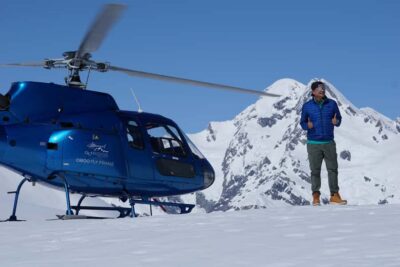
Franz Josef Glacier: Helicopter Flight & Alpine Landing
Read our review →
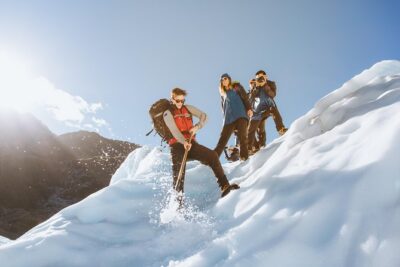
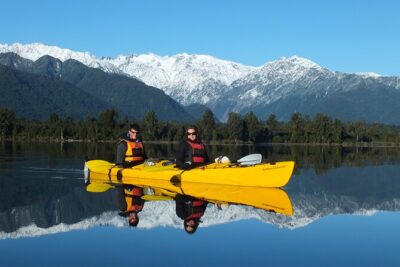
Small-Group Kayak Adventure from Franz Josef Glacier
Read our review →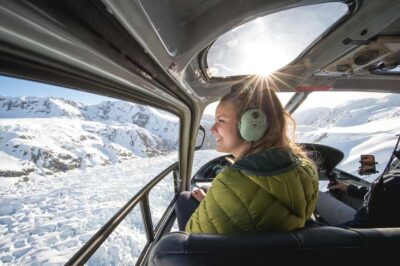
Franz Josef & Fox Glaciers Helicopter Flight & Snow Landing
Read our review →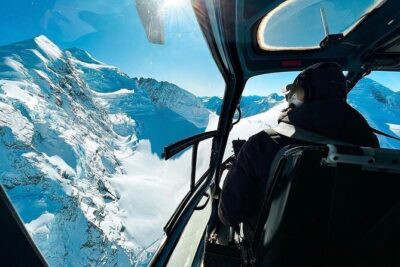
Pilot’s Choice: 2 Glaciers & Snow Landing – 35min
Read our review →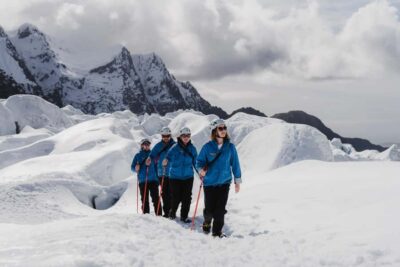
2.5 Hour Glacier Hike with Helicopter Transfer
Read our review →Browse the lists this tour appears in